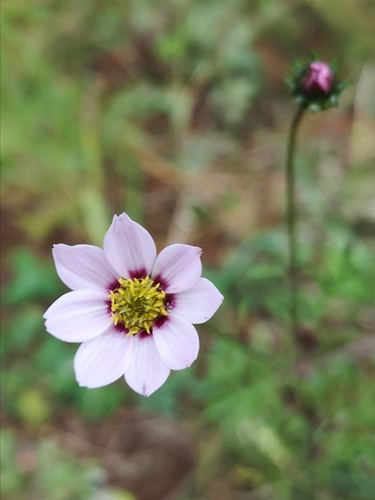
Dahlia, Genus, merckii, Species,
- Genus & species
bedding dahlia
Mexico and Guatemala (pine-oak forests and mountain meadows at 5,000-9,000 feet / 1,500-2,700 m)
Overview
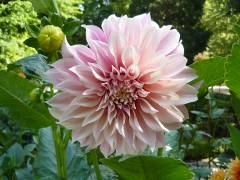
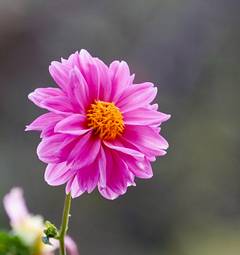
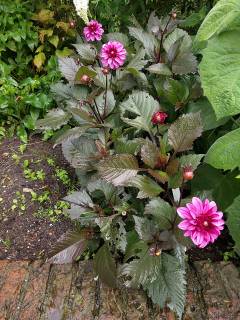
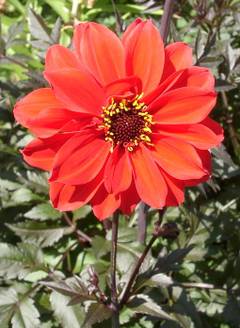
Dahlia merckii is an upright tuberous perennial in the sunflower family (Asteraceae) reaching 36–60 inches (90–150 cm) tall with a spread of 24–36 inches (60–90 cm). This is a wild dahlia species that reads very differently in character from the large double-flowered hybrid dahlias familiar in show-garden contexts. Flowers are small single daisy-like heads 1.5–2 inches (4–5 cm) across in pale lavender-pink to lilac with a yellow center disc, carried in loose airy sprays on slender wiry stems. The delicate open flower form and airy branching habit contrasts with the dense heavy-headed hybrid dahlias, which carry substantially larger bloom masses on stouter stems. Leaves are bipinnately compound, dark green, finely divided. Growth rate is fast. Tuberous roots are hardy to zone 7 (15°F / −9°C) without lifting — which is hardier than most garden dahlias, most of which require fall lifting in zones 5–7. In zones 5–6, tubers are lifted in fall or heavy mulching protects the crown in place. Blooms continuously from July through first frost, which spans the late-summer-to-early-fall bloom gap that many perennial borders carry. The slender stems may need staking support in wind-exposed planting positions.
Native Range
Dahlia merckii is native to Mexico and Guatemala, where it occurs in pine-oak forests and mountain meadows at elevations of 5,000–9,000 feet (1,500–2,700 m).Suggested Uses
Grown in mixed borders, cottage gardens, and meadow-style plantings at 18–24 inch (45–60 cm) spacing. The airy delicate habit and small flower size blend with ornamental grasses and late-summer perennials in ways that hybrid dahlias cannot match — hybrid dahlia flower mass reads as visually heavy against grass-and-perennial compositions, while D. merckii carries a lighter visual weight that integrates. Naturalistic and prairie-style plantings suit the open wiry architecture. The continuous July-to-frost bloom fills the late-summer perennial gap in many border compositions. Pairing with ornamental grasses such as Stipa tenuissima, with Aster species, and with Salvia cultivars produces layered late-season compositions. Formal bedding schemes and cut-flower production are not suitable given the slender stems and small flower size.How to Identify
Appearance
Size & Dimensions
Height3' - 5'
Width/Spread2' - 3'
Bloom Information
Small single daisy-like flower heads 1.5–2 inches (4–5 cm) across in pale lavender-pink to lilac with yellow center discs bloom continuously from July through first frost. Bloom duration is 12–16 weeks, which covers the late-summer-through-fall border period when many earlier-blooming perennials have finished.
Detailed Descriptions
Flower Description
Pale lavender-pink to lilac with yellow center disc; small single daisy-like heads 1.5-2 inches acrossFoliage Description
Dark green bipinnately compound finely-divided foliageGrowing Conditions
Sun Requirements
Requires 6-10 hours of direct sunlight daily
• Full Sun: 6+ hours of direct sunlight
• Partial Shade: 3-6 hours of direct sunlight
• Full Shade: Less than 3 hours of direct sunlight
Care & Maintenance
Care Guide
Tubers are planted 4–6 inches (10–15 cm) deep after last frost in full sun in moist well-drained fertile soil at pH 6.0–7.0, tolerating loam. Hardy to zone 7. Full sun supports heaviest flowering; partial-shade positions reduce bloom quantity and produce leggier growth. Consistent moisture supports continuous bloom through the 12–16 week flowering period. Regular deadheading maintains continuous flower production by redirecting plant energy from seed development back into new bud initiation. Tubers are hardy to zone 7 without lifting; in zones 5–6, tubers are lifted after first frost and stored in a cool dry location, or heavy mulching (6+ inches / 15+ cm of dry leaves or straw) protects the crown in place. Slender stems may require staking in wind-exposed positions. Earwigs, slugs, and aphids can develop on the foliage and buds and respond to standard garden management.Pruning
Regular deadheading maintains continuous bloom through the summer-to-fall flowering period. Growing tips are pinched when the plant reaches 12 inches (30 cm) tall to drive branching and produce a fuller plant form. After first frost kills the top growth, stems are cut back to ground level. In zones 7 and warmer, tubers are left in ground under winter mulching; in zones 5–6, tubers are lifted for winter storage.Pruning Schedule
Prune: November
fall
Container Growing
Suitable for container growing
Minimum container size: 5 gallons