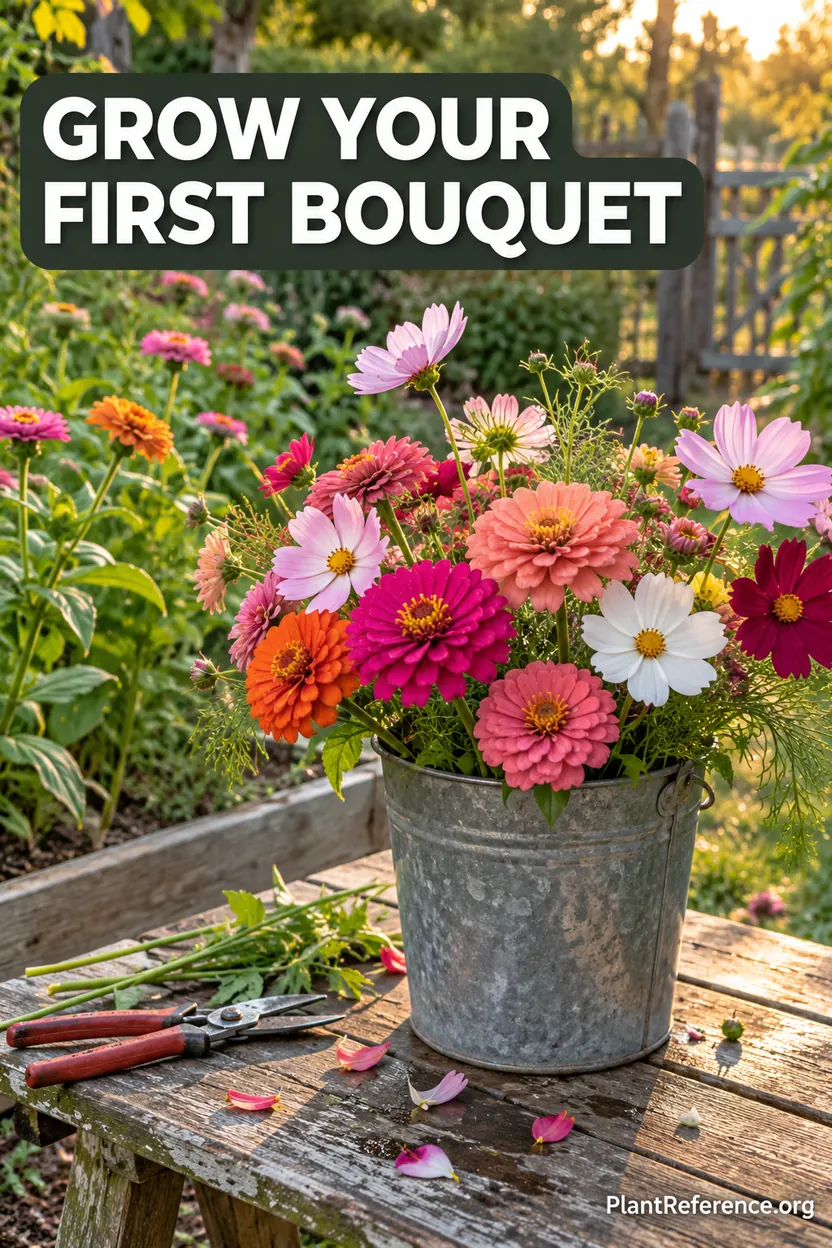
Cut Flower Garden for Beginners: Seed to Bouquet
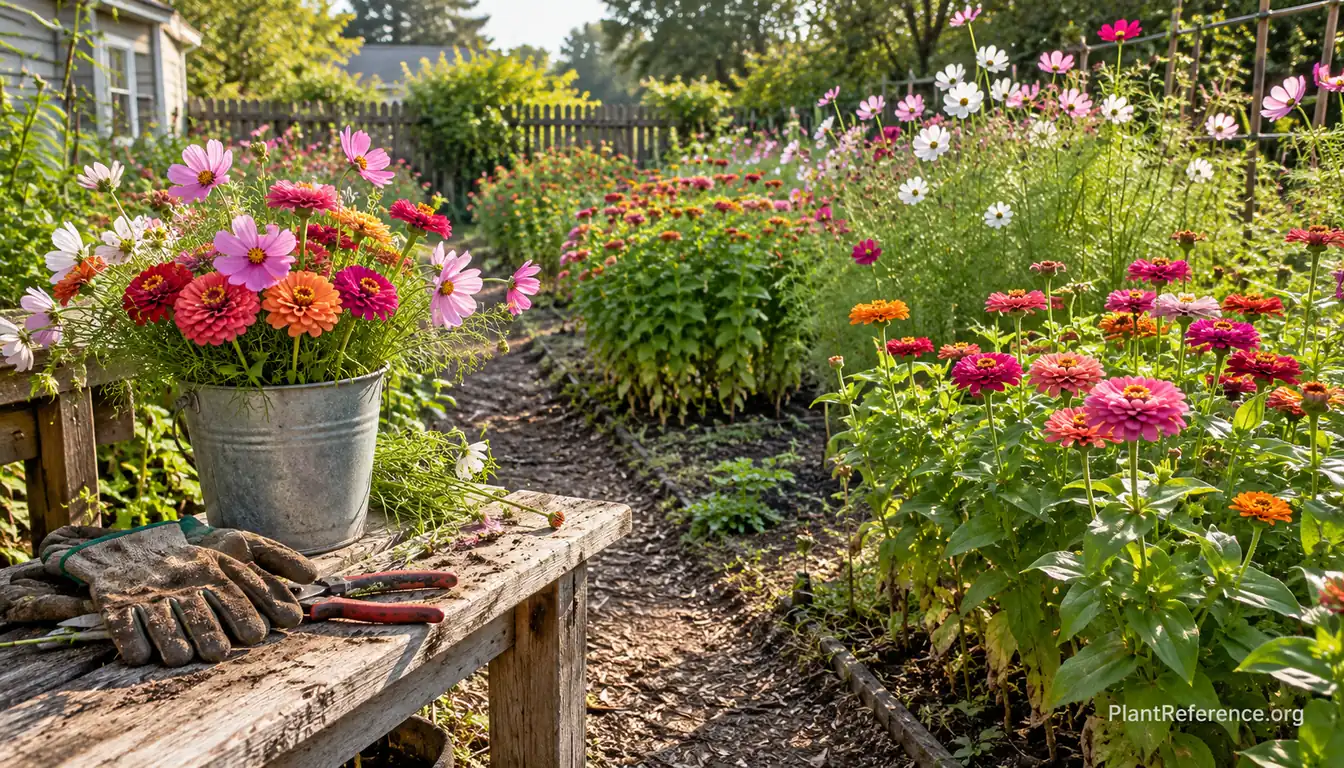
— Image © PlantReference.org 2026
Pets & Toxicity
Recorded toxicity for plants linked in this guide. An unknown status is not a safety assessment.
No linked plant is recorded as toxicDetailsHide
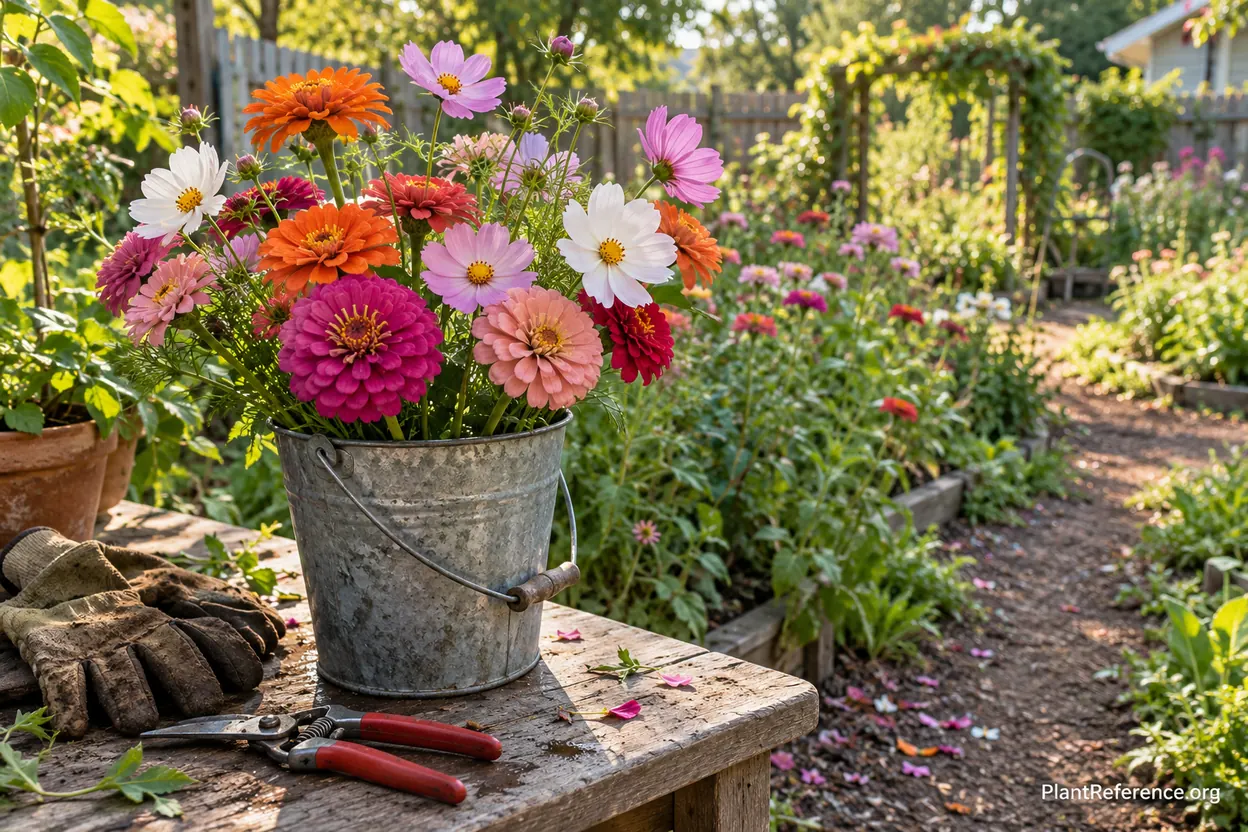
A cut flower garden is a place where harvesting is part of the design, not something you feel guilty doing to a finished border. Start with a few reliable annuals, keep every row accessible, and aim for a modest supply of usable stems before expanding into a bigger bouquet project.
Plan a Cut Flower Garden You Can Maintain
Choose a site with enough direct sun for the flowers you want to grow. Zinnias need full sun, meaning at least six hours of direct sunlight on a typical growing-season day. Watch the site through the day before assuming that an open-looking patch receives enough light.
Keep water access close and leave a practical place to set a harvest bucket. A bed at the far end of the yard can look appealing on paper but receive less attention during a busy week. Start where you can notice a dry root zone or a flower ready to cut during ordinary daily routines.
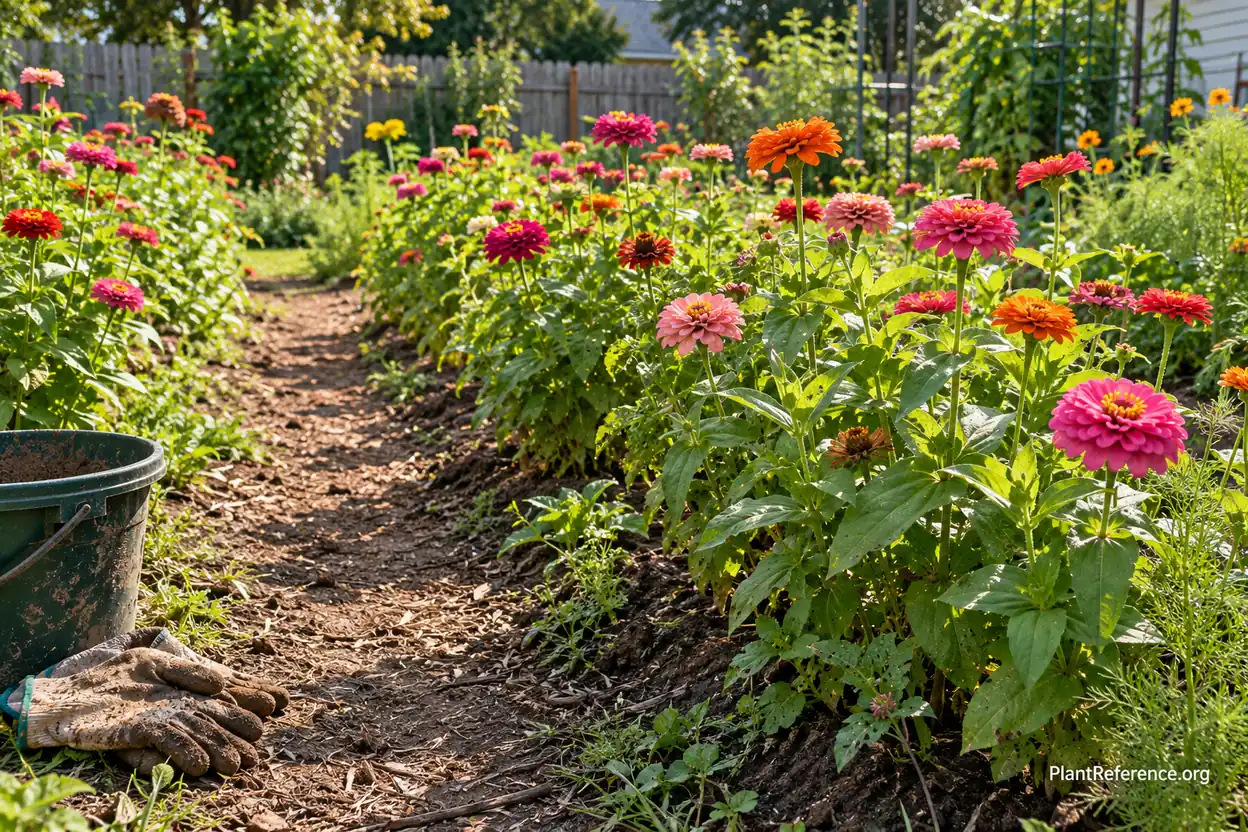
Give yourself a reachable layout
A bed about 3–4 feet (90–120 cm) wide can be convenient when you can reach it from both sides, but adjust the width to your own reach. The point is to avoid stepping among roots to harvest a stem in the middle. Leave paths wide enough for you and the bucket without brushing every plant.
Rows or clearly marked blocks make repeat sowings easier to track. A decorative mixed border can also supply flowers, but a dedicated cutting patch lets you remove stems freely and replace tired plants without disrupting the whole landscape. Decide which role the space serves before planting.
Plan the soil before the shopping list
Inspect drainage and soil structure. Soil Health 101: How to Build Living, Productive Garden Soil provides a useful foundation for the root environment beneath the flowers. A sunny position is not enough if roots spend spring in saturated ground.
If you use a raised bed, account for settling and access rather than filling it once and forgetting it. Raised Bed Soil Settling and Compaction: Prevention and Solutions explains why the growing surface can change. Keep paths distinct so repeated harvesting does not compact the planting area.
Choose Flowers for Useful Stems and Different Shapes
Zinnias 🌿Zinnia elegans (ZIN-ee-uh EL-eh-ganz) are a strong beginner choice for warm-season bouquets. Choose selections intended for cutting, not compact bedding plants whose short stems suit pots better than vases. Flower size matters less than whether you can harvest stems of a useful length.
Cosmos 🌿Cosmos bipinnatus (KOZ-mos bye-pin-NAY-tus) provide a lighter flower form and are useful direct-sow candidates. Snapdragons 🌿Antirrhinum majus (an-tih-RYE-num MAY-jus) supply upright flower spikes and fit cooler growing periods. Combining a rounded flower with an airy or vertical form creates more options than growing several nearly identical blooms.
Start with a small working palette
Choose colors you would enjoy together in one vase. A limited palette makes it easier to combine whatever is ready rather than waiting for every variety to bloom simultaneously. Repeating a dependable flower is often more useful than owning one plant of many unfamiliar types.
The vocabulary in Flower Identification Guide: Petals, Shape & Color Explained can help you compare forms. Think about the role each flower plays: a focal bloom, a smaller supporting flower, or an upright accent. Those are design roles, not requirements to buy three different seed collections.
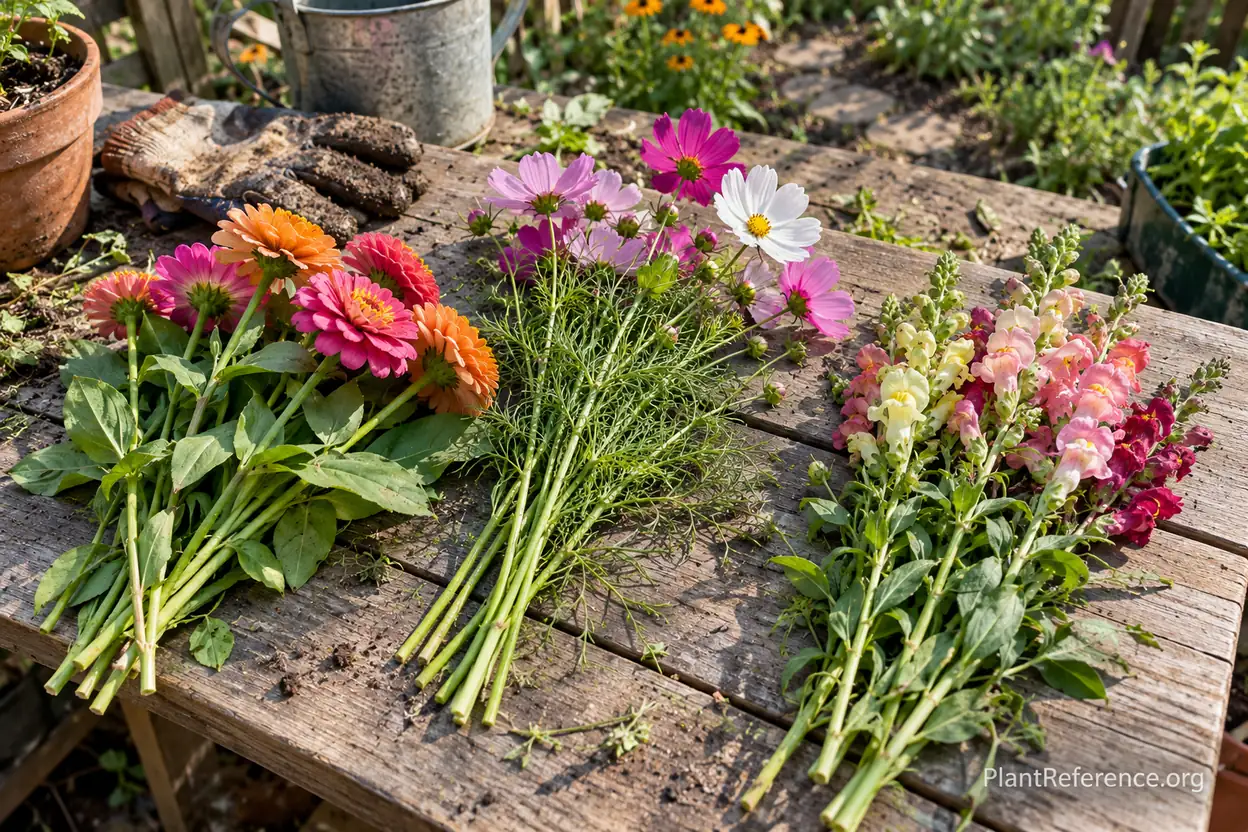
Flower group | Useful bouquet role | Starting approach | Important distinction |
|---|---|---|---|
Zinnias | Rounded focal flowers | Direct sow or short indoor start | Choose cutting selections rather than dwarf bedding types |
Cosmos | Lighter supporting flowers | Direct sow in suitable conditions | Leave enough season for flowering |
Snapdragons | Upright spikes | Longer indoor start or transplants | Cooler-season performance differs from summer heat lovers |
Celosia | Distinctive texture | Careful indoor start or transplants | Minimize root disturbance; do not apply a blanket pinching rule |
Branching sunflowers | Repeated flowering stems | Direct sow when appropriate | Branching and single-stem types need different planning |
Strawflower, statice, or gomphrena | Additional texture | Follow the specific packet | Add gradually once the basic garden is manageable |
Expand only after learning the basics
Larkspur and bachelor buttons are also supported cutting-garden options, but they do not belong on the same warm-season schedule as every tender annual. Read their individual requirements before adding them. A garden improves when new plants fit a clear purpose, not just because the packet photograph is attractive.
Avoid promising yourself a certain number of bouquets from a tiny bed. Yield depends on plant selection, weather, spacing, losses, and how often you cut. A useful first-season goal is to learn which plants produce stems you enjoy using and which require more work than their contribution justifies.
Prepare Soil and Schedule the First Sowing
Test soil when you need information about pH or nutrient supply. How to Test Garden Soil: Jar, Ribbon & pH Tests separates simple texture observations from questions requiring a proper test. Do not assume every cutting bed needs a rich fertilizer blend before you know what is already present.
For heavy ground, How to Improve Clay Soil Without Making It Worse helps avoid making wet soil more compacted during preparation. Quick-draining ground presents the opposite challenge; How to Improve Sandy Soil That Dries Out Fast addresses water retention and structure. Match the preparation to the site rather than following a single recipe.
Separate cool-season and warm-season starts
Snapdragons commonly need an indoor start 8–10 weeks before the local spring planting window. Zinnias need only 4–6 weeks if you start them indoors, and direct sowing remains a practical alternative. Celosia commonly needs 6–8 weeks indoors and careful handling of its roots.
Use local frost information and the seed packet to build the schedule. Hardiness zones alone do not tell you the correct sowing date. A date that works in one garden can be too early in another because soil temperature, elevation, and exposure differ.
Let warmth guide tender annuals
For tender annuals, wait for frost risk to pass and for suitable warmth. Soil above about 60°F (16°C) and nights around or above 50°F (10°C) are useful establishment checkpoints, while a packet may specify warmer conditions for germination. Zinnia germination is commonly fastest around 70–80°F (21–27°C).
Starting too early can leave you tending oversized seedlings while the garden remains cold. Buying transplants is a reasonable option if you missed the sowing window or need only a few plants. The goal is a healthy garden, not proving that every stem began in your own seed tray.
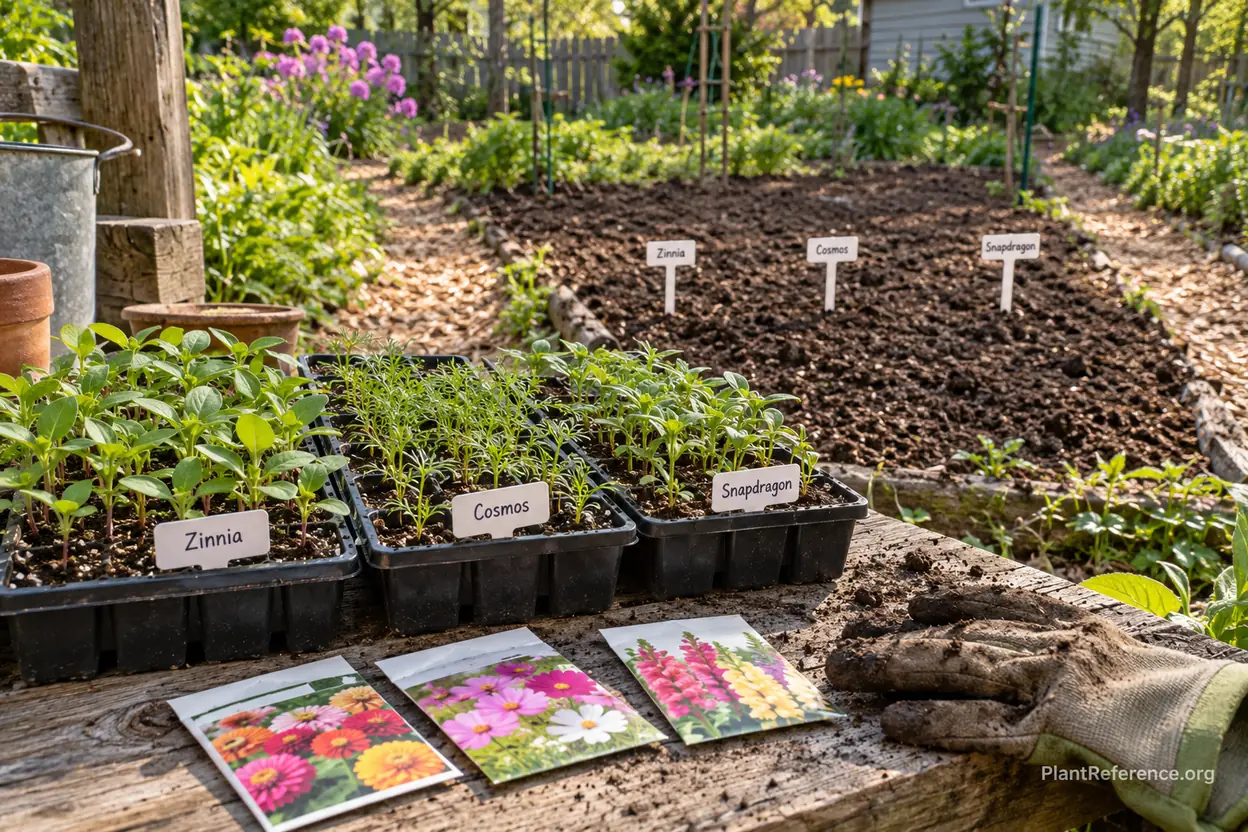
Sow and label with the final bed in mind
Use clean trays and appropriate seed-starting mix indoors. Follow each packet's covering depth and light requirements; seeds do not all want the same treatment. Keep labels with the plants from sowing through transplanting so you can compare selections later.
Direct-sown rows need clear markers, suitable moisture, and thinning after emergence. Do not leave every seedling because germination went well. Plant spacing is based on mature growth, and a crowded row can become difficult to water, inspect, and cut.
Use Succession Planting to Extend the Harvest
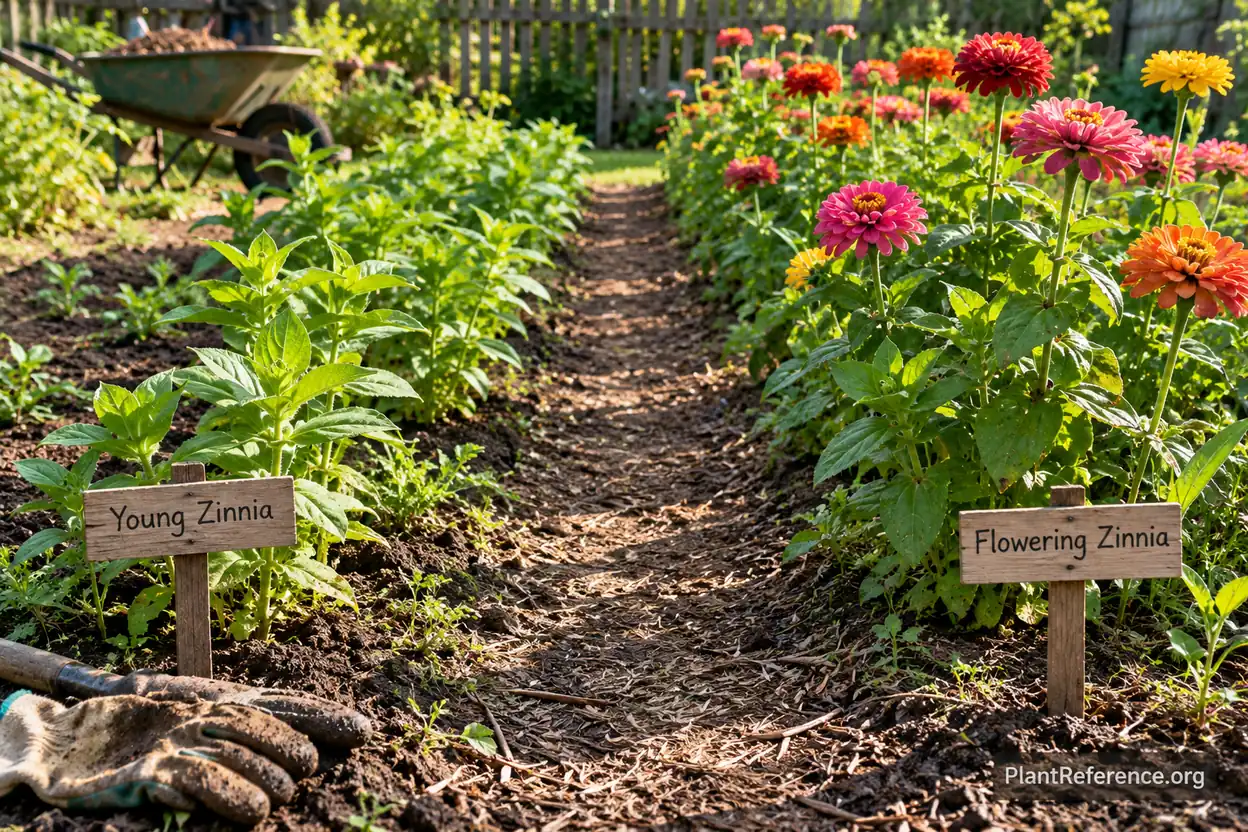
A single sowing produces a garden of plants of similar age. Successive sowings spread that age range, giving you younger plants as earlier ones become tired or damaged. This is especially useful when you want flowers over several weeks rather than one large flush.
The research supports sowing zinnias and cosmos about every two to three weeks during a suitable warm window. That interval is a planning tool, not an instruction to keep sowing until autumn. Each batch needs enough growing time to flower before the season closes.
Count forward before adding another batch
Zinnias commonly take about 60–70 days from seed to bloom, and cosmos may need 60–90 days. Use the specific packet's estimate and allow room for weather-related delays. A sowing that reaches its first flower just before frost does not provide the same value as one with several useful harvest weeks.
Keep a portion of the bed available for the next batch instead of filling every space immediately. A labeled gap is part of the plan, not a design failure. You can also remove a declining planting when a younger batch is ready to occupy its space.
Keep the schedule flexible
If a batch establishes poorly, diagnose the problem before repeating it. If the first planting is still productive, you may need fewer replacements than expected. Record what actually happened rather than forcing the garden to follow the original plan.
A small trial of later sowing is useful when you are learning the season length. Keep it separate from your main expected harvest. Over time, your own records will tell you more about the useful final sowing window than a generic national calendar.
Plan for access during turnover
Leave room to remove old plants without trampling the new row. Keep younger plants identifiable and avoid mixing different sowing dates into an unmarked mass. The extra organization matters most when the garden is lush and every stem looks like it belongs to the same planting.
Do not treat succession planting as permission to neglect the older batch. Continue removing spent flowers and checking health while it remains useful. A younger row is a backup and an extension, not a cure for poor care across the entire bed.
Grow Strong Stems with Consistent Care
Water the root zone according to soil conditions and plant growth. A new transplant's root ball can dry differently from the surrounding bed, so inspect both. Once plants establish, continue checking beneath the surface rather than watering only because the top looks pale.
Avoid routinely wetting the whole canopy when you can deliver water to the roots. Provide the spacing and airflow appropriate to the selection. For zinnias, the research gives a broad range of 6–18 inches (15–46 cm), so use the actual packet rather than assuming one spacing suits every type.
Pinch the right plants at the right stage
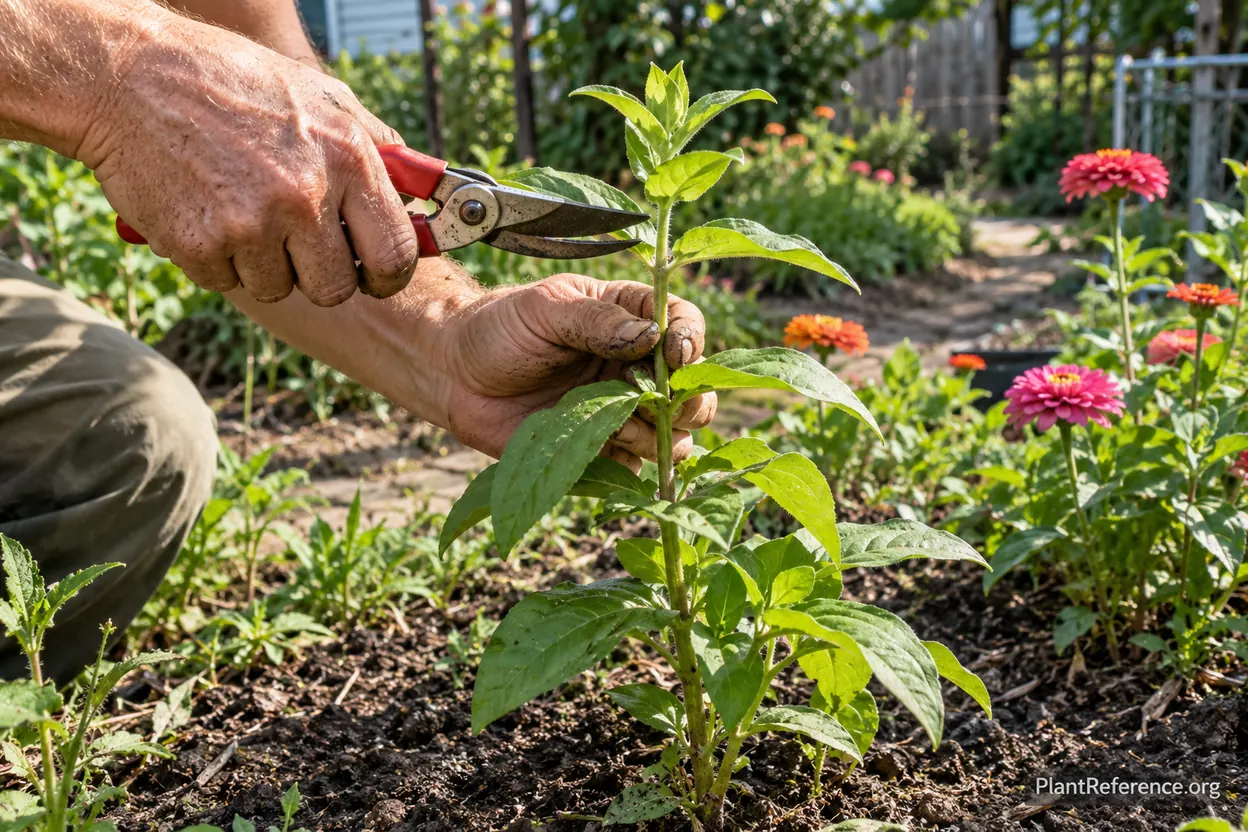
Zinnias can be pinched when they are about 8–12 inches (20–30 cm) tall and have three to five sets of leaves. Remove the central growing tip above a healthy leaf junction to encourage branching. Leave enough healthy foliage for the plant to continue growing.
Do not apply that instruction to everything in the bed. Single-stem sunflowers are not a crop to pinch for more stems, and the research cautions against routine pinching of celosia. Know the growth habit before removing the growing point.
Feed with a purpose
Use soil information and product directions to decide whether feeding is needed. DIY Organic Fertilizer Blends: A Soil-Test-First Guide explains why nutrient decisions should follow evidence rather than a desire to make plants grow faster. Excess nitrogen can contribute to leafy or stretched growth instead of the balanced framework you want.
A plant struggling from poor light or damaged roots will not be repaired by a stronger fertilizer. Review conditions before adding another product. If a plant is healthy but overgrown, harvesting and appropriate shaping may be more relevant than feeding.
Keep the bed clean enough to inspect
Remove spent flowers that you are not saving for seed and deal with damaged growth promptly. Keep paths visible and look at lower leaves as well as the attractive flowers above them. Powdery mildew and leaf spots can become easier to miss when the bed is dense.
Choose resistant selections where appropriate and avoid assuming every leaf symptom has the same cause. In humid climates, Southeast Gardening Guide: Heat, Humidity & Clay Soil provides useful context for combined weather and soil challenges. Seek a diagnosis for serious or spreading problems instead of improvising pesticide treatments.
Harvest and Condition Your Flowers
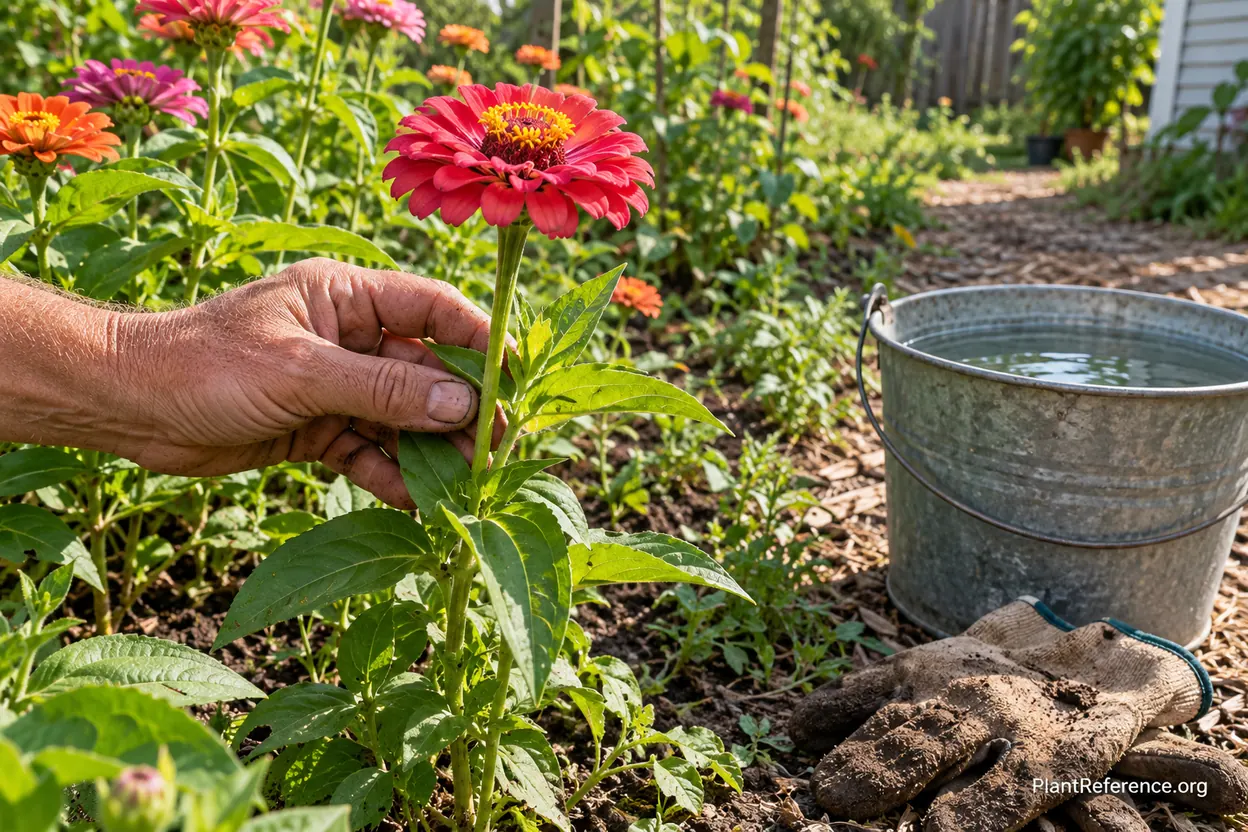
Harvest early in the morning when the plants are cool and take a clean bucket of water with you. Clean, sharp tools reduce the need to tug or crush stems. Cut only what you can handle promptly rather than leaving a pile of flowers on a warm bench.
For zinnias, use the stem-firmness or wiggle test: gently move the stem below the flower and check whether it feels sturdy rather than floppy. A firm stem is a useful sign of harvest readiness. Do not apply that single test to every species; harvest stage varies among flowers.
Cut useful stems without stripping the plant
Choose a stem long enough for the intended arrangement while leaving healthy growth below the cut. Cut rather than pull. A short snip immediately beneath the bloom may preserve a tidy plant temporarily but give you very little stem to arrange.
Inspect the plant after harvesting. The remaining framework should still have healthy leaves and growing points where the species can produce more growth. The objective is a productive cutting plant, not a bare stalk carrying a few inaccessible flowers.
Move flowers into clean water promptly
Keep harvested stems shaded and place them into clean water without unnecessary delay. Use a floral preservative according to its label rather than improvising a concentrated mixture. Clean buckets and vases are part of the harvest kit, not an optional finishing touch.
Remove foliage that would sit below the waterline when arranging. Recheck water and cleanliness after the bouquet is assembled. Vase life varies with species, harvest stage, and handling, so compare your own results rather than expecting a fixed number of days from every stem.
Learn one species before judging the whole garden
If a bouquet wilts quickly, record what was cut, when it was cut, and how it was handled. A harvesting-stage problem is different from a plant that never developed a sturdy stem. Changing every part of the routine at once makes the cause harder to identify.
Start with a few stems and a small vase while learning. You can practice stem selection and conditioning without using the entire day's harvest. A modest bouquet that holds well teaches more than an oversized arrangement assembled from every available flower.
Build Bouquets and Improve Next Season
Begin with the flowers that are ready, not an exact design that requires cutting immature blooms. Combine a focal flower with a contrasting form, then stop before the arrangement becomes crowded. A small cutting garden often produces better results when the vase size follows the harvest.
Keep the first season's color palette manageable. Repeating a few colors makes it easier to combine stems from different sowing dates. You can expand the palette later after learning which plants are dependable in your conditions.
Keep a useful harvest record
Record the selection, sowing date, and actual first useful cutting date.
Note which plants needed support or more room than expected.
Track whether pinching improved usable branching for the appropriate species.
Record the harvest stage and handling of stems that performed especially well or poorly.
Keep a short list of flowers you would grow again and those that did not justify their space.
Expand the part that worked
If zinnias supplied most of the stems you enjoyed, increase that planting before adding several demanding crops. If a cool-season flower finished before the rest of the garden began, decide whether that early harvest was valuable enough to repeat. Successful planning is about your bouquet habits as much as the plants.
A cut flower garden does not need to resemble a commercial field. It needs healthy plants, clear access, and a harvest routine you enjoy repeating. Begin small, cut thoughtfully, and let each season's observations shape the next bed.
Frequently Asked Questions
Reading about plants and recognising them are different skills. These three build the second.
- Daily PlantIdentify the day’s mystery plant from a close-up photograph.
- Keyed OutWork a dichotomous key, lead by lead, to name a hidden specimen.
- Name That PlantName a specimen from botanical clues dealt hardest first.
Free to play, no account needed
Tagged with
Claire runs a small cut flower farm on two acres outside Asheville, North Carolina, where she grows annual flowers for farmers market bouquets and a subscription CSA. She studied art in college and fell into flower farming after volunteering at a community garden during graduate school. What started as a few rows of zinnias and cosmos turned into a full-time business within three years. Claire grows over 40 annual flower varieties from seed each season, managing succession plantings from February through October. She teaches seed-starting workshops at the local cooperative extension office and mentors new flower farmers through their first seasons. Claire writes from direct growing experience — she has started tens of thousands of seeds, trialed hundreds of varieties, and made every mistake in the annual flower book at least once. Her advice is specific, seasonal, and grounded in what actually works in the field, not what looks good in a catalog photo.