When to Plant Basil in Nashville: Dates and Summer Care
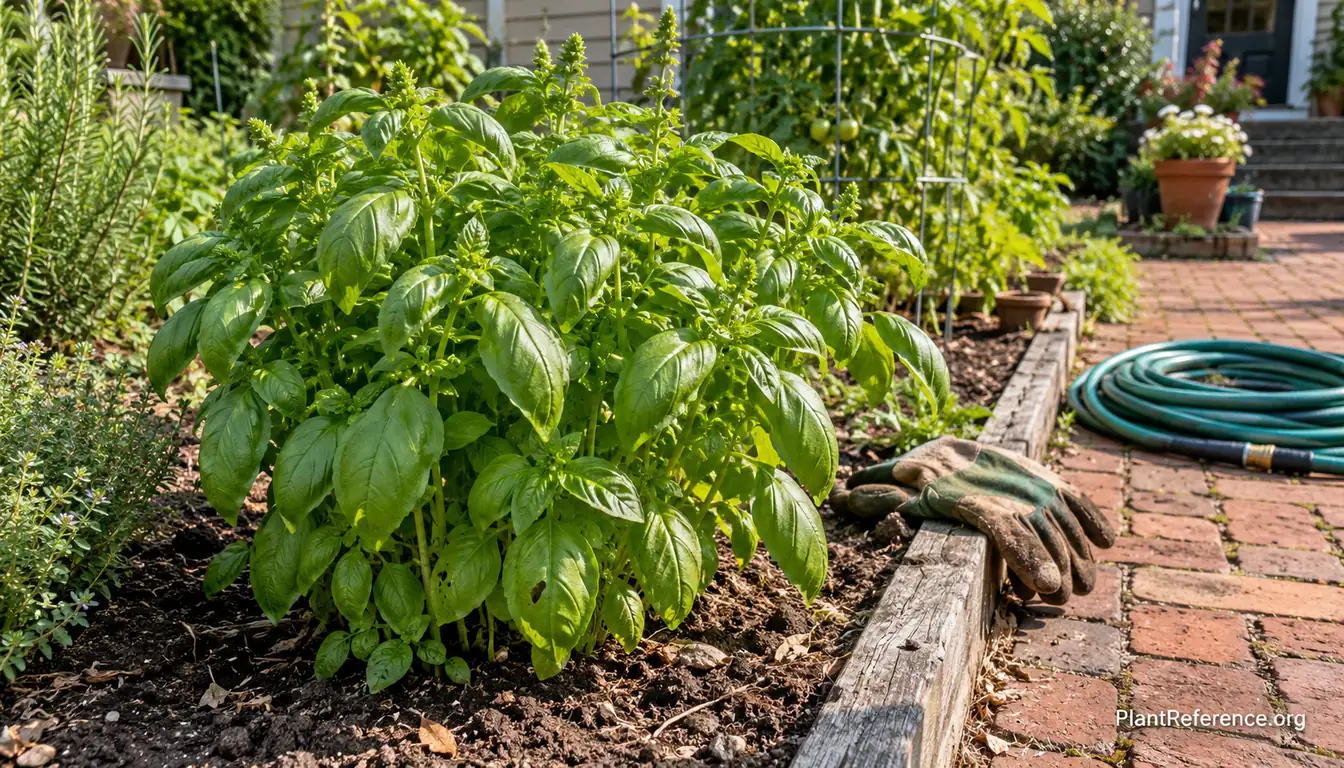
— Image © PlantReference.org 2026
Pets & Toxicity
Recorded toxicity for plants linked in this guide. An unknown status is not a safety assessment.
No linked plant is recorded as toxicDetailsHide
Ocimum basilicum 'Purple Ruffles' — Toxicity
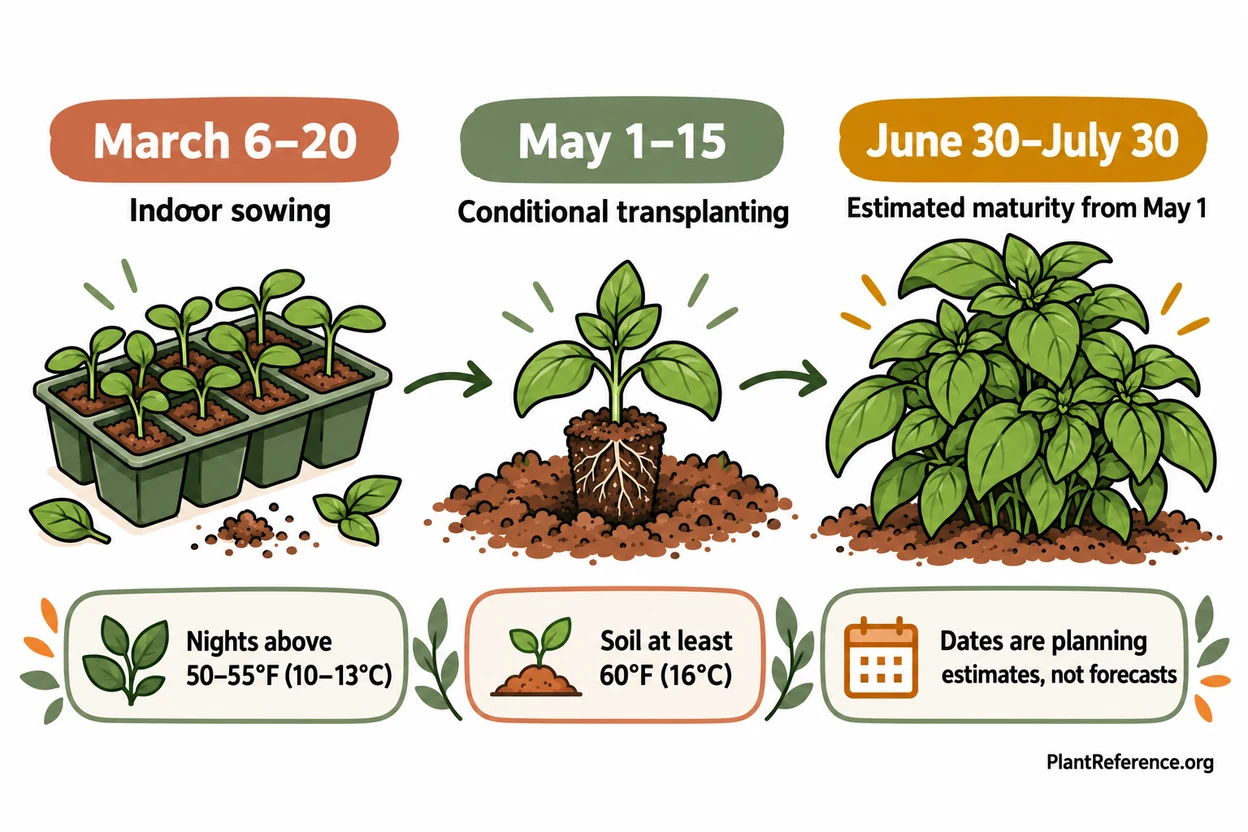
Non-toxicView Ocimum basilicum 'Purple Ruffles' plant profileWhen to plant basil in Nashville comes down to letting spring settle into real warmth. Start seeds indoors around March 6–20 for a May 1–15 transplant target, then check that nights stay above 50–55°F (10–13°C) and soil has reached at least 60°F (16°C). A sunny afternoon is welcome, but it does not cancel a cold night or dry out a waterlogged bed.
Sweet basil Ocimum basilicum (OH-see-mum bah-SIL-ih-kum) can give a Tennessee kitchen plenty of useful leaves from a small planting. The trick is keeping that planting healthy after the easy early growth, when summer humidity, crowded foliage, and uneven watering start to matter. Put the plants where you will notice them, leave space to reach the stems, and check drainage before buying another bag of fertilizer. If a bed is not the right fit, Growing Herbs in Containers: Pots, Soil & Harvest explains how to keep the crop close to the kitchen in a pot.
Best Basil Varieties for Nashville's Climate
Plant the flavors your household uses. A reliable cooking type deserves most of the space, while one or two other types can add variety without turning a manageable bed into a chore. Different aromas are useful, but none removes the need for healthy roots and dry-enough foliage.
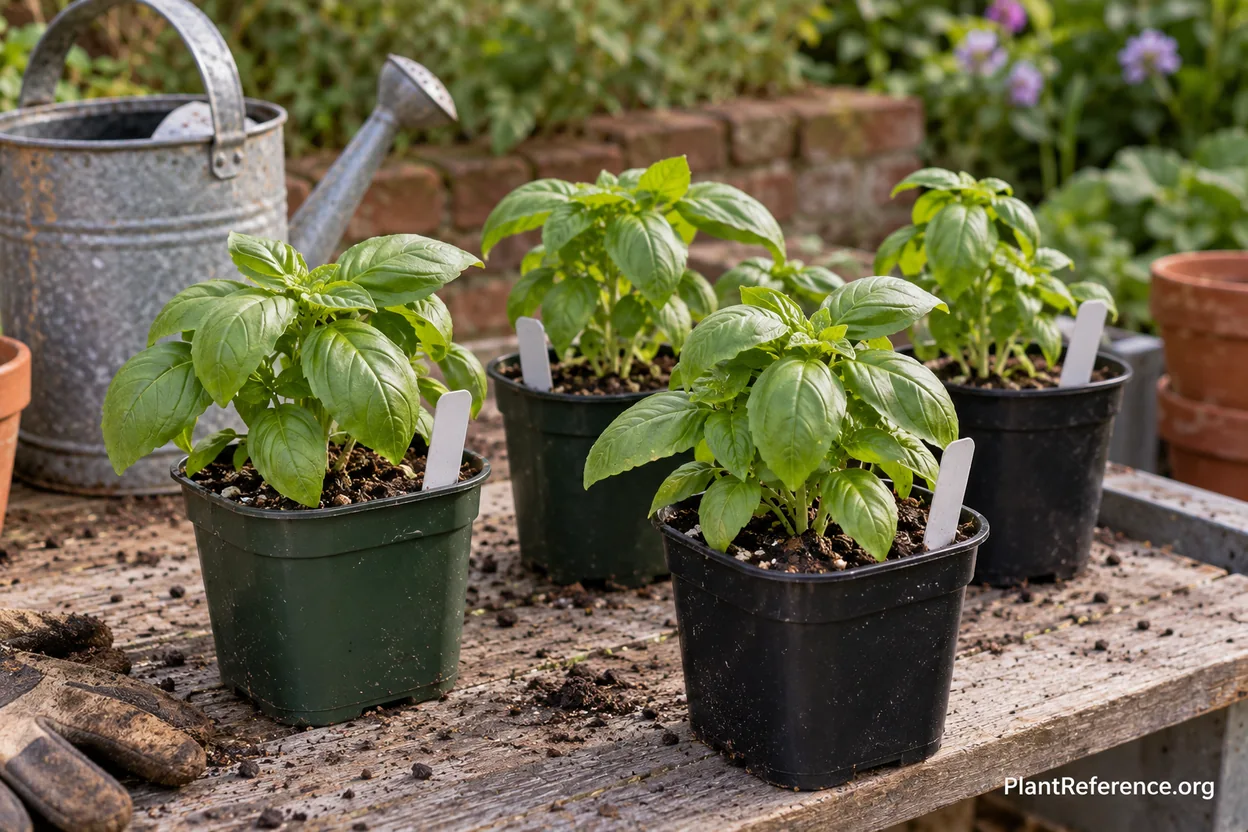
Familiar leaves and stronger flavors
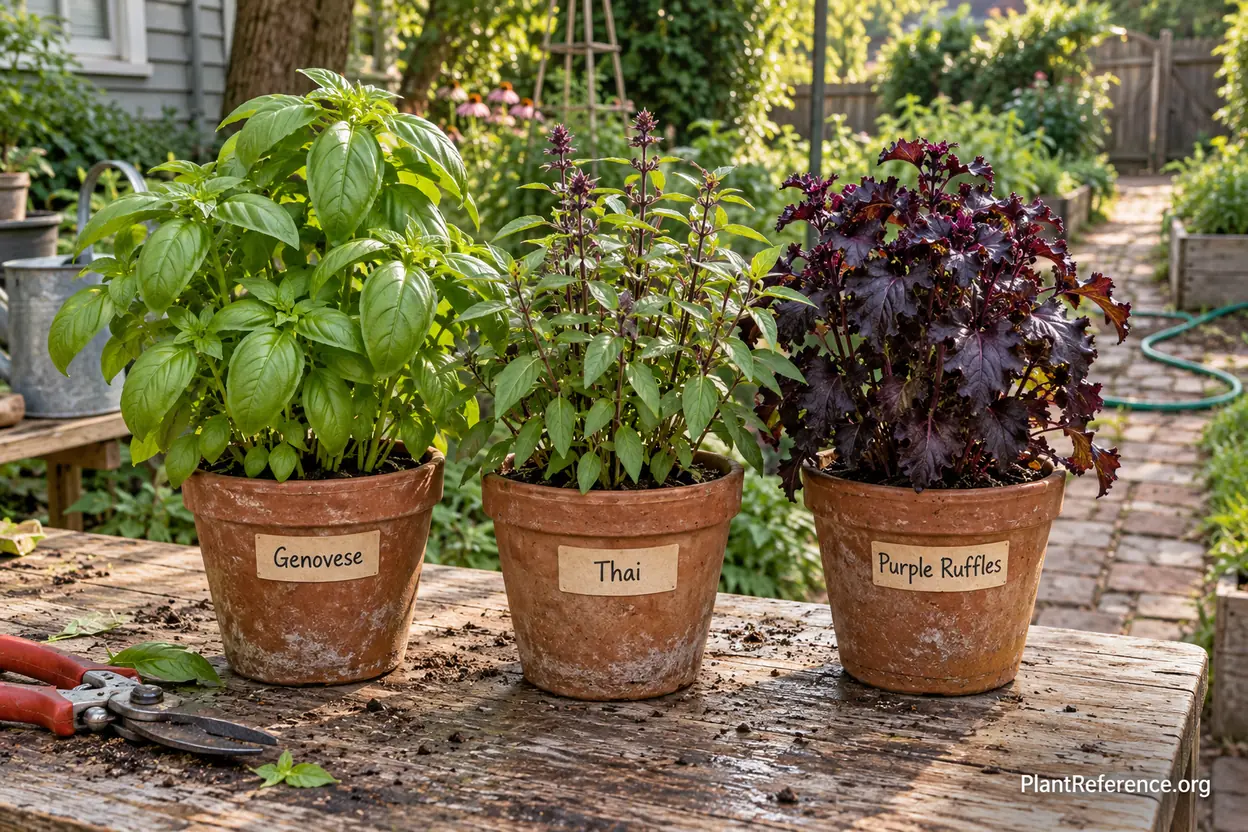
🌿Ocimum basilicum 'Genovese' is the broad-leaved choice for pesto, salads, and fresh cooking. It makes a good main crop when you want the familiar sweet basil flavor. Keep the planting open enough that you can look underneath leaves without pushing through a wet mass of foliage.
🌿Ocimum basilicum 'Thai' has narrower leaves and an anise-like flavor that holds its own in cooking. The research identifies it as a useful heat-tolerant option, but that does not make it drought-proof. Watch developing flower spikes and remove them when your purpose is regular leaf harvest.
🌿Ocimum basilicum 'Lemon' is the citrus-scented selection named in the plan. Lemon-scented basil can be sold under differing botanical identities, so keep the actual packet label with your records. Its distinctive flavor is a good reason to grow a small trial before committing a large section of the bed.
Type | Planning maturity range | Best use | Local care priority |
|---|---|---|---|
60–90 days | Pesto and fresh cooking | Inspect leaves during humid weather | |
60–90 days | Anise-flavored cooking herb | Pinch flowers when leaves are wanted | |
60–75 days | Citrus-scented leaves | Keep moisture steady and roots uncrowded | |
70–80 days | Garnish and foliage color | Provide good light and confirm cultivar | |
60–90 days | Spicy aromatic leaves | Allow a warm growing season |
Read maturity ranges as estimates. Some suppliers count from seed and others from transplanting, which changes the harvest calculation. Established plants can supply light tip harvests before full maturity, but small seedlings should not be cut as though they are already a full crop.
Color and specialty plantings
🌿Ocimum basilicum 'Purple' is the broad purple-leaved selection in the plan. A more specific research-supported cultivar is 🌿Ocimum basilicum 'Purple Ruffles', with textured dark foliage. Color adds interest, but it does not prove resistance to disease or poor drainage.
Holy basil 🌿Ocimum tenuiflorum (OH-see-mum ten-yoo-ih-FLOR-um) is a separate species with a spicy aroma and frequent flowers. Its seeds can require light, so follow surface-sowing instructions rather than covering them automatically. Treat it as a warm-season annual under the stored Zone 7a baseline, without expecting outdoor winter survival.
A simple label is worth keeping all season. It prevents you from confusing the flavors at harvest and helps identify which type stayed useful longest. Good gardening records can be brief: what you planted, where it grew, and whether anyone wanted the leaves.
When to Plant Basil in Nashville: Specific Dates
The city record supplies April 10 and October 30 frost dates, stored with the year 2025. Their difference is 203 days. Those dates and the record's Zone 7a label provide a planning baseline, not a forecast for the current season or every yard in the area.
Count back six to eight weeks from April 10 and you get February 13–27 for indoor sowing. Add the seven- to fourteen-day frost buffer and April 17–24 becomes an earliest conditional transplant check. Neither calculation means the soil and nights will already be warm enough.
The working schedule here counts back from May 1 instead, giving March 6–20 indoors and a May 1–15 outdoor target. This leaves less time for seedlings to become cramped while they wait. If you start earlier, plan enough bright indoor space to hold them without crowding.
Calculate harvests from the right starting point
If a packet's 60–90 day range begins at transplanting, May 1 points to June 30–July 30. If it begins at sowing, calculate from the sowing date instead. Do not add the full range again after transplanting and then wonder why the calendar looks too short.
A modest June sowing can provide fresh plants for later summer. That is useful when spring plants have become woody or repeatedly flower. Keep the replacement batch separate from visibly diseased plants and correct the underlying growing conditions rather than carrying the same problem into a new pot.
For a late planting, August 1 plus 60–90 days gives September 30–October 30. The slow end reaches the stored frost boundary exactly, leaving no useful safety margin. Start replacements earlier when possible and regard very late plants as a source of small tips rather than a promised full crop.
Keep a note of the actual first harvest and any cold delay. A calendar becomes more useful when it includes what happened in your own garden. Temperature checks and plant condition should always have the final say over a date printed months earlier.
Complete Growing Guide for Nashville
Make drainage the first job
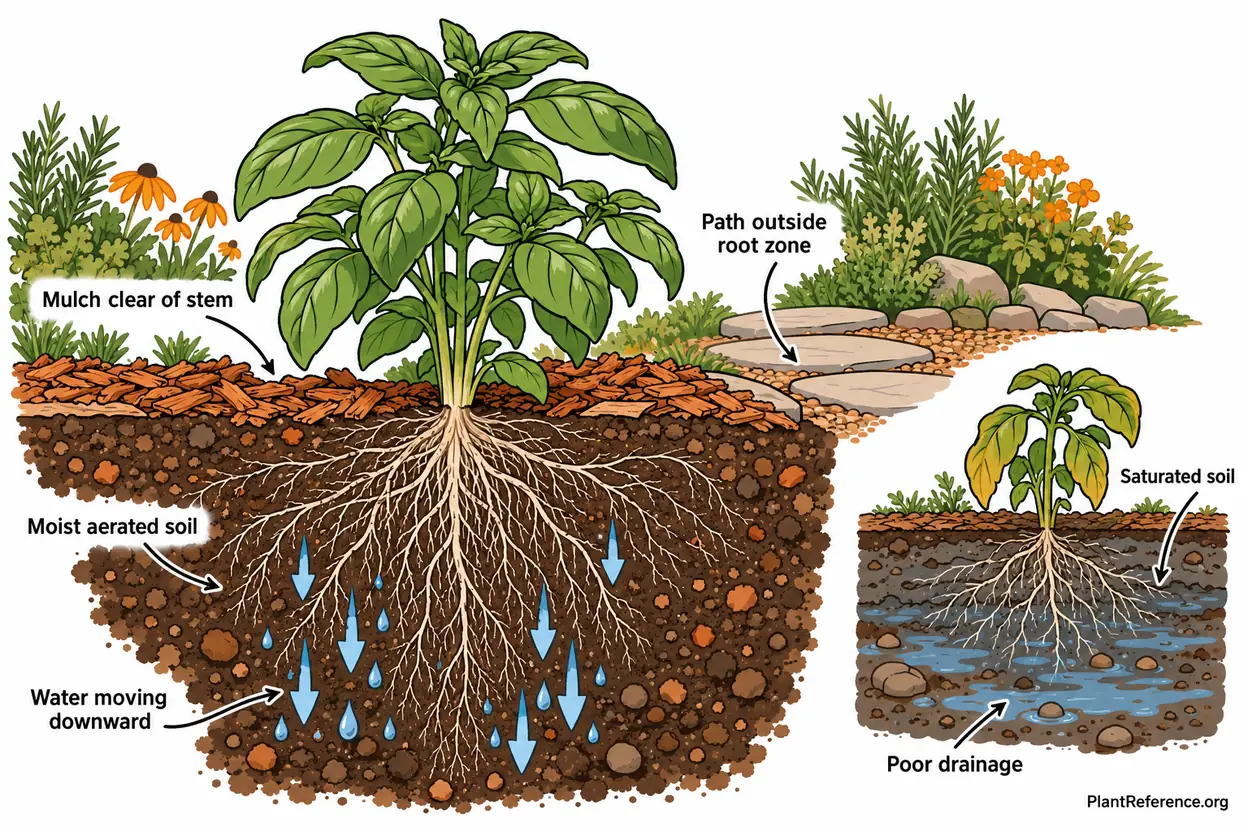
Take a look at the bed after rain, not only on the day you intend to plant. Water lingering around roots is a warning. A plant cannot use a long growing season well if its roots spend the first month short of oxygen.
Clay soil is not automatically bad soil. Avoid working it wet, keep foot traffic on paths, and improve the planting area with finished compost where appropriate. How to Improve Clay Soil Without Making It Worse explains why structure matters more than simply adding whatever amendment is on sale.
Use a soil test before changing pH or adding nutrients. The research places basil's useful pH range around 6.0–7.5, but color and texture do not tell you the number. How to Test Garden Soil: Jar, Ribbon & pH Tests helps separate those questions.
Build organic matter and protect the soil over time. Soil Health 101: How to Build Living, Productive Garden Soil is useful background for that work. If you make compost, How to Build a Hot Compost Pile: Finished Compost in Weeks explains preparation; fresh scraps buried beside young roots are not the same thing as finished compost.
Choose a bed or container for the actual site
A raised bed can help where drainage remains poor, but it is not mandatory for every Tennessee herb patch. Place it where you can reach the middle from the sides and where runoff will not simply collect underneath. How to Build a Raised Garden Bed: Step-by-Step Construction Guide covers construction when a raised bed is the right answer.
Containers are a useful alternative for a porch or small yard. Use drainage holes and a suitable container mix rather than packing heavy garden soil into a pot. Container Gardening: Pots, Soil, Water & Yields explains how pot size and mix affect the work of watering.
Choose morning sun and an open position. Plants crammed against a hedge may remain damp longer after rain. If reflected afternoon heat becomes severe, soften that exposure without moving the crop into deep shade all day.
Start seedlings without forcing them
For sweet basil, sow about 1/4 inch (6 mm) deep unless the packet gives different instructions. Maintain even moisture and seed-zone warmth around 75°F (24°C). Follow the separate surface-sowing directions for holy basil when specified.
A controlled heat mat helps in a cool room, but it is not necessary when the mix is already warm. Give emerged seedlings bright light and room to grow. Warmth alone can produce long, weak stems if light is inadequate.
Introduce seedlings to outdoor sun and wind gradually over about a week. Start sheltered, avoid cold nights, and increase exposure without letting small root balls dry out. Transplant at roughly nursery depth, water thoroughly, and check the plants again the following day.
Keep leaves growing through summer
Water the soil when the root zone needs it, not because the calendar says it is watering day. Check beneath the surface and account for rain. Containers and beds can behave differently even when they stand only a few steps apart.
Aim water at roots and avoid unnecessary leaf wetting, especially late in the day. Leave space around mature plants; the research suggests roughly 18–24 inches (45–60 cm) for larger plants where suitable. Use the actual cultivar's size rather than treating that distance as a rule for every pot.
Once a plant has several pairs of true leaves, pinch the tip above a healthy leaf pair. The side buds can then branch. This is a useful part of harvesting, not a reason to cut most of the foliage from a young plant.
Remove developing flower tips when leaves are your priority. Maintain steady moisture and avoid cramped roots, both of which can contribute to stress. A younger replacement may be more productive than trying to make an old woody plant behave like a new seedling.
Feed according to the soil or container medium's needs. DIY Organic Fertilizer Blends: A Soil-Test-First Guide helps keep that decision grounded. More fertilizer does not repair poor drainage, a crowded canopy, or disease damage.
Troubleshooting Nashville Basil Problems
Inspect both surfaces of yellowing leaves
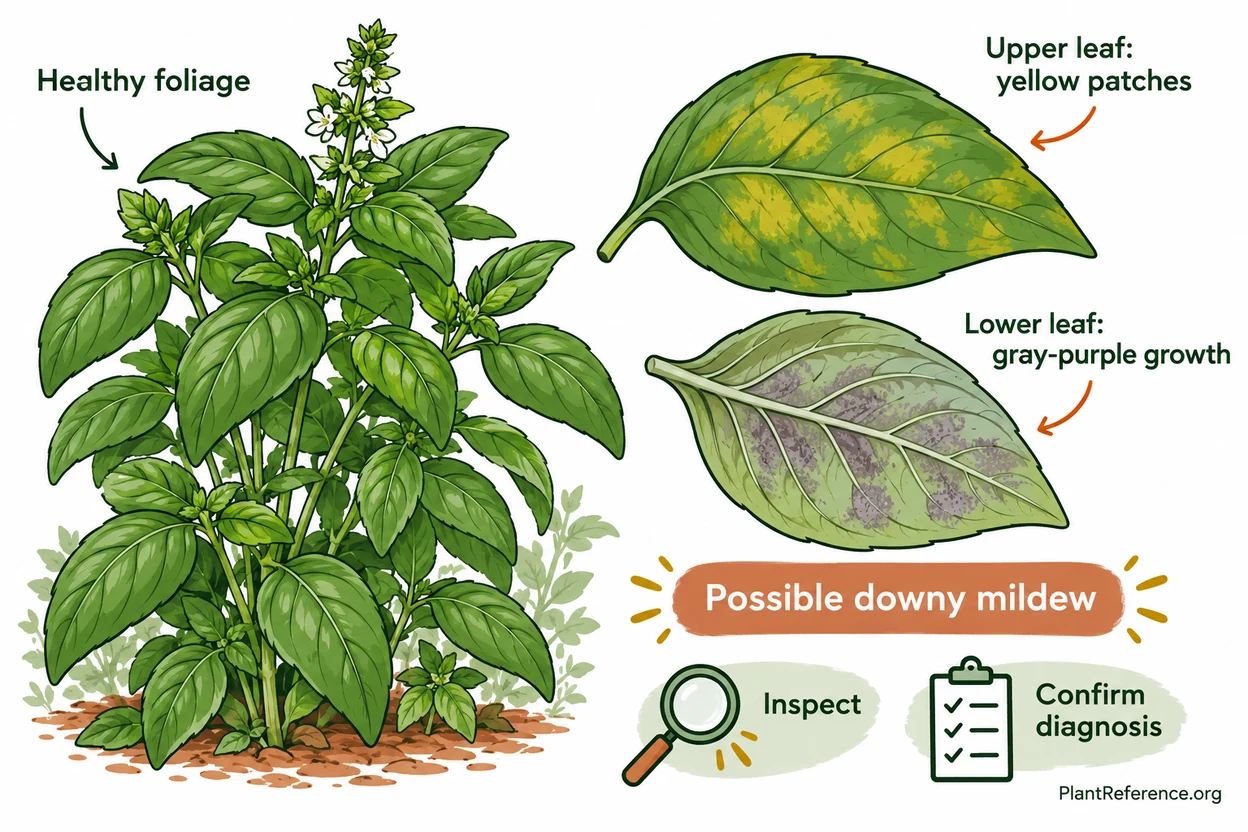
Yellow foliage is not automatically a request for nitrogen. Gray-purple growth on the underside of yellow patches can be consistent with downy mildew. Humid conditions and wet leaves make careful inspection worthwhile, particularly as the planting fills out.
Photograph upper and lower leaf surfaces and note whether the symptoms spread. Remove badly affected plants and seek diagnostic help if the cause is unclear. Better spacing and soil-directed watering reduce avoidable leaf wetness, but they cannot guarantee prevention or cure an established infection.
Separate thirst from root trouble
Wilting in dry soil calls for water; persistent wilt in wet soil calls for investigation. Check drainage and look for brown stem streaks or decaying roots. Do not keep soaking a collapsing plant just because its leaves hang down.
Afternoon heat can also cause temporary flagging. Compare the plant later in the evening or the next morning, then adjust harsh exposure if needed. Avoid adding fertilizer and several treatments at once, which makes it harder to see what actually helped.
For holes or skeletonized leaves, find the feeder before choosing a response. Some pests are easier to spot early in the morning or after dusk. Hand removal can be sufficient for a small planting when the animal is identifiable and safe to handle.
Any pesticide needs to be labeled for the edible crop and used according to its directions. Do not borrow a treatment schedule from an ornamental bed nearby. Kitchen herbs are harvested often, and that use belongs in the decision.
Harvest & Storage
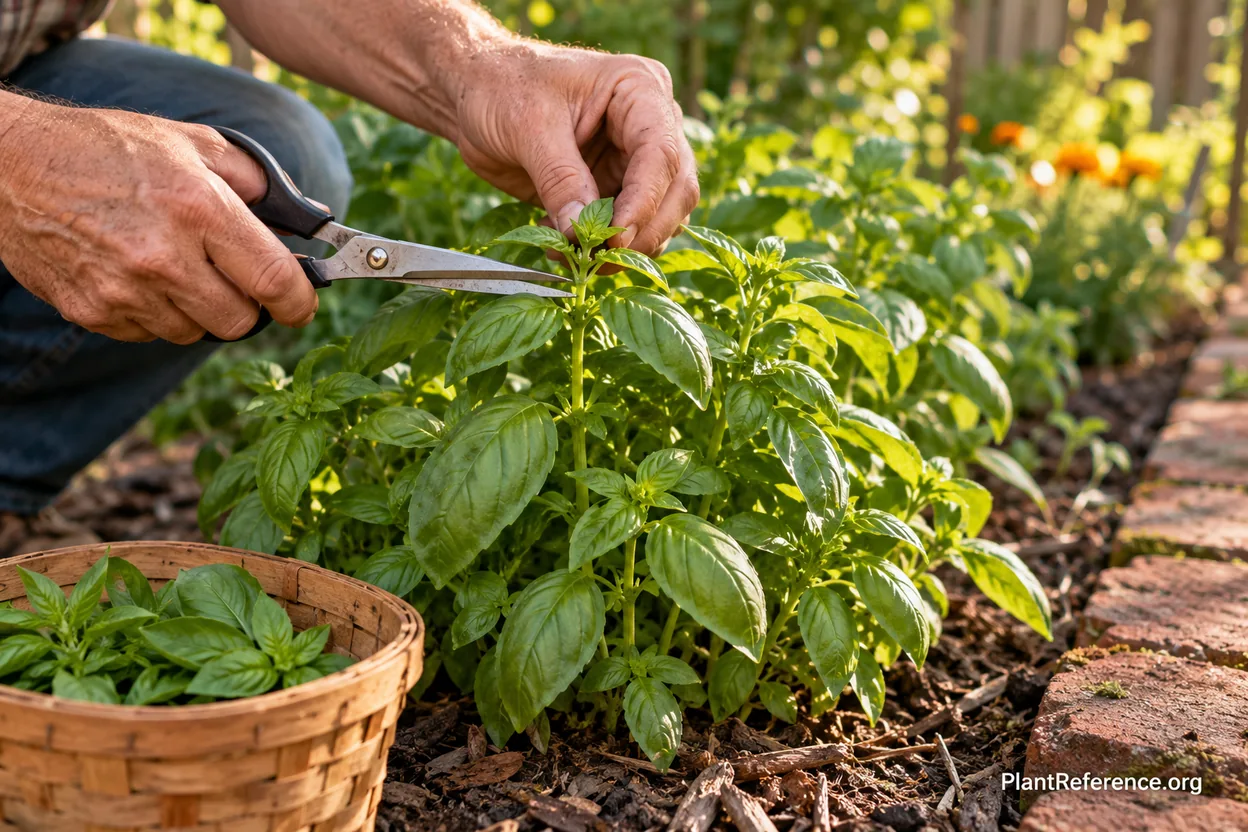
Cut tips in the morning after dew dries, leaving a healthy leaf pair below each cut. Use clean scissors rather than pulling stems apart. Take modest amounts from several branches so the plant keeps enough foliage to grow.
Bring the harvest out of direct sun promptly. Sort damaged or questionable leaves away from sound ones, rinse as needed, and dry gently. Keep distinct aromatic types separate if you want predictable flavor later.
Freeze surplus in small portions labeled with type and date. Frozen leaves lose their fresh garnish texture but remain useful in sauces and cooked dishes. Do not leave fresh herbs packed in oil at room temperature; follow a tested preservation method for longer storage.
As nights cool, harvest usable foliage before a cold event rather than waiting for October 30. The stored Zone 7a calendar is a guide to planning, not a shield around tender leaves. A few notes about which plants stayed productive, and why, will make the next season easier to manage.
Frequently Asked Questions

Reading about plants and recognising them are different skills. These three build the second.
- Daily PlantIdentify the day’s mystery plant from a close-up photograph.
- Keyed OutWork a dichotomous key, lead by lead, to name a hidden specimen.
- Name That PlantName a specimen from botanical clues dealt hardest first.
Free to play, no account needed
Tagged with
Marcus manages the grounds at a historic property in Memphis and runs a side business doing residential garden design. He grew up helping his grandfather maintain a large vegetable garden in the Mississippi Delta and carried that knowledge into formal training—he has a degree in landscape technology. Memphis sits in a sweet spot for growing: long warm seasons, decent rainfall, and mild enough winters that many marginally hardy plants survive. Marcus writes about Southern gardening traditions, ornamental garden design, and dealing with the humidity and heavy rainfall that define the Mid-South climate.