When to Plant Basil in Raleigh: Dates and Growing Guide
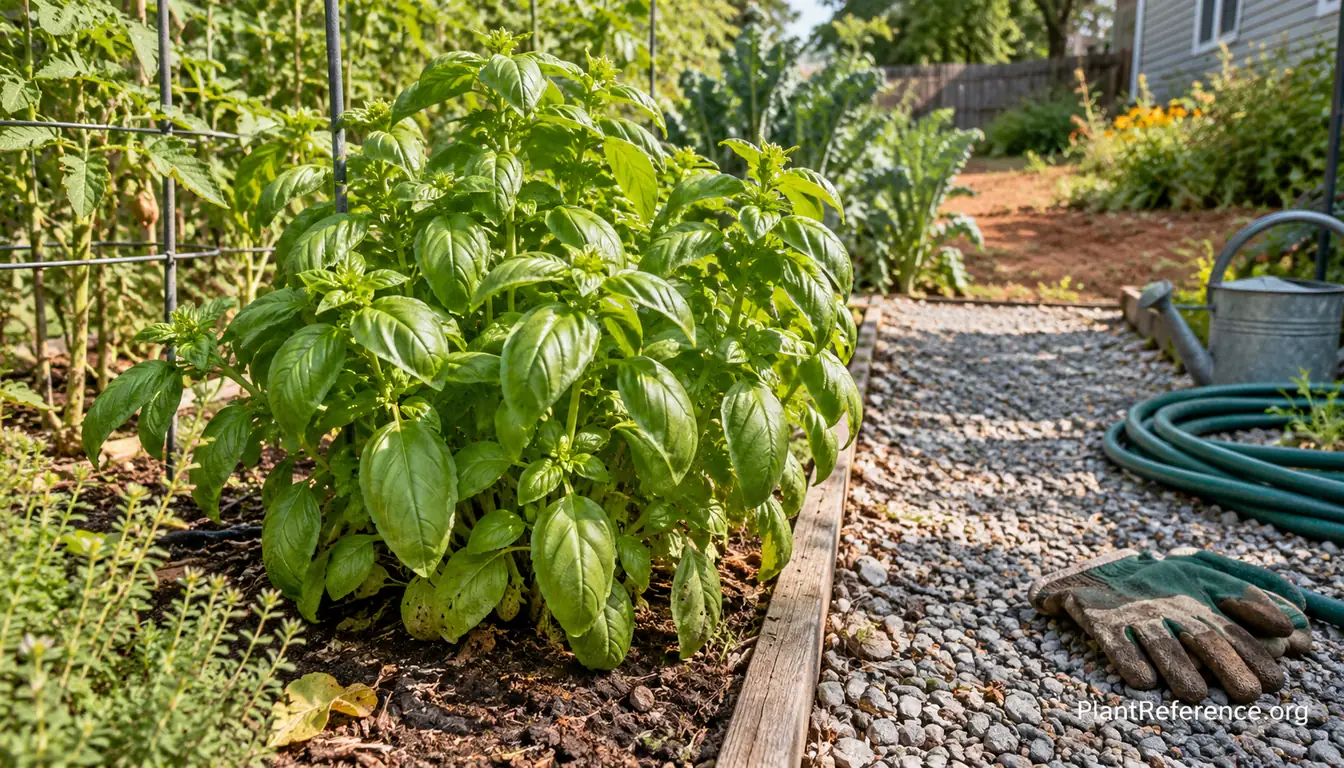
— Image © PlantReference.org 2026
Pets & Toxicity
Recorded toxicity for plants linked in this guide. An unknown status is not a safety assessment.
No linked plant is recorded as toxicDetailsHide
Ocimum basilicum 'Purple Ruffles' — Toxicity
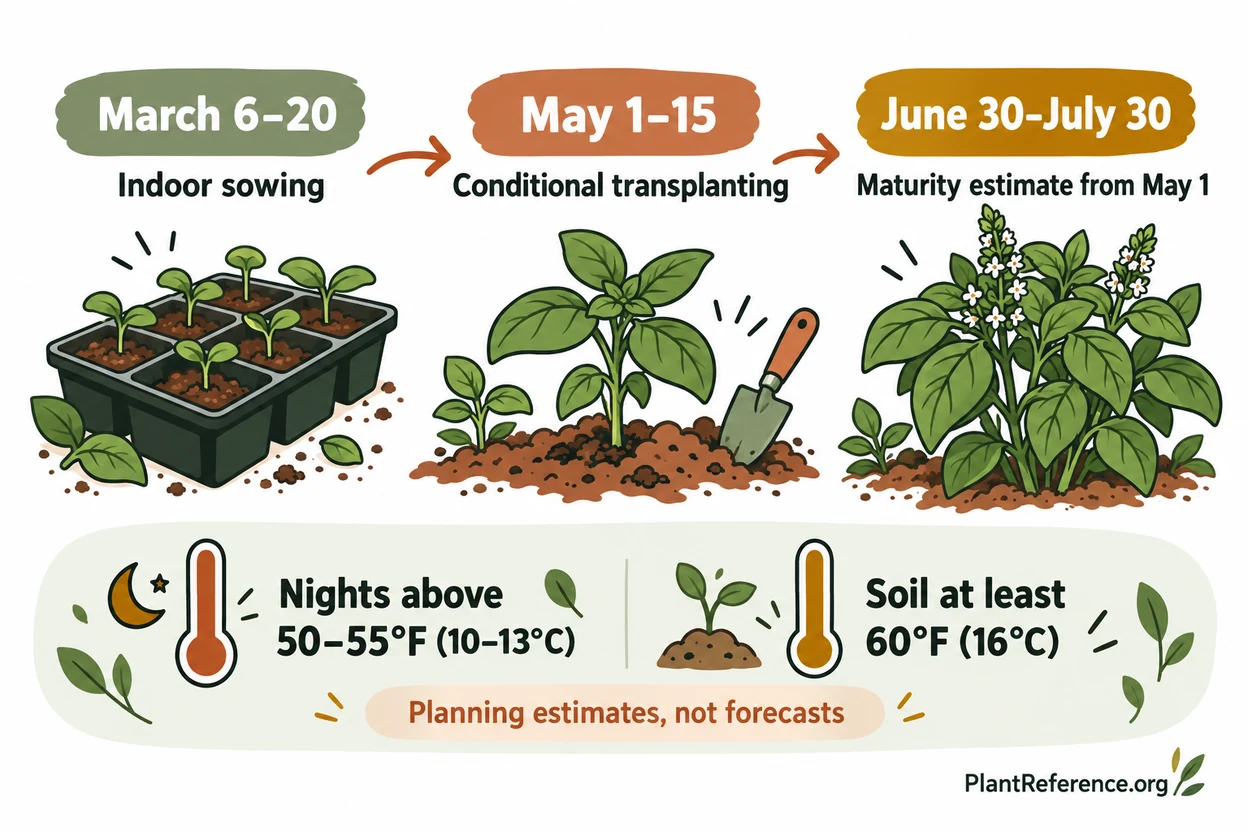
Non-toxicView Ocimum basilicum 'Purple Ruffles' plant profileWhen to plant basil in Raleigh depends more on warm nights than on the first attractive display of seedlings at a garden center. Sow indoors around March 6–20 for a May 1–15 transplant target, then confirm nights consistently above 50–55°F (10–13°C) and soil at least 60°F (16°C). If those conditions arrive later, let the calendar move rather than putting tender roots into cold ground.
Sweet basil Ocimum basilicum (OH-see-mum bah-SIL-ih-kum) fits comfortably into a North Carolina kitchen garden, but a productive planting begins below the leaves. Piedmont clay can hold useful moisture and nutrients; it can also stay wet long enough to deprive young roots of air. Choose a site you can inspect after rain, leave room around each plant, and keep the harvest within easy reach of a path. A pot is a sensible alternative where the bed remains soggy; Growing Herbs in Containers: Pots, Soil & Harvest covers that smaller-scale approach.
Best Basil Varieties for Raleigh's Climate
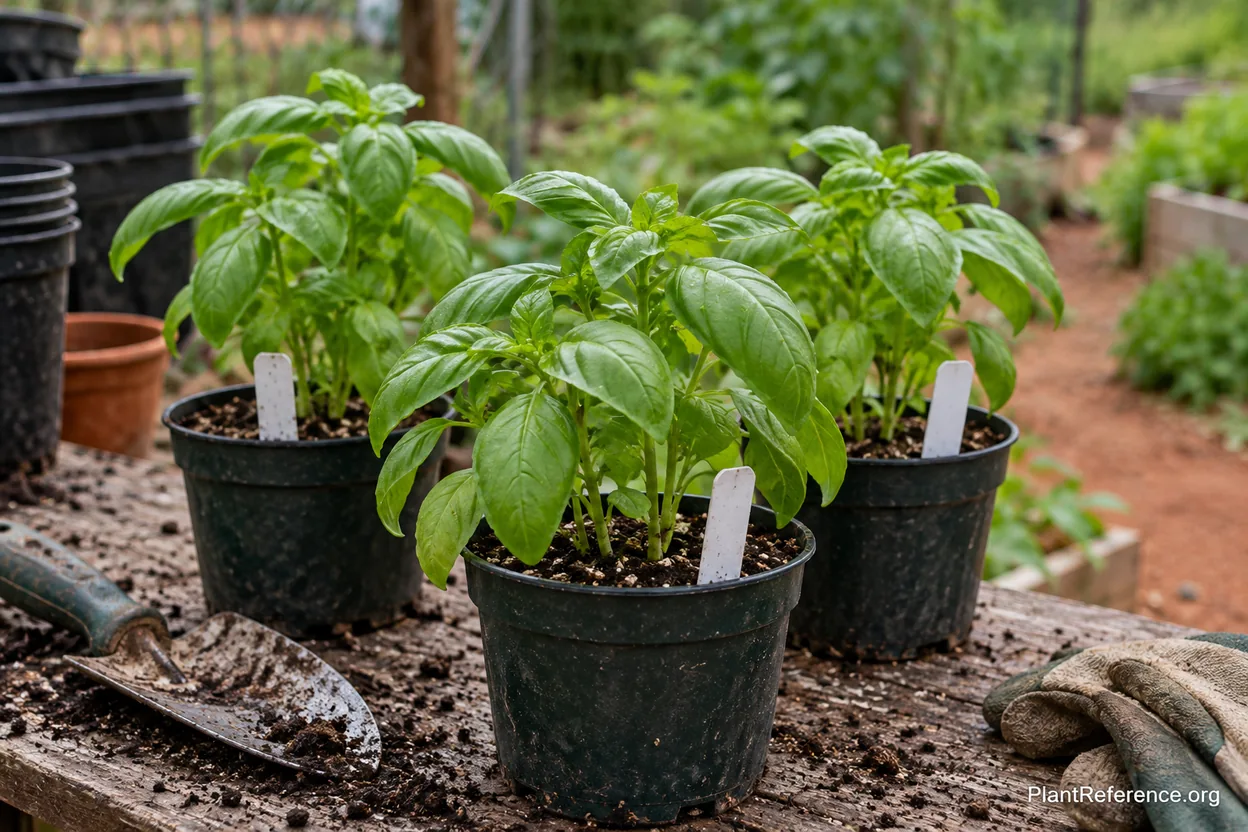
Choose the flavors you use, not simply the largest plant on the shelf. A broad-leaved cooking type can anchor the planting, with one or two contrasting types nearby. Their different leaf shapes make an attractive arrangement without requiring the whole bed to become a collection.
Familiar sweet leaves and contrasting aromas
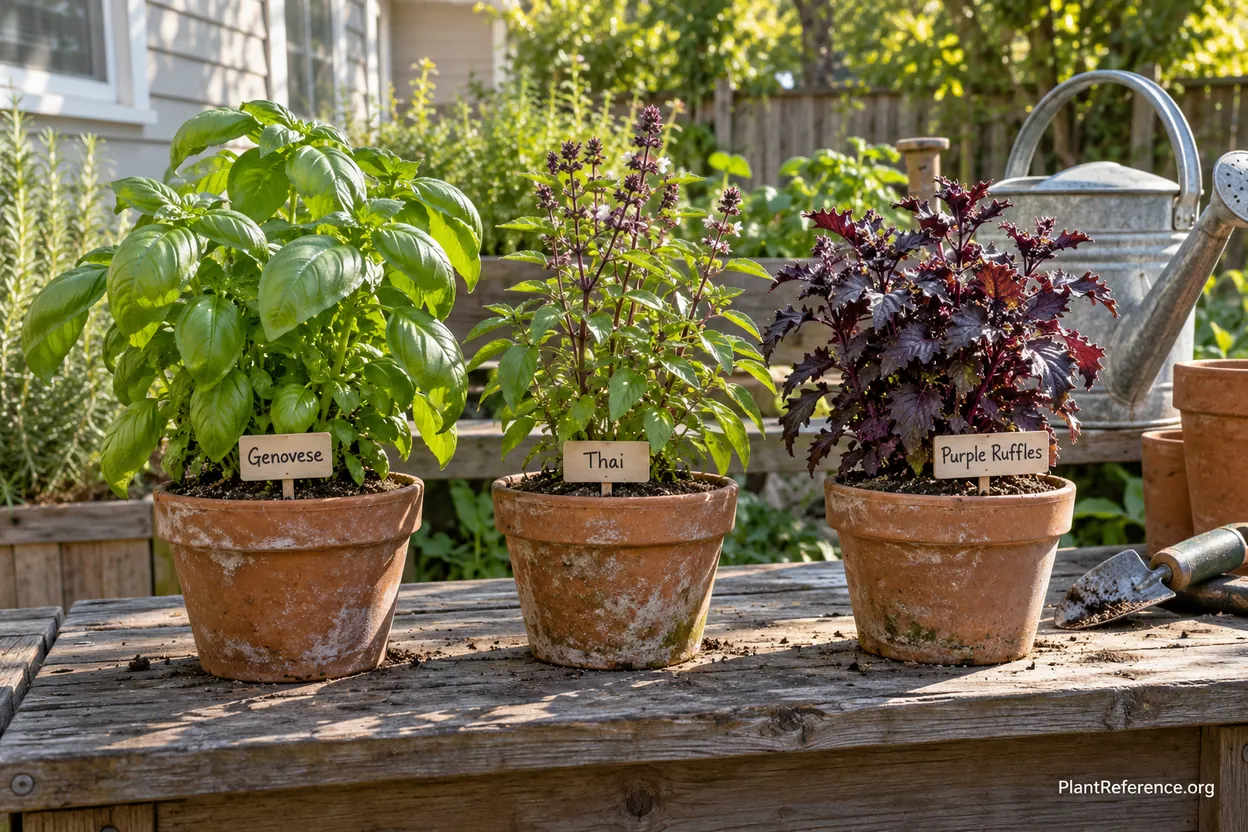
🌿Ocimum basilicum 'Genovese' supplies broad leaves for pesto, salads, and fresh cooking. It is a useful main crop if your household uses basil often. Give it a position where you can reach the growing tips without pushing through neighboring plants, because regular light harvesting encourages a branching shape.
🌿Ocimum basilicum 'Thai' has narrower leaves and an anise-like flavor. Its stronger summer performance makes it worth considering, but heat tolerance is not immunity to dry roots or disease. Flower spikes appear readily; remove them when leafy growth matters more than the flowering display.
🌿Ocimum basilicum 'Lemon' is the lemon-scented selection named in the plan. Commercial lemon basil can have different botanical identities, so retain the exact identification supplied with the packet. Its citrus aroma is useful when you want something different from the familiar sweet-leaved type.
Type | Planning maturity range | Kitchen role | Local growing consideration |
|---|---|---|---|
60–90 days | Pesto and fresh leaves | Monitor leaf undersides during humid weather | |
60–90 days | Anise-flavored cooking herb | Remove flower tips when leaves are the priority | |
60–75 days | Citrus-scented leaves | Avoid cramped roots and irregular watering | |
70–80 days | Garnish and foliage contrast | Confirm the named cultivar on the packet | |
60–90 days | Spicy aromatic leaves | Grow as a warm-season annual |
The maturity ranges are planning estimates, not appointments. Check whether the supplier counts from sowing or transplanting, and remember that small tip harvests can precede full-sized plants. A cool spring or a root-bound start can change the timetable.
Purple foliage and a separate aromatic species
🌿Ocimum basilicum 'Purple' represents the plan's broad purple-leaved selection. For a more specific identity, the research includes 🌿Ocimum basilicum 'Purple Ruffles', with textured foliage that contrasts well with plain green leaves. Neither leaf color nor ruffling establishes disease resistance.
Holy basil 🌿Ocimum tenuiflorum (OH-see-mum ten-yoo-ih-FLOR-um) is a separate species with a spicy aroma and frequent flowers. Keep its seed-starting instructions separate too: surface sowing can matter because the seeds need light. It is not a dependable outdoor perennial under the stored Zone 7b baseline.
Do not crowd different types together to create an instant full-looking display. The gaps between small plants are future growing space, and those gaps make it easier to inspect leaves. If a variety repeatedly goes unused in the kitchen, replace it next season with one that earns its place.
When to Plant Basil in Raleigh: Specific Dates
The city record provides April 5 and November 5 frost dates, both stored with the year 2025. Their difference is 214 days. Use those dates and the stored Zone 7b designation as a planning baseline, not a current-season forecast or a guarantee for a particular yard.
Six to eight weeks before April 5 gives February 8–22 for indoor sowing. A seven- to fourteen-day buffer beyond that frost date gives April 12–19 as an earliest conditional transplant check. Basil still needs warm nights and soil; the arithmetic does not override its temperature requirements.
For the working schedule in this guide, count back six to eight weeks from May 1 instead. That gives March 6–20 indoors and a May 1–15 outdoor target. Starting later can be easier than holding large seedlings in small cells while cold nights continue.
Translate maturity ranges into useful checkpoints
If a supplier counts 60–90 days from transplanting, a May 1 planting points to June 30–July 30 for that maturity range. If the packet counts from seed, use the sowing date instead. Harvest light tips earlier only when the plant has enough leaves left to keep growing.
A small second sowing in June can provide younger plants as the spring crop becomes woody or repeatedly flowers. Keep the new batch separate from plants showing disease symptoms. Succession planting is useful insurance, but it is not a way to ignore the conditions that damaged the first crop.
Late plantings need extra caution. An August 1 transplant plus 60–90 days gives September 30–October 30, close to the stored November 5 frost boundary at the slower end. Shorter days and cooling nights reduce the margin, so aim for modest harvests rather than assuming a full second summer.
Record actual sowing, transplanting, and first useful harvest dates on a plant label or in a notebook. One season of observations from your own bed is more informative than repeatedly treating the city calendar as exact.
Complete Growing Guide for Raleigh
Improve clay without turning the bed into a project
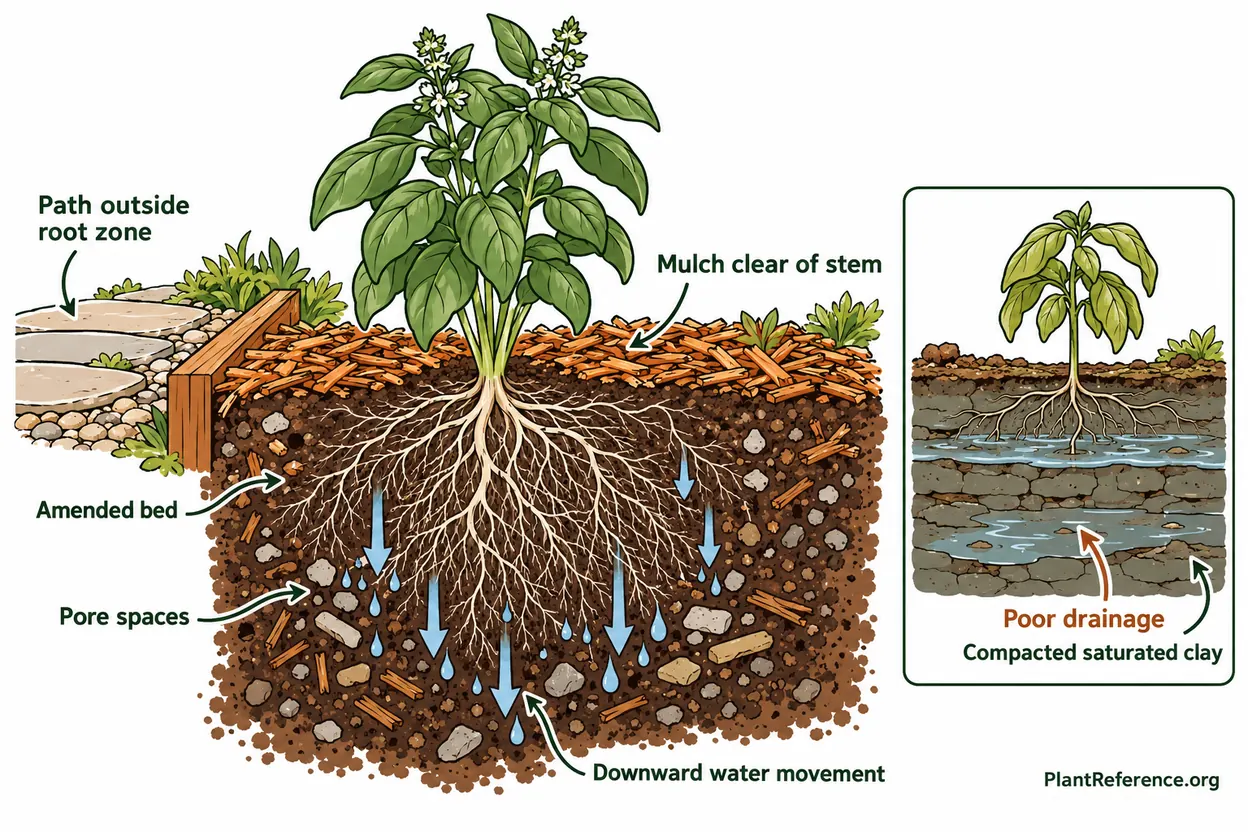
Look at the planting area after a substantial rain. Water that remains around the root zone is a problem to solve before transplanting. Clay itself is not a reason to discard the soil; compaction, surface runoff, and poor drainage need separate attention.
Avoid digging or walking on wet ground, which can damage its structure. Work finished compost into the planting area when the soil is workable, and keep paths distinct from beds. How to Improve Clay Soil Without Making It Worse explains why a few deliberate changes are better than repeatedly disturbing sticky soil.
Test before making chemical adjustments. The research places basil's suitable pH around 6.0–7.5, but soil appearance does not reveal its actual pH or nutrient levels. How to Test Garden Soil: Jar, Ribbon & pH Tests helps separate those questions, while Soil Health 101: How to Build Living, Productive Garden Soil addresses structure and organic matter over time.
If you make your own amendments, use finished compost rather than fresh scraps buried beside roots. How to Build a Hot Compost Pile: Finished Compost in Weeks covers the preparation process. Compost can improve the planting environment without making every nutrient deficiency disappear.
Choose the growing space that fits the site
A raised bed makes sense when the existing soil stays poorly drained, but it is not compulsory throughout North Carolina. Keep the bed accessible from its edges and provide a suitable mix. How to Build a Raised Garden Bed: Step-by-Step Construction Guide is useful if construction is genuinely part of the solution.
Containers offer a simpler trial. Use drainage holes and a mix intended for pots, not dense garden clay packed into a decorative vessel. Container Gardening: Pots, Soil, Water & Yields explains how container size and growing medium affect watering and root space.
Give plants good morning light and an open position. A site shaded heavily by shrubs may remain damp longer and produce weaker growth. Where afternoon exposure is unusually harsh, provide some relief without turning the whole day into deep shade.
Raise compact seedlings, then make a gradual move
For sweet basil, sow about 1/4 inch (6 mm) deep unless the packet specifies otherwise. Keep the mix evenly moist and around 75°F (24°C) for germination. A controlled heat mat is useful in a cool room, but unnecessary if the mix already stays warm enough.
Supply bright light as soon as seedlings emerge. Warmth without sufficient light encourages stretched stems. Thin or separate crowded starts so each develops a usable root system rather than leaving several plants competing in one tiny cell.
Harden plants gradually over about a week, beginning with sheltered outdoor exposure and increasing sun and wind. Avoid cold nights during this process. Set transplants at roughly their nursery depth, water the root ball and surrounding soil, and check the next day rather than assuming the first soaking settled everything.
Keep moisture steady and foliage open
Check below the soil surface before watering. Rainfall may wet the top without supplying a sheltered pot, or leave a clay bed wet long after its surface starts drying. Water the root zone thoroughly when needed and allow excess water to drain.
In humid weather, avoid unnecessary overhead watering and leave enough room for leaves to dry. The research suggests wider spacing, around 18–24 inches (45–60 cm) for larger plants where appropriate, rather than forcing every cultivar into the same tight arrangement. Use mature size and the actual site to refine that distance.
Pinch a healthy growing tip above a leaf pair once the plant has several pairs of true leaves. Side buds can then develop into branches. Repeat modest harvesting rather than removing so much foliage that the plant must rebuild during a hot spell.
Feed according to soil or potting-mix needs, not a fixed urge to make the leaves darker. DIY Organic Fertilizer Blends: A Soil-Test-First Guide keeps amendment choices tied to evidence. Yellowing can have several causes, and extra fertilizer will not correct root suffocation or an infected leaf.
Troubleshooting Raleigh Basil Problems
Read the underside as well as the top
Yellow patches deserve a closer look before a fertilizer application. Gray-purple growth beneath affected leaves can be consistent with basil downy mildew. Humid conditions and prolonged wet foliage favor the problem, but appearance alone is not always enough for a confident diagnosis.
Photograph both sides of the leaf and note how quickly symptoms spread. Remove badly affected plants and seek diagnostic guidance when needed. Wider spacing and soil-directed watering reduce avoidable leaf wetness; they do not guarantee protection or reverse established infection.
Wilt does not always mean thirst
Inspect soil moisture first. A plant in dry soil needs water, while one in saturated soil needs its drainage and roots assessed. Brown stem streaks, persistent collapse, or decaying roots can indicate a disease problem that another watering will not solve.
Heat can also cause afternoon flagging even when moisture is present. Compare the plant later in the evening or the next morning and adjust harsh exposure if necessary. Avoid immediately combining extra water, fertilizer, and a spray; several changes at once make the original cause harder to identify.
For ragged leaves, look for the pest before selecting a treatment. Beetles may be visible during the day, while other feeders require an evening inspection. Hand removal can be practical in a small planting when the animal is identifiable and safe to handle.
Flowering needs a different response. Remove developing spikes when leaves are your priority, but do not treat every flower as a crop failure. Older plants can become less productive despite pruning; a younger replacement may be more useful than repeated attempts to restore a tired stem.
Harvest & Storage
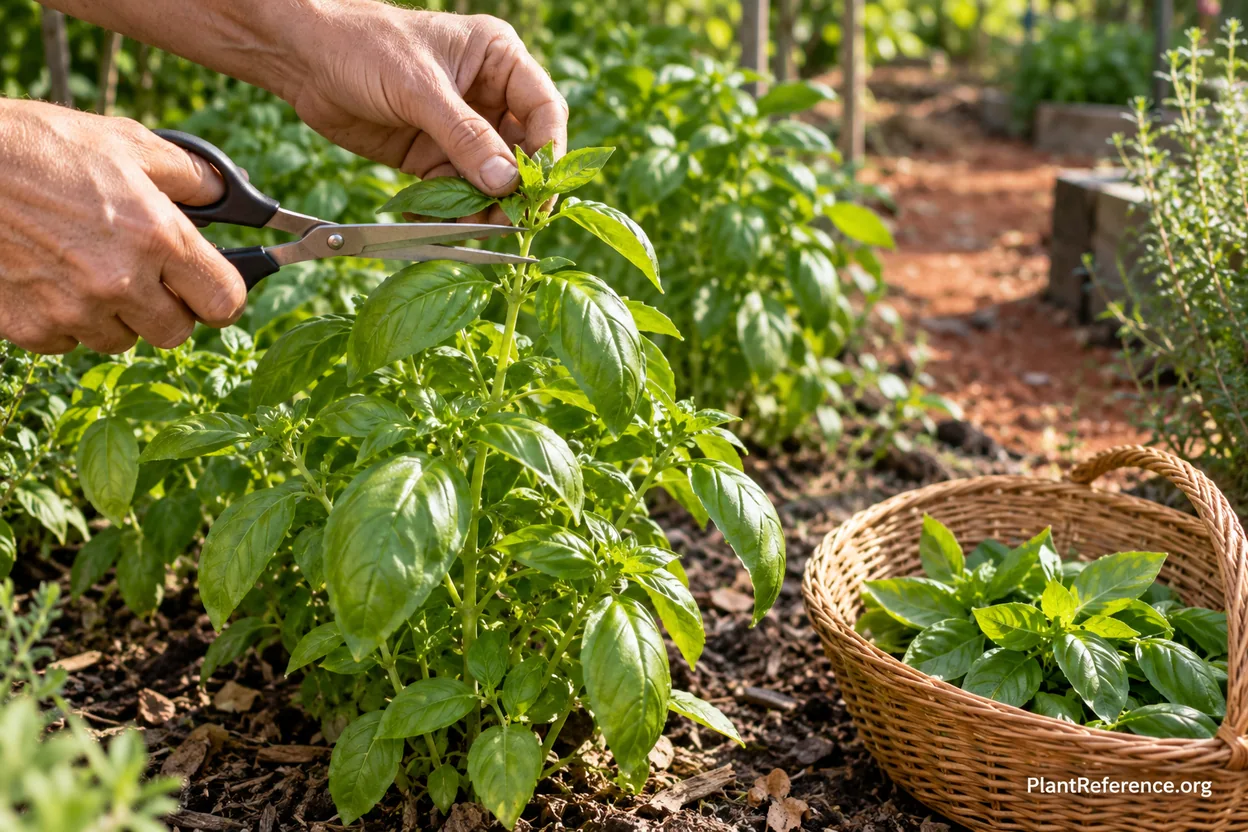
Harvest in the morning after dew dries, before leaves sit through the hottest part of the day. Cut above a healthy leaf pair and leave enough foliage for continued growth. Work around the plant rather than stripping one stem bare.
Use clean scissors and bring the leaves into shade promptly. Sort damaged or questionable material away from sound leaves, rinse as needed, and dry gently. Keep strongly flavored types separate so a mixed handful does not change a meal unexpectedly.
Freeze surplus in small portions labeled with type and date. Frozen leaves will not keep the texture of fresh garnish, but they are useful in sauces and cooked dishes. Do not leave fresh herbs packed in oil at room temperature; use a tested preservation method for longer storage.
Before a cold forecast, harvest usable leaves rather than waiting for the stored November 5 boundary. Zone 7b describes a broad winter-climate category, not the date a tender leaf becomes vulnerable. Save your notes about planting time, drainage, and useful harvests so next year's bed begins with evidence from this one.
Frequently Asked Questions

Reading about plants and recognising them are different skills. These three build the second.
- Daily PlantIdentify the day’s mystery plant from a close-up photograph.
- Keyed OutWork a dichotomous key, lead by lead, to name a hidden specimen.
- Name That PlantName a specimen from botanical clues dealt hardest first.
Free to play, no account needed
Tagged with
Rachel is a garden writer and photographer based in Raleigh who covers the Piedmont region of North Carolina. She has a journalism background and got into gardening after buying her first house and realizing she had no idea what any of the plants in her yard were. That curiosity led to a Master Gardener certification and eventually a garden writing career. Rachel is especially interested in native plants of the Southeast, seasonal color, and the challenge of gardening in red clay soil. Her photography background means she pays attention to how gardens look through the seasons—she thinks about visual composition as much as plant health. She writes clearly and directly, without the breathless enthusiasm that makes a lot of garden writing hard to trust.