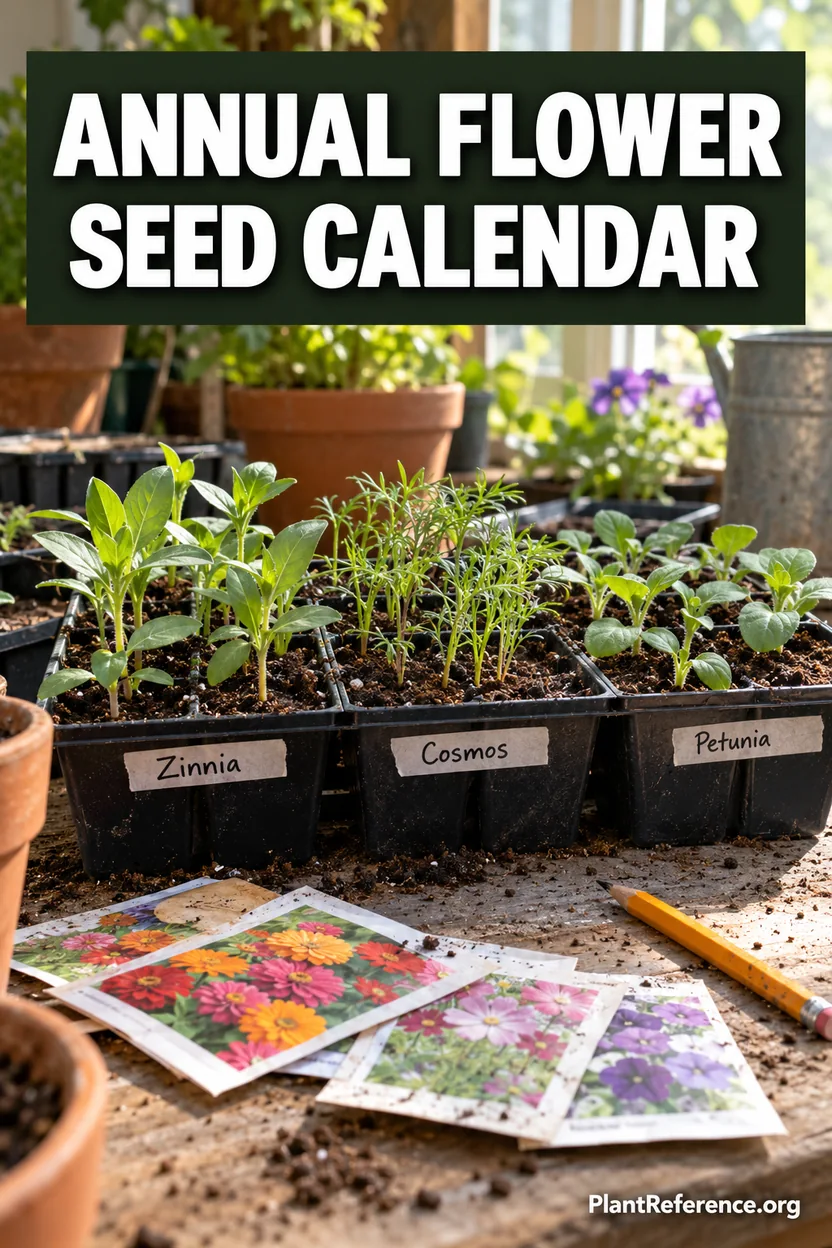
Annual Flowers from Seed: A Month-by-Month Guide
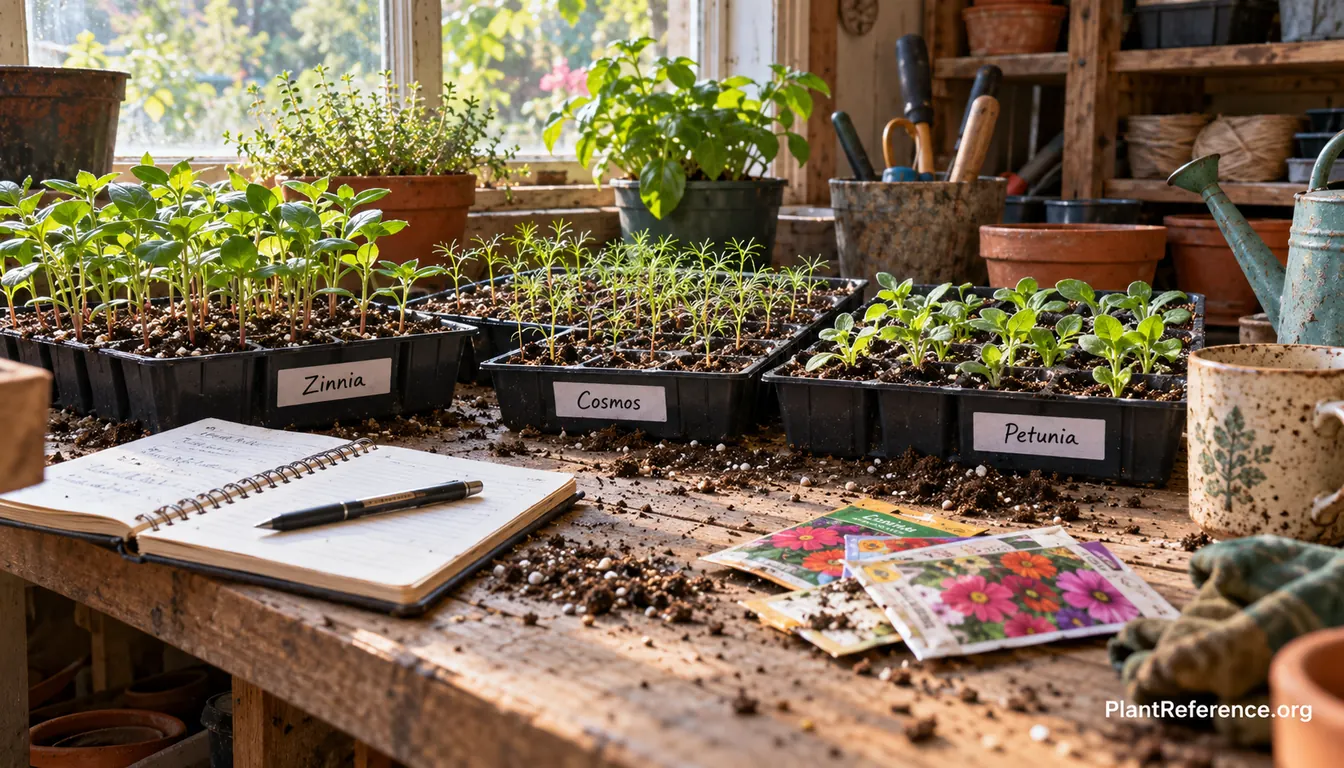
— Image © PlantReference.org 2026
Pets & Toxicity
Recorded toxicity for plants linked in this guide. An unknown status is not a safety assessment.
No linked plant is recorded as toxicDetailsHide
Starting annual flowers from seed is easier when you stop treating every packet as a February project. Some flowers need months of protected growth, while others establish quickly from an outdoor sowing; the useful calendar tells you which is which and ties each decision to your own season.
Starting Annual Flowers from Seed: Build Your Calendar
Use a locally relevant last-frost estimate as a planning anchor, not a weather guarantee. Then check the seed packet for indoor lead time, germination requirements, and transplant guidance. Hardiness zones describe winter cold; they do not give every garden within a zone the same spring planting date.
This guide includes a month-by-month example for a garden using May 15 as its planning frost date. That is an illustration, not a date assigned to your town. Shift the calendar earlier or later to match your local conditions, and keep the species-specific requirements when you shift it.
Before buying seed, decide where the mature plants will go. The bed preparation principles in Soil Health 101: How to Build Living, Productive Garden Soil help ensure that a successful tray of seedlings has a suitable destination. Seed starting solves plant supply, not poor site preparation.
Separate sowing dates from planting dates
An indoor start date tells you when to sow, not when a plant is safe outdoors. Tender annuals may need warmer conditions after the usual frost window. Cool-tolerant flowers have a different schedule, and seedlings raised indoors still need gradual acclimation before exposure.
For a simple calculation, an eight-week indoor lead means counting back 56 days from the intended outdoor planting target. If that target moves because the weather stays cold, the transplant date moves too. Do not push a tender seedling outside merely to make the notebook look correct.
Count growing space as well as weeks
Small cells take little room at sowing, but larger seedlings may need more space before planting. Count the area under your lights and the pots available for that later stage. Starting fewer healthy plants is more useful than producing a crowded tray of weak stems.
Set a realistic plant count from the mature spacing on the packet. Add a modest allowance for losses, rather than sowing the entire packet automatically. A spare tray is not free if you must water, light, and transplant plants for which you have no garden space.
Match Each Flower to an Indoor or Outdoor Start
Petunias Petunia x hybrida (peh-TOON-yuh hy-BRID-uh) benefit from a long protected start and need light for germination, so their seed goes on the surface rather than under a covering layer. Zinnias 🌿Zinnia elegans (ZIN-ee-uh EL-eh-ganz) offer a shorter indoor option and can also be direct sown after frost when the soil is warm.
Snapdragons 🌿Antirrhinum majus (an-tih-RYE-num MAY-jus) are cool-season performers with a longer indoor lead. Cosmos 🌿Cosmos bipinnatus (KOZ-mos bye-pin-NAY-tus) are useful direct-sow candidates. These differences are why one universal sowing date produces uneven results.
Flower | Typical indoor lead before the spring planting window | Practical starting choice | Main caution |
|---|---|---|---|
Begonias | 12–16 weeks | Indoor start for seed-grown types | Long lead and sustained seedling care |
Geraniums | 12–16 weeks | Indoor start for seed-grown selections | Not every offered selection is grown from seed |
Impatiens | 10–12 weeks | Indoor start | Match the type to its eventual light conditions |
Petunias | 8–10 weeks | Indoor start | Surface sow; seed needs light |
Snapdragons | 8–10 weeks | Indoor start | Plan for cool-season performance |
Marigolds | 6–8 weeks | Indoor start or direct sow | Wait for suitable outdoor warmth |
Celosia | 6–8 weeks | Careful indoor start | Minimize root disturbance |
Zinnias | 4–6 weeks | Short indoor start or direct sow | Do not hold vigorous plants too long in small cells |
Cosmos | Direct sow preferred | Outdoor sowing in suitable conditions | Leave enough season for flowering |
Treat these as planning ranges from the crop profiles, then use the packet for the actual selection. A branded nursery plant may be propagated differently from a seed packet bearing the same common name. Buy plants when the selection you want is not offered as seed or when the required lead time has already passed.
Choose direct sowing deliberately
Zinnias, cosmos, marigolds, sunflowers, nasturtiums, and calendula are among the supported direct-sow candidates, but they do not all share the same cold tolerance. Follow the species and packet instructions rather than broadcasting a mixed handful into cold ground. Tender annuals need warmth as well as freedom from frost.
Prepare a recognizable sowing area, mark it, and keep a record of what went where. The early leaves of garden flowers can be unfamiliar; How to Identify Any Plant: A Beginner's Guide to Leaves, Flowers, and Stems helps build observation skills, but labels are still the fastest way to avoid weeding out your own seedlings.
January Through April: Plan and Sow in Stages
The following months use the example May 15 planning anchor. In a colder garden, several jobs shift later; in a mild-winter garden, cool-season and warm-season flowers may follow different seasonal cycles altogether. Keep the relative lead times rather than copying month names without adjustment.
January: inventory and the longest lead times
Review packets, labels, trays, lighting, and available growing space. Choose the flowers you can actually accommodate, and read germination directions before opening packets. Some long-lead seed-grown begonias or geraniums may belong in the late-January to February window in this example.
Do not start fast annuals simply because the equipment is ready. A zinnia sown alongside a slow begonia can outgrow its place long before outdoor conditions improve. Keep packets grouped by sowing window so an enthusiastic afternoon does not erase the schedule.
February: stagger the slow starters
Continue the long-lead group and prepare for impatiens, whose 10–12 week indoor window falls around late February into early March in the example. Sow manageable batches with individual labels. If you are trying a flower for the first time, a smaller trial leaves room to correct the setup without losing your whole planting plan.
Check moisture and light access across the tray, not only at its easiest-to-see edge. A bright center with dim corners can produce uneven seedlings. Record the sowing date and emergence as they happen instead of reconstructing them several weeks later.
March: petunias, snapdragons, and the next group
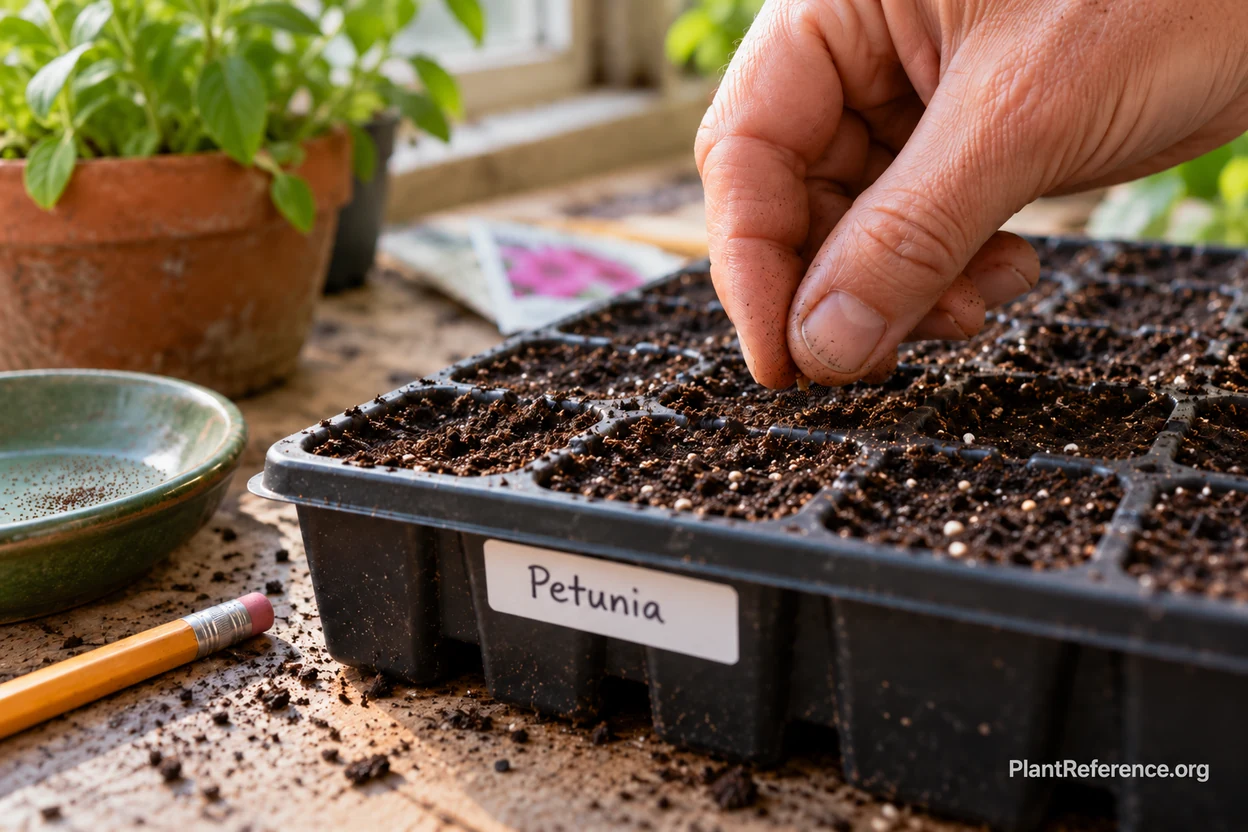
The example's 8–10 week window falls in March, making it a logical time for petunias and snapdragons. Surface sow petunia seed on moistened fine mix, following any special directions for pelleted seed. Other species may require covering, so avoid applying petunia instructions to the entire shelf.
Later in March, the 6–8 week window begins for marigolds and celosia. Handle celosia carefully as it develops because root disturbance can set it back. Allocate enough room for each batch before sowing the next one.
April: fast starters and outdoor preparation
The example's 4–6 week window falls in April, so this is the short indoor-start period for zinnias. Direct sowing later remains a valid alternative if you do not need an indoor head start. Do not create extra work merely because indoor space has opened up.
Prepare the eventual beds while seedlings grow. How to Improve Clay Soil Without Making It Worse is useful where wet, heavy ground complicates spring work, while How to Improve Sandy Soil That Dries Out Fast addresses a different establishment challenge. Neither soil type is fixed by transplanting earlier.
Check forecasts and identify a sheltered outdoor place for hardening off when conditions permit. You need a transition area, not just an indoor shelf and a fully exposed bed. Make that area convenient enough to bring plants back under protection when weather changes.
May Through August: Plant Out and Sow Successions
May is the example's transition month, not a command to plant everything on May 15. Actual temperatures, soil moisture, wind, and species requirements determine the pace. A forecast frost or a cold, saturated bed is a reason to wait.
May: separate frost clearance from warmth
Move suitable hardened-off plants out when their conditions are met. For tender annuals such as zinnias, look for warm soil above about 60°F (16°C) and nights reliably around or above 50°F (10°C), rather than relying on the calendar alone. The seed packet can call for a warmer germination range than the minimum transplant conditions.
For zinnia germination, the research gives a useful range of 70–80°F (21–27°C), with emergence often in five to seven days under suitable conditions. That is an expectation, not a deadline for every seed. Cold, wet ground can make a theoretically early sowing less useful than a later warm one.
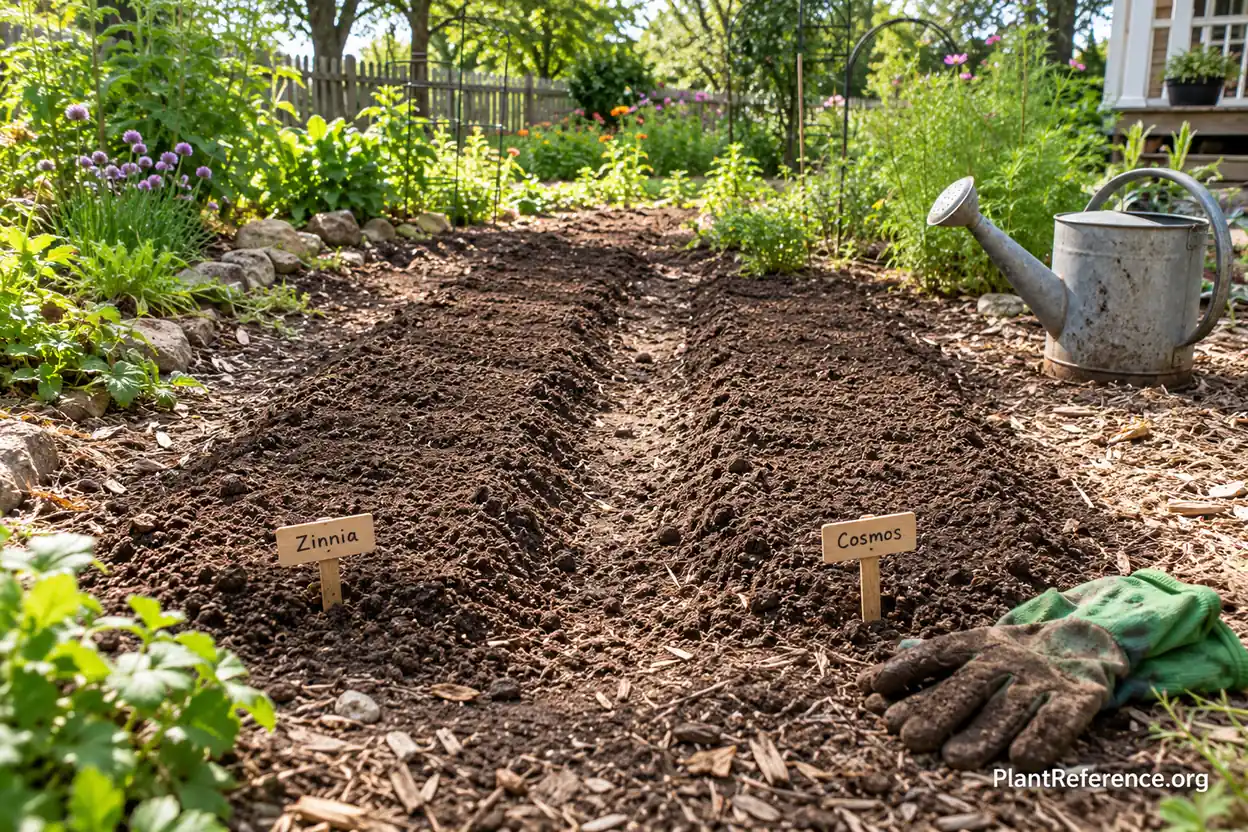
Prepare direct-sow rows with enough fine surface structure for seed-to-soil contact, but do not work saturated soil into hard clods. Sow at the packet's depth, label the row, and maintain suitable moisture through emergence. Marking the area also prevents foot traffic through a row that has not yet become visible.
June: thin and establish before adding more
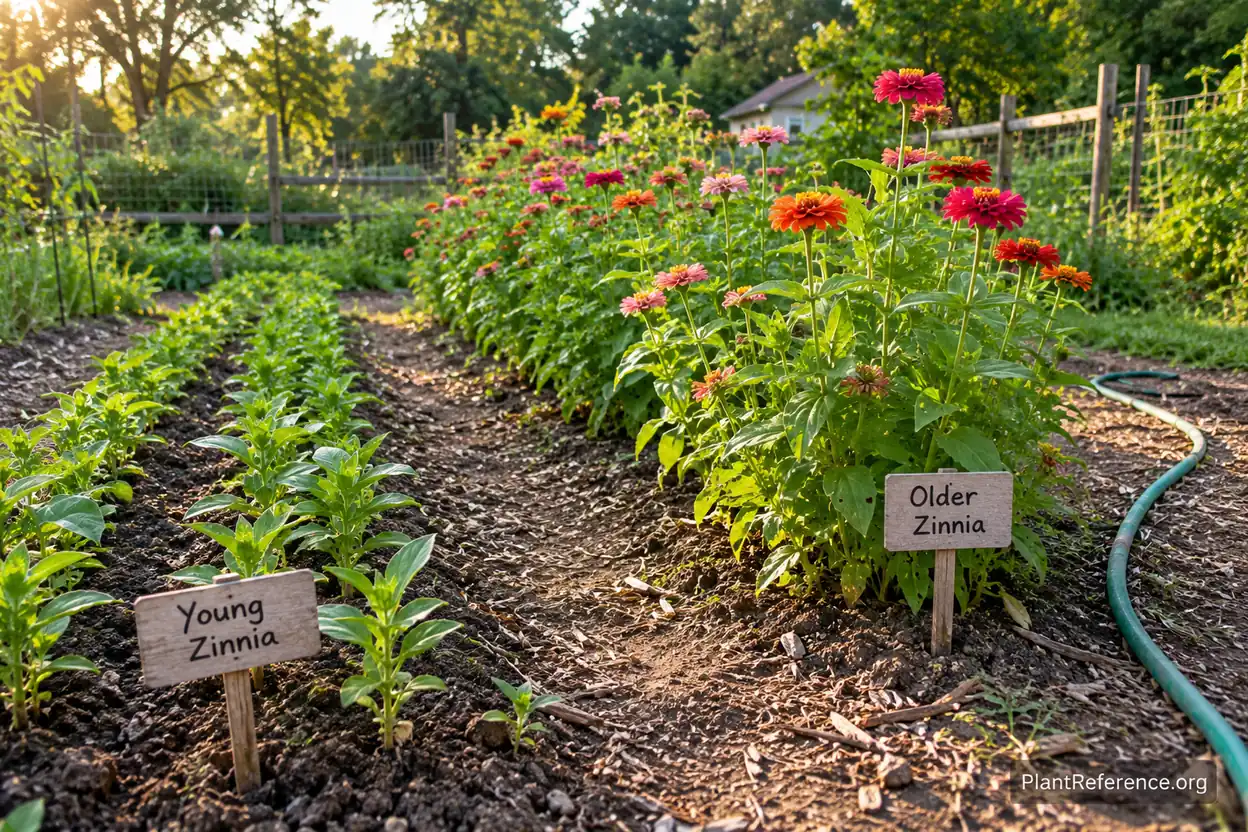
Thin direct-sown plants according to their mature spacing rather than keeping every seedling. Crowding does not produce more usable flowers indefinitely; it can reduce access and airflow as the canopy develops. For zinnias, the research spans 6–18 inches (15–46 cm) depending on selection, which is why the packet matters more than a universal spacing rule.
Continue checking recently transplanted root balls, not just the surrounding bed. A small root ball can dry differently from the soil around it. For plants destined for pots, Container Gardening: Pots, Soil, Water & Yields helps distinguish container watering from garden-bed care.
July: sow another batch only if it can finish
Successive sowings of fast flowers can extend the display and replace tired plants. The research supports zinnia and cosmos successions spaced roughly two to three weeks apart during a suitable warm growing window. Do not extend that pattern indefinitely without counting the season remaining.
Zinnias commonly need about 60–70 days from seed to flower, while cosmos may need 60–90 days. Use the actual packet's maturity information and leave room for weather-related delays before the first likely autumn frost. A late sowing that barely reaches its first bloom is different from a useful extended harvest.
August: assess the fall opportunity
Late-summer planning depends strongly on climate. Some gardens can prepare a fall cool-season display, while others are close to the end of their useful outdoor sowing window. Do not start another tender crop just because an online calendar lists August as a succession month.
Review available light indoors if you plan to raise fall plants there. A shelf freed by spring transplants may already be occupied by other plants. Keep the same discipline about space, lead time, and a real destination that made the spring schedule workable.
September Through December: Finish and Review
The end of one seed-starting season supplies the evidence for the next. Keep the successes and the awkward timing in the same notebook. A failed batch can teach you something useful if you know when it was sown, where it grew, and what happened before it declined.
September and October: record what lasted
Note which sowings produced useful flowers before the weather changed. Distinguish a species that was unsuitable from one simply sown too late. If the best batch was the second sowing rather than the first, record the soil and weather conditions that favored it.
If you leave some flowers to self-sow, mark that area and expect volunteers rather than a guaranteed repeat of the original planting. Self-sown plants may emerge where they are inconvenient, and seed from hybrids may not reproduce the same traits. Keep deliberate seedling production separate from whatever appears on its own.
November and December: simplify next year's plan
Clean and organize equipment, review packet instructions, and decide which crops justified their indoor space. Buying a few long-lead transplants can be a sensible choice if their seedlings occupied your entire setup. Reserve your effort for the flowers you can raise well and the quantities you actually need.
If you expand into native species, do not assume annual bedding-flower methods apply. Native Plant Seeds Not Germinating? Fix Dormancy addresses a separate set of seed requirements. Keeping those projects distinct prevents you from treating every slow-emerging seed as a failed annual sowing.
Seedling Care, Hardening Off, and Transplanting
Use clean containers with drainage and a fine-textured seed-starting medium. Moisten the mix before sowing so you are not trying to wet a dry tray with tiny seed already on the surface. Follow the packet for covering depth, light requirements, and germination temperature.
Keep moisture and light in balance
Maintain moisture without leaving the tray waterlogged. Check more than one cell because edges and centers can dry differently. Gentle watering is especially useful for surface-sown seed that can wash away under a strong stream.
After emergence, give seedlings enough light to form sturdy growth and follow the light manufacturer's placement guidance. Long pale stems leaning toward a window are a reason to review the setup. Extra fertilizer will not replace adequate light or room between seedlings.
If you feed seedlings, use a product and rate appropriate for that stage, accounting for nutrients already in the mix. Salt buildup is not evidence that a tray needs more fertilizer; White Crust on Potting Soil: Causes and How to Flush It explains why deposits deserve investigation. Seedlings are a poor place to improvise concentrated homemade feeds.
Harden off before the final move
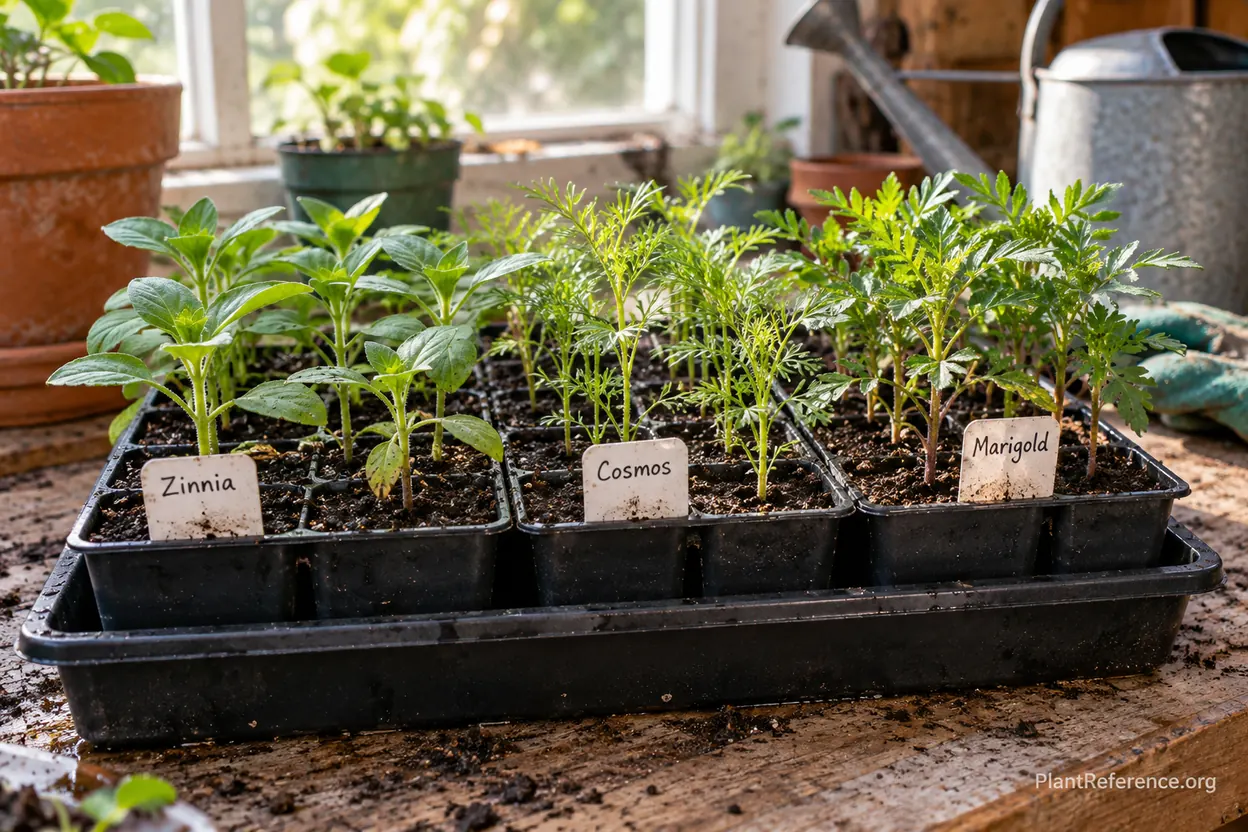
Gradually expose indoor-raised seedlings to outdoor conditions in a sheltered location, increasing exposure as the plants cope. Avoid making the first outing a full day of strong sun and wind. Bring plants back under protection when conditions exceed what the species or seedlings can tolerate.
Watch both leaves and root-zone moisture during this transition. A small cell can dry quickly outside even when the air does not feel hot to you. Hardening off prepares a plant for ordinary outdoor exposure; it does not turn a frost-tender species into a frost-hardy one.
Transplant with the roots supported
Water dry root balls before handling them, remove plants carefully, and keep roots supported. Place them at the appropriate existing growing depth without burying the crown. Settle soil around the roots and water to establish contact, then monitor rather than flooding the area repeatedly.
If the bed has unresolved drainage or compaction problems, deal with those before planting. How to Test Garden Soil: Jar, Ribbon & pH Tests can help separate texture observations from chemical questions that require testing. A healthy transplant cannot compensate for every problem beneath it.
Troubleshooting and Keeping Useful Records
When a tray fails, change the conditions that caused the failure before sowing again. Check packet instructions, temperature, moisture, light, seed age, and how long the species normally takes. Digging repeatedly into every cell to search for seed can create a second problem while you investigate the first.
Common patterns worth recognizing
Very stretched seedlings point toward inadequate light or crowding. A persistently soggy tray calls for drainage and watering corrections. A batch that repeatedly outgrows its cells before planting may need a later sowing date rather than another round of larger pots.
For leaf damage after outdoor exposure, inspect the plant instead of assuming every hole is disease. Flea Beetle Damage: Stop Tiny Holes in Seedling Leaves is relevant when that characteristic feeding pattern appears, but identification should come before treatment. Avoid preventive pesticide use simply because seedlings are valuable to you.
Keep the record small enough to maintain
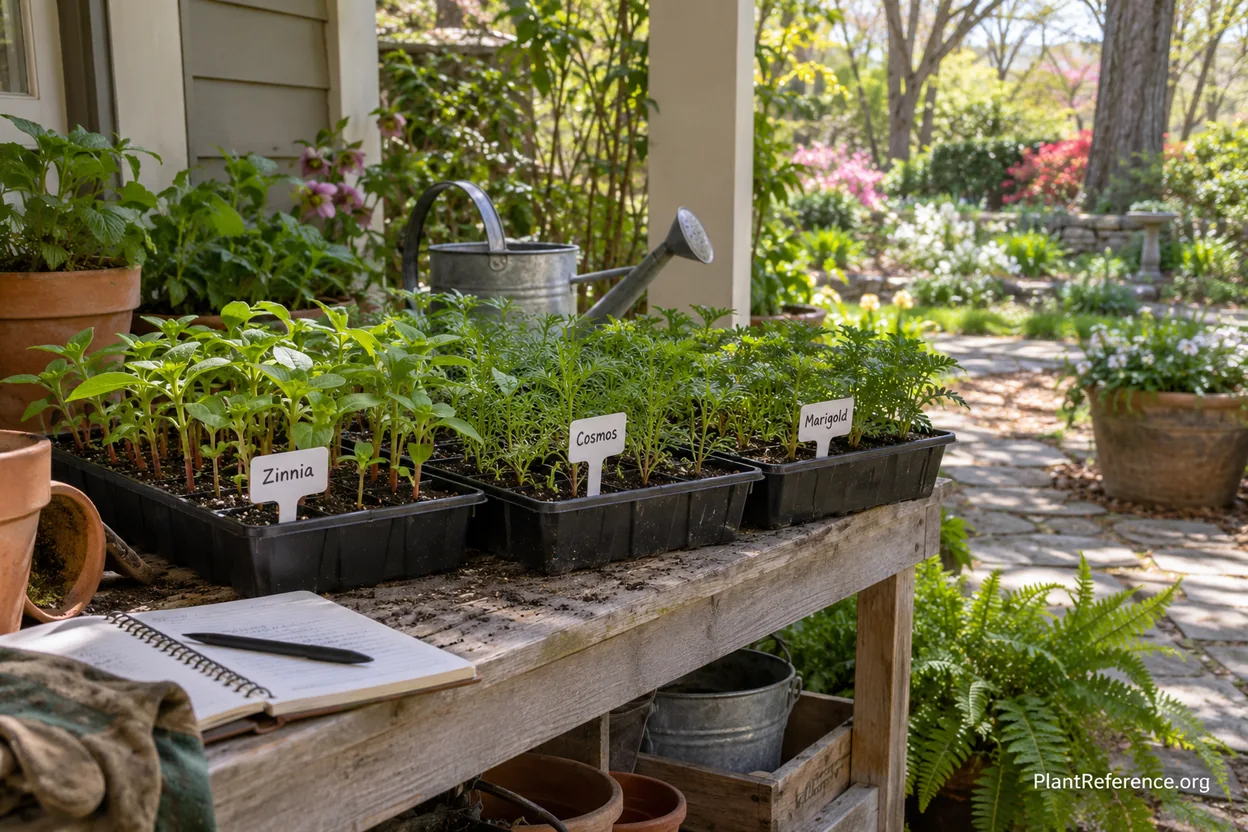
For each batch, record a few facts that affect next year's decisions:
Species or selection and the packet's stated starting requirements.
Sowing date, emergence date, and any uneven germination.
Changes in light, watering, or growing space during indoor care.
Hardening-off period and the actual transplant or direct-sow date.
First useful flowering date and whether the batch justified its space.
The goal is not a perfect calendar. It is a schedule that produces sturdy plants when your garden can accept them. Starting annual flowers from seed becomes more predictable when you adjust one season's plan using observations from the last, rather than beginning every winter with the same overcrowded tray.
Frequently Asked Questions

Reading about plants and recognising them are different skills. These three build the second.
- Daily PlantIdentify the day’s mystery plant from a close-up photograph.
- Keyed OutWork a dichotomous key, lead by lead, to name a hidden specimen.
- Name That PlantName a specimen from botanical clues dealt hardest first.
Free to play, no account needed
Tagged with
Claire runs a small cut flower farm on two acres outside Asheville, North Carolina, where she grows annual flowers for farmers market bouquets and a subscription CSA. She studied art in college and fell into flower farming after volunteering at a community garden during graduate school. What started as a few rows of zinnias and cosmos turned into a full-time business within three years. Claire grows over 40 annual flower varieties from seed each season, managing succession plantings from February through October. She teaches seed-starting workshops at the local cooperative extension office and mentors new flower farmers through their first seasons. Claire writes from direct growing experience — she has started tens of thousands of seeds, trialed hundreds of varieties, and made every mistake in the annual flower book at least once. Her advice is specific, seasonal, and grounded in what actually works in the field, not what looks good in a catalog photo.