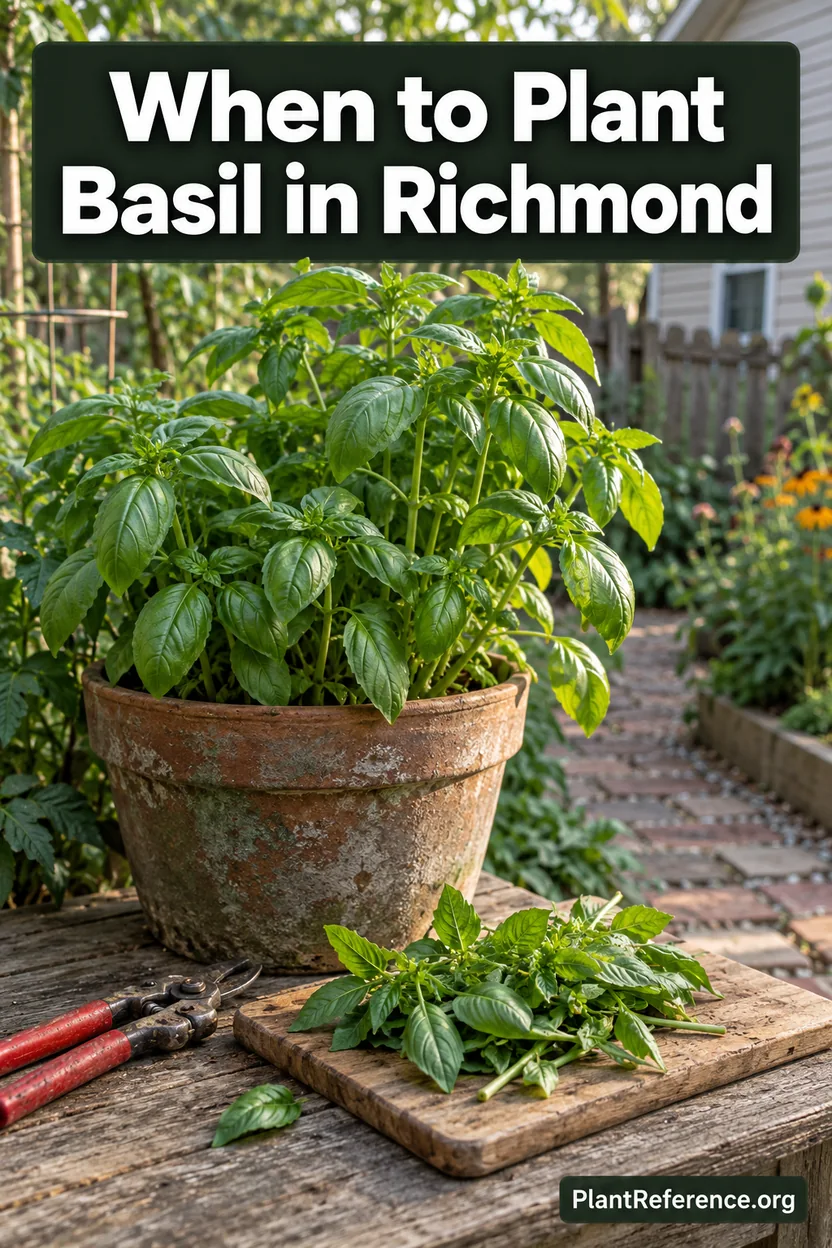
When to Plant Basil in Richmond: Dates and Growing Guide
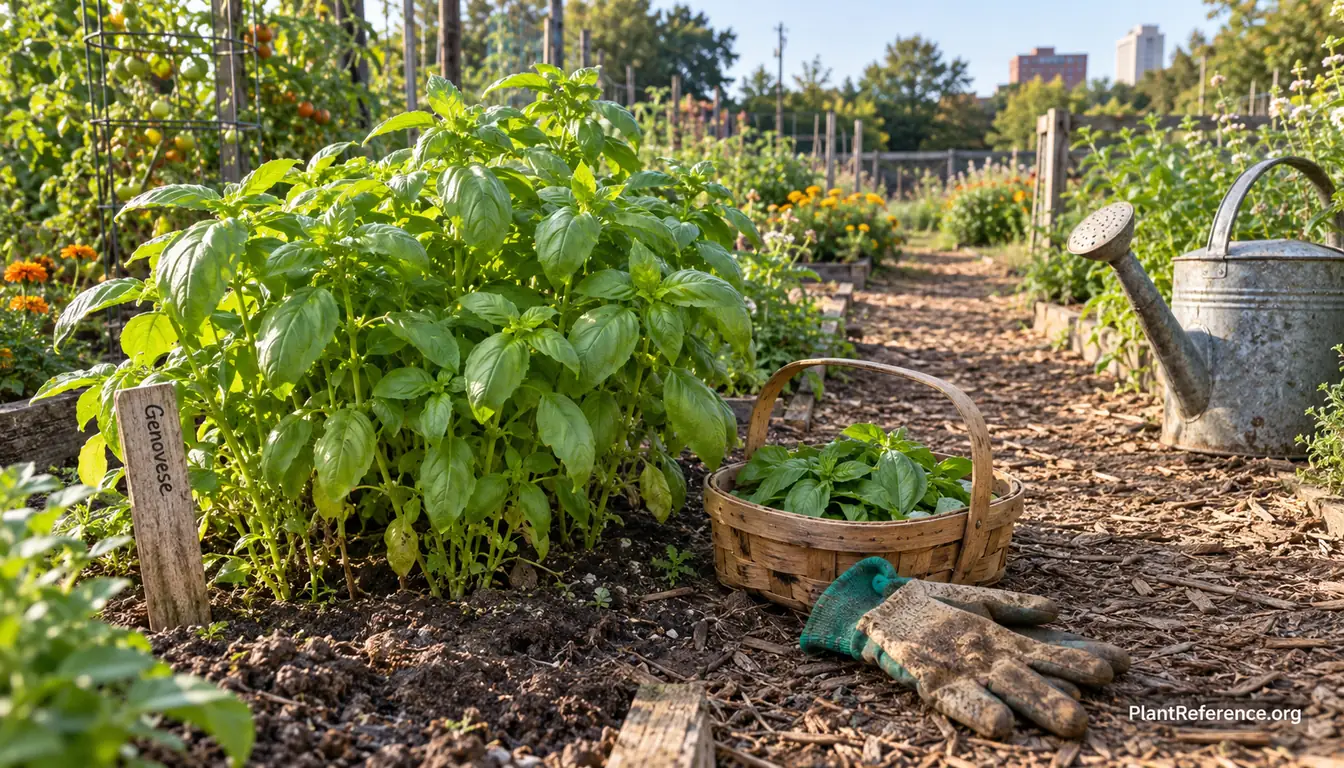
— Image © PlantReference.org 2026
Pets & Toxicity
Recorded toxicity for plants linked in this guide. An unknown status is not a safety assessment.
No linked plant is recorded as toxicDetailsHide
Ocimum basilicum 'Purple Ruffles' — Toxicity
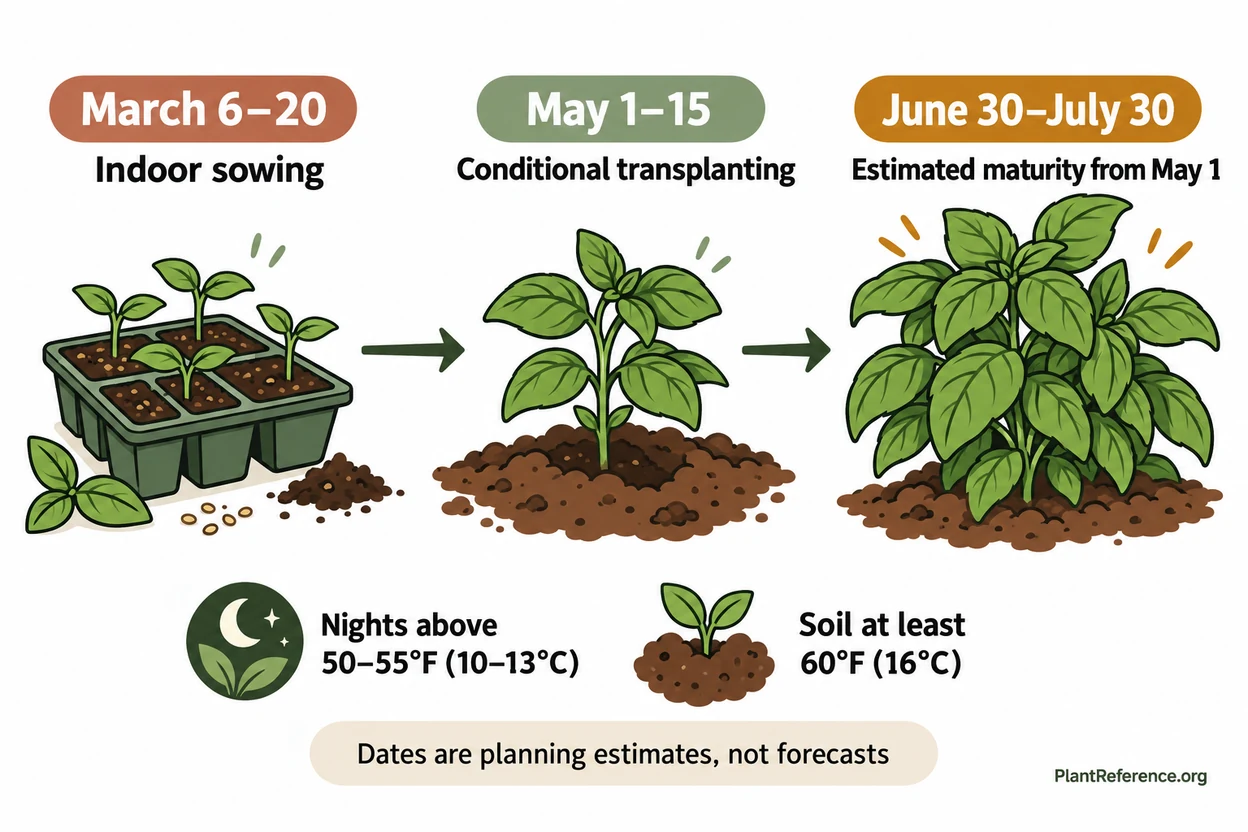
Non-toxicView Ocimum basilicum 'Purple Ruffles' plant profileWhen to plant basil in Richmond is simple enough: wait for warm soil and nights that stay warm, not just a pleasant Saturday afternoon. Start indoors around March 6–20 for a May 1–15 transplant target, checking for nights consistently above 50–55°F (10–13°C) and soil at least 60°F (16°C). If a cold spell comes along, leave the seedlings protected and plant later.
Sweet basil Ocimum basilicum (OH-see-mum bah-SIL-ih-kum) does not need a complicated setup to earn its place in a Virginia vegetable garden. It needs roots that can breathe, moisture when the soil is drying, and somebody willing to pick the tips before the plant becomes a tall collection of flowers. Start with a few plants you can look after well, keep the labels, and put them somewhere easy to reach. You can grow a useful crop without a large bed; Growing Herbs in Containers: Pots, Soil & Harvest explains the container option.
Best Basil Varieties for Richmond's Climate
Choose what you want to eat. A packet with an interesting name is not much use if nobody in the household likes the flavor. Start with a familiar type, then try one or two others in clearly labeled spots.
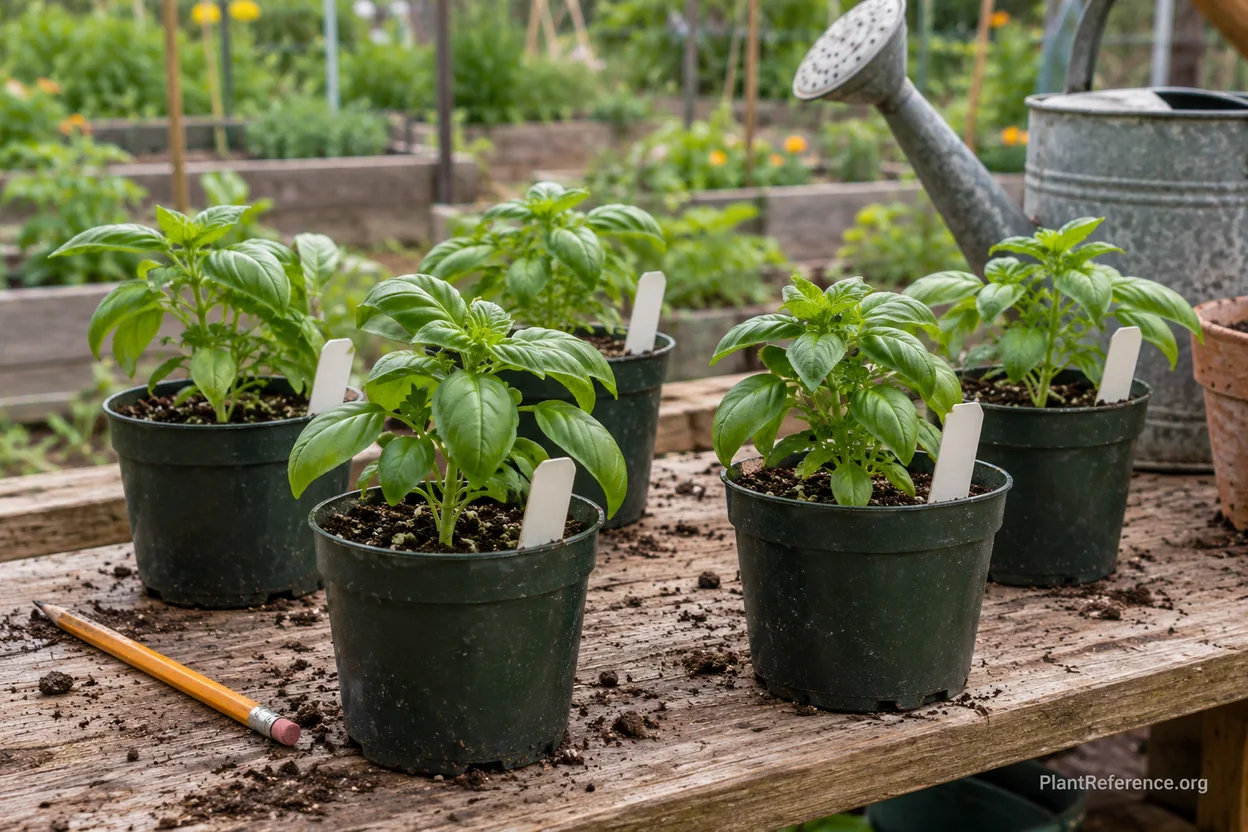
Begin with a dependable kitchen flavor
🌿Ocimum basilicum 'Genovese' supplies broad leaves for pesto, salads, and fresh cooking. It is a sensible main planting if you want the familiar sweet basil taste. Pick growing tips regularly instead of taking every lower leaf and leaving a bare stem.
🌿Ocimum basilicum 'Thai' has narrower leaves and an anise-like flavor. It is useful in hot dishes and handles summer warmth well, but still needs water and room for roots. Its flower spikes can appear quickly, so look for them when you make your ordinary harvesting rounds.
🌿Ocimum basilicum 'Lemon' is the citrus-scented selection named in the plan. Lemon basil is sold under several botanical identities, so keep the packet's exact identification. Try a small planting first and decide whether its flavor earns more space next season.
Type | Planning maturity range | Best use | Care to remember |
|---|---|---|---|
60–90 days | Pesto and fresh leaves | Watch foliage during humid weather | |
60–90 days | Anise-flavored cooking herb | Remove flower tips for leafy harvests | |
60–75 days | Citrus-scented leaves | Avoid cramped pots and dry spells | |
70–80 days | Garnish and foliage contrast | Check the named cultivar on the packet | |
60–90 days | Spicy aromatic leaves | Grow as a seasonal crop |
Those maturity numbers are estimates from the plan. Read the seed packet to learn whether counting begins at sowing or transplanting. A sturdy plant may offer small tip harvests before full maturity, while a chilled or root-bound plant may take longer than the packet suggests.
Add color or a different aroma with a purpose
🌿Ocimum basilicum 'Purple' is the broad purple-leaved selection in the plan. The research also names 🌿Ocimum basilicum 'Purple Ruffles', a more specific choice with textured foliage. Purple leaves can be handsome in a kitchen garden, but their color does not guarantee pest resistance or drought tolerance.
Holy basil 🌿Ocimum tenuiflorum (OH-see-mum ten-yoo-ih-FLOR-um) is a different species with a spicy aroma. It flowers readily and has different seed requirements: follow surface-sowing instructions when the packet calls for light. Do not expect it to live outdoors through winter under the stored Zone 7b baseline.
Keep the plants separated enough that you can see their labels and reach the stems. That makes harvesting easier and helps you notice trouble before it spreads through a crowded patch. There is no need to grow all five types just because the comparison table lists them.
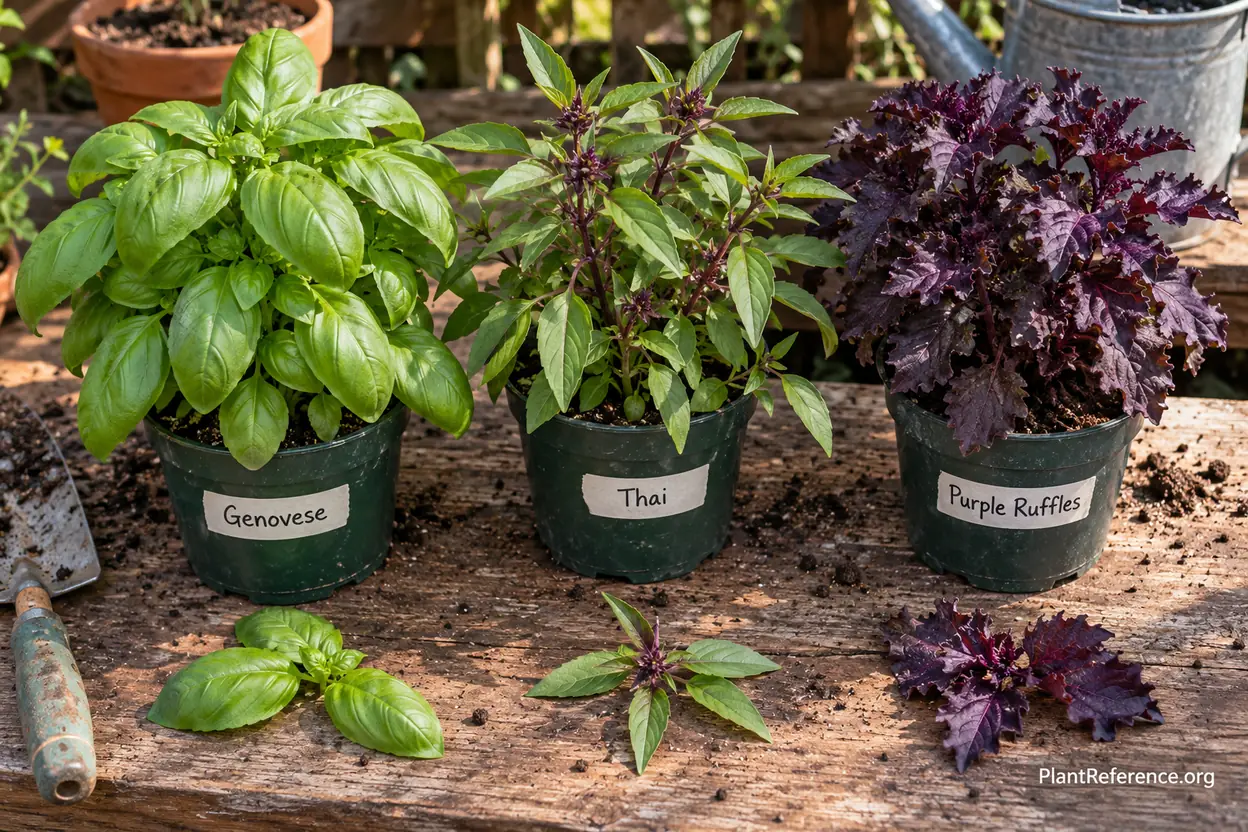
When to Plant Basil in Richmond: Specific Dates
The city record gives April 15 and October 25 as frost dates, stored with the year 2025. Their difference is 193 days. Use these dates and the stored Zone 7b label to make a plan, not to predict the weather in a particular year.
Six to eight weeks before April 15 gives February 18–March 4 for indoor sowing. Adding a seven- to fourteen-day frost buffer gives April 22–29 as the earliest conditional transplant check. Basil still needs warm nights and soil, so that early window may not be suitable when it arrives.
For an easier working schedule, aim at May 1 and count back six to eight weeks. That gives March 6–20 for sowing indoors and May 1–15 outdoors if conditions cooperate. Seedlings started earlier need enough light and space to wait without becoming stretched or crowded.
Count harvest time from the packet's starting point
If a 60–90 day maturity range begins at transplanting, a May 1 planting points to June 30–July 30. If the packet counts from seed, calculate from the sowing date instead. The label tells you which clock to use; guessing can make a perfectly reasonable season look too short.
Make a small second sowing in June if you want younger plants for late summer. It is often easier to raise a few replacements than to keep asking an old woody plant for tender new growth. Keep them away from plants showing disease and avoid squeezing them into the last damp gap in the bed.
An August 1 transplant plus 60–90 days gives September 30–October 30. The slow end is already beyond the stored October 25 frost boundary, and cooling weather can slow growth before then. Late planting is therefore a chance for modest tip harvests, not a dependable full crop.
Write the actual planting date on a label and note when you begin useful harvesting. Add a short note if a cold spell delayed planting or a wet bed caused trouble. You do not need a complicated journal to learn something worth using next spring.
Complete Growing Guide for Richmond
Start with a workable piece of ground
Look at the bed after rain. If water sits where the roots will be, deal with that before transplanting. Good drainage means extra water can leave while the soil retains useful moisture; it does not mean the bed should dry to dust.
Do not work clay while it is wet and sticky, and keep feet out of the growing area. Finished compost can help improve structure over time. How to Improve Clay Soil Without Making It Worse explains the basic work without treating all clay as something that must be hauled away.
Test before adding materials to change pH or nutrients. The research places basil's useful pH range around 6.0–7.5, but a soil's color does not tell you its chemistry. How to Test Garden Soil: Jar, Ribbon & pH Tests helps you decide what information you actually need.
Build a healthy bed gradually rather than adding a different product every time growth looks slow. Soil Health 101: How to Build Living, Productive Garden Soil covers that approach. If you make compost, How to Build a Hot Compost Pile: Finished Compost in Weeks is useful background; use finished material, not fresh scraps buried next to seedlings.
Decide whether a pot would be simpler
A raised bed can help with an unsuitable site, but you do not need to build one just to grow a few herbs. If construction is appropriate, How to Build a Raised Garden Bed: Step-by-Step Construction Guide explains the practical details. A box alone does not fix a poor growing mix or a location that collects runoff.
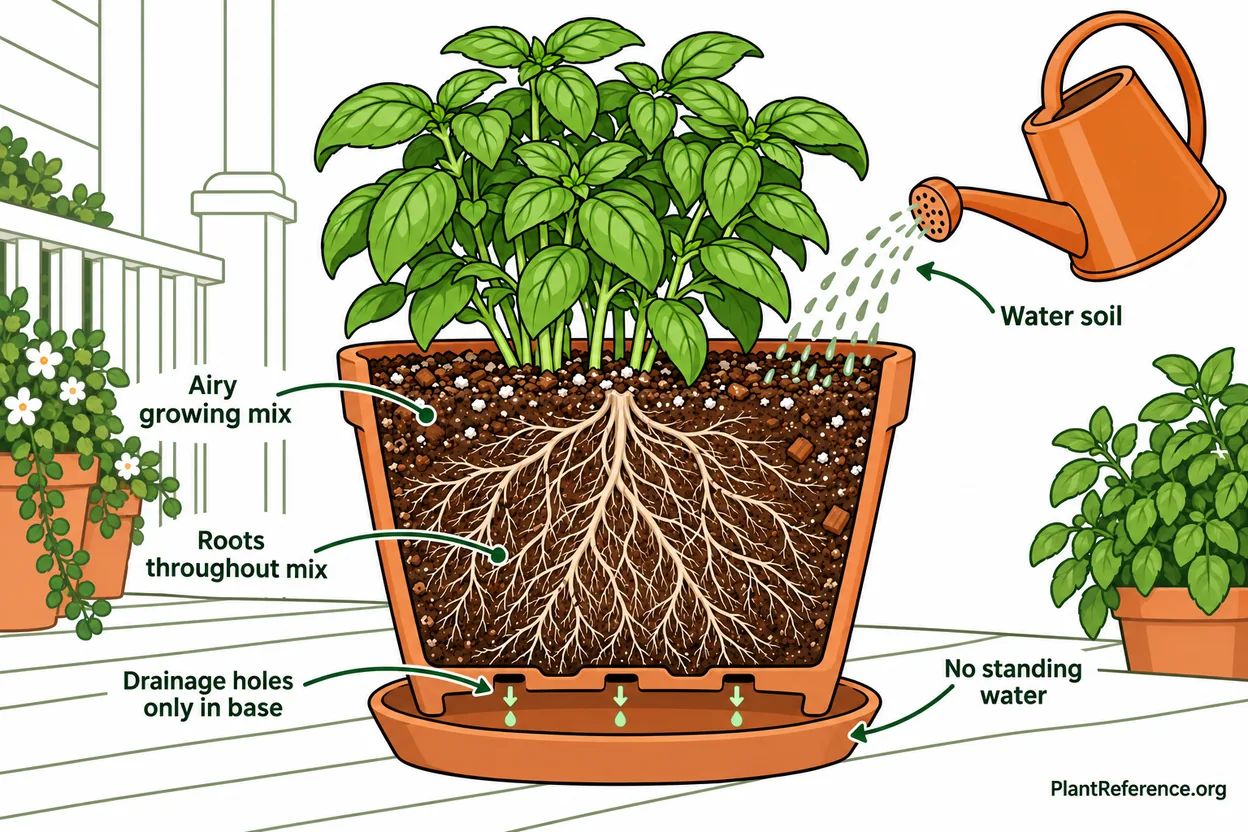
A container with drainage holes may be the easier choice. Use a mix made for pots rather than heavy garden soil, and leave room for the plant's mature roots. Container Gardening: Pots, Soil, Water & Yields explains why a tiny decorative pot often becomes more work than a roomier one.
Put the planting where it gets useful morning sun and where you will remember to check it. Avoid hiding basil behind taller crops that will shade it later. A convenient place for harvesting is usually a convenient place for noticing wilt or damaged leaves too.
Sow a small batch well
Sweet basil seed is usually covered about 1/4 inch (6 mm) deep; follow the packet if it specifies otherwise. Keep the mix evenly moist and around 75°F (24°C) for germination. Holy basil can need light for germination, so follow its surface-sowing instructions separately.
Provide bright light as soon as seedlings emerge. A warm tray in a dim corner gives you weak, stretched plants. Thin crowded starts or separate them carefully so each plant has space rather than leaving a knot of seedlings competing in one cell.
A thermostat-controlled heat mat can help when indoor mix is cool, but it is not compulsory in a suitably warm room. Follow the equipment instructions and monitor the seed zone. More heat is not a substitute for light, and more water is not a substitute for warmth.
Harden seedlings gradually over about a week, beginning with sheltered outdoor time and increasing exposure to sun and wind. Keep them protected during cold nights. Plant at roughly nursery depth, water the root ball and surrounding soil, and inspect the next day.
Water, pinch, and leave enough leaves
Check moisture below the surface before watering. A pot can dry while a nearby bed stays wet, and a dry-looking surface does not always mean the whole root zone needs soaking. Water thoroughly when needed and let excess drain away.
Aim water at the soil, not through the leaves. Humid Virginia weather gives foliage enough opportunities to stay wet without adding unnecessary overhead watering. For larger plants, spacing around 18–24 inches (45–60 cm) can help airflow where appropriate; use the cultivar's mature size to refine the distance.
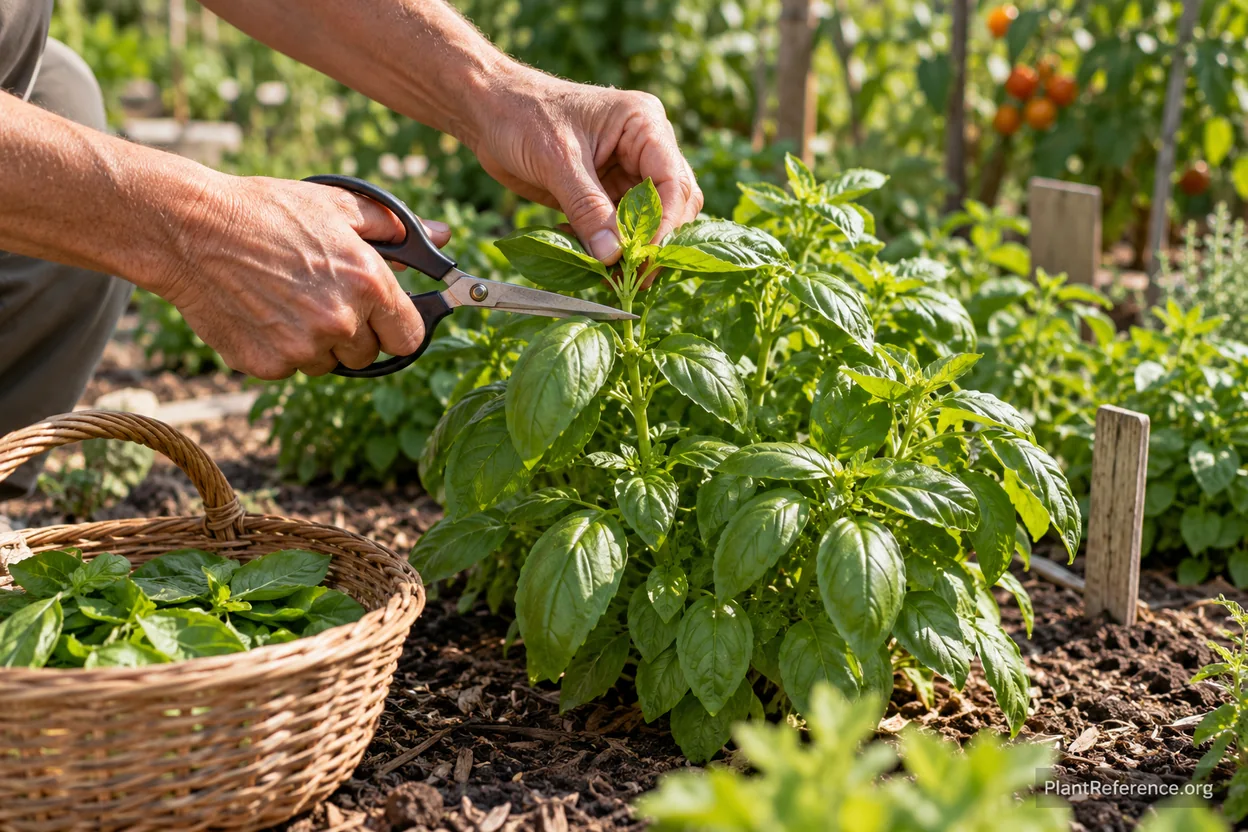
Once a plant has several pairs of true leaves, pinch a growing tip above a healthy leaf pair. Side buds can then branch. Think of harvesting as a series of small useful cuts, not a reason to remove nearly every leaf at once.
Look for developing flowers as you harvest. Remove them when leaf production matters most, and keep moisture steady. A stressed plant in a cramped pot may flower early, so address the root space instead of merely cutting flowers again and again.
Feed according to the soil or potting mix's needs. DIY Organic Fertilizer Blends: A Soil-Test-First Guide is useful if you are choosing amendments. Extra fertilizer will not open a blocked drain or repair an infected leaf, and changing several things at once makes the real problem harder to find.
Troubleshooting Richmond Basil Problems
Yellow leaves need a closer look
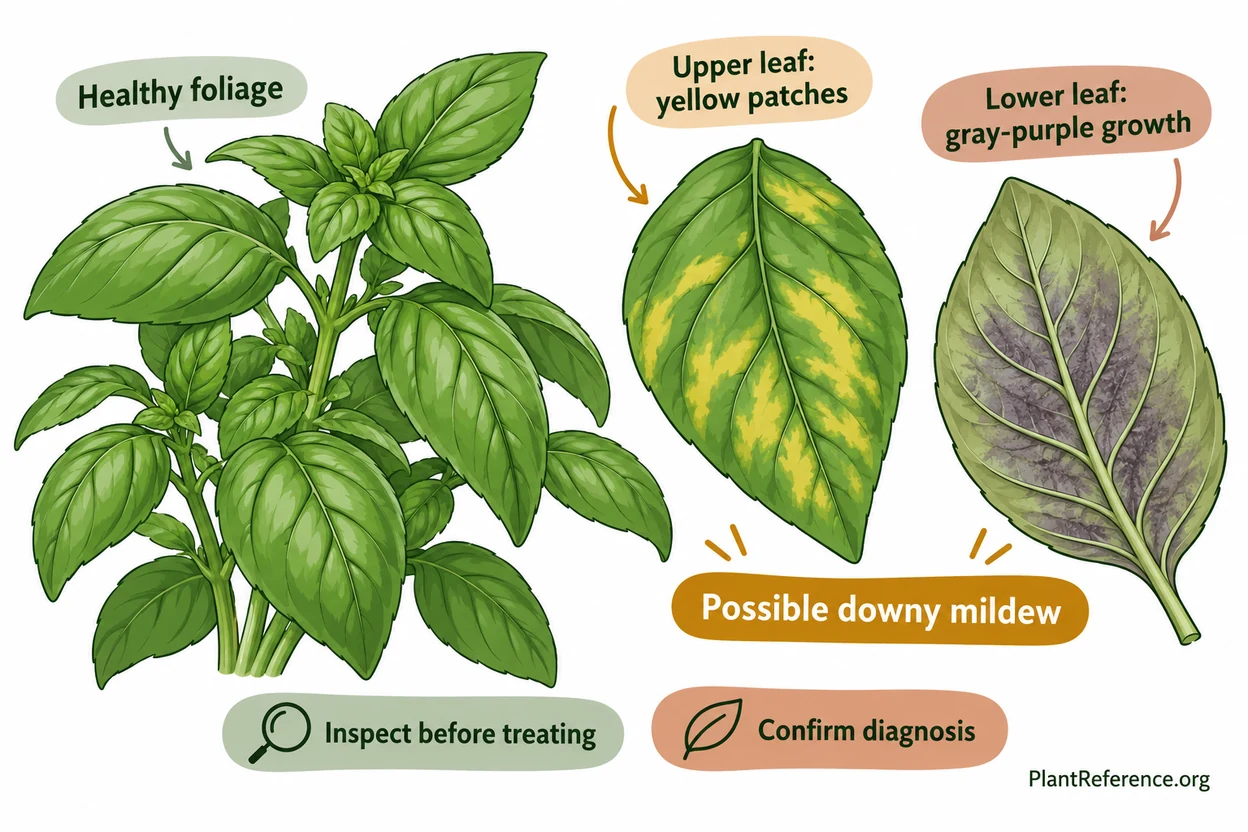
Turn the leaf over before deciding it needs feeding. Yellow patches with gray-purple growth underneath can suggest downy mildew. Humidity and prolonged leaf wetness favor the problem, but symptoms should be checked rather than treated as a certain diagnosis from color alone.
Photograph both leaf surfaces and note whether the damage is spreading. Remove badly affected plants and seek diagnostic help when needed. Good spacing and soil-directed watering reduce avoidable leaf wetness, but neither makes a planting disease-proof.
Check roots before treating wilt
Dry soil and wet soil can both accompany drooping leaves. Check the root zone before reaching for the hose. Persistent collapse, brown streaks on stems, or decaying roots call for investigation rather than repeated watering.
If a plant flags in strong afternoon heat but recovers later, examine its exposure as well as its moisture. Some afternoon relief may help in a particularly hot position. Do not move it abruptly into deep shade and assume the problem is settled.
For holes in leaves, find the pest. Inspect at different times if you cannot see anything during the day. Hand removal can work in a small planting when the animal is identifiable and safe to handle; any pesticide must be labeled for the edible crop and used as directed.
Flowering is not the same as disease. Remove spikes if you want more leaves, but do not assume all leaves become unusable as soon as a flower opens. Older woody plants sometimes need replacing, and that is an ordinary part of managing a seasonal crop.
Harvest & Storage
Harvest in the morning after dew dries. Cut above a leaf pair, leave plenty of healthy foliage, and use clean scissors rather than tearing stems. A small regular picking keeps you supplied without leaving the plant stripped.
Bring leaves into shade promptly. Sort damaged or questionable leaves away from sound material, rinse as needed, and dry gently. Keep different aromatic types separate so you know what you are adding to a meal.
Freeze surplus in small portions labeled with the type and date. Frozen leaves lose the texture of fresh garnish but still serve well in sauces and cooked dishes. Do not leave fresh herbs packed in oil at room temperature; use a tested preservation method for longer storage.
Before a cold forecast, pick usable leaves instead of waiting for October 25. The stored Zone 7b calendar helps with planning, but the plant responds to the weather outside. Keep a short note about which types you used most, and let that decide what you sow next year.
Frequently Asked Questions

Reading about plants and recognising them are different skills. These three build the second.
- Daily PlantIdentify the day’s mystery plant from a close-up photograph.
- Keyed OutWork a dichotomous key, lead by lead, to name a hidden specimen.
- Name That PlantName a specimen from botanical clues dealt hardest first.
Free to play, no account needed
Tagged with
Dot grew up on a small farm in rural Virginia and has maintained a vegetable garden for decades. After retiring from teaching elementary school, she became a Master Gardener volunteer and spends her time mentoring new gardeners at community garden plots in Richmond. She's especially knowledgeable about heirloom varieties, seed saving, and traditional growing methods passed down from her grandmother. Dot's no-nonsense advice comes from extensive trial and error—she's seen every tomato disease, pest problem, and weather disaster imaginable. Her biggest pet peeve is gardeners who overcomplicate simple tasks. "Plants want to grow," she often says. "Your job is to not get in their way."