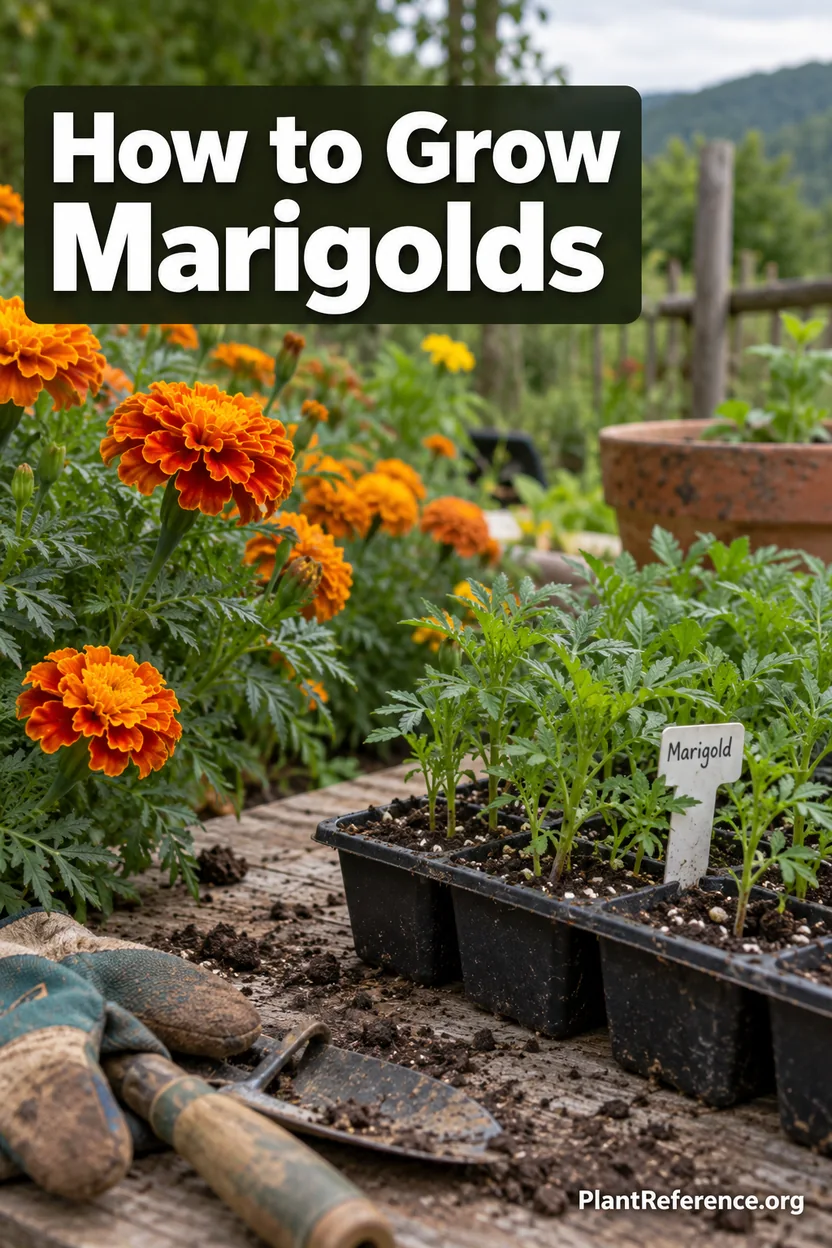
How to Grow Marigolds: Seed, Varieties, and Summer Care
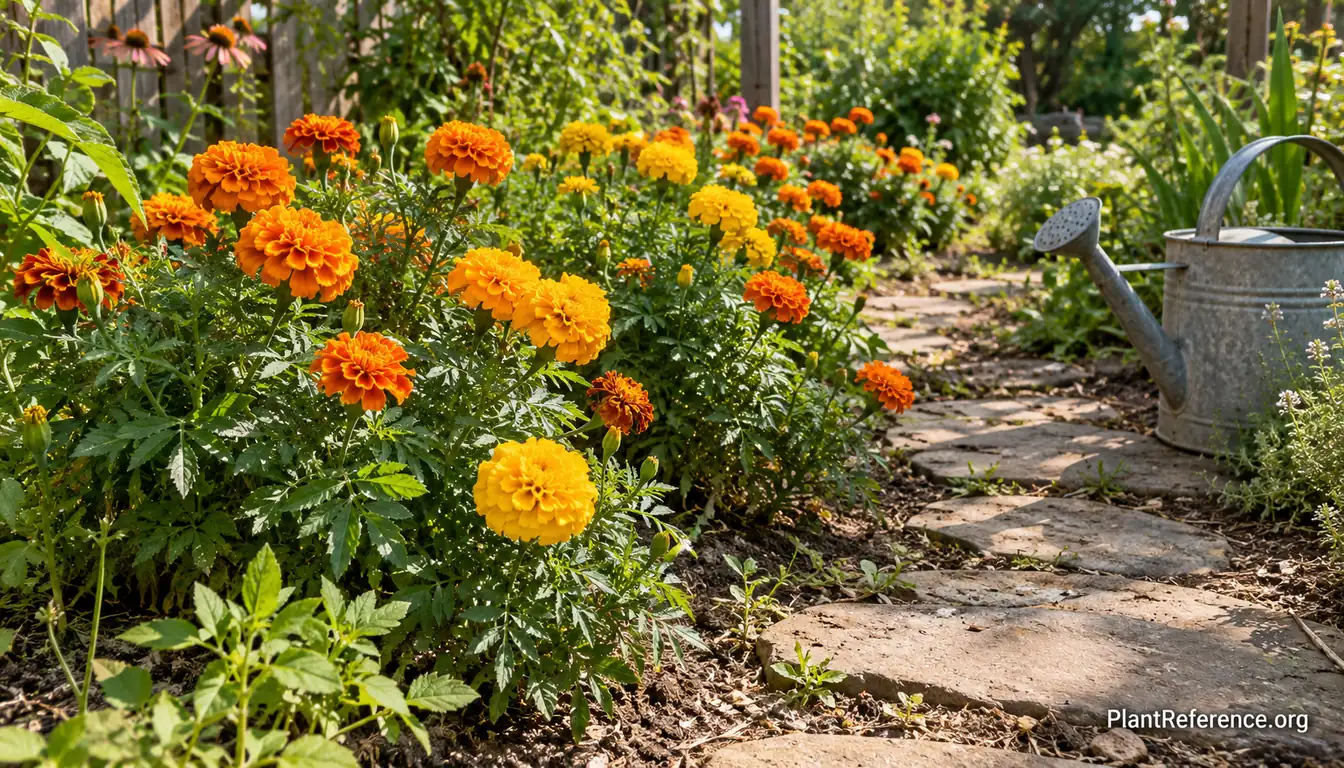
— Image © PlantReference.org 2026
If you want to learn how to grow marigolds, start with the space you actually have rather than the brightest packet photograph. A compact edging plant and a tall, large-flowered plant can both be marigolds, but they do different jobs. Match the type to your bed or pot, then give it warmth, sun, and a little regular attention.
How to Grow Marigolds: Start With the Right Type
Marigolds Tagetes spp. (tuh-JEE-teez) are tender annuals valued for warm-colored flowers and straightforward care. They belong in a sunny planting, not as a rescue choice for a deeply shaded corner. Look for at least six hours of direct sun and check whether nearby plants will shade them later.
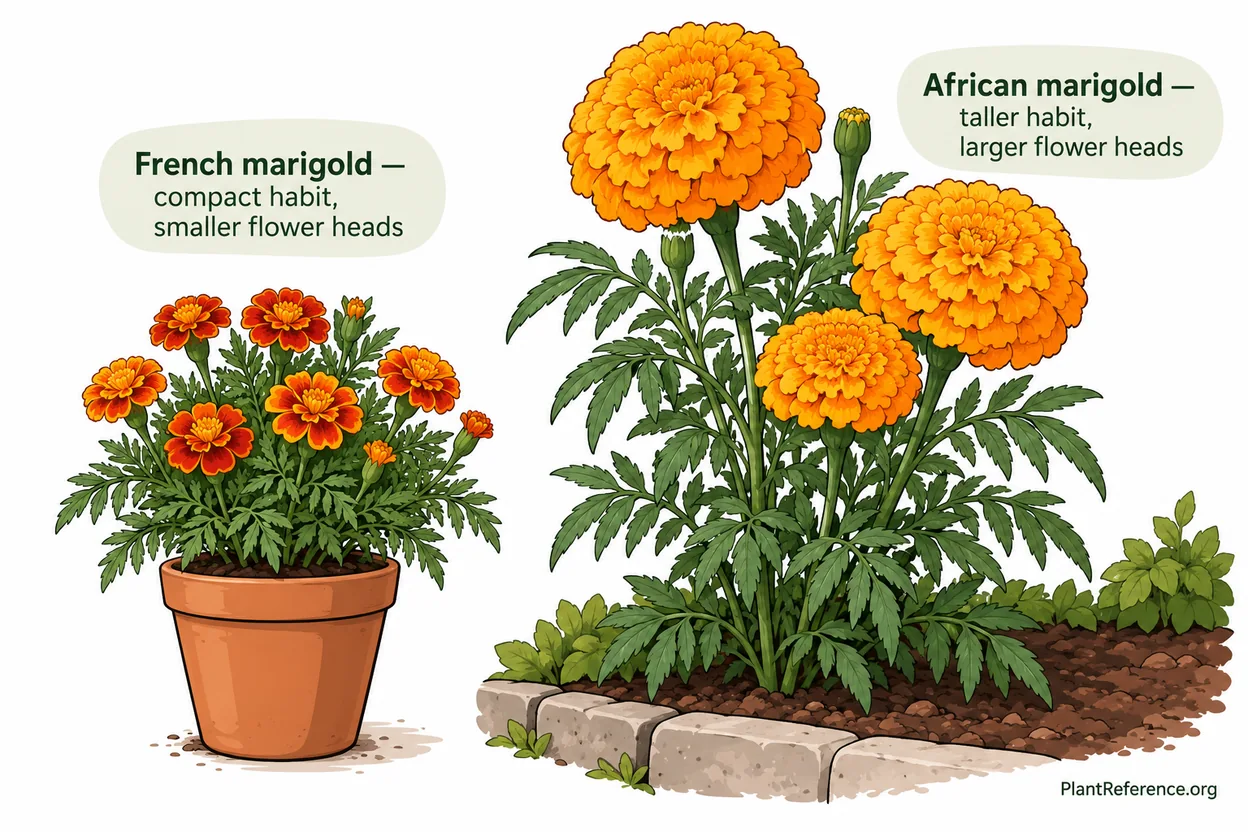
French types are generally compact, making them useful around bed edges and in smaller containers. African types tend to be taller with larger flower heads. Those group names are useful starting points, but the packet's mature dimensions should decide spacing and placement.
Signet types offer a different, finer-textured look, while sterile triploid types can provide a long display without the same seed-setting behavior. You do not need every group in one garden. Choose the shape that fits your design, then repeat it for a clearer effect.
If you are comparing unfamiliar flowers, Flower Identification Guide: Petals, Shape & Color Explained helps with their visible features. For a porch planting, start with Container Gardening: Pots, Soil, Water & Yields before deciding how many plants to fit into the pot.
Growing Marigolds From Seed
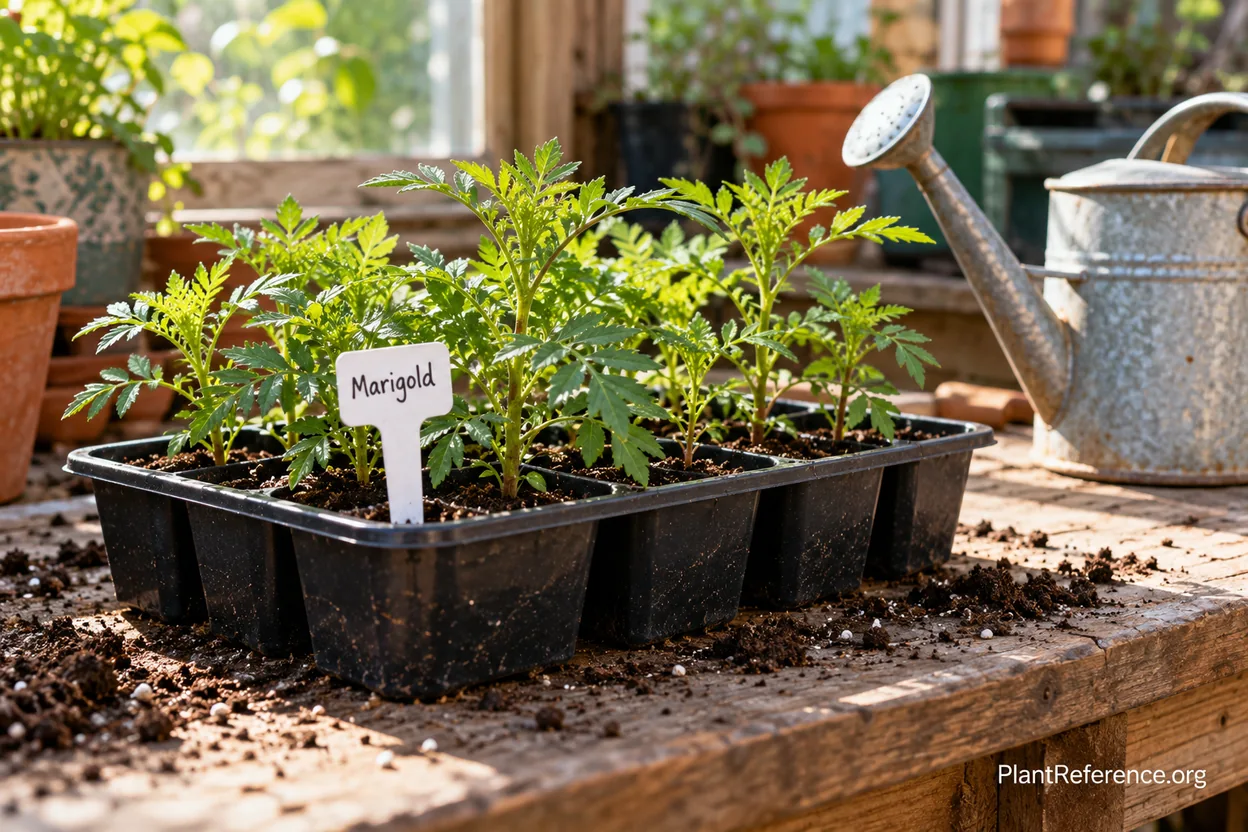
You can direct sow after frost danger has passed or start seeds indoors about six to eight weeks before your expected last frost. Indoor sowing gives a head start; direct sowing avoids the work of maintaining seedlings inside. Neither method makes cold, wet outdoor conditions suitable for planting.
Use your local frost history and the forecast together. Hardiness zones describe winter cold, not a dependable spring planting date. For a warm-season start, look for soil above about 60°F (16°C) and nights around or above 50°F (10°C), with no frost forecast.
Follow the packet for sowing depth and spacing because seed lots and types differ. Indoors, use a clean tray with drainage and seed-starting mix; outdoors, prepare a fine, weed-free surface that lets you maintain even moisture. Keep the seed zone moist without leaving it waterlogged.
Once seedlings emerge, provide strong light and enough space to develop sturdy growth. Before transplanting indoor plants, gradually introduce outdoor sun, wind, and temperature changes. A seedling grown in sheltered conditions should not move straight into an exposed bed for an entire hot day.
Some marigolds can begin flowering roughly 50–60 days from seed under favorable conditions, but treat the packet's timing as a planning estimate. Cool conditions, larger types, and setbacks can extend the wait. If you have missed the sowing window for your display, healthy transplants are a sensible choice rather than a gardening failure.
Planting in Beds and Containers
Choose a site that drains rather than one that stays puddled after rain. Prepare beds before planting, removing weeds and addressing compaction without working wet soil into a smear. Soil Health 101: How to Build Living, Productive Garden Soil covers that foundation, and How to Test Garden Soil: Jar, Ribbon & pH Tests helps when the soil's behavior is uncertain.
Space plants for their mature width, not the size of the seedling plug. Read the specific label rather than assigning one spacing to all marigolds. Tall plants placed in front of compact ones can hide the very flowers you wanted to see.
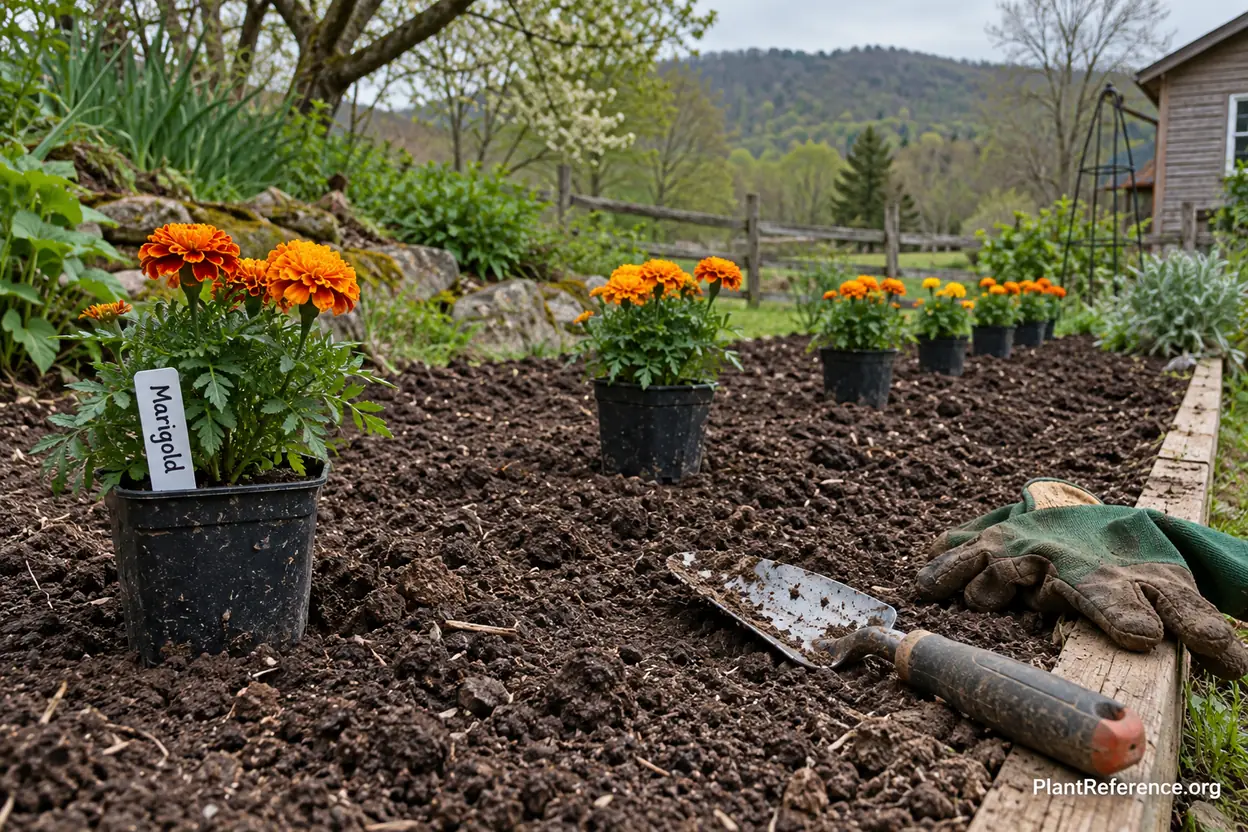
In containers, use potting mix and open drainage holes. Plant at approximately the same depth as the original root ball, firm gently, and water to settle the mix. Do not bury the crown deeply or compress the root zone into a hard plug.
A useful planting sequence keeps the decisions simple:
Check sun exposure and the forecast.
Set plants out at their labeled mature spacing before digging.
Keep root balls intact while easing them from their containers.
Plant at the original depth and water the root zone.
Watch moisture closely while the plants establish.
If a pot becomes difficult to keep watered as roots fill it, consult Container Plants Drying Out Fast? 7 Ways to Slow It Down. Cramming in extra plants for an instant display can create more maintenance later, especially once their canopies and roots expand.
Water, Feeding, and Deadheading
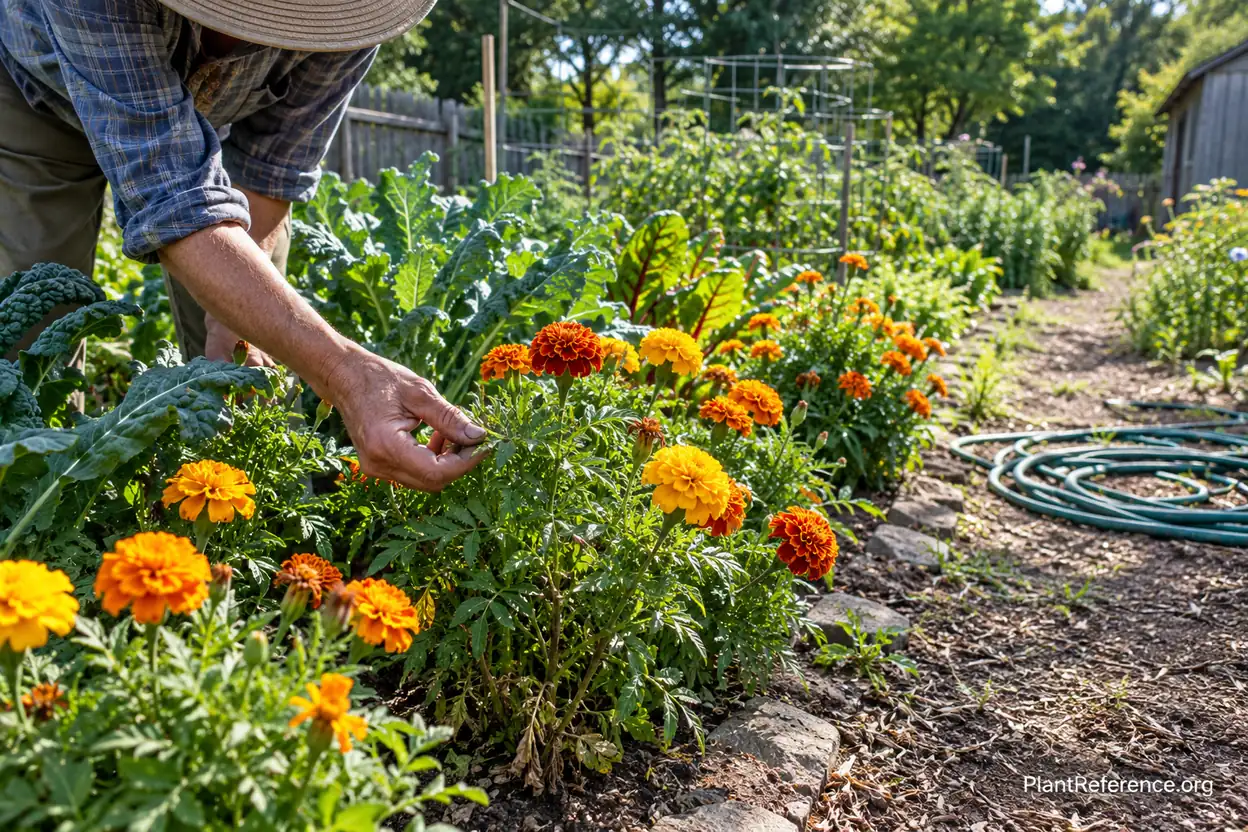
Check soil moisture before watering. Newly planted marigolds need attention while their roots establish; established plants should not sit in saturated soil. Water the root zone thoroughly when needed, then let excess drain rather than giving frequent little splashes by the calendar.
Hot weather changes the pace, especially in containers. A plant drooping in dry mix needs a different response from one drooping in wet mix. Container Plants Wilting in Heat: Cool the Root Zone helps you inspect exposure and roots instead of treating every wilt as thirst.
Avoid feeding heavily just because flowering is slower than expected. Excess nitrogen can encourage leafy growth at the expense of the display you want. Use DIY Organic Fertilizer Blends: A Soil-Test-First Guide for bed decisions; container feeding should follow the product directions and account for fertilizer already in the mix.
White deposits on potting mix are another reason to inspect the feeding and watering routine. White Crust on Potting Soil: Causes and How to Flush It explains why adding more fertilizer is not always the right response to a tired-looking pot.
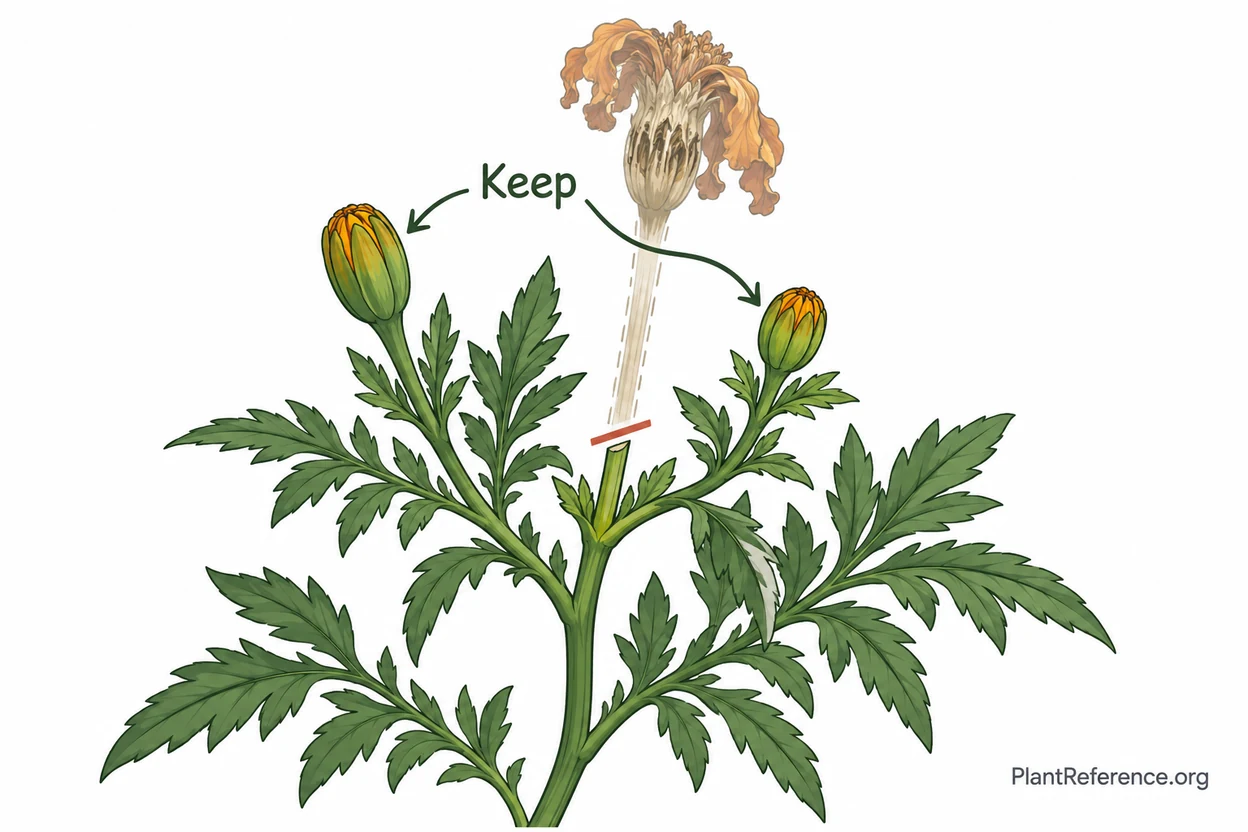
Remove spent flowers regularly on types that benefit from deadheading. Follow the faded head to a healthy leaf or side branch and cut above that junction, removing the developing seed base as well as the petals. Keep unopened buds and healthy foliage; shearing off everything at one height sacrifices flowers that were about to open.
Marigold Companion Planting and Troubleshooting
Marigold companion planting is often described more broadly than the evidence supports. French marigolds have a documented role in suppressing some root-knot nematodes under appropriate growing conditions. That does not mean a few flowers beside a vegetable plant create an all-purpose pest barrier.
The nematode involved, marigold selection, and planting method matter. If nematodes are your concern, seek a diagnosis and locally appropriate guidance before treating a decorative border as a control program. Do not assume that a sick neighboring plant will recover because you added marigolds.
For ordinary home growing, the dependable benefits are simpler: seasonal color, a defined bed edge, and a manageable annual display. Judge success by healthy growth and flowering, not by whether every insect disappears. Continue inspecting vegetables and flowers separately.
When marigolds struggle, start with the basics. Sparse stretched growth points you toward light and crowding; lush leaves with few flowers call for a feeding review. Wilting in wet soil suggests a root-zone problem, while slow growth after an early planting may reflect cold conditions.
Keep one short note each week: moisture behavior, new buds, and any change in leaf color. That record is more useful than changing watering, fertilizer, and pruning on the same afternoon. Correct the clearest problem first, then give the plant time to respond.
Frequently Asked Questions

Reading about plants and recognising them are different skills. These three build the second.
- Daily PlantIdentify the day’s mystery plant from a close-up photograph.
- Keyed OutWork a dichotomous key, lead by lead, to name a hidden specimen.
- Name That PlantName a specimen from botanical clues dealt hardest first.
Free to play, no account needed
Tagged with
Claire runs a small cut flower farm on two acres outside Asheville, North Carolina, where she grows annual flowers for farmers market bouquets and a subscription CSA. She studied art in college and fell into flower farming after volunteering at a community garden during graduate school. What started as a few rows of zinnias and cosmos turned into a full-time business within three years. Claire grows over 40 annual flower varieties from seed each season, managing succession plantings from February through October. She teaches seed-starting workshops at the local cooperative extension office and mentors new flower farmers through their first seasons. Claire writes from direct growing experience — she has started tens of thousands of seeds, trialed hundreds of varieties, and made every mistake in the annual flower book at least once. Her advice is specific, seasonal, and grounded in what actually works in the field, not what looks good in a catalog photo.