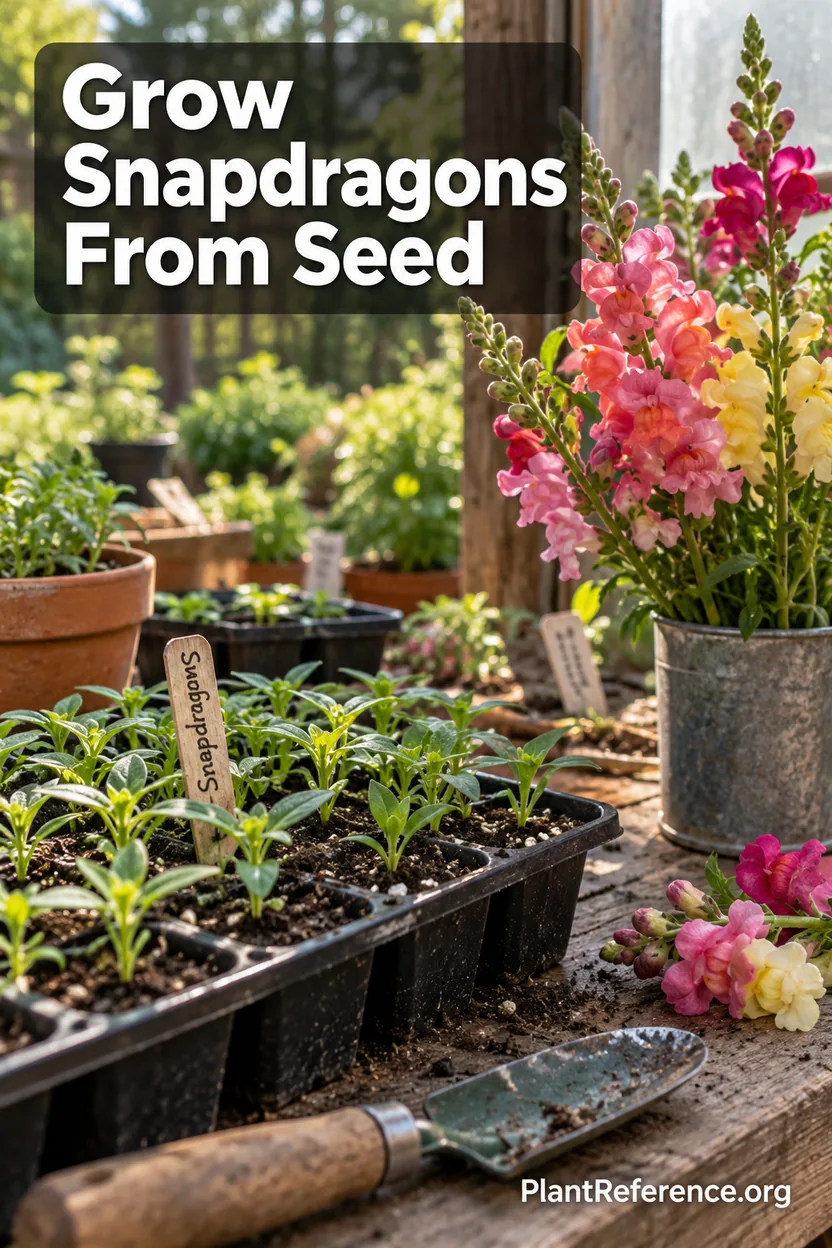
How to Grow Snapdragons: Seed and Cool-Season Care
— Image © PlantReference.org 2026
Pets & Toxicity
Recorded toxicity for plants linked in this guide. An unknown status is not a safety assessment.
No linked plant is recorded as toxicDetailsHide
Learning how to grow snapdragons starts with a calendar, not a fertilizer bottle. These flowers can make a generous display in cool weather and then slow down when summer turns hot. Plan for that rhythm from the start, and you are less likely to mistake a seasonal pause for a plant that needs rescuing.
How to Grow Snapdragons With the Season
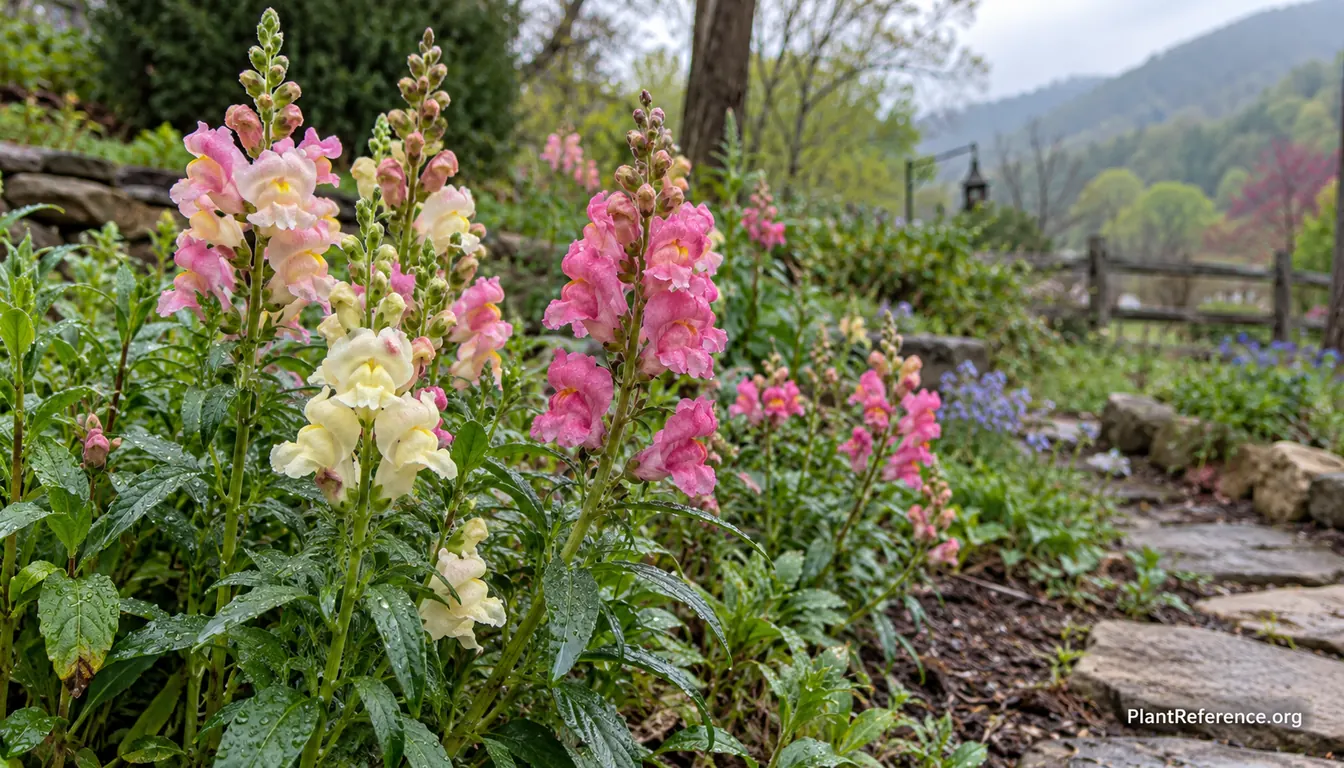
Snapdragons 🌿Antirrhinum majus (an-tih-RYE-num MAY-jus) are commonly grown as cool-season annuals. Their upright flower spikes offer a different shape from round-headed bedding flowers, giving a border or bouquet a useful vertical line. Check the variety's mature size before deciding where that line belongs.
They grow and flower well in mild conditions, roughly 60–75°F (16–24°C). That range describes a preference, not a rigid cutoff that every plant follows. A sheltered spring bed and a hot paved courtyard can behave very differently even in the same neighborhood.
Hardy annuals tolerate some cold, but “hardy” does not mean an indoor seedling can go straight into a freeze. Acclimation, plant maturity, wind, wet soil, and the forecast all affect the decision. Use local growing guidance rather than translating a hardiness-zone number into a universal transplant date.
If you are choosing plants by flower form, Flower Identification Guide: Petals, Shape & Color Explained helps clarify what you are seeing. For pots, Container Gardening: Pots, Soil, Water & Yields is a useful starting point before you match mature height to a container.
Growing Snapdragons From Seed
Count back eight to ten weeks from your expected last frost for an indoor start. Write that target on the seed tray, along with the variety and sowing date. The point of the early start is to have useful young plants ready for the cool part of the outdoor season.
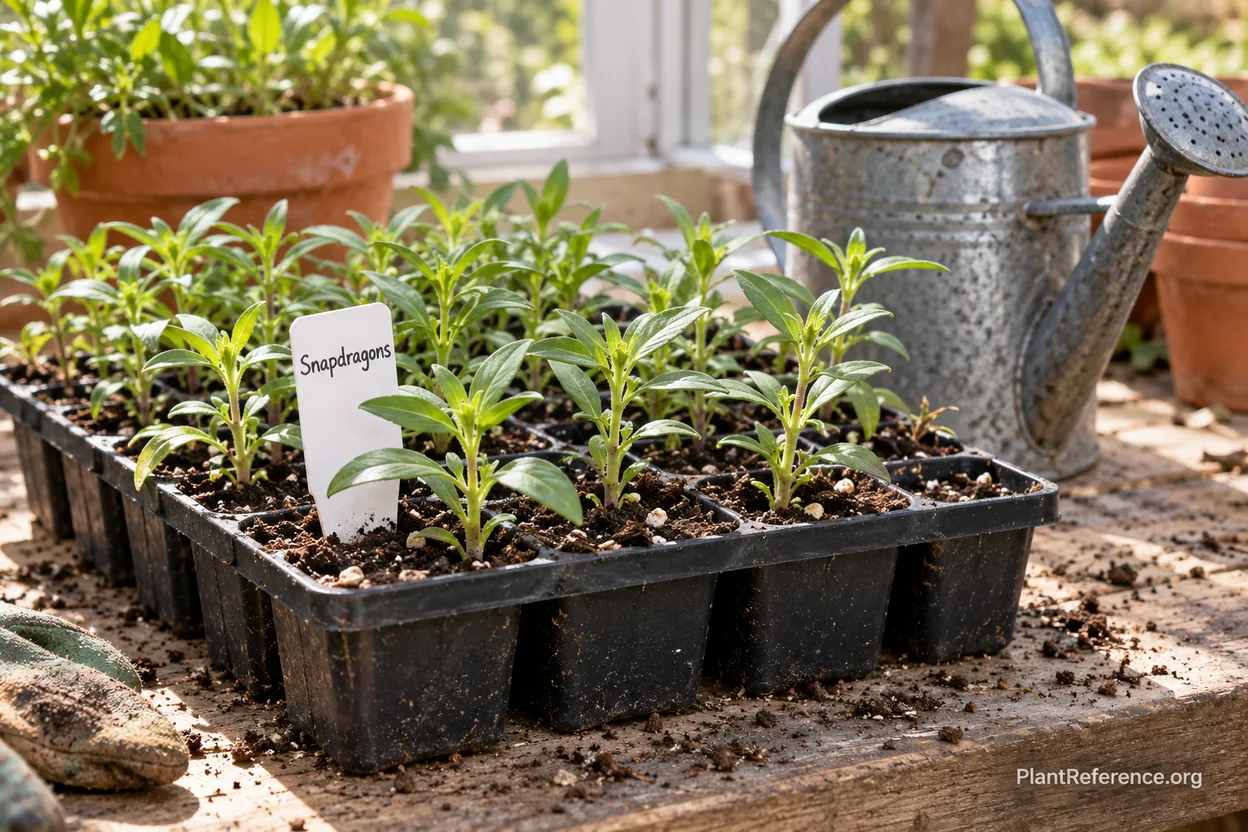
Use clean containers with drainage and a fine seed-starting mix. Follow the packet's instructions for sowing depth, light, and germination conditions; tiny seeds are easy to bury more deeply than intended. Water gently so the seed surface is not washed into corners.
Once seedlings emerge, provide strong light and inspect moisture regularly. Keep the mix from drying completely around tiny roots, but do not leave the tray saturated. Stretched, leaning seedlings are a reason to improve light, not to apply stronger fertilizer.
As plants grow, give them enough room that you can handle individual root balls without tearing neighboring seedlings apart. Avoid holding the seedlings indoors indefinitely just because the tray still looks tidy. Plan the transition outdoors while the plants are young and manageable.
Harden them off gradually by introducing outdoor conditions over several days. Begin with protected exposure, then increase time outside as the plants adjust. If the forecast turns harsh, pause the process; the sowing date on a label does not override the weather.
Planting Beds and Containers
Choose a sunny site with soil that drains well. Prepare beds before the plants arrive, removing weeds and addressing compaction without working wet soil into a smear. Soil Health 101: How to Build Living, Productive Garden Soil explains why structure matters as much as what you add.
Follow the variety label for spacing rather than treating compact bedding types and taller cutting types alike. Leave room for the mature foliage and for access during maintenance. A full-looking tray does not mean the plants should remain shoulder to shoulder in the ground.
For persistent soil concerns, start with How to Test Garden Soil: Jar, Ribbon & pH Tests. Do not assume that extra nutrients will correct a site that stays wet. In containers, use potting mix, keep drainage holes open, and avoid burying the crown more deeply than it sat in the original pot.
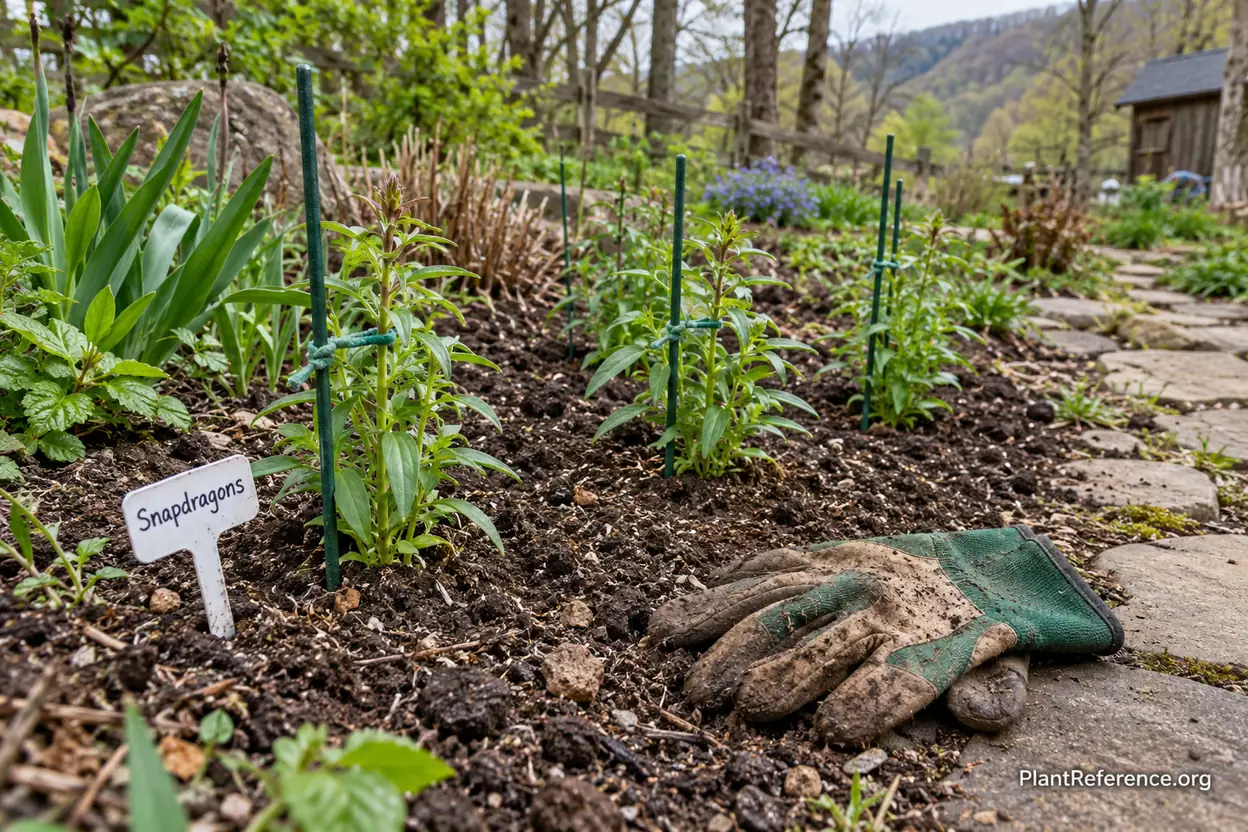
Tall selections need a plan for support before their stems lean into a path. Install supports while plants are small enough to work around easily. Keep ties gentle and allow room for growth rather than fastening stems tightly against a stake.
Watch watering more closely after transplanting and during windy weather. Container Plants Drying Out Fast? 7 Ways to Slow It Down can help with pots that become difficult to manage. Water the root zone when needed, then allow excess to drain rather than leaving a saucer full.
Pinching, Deadheading, and Bouquet Cuts
Pinching is a choice about structure and timing. Removing the central tip of a suitable young plant can encourage side branches, but it gives up the original central spike and can delay the first flowers. Leave the tip alone if that earliest central stem is your priority.
For branching, wait for three to five sets of true leaves on an actively growing plant. Cut just above a healthy leafy node, leaving foliage below to support the new shoots. Do not apply this early shaping step to a wilted transplant or a plant already in flower.
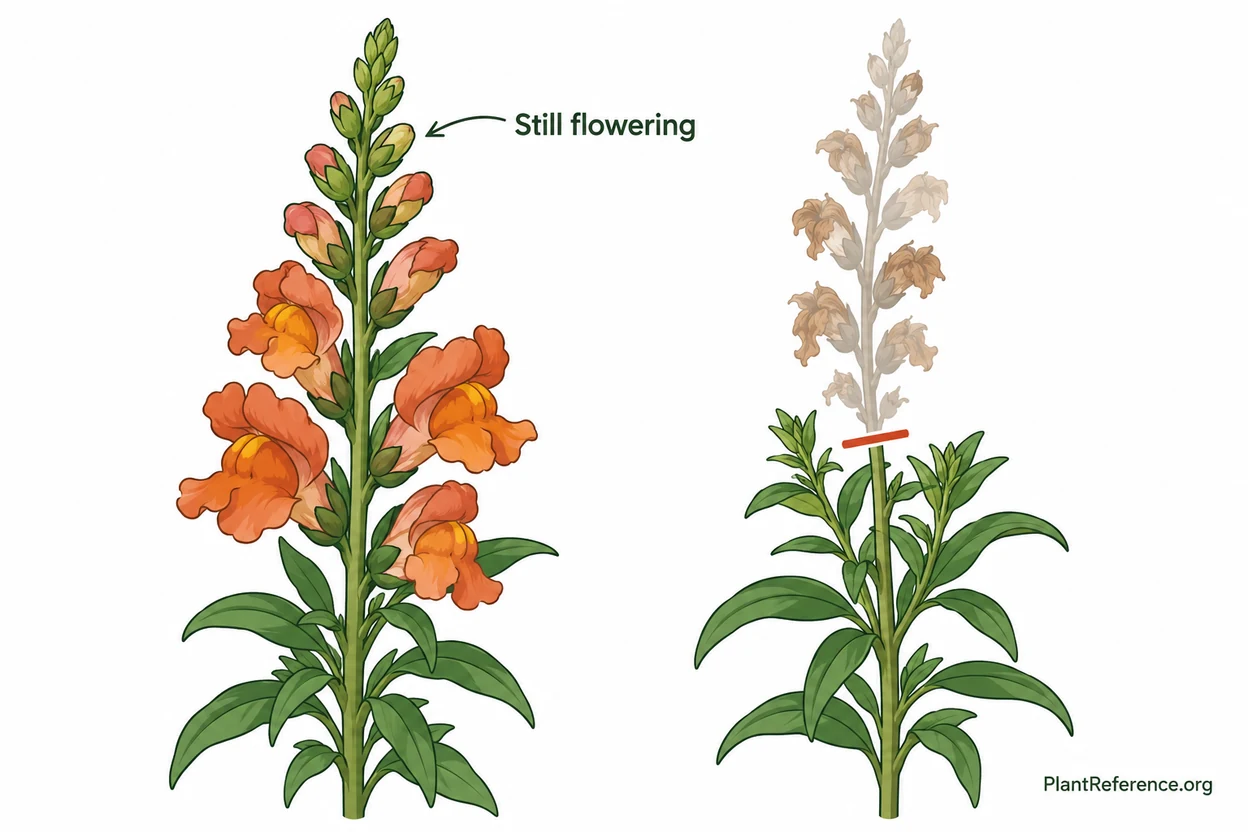
Deadheading comes later. A snapdragon spike may have finished lower flowers while upper buds are still opening, so inspect the whole spike before removing it. Once its display is finished, cut back above healthy leafy side growth rather than leaving a long bare stalk.
For a simple maintenance routine:
Check whether the spike still has useful unopened buds.
Find healthy leafy growth below a finished spike.
Make a clean cut above that retained growth.
Collect the clipping and preserve nearby new shoots.
Recheck moisture and overall plant condition before doing more.
For bouquets, cut healthy stems in the cool morning and place them promptly in clean water. Take only what the plant can spare while leaving useful foliage and side growth. A bouquet harvest is not a reason to cut every plant to the ground.
Summer Heat and Fall Recovery
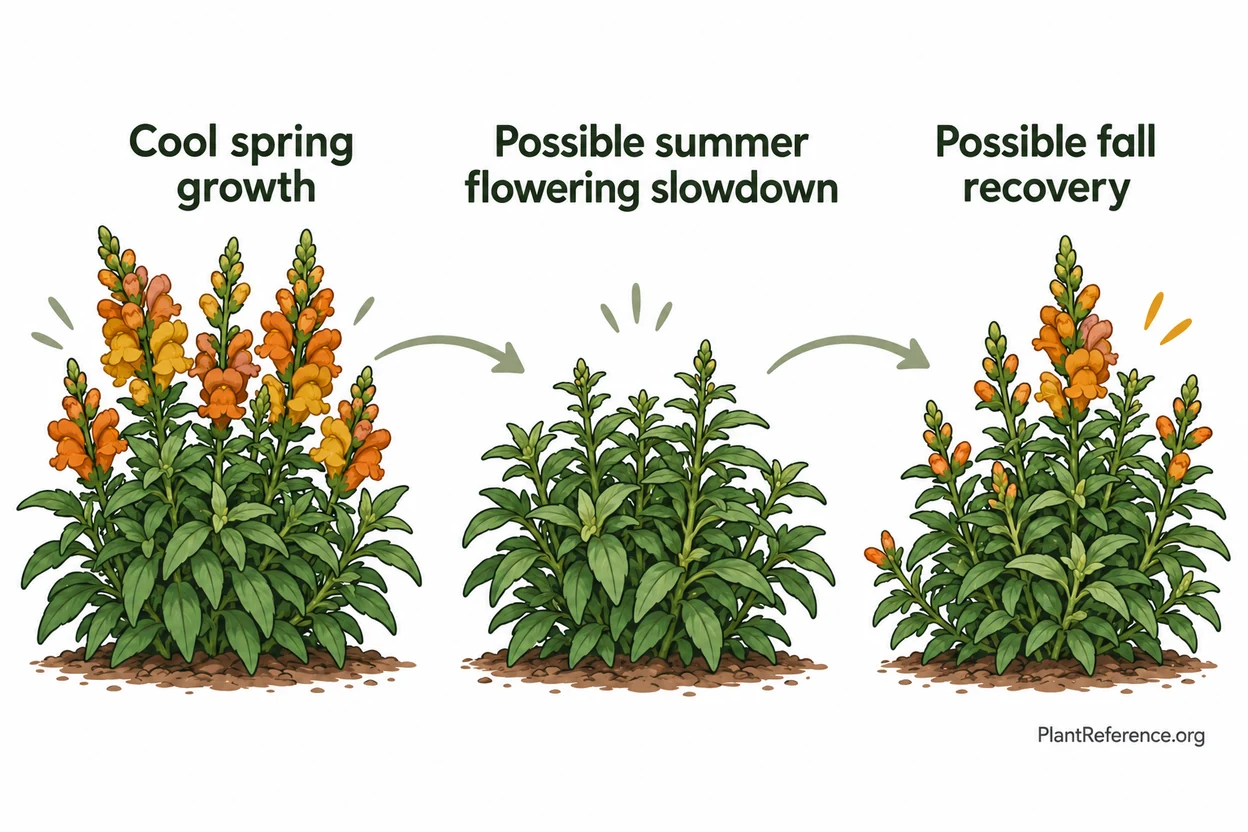
When hot weather arrives, flowering can slow even if you have watered carefully. First inspect the plant's leaves, roots, and moisture conditions. Healthy foliage with fewer spikes suggests a different situation from a plant collapsing in saturated soil.
For containers exposed to paving or hot walls, Container Plants Wilting in Heat: Cool the Root Zone helps you assess the immediate environment. Avoid repeatedly soaking already wet mix or making severe cuts during a stressful heat spell. The plant needs functioning roots and leaves to recover.
Do not try to force a new flush with heavy feeding. DIY Organic Fertilizer Blends: A Soil-Test-First Guide provides a more measured approach to bed nutrition. In pots, consider fertilizer already present in the mix, and use White Crust on Potting Soil: Causes and How to Flush It if deposits suggest accumulated salts.
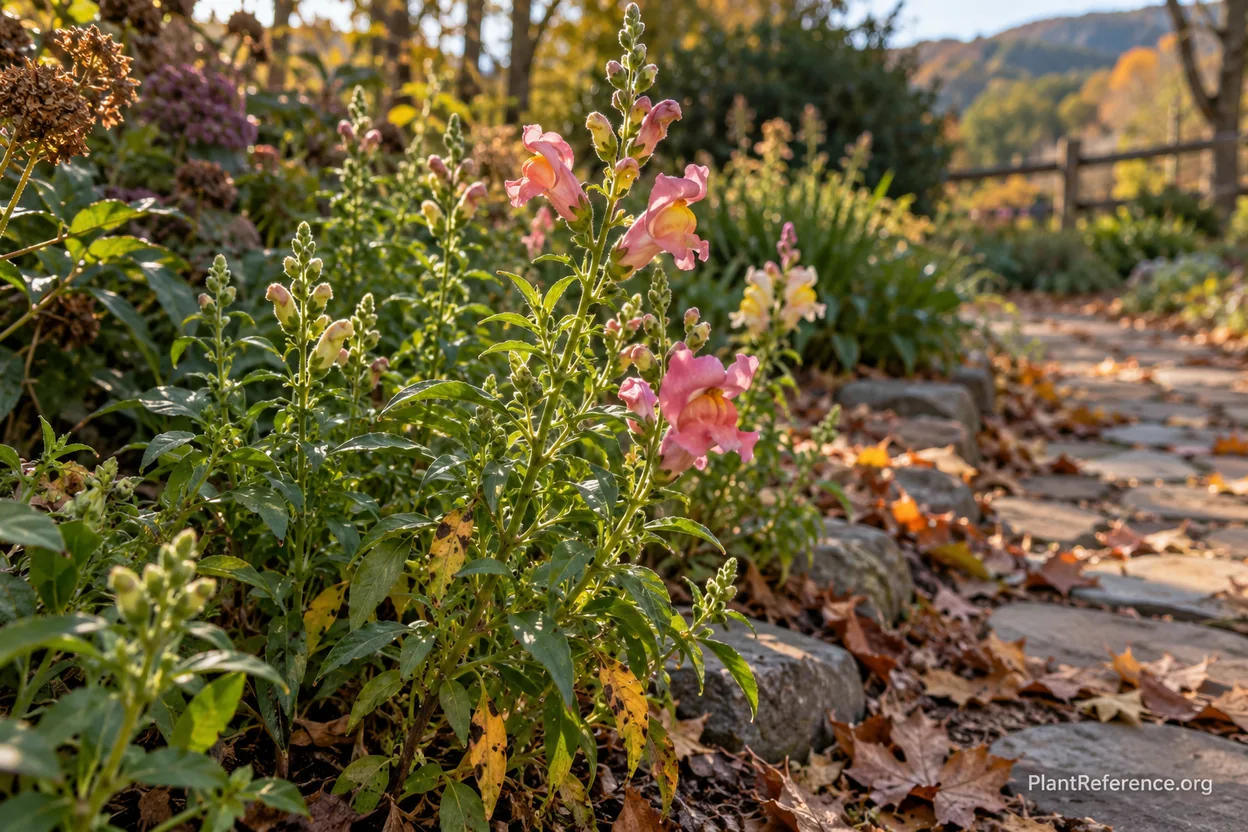
Continue appropriate watering and remove genuinely spent spikes while preserving healthy growth. Plants that remain healthy may flower again as temperatures moderate in fall. Treat that as a possibility, not a guarantee: severe summer decline or a short autumn can limit the result.
A later planting can also extend the cool-season display where local conditions support it. Work backward from the expected growing window using the variety's instructions, rather than copying a date from a different climate. Your aim is a plant ready for favorable weather, not a tray that reaches maturity after the useful season ends.
Keep a short record of sowing, transplanting, first bloom, and the start of any summer pause. That gives next year's calendar a local foundation. Good snapdragon care is as much about choosing the right season as choosing the right cut.
Frequently Asked Questions

Reading about plants and recognising them are different skills. These three build the second.
- Daily PlantIdentify the day’s mystery plant from a close-up photograph.
- Keyed OutWork a dichotomous key, lead by lead, to name a hidden specimen.
- Name That PlantName a specimen from botanical clues dealt hardest first.
Free to play, no account needed
Tagged with
Claire runs a small cut flower farm on two acres outside Asheville, North Carolina, where she grows annual flowers for farmers market bouquets and a subscription CSA. She studied art in college and fell into flower farming after volunteering at a community garden during graduate school. What started as a few rows of zinnias and cosmos turned into a full-time business within three years. Claire grows over 40 annual flower varieties from seed each season, managing succession plantings from February through October. She teaches seed-starting workshops at the local cooperative extension office and mentors new flower farmers through their first seasons. Claire writes from direct growing experience — she has started tens of thousands of seeds, trialed hundreds of varieties, and made every mistake in the annual flower book at least once. Her advice is specific, seasonal, and grounded in what actually works in the field, not what looks good in a catalog photo.