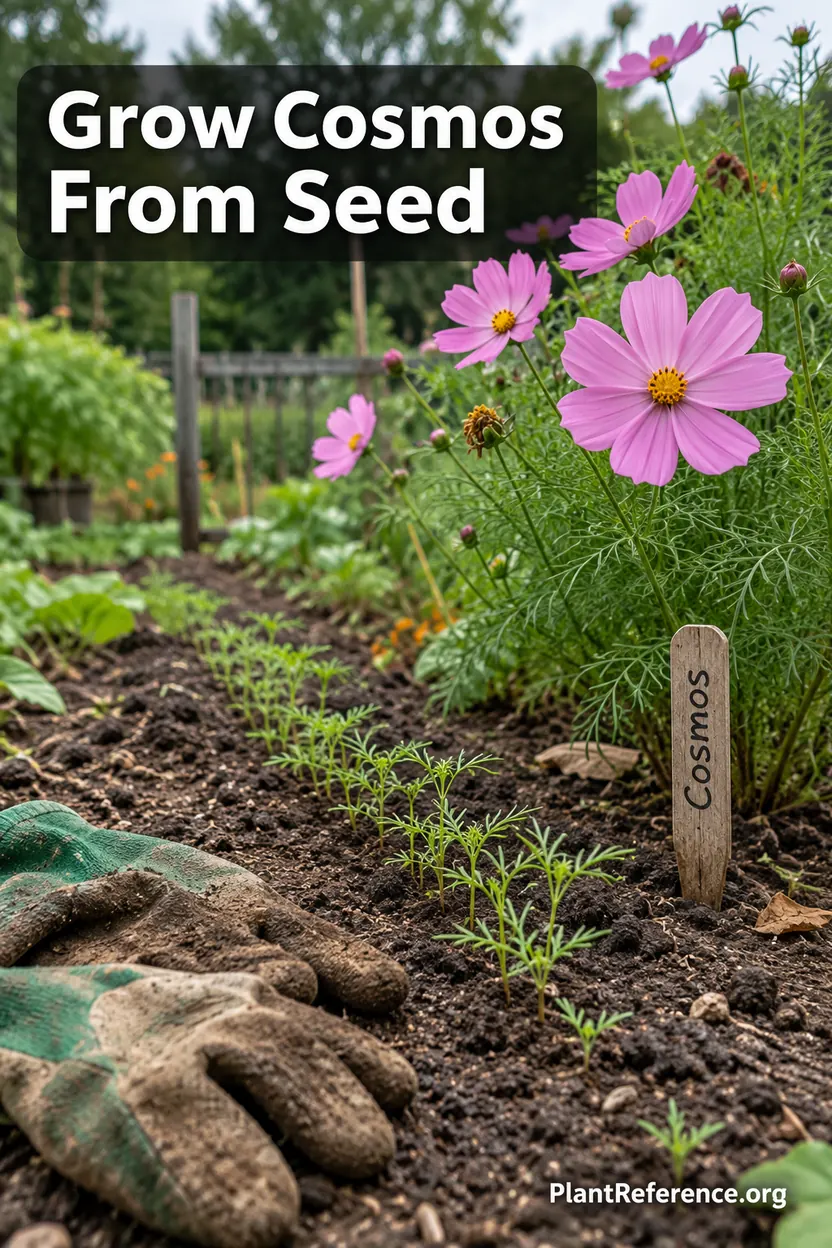
How to Grow Cosmos From Seed to Summer Flowers
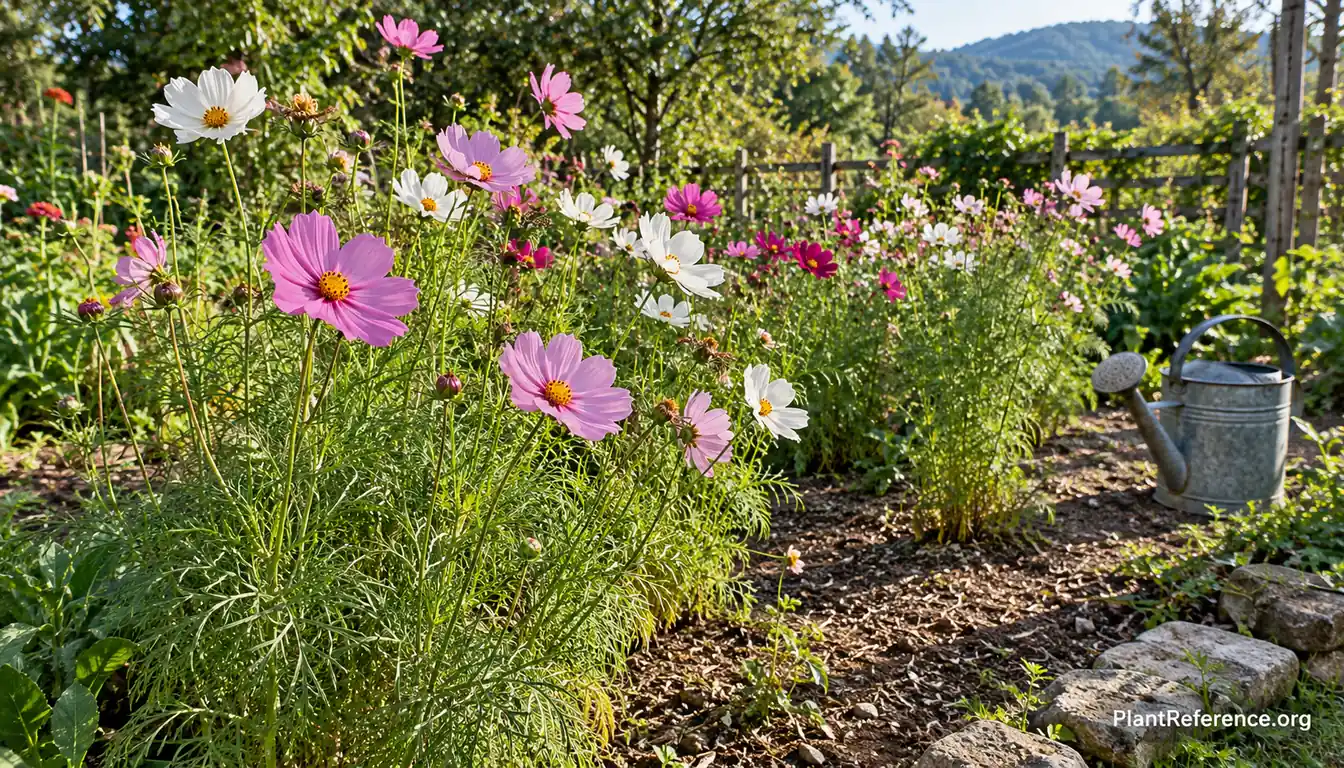
— Image © PlantReference.org 2026
Pets & Toxicity
Recorded toxicity for plants linked in this guide. An unknown status is not a safety assessment.
No linked plant is recorded as toxicDetailsHide
Knowing how to grow cosmos is largely knowing what not to overdo. These airy annuals do not need a heavily fed bed or constant interference to make a generous summer display. Start with warm conditions and enough sun, then let the plants build their framework before judging the flower count.
How to Grow Cosmos: Choose the Right Site
Common garden cosmos 🌿Cosmos bipinnatus (KOZ-mos bye-pin-NAY-tus) brings fine foliage and flowers that sit lightly above the leaves. Sulfur cosmos 🌿Cosmos sulphureus (KOZ-mos sul-FYOOR-ee-us) is another annual option. Check the seed packet for the particular plant's color, height, and mature width rather than assuming every cosmos stays the same size.
Choose full sun, with at least six hours of direct light as a useful starting point. Watch for shade from buildings and neighboring plants, especially as the garden fills in. A seedling planted in spring sun can end up under a leafy canopy later.
Good drainage matters more than making the soil unusually rich. Cosmos tolerates relatively lean soil, but that does not mean compacted, waterlogged ground is suitable. Soil Health 101: How to Build Living, Productive Garden Soil explains the difference between supporting soil structure and simply adding more fertilizer.
Use Flower Identification Guide: Petals, Shape & Color Explained if you are sorting out an unfamiliar plant. In containers, begin with the fundamentals in Container Gardening: Pots, Soil, Water & Yields and choose a type whose mature size actually suits the pot.
Growing Cosmos From Seed
Direct sowing is a simple first choice because the plants can grow where they will flower without a transplant step. Wait until frost danger has passed and the soil has warmed. As a warm-season checkpoint, look for soil above about 60°F (16°C) and nights around or above 50°F (10°C), alongside a favorable forecast.
Do not use a hardiness-zone number as an exact sowing date. Local elevation, exposure, and the current spring weather can change the decision. A short wait for suitable conditions is usually more productive than sowing into cold, saturated ground.
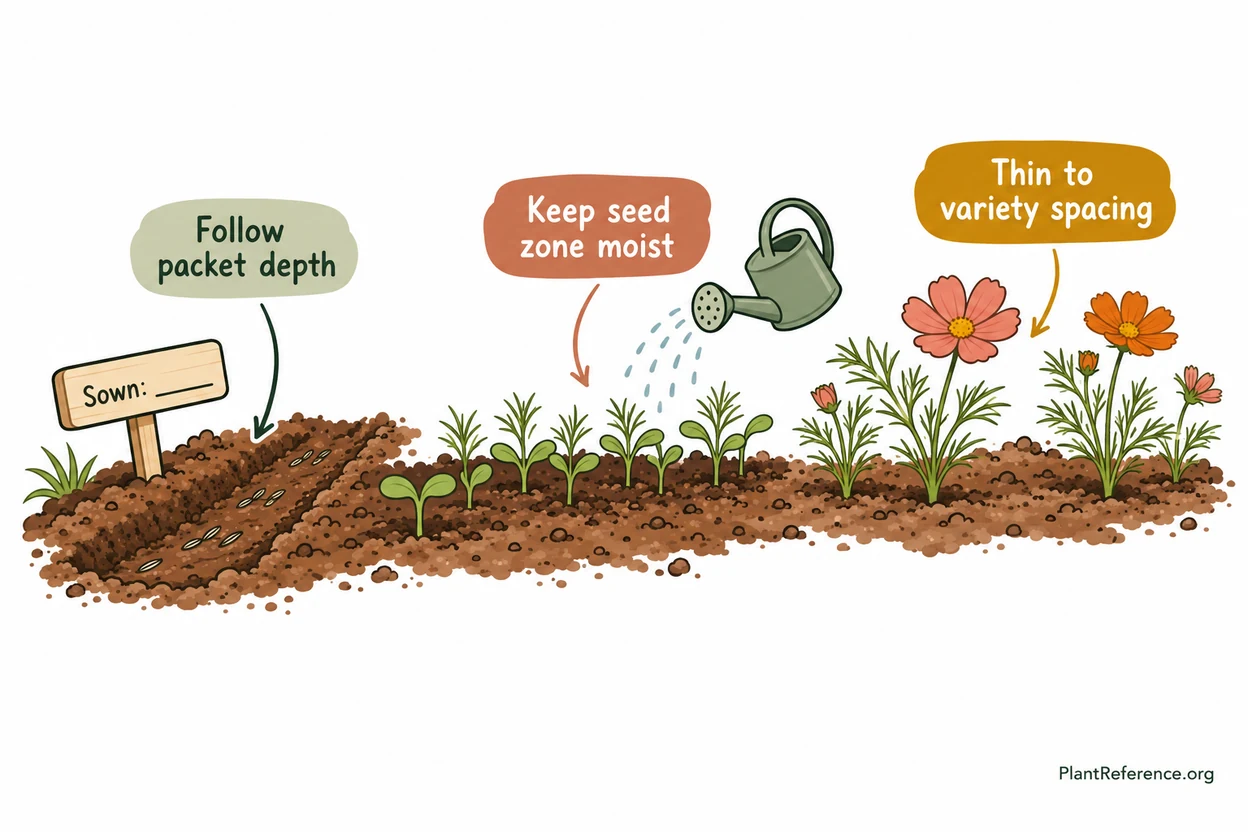
Prepare a weed-free seedbed and follow the packet's sowing depth. Sow in marked rows or small groups so you can distinguish the seedlings from weeds. Water gently enough that seeds stay in place, then maintain moisture in the seed zone without turning the bed into mud.
Once seedlings are established, thin to the spacing specified for the variety. Leaving every seedling in place feels generous, but it creates competition for light and root space. You want individual plants that can branch, not a dense mat of stems stretching upward.
Expect roughly 60–90 days from sowing to bloom as a broad planning range, with variety and conditions affecting the result. Note the sowing date on the label. That makes it easier to distinguish a genuinely delayed planting from one that simply has not reached flowering age.
Establish Plants Without Overfeeding
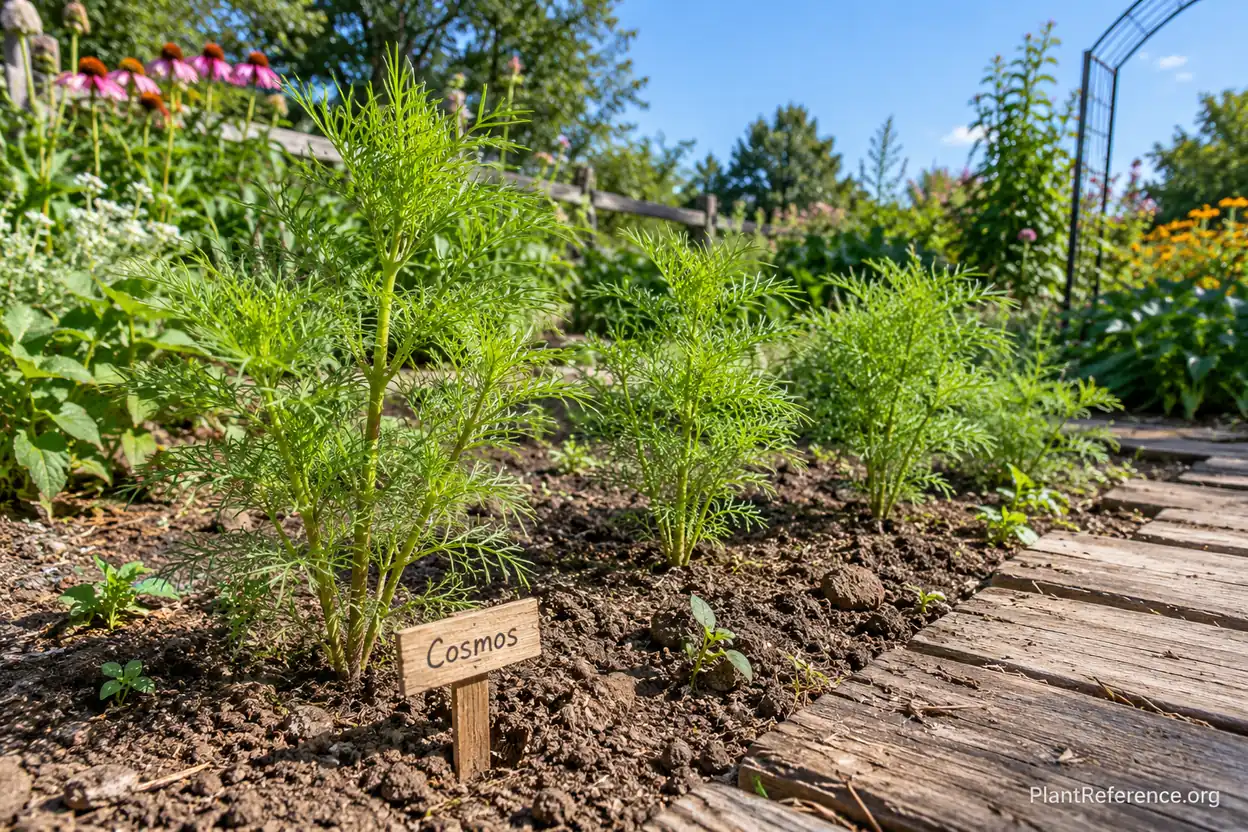
Water young plants while their roots establish, checking the soil rather than relying on a fixed daily schedule. As growth increases, water the root zone when needed and let the soil drain. A plant wilting in dry ground and one wilting in wet ground need different responses.
Container-grown cosmos needs especially careful observation because a small root volume can dry rapidly. Container Plants Drying Out Fast? 7 Ways to Slow It Down helps you assess pot size, crowding, and exposure. Do not assume an annual that handles a sunny bed will manage the same watering interval in a pot.
Resist the urge to feed heavily for faster flowers. Too much nitrogen can favor lush foliage, leaving you with a large green plant and a disappointing display. Review DIY Organic Fertilizer Blends: A Soil-Test-First Guide before adding nutrients to beds that may already have enough.
If poor growth persists, inspect the site rather than guessing at an amendment. How to Test Garden Soil: Jar, Ribbon & pH Tests is a useful starting point. For white deposits on container mix, White Crust on Potting Soil: Causes and How to Flush It explains why more fertilizer can be the wrong response.
Tall selections also need space to remain upright without leaning over a path. Plan any support early, while access is easy, and avoid packing them between vigorous neighbors. The goal is an airy framework with visible flowers, not a crowded thicket that must be untangled later.
Keep Cosmos Flowering and Cut for Bouquets
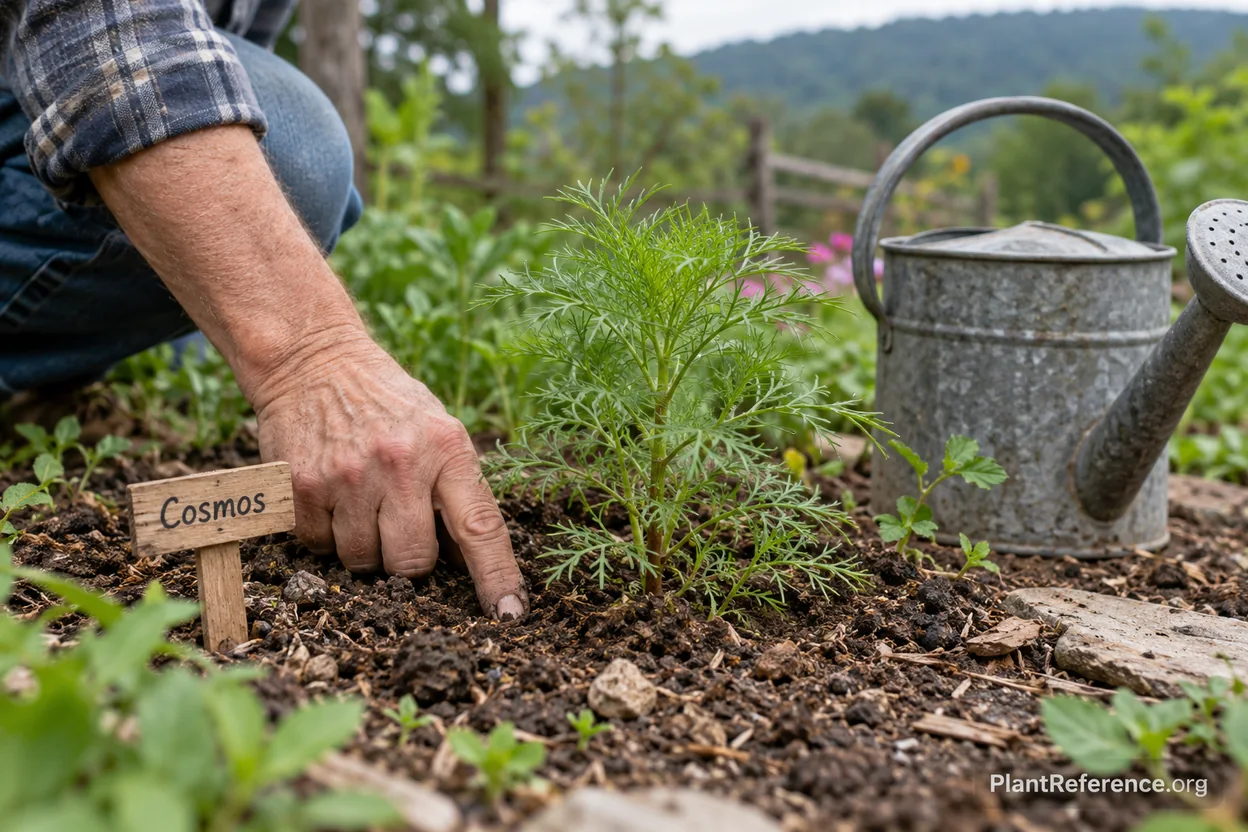
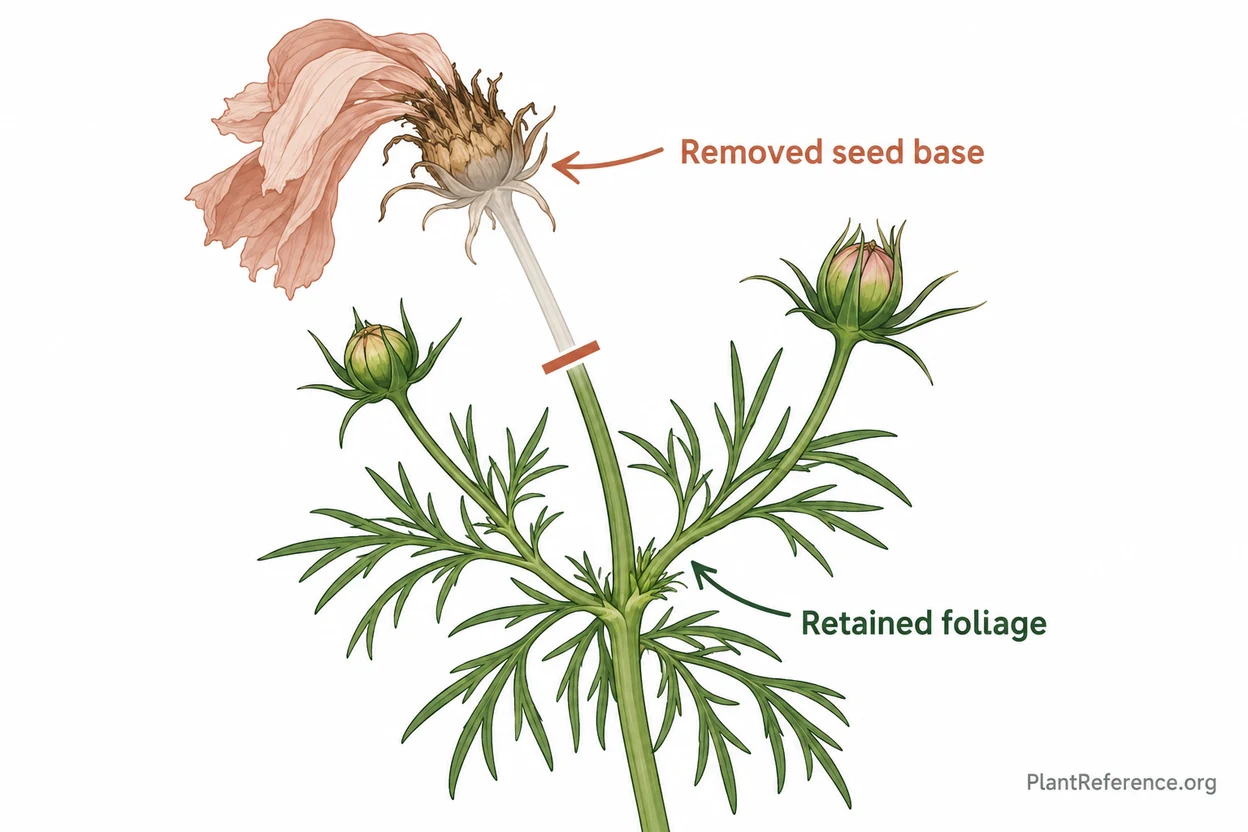
Once flowers arrive, regular deadheading keeps spent heads from accumulating. Follow a faded flower's stalk down to a healthy branching point and cut above the growth you want to keep. Remove the developing seed base as well as the petals, taking care around the small neighboring buds.
For bouquets, harvest during the cool part of the morning and place cut stems in clean water promptly. Choose healthy flowers and handle their slender stems gently. Harvesting an attractive bloom and removing a spent one serve different purposes, even when both cuts return to a useful branching point.
A short maintenance pass can stay simple:
Check moisture and general leaf condition.
Pick suitable flowers for the vase if desired.
Remove finished heads while preserving unopened buds.
Collect clippings rather than leaving them piled around stems.
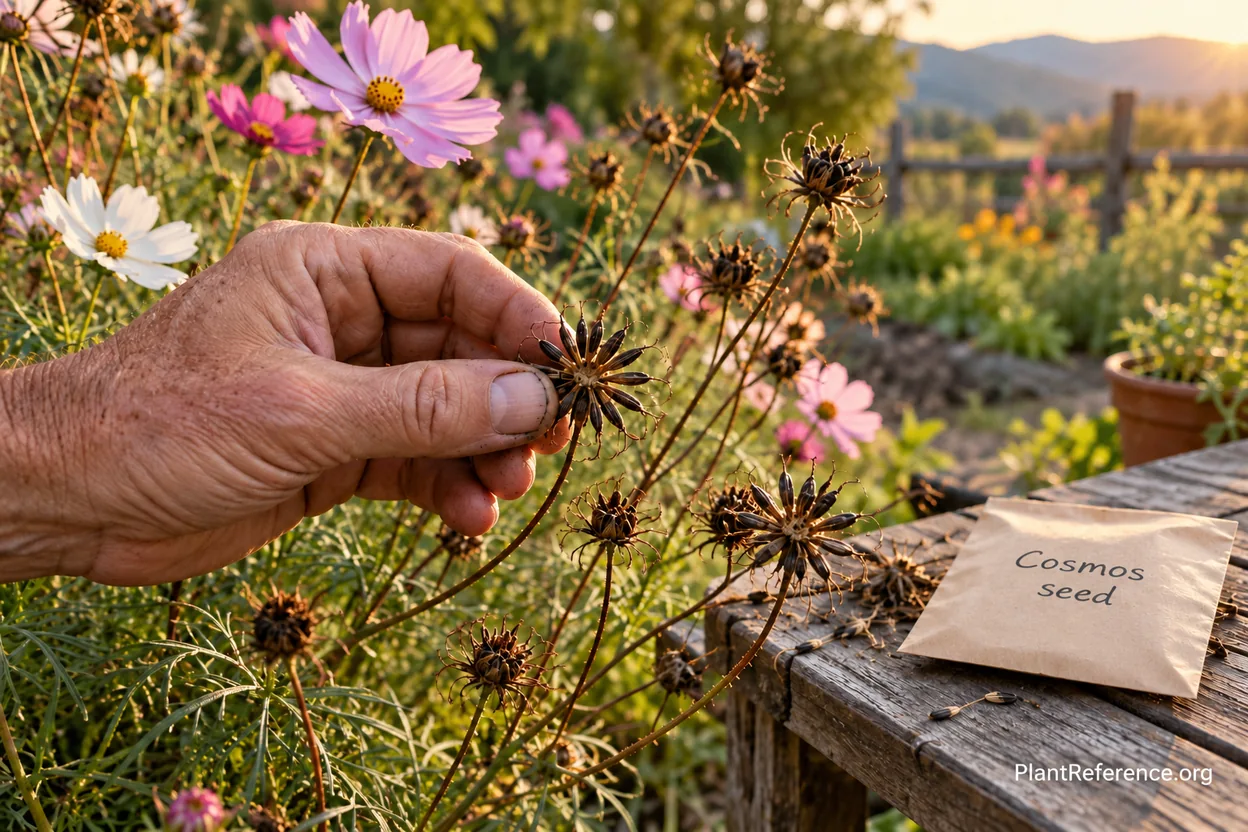
Mark any healthy heads you intend to keep for seed.
If you want a longer sequence of flowers, consider a later sowing while enough warm growing time remains. Count backward from the likely end of your season using the packet's maturity estimate, then allow a buffer. A midsummer sowing date that works in one climate may be too late in another.
Do not keep clipping a heat-stressed plant in the hope of forcing it into bloom. Container Plants Wilting in Heat: Cool the Root Zone offers a useful check for pots. Flower production still depends on the plant having enough healthy leaves and functioning roots to support new growth.
Self-Sowing and Common Problems
Cosmos can self-sow when mature seed falls onto suitable ground. To encourage volunteers, leave selected healthy flower heads to ripen instead of deadheading everything. To reduce volunteers, remove heads before mature seed drops.
Self-sowing is an opportunity, not a promise of an identical garden next year. Weather, soil disturbance, and growing conditions influence which seedlings appear. Saved seed from hybrids may also produce plants unlike the original, so retain the packet if matching color and form matters.
When seedlings appear in unwanted places, remove them while they are small. Keep volunteers only where their eventual size fits the planting. A freely seeded patch still needs thinning and weeding; “self-sowing” does not mean every seedling should stay.
If plants are tall but flowerless, first check their age, light, and feeding history. If they wilt, inspect moisture below the surface before watering again. Make one clear correction at a time, and note the response rather than changing fertilizer, watering, and pruning together.
The easiest cosmos planting is not the one that receives the most attention. It is the one started at the right time, given enough sun and room, and maintained with small, purposeful decisions.
Frequently Asked Questions

Reading about plants and recognising them are different skills. These three build the second.
- Daily PlantIdentify the day’s mystery plant from a close-up photograph.
- Keyed OutWork a dichotomous key, lead by lead, to name a hidden specimen.
- Name That PlantName a specimen from botanical clues dealt hardest first.
Free to play, no account needed
Tagged with
Claire runs a small cut flower farm on two acres outside Asheville, North Carolina, where she grows annual flowers for farmers market bouquets and a subscription CSA. She studied art in college and fell into flower farming after volunteering at a community garden during graduate school. What started as a few rows of zinnias and cosmos turned into a full-time business within three years. Claire grows over 40 annual flower varieties from seed each season, managing succession plantings from February through October. She teaches seed-starting workshops at the local cooperative extension office and mentors new flower farmers through their first seasons. Claire writes from direct growing experience — she has started tens of thousands of seeds, trialed hundreds of varieties, and made every mistake in the annual flower book at least once. Her advice is specific, seasonal, and grounded in what actually works in the field, not what looks good in a catalog photo.