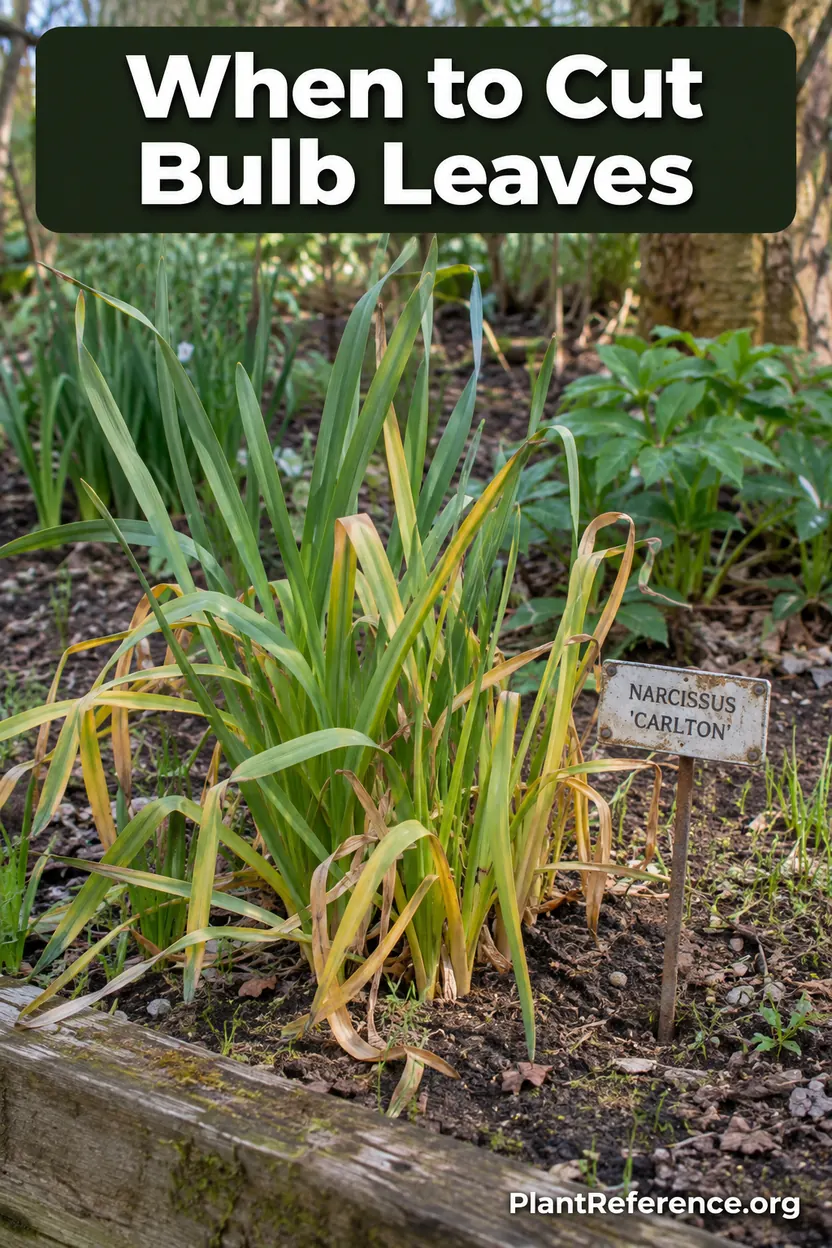
When to Cut Back Bulb Foliage Without Losing Next Bloom
— Image © PlantReference.org 2026
Pets & Toxicity
Recorded toxicity for plants linked in this guide. An unknown status is not a safety assessment.
Toxic to pets: daffodil, tulips, hostasDetailsHide
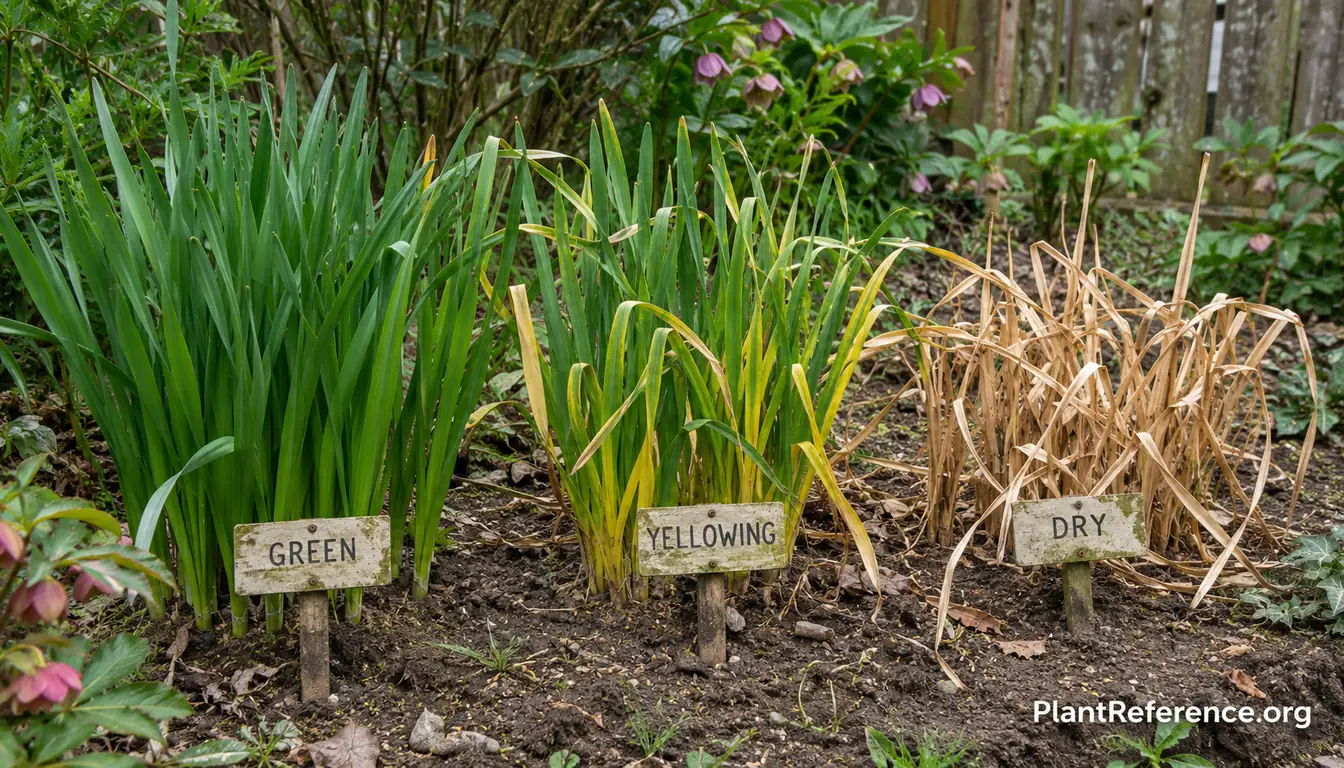
When to cut back bulb foliage is easier to answer by looking at the leaves than by picking a date. Keep green leaves after flowering and wait for natural yellowing before routine cleanup, often around six to eight weeks after the flowers fade.
That waiting period is not wasted space. It is part of how a retained bulb prepares for another season.
When to Cut Back Bulb Foliage: Read the Leaves
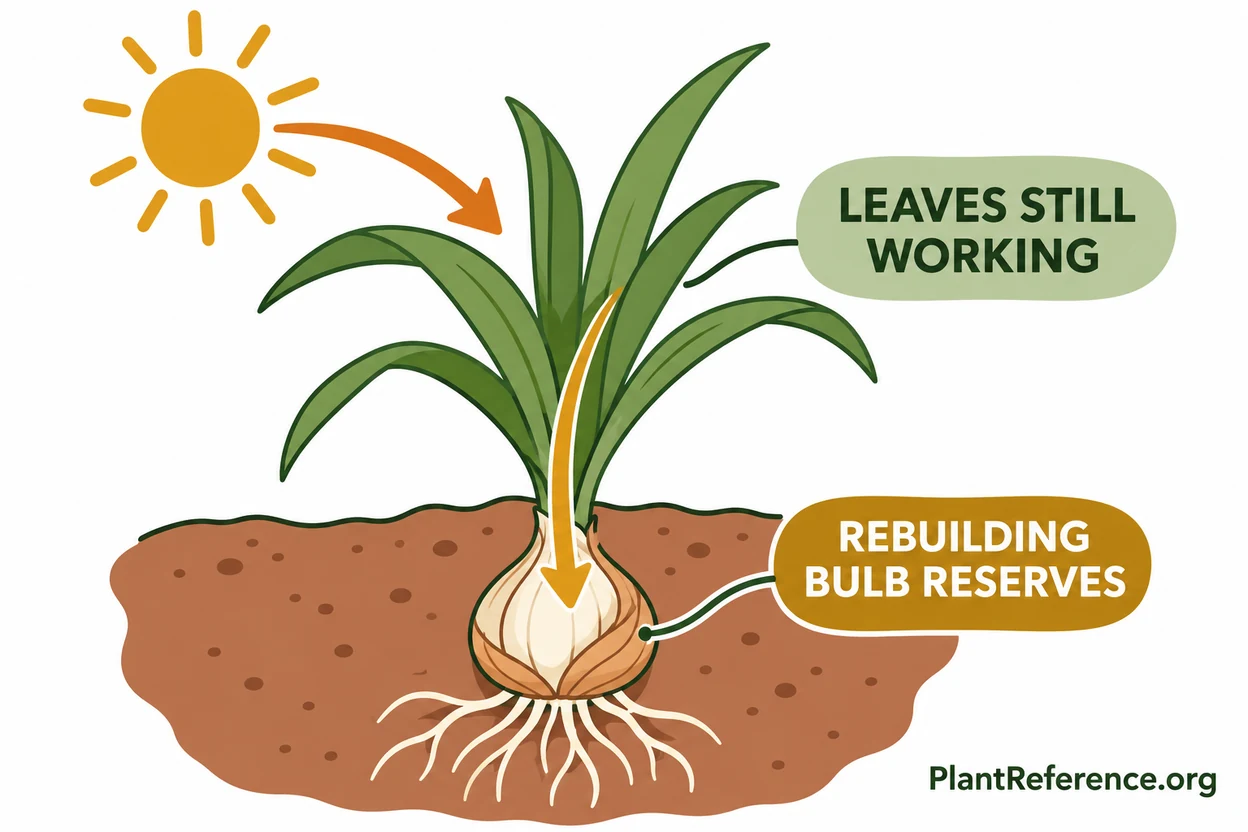
Daffodils 🌿Narcissus spp. (nar-SIS-us), tulips 🌿Tulipa spp. (TOO-lih-puh), and other spring bulbs continue working after their flowers finish. The foliage captures light and replenishes resources stored below ground.
A faded flower is therefore not a signal to cut the whole plant down. If the leaves remain green, they still have a role.
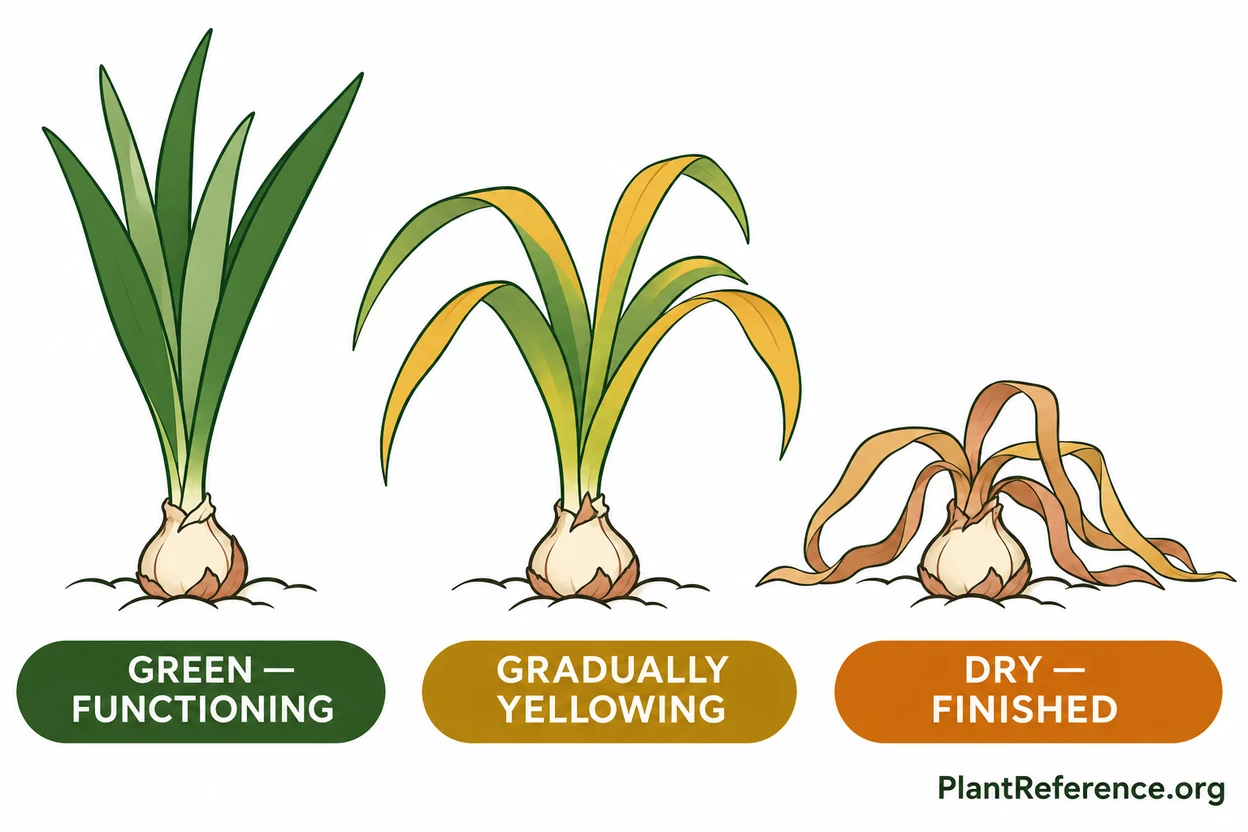
The six-to-eight-week period is an approximate guide, not a deadline that overrides what you see. Different bulbs and growing conditions finish at different times. A mixed planting should not be treated as one uniform batch.
Mark each group's identity and flowering period. A small note in a garden record is enough to prevent the familiar “surely these have been here long enough” guess.
Why Early Cutting Can Reduce Next Year's Flowers
Removing functioning foliage interrupts replenishment. A bulb can survive but return with weaker growth or fewer flowers; repeated early removal can make the problem worse.
Do not turn that into a promise that one accidental cut always kills the bulb. The practical point is that early removal reduces the plant's opportunity to recover, and the outcome may not be visible until the following season.
Soil Health 101: How to Build Living, Productive Garden Soil explains the wider growing environment. Good soil supports growth, but it does not replace the work of leaves that have been cut off.
Fertilizer cannot manufacture the lost leaf area. If you suspect a separate nutrient issue, use How to Test Garden Soil: Jar, Ribbon & pH Tests and the approach in DIY Organic Fertilizer Blends: A Soil-Test-First Guide. Do not respond to an early mowing mistake with repeated doses of bloom booster.
Keep records of accidental damage. If a clump performs poorly next spring, that history is more useful than assuming every flowerless bulb has the same problem.
Deadheading Is Not Cutting Back the Plant
Deadheading removes the spent flower head while retaining the green foliage. Cut carefully so the surrounding leaves are not gathered into the same handful and severed.
There is no need to make bulb leaves look like a freshly trimmed hedge. The aim is to remove the finished flower if that suits your planting, not to erase the entire post-bloom stage.
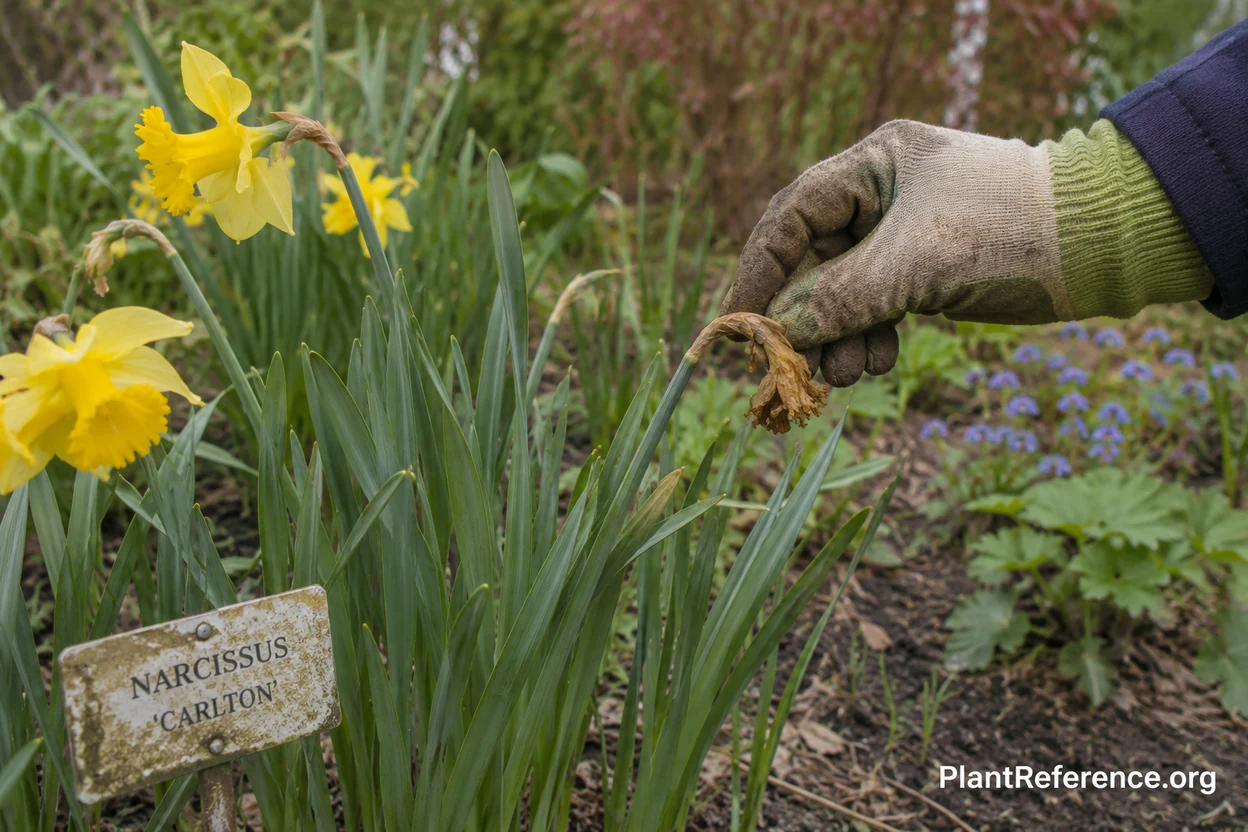
The distinction is similar to the task separation discussed in How to Deadhead Flowers: Annuals by Species, but do not copy every annual-flower technique onto bulbs. A plant grown for repeated summer flowering and a spring bulb rebuilding reserves have different seasonal routines.
If you intentionally want seed development, deadheading changes that goal. Decide whether your priority is seed, appearance, or a retained bulb display rather than treating every spent flower as an automatic cutting instruction.
Skip Braiding, Tying, and Early Mowing
Braiding leaves or tying them into tight bundles may look tidy, but it reduces their effective exposure to light. Leave them loose. Folding them down under neighboring plants is not a useful compromise either.
In a lawn, mark the bulb area and postpone mowing until its leaves finish naturally. If the lawn must be kept uniformly short throughout spring, that location may not suit a persistent bulb planting.
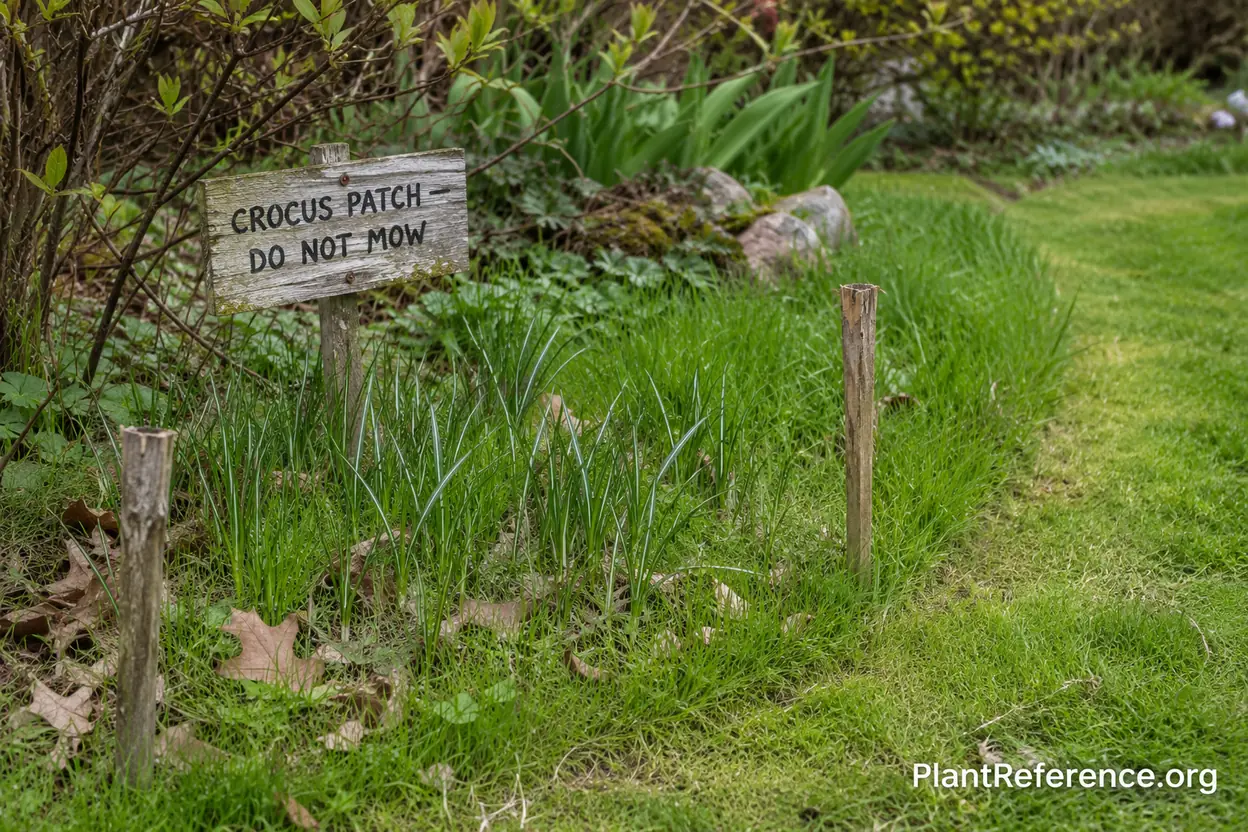
Keep green bulb foliage outside the mower's route.
Mark small patches before surrounding grass hides the leaves.
Treat late-flowering groups separately from early ones.
Remove foliage only after its natural decline.
Relocate future plantings if mowing needs cannot change.
Do not assume raising the mower slightly solves the issue. If the blade still removes most of the green bulb leaves, the plant still loses that working area.
For naturalized crocuses such as 🌿Crocus tommasinianus, the small scale can make foliage easy to overlook. A short flower is not a reason to skip the post-flowering stage.
Make the Border Look Better Without Smothering Leaves
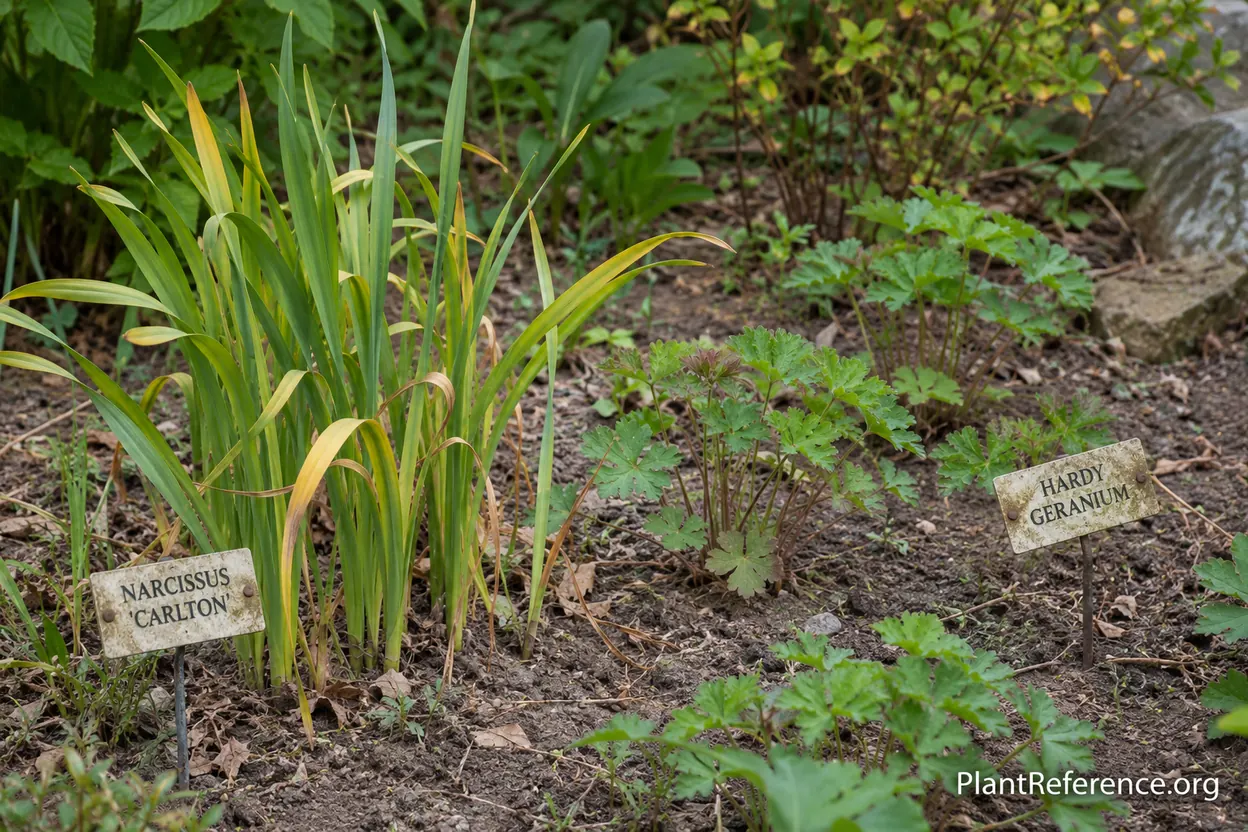
Use planting design to manage the view rather than shortening the bulb's growth cycle. Later-emerging companions can soften the appearance of fading leaves while leaving them room and light.
Hostas 🌿Hosta spp. and daylilies Hemerocallis are possibilities mentioned in the research, but match companions to local conditions and available space. Do not pack a dense cover directly over the bulb foliage.
Annual Flowers That Bloom All Summer: The Complete Guide can help plan the next season of interest. Annual Flowers from Seed: A Month-by-Month Guide helps with timing, so replacement color is not dependent on prematurely clearing every bulb patch.
Keep access paths or visible labels around clumps. If you cannot tell where bulbs are once they disappear, planting companions later can turn into accidental excavation.
A small area of seasonal untidiness is a manageable design problem. A bed repeatedly stripped of functioning leaves is a recurring plant-care problem.
Manage Bulb Pots After the Display Ends
A finished flower pot does not have to remain in the most prominent spot, but retained bulbs still need a suitable location while their leaves are green. Move the display only if you can continue appropriate light, moisture, and drainage.
Do not put a green-leaved pot into a dark shed simply because the flowers are over. Do not leave it sitting in collected water either. Container Gardening: Pots, Soil, Water & Yields covers those root-zone basics.
Foliage condition | Routine response | What to avoid |
|---|---|---|
Green after flowers fade | Keep leaves functioning | Cutting the whole pot back |
Gradually yellowing with seasonal decline | Continue observing until foliage finishes | Forcing an identical date across all bulbs |
Dry finished leaves | Remove carefully without disturbing bulbs | Pulling hard on attached green growth |
Sudden collapse with soft bulb tissue | Investigate a health or drainage problem | Calling all yellowing normal dormancy |
Green leaves in a lawn | Keep mower away from the patch | Mowing because flowers are gone |
For the next decorative display, Best Annual Flowers for Containers: Pots and Baskets offers alternatives. Using separate inner pots lets one planting finish its cycle while another takes the visible position, without ripping out active foliage.
If You Already Cut Too Early
Stop further damage and leave any remaining green tissue intact. Keep normal care suited to the bulb and site; do not compensate with excessive watering or feeding.
You cannot restore severed leaves by wishing the flower cycle backward. Note the mistake, protect future growth, and judge the outcome next season rather than repeatedly disturbing the bulb to check whether it is still alive.
Not every disappointing return comes from foliage removal. Cultivar decline, insufficient chilling, crowding, wet soil, and physical damage can also matter. The history of the planting helps separate these possibilities.
When deciding when to cut back bulb foliage next year, make natural yellowing the main signal. Plan the garden around that interval, keep green leaves loose, and let the plant finish before you tidy it away.
Frequently Asked Questions
Reading about plants and recognising them are different skills. These three build the second.
- Daily PlantIdentify the day’s mystery plant from a close-up photograph.
- Keyed OutWork a dichotomous key, lead by lead, to name a hidden specimen.
- Name That PlantName a specimen from botanical clues dealt hardest first.
Free to play, no account needed
Tagged with
TJ stumbled into plant parenthood when a coworker gave him a neglected pothos. That single plant sparked an obsession that led him to quit his corporate marketing job and start a plant care service for busy professionals in Chicago. TJ maintains over 150 plants for residential clients and runs monthly plant swap meetups at local coffee shops. He's self-taught through YouTube, plant forums, and plenty of expensive mistakes (RIP to his variegated monstera). TJ specializes in troubleshooting common houseplant problems and is known for his blunt, no-BS advice: "Your plant isn't dying because Mercury is in retrograde—you're overwatering it." He's particularly skilled with finicky tropical plants like fiddle leaf figs and calatheas.