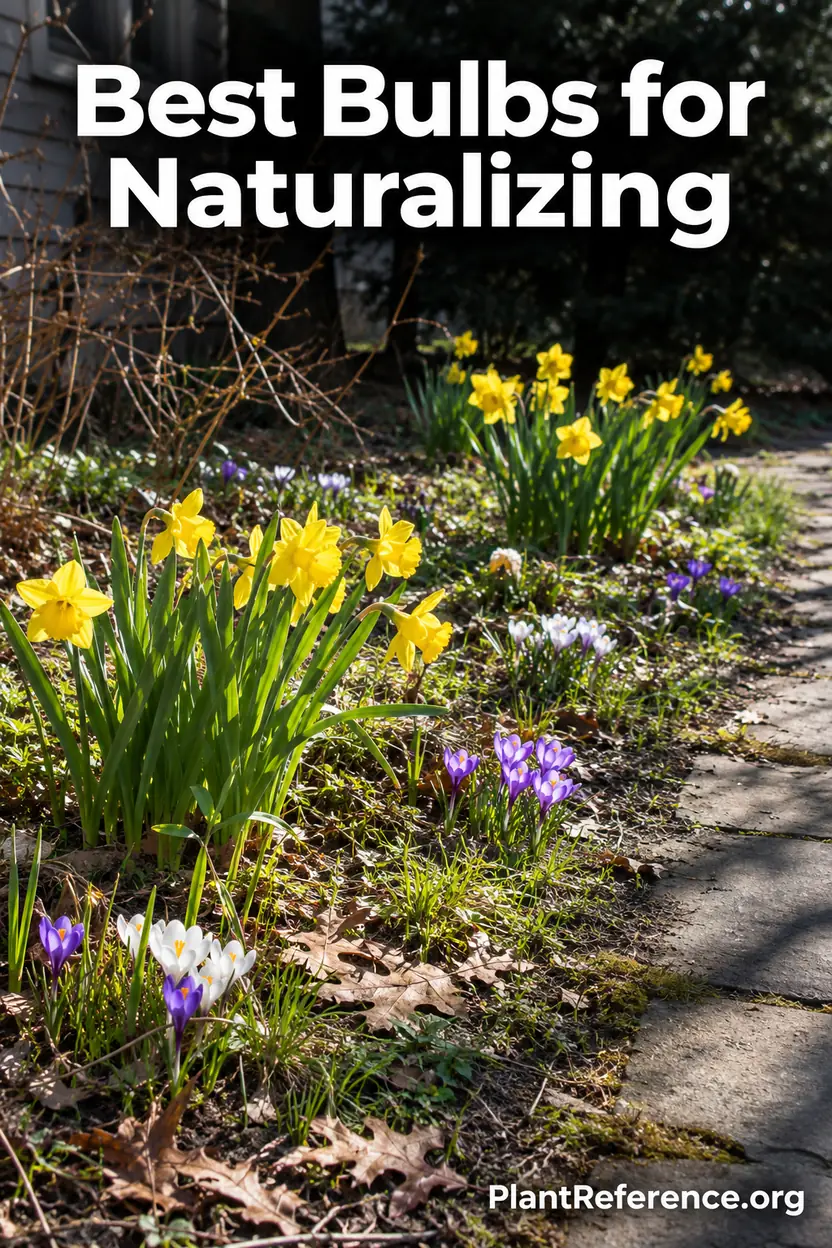
Best Bulbs for Naturalizing: 7 Long-Term Choices
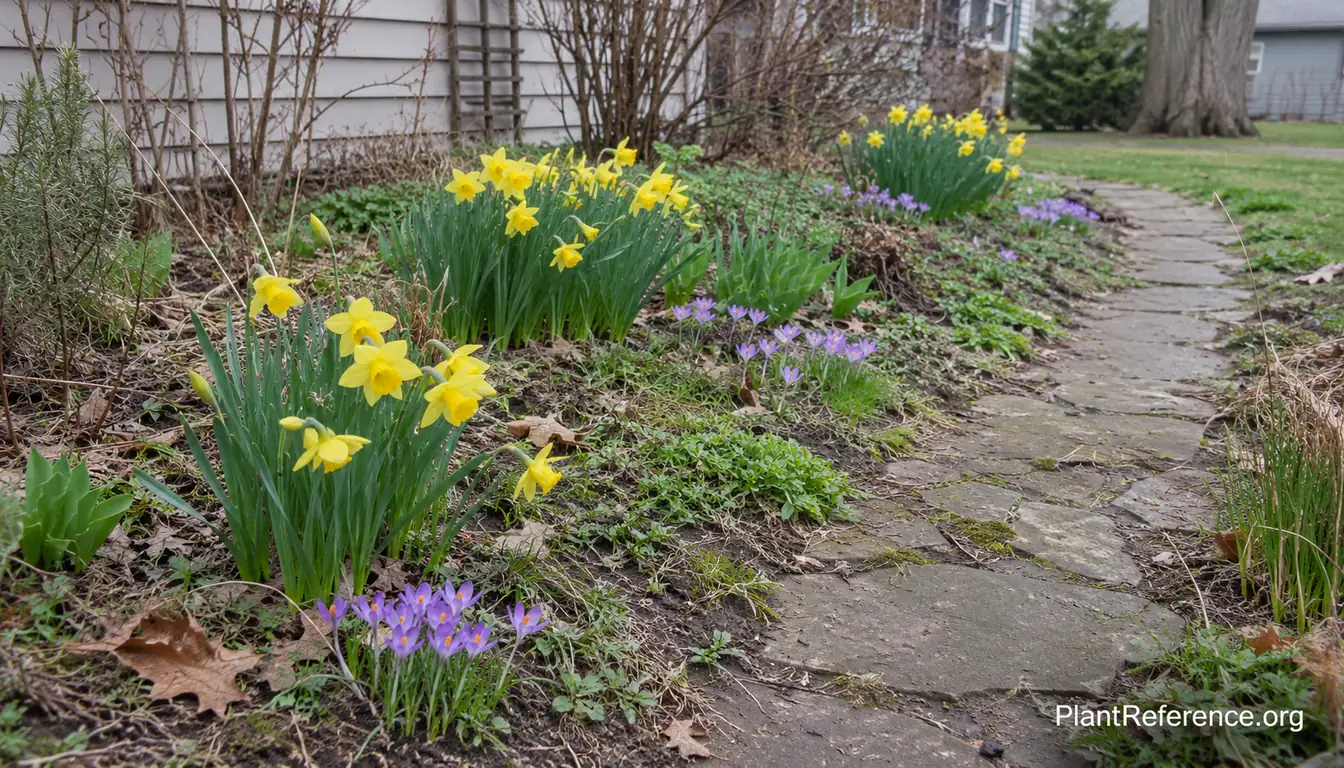
— Image © PlantReference.org 2026
Pets & Toxicity
Recorded toxicity for plants linked in this guide. An unknown status is not a safety assessment.
Toxic to pets: Spring crocus, common snowdrop, drumstick alliumDetailsHide
Allium sphaerocephalon — Toxicity Warning
Toxic to cats and dogs if eaten; cats are especially susceptible, and raw, cooked or concentrated plant material can damage red blood cells and cause anaemia.View Allium sphaerocephalon plant profileThe best bulbs for naturalizing are the ones that fit the place you intend to leave them. A bulb that returns in a well-drained border may disappoint in a wet lawn, and a plant that spreads quickly may become a problem rather than a bargain. Start with the site, then choose the flower.
What Naturalizing Actually Means
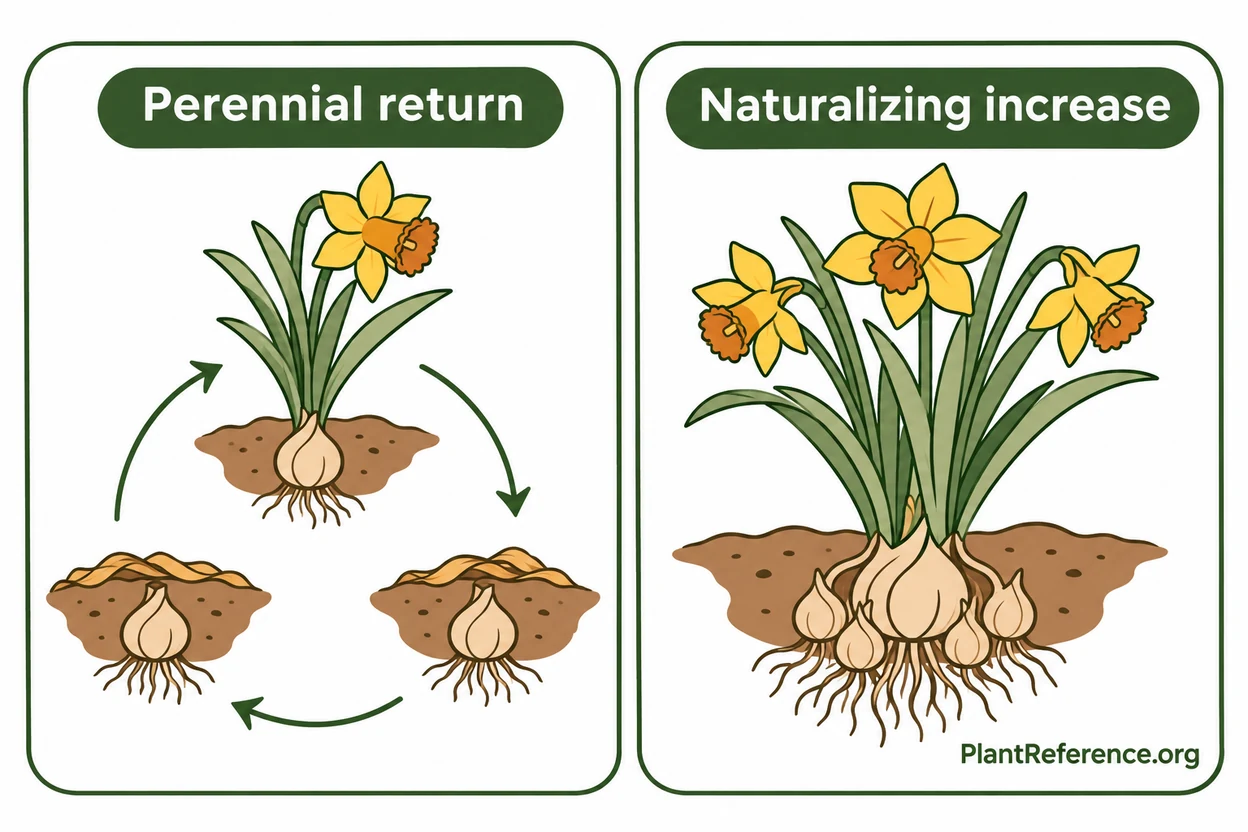
A perennial bulb returns; a naturalizing bulb also establishes and increases over time through offsets, seed, or both. Those are related qualities, but they are not identical. A large ornamental allium can return without making a spreading colony.
Likewise, “plant once” is an ambition, not permission to ignore the bed. Drainage, summer conditions, browsing, and the way you manage spring foliage all influence the result. This shortlist is based on the supplied research, not a trial promising a particular multiplication rate.
Start with a manageable patch and observe it before buying hundreds more. Soil Health 101: How to Build Living, Productive Garden Soil provides a useful foundation for the growing environment. In a woodland garden, also consider Best Native Plants for Eastern Woodland Gardens; naturalized ornamental bulbs are not automatically native plants.
Compare Seven Bulb Choices for Naturalizing
The order below favors practical starting points and different planting roles, not a universal performance score. Exact flowering dates depend on climate and season. The purpose is to help you choose what belongs in your garden, not to persuade you to plant all seven.
Choice | Main reason to choose it | Best planning question |
|---|---|---|
Daffodils such as Narcissus 'Carlton' | Long-lived clumps with reliable increase | Can foliage remain after bloom? |
Prolific increase among the researched crocus | Can you delay mowing in its patch? | |
Another crocus option for lawns and borders | Does the planting fit your lawn routine? | |
Very early flowers and long-term persistence | Can you allow slow establishment? | |
A naturalizing ornamental onion choice | Where will its flower form fit? | |
Tulipa tarda | A botanical tulip with return potential | Is the site suitable for lasting tulips? |
Tulipa clusiana | Another perennial botanical tulip option | Are drainage and summer conditions appropriate? |
1. Daffodils for a Dependable Foundation
Daffodils such as Narcissus 'Carlton' (nar-SISS-us) are the research's strongest general starting point for long-term clumps. They multiply and are less appealing to deer than tulips. That combination is useful, but it does not make them immune to poor drainage or guarantee that wildlife will never damage them.
Choose a locally suitable daffodil rather than assuming every named variety performs equally in every winter climate. The broader group includes options for different regions. If deer regularly visit, Deer-Resistant Perennials: A Zone-by-Zone Planting Guide can help you plan companions without treating the daffodils as a protective fence.
Large daffodil bulbs have a starting planting depth of 6–8 inches (15–20 cm) to the base, spaced 4–6 inches (10–15 cm) apart. Follow the supplier's guidance for the actual stock. If established clumps become crowded and bloom declines, division may be useful; the research suggests checking that need around three to five years.
Crocus for Small-Scale Spring Drifts
2. The Prolific Crocus Choice
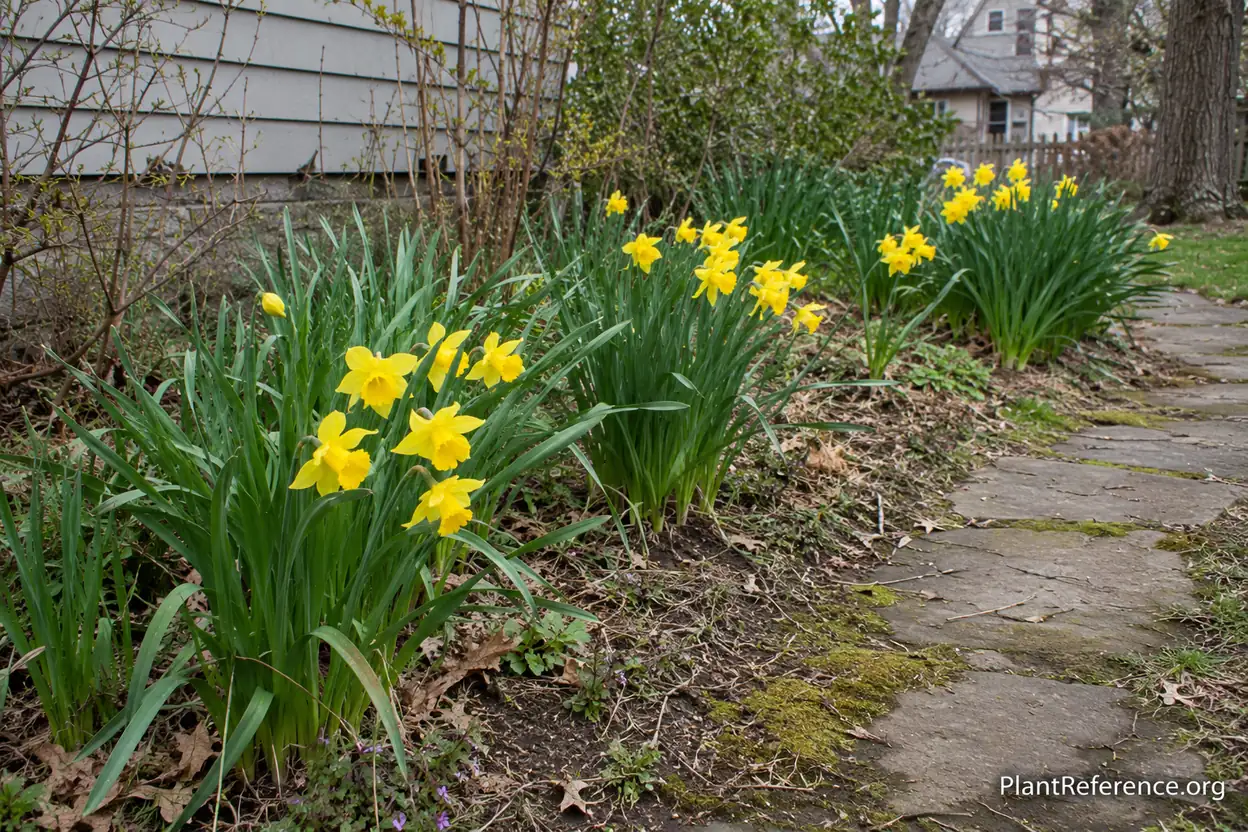
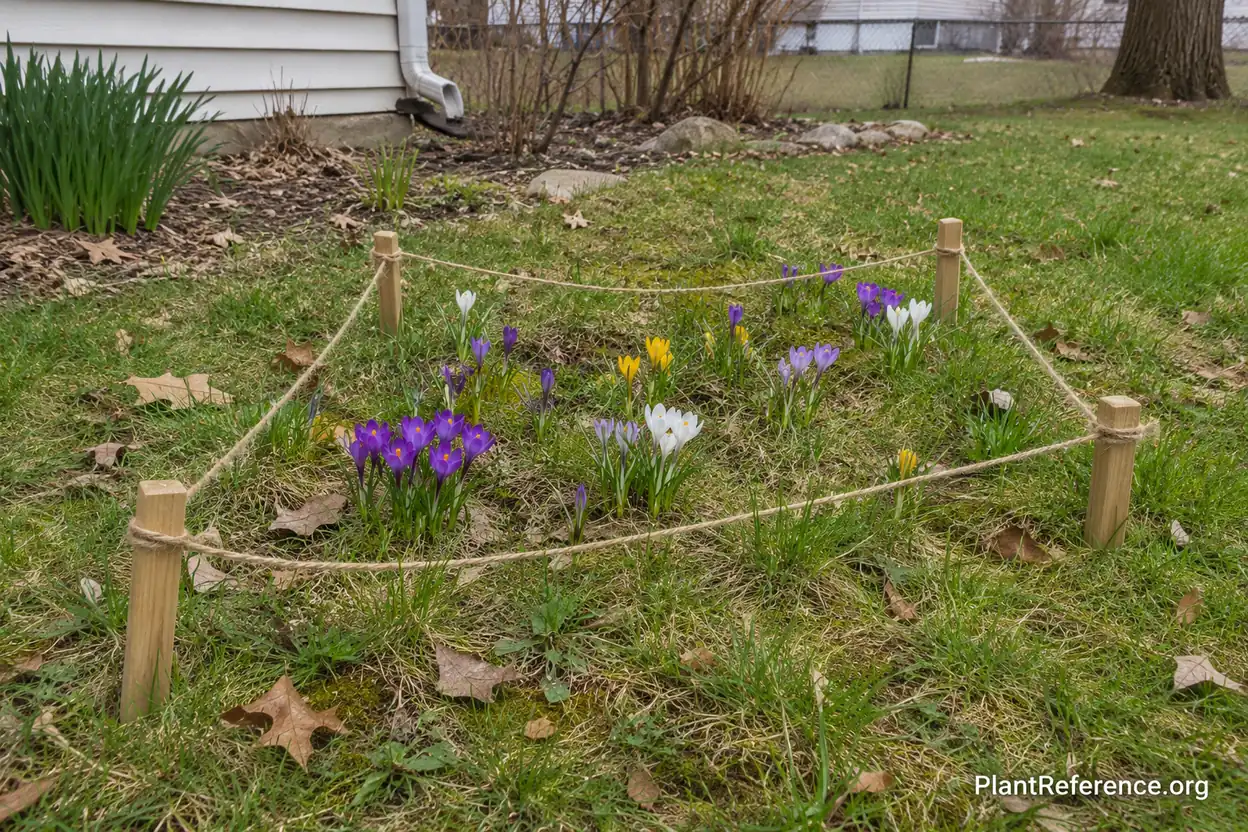
🌿Crocus tommasinianus (KROH-kus tom-uh-sin-ee-AY-nus) is identified in the research as the most prolific spreader among its listed spring crocus. It increases by corm offsets and seed, making it a candidate for a gradually expanding patch rather than a rigid annual display.
The important tradeoff is management. A lawn that must be cut short immediately after flowering is a poor place for bulbs whose leaves still need to grow. Mark the patch and agree on mowing expectations before planting, especially if someone else maintains the lawn.
3. Another Lawn and Border Option
🌿Crocus vernus (KROH-kus VER-nus) gives you another researched choice for lawns and borders. It belongs on the shortlist because it can return and increase, not because the available research proves it outperforms the previous species. Select between them using local suitability and the stock offered by a reliable supplier.
For crocus, the report's starting range is 3–4 inches (8–10 cm) deep, spaced 2–3 inches (5–8 cm) apart. Treat that as a guide for planting stock, not an instruction to force small corms into saturated soil. How to Improve Clay Soil Without Making It Worse is a useful next step if drainage is the limiting factor.
Do not confuse a natural-looking arrangement with random care. Loose groups can still have a clear boundary, a labeled record, and a mowing plan. Those details protect the planting long after the flowers have disappeared.
Snowdrops and Alliums for Different Roles
4. Snowdrops for an Early Display
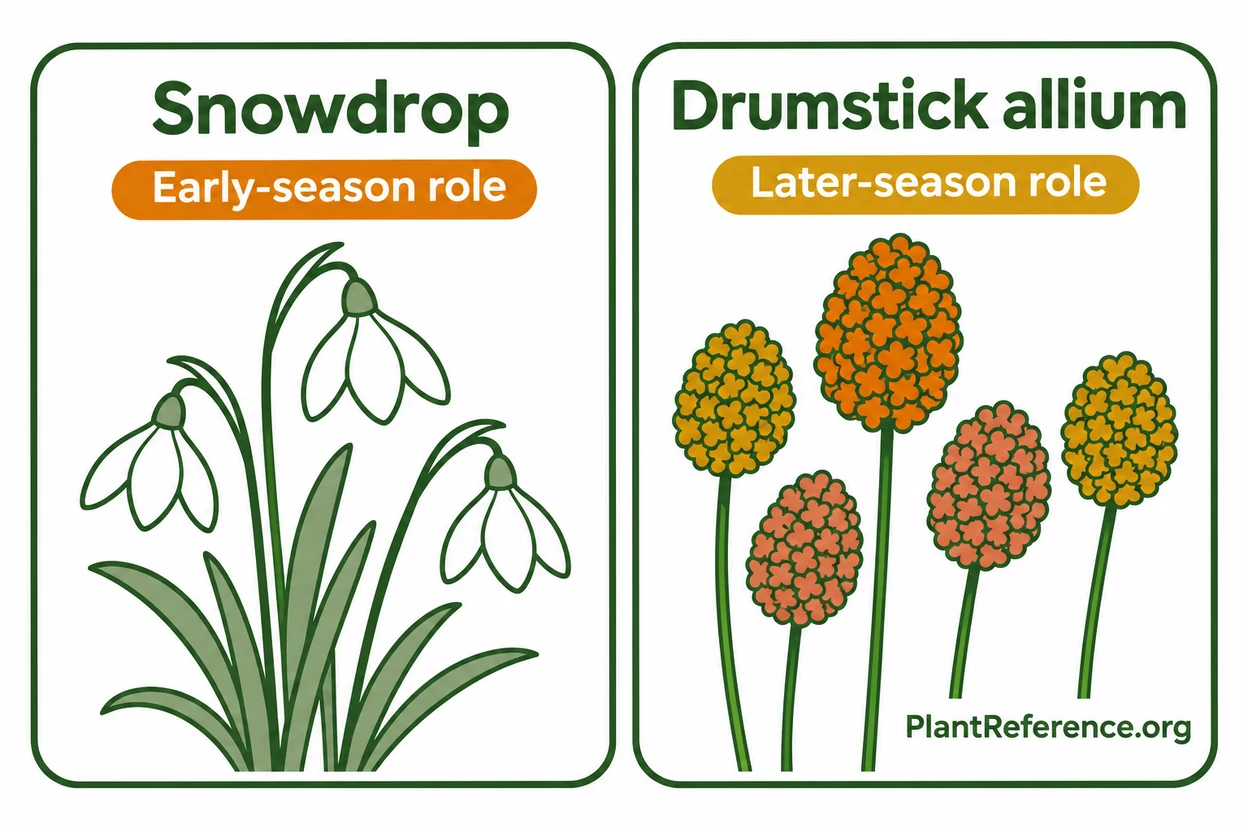
🌿Galanthus nivalis (guh-LAN-thus nih-VAL-is) is an early-flowering choice that can persist for years once established. The research specifically describes slow establishment, so do not judge a new patch against a photograph of a mature colony. Patience is part of the selection.
The report recommends dividing snowdrops “in the green,” soon after flowering while foliage remains. Keep that as a species-specific practice rather than copying it to every bulb. A starting planting range is 3–4 inches (8–10 cm) deep and 2–3 inches (5–8 cm) apart, with supplier instructions taking priority for the material you buy.
5. Ornamental Alliums for a Different Flower Shape
🌿Allium sphaerocephalon (AL-ee-um sfair-oh-SEF-uh-lon) is the research's preferred naturalizing allium. It earns a place because it offers a different flower structure from the spring cups and trumpets. Choose it for the role it fills, not simply to complete a mixed-bulb order.
Do not substitute the planting dimensions for giant alliums without checking the smaller species' instructions. Common names can hide meaningful size differences. Likewise, a reliably perennial giant allium is not necessarily a strong spreader.
Before expanding a planting in a raised bed, check whether the soil has settled into wet pockets. Raised Bed Soil Settling and Compaction: Prevention and Solutions and Poor Drainage in Raised Beds: Causes and Fixes for Waterlogged Soil address problems that another bag of bulbs cannot solve.
Botanical Tulips for Gardeners Who Want Return
6. A Small Botanical Tulip
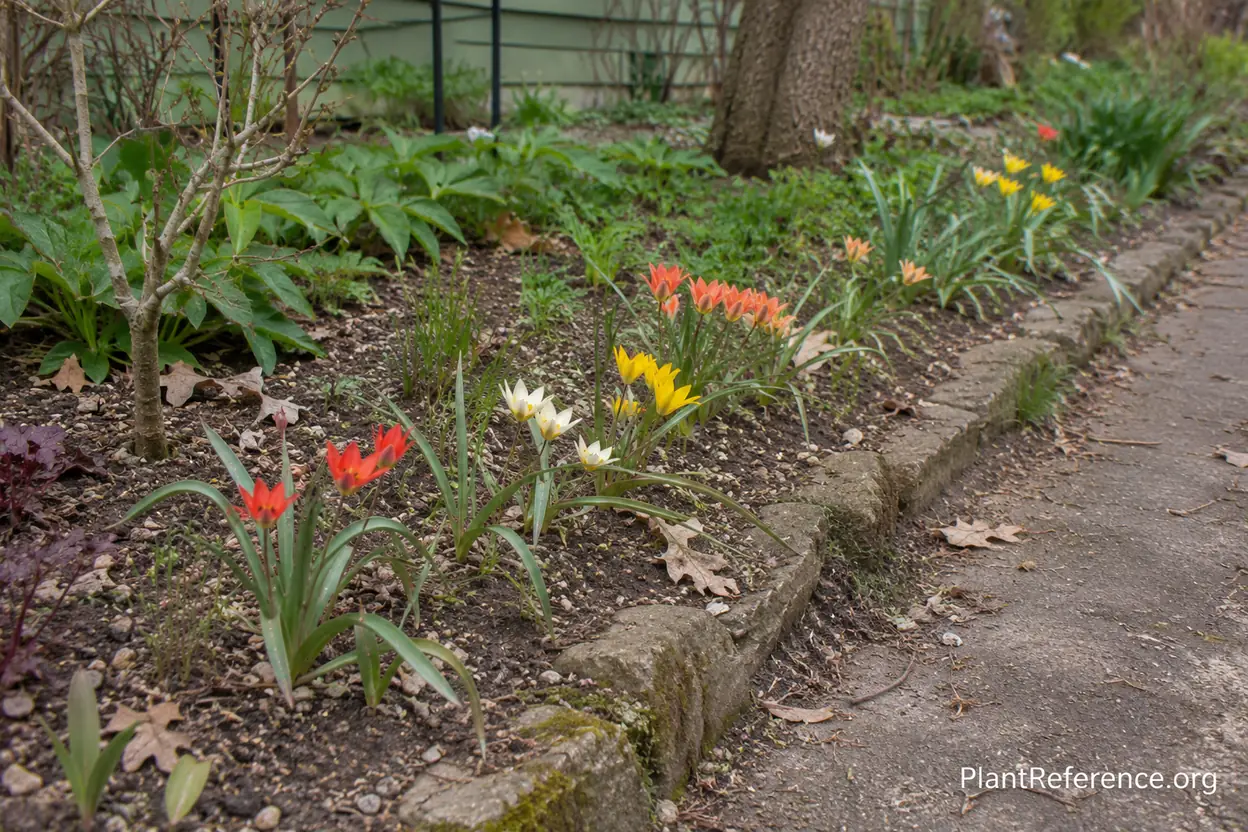
Tulipa tarda (TOO-lih-puh TAR-duh) belongs to the botanical tulips identified as more reliable returners than many highly bred large-flowered types. It is a better starting point when persistence matters more than a one-season formal display. That does not remove the need for suitable growing conditions.
The research describes botanical tulips as roughly 6–12 inches (15–30 cm) tall as a group. Plant them where that smaller scale can be appreciated rather than lost behind taller spring growth. Use the supplier's dimensions for the particular species and stock.
7. A Second Botanical Tulip Option
Tulipa clusiana (TOO-lih-puh kloo-see-AH-nuh) is another researched option for perennial performance and increase. Treat the choice between these botanical tulips as a site-and-design decision, not an evidence-free ranking of which will multiply fastest. A trial patch is especially useful where summers remain wet or heavily irrigated.
Botanical tulips in the report have a starting planting range of 4–5 inches (10–13 cm) deep, spaced 3–4 inches (8–10 cm) apart. Their ability to return does not make them deer resistant. Where browsing is established, Best Deer Fencing and Repellents for PNW Home Gardens offers regional protection comparisons; adapt the approach to your own site.
Keep a Naturalized Planting Worth Having
Leave healthy leaves until they yellow naturally, often around six to eight weeks after flowering. Do not braid, tie, or cut them early to tidy the border. Those leaves support the bulb's next cycle, which is the whole point of choosing a long-term planting.
Use these checks before increasing your order:
Confirm the species is suitable for your local climate and site.
Check local invasive-plant guidance before introducing vigorous spreaders.
Leave room for foliage after the flowers finish.
Correct drainage rather than planting deeper into a wet pocket.
Record what returns, increases, or disappears over several seasons.
Grape hyacinths and Siberian squill appear in the research as vigorous spreaders, but that is why they are not automatic recommendations here. In some settings, unwanted spread outweighs the convenience. “Naturalizing” on a package does not establish ecological suitability.
For soil assessment, use How to Test Garden Soil: Jar, Ribbon & pH Tests before guessing at amendments. A fertilizer purchase does not correct premature mowing or a badly chosen site. Keep ornamental bulbs labeled and separate from edible bulbs during planting.
The best bulbs for naturalizing should make the garden more satisfying over time, not harder to control. Begin with one or two suitable choices, retain the labels, and let the actual return guide your next purchase.
Frequently Asked Questions
Reading about plants and recognising them are different skills. These three build the second.
- Daily PlantIdentify the day’s mystery plant from a close-up photograph.
- Keyed OutWork a dichotomous key, lead by lead, to name a hidden specimen.
- Name That PlantName a specimen from botanical clues dealt hardest first.
Free to play, no account needed
Tagged with
Bill is a third-generation nurseryman who runs a small family garden center on the outskirts of Kansas City. His grandfather started the business in the 1960s, and Bill took over after working as an ag teacher for a decade. He knows the plants that work in the Kansas City area better than anyone—he's grown most of them himself and watched customers succeed or fail with the rest. Bill specializes in trees and shrubs for the Midwest, perennial borders that handle the region's hot summers and cold winters, and helping customers make sensible choices rather than impulse buys. He writes the way he talks to customers: patient, knowledgeable, and honest about what's worth the money and what isn't.