Bulbs
Crocus, Genus, vernus, Species,
- Genus & species
Spring crocus
Pyrenees, Alps, Apennines, and western Balkans, Europe
Overview
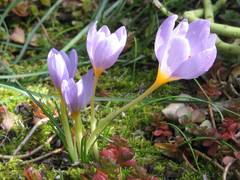
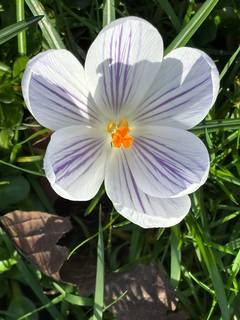
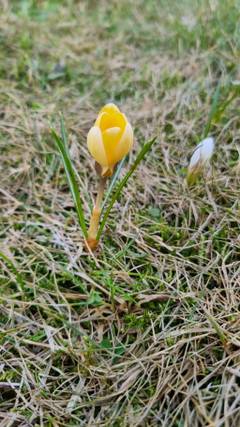
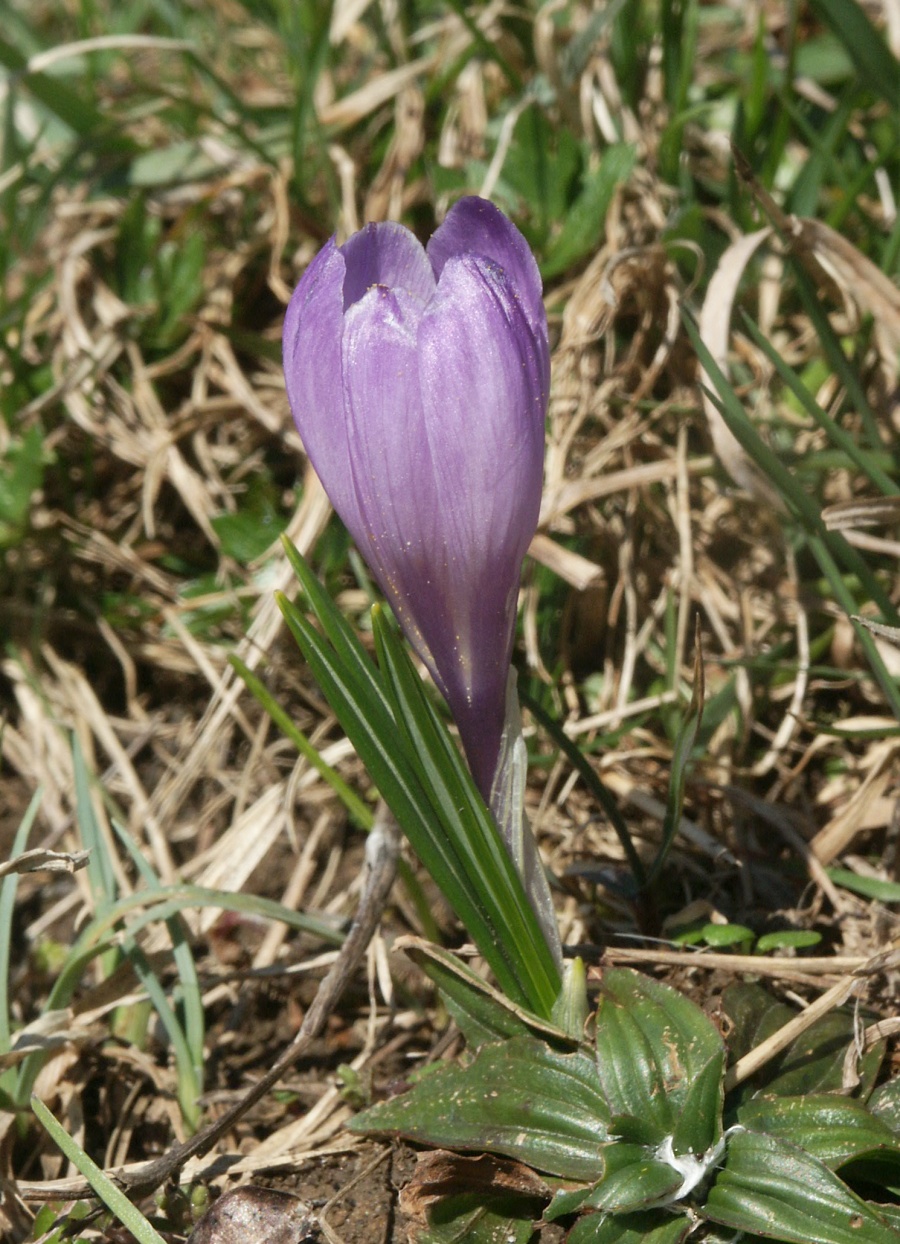
Crocus vernus is a cormous perennial in the iris family (Iridaceae), growing 3–6 inches (7.5–15 cm) tall and 2–4 inches (5–10 cm) wide from a flattened, rounded corm 0.8–1.2 inches (2–3 cm) across. Leaves are narrow and grass-like, 6–10 inches (15–25 cm) long and 0.1–0.25 inch (3–6 mm) wide, with a white or silver stripe along the midrib, and continue elongating after flowering. Flowers are goblet-shaped, 1.5–3 inches (4–7.5 cm) long, with six tepals in white, lilac, purple, or striped combinations, a yellow to orange throat, and bright orange-red stigmas divided into three branches. Flowers open in sun and close in cloud and at night. Plants are dormant from early summer to autumn, when the leaves die back. Corms multiply by cormlets and by seed, forming colonies over 3–5 years. Large-flowered Dutch crocus cultivars grown in gardens derive mainly from this species, and these have flowers 2–3 inches (5–7.5 cm) long, larger than those of wild plants. Flowers last 4–7 days each. Corms are eaten by voles, squirrels, and chipmunks, and flowers are damaged by rabbits and deer.
Native Range
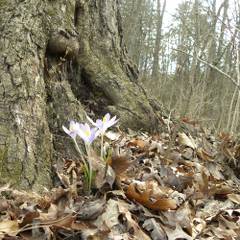
Crocus vernus is native to the mountains of central and southern Europe, including the Pyrenees, Alps, Apennines, and the western Balkans. It grows in alpine meadows, open woodland, and grassy slopes at elevations of 3,000–8,000 feet (900–2,400 m), often near melting snow.Suggested Uses
Planted in drifts of 25–50 corms in lawns, rock gardens, and under deciduous trees, where spring sun reaches the ground before leaf-out. Grown in containers 6–8 inches (15–20 cm) wide and in bulb lasagna plantings. Corms are naturalized in grass that is mowed after leaves yellow.How to Identify
Appearance
Size & Dimensions
Height3" - 6"
Width/Spread2" - 4"
Bloom Information
Detailed Descriptions
Flower Description
White, lilac, purple, or stripedFoliage Description
Dark green with a white central stripeGrowing Conditions
Sun Requirements
Requires 6-8 hours of direct sunlight daily
• Full Sun: 6+ hours of direct sunlight
• Partial Shade: 3-6 hours of direct sunlight
• Full Shade: Less than 3 hours of direct sunlight
Care & Maintenance
Care Guide
Corms are planted 3–4 inches (7.5–10 cm) deep and 3 inches (7.5 cm) apart in autumn, in full sun to part shade with 6 or more hours of direct sun in spring, on gritty, well-drained soil at pH 6.0–7.5. Water needs are low once growth begins, with rain providing sufficient moisture in most seasons. Hardiness is USDA zones 3–8, and plants need 12–15 weeks of winter chill. Summer soil that stays wet causes corm rot. Leaves are left to die back naturally for 6–8 weeks after flowering so the corm can store energy. Corms are divided every 3–5 years when clumps become crowded.Pruning
No cutting back is needed during growth. Leaves are removed only after they have yellowed fully, about 6–8 weeks after flowering. Spent flower heads are left in place, as plants do not need deadheading.Pruning Schedule
Prune: May–June
late spring
Container Growing
Suitable for container growing
Minimum container size: 1 gallons