Crocus, Genus, tommasinianus, Species,
- Genus & species
Tommasini's crocus
Southeastern Europe (Hungary, Bulgaria, Balkans, Dalmatian coast)
Overview
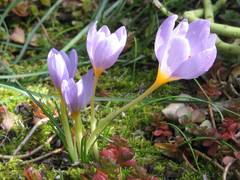
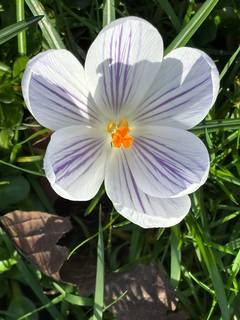
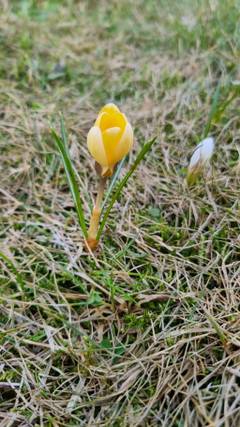
Crocus tommasinianus is a small, cormous perennial reaching 3–5 inches (8–13 cm) tall with a spread of 2–3 inches (5–8 cm) per corm. The species is an early-blooming Crocus, flowering in February–March—often emerging through light snow cover in mild winters and typically opening 2–3 weeks ahead of Dutch crocus (C. vernus). Slender, goblet-shaped flowers 1–1.5 inches (2.5–4 cm) long open from silvery-lilac buds to pale lavender or lilac-purple, with a paler silvery exterior and a deeper-colored interior. The flowers open wide in sunshine and close in overcast weather, a light-responsive behavior common to Crocus. Three to four narrow, grass-like leaves with a central white stripe emerge with or just after the flowers and persist until late spring. Corms naturalize readily by both self-seeding and offset production, forming colonies of hundreds to thousands of individuals over 10–15 years from an initial planting of 25–50 corms. Growth rate is moderate but naturalization is rapid once established. The species is a dependable choice for naturalizing in lawns and under deciduous trees. Squirrel-resistant—unlike Dutch crocus (C. vernus), which is heavily targeted by eastern gray squirrels (Sciurus carolinensis) for corm excavation. Hardy to zone 3 (−40°F / −40°C).
Native Range
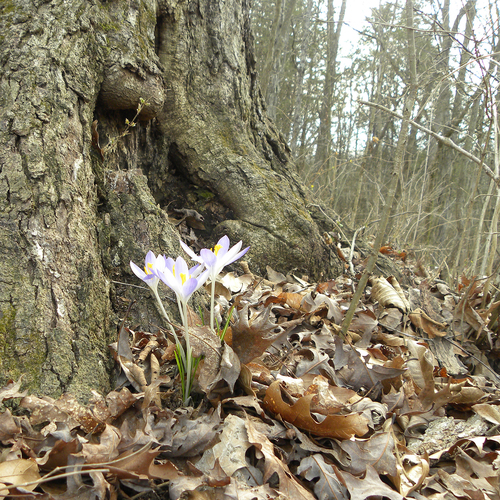
Crocus tommasinianus is native to southeastern Europe, from Hungary and Bulgaria south through the Balkans to the Dalmatian coast of Croatia. The species grows in deciduous woodlands and rocky hillsides. Named for botanist Muzio de Tommasini of Trieste, who documented the plant in the 19th century.Suggested Uses
Planted in lawns, under deciduous trees, in rock gardens, and along woodland edges at 3 inch (8 cm) spacing, with 10–25 corms per square foot for dense effect. The corms naturalize rapidly to form spreading colonies over 10–15 years—an initial 50-corm planting typically grows to a 500–1000-corm drift within a decade in favorable sites. Grows in containers and window boxes for late-winter color. Paired with snowdrops (Galanthus nivalis), winter aconite (Eranthis hyemalis), and early daffodils (Narcissus 'February Gold'), the species forms part of a late-winter bloom succession from mid-January through early April. The squirrel resistance is a significant advantage over Dutch crocus in areas where corm excavation by squirrels ruins plantings of the larger-flowered species.How to Identify
Appearance
Size & Dimensions
Height3" - 5"
Width/Spread2" - 3"
Bloom Information
Slender, goblet-shaped flowers 1–1.5 inches (2.5–4 cm) long in silvery-lilac to lilac-purple open in February–March, often through light snow cover. Flowers open in sunshine and close in overcast weather. Bloom duration is 2–3 weeks. Foliage persists until late spring, then yellows and dies back.
Detailed Descriptions
Flower Description
Silvery-lilac to lilac-purple, goblet-shapedFoliage Description
Narrow grass-like with central white stripeGrowing Conditions
Sun Requirements
Requires 4-10 hours of direct sunlight daily
• Full Sun: 6+ hours of direct sunlight
• Partial Shade: 3-6 hours of direct sunlight
• Full Shade: Less than 3 hours of direct sunlight
Care & Maintenance
Care Guide
Corms are planted 3–4 inches (8–10 cm) deep and 3 inches (8 cm) apart in fall (September–November). Full sun to partial shade in well-drained soil. Deciduous woodland and lawn plantings work because the bloom ends before the tree canopy leafs out, so the corms receive full light during the active period despite being shaded later. Naturalized lawn plantings require delayed mowing until the foliage yellows in late May–early June, since the green leaves replenish the corm for the following year. Squirrel-resistant, which is a significant advantage over Dutch crocus in areas with heavy squirrel pressure. No division is required; corms naturalize and multiply on their own. No serious pest or disease problems.Pruning
No pruning is done. Foliage is allowed to yellow and die back naturally. In lawns, mowing is delayed until late May–early June when the foliage has yellowed completely.Container Growing
Suitable for container growing
Minimum container size: 1 gallons