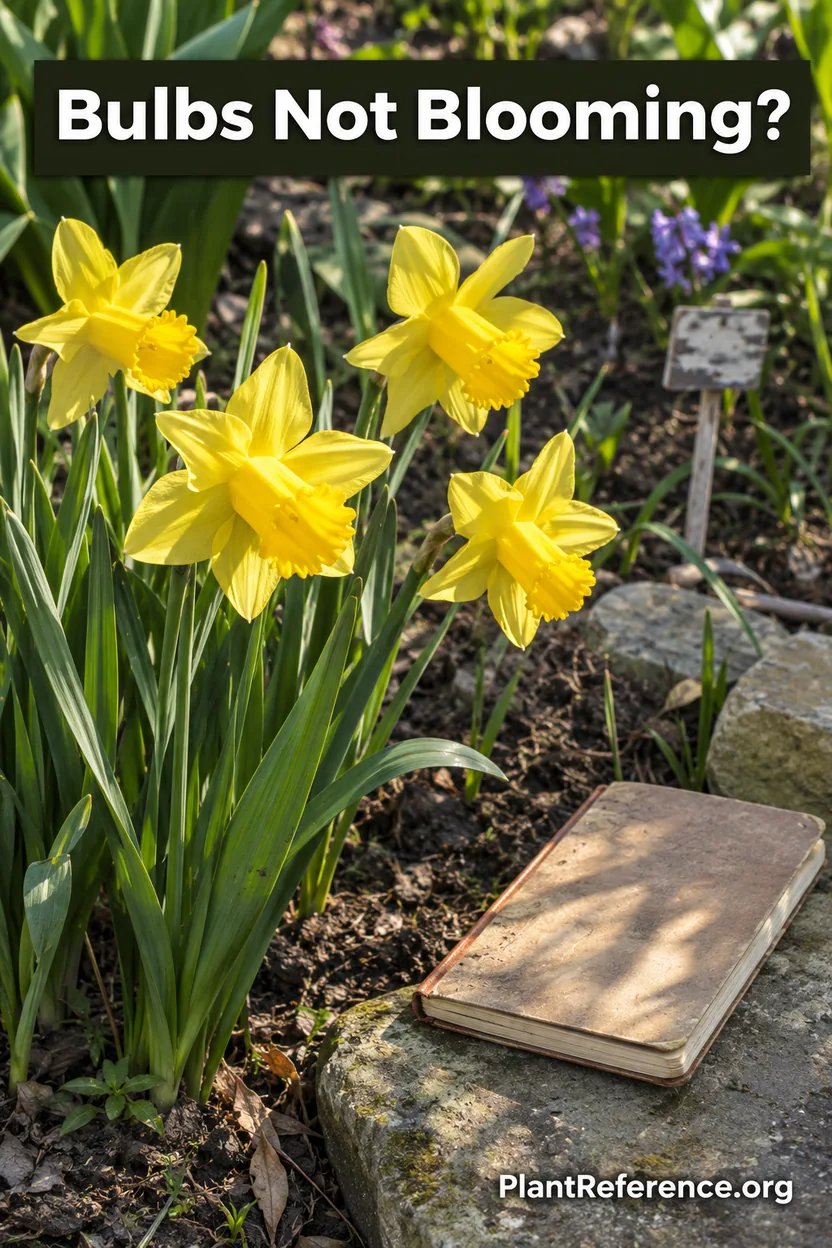
Bulbs Not Blooming? 6 Reasons and the Fix for Each One
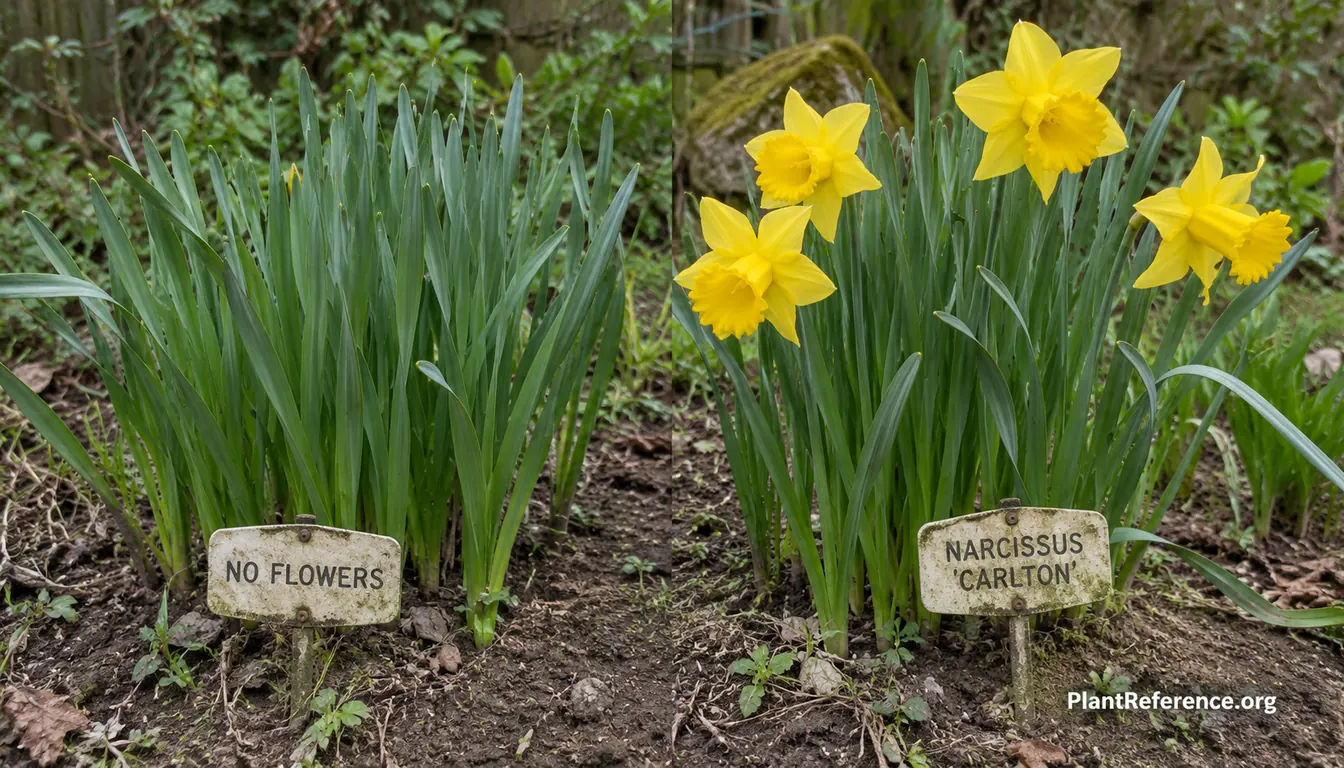
— Image © PlantReference.org 2026
Pets & Toxicity
Recorded toxicity for plants linked in this guide. An unknown status is not a safety assessment.
Toxic to pets: daffodil, tulips, common snowdrop and 1 moreDetailsHide
Bulbs not blooming does not automatically mean they need feeding. A bulb can be alive but too depleted to flower, poorly matched to the climate, crowded, damaged, or simply part of a tulip group that does not repeat reliably.
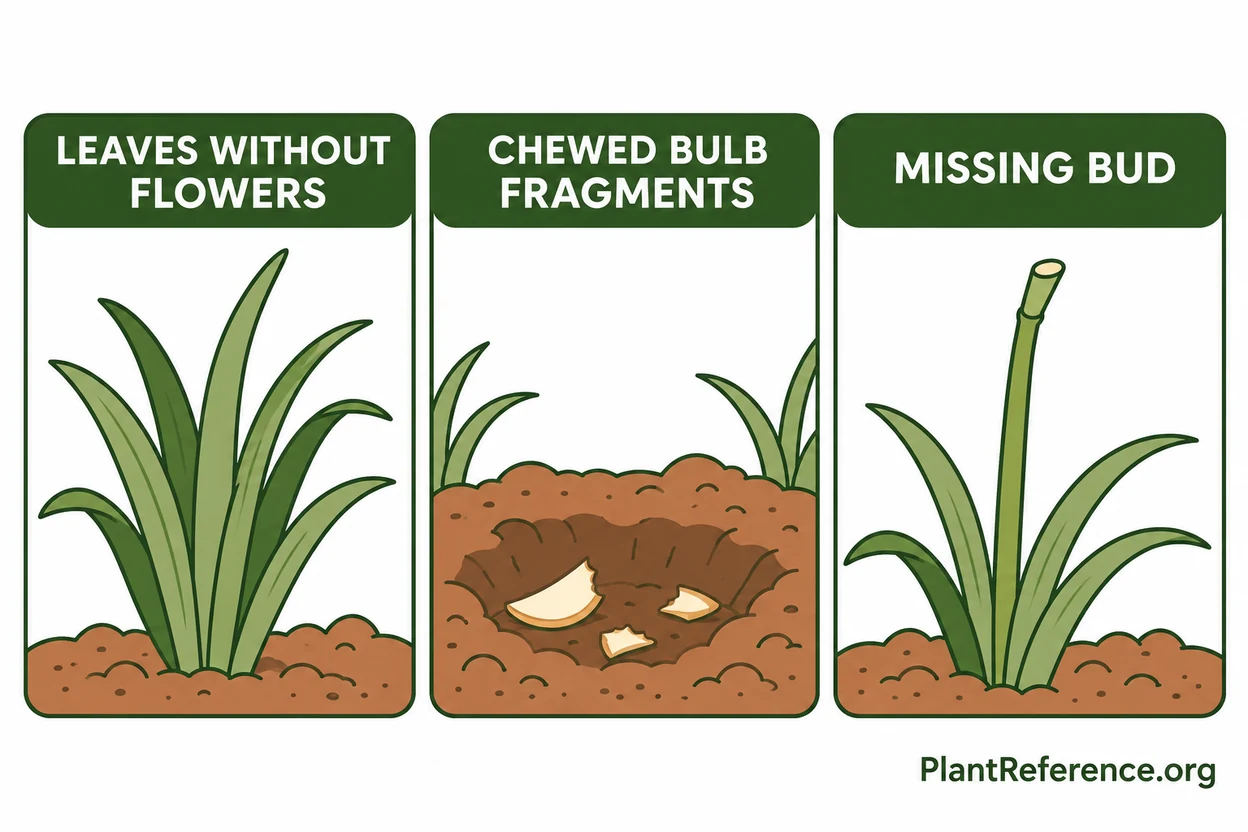
Start by deciding what is missing. Leaves without flowers, no growth at all, and a flower stalk with its bud removed are three different clues.
Bulbs Not Blooming: Start with the Evidence
Daffodils 🌿Narcissus spp. (nar-SIS-us) and tulips 🌿Tulipa spp. (TOO-lih-puh) do not follow identical long-term patterns. Record the plant name, planting year, previous flowering, and whether leaves emerged this season.
Do not dig up a whole bed because it is later than last year. Check the expected flowering period for the actual bulb and allow for seasonal variation before declaring failure.
Use Soil Health 101: How to Build Living, Productive Garden Soil for the broader growing environment. If you suspect a soil issue, How to Test Garden Soil: Jar, Ribbon & pH Tests helps you investigate rather than guessing from one missing flower.
A useful diagnosis ends with one targeted change. Changing water, fertilizer, depth, and location simultaneously makes it harder to learn which factor mattered.
Reason One: Green Foliage Was Removed Too Soon
Bulb leaves replenish stored resources after flowering. Cutting them off, mowing them down, or tying them into tight bundles interrupts that work. The consequence can appear the following spring, long after the tidy-up that caused it.
Leave foliage until it yellows naturally, often around six to eight weeks after bloom. Remove spent flower heads if desired, but do not remove functioning leaves just because the flowers are finished.
The fix is a change in aftercare, not an instant flower stimulant. Mark the clumps so you remember why the leaves must stay. Arrange neighboring plants to soften the view without smothering the foliage.
If you routinely mow the area early, choose a different planting location or change the mowing plan. A bulb lawn and a constantly short lawn are not always compatible goals.
Reason Two: The Bulbs Did Not Receive Enough Chilling
Many spring bulbs need a prolonged cold period for normal flowering. Warm-winter gardens can produce disappointing results when stock is planted without the preparation it requires.
The research gives broad ranges of 12–18 weeks for tulips, 12–17 weeks for many daffodils, and 10–15 weeks for hyacinths. Cultivar and prior supplier treatment matter, so use those figures for planning rather than imposing one schedule on every bulb.
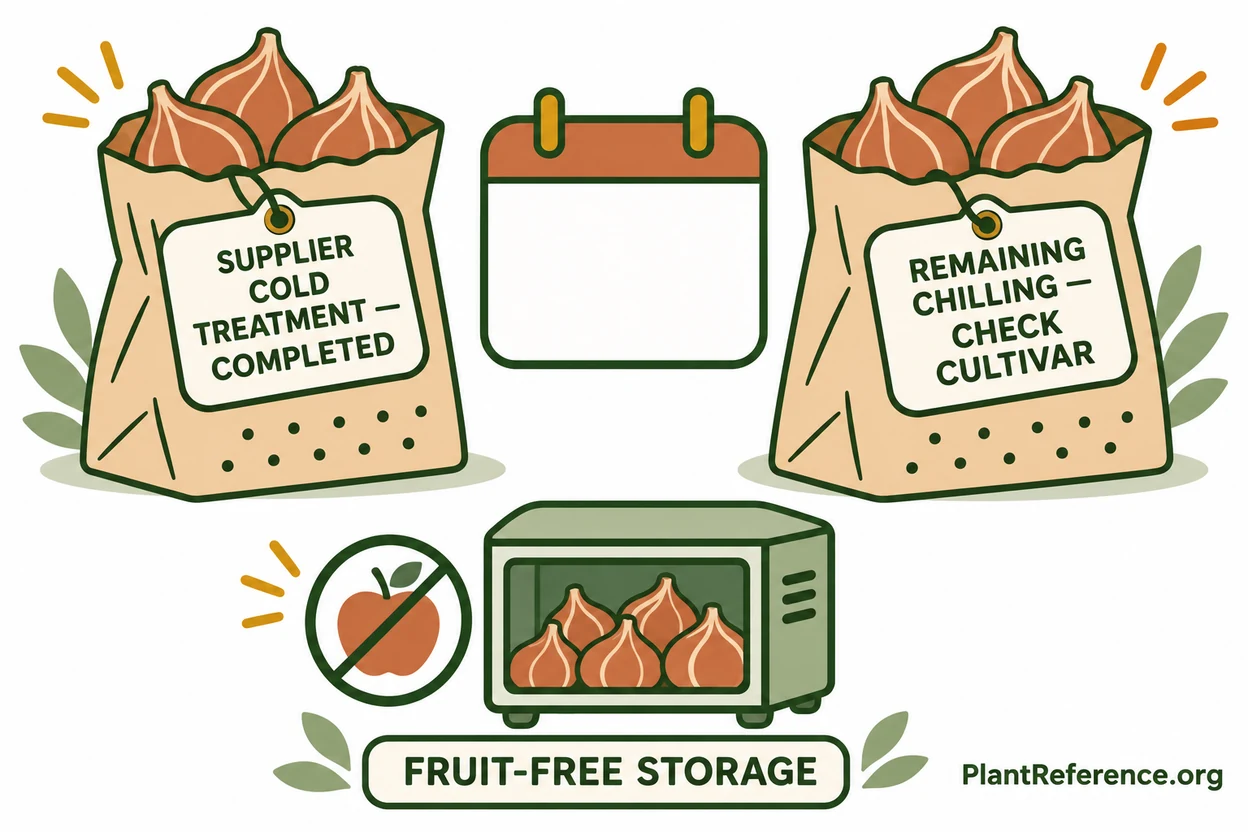
For replacement stock, check whether chilling is needed, how much has already been completed, and when the prepared bulbs should be planted. Keep refrigerated bulbs away from ripening fruit because ethylene exposure can damage developing flowers.
Do not dig up actively growing, flowerless bulbs and repeatedly refrigerate them as a general rescue treatment. Review the seasonal history and plan the next batch correctly. Paperwhites and other no-chill choices require a different approach.
Reason Three: Wet Soil Damaged the Bulbs
If a failed planting contains soft, deteriorating bulbs, drainage deserves attention before fertilizer. Persistent saturation can undermine the bulb even when the surface occasionally looks dry.
Inspect one representative spot carefully. Look at water movement after rain and at any compacted layer beneath the planting. How to Improve Clay Soil Without Making It Worse addresses the surrounding bed, not just an isolated planting pocket.
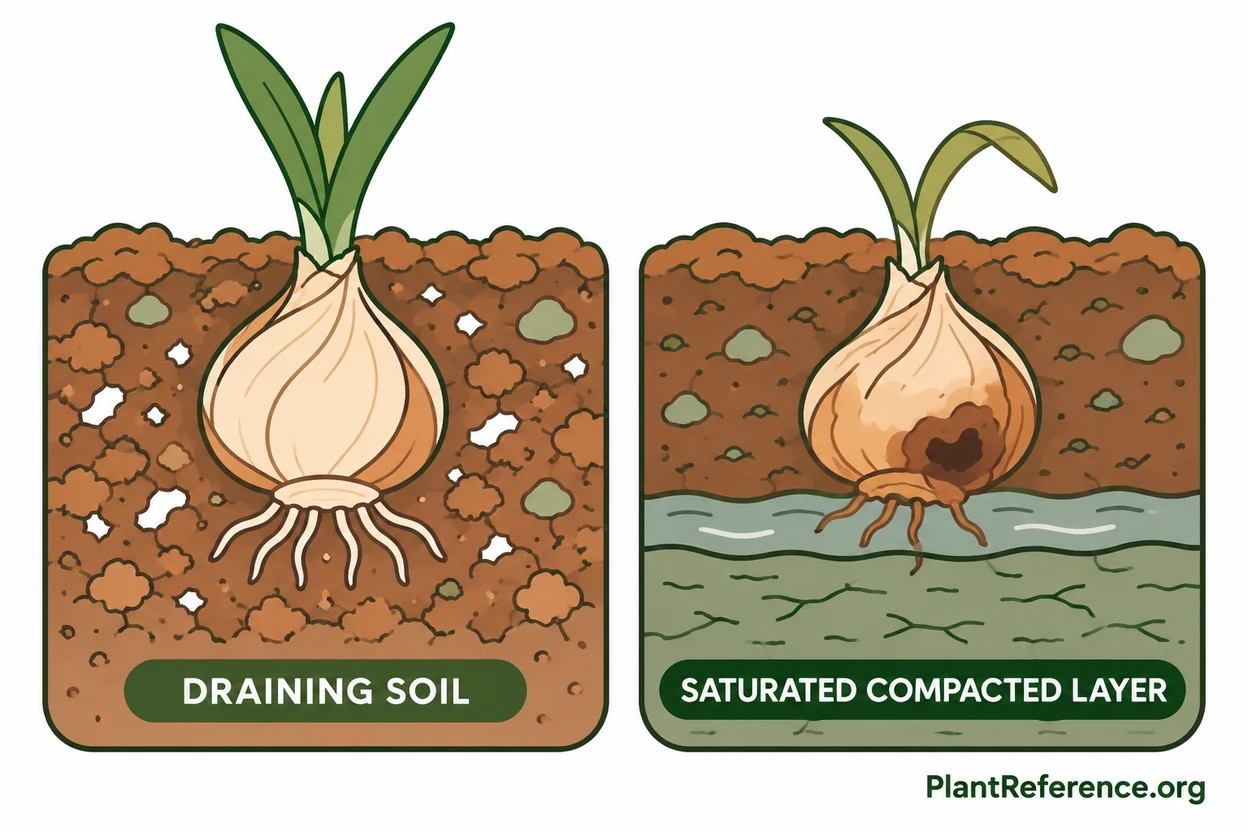
For raised beds, consult Poor Drainage in Raised Beds: Causes and Fixes for Waterlogged Soil. A raised frame does not automatically create a route for excess water to leave.
Remove clearly failed bulbs and correct the conditions before buying replacements. In pots, Gravel in Bottom of Pots for Drainage: Why It Backfires explains why a stone layer is not a substitute for suitable medium and working drainage holes.
Reason Four: An Established Clump Became Crowded
A previously productive daffodil clump that now has many leaves and fewer flowers may need division. The research suggests checking established groups around every three to five years when bloom declines, rather than dividing healthy groups purely by the calendar.
Crowding is a stronger explanation when you can compare the clump with its own earlier performance. A newly planted, flowerless bulb has a different history and should not automatically receive the same treatment.
Divide at an appropriate seasonal stage for the bulb involved and replant with suitable spacing. Snowdrops 🌿Galanthus nivalis, for example, are commonly divided after flowering while still in leaf; do not assume every bulb uses the same timing.
For large daffodils, spacing around 4–6 inches (10–15 cm) is a useful starting point, adjusted to the stock and planting purpose. Keep labels so improvement can be tracked rather than remembered vaguely.
Reason Five: The Cultivar Is an Unreliable Repeat Bloomer
Many ornate hybrid tulips put on a strong first display and then decline. Triumph, parrot, double, fringed, and lily-flowered groups are often managed as seasonal plantings. A weak second year is not proof that every gardener's trick failed.
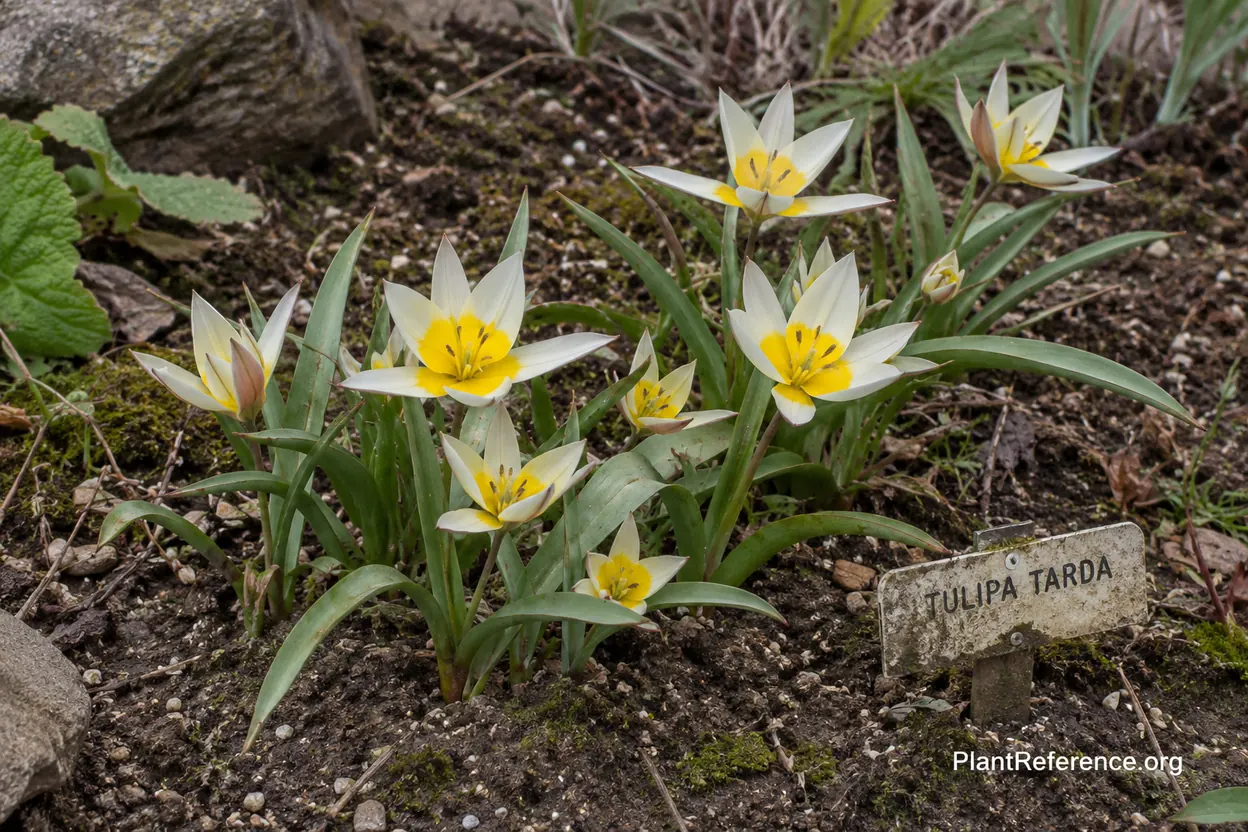
Botanical tulips such as Tulipa tarda and Tulipa clusiana offer better repeat-flowering potential in suitable sites. Darwin hybrids such as Tulipa 'Apeldoorn' can also return well, but drainage, summer conditions, and aftercare still matter.
The fix can be a change in expectations: replace seasonal display bulbs, or select more persistent plants. Daffodils such as Narcissus 'Carlton' and 🌿Narcissus 'Thalia' are alternatives to investigate for your local conditions.
Do not expect a different cultivar to solve a persistently wet bed. Selection and site preparation need to work together.
Reason Six: Bulbs or Flower Buds Were Damaged or Eaten
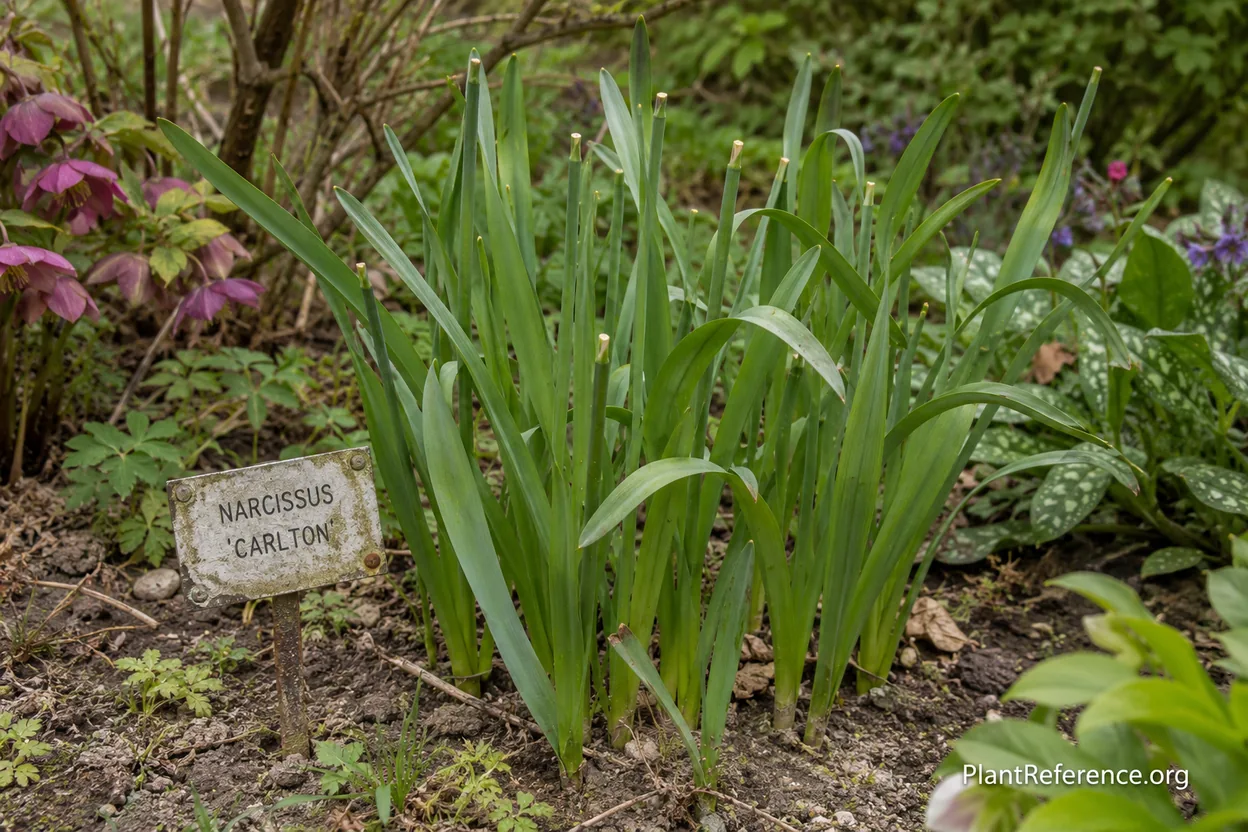
An empty planting hole is not the same as a healthy bulb failing to bloom. Displaced bulbs, chewed remains, or missing above-ground buds point toward damage, but signs alone do not always identify the animal responsible.
Inspect the access route before choosing protection. A surface cover addresses digging from above; it does not automatically stop feeding from below. Less appealing plants can reduce pressure, but no neighboring plant creates a guaranteed protective fence.
Observation | First question | Avoid this assumption |
|---|---|---|
Leaves but no flowers | What happened to foliage last year? | Every case needs fertilizer |
Soft bulb | Is the root zone staying saturated? | More watering encourages emergence |
Declining old clump | Has it become crowded? | All bulbs need annual division |
Empty planting spot | Is there evidence of damage? | The bulb is merely dormant |
Tulips decline after year one | Which group was planted? | Every tulip repeats equally well |
Keep ornamental bulbs separate from food and away from children and pets. Do not use poisonous bulbs as bait or improvise chemical deterrents.
Choose the Fix Before Buying Supplies
If you suspect a nutrient limitation after checking these six causes, Best Soil Test Kits for Home Gardeners can help you choose an investigation. Follow the evidence-first approach in DIY Organic Fertilizer Blends: A Soil-Test-First Guide rather than adding a generic bloom booster.
For potted displays, Container Gardening: Pots, Soil, Water & Yields covers the separate limits of a restricted root zone. Record which changes you make and compare the next flowering season.
Bulbs not blooming is a symptom, not a single diagnosis. Keep viable foliage working, correct the identified problem, and allow the next growth cycle to show whether the fix was appropriate.
Frequently Asked Questions

Reading about plants and recognising them are different skills. These three build the second.
- Daily PlantIdentify the day’s mystery plant from a close-up photograph.
- Keyed OutWork a dichotomous key, lead by lead, to name a hidden specimen.
- Name That PlantName a specimen from botanical clues dealt hardest first.
Free to play, no account needed
Tagged with
TJ stumbled into plant parenthood when a coworker gave him a neglected pothos. That single plant sparked an obsession that led him to quit his corporate marketing job and start a plant care service for busy professionals in Chicago. TJ maintains over 150 plants for residential clients and runs monthly plant swap meetups at local coffee shops. He's self-taught through YouTube, plant forums, and plenty of expensive mistakes (RIP to his variegated monstera). TJ specializes in troubleshooting common houseplant problems and is known for his blunt, no-BS advice: "Your plant isn't dying because Mercury is in retrograde—you're overwatering it." He's particularly skilled with finicky tropical plants like fiddle leaf figs and calatheas.