Image 1 of 19
1 / 19
Plant Reference
Narcissus, Genus,
- Genus
daffodil
Europe and North Africa — Mediterranean basin, Iberian Peninsula, and northwestern Africa; meadows, woodlands, and rocky slopes
Overview
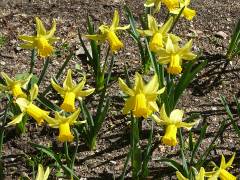
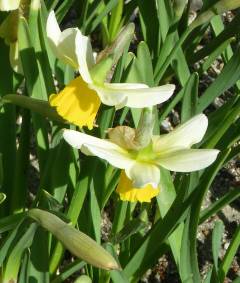
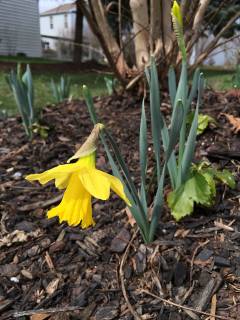
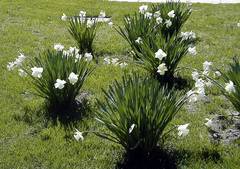
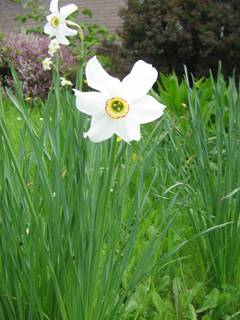
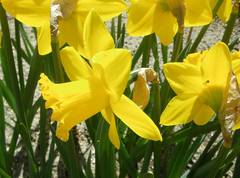
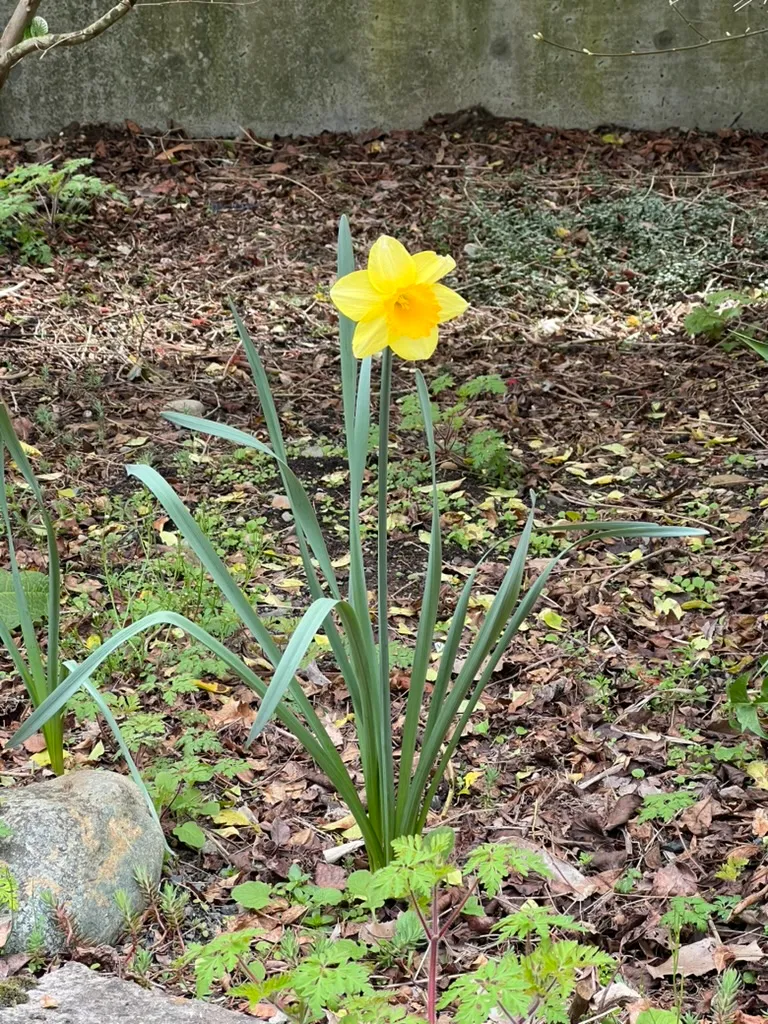
Narcissus spp. is daffodil (narcissus), a bulbous perennial growing 6-20 inches (15-50 cm) tall and 4-6 inches (10-15 cm) wide. Flowers with 6 spreading tepals surrounding a central trumpet or cup-shaped corona in yellow, white, orange, pink, or bicolor from February through April (10-week succession across cultivars). Glaucous gray-green strap-shaped basal leaves 8-18 inches (20-45 cm). In Amaryllidaceae. About 50 species and over 25,000 registered cultivars classified into 13 divisions by the Royal Horticultural Society. Native to Europe and North Africa. Naturalizes freely by bulb offsets. Contains lycorine — all parts are toxic if ingested, and the alkaloid content makes the bulbs unappealing to squirrels and deer (squirrel-proof, unlike tulips and crocus). The foliage must be allowed to yellow naturally for at least 6 weeks after bloom — do not cut, braid, or tie green leaves. This 6-week foliage maturation period and the floppy dying foliage are the primary aesthetic limitations. Many cultivars are fragrant (especially Tazetta and Jonquilla divisions). Plant 6-8 inches (15-20 cm) deep in fall. Zones 3-9. Full sun to partial shade. Growth rate is moderate.
Native Range
Native to Europe and North Africa — Mediterranean basin, Iberian Peninsula, and northwestern Africa. Found in meadows, woodlands, and rocky slopes.Suggested Uses
Grown naturalized in lawns, under deciduous trees, in borders, and in containers of at least 2 gallons (7.5 L), spaced 4-6 inches (10-15 cm). Plant in drifts. Squirrel-proof. Fragrant (many cultivars). Toxic. Deer-resistant. Zones 3-9.How to Identify
Appearance
Size & Dimensions
Height6" - 1'8"
Width/Spread4" - 6"
Bloom Information
Late winter to mid spring (February-April). Flowers with 6 tepals and a central corona in yellow, white, orange, pink, or bicolor. 10-week succession across cultivar groups. Many divisions fragrant. Bee-visited. Naturalizes.
Detailed Descriptions
Flower Description
Yellow, white, orange, pink, or bicolor; 6 spreading tepals surrounding a central trumpet or cup-shaped corona (the corona length relative to the tepals defines the 13 divisions); 1-20 flowers per stem depending on division; many cultivars are fragrantFoliage Description
Basal, strap-shaped to cylindrical, glaucous gray-green, 8-18 inches (20-45 cm); foliage dies back by early summerGrowing Conditions
Sun Requirements
Requires 3-10 hours of direct sunlight daily
• Full Sun: 6+ hours of direct sunlight
• Partial Shade: 3-6 hours of direct sunlight
• Full Shade: Less than 3 hours of direct sunlight
Care & Maintenance
Care Guide
Full sun to partial shade (3-10 hours). Well-drained soil pH 6.0-7.5. Plant 6-8 inches (15-20 cm) deep in fall. Allow foliage to yellow naturally for 6+ weeks after bloom. Squirrel-proof (lycorine). Naturalizes. All parts toxic (lycorine). Deer-resistant. Zones 3-9.Pruning
Snap off spent flowers. Do not cut, braid, or tie green foliage — allow to yellow naturally for at least 6 weeks. Remove dead foliage after it withers (May-June).Pruning Schedule
Prune: April–June
springlate spring
Container Growing
Suitable for container growing
Minimum container size: 2 gallons