Narcissus, Genus, pseudonarcissus, Species,
- Genus & species
wild daffodil
Overview
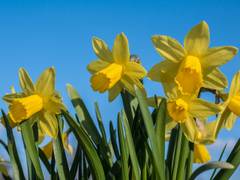
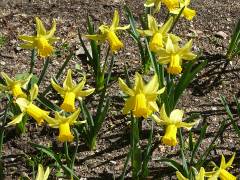
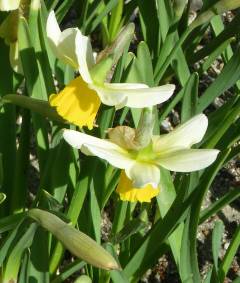
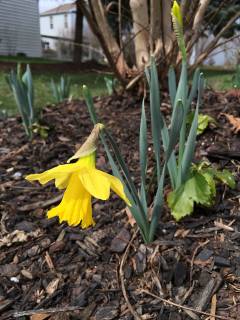
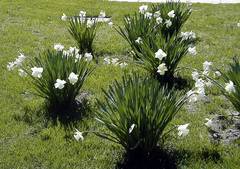
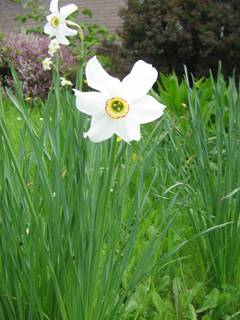
Narcissus pseudonarcissus is a spring-flowering bulb in the family Amaryllidaceae, growing 8-14 inches (20-35 cm) tall from a tunicate bulb and forming clumps over time. Each bulb produces a fan of narrow, grey-green strap-shaped leaves and one nodding flower per stem in early to mid-spring. The flower has a long, deep yellow central trumpet 1-1.5 inches (2.5-4 cm) long surrounded by six paler, twisted, primrose-yellow petals, the two-tone colouring giving the wild daffodil its character. After flowering the foliage yellows and dies back by early summer, and the bulb rests until autumn. Narcissus pseudonarcissus multiplies by offset bulbs and by seed, naturalising into drifts in grass and woodland. All parts, especially the bulbs, contain lycorine and related alkaloids that are toxic to people and pets if eaten. Limitations include a brief spring display, foliage that must be left to wither for the bulb to recharge, and toxicity that rules it out where bulbs might be mistaken for onions.
Native Range
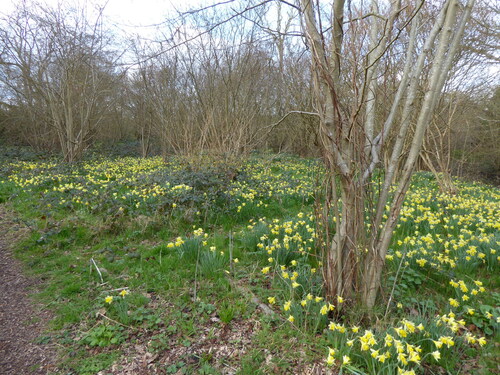
Narcissus pseudonarcissus is native to western Europe, from the Iberian Peninsula and France through Britain and into Germany. It grows in damp meadows, open woodland, and on shaded banks, and has naturalised widely in temperate regions, including parts of North America.Suggested Uses
Narcissus pseudonarcissus is naturalised in lawns, meadows, and woodland edges and planted in drifts in borders and under deciduous trees, spaced 3-4 inches (7.5-10 cm) apart. It is also grown in containers for spring display and combines with later perennials that hide the dying foliage.How to Identify
Appearance
Size & Dimensions
Height8" - 1'2"
Width/Spread4" - 6"
Bloom Information
Narcissus pseudonarcissus blooms in early to mid-spring, typically March to April, with one flower per stem opening over two to three weeks. The nodding yellow flowers appear before or with the leaves and draw early bees. Flowering ends as temperatures rise, after which the foliage takes several weeks to die back.
Detailed Descriptions
Foliage Description
Grey-greenGrowing Conditions
Sun Requirements
Requires 4-12 hours of direct sunlight daily
• Full Sun: 6+ hours of direct sunlight
• Partial Shade: 3-6 hours of direct sunlight
• Full Shade: Less than 3 hours of direct sunlight
Care & Maintenance
Care Guide
Narcissus pseudonarcissus grows in full sun to part shade on moist, well-drained soil and tolerates heavier ground than many daffodils. Bulbs are planted 4-6 inches (10-15 cm) deep in autumn into soil that stays moist in spring and drier in summer. The leaves are left to yellow and wither naturally, since cutting them early starves the bulb and reduces future flowering. Established clumps need little care and multiply on their own. Narcissus bulb fly and basal rot are the main problems, the latter worse in wet, poorly drained soil. No staking or routine feeding is needed in fertile ground.Pruning
Narcissus pseudonarcissus needs no pruning beyond removing spent flower stalks after bloom to prevent seed formation where increase by offsets is wanted. The foliage is left in place until it yellows and pulls away easily, usually six weeks after flowering. Congested clumps are lifted and divided in early summer once the leaves die down.Container Growing
Suitable for container growing
Minimum container size: 1 gallons