Narcissus, Genus, 'Jack Snipe', Cultivar,
- Genus
- Cultivar
jack snipe daffodil
Garden cultivar bred in Cornwall, England; genus native to Europe, North Africa, and western Asia
Overview
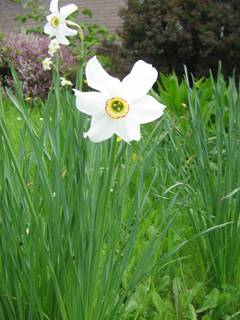
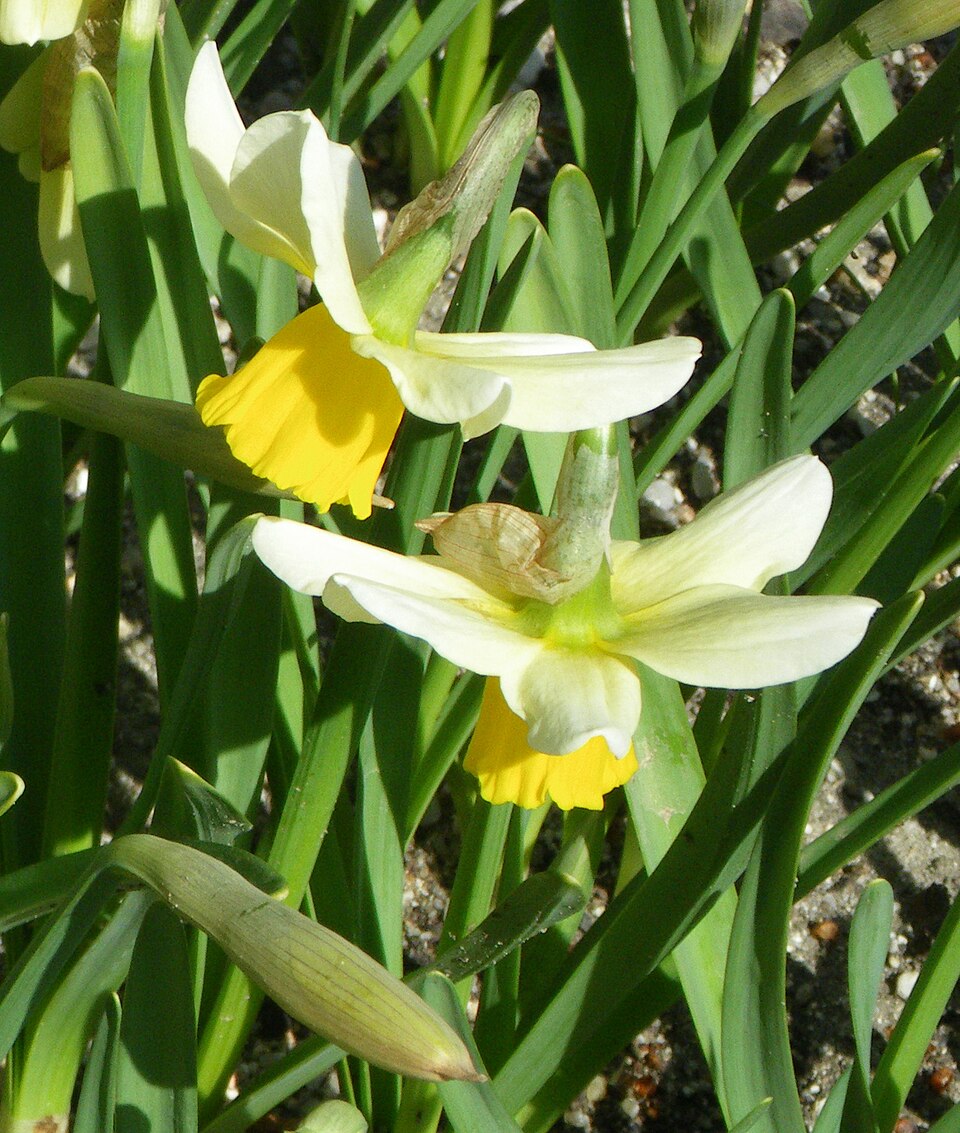
Narcissus 'Jack Snipe' is a bulbous herbaceous perennial reaching 8–10 inches (20–25 cm) tall and 3–4 inches (8–10 cm) wide per bulb, spreading into clumps over time through offset production. The cultivar is a Division 6 Cyclamineus hybrid bred by M.P. Williams in Cornwall, England, and registered in 1951; it holds the Royal Horticultural Society Award of Garden Merit. Each stem carries a single nodding bicolor flower 2–2.5 inches (5–6 cm) across with white perianth segments swept back 30–60 degrees from the flower axis and a short lemon-yellow cup approximately 1/3 the length of the tepals. Bloom occurs in March–April, 1–2 weeks after Narcissus 'February Gold' and 1–2 weeks before Division 1 trumpet daffodils such as 'King Alfred'. Leaves are basal, narrow and strap-shaped, 6–8 inches (15–20 cm) long, blue-green, and die back 6 or more weeks after flowering. Established clumps persist and increase for 20–40 years without division in suitable conditions. Growth rate is moderate; bulbs reach flowering maturity the year after autumn planting. Hardy to USDA zone 3. All parts — especially the bulbs — contain lycorine and other alkaloids; ingestion causes vomiting, salivation, and contact dermatitis in pets, livestock, and humans.
Native Range
The genus Narcissus is native to Europe, North Africa, and western Asia. Narcissus 'Jack Snipe' is a garden cultivar — a Division 6 Cyclamineus hybrid with parentage including N. cyclamineus — bred by M.P. Williams in Cornwall, England, and registered in 1951.Suggested Uses
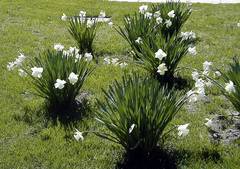
Planted in rock gardens, border fronts, containers 1 gallon (3.8 L) or larger, and naturalized in lawns and meadows at 3–4 inch (8–10 cm) spacing and 4–5 inches (10–13 cm) deep. The compact 8–10 inch (20–25 cm) stature fits small-scale plantings where taller 16–20 inch (40–50 cm) trumpet daffodils would dominate the foreground. Established clumps persist and increase over 20–40 years without intervention. The bicolor white-and-yellow flower bridges the color palette between white cultivars such as 'Mount Hood' and uniform golden-yellow cultivars such as 'February Gold' when mixed in the same planting. The 6-week post-bloom foliage ripening period leaves yellowing leaves visible into May–June. All parts of Narcissus are toxic to pets, livestock, and humans if ingested.How to Identify
Appearance
Size & Dimensions
Height8" - 10"
Width/Spread3" - 4"
Bloom Information
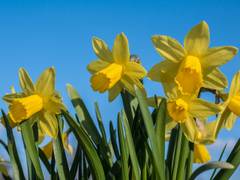
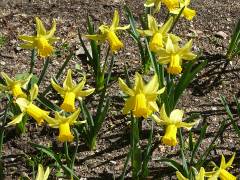
Single nodding bicolor flowers 2–2.5 inches (5–6 cm) across appear in March–April over a 2–3 week window per planting. Perianth segments are white and swept back 30–60 degrees from the flower axis; the short cup is lemon-yellow and approximately 1/3 the length of the tepals. Bloom opens 1–2 weeks after Narcissus 'February Gold' and 1–2 weeks before the main Division 1 trumpet daffodil flush.
Detailed Descriptions
Flower Description
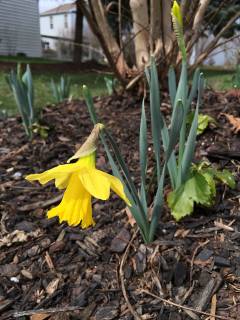
Bicolor: white perianth segments swept back 30-60 degrees from the flower axis with a short lemon-yellow cup approximately 1/3 the length of the tepals; single nodding flower 2-2.5 inches across; March-AprilFoliage Description
Blue-green; basal, narrow, strap-shaped, 6-8 inches longGrowing Conditions
Sun Requirements
Requires 4-10 hours of direct sunlight daily
• Full Sun: 6+ hours of direct sunlight
• Partial Shade: 3-6 hours of direct sunlight
• Full Shade: Less than 3 hours of direct sunlight
Care & Maintenance
Care Guide
Plant bulbs 4–5 inches (10–13 cm) deep at 3–4 inch (8–10 cm) spacing in full sun to partial shade with 4–10 hours of direct light, in well-drained loam, sandy loam, or silt at pH 6.0–7.0. Autumn planting between September and November, 6–8 weeks before the ground freezes, gives the bulbs time to root before winter. Water in after planting and keep soil moist through establishment; bulbs are drought-tolerant once established. Allow foliage to yellow and die back naturally for at least 6 weeks after flowering. Divide congested clumps every 5–8 years in early summer after foliage dies back, when flower count per stem drops below 80–90% of peak. Hardy to USDA zone 3.Pruning
Allow foliage to yellow and die back naturally for 6 or more weeks after flowering. Do not cut, braid, or tie the leaves while they are still green — this reduces photosynthate production and weakens bulbs for the next season. Remove yellowed foliage when it detaches from the bulb with gentle pulling. Deadhead spent flower stems at the base of the stalk to prevent seed formation and direct energy into bulb storage.Pruning Schedule
Prune: May–June
late spring
Container Growing
Suitable for container growing
Minimum container size: 1 gallons