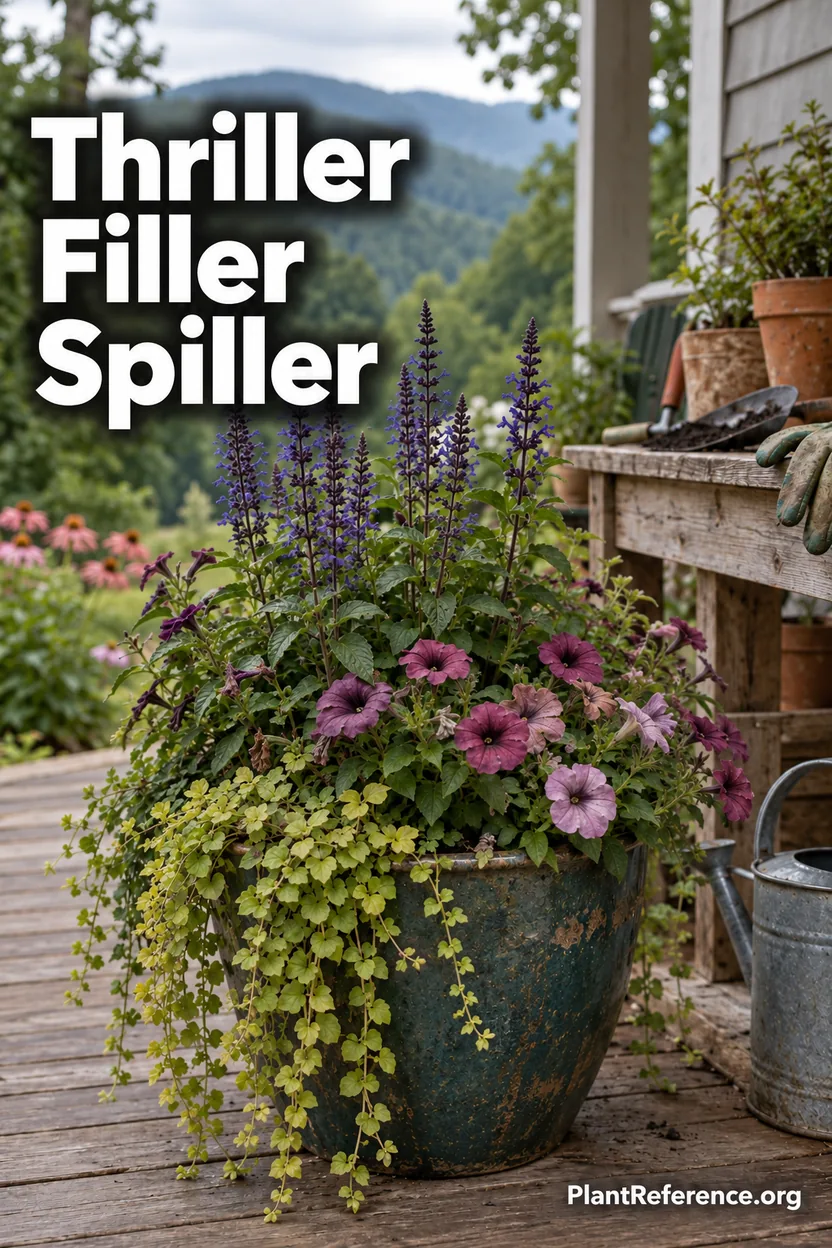
Thriller Filler Spiller: Design a Balanced Flower Pot
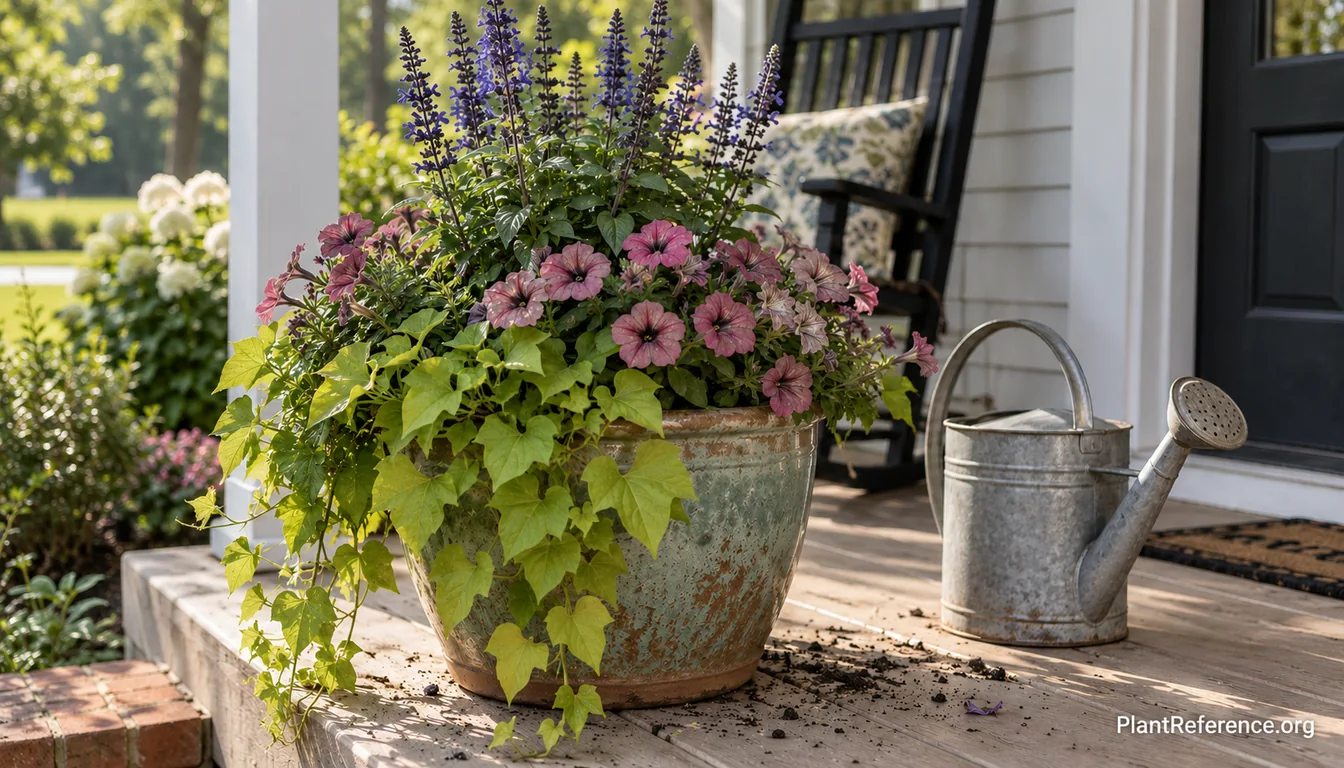
— Image © PlantReference.org 2026
Pets & Toxicity
Recorded toxicity for plants linked in this guide. An unknown status is not a safety assessment.
No linked plant is recorded as toxicDetailsHide
The thriller filler spiller formula gives a flower pot a clear outline: height, a rounded middle, and growth that softens the rim. It is a design tool, not a rule that every container must contain three species. The strongest combination is one whose plants can share the same conditions after the nursery flowers fade.
What Thriller Filler Spiller Means
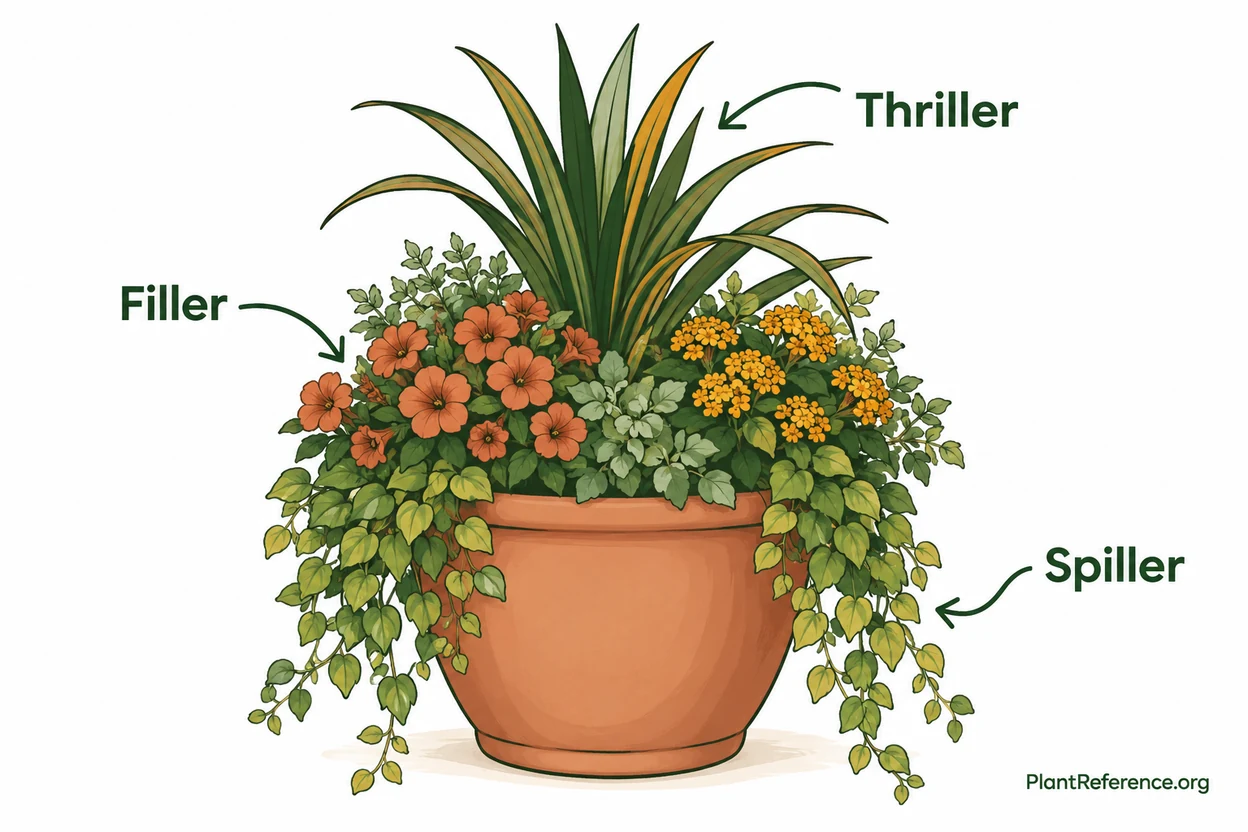
The thriller provides the main vertical feature. The filler gives the arrangement body, covering the middle without hiding that feature. The spiller trails over the edge, connecting the plant canopy to the container rather than leaving a sharp line at the rim.
A single plant can sometimes play more than one role. A spreading petunia may fill the middle and spill outward, for example. Think about the mature growth habit rather than buying a separate plant just to complete a shopping checklist.
Petunias Petunia x hybrida (peh-TOON-yuh hy-BRID-uh) and bedding geraniums Pelargonium x hortorum (pel-ar-GOH-nee-um hor-TOR-um) can provide rounded flowering mass. Snapdragons 🌿Antirrhinum majus (an-tih-RYE-num MAY-jus) offer upright spikes, but their preference for cooler weather matters when planning the season.
Use Container Gardening: Pots, Soil, Water & Yields for the container basics behind the design. If you are comparing unfamiliar flowers, Flower Identification Guide: Petals, Shape & Color Explained helps you look beyond color to structure.
Match Conditions Before Choosing Colors
Start with the spot where the pot will live. Watch how much direct sun it receives, including changes caused by a roof, nearby wall, or afternoon shade. A combination assembled for a sunny nursery bench may struggle on a shaded porch.
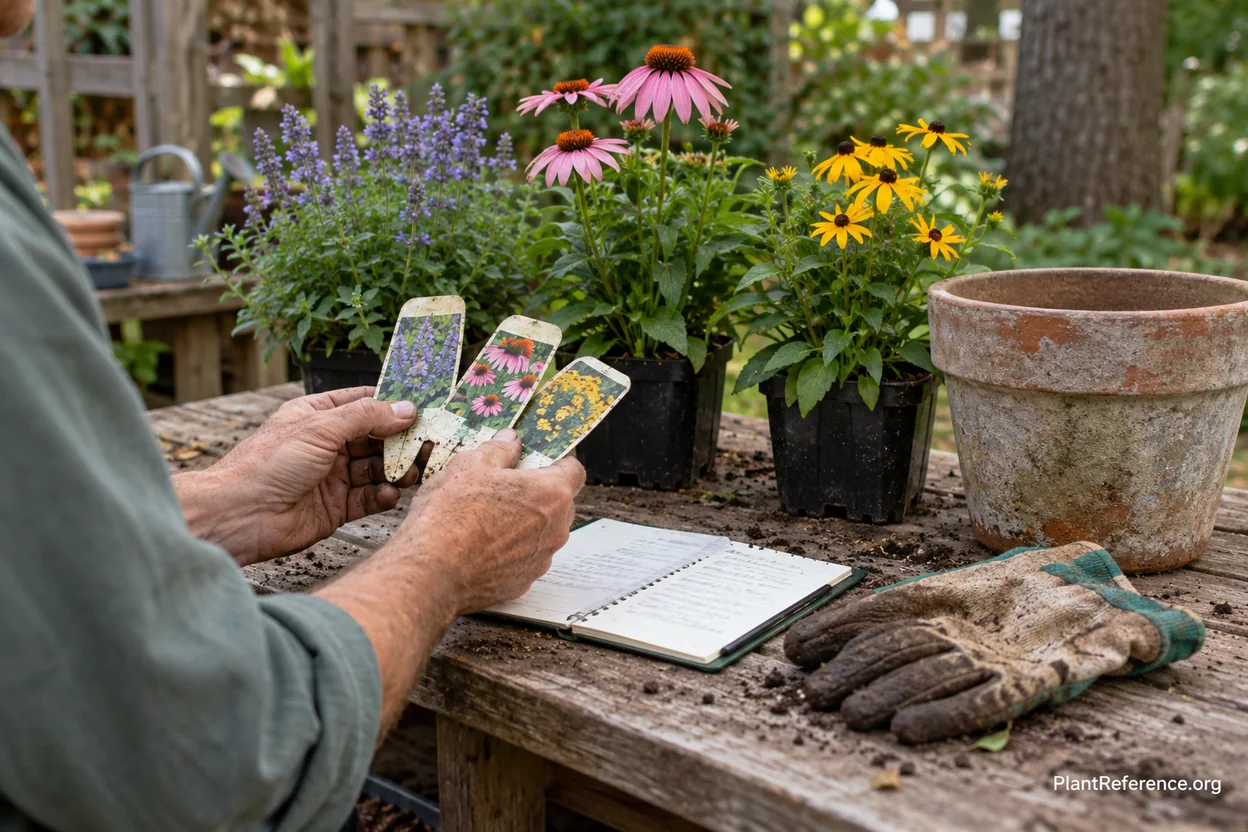
Next, compare the plant labels for moisture needs, mature size, and seasonal performance. Do not combine plants that need frequent moisture with plants that require a much drier root zone simply because their flowers look good together. One shared pot means one shared watering decision.
For a warm, sunny display, an upright heat-season flowering plant with petunia fillers and a compatible trailing plant can be a useful starting point. For a cool-season display, snapdragons can supply the height, but do not expect that same design to peak unchanged through intense summer heat.
Calibrachoa 🌿Calibrachoa spp. hybrids (kal-ih-bruh-KOH-uh) can trail beautifully, but their preference for an acidic root zone deserves attention. A plant's role in the design does not cancel its cultural needs. If matching plants becomes complicated, reduce the number of different kinds rather than adding another treatment to the care routine.
Choose a restrained palette after those checks. Repeating one flower color in different shapes often looks more deliberate than combining every available shade. Foliage can provide contrast even when one flowering component pauses, so judge leaves as well as blooms.
Arrange the Container From Its Viewing Side
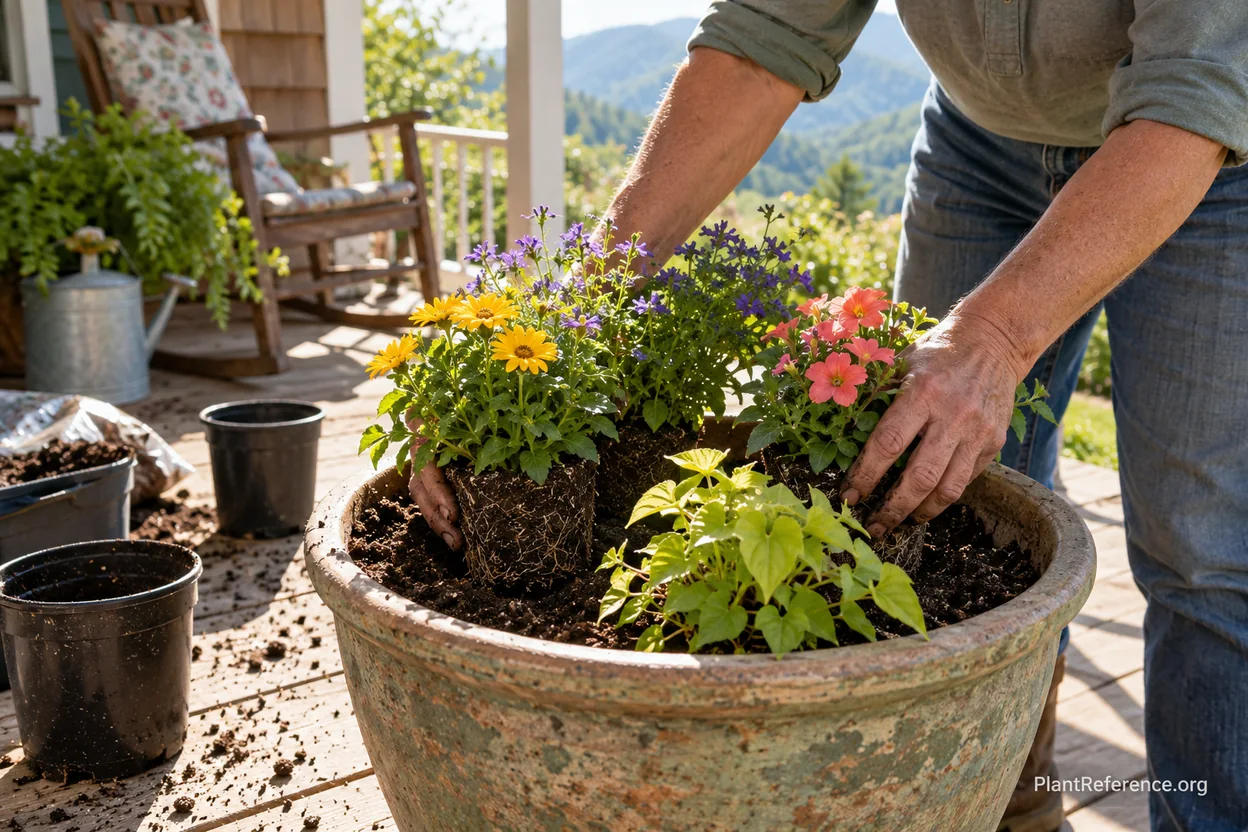
Keep plants in their nursery pots while you test the arrangement. Place the main upright feature first, then add rounded plants around it and trailers near the rim. Step back to the distance from which the finished pot will normally be seen.
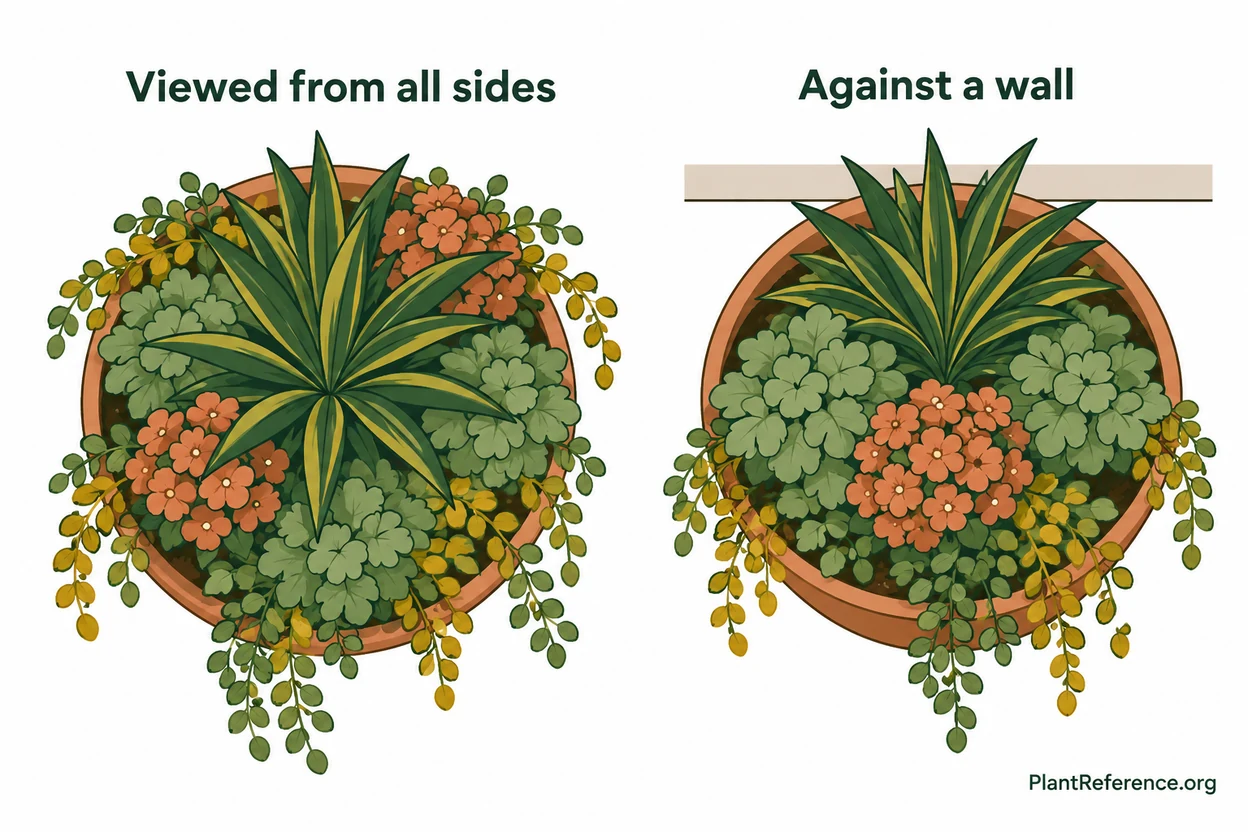
For a pot viewed from all sides, a central thriller usually works well. For one placed against a wall, move the taller feature toward the back so it does not block the lower flowers. In a window box, repeat a small number of shapes instead of making each end compete for attention.
The formula is easiest to see as a set of jobs:
Role | Visual job | Position to test |
|---|---|---|
Thriller | Creates height and a focal point | Center for all-around viewing; back for one-sided viewing |
Filler | Builds the main flowering or leafy mass | Around the thriller, without covering it |
Spiller | Softens the rim and trails outward | Near the visible edges |
Do not force symmetry if the setting is asymmetrical. A pot beside steps may need a clear walking side, while a hanging basket needs even weight and a canopy that does not hide its support. Keep trailing growth away from paths where it will be brushed or stepped on.
Take a photograph of the trial arrangement before removing the nursery pots. It is a simple way to remember positions once planting begins. More importantly, it helps you notice an overcrowded middle that was less obvious while you were leaning over the container.
Plant for Growth, Not Just the First Photograph
Use a container with drainage holes and enough usable root volume for the chosen plants. Fill with an appropriate potting mix rather than garden soil that may compact in a pot. Soil Health 101: How to Build Living, Productive Garden Soil concerns bed soil; container roots need a mix designed for their different setting.
Do not add a gravel layer to compensate for poor drainage. Gravel in Bottom of Pots for Drainage: Why It Backfires explains why that shortcut does not replace open holes and suitable mix. Keep the whole root zone useful rather than sacrificing its lower portion to stones.
Set root balls at approximately their original depth, fill around them, and firm gently. Leave a watering lip below the rim so water can soak in instead of immediately spilling over. Water after planting to settle the mix, then check for uneven settling around the root balls.
Follow this sequence before calling the design finished:
Confirm drainage and stable placement.
Test the layout with plants still in nursery pots.
Compare mature widths and remove any unnecessary extras.
Plant without burying crowns deeply.
Water, let excess drain, and check the final outline.
An instant, tightly packed display can be appropriate for a short event, but it is not the same plan as a pot expected to last for months. Container Plants Drying Out Fast? 7 Ways to Slow It Down helps explain the maintenance cost of crowding and limited root volume.
Keep the Design Balanced Through the Season
Check moisture in the root zone rather than watering only because the surface looks pale. Growth, wind, and temperature change how quickly the container dries. If the display wilts in hot weather, use Container Plants Wilting in Heat: Cool the Root Zone to assess both exposure and moisture.
Review fertilizer already present in the potting mix before adding another product. Follow the label for container feeding, and avoid treating extra leaves as proof that a stronger dose will produce more flowers. The reasoning in DIY Organic Fertilizer Blends: A Soil-Test-First Guide also helps distinguish a nutrient decision from a guess.
If white deposits appear, investigate using White Crust on Potting Soil: Causes and How to Flush It rather than continuing to add feed. A design problem can begin below the leaves, even when its first visible symptom is a thinning canopy.
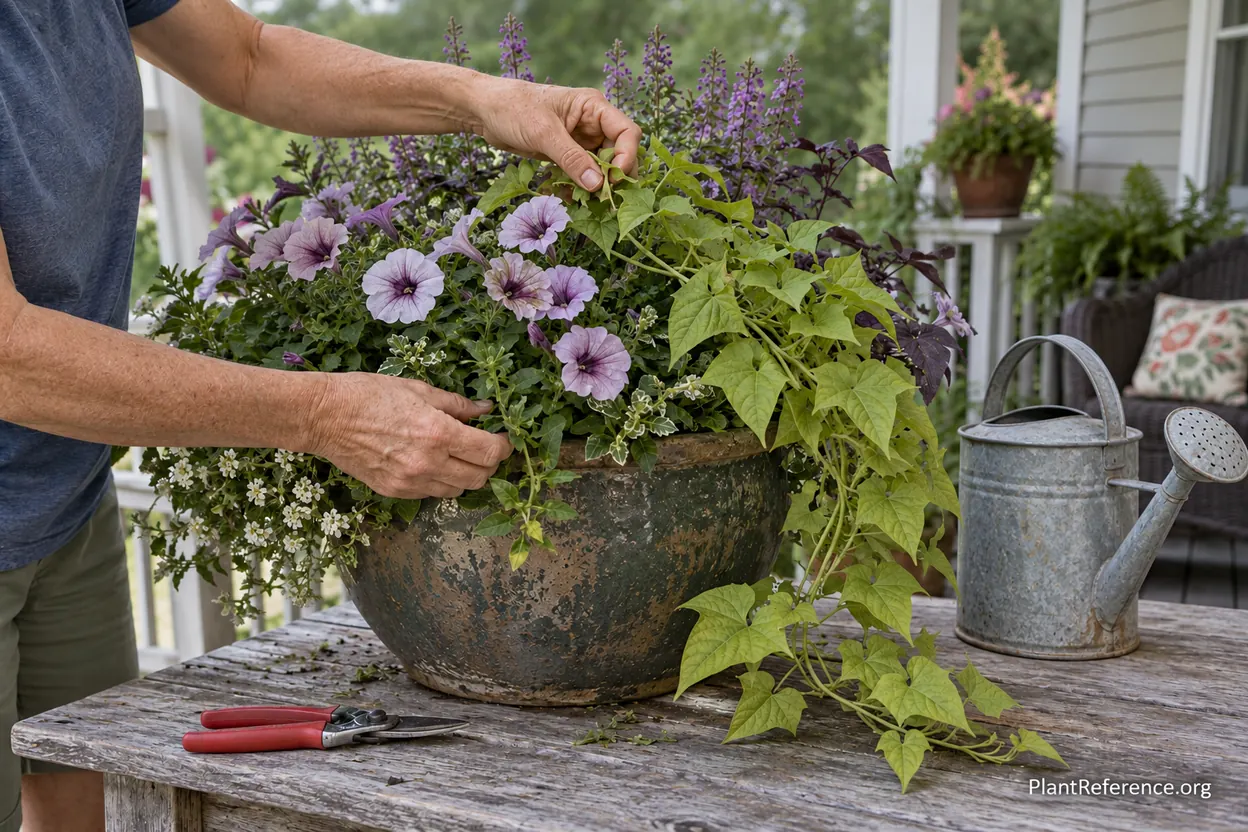
Trim a vigorous spiller before it covers its neighbors, and remove spent flowers where the plant benefits from deadheading. Keep healthy leaves below shaping cuts. If one component declines because its season has ended, replacing that component can be more sensible than repeatedly pruning every plant.
The thriller filler spiller formula remains useful throughout maintenance: ask whether the pot still has a focal point, a readable middle, and a controlled edge. You do not need to preserve the exact planting-day outline. You need a balanced arrangement that still fits its space and its shared growing conditions.
Frequently Asked Questions

Reading about plants and recognising them are different skills. These three build the second.
- Daily PlantIdentify the day’s mystery plant from a close-up photograph.
- Keyed OutWork a dichotomous key, lead by lead, to name a hidden specimen.
- Name That PlantName a specimen from botanical clues dealt hardest first.
Free to play, no account needed
Tagged with
Claire runs a small cut flower farm on two acres outside Asheville, North Carolina, where she grows annual flowers for farmers market bouquets and a subscription CSA. She studied art in college and fell into flower farming after volunteering at a community garden during graduate school. What started as a few rows of zinnias and cosmos turned into a full-time business within three years. Claire grows over 40 annual flower varieties from seed each season, managing succession plantings from February through October. She teaches seed-starting workshops at the local cooperative extension office and mentors new flower farmers through their first seasons. Claire writes from direct growing experience — she has started tens of thousands of seeds, trialed hundreds of varieties, and made every mistake in the annual flower book at least once. Her advice is specific, seasonal, and grounded in what actually works in the field, not what looks good in a catalog photo.