When to Plant Onions in Chicago: Complete Guide + Best Varieties for Zone 6a
Pets & Toxicity
Recorded toxicity for plants linked in this guide. An unknown status is not a safety assessment.
Toxic to pets: Walla Walla sweet onion, red wing storage onion, yellow sweet Spanish onion and 3 moreDetailsHide
Allium cepa 'Walla Walla' — Toxicity Warning
Toxic to cats and dogs if eaten; cats are especially susceptible, and raw, cooked or concentrated plant material can damage red blood cells and cause anaemia.View Allium cepa 'Walla Walla' plant profileAllium cepa 'Red Wing' — Toxicity Warning
Toxic to cats and dogs if eaten; cats are especially susceptible, and raw, cooked or concentrated plant material can damage red blood cells and cause anaemia.View Allium cepa 'Red Wing' plant profileAllium cepa 'Yellow Sweet Spanish' — Toxicity Warning
Toxic to cats and dogs if eaten; cats are especially susceptible, and raw, cooked or concentrated plant material can damage red blood cells and cause anaemia.View Allium cepa 'Yellow Sweet Spanish' plant profileAllium sativum 'Music' — Toxicity Warning
Toxic to cats and dogs if eaten; cats are especially susceptible, and raw, cooked or concentrated plant material can damage red blood cells and cause anaemia.View Allium sativum 'Music' plant profileAllium sativum 'California Early' — Toxicity Warning
Toxic to cats and dogs if eaten; cats are especially susceptible, and raw, cooked or concentrated plant material can damage red blood cells and cause anaemia.View Allium sativum 'California Early' plant profileAllium fistulosum — Toxicity Warning
Toxic to cats and dogs if eaten; cats are especially susceptible, and raw, cooked or concentrated plant material can damage red blood cells and cause anaemia.View Allium fistulosum plant profile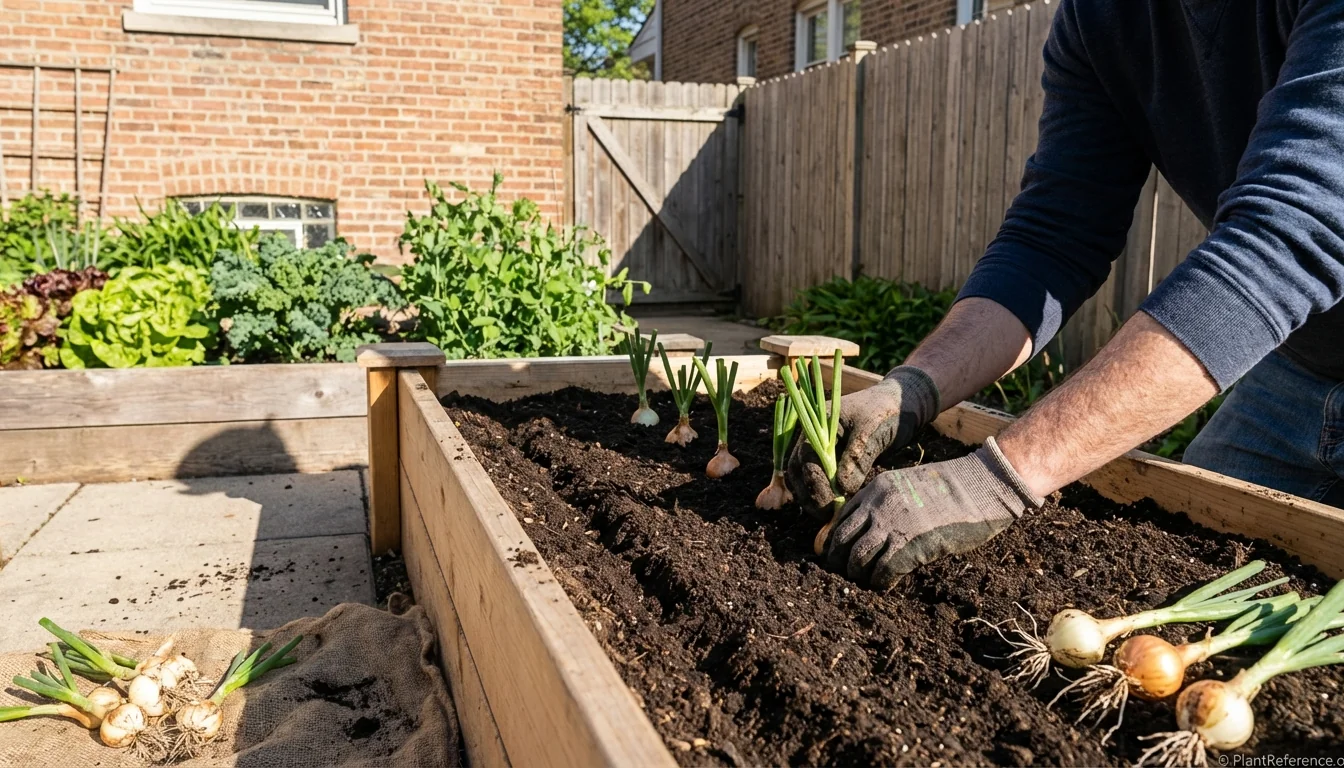
— Image © Plant Reference 2026
Growing onions in Chicago isn't complicated, but you need to understand one critical fact: at 42° North, Chicago requires long-day onion varieties that won't bulb until summer's longest days arrive. I've been growing onions here for thirty-five years, and I'll tell you exactly when to plant and which varieties actually work in our Zone 6a climate.
Best Onion Varieties for Chicago's Zone 6a Climate
Chicago's 42° latitude puts us squarely in long-day onion territory. These varieties need 14-16 hours of daylight before they stop growing leaves and start forming bulbs. Plant the wrong type, and you'll get massive green tops with tiny bulbs—or no bulbs at all.
Long-day varieties thrive here because they use our entire growing season to build leaf mass before the summer solstice triggers bulbing. More leaves means bigger bulbs, and Chicago's 158-day growing season gives them plenty of time to reach full size.
Variety | Days to Maturity | Best For | Notes for Chicago |
|---|---|---|---|
110-125 days | Fresh eating | Sweet, mild flavor; poor storage | |
105-120 days | Long storage | Stores 8-10 months when cured properly | |
110-120 days | Large bulbs | Can reach 1+ pound in good soil | |
240-270 days | Hardneck garlic | Plant October, harvest July | |
240-270 days | Softneck garlic | Better for braiding and storage | |
60-70 days | Green onions | Continuous harvest, cold hardy |
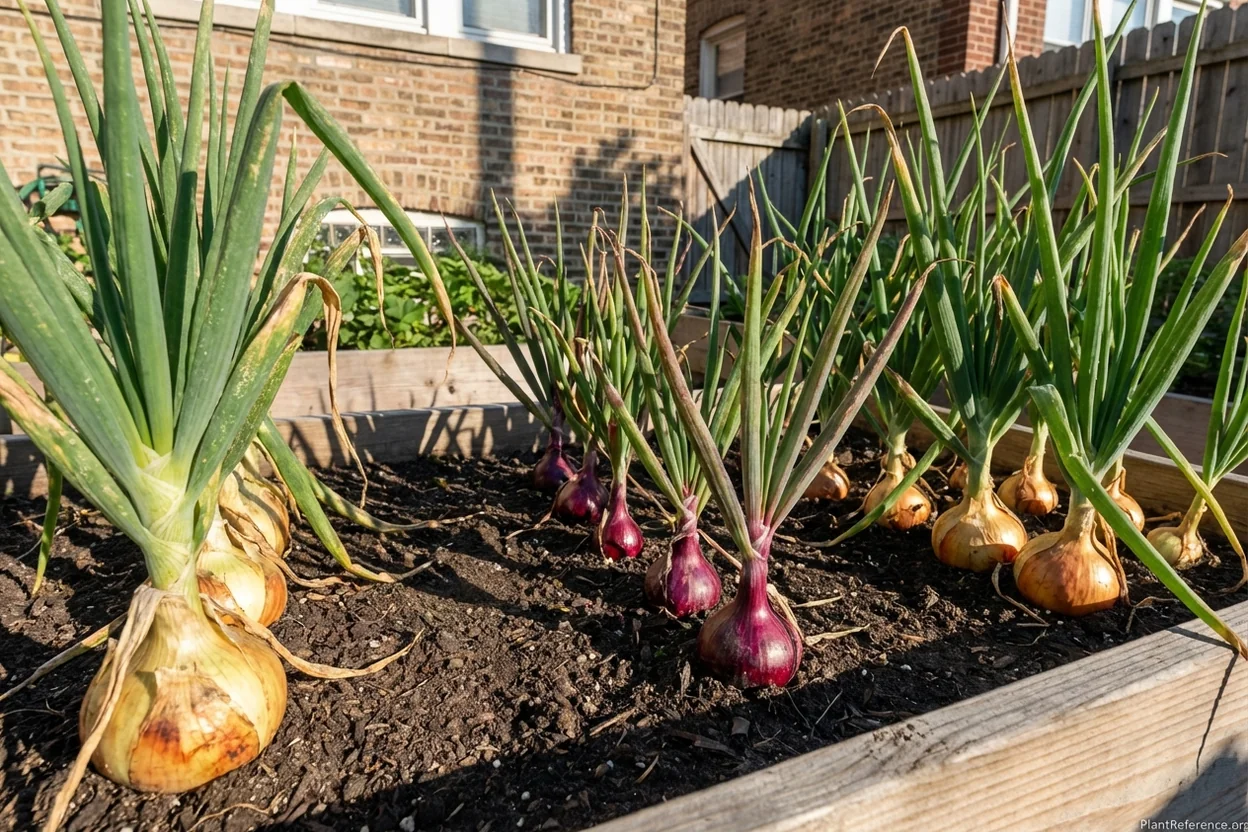
🌿Allium cepa 'Walla Walla' produces the sweetest, mildest onions you'll ever grow. These beauties can reach massive sizes in Chicago's rich soil, but don't expect them to store past October. The high water content that makes them sweet also makes them prone to rot. Plant these for fresh eating through summer and fall.
🌿Allium cepa 'Red Wing' is your storage workhorse. I've kept these bulbs firm and flavorful through the following spring when properly cured. The deep red rings hold their color even after months in storage, making them perfect for cooking all winter long.
🌿Allium cepa 'Yellow Sweet Spanish' gives you the best of both worlds—large size and decent storage life. In fertile Chicago soil, these can grow enormous while maintaining enough firmness to store for 4-5 months.
For garlic, 🌿Allium sativum 'Music' is my go-to hardneck variety. It handles our winters perfectly and produces 4-6 large, easy-to-peel cloves per bulb. The flavor is complex and rich—much better than anything you'll buy at the store.
🌿Allium sativum 'California Early' works well if you prefer softneck garlic. It produces more cloves per bulb (12-18) and stores longer, but the flavor is milder than hardneck varieties.
**Allium fistulosum** gives you fresh green onions from early spring through late fall. These perennial bunching onions never form bulbs, so you harvest the green tops continuously. They're incredibly cold hardy and will overwinter in Chicago with minimal protection.
Specific Planting Dates for Chicago Gardens
Chicago's last frost averages May 9, but I start planting onions well before then. Onions handle light frost just fine—in fact, they prefer cool weather for establishing their root systems.
Onion Sets and Transplants: Plant from April 15 to May 1. This gives them 3-4 weeks to establish before any late frost, and they'll be well-rooted when warm weather arrives. I prefer this window because the soil is workable but not waterlogged from spring rains.
Direct Seeding: Wait until May 1-15 if you're planting seeds directly. Seeds need warmer soil than sets or transplants, and Chicago's heavy clay soils are often too cold and wet in April for good germination.
Indoor Seed Starting: Start seeds indoors February 15-March 1 if you want transplants. This gives them 8-10 weeks to develop good root systems before transplanting in mid-April.
Garlic Planting: Plant cloves October 15 to November 1. You want 4-6 weeks for root development before the ground freezes hard. Plant too early and you'll get excessive top growth that winter will kill back.
The key is matching your planting method to Chicago's spring weather patterns. Sets and transplants handle our unpredictable April weather better than direct-seeded crops.
I always plant my main crop by April 20. This timing ensures maximum leaf growth before the summer solstice triggers bulbing. Every week of delay means smaller final bulb size.
For succession plantings of scallions, plant 🌿Allium fistulosum every 2-3 weeks from April through August. They mature in 60-70 days, giving you continuous fresh green onions through the growing season.
Complete Growing Guide for Chicago Onion Success
Soil Preparation
Chicago's heavy clay soils need serious amendment for onion success. Onions have shallow, inefficient root systems that can't push through compacted clay or sit in waterlogged soil.
Work in 2-3 inches of compost every spring. I also add coarse sand—not fine sand, which makes clay worse—to improve drainage. The goal is soil that drains within 24 hours after heavy rain but holds enough moisture for consistent growth.
Test your soil pH every few years. Onions prefer 6.0-6.8 pH. Chicago soils tend toward alkaline, so sulfur additions are often needed to lower pH into the optimal range.
Planting Techniques
For sets, push them into prepared soil until just the tips show above ground. Space them 4 inches apart in rows 12 inches apart. Don't plant them too deep—buried onions often rot in our spring rains.
Transplants need their roots trimmed to 2 inches and tops trimmed to 4 inches before planting. This reduces transplant shock and helps them establish quickly in Chicago's variable spring weather.
Direct seeds need careful attention to soil moisture. Plant 1/2 inch deep and keep the soil consistently moist until germination. In Chicago's clay soils, this often means covering the seeded area with boards or cardboard to prevent crusting, then removing the covers as soon as seedlings emerge.
Fertilizing Schedule
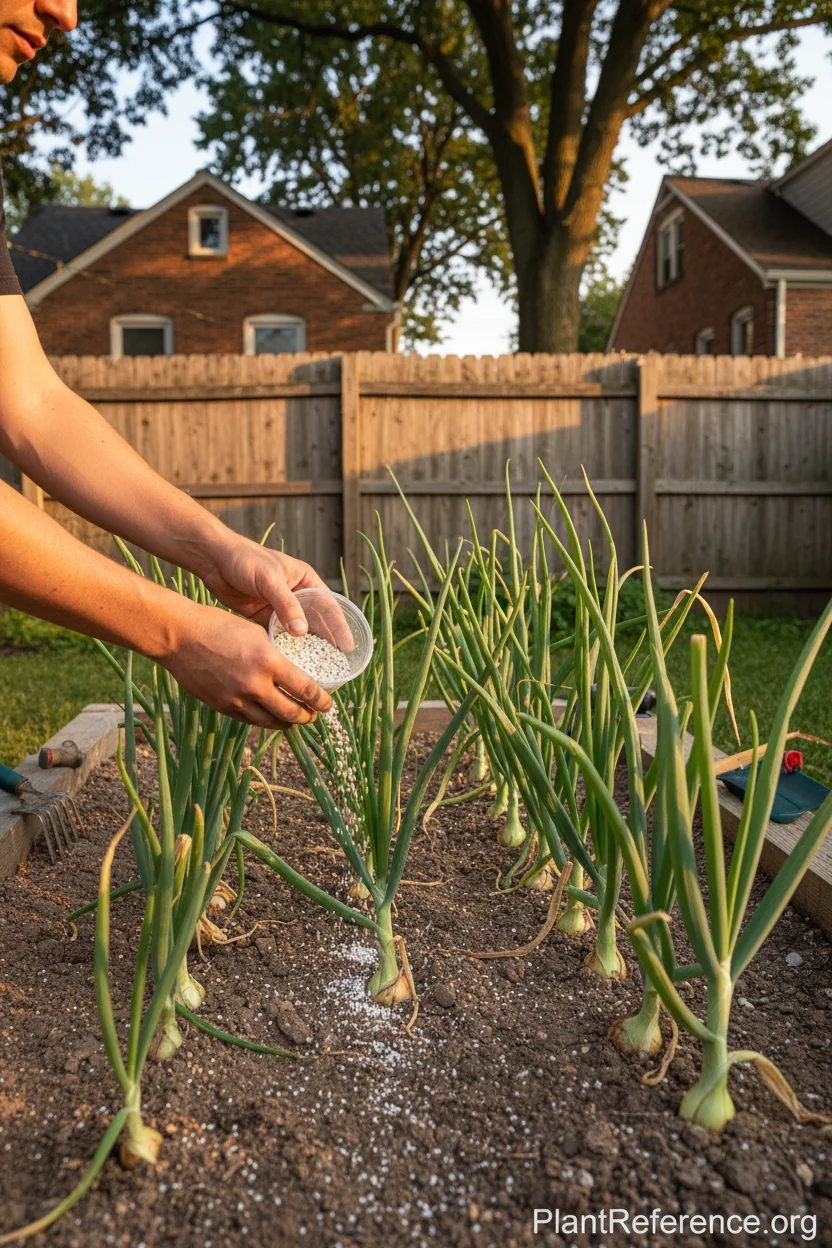
Feed heavily during the vegetative growth phase, then stop completely when bulbing begins. I use a balanced fertilizer (10-10-10) at planting, then side-dress with high-nitrogen fertilizer every 3 weeks through June.
Watch for the soil to crack around the bulb bases—this signals the start of bulbing. Stop all nitrogen applications immediately. Late nitrogen creates thick necks that won't cure properly and soft bulbs that rot in storage.
Watering Management
Onions need consistent moisture but never waterlogged conditions. Chicago's summer thunderstorms often provide too much water at once, followed by dry spells that stress the plants.
Water deeply once weekly during dry periods, providing about 1 inch total per week. Reduce watering frequency as harvest approaches to help bulbs mature and cure properly.
Troubleshooting Chicago-Specific Growing Problems
Bolting Issues
Bolting—sending up flower stalks before bulbing—ruins your onion crop. In Chicago, this usually happens when you plant large sets or use intermediate/short-day varieties by mistake.
Large onion sets (bigger than a dime) think they've been through winter and try to flower in spring. Stick to small sets, or better yet, use transplants that haven't experienced temperature fluctuations.
Wrong variety types bolt because they can't handle our long winter-to-spring temperature swings. Only plant varieties specifically labeled as long-day types suitable for northern climates.
Late Spring Freezes
Chicago's unpredictable spring weather can bring hard freezes even in early May. Young onion plants handle light frost (28-30°F) but suffer damage below 25°F.
Cover plants with row covers, milk jugs, or even cardboard boxes when hard freezes threaten. Remove covers the next morning to prevent overheating. Established plants with good root systems recover quickly from minor freeze damage.
Heavy Clay Soil Drainage
Chicago's clay soils become waterlogged in spring, leading to onion rot and poor root development. Raised beds solve this problem immediately by elevating plants above the saturated clay layer.
Build beds 6-8 inches high and fill with amended soil that drains well. Even simple raised rows made by hilling soil 4 inches high improve drainage enough for successful onion growing.
Thrips Damage
Thrips cause silvery streaks on onion leaves and can stunt bulb development. These tiny insects hide in leaf folds and multiply rapidly in hot weather.
Inspect plants weekly starting in June. Early infestations respond to insecticidal soap sprays applied in early morning or evening. Severe infestations may require pyrethrin-based sprays.
Encourage beneficial insects by planting flowers nearby. Predatory mites and minute pirate bugs help control thrips naturally if you avoid broad-spectrum insecticides.
Thick Necks at Harvest
Onions that won't cure properly usually have thick, fleshy necks instead of tight, papery ones. This happens when plants receive too much nitrogen or water late in the season.
Stop fertilizing by mid-July and reduce watering as tops begin yellowing naturally. Never force tops down by stepping on them—this creates wounds that invite rot instead of natural sealing.
Harvest and Storage in Illinois Climate
Timing the Harvest
Harvest when 50-75% of tops have fallen over naturally. Don't wait for all tops to fall—some varieties maintain green tops even when bulbs are mature. In Chicago, this typically occurs from mid-August through September, depending on variety and planting date.
Pull bulbs on a sunny day when soil is relatively dry. Shake off loose soil but don't wash them—wet bulbs are more prone to rot during curing.
Curing Process
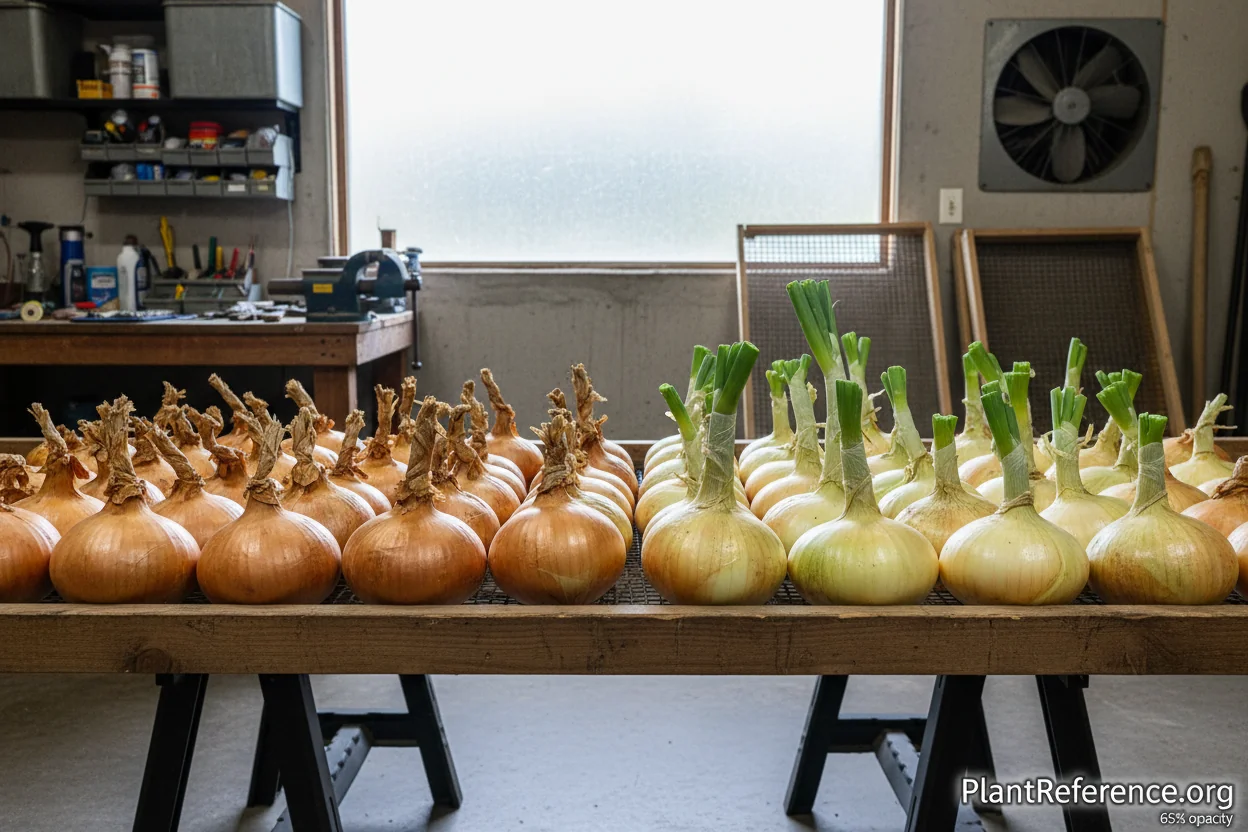
Chicago's humid summers require careful curing to prevent storage rot. Lay bulbs in single layers in a warm, dry, well-ventilated area. I use my garage with fans running to keep air moving.
Ideal curing conditions are 80-90°F with low humidity and good airflow. This takes 2-4 weeks until outer skins become papery and necks feel completely dry when squeezed.
Never cure in direct sunlight—this causes sunscald and reduces storage life. A covered porch, garage, or barn works perfectly.
Storage Requirements
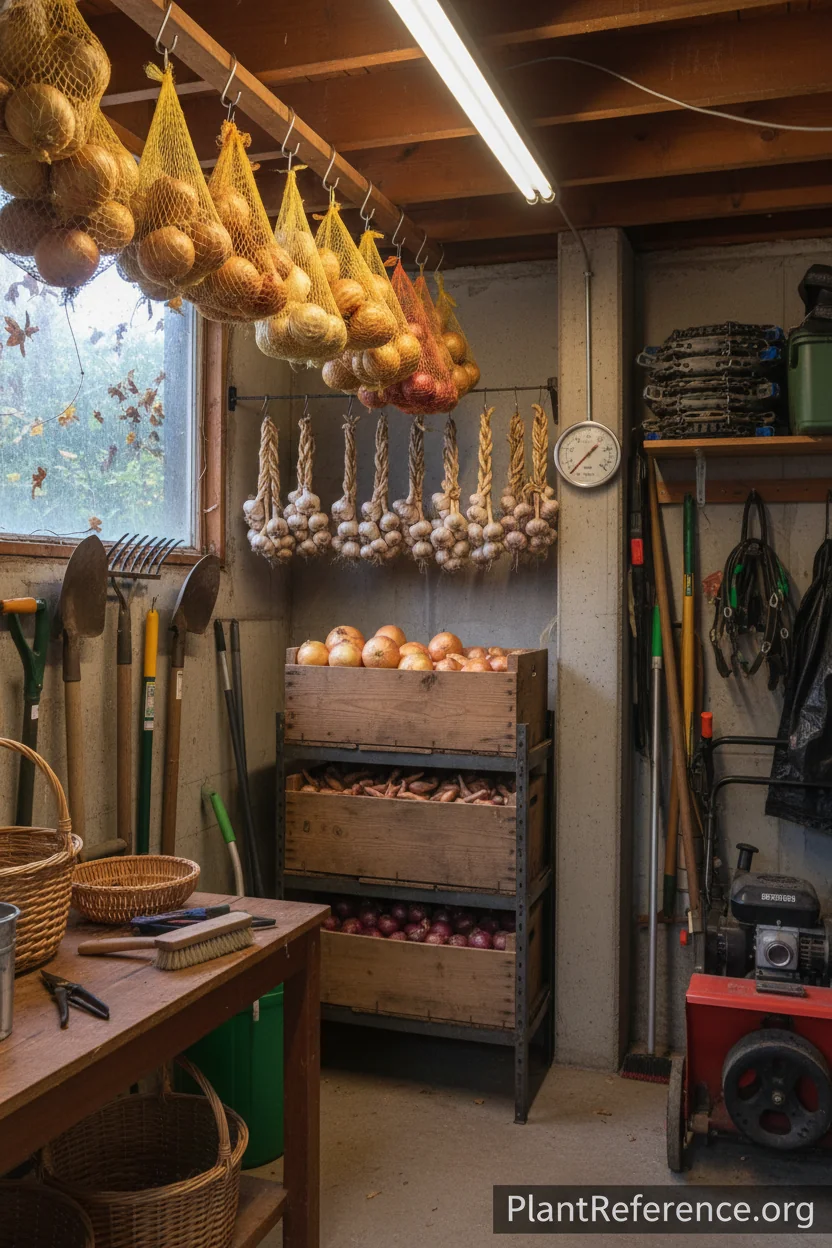
Store cured onions in mesh bags, wooden crates, or braided strings in a cool (32-40°F), dry location. My unheated garage maintains perfect storage conditions through Chicago winters.
Check stored onions monthly and remove any showing soft spots or sprouting. One bad onion can spoil others nearby through bacterial spread.
Garlic Harvest and Curing
Harvest garlic in July when lower leaves turn brown but upper leaves remain green. Brush off soil and hang in small bundles in a warm, dry, ventilated area for 2-3 weeks.
Properly cured garlic stores 6-12 months depending on variety. Hardneck types like 🌿Allium sativum 'Music' store 4-6 months, while softneck varieties like 🌿Allium sativum 'California Early' keep 8-12 months.
Reading about plants and recognising them are different skills. These three build the second.
- Daily PlantIdentify the day’s mystery plant from a close-up photograph.
- Keyed OutWork a dichotomous key, lead by lead, to name a hidden specimen.
- Name That PlantName a specimen from botanical clues dealt hardest first.
Free to play, no account needed
Pat has been gardening in Milwaukee for over thirty years, through every kind of Wisconsin weather. She worked as a school librarian and started gardening seriously when her kids were small—she wanted them to know where food came from. Now retired, she's a certified Master Gardener and runs the plant sale at her local garden club every spring. She specializes in cold-hardy perennials, native wildflower meadows, and the art of getting a vegetable garden producing in Wisconsin's short but intense growing season. Pat is practical and patient—she's seen enough Wisconsin winters to know that gardening here is a long game, and she writes with the steady confidence of someone who's been doing this a long time.