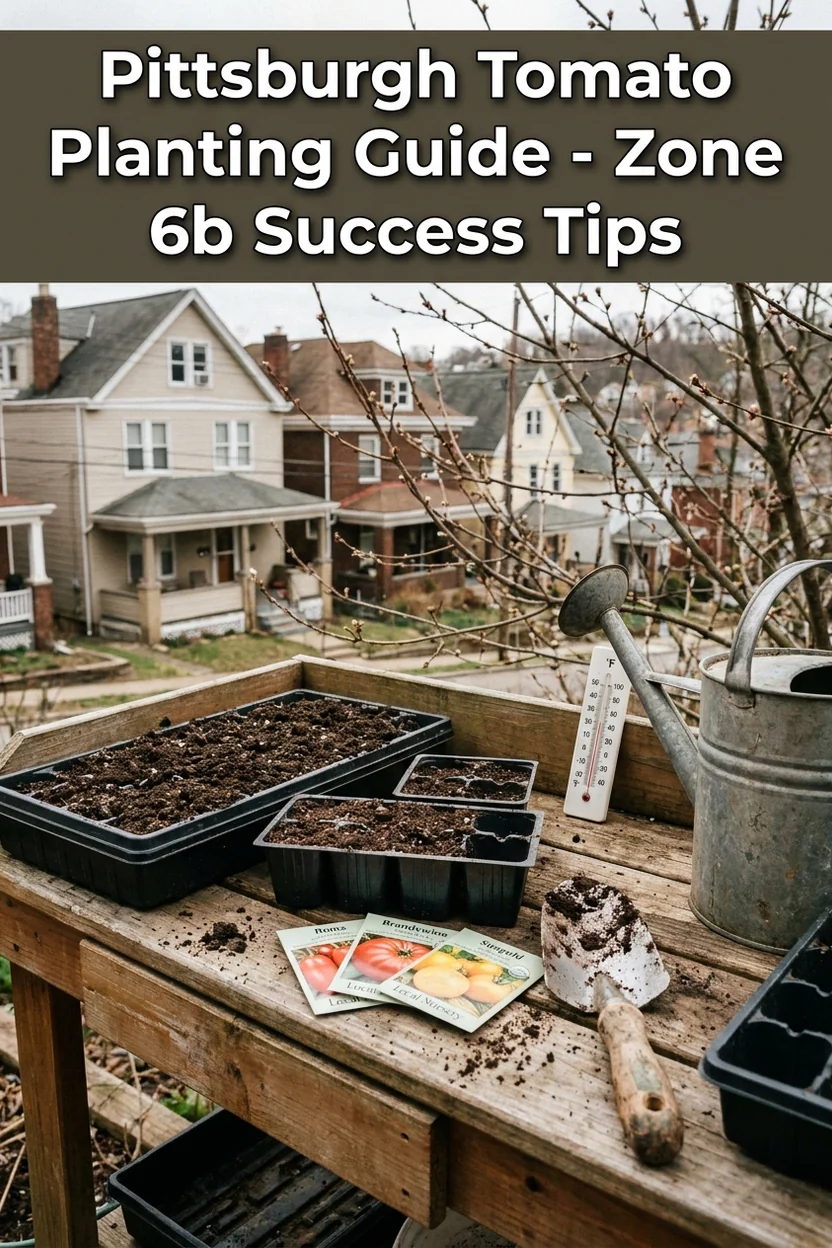
When to Plant Tomatoes in Pittsburgh: Complete Guide + Best Varieties for Zone 6b
Pets & Toxicity
Recorded toxicity for plants linked in this guide. An unknown status is not a safety assessment.
Toxic to pets: early girl tomato, Stupice tomato, San Marzano tomato and 1 more (4 linked plants checked)DetailsHide
Solanum lycopersicum 'Early Girl' — Toxicity Warning
Toxic to petsView Solanum lycopersicum 'Early Girl' plant profileSolanum lycopersicum 'Stupice' — Toxicity Warning
Toxic to petsView Solanum lycopersicum 'Stupice' plant profileSolanum lycopersicum 'San Marzano' — Toxicity Warning
Toxic to petsView Solanum lycopersicum 'San Marzano' plant profileSolanum lycopersicum 'Brandywine' — Toxicity Warning
Toxic to petsView Solanum lycopersicum 'Brandywine' plant profile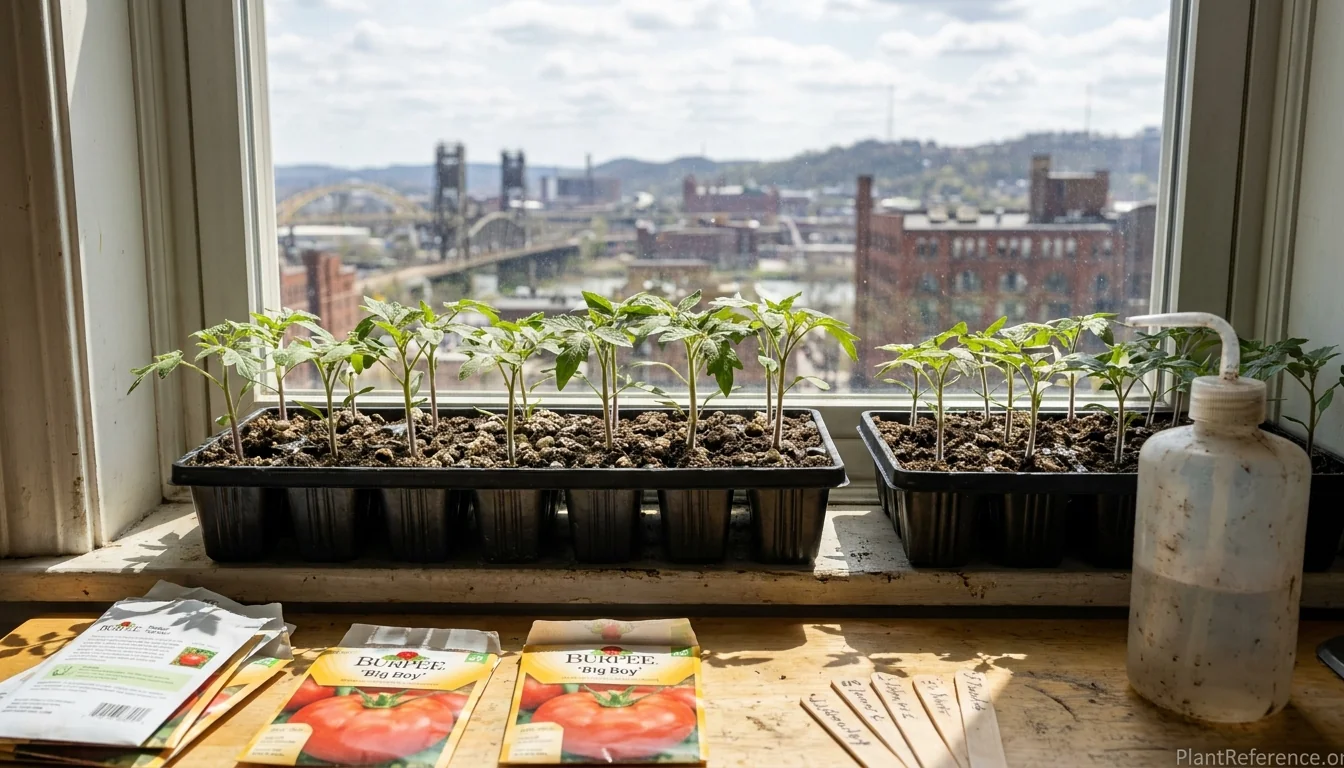
— Image © PlantReference.org 2026
Pittsburgh gardeners have a significant advantage when growing tomatoes—Zone 6b's 178-day growing season provides ample time for even late-maturing heirlooms to reach full potential. The Steel City's humid continental climate, with its April 24 last frost date and October 19 first frost, creates an ideal window for exceptional tomato harvests.
Introduction: Why Pittsburgh's Zone 6b Climate is Perfect for Tomatoes
Pittsburgh's location in USDA Zone 6b creates nearly optimal conditions for tomato cultivation. The city's 178-day growing season, stretching from April 24 to October 19, provides sufficient time for both quick-maturing varieties and flavor-rich heirlooms to develop fully. Pennsylvania's abundant rainfall—averaging 37 inches annually—reduces irrigation needs, though it also increases disease pressure from fungal pathogens.
The Steel City's unique microclimate benefits from the urban heat island effect, making downtown areas slightly warmer than surrounding suburbs. This means gardeners in neighborhoods like Lawrenceville or the Strip District may safely transplant 3-5 days earlier than those in Fox Chapel or Mt. Lebanon.
Pittsburgh's clay-rich soils, formed from weathered shale and sandstone, retain moisture well but require amendment with organic matter to improve drainage. The region's humidity levels—averaging 65-70% during summer months—create perfect conditions for foliar diseases, making variety selection and cultural practices crucial for success.
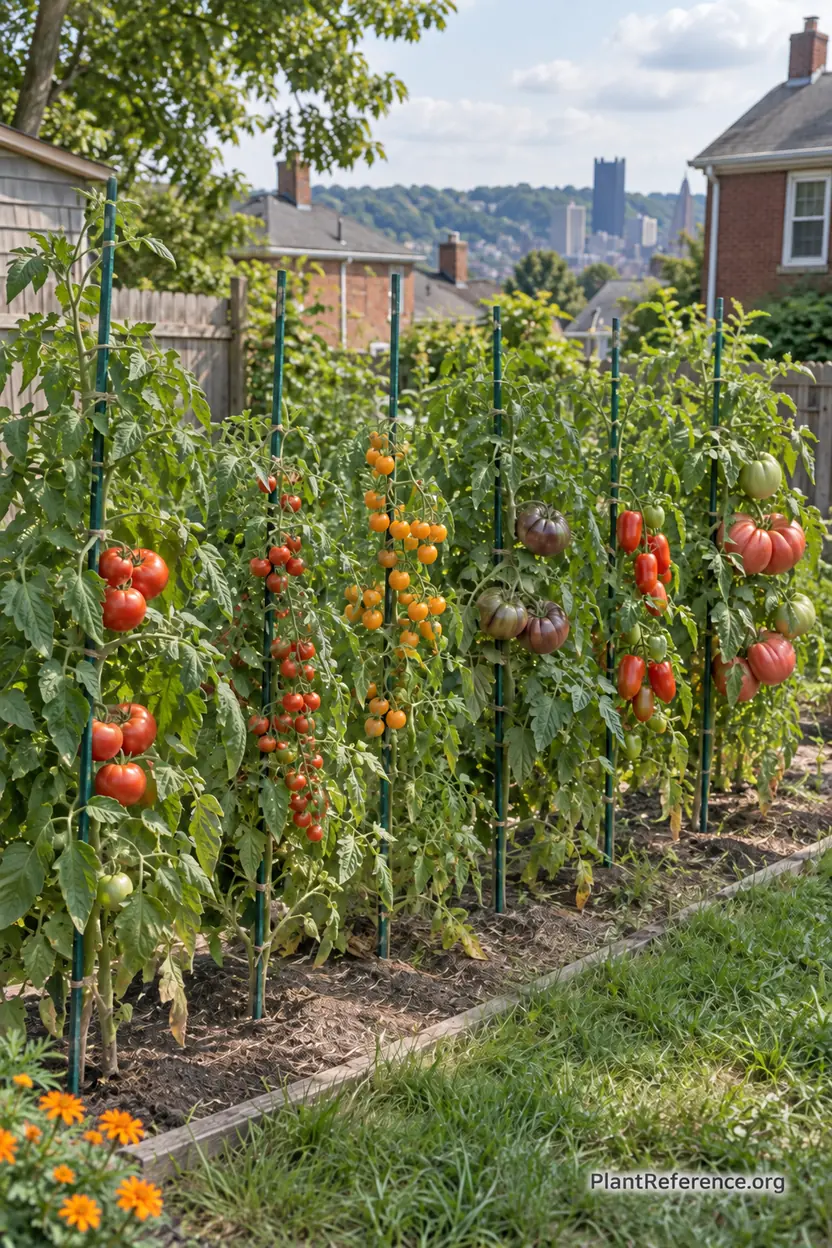
This guide covers six proven varieties specifically chosen for Pittsburgh's climate challenges: 🌿Solanum lycopersicum 'Early Girl', 🌿Solanum lycopersicum 'Stupice', 🌿Solanum lycopersicum 'Cherokee Purple', 🌿Solanum lycopersicum 'San Marzano', 🌿Solanum lycopersicum 'Sungold', and 🌿Solanum lycopersicum 'Brandywine'.
Best Tomato Varieties for Pittsburgh's Climate
Selecting appropriate varieties for Pittsburgh's Zone 6b climate requires balancing disease resistance with flavor preferences. The region's humid summers favor varieties with strong resistance to Early Blight and Septoria Leaf Spot, while the 178-day season allows flexibility in maturity timing.
For Early Harvest
🌿Solanum lycopersicum 'Early Girl' and 🌿Solanum lycopersicum 'Stupice' lead Pittsburgh gardens in reliability. 'Early Girl' matures in just 50-62 days from transplant, ensuring harvests by early July even in challenging seasons. Its VF resistance package protects against Verticillium and Fusarium wilts common in Pennsylvania soils.
'Stupice', developed in the Czech Republic for cool climates, excels in Pittsburgh's variable spring conditions. This variety sets fruit at temperatures as low as 45°F (7°C), continuing production when other varieties stall during cool June nights typical in western Pennsylvania.
For Best Flavor
🌿Solanum lycopersicum 'Cherokee Purple' originated in Tennessee's similar humid climate, making it surprisingly well-adapted to Pittsburgh conditions. This heirloom produces 10-12 ounce fruits with complex, smoky flavor profiles that develop beautifully in Pennsylvania's warm, humid summers.
🌿Solanum lycopersicum 'Brandywine' represents the pinnacle of tomato flavor but demands careful management in Pittsburgh's disease-prone environment. The Sudduth strain performs best locally, though it requires aggressive pruning and preventive fungicide applications.
For Pittsburgh's Climate Challenges
🌿Solanum lycopersicum 'Sungold' cherry tomatoes thrive in high humidity while providing continuous harvests from July through October. This variety's FTV resistance protects against multiple pathogens prevalent in Pennsylvania gardens.
🌿Solanum lycopersicum 'San Marzano' paste tomatoes produce exceptional processing fruit ideal for Pittsburgh's Italian-American community. However, this variety requires consistent watering to prevent blossom end rot during July's heat spells.
Variety Comparison Table
Variety | Days to Maturity | Best For | Notes for Pittsburgh |
|---|---|---|---|
50-62 days | Quick harvest | Perfect for Zone 6b; VF disease resistance | |
52-60 days | Cool springs | Sets fruit at 45°F; ideal for variable PA weather | |
55-65 days | Continuous harvest | FTV resistance; thrives in Pittsburgh humidity | |
75-90 days | Flavor | Adapted to humid climates; requires staking | |
78-85 days | Processing | Needs consistent water; prevent blossom end rot | |
80-100 days | Premium flavor | High maintenance; requires disease prevention |
For Beginners
New Pittsburgh gardeners should start with 🌿Solanum lycopersicum 'Early Girl' and 🌿Solanum lycopersicum 'Sungold'. These varieties forgive cultural mistakes while providing reliable harvests. Their disease resistance packages handle Pennsylvania's fungal pressure without intensive management.
For Storage and Preserving
🌿Solanum lycopersicum 'San Marzano' produces ideal canning tomatoes with low moisture content and rich flavor. Pittsburgh's Italian heritage makes this variety particularly popular for sauce making. Plant multiple succession plantings 2 weeks apart for extended harvest windows.
Specific Planting Dates for Pittsburgh
Pittsburgh's April 24 last frost date serves as the anchor point for all tomato timing decisions. Zone 6b's climate allows for strategic succession plantings and extended harvests through October.
Indoor Seed Starting Timeline
March 13-20: Start seeds indoors 6 weeks before Pittsburgh's last frost date. Maintain soil temperature at 75-80°F (24-27°C) for optimal germination. Most varieties germinate within 5-7 days under these conditions.
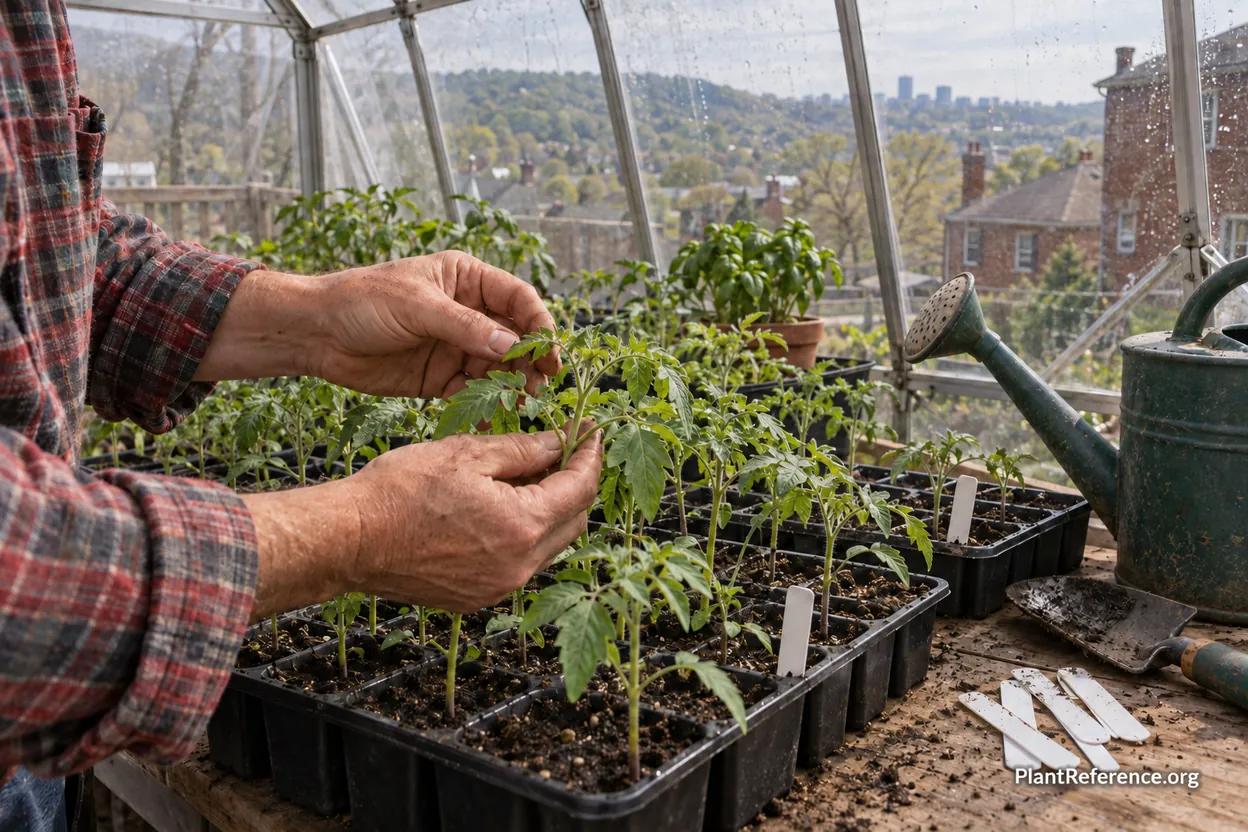
March 27-April 3: Transplant seedlings to 4-inch pots when first true leaves appear. Pittsburgh's variable spring weather makes this step crucial for developing strong root systems before outdoor transplanting.
April 10-17: Begin hardening off process gradually. Start with 2 hours outdoors in protected location, increasing daily. Pittsburgh's spring wind can damage tender seedlings, so choose calm days for initial exposure.
Outdoor Transplanting Schedule
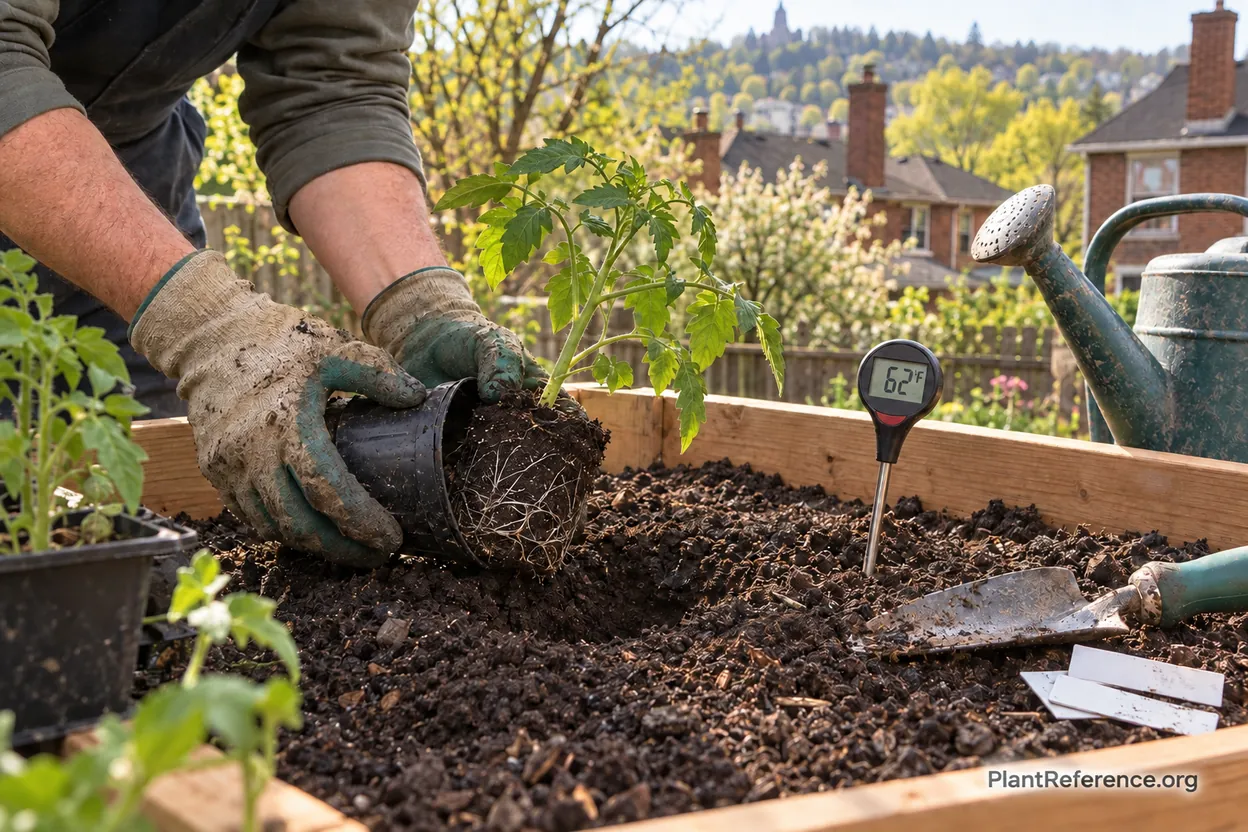
May 1-8: Primary transplanting window for Pittsburgh Zone 6b. Soil temperatures should consistently reach 60°F (16°C) or higher. This timing provides 172-178 days until first frost, sufficient for all recommended varieties.
May 15-22: Latest safe planting for long-season varieties like 🌿Solanum lycopersicum 'Brandywine'. This date still allows 150-157 growing days before October 19 frost.
Succession Planting Strategy
June 1-15: Plant second round of 🌿Solanum lycopersicum 'Early Girl' and 🌿Solanum lycopersicum 'Stupice' for fall harvest. These mature by August 15-September 1, providing fresh fruit through October.
July 1: Final planting window for 50-60 day varieties. Seeds started now mature by late August, extending harvest season through Pittsburgh's typically mild October weather.
Harvest Timeline Expectations
Based on May 1 transplanting date:
Early Varieties (50-62 days):
🌿Solanum lycopersicum 'Early Girl': First harvest June 20-July 2
🌿Solanum lycopersicum 'Stupice': First harvest June 22-July 1
Mid-Season (55-75 days):
🌿Solanum lycopersicum 'Sungold': First harvest June 25-July 10
🌿Solanum lycopersicum 'Cherokee Purple': First harvest July 15-August 1
Late Season (78-100 days):
🌿Solanum lycopersicum 'San Marzano': First harvest July 18-August 5
🌿Solanum lycopersicum 'Brandywine': First harvest July 20-August 10
Complete Growing Guide for Pittsburgh
Pittsburgh's Zone 6b climate presents specific challenges that require targeted growing strategies. Success depends on managing Pennsylvania's clay soils, high humidity, and variable weather patterns.
Pittsburgh Climate Challenges
Spring Weather Variability: Pittsburgh experiences dramatic temperature swings in April and May. Temperatures can fluctuate 30°F (17°C) between day and night, stressing young transplants. Use row covers or Wall-o-Water protection for plants set out before May 10.
Summer Humidity: Pennsylvania's 65-70% average humidity during growing season creates ideal conditions for Early Blight, Septoria Leaf Spot, and other fungal diseases. Proper spacing and air circulation become critical for plant health.
Clay Soil Drainage: Pittsburgh's heavy clay soils, derived from weathered Pennsylvanian-age rocks, retain moisture but drain poorly. Amend with 2-3 inches of compost annually to improve structure and drainage.
Week-by-Week Pittsburgh Timeline
Weeks 1-2 (May 1-15): Focus on establishment. Mulch heavily with straw or shredded leaves to moderate soil temperature and retain moisture. Install sturdy stakes or cages—Pittsburgh's summer thunderstorms produce damaging winds.
Weeks 3-6 (May 15-June 15): Vegetative growth period. Side-dress plants with compost or balanced fertilizer. Begin pruning suckers on indeterminate varieties to improve air circulation and reduce disease pressure.
Weeks 6-10 (June 15-July 15): Flowering and early fruit set. Monitor soil moisture carefully—inconsistent watering causes blossom end rot in 🌿Solanum lycopersicum 'San Marzano'. Apply organic fungicides preventively if weather remains humid.
Weeks 10-16 (July 15-September 1): Peak harvest period. Check plants daily for hornworms, which peak during Pittsburgh's hot August weather. Harvest Solanum lycopersium 'Sungold' cherries daily to prevent splitting after thunderstorms.
Weeks 16-20 (September 1-October 19): Late season management. Prune lower leaves showing blight symptoms. Harvest green fruits if frost threatens—Pittsburgh's first frost typically occurs October 15-25.
Pittsburgh-Specific Growing Techniques
Raised Beds: Essential for improving drainage in Pittsburgh's clay soils. Build beds 8-12 inches high with 50% native soil, 30% compost, and 20% coarse sand or perlite.
Mulching Strategy: Apply 3-4 inches of organic mulch around plants by June 1. This prevents soil splash-back carrying fungal spores, moderates root temperature during hot periods, and conserves moisture during dry spells.
Disease Prevention: Pittsburgh's humid conditions require proactive management. Space plants for maximum air circulation, prune lower branches, and apply copper-based fungicides every 14 days during wet periods.
Soil Preparation for Pittsburgh
Pittsburgh soils typically test pH 6.0-7.0, ideal for tomatoes. However, clay content often exceeds 40%, creating drainage issues. Test soil drainage by digging 12-inch hole and filling with water—it should drain within 4-6 hours.
Amendment Schedule:
Fall: Add 2-3 inches aged compost or cow manure
Spring: Incorporate 1 inch additional compost plus 1⁄4 cup lime per plant if pH below 6.5
Mid-season: Side-dress with compost tea or fish emulsion every 3-4 weeks
Fertility Management: Pennsylvania soils are often high in phosphorus but may lack potassium. Use balanced fertilizers like 10-10-10 at planting, switching to lower nitrogen formulations (5-10-10) once flowering begins to prevent excessive vegetative growth.
Troubleshooting Pittsburgh-Specific Problems
Pittsburgh gardeners face three primary challenges that can devastate tomato crops if not properly managed. Understanding these regional issues enables proactive prevention strategies.
Early Blight (Alternaria solani)
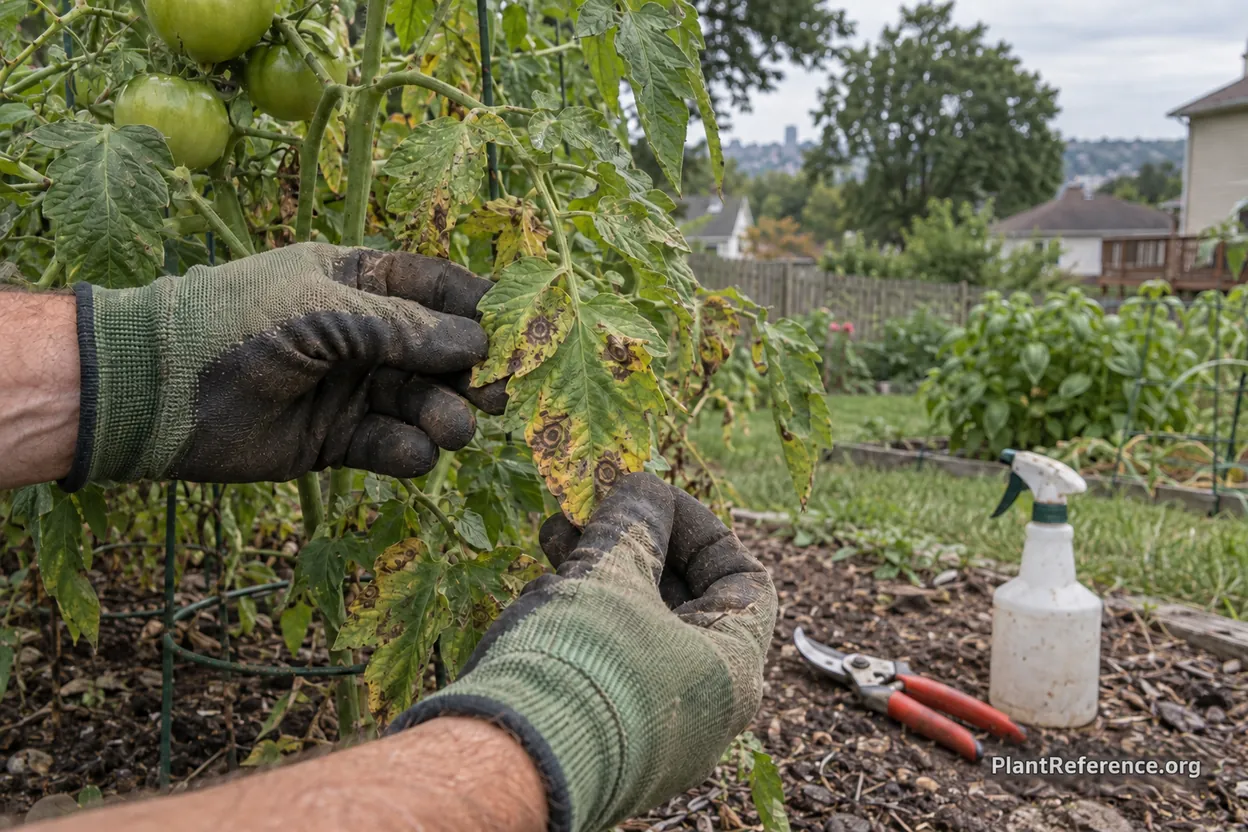
Why It Occurs in Pittsburgh: Pennsylvania's summer humidity combined with warm temperatures creates perfect conditions for this fungal pathogen. Spores overwinter in soil debris and splash onto lower leaves during spring rains.
Symptoms: Dark brown spots with concentric rings on lower leaves, progressing upward. Severely affected leaves yellow and drop, reducing fruit production and quality.
Prevention and Solutions:
Mulch heavily to prevent soil splash
Space plants 36 inches apart for air circulation
Remove lower branches to 12 inches above soil level
Apply copper fungicides preventively starting in June
Choose resistant varieties like 🌿Solanum lycopersicum 'Sungold'
Varieties with Resistance: 🌿Solanum lycopersicum 'Early Girl' and 🌿Solanum lycopersicum 'Sungold' show good field tolerance to Early Blight pressure common in Pennsylvania gardens.
Blossom End Rot
Why It Occurs in Pittsburgh: Clay soils typical in Pittsburgh create uneven moisture conditions. During rapid growth periods in July, inconsistent watering prevents calcium uptake to developing fruits.
Symptoms: Dark, sunken spots on bottom (blossom end) of fruits, particularly common on 🌿Solanum lycopersicum 'San Marzano' paste varieties.
Prevention and Solutions:
Maintain consistent soil moisture with drip irrigation or soaker hoses
Mulch heavily to moderate soil moisture fluctuations
Avoid root damage from cultivation during growing season
Test soil pH—calcium availability decreases below 6.0
Select less susceptible varieties like 🌿Solanum lycopersicum 'Early Girl'
Late Season Disease Pressure
Why It Occurs in Pittsburgh: September's cool nights and warm days create heavy dew conditions. Combined with still-humid air, this promotes rapid spread of Late Blight and other destructive pathogens.
Symptoms: Water-soaked spots on leaves and fruits that rapidly expand during humid weather. Can destroy entire crops within days during favorable conditions.
Prevention and Solutions:
Improve air circulation through proper spacing and pruning
Avoid overhead watering, especially in evening hours
Remove affected plant material immediately and dispose in trash
Apply preventive fungicides before symptoms appear
Harvest fruits at first sign of disease pressure
Harvest & Storage
Pittsburgh's 178-day growing season provides excellent harvest windows for all recommended varieties. Proper harvesting and storage techniques maximize yield and extend enjoyment of homegrown tomatoes.
Signs of Readiness
Slicing Varieties: 🌿Solanum lycopersicum 'Early Girl' and 🌿Solanum lycopersicum 'Cherokee Purple' should show full color development but remain slightly firm. Pittsburgh's humid conditions mean fully soft tomatoes often develop surface defects.
Cherry Varieties: 🌿Solanum lycopersicum 'Sungold' cherries reach peak flavor when deep golden-orange but before skin becomes translucent. Harvest daily during peak season to prevent splitting after thunderstorms.
Processing Varieties: 🌿Solanum lycopersicum 'San Marzano' paste tomatoes are ready when deep red but still firm enough to maintain shape during processing.
Harvest Technique
Pick tomatoes during cooler morning hours when possible. Pittsburgh's afternoon heat can stress both plants and harvested fruits. Use sharp pruning shears rather than pulling to avoid plant damage and ensure clean stem scars.
For varieties prone to cracking like 🌿Solanum lycopersicum 'Cherokee Purple', harvest at first color break (breaker stage) and ripen indoors at room temperature. This prevents weather-related splitting common during Pennsylvania's variable September weather.
Expected Harvest Windows in Pittsburgh
Early Season (July 1-15): 🌿Solanum lycopersicum 'Early Girl' and 🌿Solanum lycopersicum 'Stupice' provide first harvests of the season.
Peak Season (July 15-September 15): All varieties producing simultaneously. This 60-day period typically yields 70-80% of total harvest in Pittsburgh gardens.
Late Season (September 15-October 19): Cool-tolerant varieties like 🌿Solanum lycopersicum 'Stupice' continue producing. Harvest remaining green fruits before Pittsburgh's typical mid-October frost.
Storage Recommendations
Fresh Storage: Ripe tomatoes keep 7-10 days at room temperature in Pittsburgh's typical humidity. Avoid refrigeration, which damages flavor compounds.
Green Tomato Storage: Wrap individual green fruits in newspaper and store in cool (55-60°F/13-16°C) location. Pittsburgh basements often provide ideal conditions for 4-6 week storage.
Processing: 🌿Solanum lycopersicum 'San Marzano' varieties are ideal for Pittsburgh's popular sauce-making traditions. Process within 24 hours of harvest for best flavor retention.
Frequently Asked Questions
Reading about plants and recognising them are different skills. These three build the second.
- Daily PlantIdentify the day’s mystery plant from a close-up photograph.
- Keyed OutWork a dichotomous key, lead by lead, to name a hidden specimen.
- Name That PlantName a specimen from botanical clues dealt hardest first.
Free to play, no account needed
Tagged with