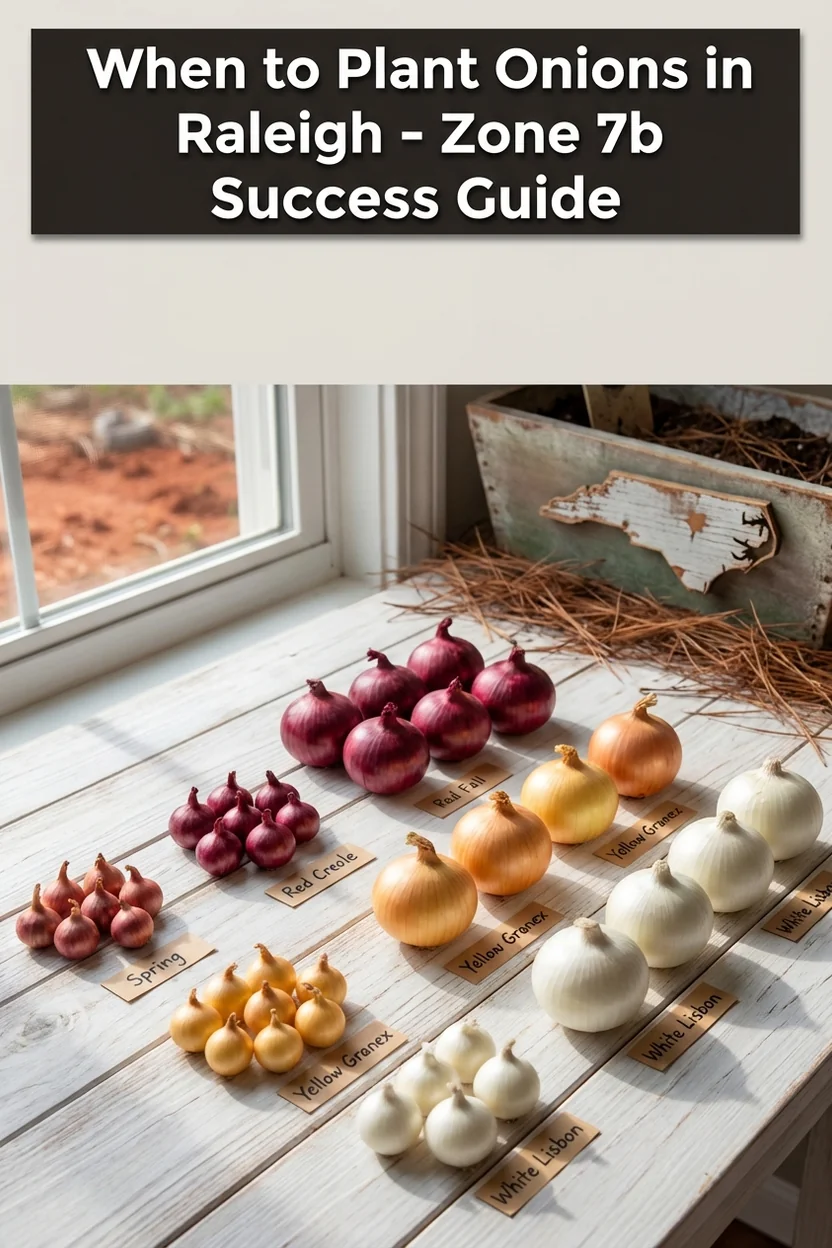
When to Plant Onions in Raleigh: Complete Guide + Best Varieties for Zone 7b
Pets & Toxicity
Recorded toxicity for plants linked in this guide. An unknown status is not a safety assessment.
Toxic to pets: Granex onion, evergreen hardy white bunching onion, Texas super sweet onion and 6 moreDetailsHide
Allium cepa 'Granex' — Toxicity Warning
Toxic to cats and dogs if eaten; cats are especially susceptible, and raw, cooked or concentrated plant material can damage red blood cells and cause anaemia.View Allium cepa 'Granex' plant profileAllium cepa 'Evergreen Hardy White' — Toxicity Warning
Toxic to cats and dogs if eaten; cats are especially susceptible, and raw, cooked or concentrated plant material can damage red blood cells and cause anaemia.View Allium cepa 'Evergreen Hardy White' plant profileAllium cepa 'Texas Super Sweet' — Toxicity Warning
Toxic to cats and dogs if eaten; cats are especially susceptible, and raw, cooked or concentrated plant material can damage red blood cells and cause anaemia.View Allium cepa 'Texas Super Sweet' plant profileAllium cepa 'Yellow Sweet Spanish' — Toxicity Warning
Toxic to cats and dogs if eaten; cats are especially susceptible, and raw, cooked or concentrated plant material can damage red blood cells and cause anaemia.View Allium cepa 'Yellow Sweet Spanish' plant profileAllium sativum 'Music' — Toxicity Warning
Toxic to cats and dogs if eaten; cats are especially susceptible, and raw, cooked or concentrated plant material can damage red blood cells and cause anaemia.View Allium sativum 'Music' plant profileAllium sativum 'California Early' — Toxicity Warning
Toxic to cats and dogs if eaten; cats are especially susceptible, and raw, cooked or concentrated plant material can damage red blood cells and cause anaemia.View Allium sativum 'California Early' plant profileAllium fistulosum — Toxicity Warning
Toxic to cats and dogs if eaten; cats are especially susceptible, and raw, cooked or concentrated plant material can damage red blood cells and cause anaemia.View Allium fistulosum plant profileAllium cepa 'Super Star' — Toxicity Warning
Toxic to cats and dogs if eaten; cats are especially susceptible, and raw, cooked or concentrated plant material can damage red blood cells and cause anaemia.View Allium cepa 'Super Star' plant profileAllium cepa 'Red Candy Apple' — Toxicity Warning
Toxic to cats and dogs if eaten; cats are especially susceptible, and raw, cooked or concentrated plant material can damage red blood cells and cause anaemia.View Allium cepa 'Red Candy Apple' plant profile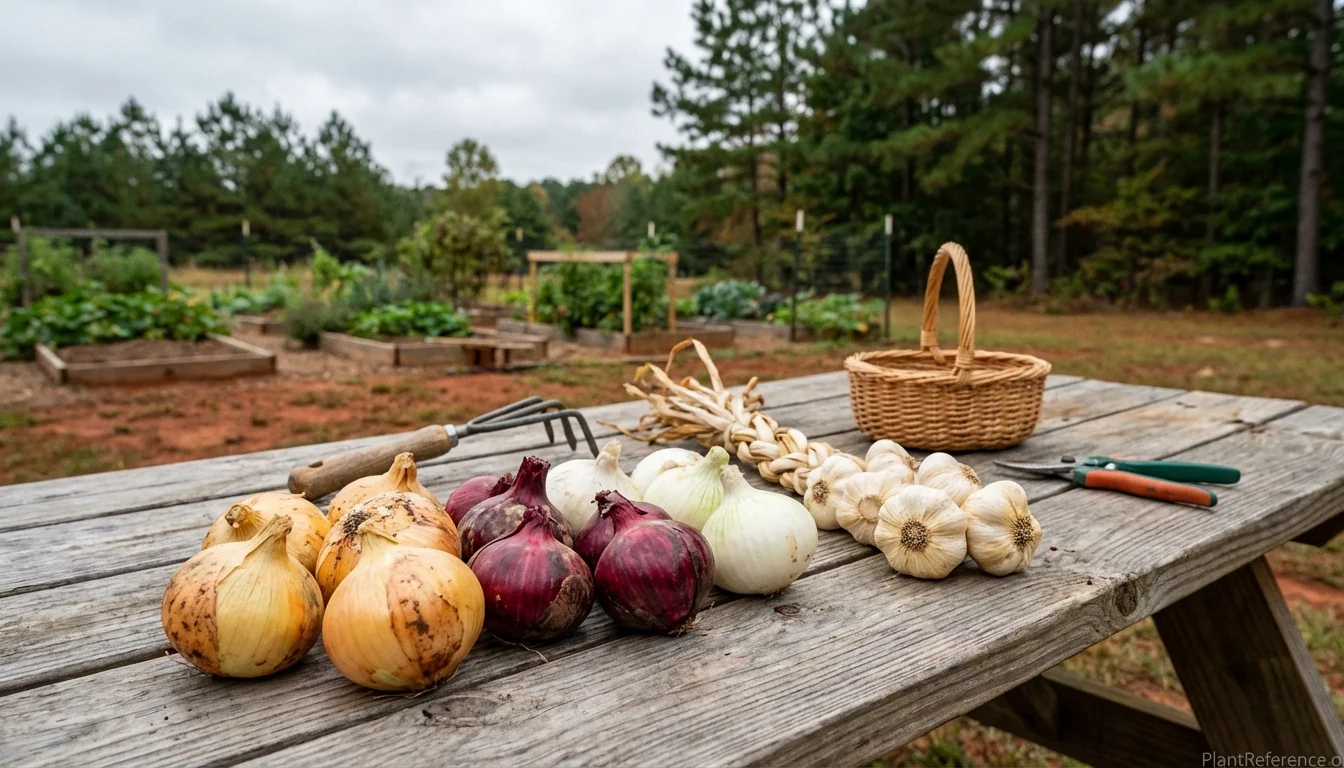
— Image © Plant Reference 2026
Raleigh gardeners enjoy a unique advantage—Zone 7b's moderate climate allows both spring and fall onion planting, giving you flexibility other regions don't have. After forty years growing onions in North Carolina, I'll tell you the secret: choose intermediate-day varieties and time your planting right.
Best Onion Varieties for Raleigh's Zone 7b Climate
Raleigh sits perfectly in the transition zone where you can grow intermediate-day onions that bulb when daylight reaches 12-14 hours. This happens twice yearly—once in spring (March-April) and again in late summer (August-September). The key is matching variety selection to your planting schedule.
Understanding Day-Length Requirements for Raleigh
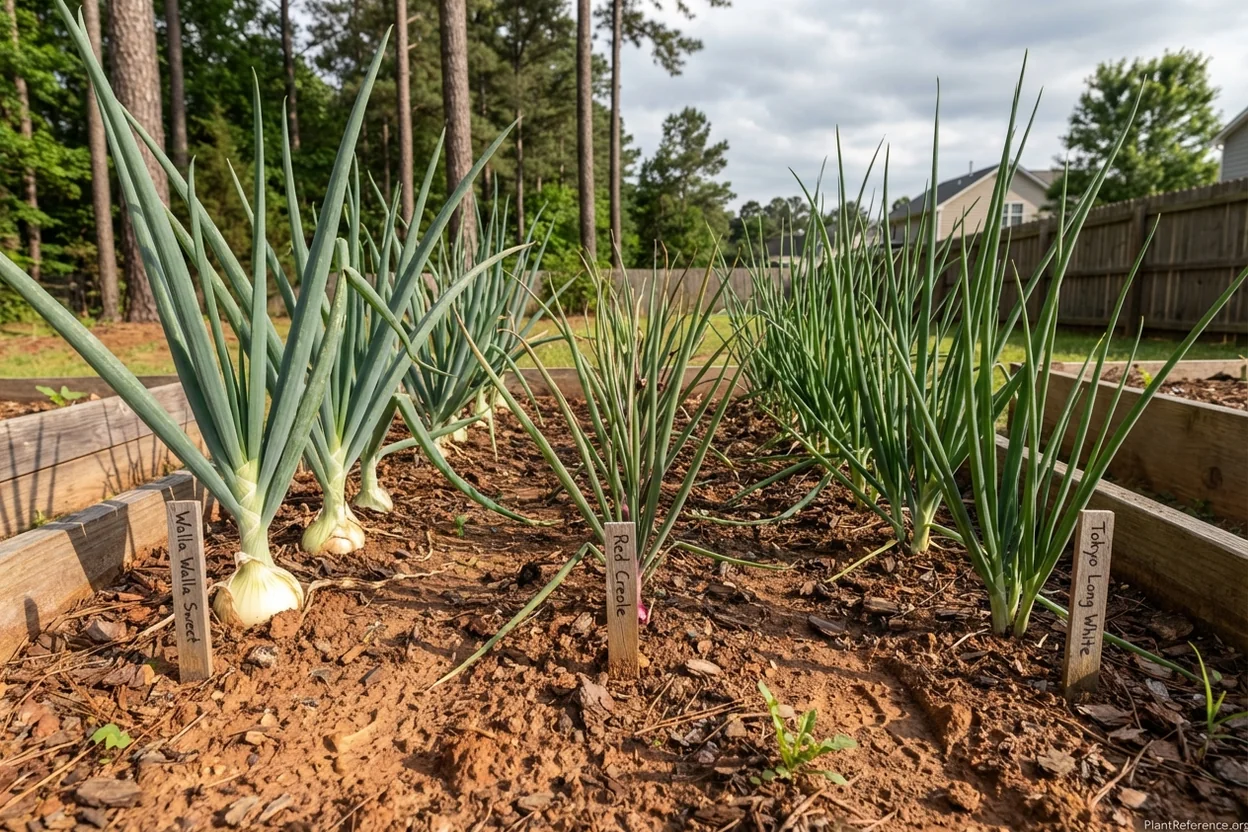
The onion 🌿Allium cepa 'Tokyo Long White' forms bulbs based on daylight hours, not temperature. Raleigh's latitude (35.8°N) receives 12-14 hours of daylight from mid-March through late August. This makes intermediate-day varieties your best choice, though you can also grow some long-day types with spring planting.
Wrong variety selection is the number one reason onions fail in North Carolina. Plant short-day varieties meant for Texas, and they'll bulb prematurely while still tiny. Choose long-day varieties meant for Minnesota, and they may not bulb at all during our shorter summer days.
Variety | Days to Maturity | Best For | Notes for Raleigh |
|---|---|---|---|
85-100 days | Spring or fall planting | Perfect for Zone 7b, sweet flavor, good storage | |
110-120 days | Spring planting | Excellent storage onion, mild pungency | |
90-100 days | Fall planting preferred | Beautiful red color, sweet when fresh | |
110-120 days | Spring planting | Large bulbs, moderate storage life | |
240-270 days | Fall planting only | Hardneck garlic, plant October-November | |
240-270 days | Fall planting only | Softneck garlic, excellent storage |
Top Intermediate-Day Onions for Raleigh
🌿Allium cepa 'Candy' is my go-to recommendation for new Raleigh gardeners. This hybrid works beautifully with both spring and fall planting, producing large, sweet bulbs in 85-100 days. It's forgiving if your timing isn't perfect and stores well for 4-6 months when properly cured.
🌿Allium cepa 'Superstar' excels as a spring-planted storage onion. Plant transplants in February, and you'll harvest firm, pungent bulbs in August that store through winter. The higher sulfur content provides natural preservation—exactly what you want for long-term storage.
🌿Allium cepa 'Red Candy Apple' brings beautiful color to fall plantings. These deep red bulbs mature in late spring with sweet, mild flavor perfect for fresh eating. While they don't store as long as yellow varieties, nothing beats their flavor in spring salads.
Garlic Varieties for North Carolina
Zone 7b allows you to grow both hardneck and softneck garlic, giving you options other regions don't have.
🌿Allium sativum 'Music' is the premium hardneck variety that thrives in Raleigh's winters. Plant cloves in October, and you'll harvest large bulbs with 4-6 jumbo cloves in June. The cold winter vernalization develops complex flavors that softneck varieties can't match.
🌿Allium sativum 'California Early' offers the reliability of softneck garlic with excellent storage life. Plant November for July harvest. These bulbs store 8-12 months when properly cured—perfect for year-round cooking.
Specific Planting Dates for Raleigh Gardeners
Raleigh's April 4 last frost and November 4 first frost create a generous 214-day growing season. This gives you two distinct planting windows, each with different advantages.
Spring Planting Schedule (Traditional Method)
February 15 - March 15 is your spring planting window. Plant 4-6 weeks before the last frost date to give onions time to establish before heat stress begins.
Specific Spring Dates:
Start seeds indoors: January 1-15
Plant onion sets: February 15-March 1
Plant transplants: February 20-March 15
Harvest window: August 1-September 15
Spring planting works well for storage varieties like 🌿Allium cepa 'Superstar' that need the full growing season to develop firm bulbs with good keeping quality.
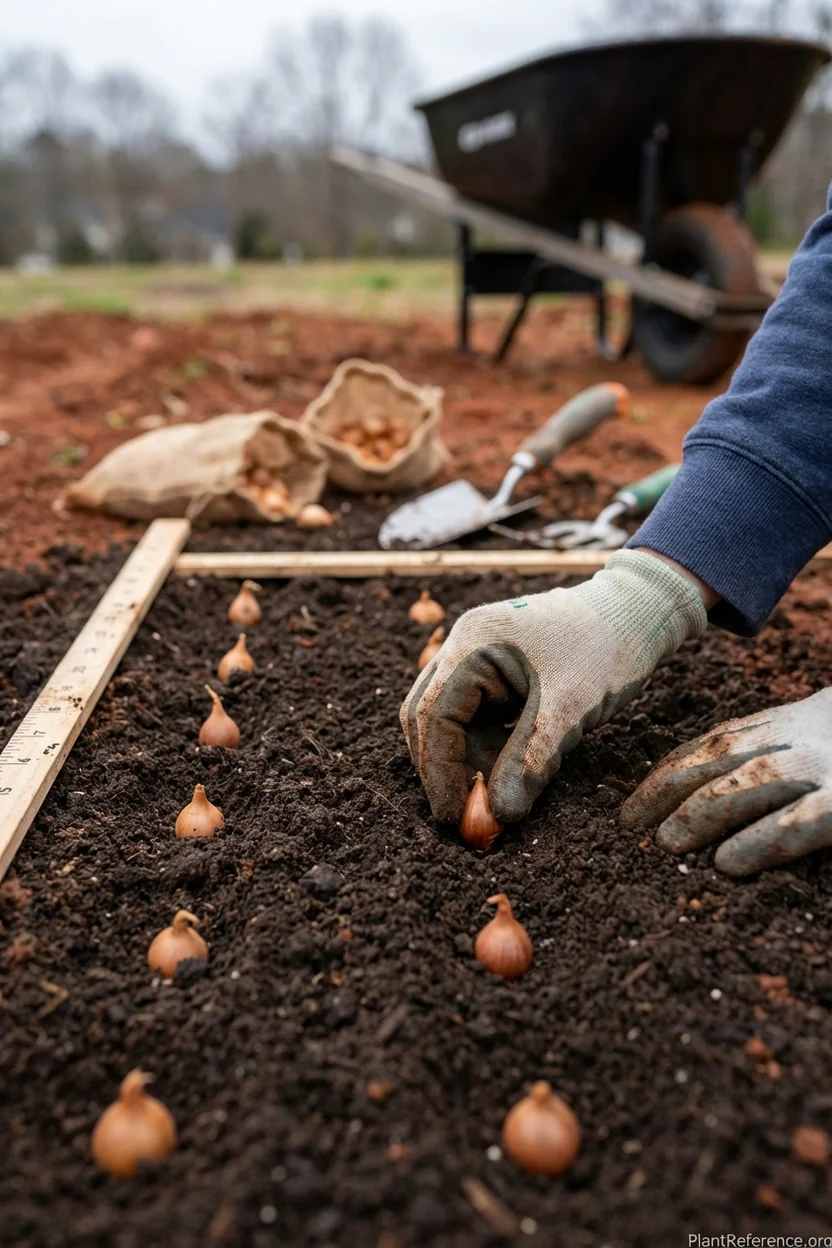
Fall Planting Schedule (Early Harvest Method)
September 15 - October 15 offers significant advantages for Raleigh gardeners. Fall-planted onions avoid summer heat stress, face fewer pest problems, and harvest in May-June when spring vegetables are scarce.
Specific Fall Dates:
Plant transplants: September 15-October 1
Mulch for winter: November 15-30
Begin harvest: May 15-June 15
Growing days: 210-240 days total
Fall planting requires transplants rather than sets, which aren't typically available in autumn. Order from specialty suppliers or start your own seeds in late July.
Garlic Planting Timeline
October 15 - November 15 is optimal for garlic planting in Raleigh. This timing allows root establishment before winter dormancy while preventing excessive top growth that could be damaged by late freezes.
Garlic Schedule:
Plant hardneck varieties: October 15-30
Plant softneck varieties: October 30-November 15
Mulch application: December 1-15
Scape removal (hardneck): May 1-15
Harvest window: June 15-July 15
Complete Growing Guide for Raleigh's Climate
Soil Preparation for North Carolina Conditions
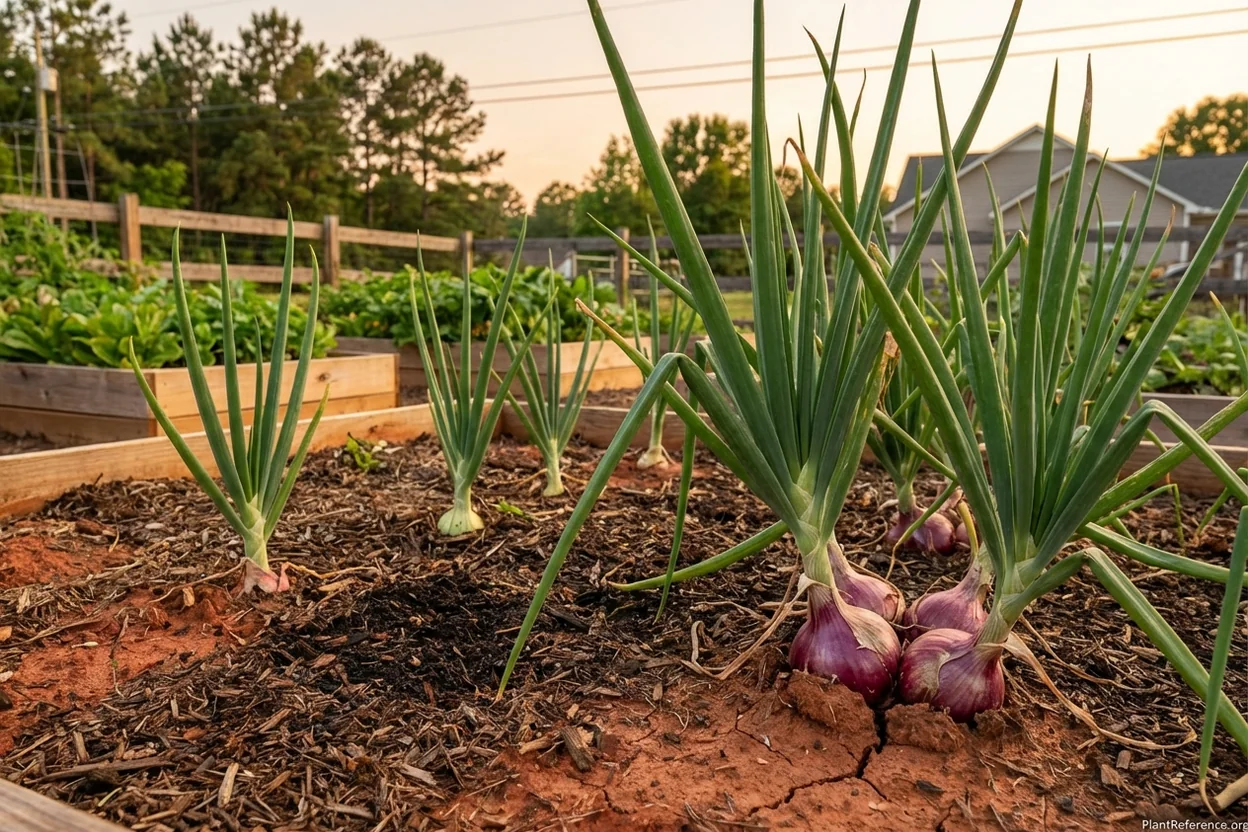
Raleigh's red clay soil needs significant amendment for successful onion growing. Clay holds too much moisture and restricts bulb expansion, leading to rot and small bulbs.
Work in 3-4 inches of compost or aged manure to improve drainage and add organic matter. Raised beds work exceptionally well in clay soil areas, providing the drainage onions require while making soil management easier.
Test soil pH every 2-3 years. Raleigh soils tend toward acidity (pH 5.5-6.0), but onions prefer 6.0-6.8. Apply lime in fall if needed, allowing winter weather to neutralize acidity before spring planting.
Add 3-4 inches of compost annually
Install raised beds for improved drainage
Test and adjust pH to 6.0-6.8 range
Ensure full sun exposure (6+ hours daily)
Avoid low areas where water collects
Fertilizing Strategy for Zone 7b
Onions are heavy feeders that need consistent nutrition throughout their long growing season. Apply a balanced fertilizer (10-10-10) at planting, then side-dress with nitrogen every 4-6 weeks during active growth.
Critical timing: Stop all nitrogen fertilization 6 weeks before expected harvest. Late nitrogen creates thick necks that won't cure properly and leads to poor storage life.
For spring-planted onions harvesting in August, stop nitrogen by mid-June. For fall-planted onions harvesting in May, stop nitrogen by mid-March.
Watering Requirements
Consistent moisture is crucial during bulb development, but too much water near harvest ruins storage quality. Onions need about 1 inch of water weekly during active growth.
Raleigh's summer rainfall often exceeds onion needs, making drainage more important than irrigation. In dry periods, water deeply but less frequently to encourage deep root growth.
Pre-harvest drying: Reduce watering when tops begin yellowing naturally. This helps concentrate flavors and improves storage life.
Managing Raleigh's Weather Challenges
Zone 7b's variable spring weather can stress young onion plants. Late cold snaps below 28°F can damage unprotected transplants, while sudden warm spells trigger premature bulbing in some varieties.
Cold protection: Have row covers ready for late February and March plantings. Even hardy onions appreciate protection during unexpected freezes.
Heat management: Raleigh's hot, humid summers stress spring-planted onions. Adequate spacing (4-6 inches) improves air circulation and reduces disease pressure.
Summer storms: Heavy rainfall during bulb development can split bulbs and encourage rot. Raised beds with good drainage prevent most storm damage.
Troubleshooting Raleigh-Specific Growing Problems
Small Bulb Syndrome
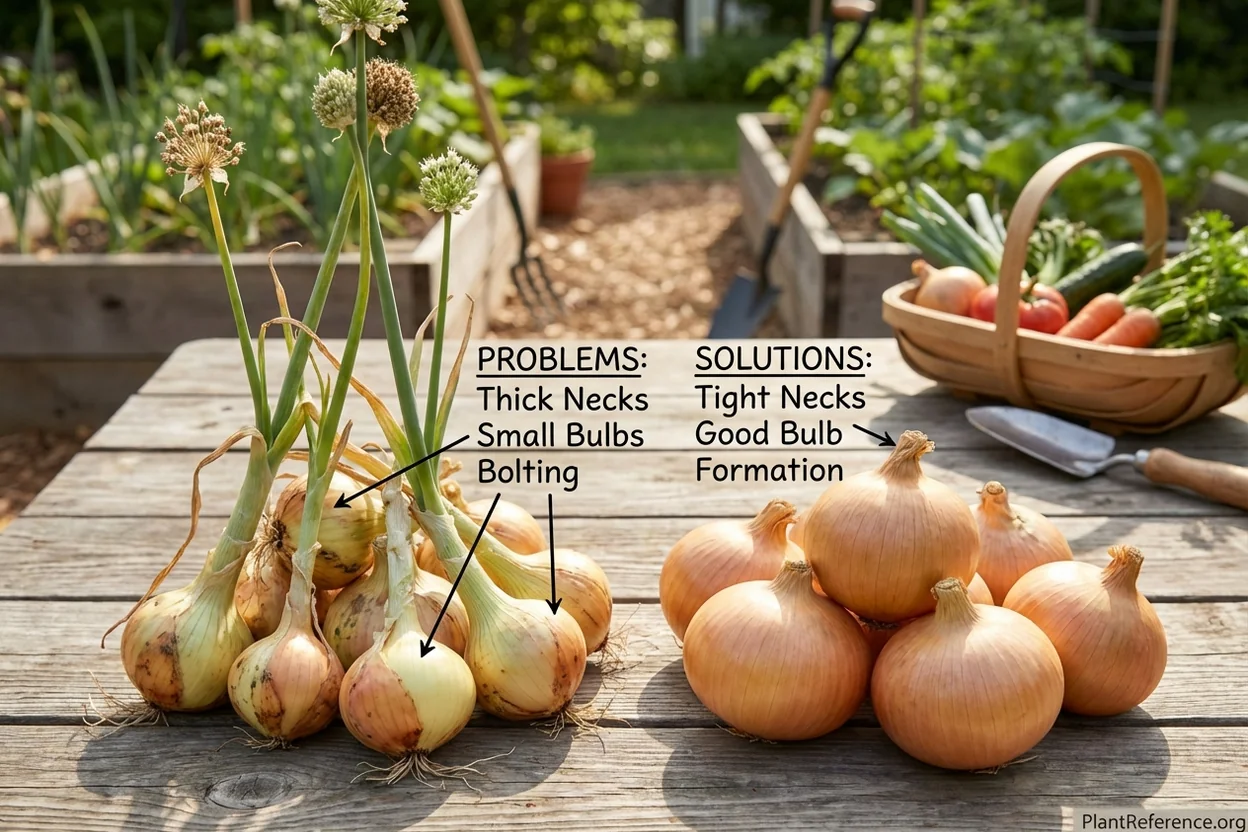
Small bulbs are usually caused by wrong variety selection or late planting. If you're consistently getting marble-sized bulbs, you're likely growing varieties meant for different latitudes.
Solution: Stick with proven intermediate-day varieties like 🌿Allium cepa 'Candy' and 🌿Allium cepa 'Superstar'. Plant early enough to maximize leaf growth before bulbing triggers.
Bolting Issues
Premature flowering (bolting) ruins bulbs and prevents storage. In Raleigh, bolting often results from planting large onion sets that are physiologically mature enough to interpret late cold snaps as winter.
Prevention: Choose sets smaller than a dime, or better yet, use transplants which rarely bolt. Avoid planting during extended cold periods in February.
Thick Neck Problems
Thick, fleshy necks that won't dry down properly indicate too much late-season nitrogen or water. These onions won't store and must be used fresh.
Solution: Stop nitrogen fertilization 6 weeks before harvest. Reduce watering as tops begin yellowing. Proper timing prevents thick necks.
Disease Management in Humid Conditions
North Carolina's humidity creates perfect conditions for fungal diseases like downy mildew and purple blotch. Good air circulation and proper spacing help, but sometimes fungicide applications are necessary.
Organic options: Copper fungicides applied preventively during humid periods control most fungal issues. Neem oil helps with both diseases and pest problems.
Cultural controls: Space plants properly, avoid overhead watering, and remove infected plant debris immediately.
Thrips Management
Onion thrips are particularly troublesome in Raleigh's climate, causing silvery streaks on leaves and reducing bulb size. These tiny insects hide in leaf folds, making control challenging.
Control strategy: Blue sticky traps help monitor populations. Beneficial insects like minute pirate bugs provide natural control. For severe infestations, spinosad-based organic insecticides are effective.
Harvest and Storage for North Carolina Conditions
Determining Harvest Readiness
Proper harvest timing is crucial for storage success. Onions are ready when 50-75% of tops have fallen over naturally. Don't force tops down early—this stops nutrient flow to bulbs and creates poor curing conditions.
Spring-planted harvest: August-September, depending on variety and planting date
Fall-planted harvest: May-June, typically 4-6 weeks earlier than spring plantings
Curing Process for Humid Conditions
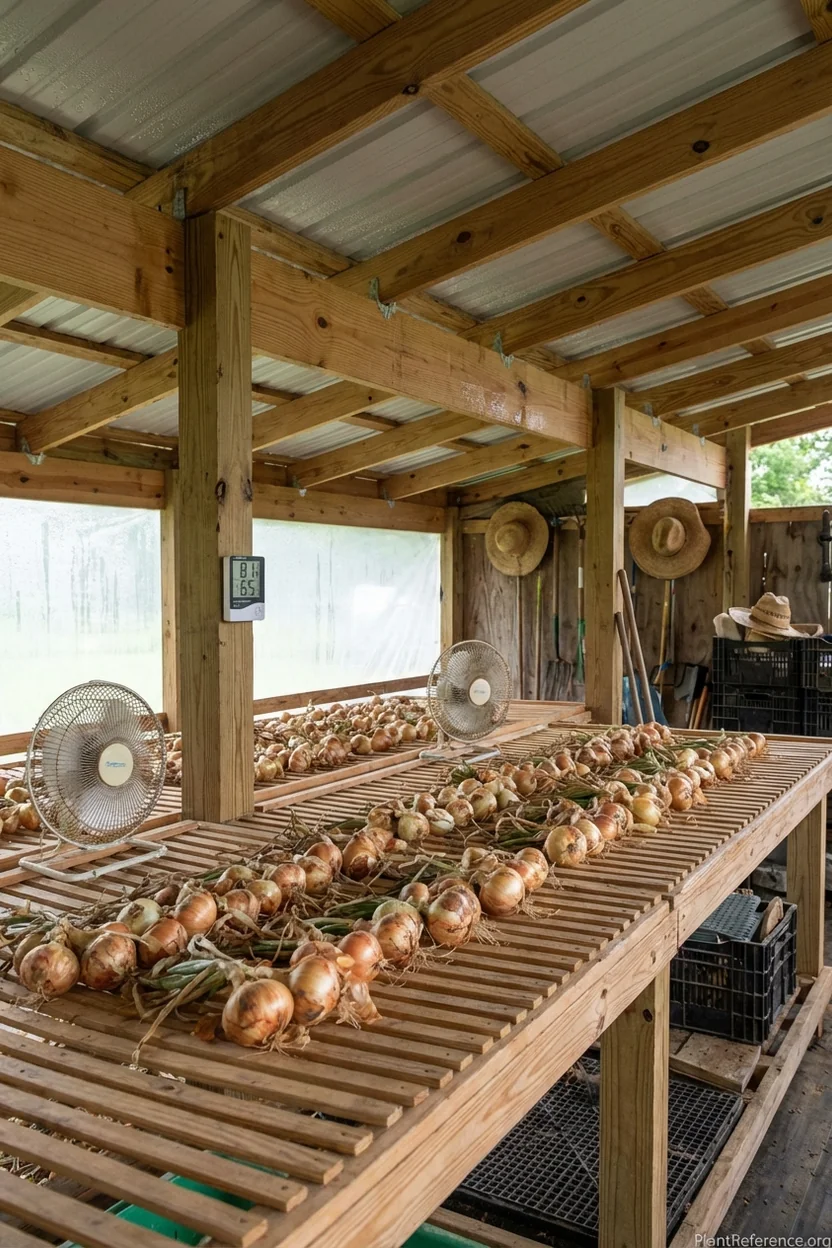
North Carolina's humidity makes proper curing more challenging than in arid western climates. You'll need controlled conditions rather than field curing.
Curing steps for Raleigh:
Harvest during dry weather if possible
Lay bulbs in single layer in covered, ventilated area
Provide fan circulation to prevent moisture buildup
Maintain temperature of 80-90°F for 2-3 weeks
Check frequently for soft spots or rot
Trim tops to 1 inch after necks are completely dry
Storage Recommendations
Properly cured onions store best at 32-40°F with 65-70% humidity. Raleigh's basement temperatures often work well, though you may need to run a dehumidifier during humid summer months.
Storage life expectations: - 🌿Allium cepa 'Superstar': 6-8 months with proper curing - 🌿Allium cepa 'Candy': 4-6 months, use sweet onions first - 🌿Allium cepa 'Red Candy Apple': 2-4 months, best used fresh - 🌿Allium sativum 'California Early': 8-10 months when braided - 🌿Allium sativum 'Music': 4-6 months, use hardneck varieties first
Extending the Harvest Season
Succession planting and variety selection extends your fresh onion harvest from May through February. Plant fall onions for May-June harvest, spring storage onions for August-September harvest, and keep some in storage through winter.
🌿Allium fistulosum (bunching onions) planted in March provide fresh green onions through summer, while fall plantings overwinter for early spring harvest.
Frequently Asked Questions
Reading about plants and recognising them are different skills. These three build the second.
- Daily PlantIdentify the day’s mystery plant from a close-up photograph.
- Keyed OutWork a dichotomous key, lead by lead, to name a hidden specimen.
- Name That PlantName a specimen from botanical clues dealt hardest first.
Free to play, no account needed
Rachel is a garden writer and photographer based in Raleigh who covers the Piedmont region of North Carolina. She has a journalism background and got into gardening after buying her first house and realizing she had no idea what any of the plants in her yard were. That curiosity led to a Master Gardener certification and eventually a garden writing career. Rachel is especially interested in native plants of the Southeast, seasonal color, and the challenge of gardening in red clay soil. Her photography background means she pays attention to how gardens look through the seasons—she thinks about visual composition as much as plant health. She writes clearly and directly, without the breathless enthusiasm that makes a lot of garden writing hard to trust.