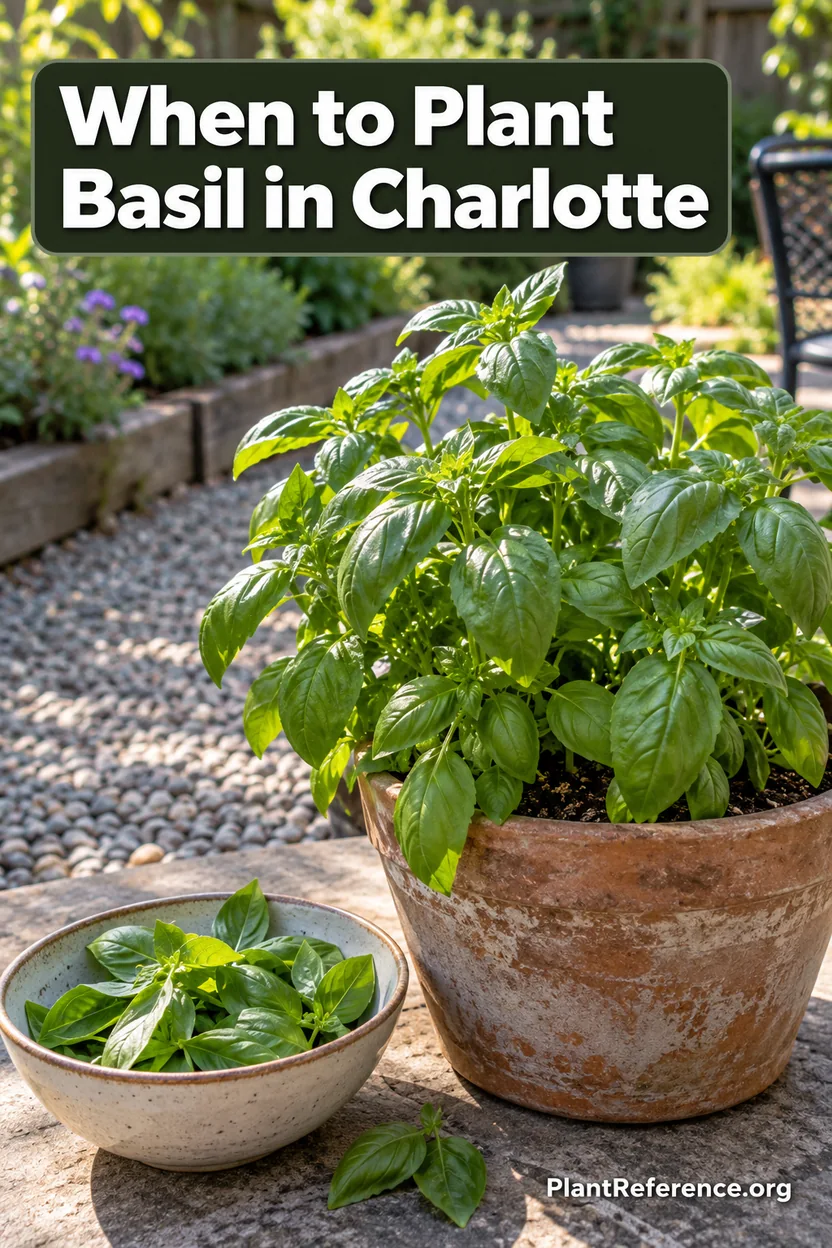
When to Plant Basil in Charlotte: A Kitchen Garden Guide
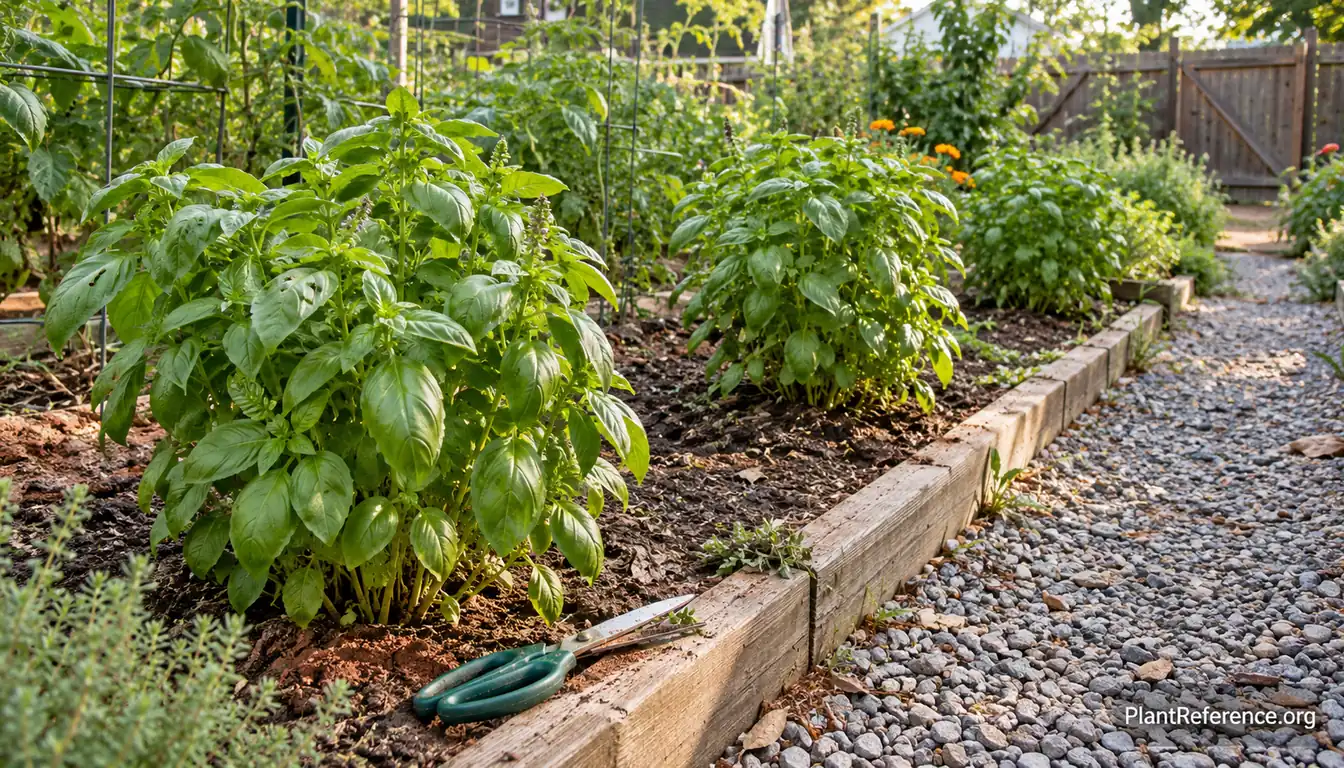
— Image © PlantReference.org 2026
Pets & Toxicity
Recorded toxicity for plants linked in this guide. An unknown status is not a safety assessment.
No linked plant is recorded as toxicDetailsHide
Ocimum basilicum 'Purple Ruffles' — Toxicity
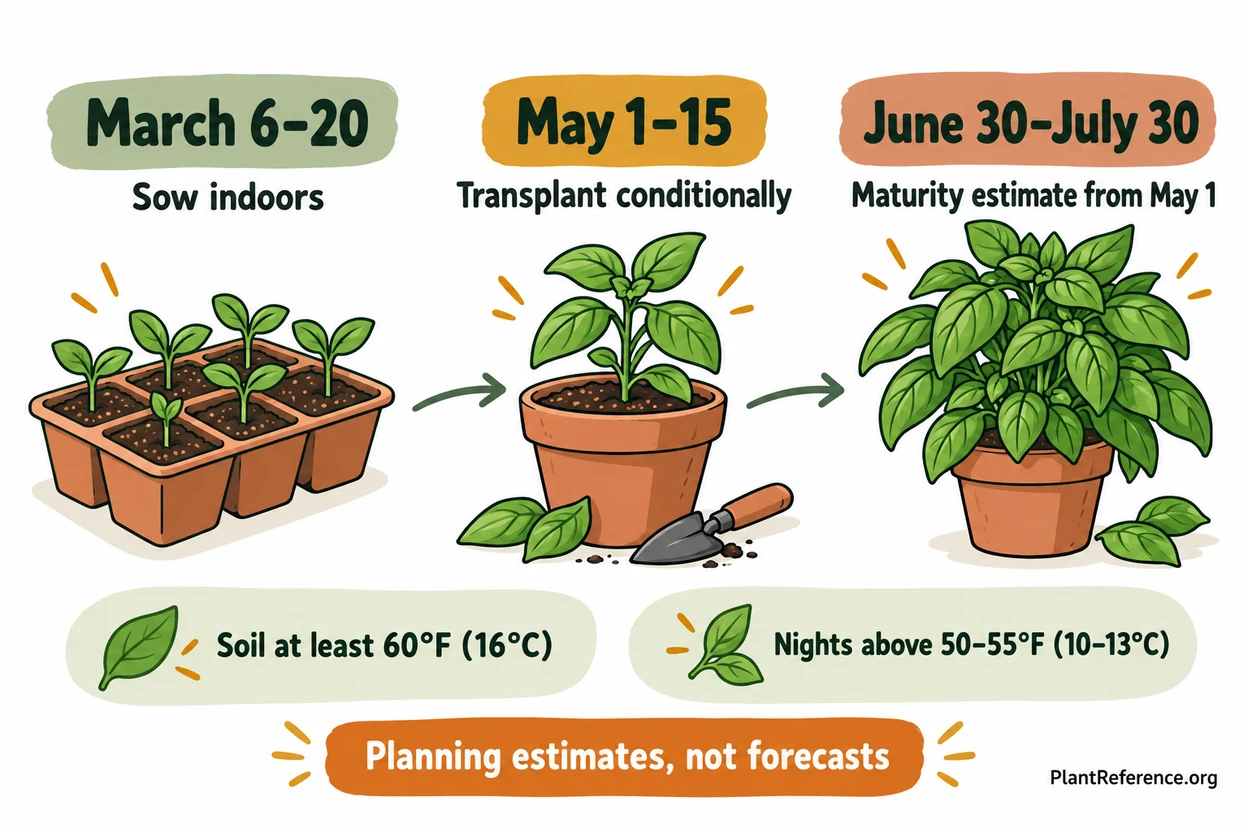
Non-toxicView Ocimum basilicum 'Purple Ruffles' plant profileWhen to plant basil in Charlotte is a question of warm soil and reliable nights, even if the garden already looks ready for summer. Start seeds indoors around March 6–20 for a conditional May 1–15 transplant window, waiting for nights consistently above 50–55°F (10–13°C) and soil at least 60°F (16°C). Leave the planting space open a little longer if cold weather returns; filling every gap immediately is not the same as making a garden work.
Sweet basil Ocimum basilicum (OH-see-mum bah-SIL-ih-kum) is both a kitchen crop and a useful summer foliage plant. In a North Carolina garden, it can soften an edge or punctuate a small herb bed, provided its placement also allows sunlight, drainage, and regular harvesting. Begin with the path, the mature plant spacing, and access to water, then choose the leaf colors and flavors. If the best location is a patio, Growing Herbs in Containers: Pots, Soil & Harvest offers a practical starting point.
Best Basil Varieties for Charlotte's Climate
A kitchen garden does not need every available basil. Choose one familiar cooking type as the main planting, then add a contrasting flavor or leaf form where it will be useful. Repetition makes a small space feel deliberate, but identical spacing is less important than giving each mature plant enough room.
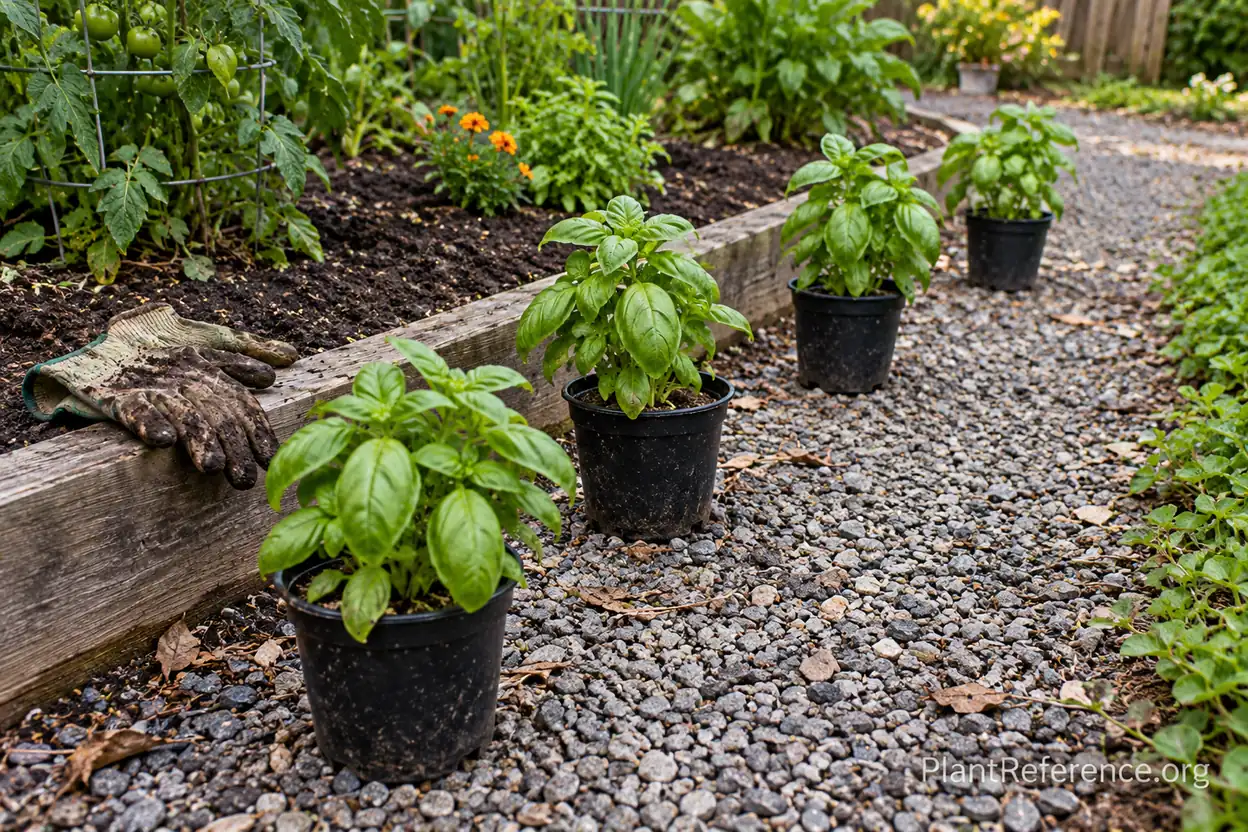
Start with the flavor you use most
🌿Ocimum basilicum 'Genovese' provides broad, cupped leaves for pesto and fresh meals. Its soft green foliage works well in a repeated group near the kitchen path. Place it where you can cut tips without stepping into the bed or reaching across another plant.
🌿Ocimum basilicum 'Thai' offers narrower leaves, stronger stems, and an anise-like flavor. It is a useful contrast in both the planting and the kitchen. Its heat tolerance is helpful in summer, although a hot container with dry roots still needs attention.
🌿Ocimum basilicum 'Lemon' adds citrus-scented leaves. The plan uses this name, but lemon-scented basil can be sold under different botanical identities. Keep the packet label so you know exactly what you planted rather than assuming every lemon-scented seed produces the same plant.
Type | Planning maturity range | Useful role | Local care note |
|---|---|---|---|
60–90 days | Pesto and fresh cooking | Keep leaves open to air in humid weather | |
60–90 days | Anise-flavored leaves | Pinch flower tips when harvesting leaves | |
60–75 days | Citrus aroma | Avoid dry spells and cramped roots | |
70–80 days | Dark foliage and garnish | Choose a clearly identified cultivar | |
60–90 days | Spicy aromatic herb | Treat as a warm-season annual |
These are maturity estimates from the planting plan. Check whether the seed supplier starts counting at sowing or transplanting. You can take small tip harvests earlier from a well-established plant, but repeated heavy cutting from a young seedling delays the full shape you want.
Use foliage contrast without sacrificing growing conditions
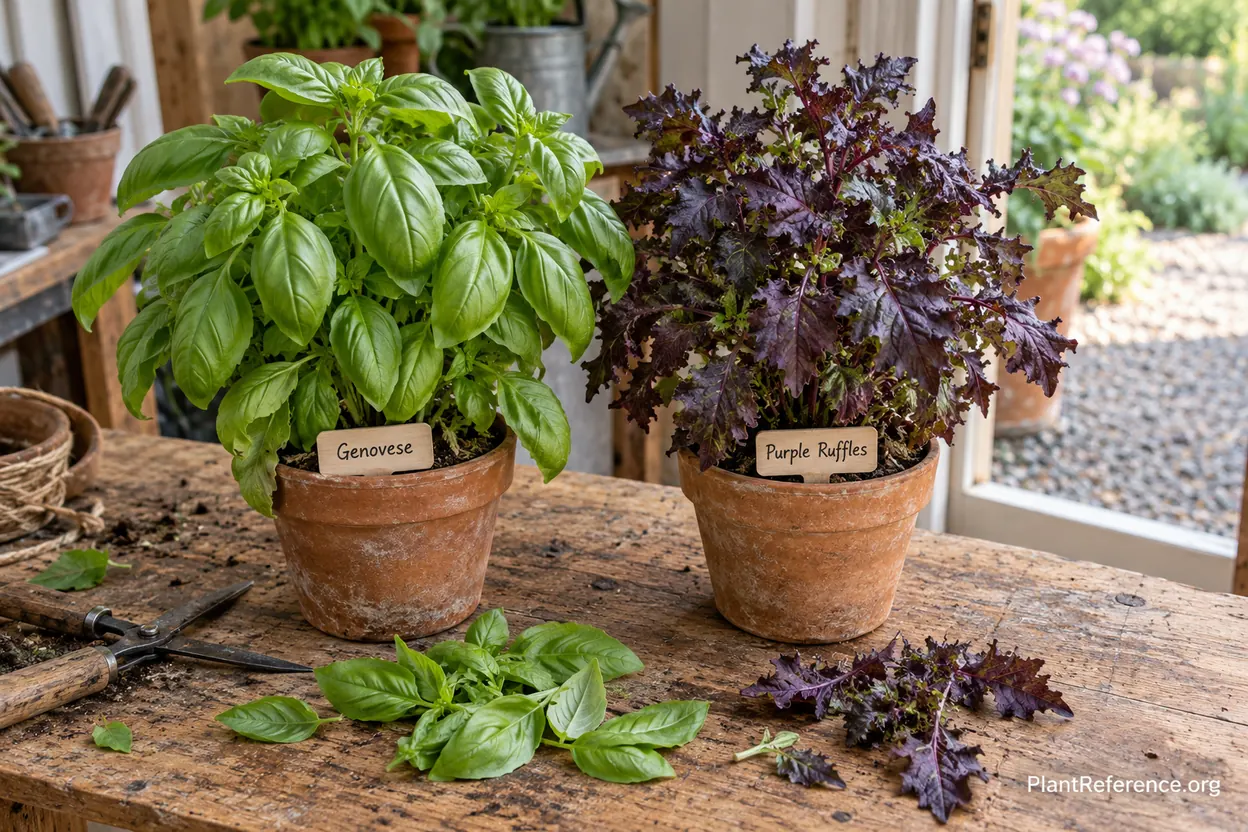
🌿Ocimum basilicum 'Purple' is the plan's broad purple-leaved selection. A specifically named option in the research is 🌿Ocimum basilicum 'Purple Ruffles', whose textured leaves create a clear contrast with smooth green foliage. Good light supports coloration, but dark leaves are not proof of drought tolerance or disease resistance.
Holy basil 🌿Ocimum tenuiflorum (OH-see-mum ten-yoo-ih-FLOR-um) is a different species, with a spicy aroma and a tendency to flower freely. Give it its own label and follow its seed instructions, including surface sowing when required. It is seasonal here, not a reliable outdoor perennial under the stored Zone 7b baseline.
Avoid placing a small herb behind a vigorous neighbor just because their colors look attractive together in spring. The larger plant can shade and crowd it by midsummer. Plant combinations work when their mature scale and access needs agree, not merely when their nursery pots look good side by side.
When to Plant Basil in Charlotte: Specific Dates
The city record uses April 5 as the last frost date and November 5 as the first frost date, stored for 2025. Subtracting the dates gives a 214-day interval. That is a useful planning frame, not a forecast for this season or a promise that every one of those days suits basil.
The direct frost-based calculation places indoor sowing six to eight weeks earlier, on February 8–22. Adding a seven- to fourteen-day safety buffer gives April 12–19 as an earliest conditional transplant check. Warm nights and soil must still follow; frost-free weather can remain too cool for good growth.
The working calendar here uses May 1 as the target instead. Counting back six to eight weeks gives March 6–20 for sowing, with May 1–15 as the outdoor window if conditions cooperate. This approach reduces the time large seedlings spend waiting in small pots.
Build the season around several useful harvests
A 60–90 day maturity range counted from a May 1 transplant gives June 30–July 30. If the packet counts from sowing, calculate from sowing instead. Do not add the same maturity period twice or promise a full harvest simply because a date has arrived.
Start a modest second batch in June when you want younger plants for late summer. Set aside a defined place for replacements rather than squeezing them into the remaining gaps around older plants. In a designed border, a planned seasonal opening looks more intentional than a crowded patch of declining stems.
For perspective, an August 1 transplant plus 60–90 days gives September 30–October 30. The slower end is close to the stored November 5 frost baseline, and cooling nights may slow growth before frost. Later planting is a chance for small harvests, not a guaranteed repeat of the spring crop.
Record the actual planting day and first useful cutting. A small note about exposure and drainage will help you interpret the dates next year. The stored Zone 7b label describes winter conditions broadly; it does not measure the temperature of the bed beside your patio.
Complete Growing Guide for Charlotte
Establish the structure before filling the bed
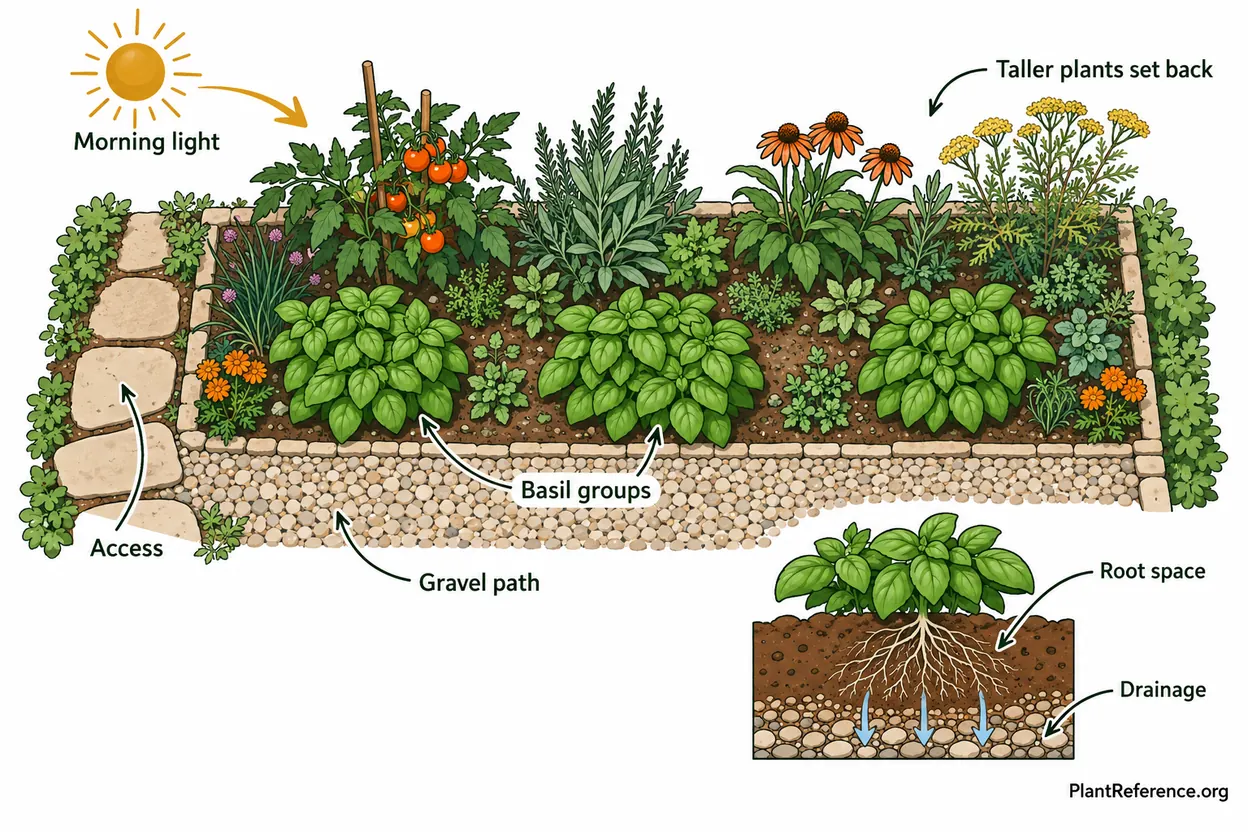
Choose an accessible position with useful morning sun and enough air movement for leaves to dry. Keep a clear edge or path so harvesting does not require reaching through damp foliage. A herb bed can be compact without being crowded.
Observe nearby plants at mature size, not only in spring. When to Plant Squash in Charlotte: Complete Guide + Best Varieties for Zone 7b is useful when planning a broader edible garden, but keep a vigorous crop from occupying the basil's light and access space. Neighboring crops do not automatically provide pest control simply because they share a bed.
Check where rainwater goes. A low pocket that stays saturated is a poor place for basil even if it completes a pleasing line of plants. Shift the planting, improve the site, or use a container rather than repeating a shape at the expense of healthy roots.
Prepare soil according to what is actually there
Piedmont soil often benefits from better structure and finished compost, but do not amend blindly. Test pH and nutrients before adding products intended to change them. The research places basil's useful pH range around 6.0–7.5; How to Test Garden Soil: Jar, Ribbon & pH Tests explains how to investigate rather than guess.
Avoid working wet clay or using the bed as a shortcut. Compacted soil holds less useful air space around roots. Soil Health 101: How to Build Living, Productive Garden Soil covers the long-term relationship between structure, organic matter, and plant growth.
If you compost at home, use mature material in the planting area. How to Build a Hot Compost Pile: Finished Compost in Weeks describes the process, but a calendar alone does not prove a pile is finished. Fresh scraps beside seedlings are not a shortcut to suitable soil.
A raised bed can help where drainage remains poor, provided its filling and location are appropriate. How to Build a Raised Garden Bed: Step-by-Step Construction Guide covers the physical structure. The bed should solve a site problem, not become an unnecessary prerequisite for growing a handful of herbs.
Start seeds with warmth and light in balance
Sow sweet basil about 1/4 inch (6 mm) deep unless the seed packet directs otherwise. Keep the mix evenly moist and around 75°F (24°C) for germination. Surface-sowing instructions for holy basil should be followed separately rather than treating every seed alike.
After emergence, bright light is as important as warmth. Thin crowded seedlings and give each a usable root system. If the room is cool, a thermostatically controlled mat can help; it does not compensate for a dim windowsill.
Before transplanting, introduce plants gradually to outdoor light and wind over about a week. Begin in a sheltered position and avoid cold nights. Plant at roughly the original nursery depth, water thoroughly, and check the root zone again after the move.
Give containers enough room to work
Select pots with drainage holes and enough volume for the intended mature plant. A very small decorative pot may look proportionate to a seedling but become difficult to keep evenly moist later. Container Gardening: Pots, Soil, Water & Yields explains those practical tradeoffs.
Use a suitable container mix rather than dense garden clay. Set pots where excess water can escape, and empty standing water from saucers. Grouping containers can create a coherent arrangement while still leaving enough space between their leaves.
North Carolina summer heat can make an exposed patio much harsher than a nearby bed. If plants repeatedly flag despite moist roots, soften the strongest afternoon exposure while preserving morning light. Deep shade throughout the day is not the same solution.
Maintain the shape through useful harvesting
Once a plant has several pairs of true leaves, pinch its growing tip above a healthy leaf pair. Side buds can develop into branches, giving a fuller plant with more accessible tips. Harvest a little at a time instead of cutting most foliage away to force a neat outline.
Check root moisture before watering and aim water at the soil. Rain and container exposure vary, so a fixed weekly routine can miss both drought and saturation. In humid conditions, avoid unnecessary leaf wetting and allow air through the planting.
For larger plants, the research suggests spacing around 18–24 inches (45–60 cm) where appropriate to improve airflow. Refine that distance for the cultivar and site. Feed according to growing-medium needs; DIY Organic Fertilizer Blends: A Soil-Test-First Guide is a useful reminder that more fertilizer is not a design tool or a cure for every pale leaf.
Troubleshooting Charlotte Basil Problems
Yellow foliage can have more than one cause
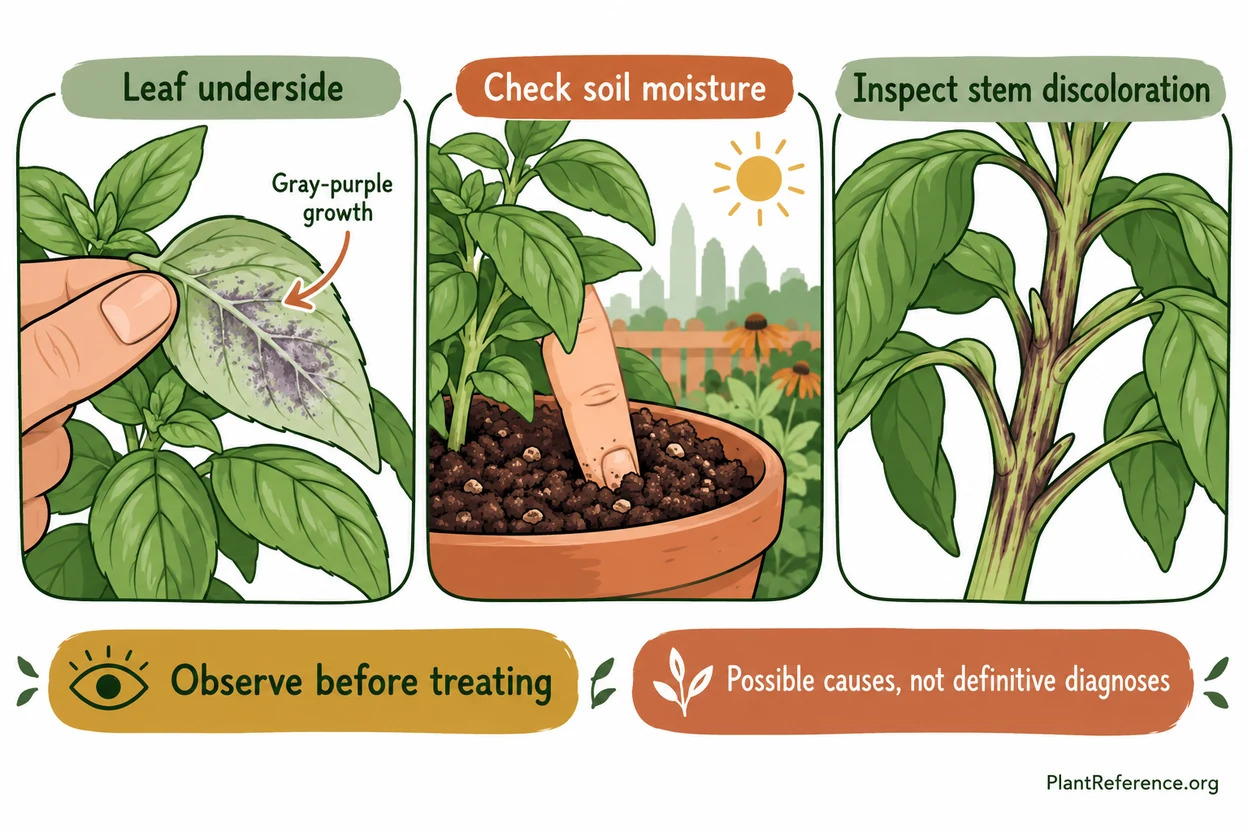
Look underneath yellowing leaves. Gray-purple growth associated with patches on the upper surface can suggest downy mildew, particularly during humid weather. Check moisture, plant spacing, and the pattern of symptoms before assuming the bed needs fertilizer.
Remove badly affected plants and seek diagnostic guidance when the cause is uncertain. Avoid claiming that a particular leaf color or flavor type is resistant unless the supplier identifies that trait. Airflow and soil-directed watering reduce avoidable leaf wetness but cannot guarantee that disease will stay away.
A wilted plant needs observation before another watering
Dry roots and saturated roots can both accompany drooping leaves. Check below the surface first. Persistent collapse with brown stem streaks or decaying roots calls for investigation rather than repeated soaking.
Compare an afternoon wilt with the plant's condition the next morning. Harsh exposure may be part of the problem if the root zone remains moist. Adjust the site gradually and look for healthy new growth rather than expecting damaged leaves to become perfect again.
For chewed foliage, identify the feeder. Examine plants at different times if daytime inspection shows nothing, and use hand removal when practical and safe. Any pesticide must be labeled for the edible crop and used according to its directions; routine spraying is not a substitute for diagnosis.
Flowers need not be treated as damage. Remove spikes when leaf production is the priority, or allow a separate plant to flower if that fits the garden's purpose. Do not expect a heavily flowering, woody plant to maintain the same leaf quality and shape indefinitely.
Harvest & Storage
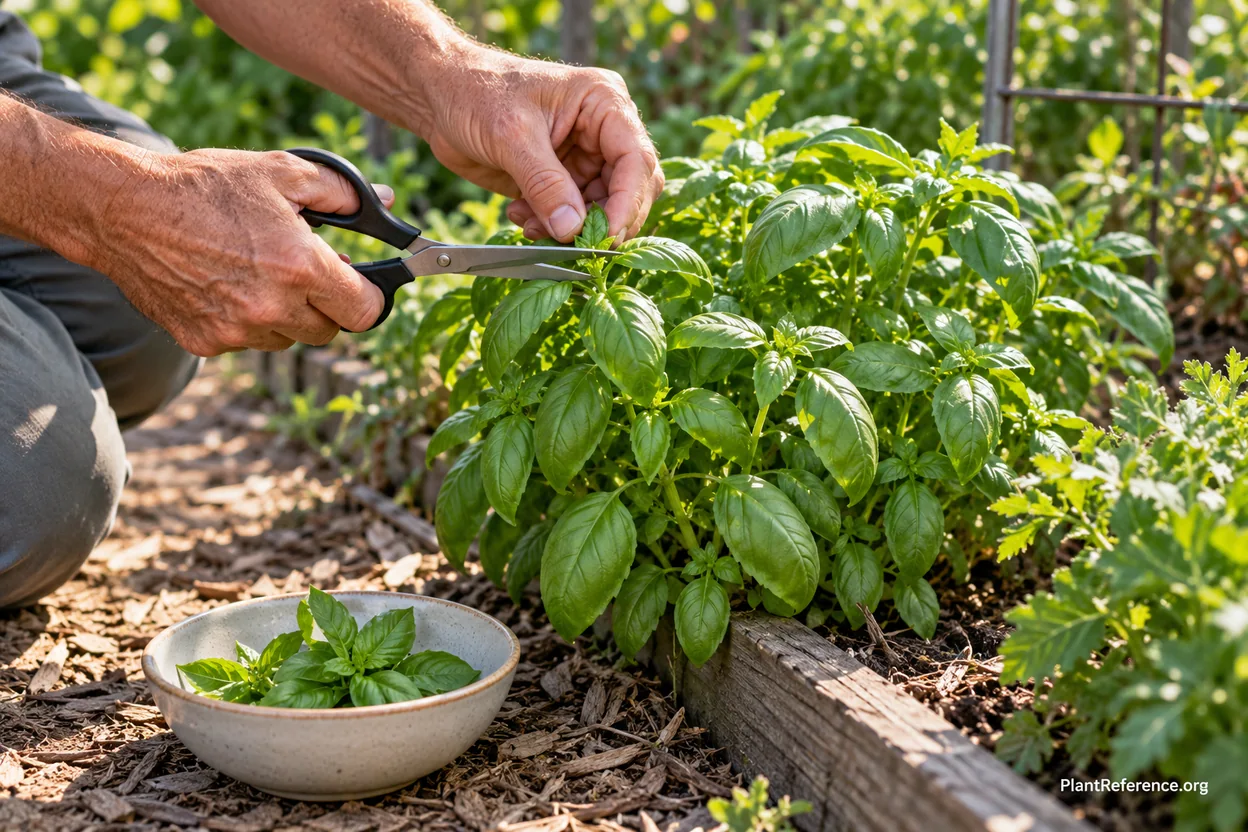
Cut tips in the morning after dew dries, leaving healthy foliage below each cut. Clean scissors give more control than pulling stems. Work from the path and harvest selectively across the plant so its shape remains balanced.
Take only what you can use or preserve promptly. Bring leaves out of direct sun, sort damaged material away from sound leaves, rinse as needed, and dry gently. Label different aromatic types rather than combining them into one indistinguishable bag.
Freeze surplus in small portions marked with the type and date. Freezing changes the texture, so reserve frozen leaves for sauces or cooked dishes rather than expecting fresh garnish quality. Do not store fresh herbs in oil at room temperature; follow a tested preservation method for longer storage.
As cold weather approaches, harvest useful foliage ahead of the forecast rather than waiting for November 5. The stored Zone 7b season has an endpoint, but individual plants respond to actual temperatures. Let the herb planting finish cleanly, keep the permanent paths and edges intact, and use your notes to decide what deserves space next spring.
Frequently Asked Questions

Reading about plants and recognising them are different skills. These three build the second.
- Daily PlantIdentify the day’s mystery plant from a close-up photograph.
- Keyed OutWork a dichotomous key, lead by lead, to name a hidden specimen.
- Name That PlantName a specimen from botanical clues dealt hardest first.
Free to play, no account needed
Tagged with
Sophie is a garden designer in Charlotte who came to the U.S. from France about a decade ago. Her design sensibility blends the structured formality of French garden traditions with the looser, more naturalistic style that works well in the Southeast. She has a degree in landscape architecture and worked at several design firms in Charlotte before going independent. She specializes in year-round garden structure, mixed borders, and creating outdoor spaces that feel intentional without being rigid. Sophie writes about garden design principles, plant combinations, and creating visual interest across seasons—always grounded in what actually grows well in the Piedmont.