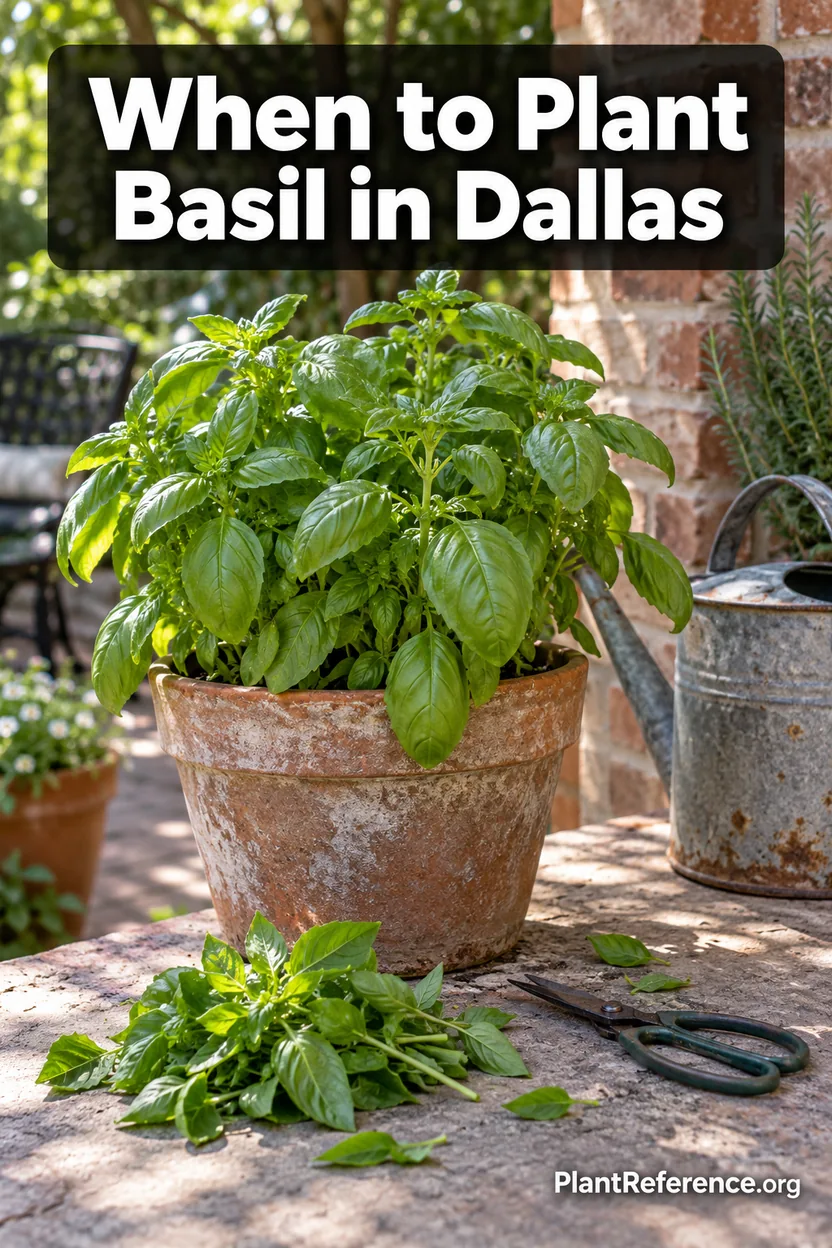
When to Plant Basil in Dallas: Dates and Heat-Smart Care
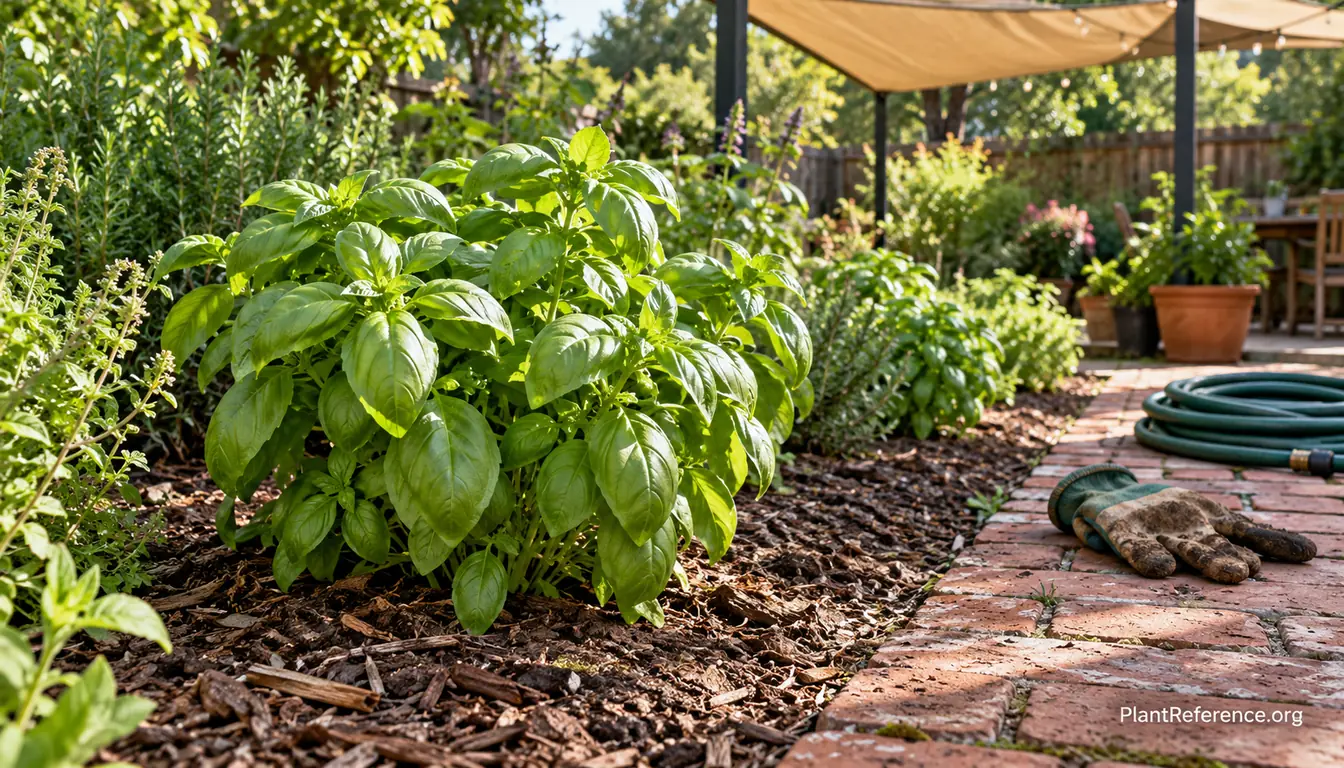
— Image © PlantReference.org 2026
Pets & Toxicity
Recorded toxicity for plants linked in this guide. An unknown status is not a safety assessment.
No linked plant is recorded as toxicDetailsHide
Ocimum basilicum 'Purple Ruffles' — Toxicity
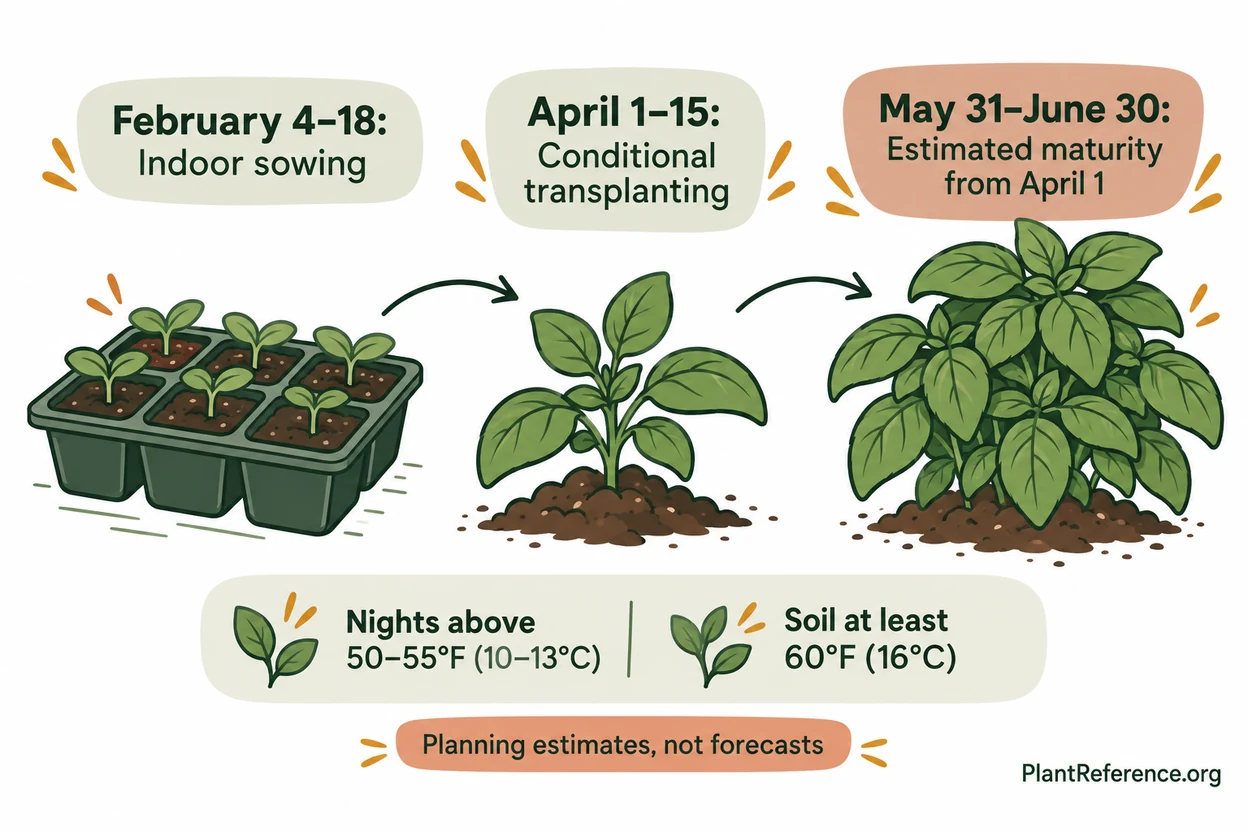
Non-toxicView Ocimum basilicum 'Purple Ruffles' plant profileWhen to plant basil in Dallas is a spring temperature decision, not a race to use the first warm weekend. Start seeds indoors around February 4–18 for an April 1–15 transplant target, then wait for nights consistently above 50–55°F (10–13°C) and soil at least 60°F (16°C). A short delay beats nursing chilled seedlings back to health, and a warm afternoon does not tell you what the roots will face overnight.
Sweet basil Ocimum basilicum (OH-see-mum bah-SIL-ih-kum) likes warmth, but Texas summer heat can still overwhelm a small root system. Give it space, usable soil moisture, and a location you can inspect without turning every watering into a chore. A few productive plants near the kitchen often beat a crowded bed that dries out while you are at work. If pots fit your yard better, Growing Herbs in Containers: Pots, Soil & Harvest explains the basics without requiring a whole new garden.
Best Basil Varieties for Dallas's Climate
Choose flavor first, then match the growing space to the plant. Heat tolerance helps, but it does not turn basil into a dryland shrub. Every selection still needs functioning roots and enough water to replace what its leaves lose.
The maturity ranges below come from the planting research. Seed suppliers may count days from sowing or transplanting, so read the actual packet before promising yourself a harvest date. Small tip harvests can begin before a plant reaches full size.
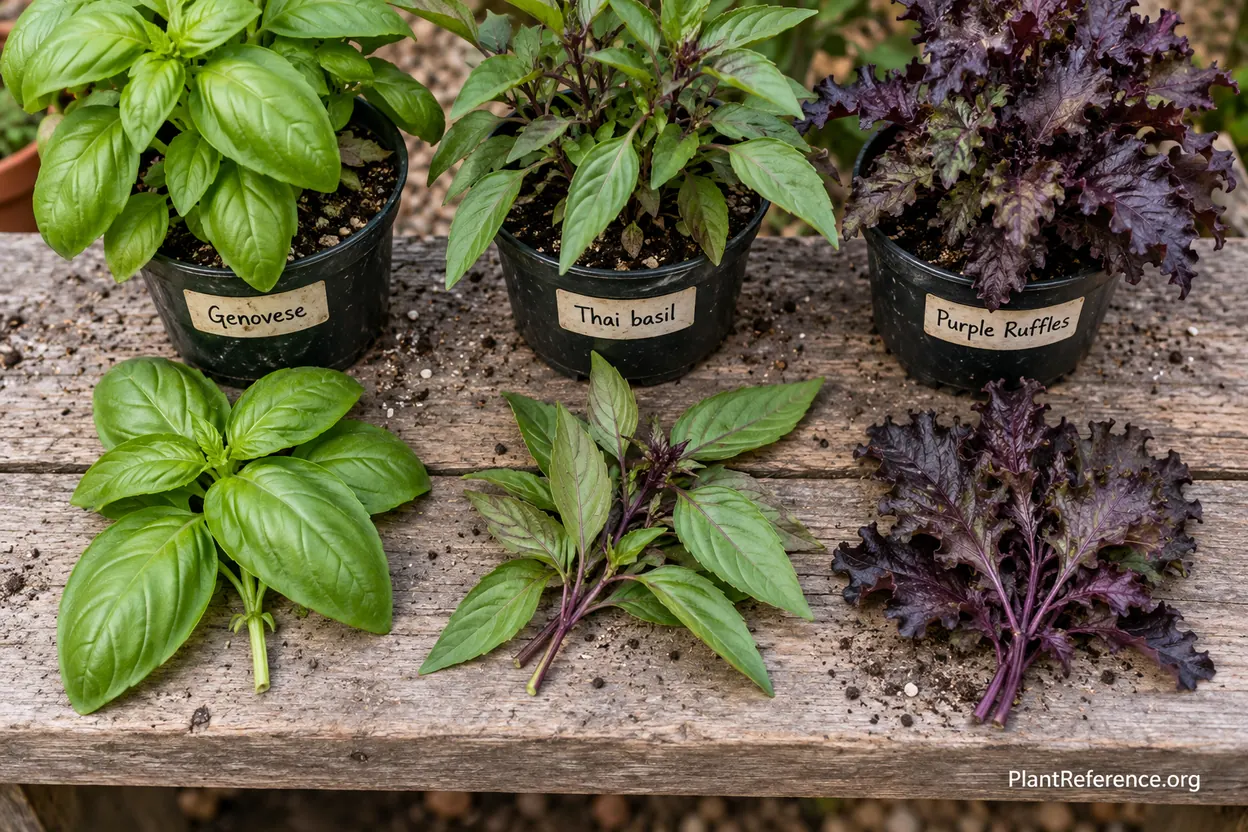
A dependable kitchen crop and distinct flavors
🌿Ocimum basilicum 'Genovese' is the broad-leaved choice for pesto and fresh cooking. Make it the main planting if that is what you use most. Harvest growing tips rather than stripping individual lower leaves until the plant resembles a bare stick.
🌿Ocimum basilicum 'Thai' brings an anise-like flavor and narrower leaves. The research identifies it as a useful hot-climate option, but a pot on sun-baked paving can still overheat. Give it the same root-zone attention as the rest of the planting and remove developing flower tips when leaves are the goal.
🌿Ocimum basilicum 'Lemon' supplies citrus-scented foliage. Lemon-scented plants are sold under more than one botanical identity, so keep the packet's full name with your planting record. Try a small quantity first; a flavor you enjoy occasionally does not need half the bed.
Type | Planning maturity range | Best for | Notes for local conditions |
|---|---|---|---|
60–90 days | Pesto and fresh leaves | Maintain steady moisture through hot weather | |
60–90 days | Anise-flavored cooking herb | Heat-adapted choice, still vulnerable to dry roots | |
60–75 days | Citrus-scented leaves | Confirm packet identity and avoid moisture swings | |
70–80 days | Garnish and foliage color | Select a named cultivar when buying seed | |
60–90 days | Spicy aromatic leaves | Warm-season annual with frequent flowering |
Color, aroma, and a sensible trial planting
🌿Ocimum basilicum 'Purple' is the broad purple-leaved selection in the plan, not a guarantee that every packet is the same cultivar. The research also supports the more specific 🌿Ocimum basilicum 'Purple Ruffles'. Buy for the leaf form and culinary use you want rather than assuming dark foliage means drought resistance.
Holy basil 🌿Ocimum tenuiflorum (OH-see-mum ten-yoo-ih-FLOR-um) is a separate species with a spicy aroma. It appreciates warmth and flowers readily. Treat it as a seasonal crop under the stored Zone 8a baseline, not a dependable outdoor perennial or a source of promised health benefits.
Plant a few types in separate, labeled positions and compare what actually reaches your kitchen. Record which plants need the most attention during hot spells. There is no prize for maintaining a large selection you never harvest.
When to Plant Basil in Dallas: Specific Dates
The city record supplies March 15 and November 25 frost dates, stored with the year 2025. Their difference is 255 days. These are the baseline dates used here, not a forecast for the coming season, and the record's Zone 8a label should not substitute for checking your exact location.
Subtracting six to eight weeks from March 15 gives January 18–February 1 for indoor sowing. Adding the required seven- to fourteen-day frost buffer gives March 22–29 for an earliest conditional transplant check. That arithmetic does not make late March automatically warm enough for basil.
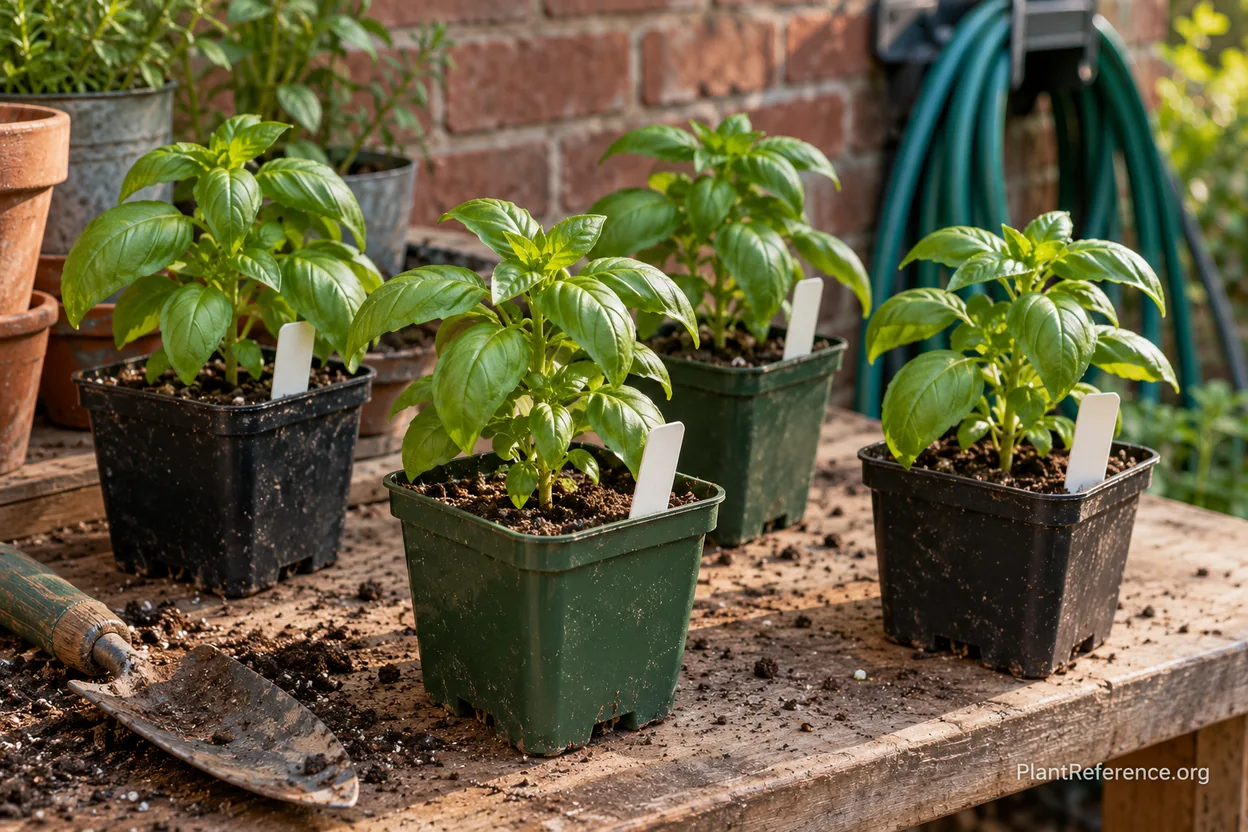
For a more practical working schedule, count back six to eight weeks from April 1: February 4–18. Target April 1–15 outdoors only when soil and night temperatures pass the checks above. Later warmth means later planting; keep seedlings bright and uncrowded while they wait.
Plan harvests without treating estimates as guarantees
A 60–90 day range counted from an April 1 transplant points to May 31–June 30. If the supplier counts from sowing instead, do not add those days to transplanting again. Temperature, plant size, and how much you remove all affect when repeated harvests become realistic.
Start a small replacement batch in late summer if spring plants have become woody or disease-damaged. For example, an August 15 transplant plus 60–90 days gives October 14–November 13, ahead of the stored November 25 endpoint. Falling temperatures can slow growth well before frost, so this is an opportunity window, not guaranteed production.
Keep the dates on a label along with the actual planting day. Two short notes about night temperature and first harvest will make next year's schedule more useful than another generic calendar. Shelter containers during unexpected cold, but do not assume a sheet over outdoor plants makes any temperature safe.
Complete Growing Guide for Dallas
Fix the planting space before buying more supplies
Choose morning sun and enough open space for air to move through the leaves. In a site that gets harsh reflected afternoon heat, plan some afternoon shade before midsummer. Moving a container a short distance can be more effective than pouring extra water into an already wet pot.
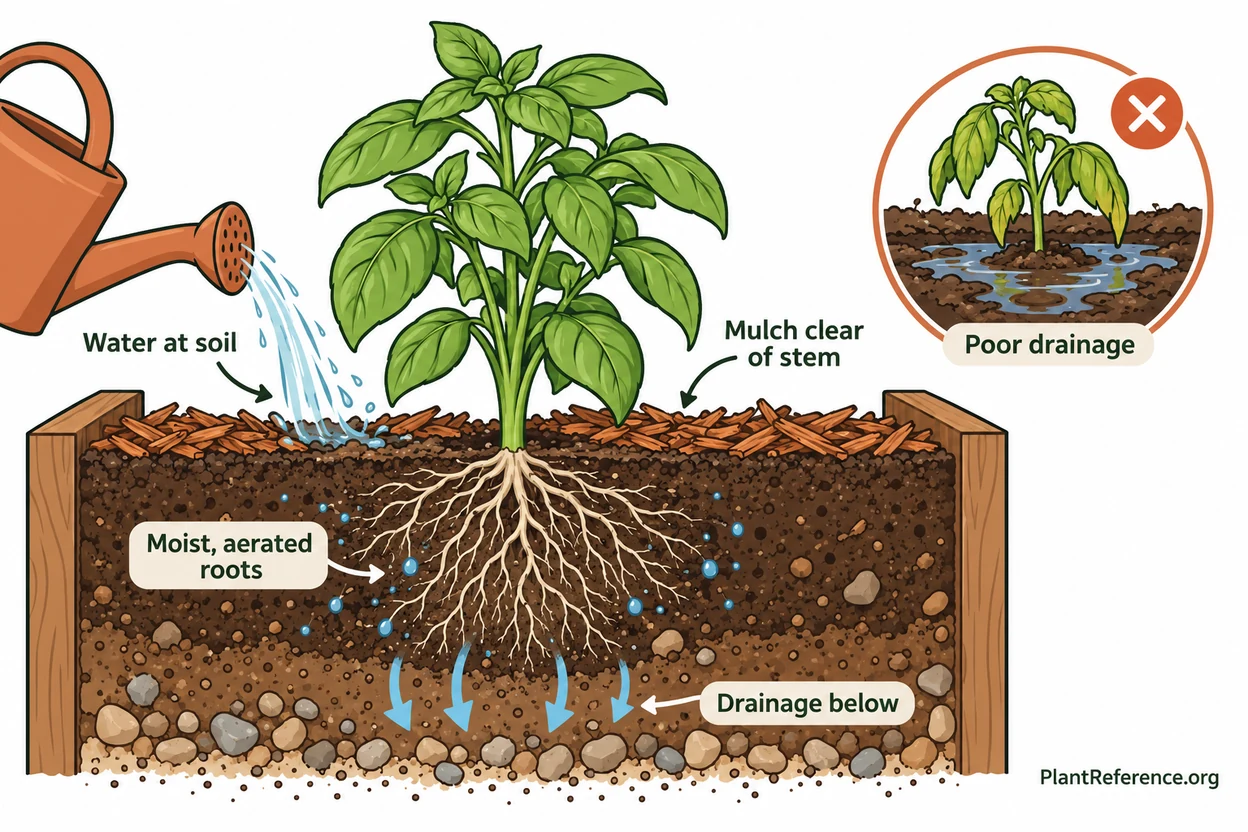
Check drainage after rain or a thorough watering. Roots need oxygen as well as moisture, and repeatedly saturated ground is not improved by a larger irrigation allowance. How to Test Garden Soil: Jar, Ribbon & pH Tests helps separate texture and pH questions before you buy amendments.
The research places basil's useful pH range around 6.0–7.5. Use a soil test to guide corrections instead of adding fertilizer, sulfur, or lime because a neighbor uses them. Soil Health 101: How to Build Living, Productive Garden Soil covers the longer-term work of improving structure and organic matter.
If you make compost at home, use finished material rather than burying fresh scraps beside young roots. How to Build a Hot Compost Pile: Finished Compost in Weeks explains the preparation process; compost is an amendment, not a substitute for drainage.
A raised bed is an option when the existing site drains poorly, not a requirement for every herb planting. If you choose one, How to Build a Raised Garden Bed: Step-by-Step Construction Guide addresses construction. Fill it with a suitable growing mix rather than assuming a tall box fixes compacted soil by itself.
Start compact seedlings and transplant gently
Sow sweet basil seed about 1/4 inch (6 mm) deep in seed-starting mix, unless the packet directs otherwise. Holy basil seed can need surface sowing and light, so do not bury every type identically. Keep the mix evenly moist, with seed-zone warmth around 75°F (24°C), and provide bright light promptly after emergence.
A thermostatically controlled heat mat is useful if the room is cool. It is unnecessary when the mix is already warm enough. Read the equipment instructions, position the temperature probe correctly, and do not confuse a warm tray with adequate light.
Gradually introduce seedlings to outdoor sun and wind over about a week. Start sheltered and increase exposure without letting the small root balls dry out. Plant at roughly the same depth as the nursery container, water the root zone thoroughly, and allow room for the mature plant instead of packing seedlings shoulder to shoulder.
Water the roots, not the calendar
Check moisture below the surface before watering. Dry topsoil does not always mean the entire root zone is dry, while a tiny container can lose usable moisture quickly. Water thoroughly when needed, let excess escape, and check again rather than leaving the pot in a full saucer.
Morning watering gives you time to notice a blocked drain or an irrigation line that missed the plant. Aim at the soil to avoid unnecessarily wet foliage. A loose mulch layer reduces exposed-soil drying; keep it away from the stem so you can inspect the crown.
Use Container Gardening: Pots, Soil, Water & Yields when choosing a pot with enough root space and drainage. Larger containers usually offer more moisture buffering than small decorative pots, but they still need inspection. Grouping plants where you can reach them is a practical water-saving measure because missed problems are easier to catch.
Manage heat before it becomes repeated damage
Watch plants at the hottest part of the afternoon and again the next morning. A plant that recovers overnight may need relief from peak exposure rather than another soaking. Raised Bed Too Hot in Summer: Protecting Plants from Heat Stress explains why raised containers and beds can heat differently from surrounding ground.
Keep any shade structure open enough for airflow. Deep permanent shade can produce weak growth, so aim to soften the worst exposure while retaining useful morning light. Texas heat is a reason to adjust the site, not proof that every plant needs the same amount of shade.
Once plants have several pairs of leaves, pinch the growing tip above a healthy leaf pair. The side buds can then develop into branches. Harvest modestly and repeatedly; removing most foliage from a heat-stressed plant makes recovery harder.
Feed only to address the growing medium and observed need. If you are preparing your own amendments, DIY Organic Fertilizer Blends: A Soil-Test-First Guide keeps that decision tied to evidence. More fertilizer is not a substitute for cool enough roots, drainage, or reliable watering.
Troubleshooting Dallas Basil Problems
Wilting requires a root check first
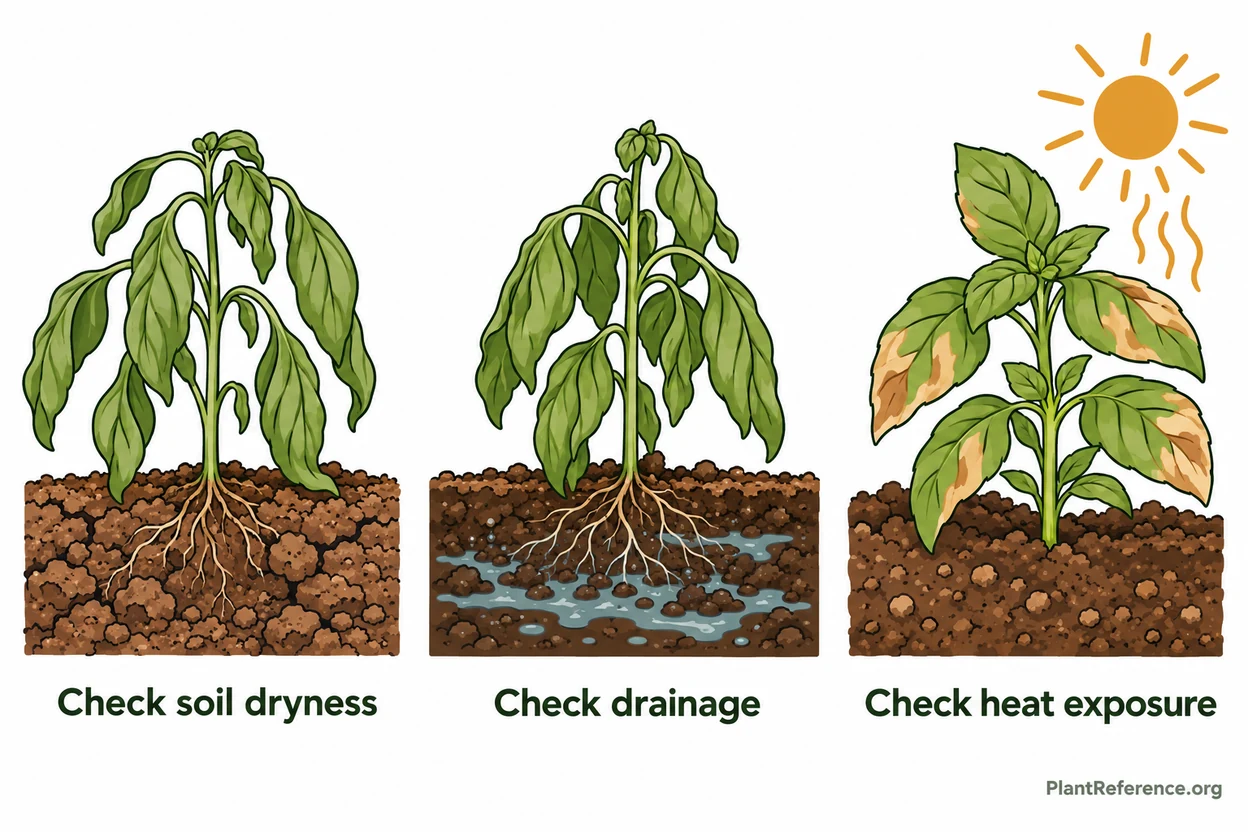
A drooping plant in dry mix needs water; one in saturated mix needs a drainage investigation. Check both before reaching for the hose. Persistent collapse, brown stem tissue, or root decay can indicate disease rather than simple thirst, and adding more water may worsen the problem.
If leaves scorch on the exposed side while the root zone remains moist, reduce the harshest afternoon exposure gradually. Do not fertilize damaged plants heavily to force a recovery. Look for healthy new growth and reassess the location before replacing the plant in the same conditions.
Yellow leaves are not automatically a feeding problem
Inspect leaf undersides when yellowing appears. Gray-purple growth underneath yellow patches can be consistent with downy mildew. Improve spacing, avoid unnecessary leaf wetting, and remove badly affected plants rather than expecting fertilizer to repair an infection.
These symptoms can overlap with other problems. Photograph both leaf surfaces and the stem before seeking a local diagnostic opinion. Do not claim a variety is resistant unless its supplier identifies that trait, and do not assume dry weather rules out disease after a humid spell or repeated overhead watering.
For holes or ragged leaf edges, look for the animal causing them before applying a treatment. Inspect in the evening if daytime checks show nothing. Hand removal can be enough for a small planting when the culprit is identifiable and safe to handle; any pesticide must be labeled for the edible crop and used as directed.
Frequent flowering is a growth-stage signal, not proof that the plant is ruined. Remove flower tips if leafy harvests remain the goal, maintain moisture, and consider younger replacement plants when old stems produce little useful growth. Flowers do not automatically make every leaf inedible.
Harvest & Storage
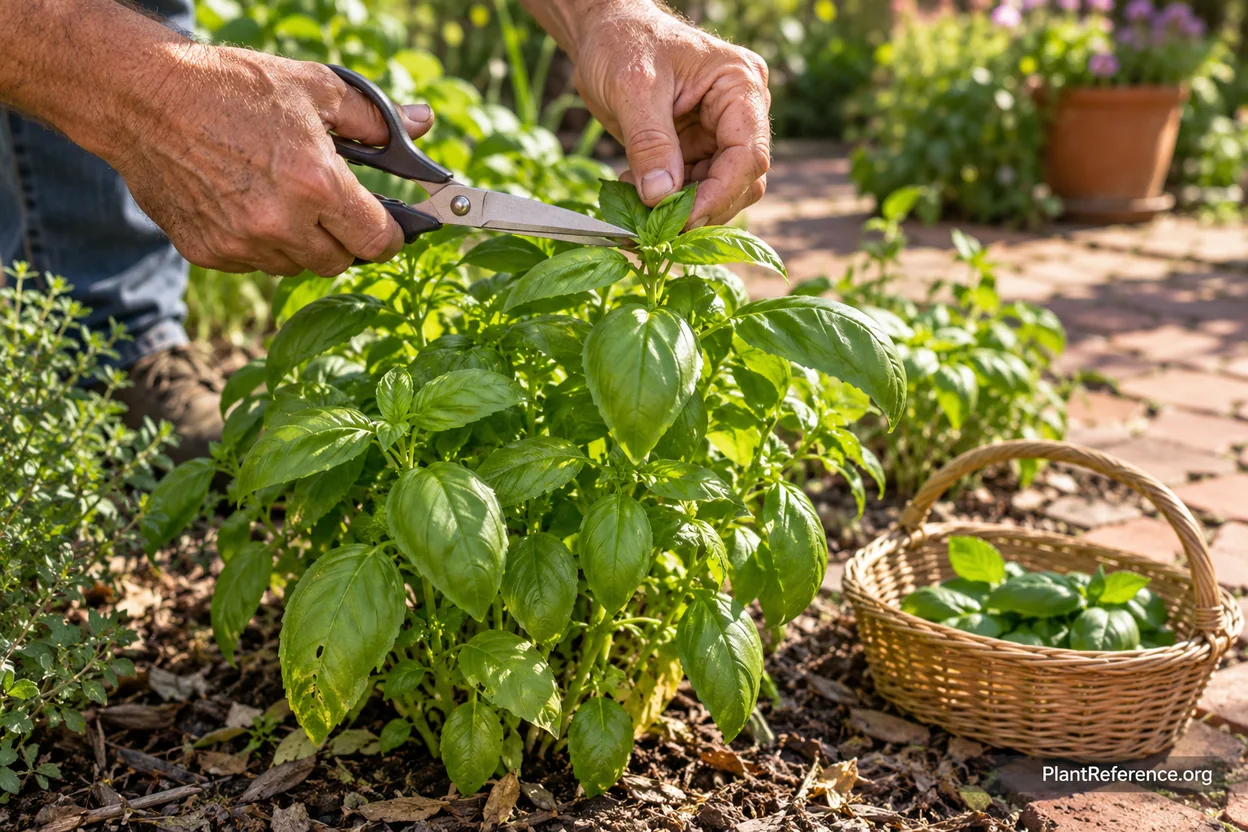
Cut healthy tips in the morning after dew dries. Snip just above a leaf pair, leave plenty of foliage, and avoid taking a large share from a struggling plant. Clean scissors make selective harvest easier than tearing stems while holding a full handful.
Bring the harvest out of direct sun promptly. Sort damaged or suspect leaves away from sound material, rinse as needed, and dry gently before use or freezing. Keep different aromatic types separate if you want predictable flavor in later meals.
Freeze surplus in small, labeled portions so you can remove what a meal needs without thawing everything. Frozen leaves lose the texture of fresh garnish but remain useful in cooked dishes and sauces. Do not leave fresh herbs packed in oil at room temperature; use a tested food-preservation method for any longer storage.
As nights cool, harvest usable foliage before a cold event instead of waiting for the calendar's frost date. The stored Zone 8a season provides plenty of opportunity, but it does not protect tender leaves. Keep a final note about which planting stayed useful longest, then let that result guide next spring's choices.
Frequently Asked Questions

Reading about plants and recognising them are different skills. These three build the second.
- Daily PlantIdentify the day’s mystery plant from a close-up photograph.
- Keyed OutWork a dichotomous key, lead by lead, to name a hidden specimen.
- Name That PlantName a specimen from botanical clues dealt hardest first.
Free to play, no account needed
Tagged with
James is a lawn care professional in Dallas who runs a small residential maintenance company. He started mowing lawns as a teenager and worked his way up to running crews for a large landscaping firm before going out on his own. James specializes in warm-season turf grasses—Bermuda, St. Augustine, and Zoysia—and knows how to keep a lawn alive through Texas summers without wasting water. He's also experienced with the transition zone challenges that Dallas faces, where warm-season and cool-season grasses overlap. James takes a practical, science-informed approach to lawn care and pushes back on the idea that a good lawn requires heavy chemical inputs.