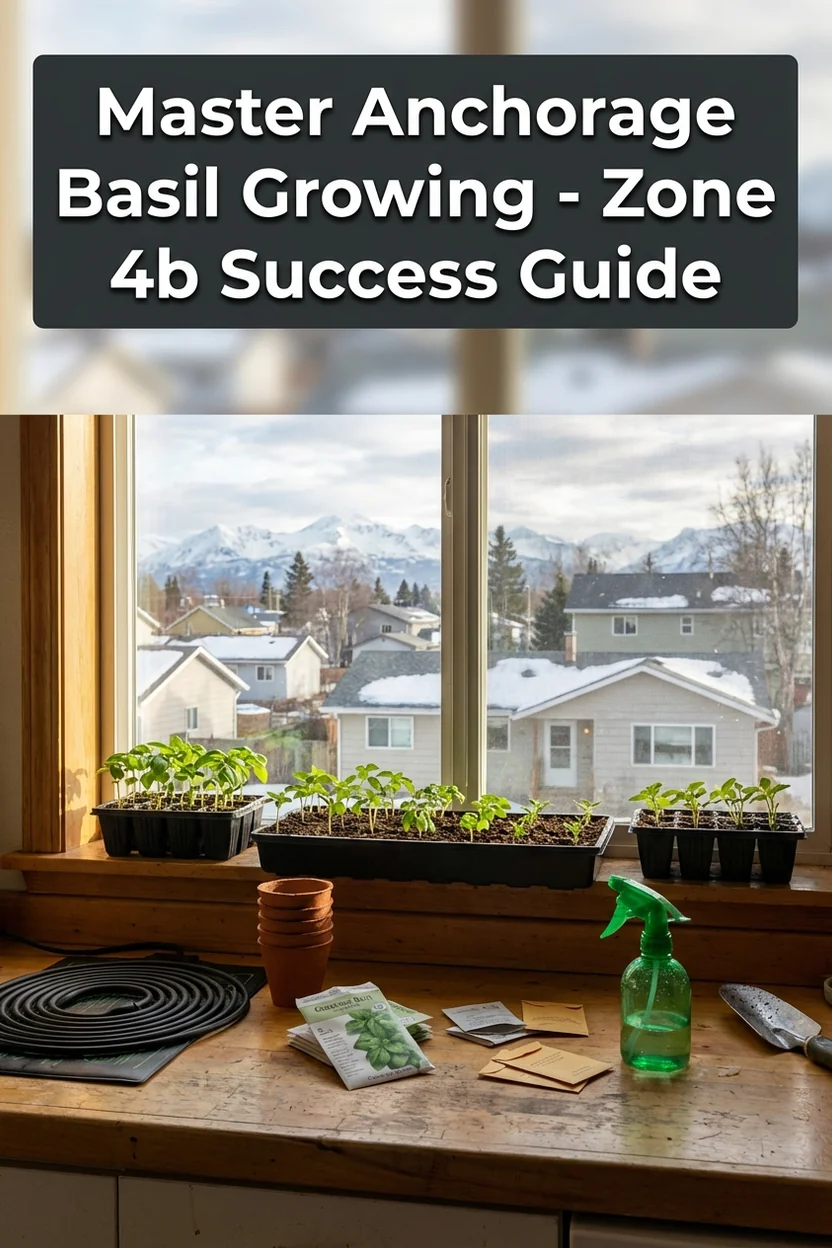
When to Plant Basil in Anchorage: Complete Guide + Best Varieties for Zone 4b
Pets & Toxicity
Recorded toxicity for plants linked in this guide. An unknown status is not a safety assessment.
No linked plant is recorded as toxicDetailsHide
— Image © Plant Reference 2026
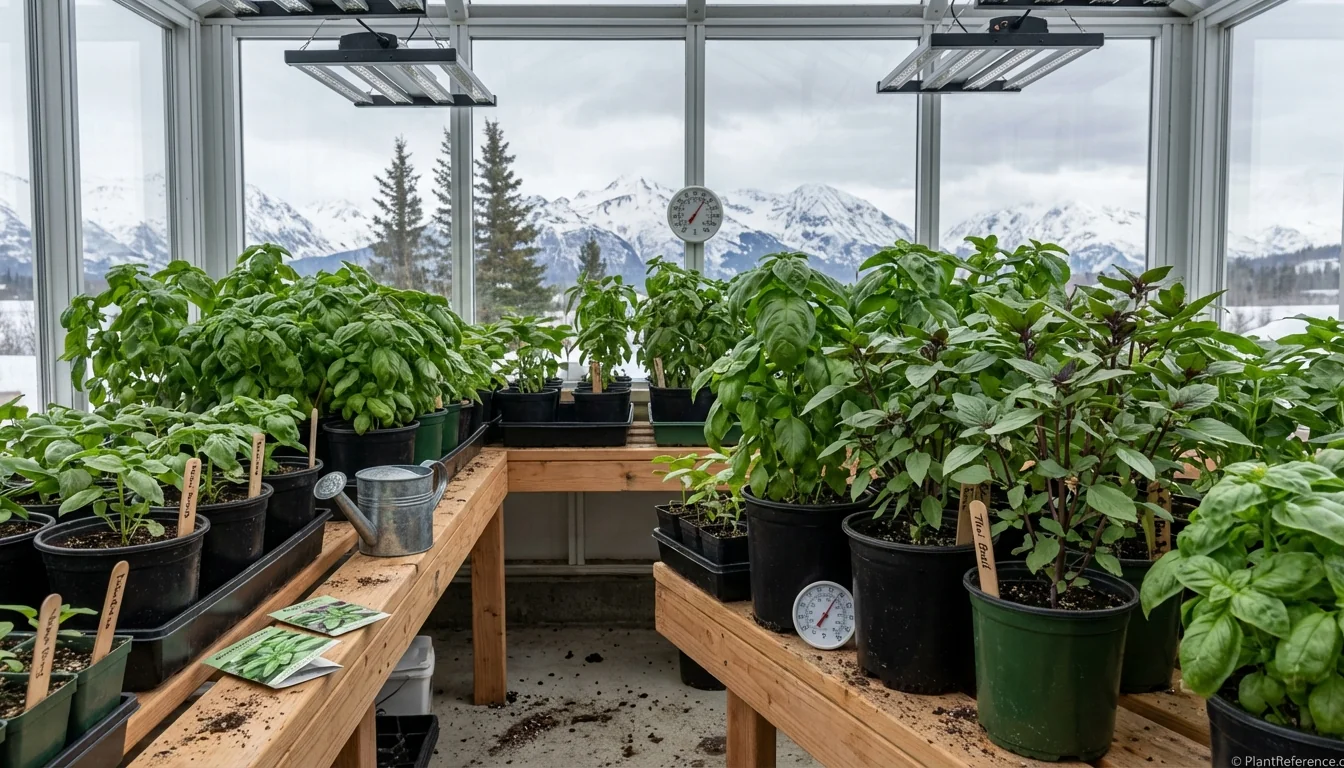
Growing basil in Anchorage isn't impossible, but it sure requires more planning than tossing seeds in the ground come spring. After forty years of coaxing warm-season crops through Alaska's challenging climate, I can tell you that success with basil comes down to three things: starting early indoors, choosing the right varieties, and accepting that you'll need protection.
Most gardening advice tells you basil needs warm soil and no frost—well, that describes about four months of the year here in Anchorage. But don't let that discourage you. The key is working with what we have: a 118-day growing season that runs from May 20 to September 15, and the willingness to give these heat-loving plants the protection they need.
Best Basil Varieties for Anchorage's Climate
Not all basil varieties are created equal when it comes to Alaska's growing conditions. After testing dozens of varieties in my greenhouse and garden, here are the ones that actually produce in our short season.
Variety | Days to Maturity | Best For Anchorage | Notes for Zone 4b |
|---|---|---|---|
60-90 days | Quick harvest, reliable producer | Start indoors 8 weeks early, excellent in containers | |
60-75 days | Compact growth, containers | Perfect for short season, stays bushy without pinching | |
68-75 days | Heat retention, purple flowers | More cold-tolerant than most, handles cool nights better | |
70-85 days | Ornamental, perennial potential | Can overwinter indoors as houseplant | |
60-75 days | Quick citrus flavor | Bolts fast—harvest early and often |
Avoid these varieties in Anchorage: 🌿Ocimum tenuiflorum (Holy Basil) needs 120+ warm days we simply don't have. 🌿Ocimum basilicum 'Thai' is possible but challenging—it wants consistent heat that's hard to provide here.
The champion for Alaska is 🌿Ocimum basilicum 'Genovese'. It's not the most exotic, but it's reliable, produces well in cool conditions, and gives you the classic basil flavor everyone expects. I've grown it successfully for fifteen years running.
Why These Varieties Work in Zone 4b
🌿Ocimum basilicum 'Spicy Globe' deserves special mention for Anchorage gardeners. This compact variety stays under 12 inches tall and doesn't require the constant pinching that larger basils demand. In our short season, that's a real advantage—you can focus on harvesting instead of plant maintenance.
🌿Ocimum basilicum 'Cardinal' has surprised me with its cold tolerance. While it's still tender to frost, it handles those cool August nights better than most varieties. The purple flowers are a bonus, and the plant keeps producing leaves even when temperatures drop into the 50s at night.
Specific Planting Dates for Anchorage
Here's where Alaska gardening gets precise. Our last average frost is May 20, but "average" doesn't mean guaranteed. I've seen snow in late May more than once. First frost typically arrives September 15, giving us exactly 118 days to work with.
Indoor Seed Starting Timeline
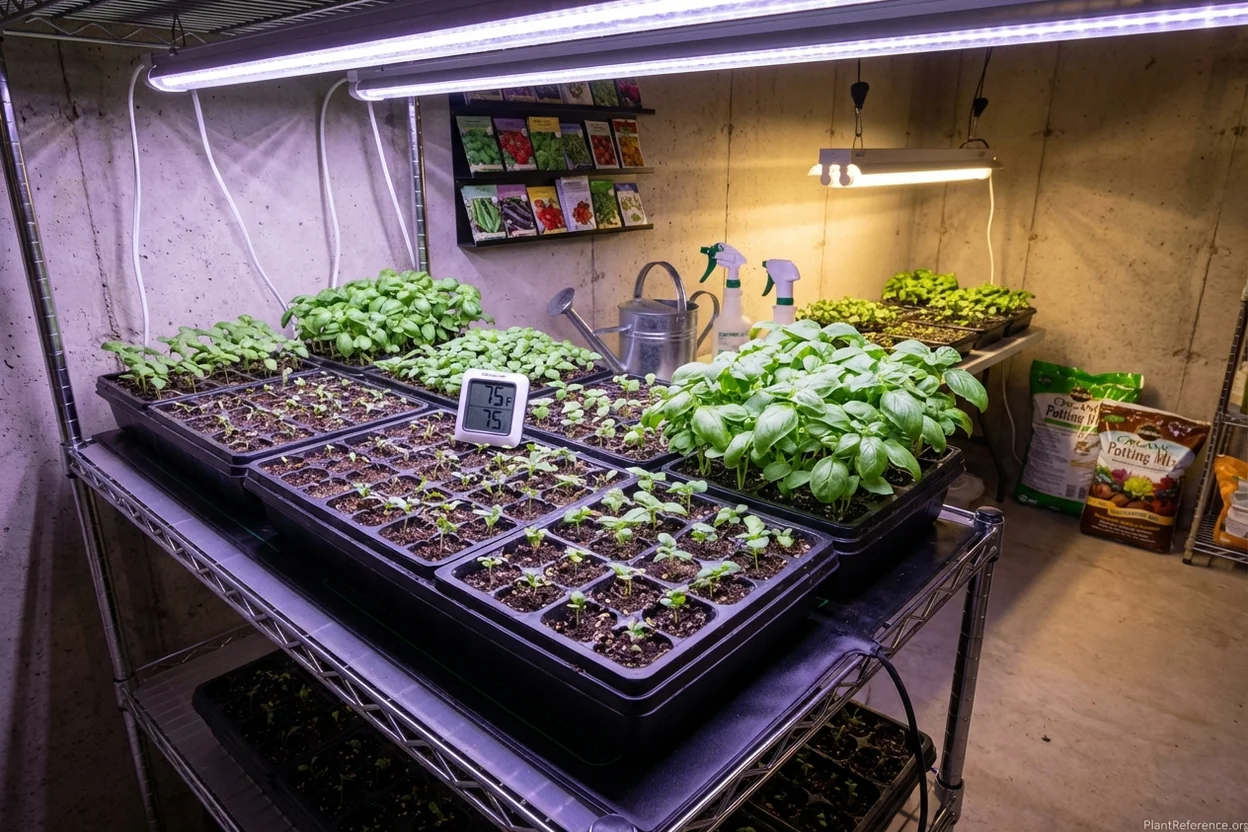
Start seeds indoors: March 25 - April 8
Use heat mats to maintain 75-80°F soil temperature
Seeds germinate in 5-10 days at proper temperature
Grow under lights for 6-8 weeks before transplant
Why so early? Basil needs warm soil to grow quickly. Starting in March gives plants time to develop strong root systems before facing Alaska's variable spring weather.
Hardening Off Process
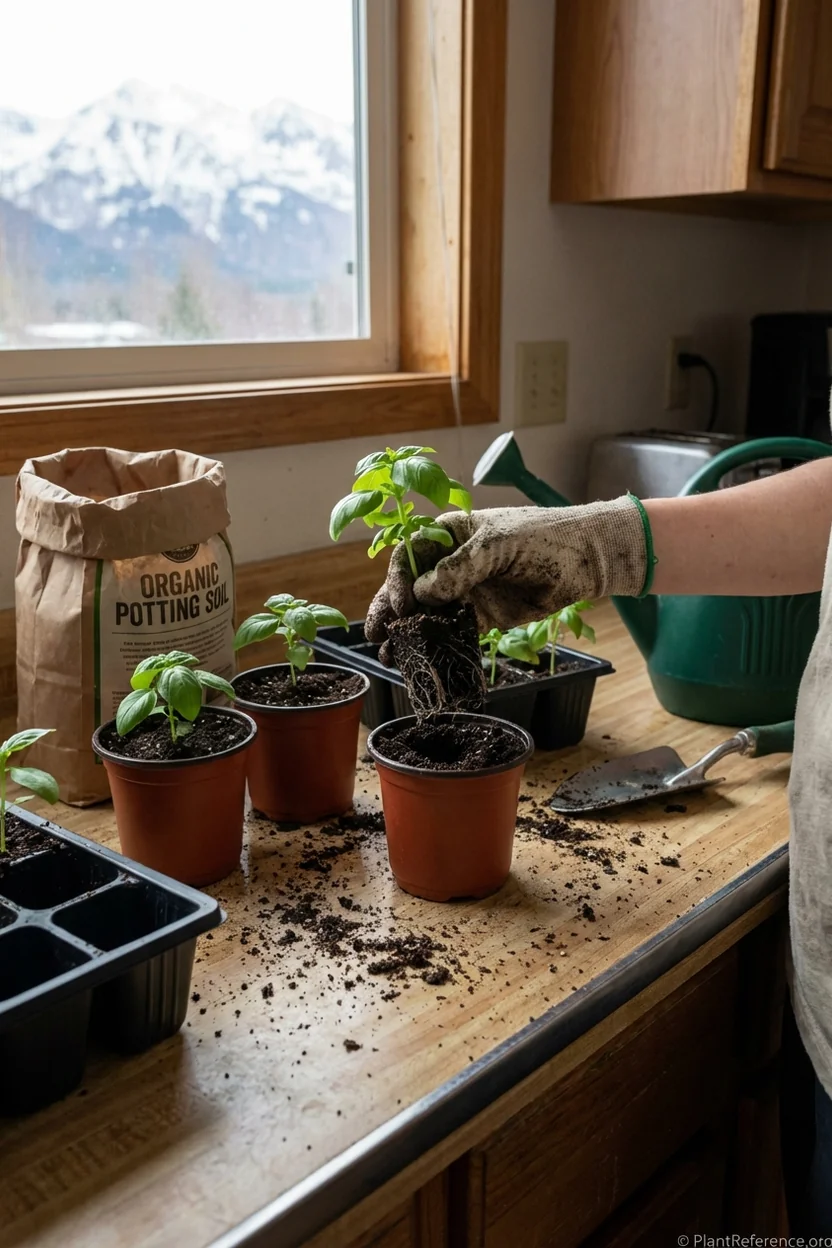
May 1-15: Hardening off period
Move containers outdoors during warm afternoon hours (60°F+)
Bring inside when temperatures drop below 50°F
Gradually increase outdoor exposure time
This step is critical in Anchorage. Plants started in warm indoor conditions need time to adjust to our variable spring weather.
Transplant Timing
Transplant outdoors: May 20 - June 1
Soil temperature consistently above 60°F
Night temperatures staying above 50°F
Weather forecast shows no frost warnings
I always check soil temperature with a thermometer. Cold soil stunts basil permanently—better to wait an extra week than rush into cold conditions.
Container Strategy for Anchorage
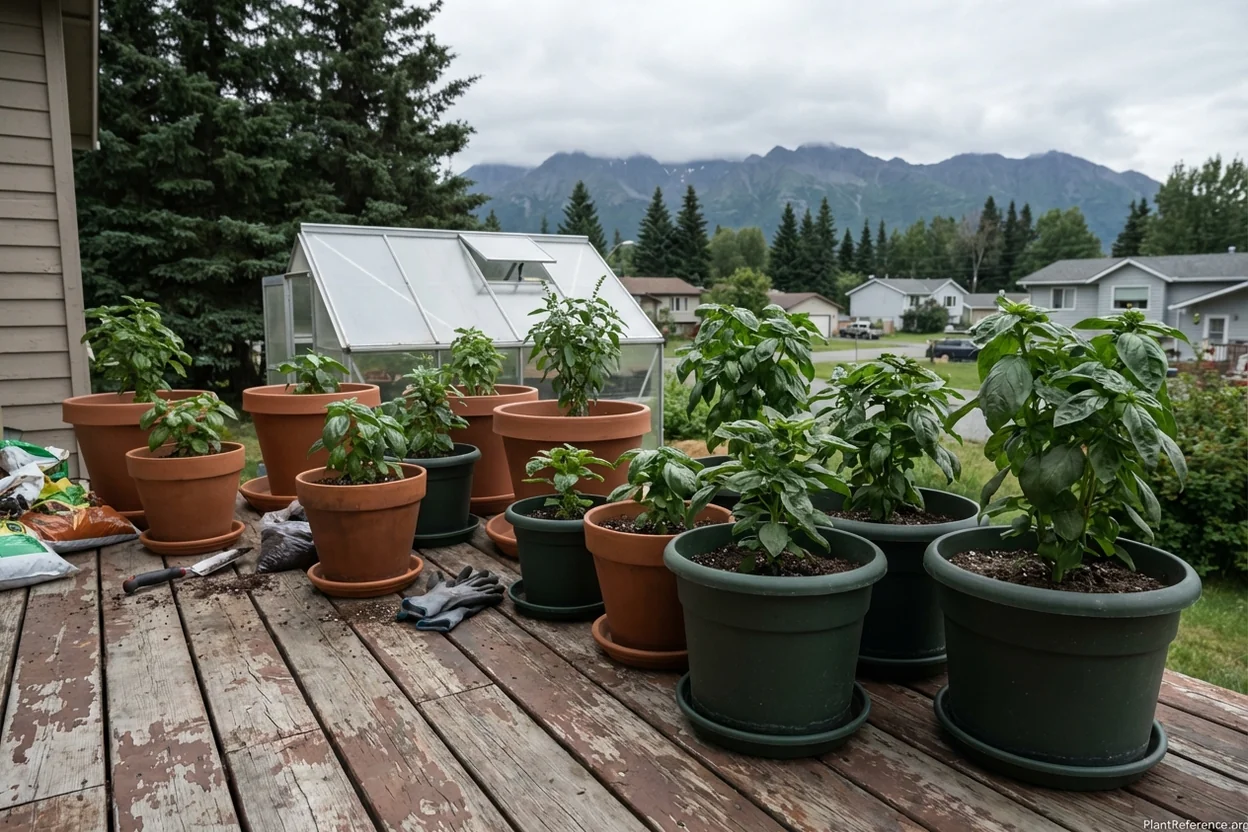
Most successful Anchorage basil growers use containers. This allows moving plants to protected locations during cool spells or early frost warnings.
Minimum 5-gallon containers for full-size varieties
2-3 gallon containers work for compact types like 🌿Ocimum basilicum 'Spicy Globe'
Use dark-colored containers to absorb heat
Ensure drainage holes prevent waterlogging
Complete Growing Guide for Anchorage
Location Selection
South-facing walls that reflect heat
Protected courtyards sheltered from wind
Greenhouse or hoop house structures
Moveable containers on patios or decks
Wind protection is crucial here. Our summer breezes can quickly cool soil and stress plants. I always position my basil containers near structures that block wind from the north and west.
Soil Requirements
Basil needs well-draining soil that warms quickly. Alaska's heavy clay soils stay cold too long for successful basil growth.
50% quality potting mix
25% compost
25% perlite or coarse sand
pH between 6.0-7.0
This mix drains well but retains enough moisture for consistent growth. The perlite helps soil warm faster in spring.
Temperature Management
Seed germination: 75-80°F
Optimal growth: 65-75°F
Minimum growth: 60°F
Damage threshold: Below 50°F
Black plastic mulch around plants
Water-filled containers nearby for thermal mass
Row covers on cool nights
Positioning near heat-reflecting surfaces
I keep thermometers in my basil growing areas and track temperatures religiously. When night temperatures threaten to drop below 55°F, I cover plants or move containers to protected areas.
Watering and Fertilization
Consistent moisture without waterlogging
Water when top inch of soil feels dry
Avoid overhead watering in humid conditions
Initial soil preparation with compost
Light liquid fertilizer every 2-3 weeks during growing season
Stop fertilizing 4 weeks before expected first frost
Over-fertilizing creates lush growth that's more susceptible to cold damage. I prefer steady, moderate feeding throughout the season.
Pruning and Maintenance
Pinch growing tips when plants reach 6 inches tall
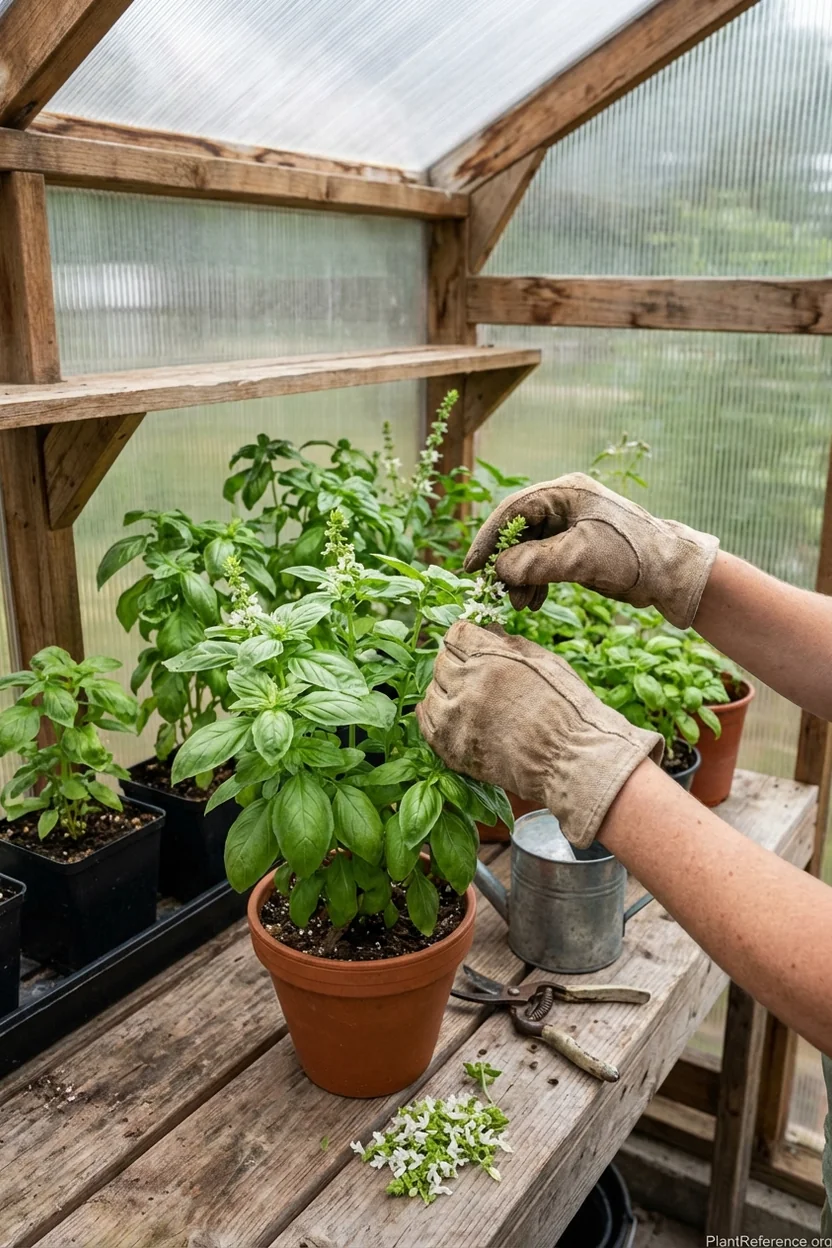
Remove flower buds immediately to encourage leaf production
Harvest regularly to promote branching
The short season means every week counts. Regular harvesting keeps plants productive and prevents bolting, which ends useful leaf production.
Troubleshooting Anchorage-Specific Problems
Cool Weather Stress
Symptoms: Yellowing leaves, stunted growth, purpling stems Causes: Soil temperatures below 60°F, cold night temperatures Solutions: Move containers to warmer locations, use row covers, provide wind protection
This is the most common issue I see with Anchorage basil growers. Plants that look healthy can decline quickly when temperatures drop.
Short Season Bolting
Symptoms: Flower spikes forming early, leaves becoming bitter Causes: Heat stress during warm spells, plant maturity Solutions: Immediate flower removal, regular harvesting, succession planting
Even in our short season, basil can bolt during hot spells. July temperatures in the 70s can trigger flowering if plants aren't regularly harvested.
Container Growing Challenges
Common container issues:
Rapid soil temperature fluctuations
Uneven watering leading to stress
Wind damage to top-heavy plants
Solutions:
Use larger containers for thermal mass
Group containers together for microclimate
Stake tall varieties against wind
Late Season Frost Protection
When September brings frost warnings, you have options:
Move containers to protected areas
Cover in-ground plants with sheets or row covers
Harvest heavily and preserve the bounty
I always watch weather forecasts carefully after Labor Day. One good harvest before first frost can provide basil for months if properly preserved.
Harvest & Storage
Optimal Harvest Timing
Start harvesting when plants reach 6-8 inches tall, typically 8-10 weeks after transplanting. In Anchorage's short season, this usually occurs in mid to late July.
Cut stems just above leaf nodes to encourage branching
Harvest in early morning after dew dries
Never harvest more than 1/3 of the plant at once
Preservation Methods for Alaska
Freezing (best method for Genovese):
Blanch leaves in boiling water for 15 seconds
Ice bath immediately
Pat dry and freeze in single layers
Store in freezer bags for up to 8 months
Pesto preparation:
Blend fresh basil with olive oil
Freeze in ice cube trays
Transfer to freezer bags once solid
Drying (works for Cardinal and African Blue):
Hang small bundles in warm, dry location
Use dehydrator at 95°F for faster results
Store dried leaves in airtight containers
The key with Alaska's humid summers is getting moisture out quickly to prevent mold. I use my dehydrator more than air-drying in our climate.
Frequently Asked Questions
Reading about plants and recognising them are different skills. These three build the second.
- Daily PlantIdentify the day’s mystery plant from a close-up photograph.
- Keyed OutWork a dichotomous key, lead by lead, to name a hidden specimen.
- Name That PlantName a specimen from botanical clues dealt hardest first.
Free to play, no account needed
Tom is a lifelong Alaskan who gardens in Anchorage, where the growing season is short but intense. He works for the state cooperative extension service and has spent years figuring out what works in a climate where the ground freezes deep, the growing season starts in late May, and you get 19 hours of daylight in June. Tom grows cold-hardy vegetables, maintains a collection of boreal-adapted perennials, and experiments with season extension using cold frames and row covers. He writes about the realities of northern gardening—the unique advantages (those long summer days produce remarkable growth) and the genuine limitations. Tom's tone is calm and practical, with the quiet humor of someone who's gardened through Alaskan winters for decades.