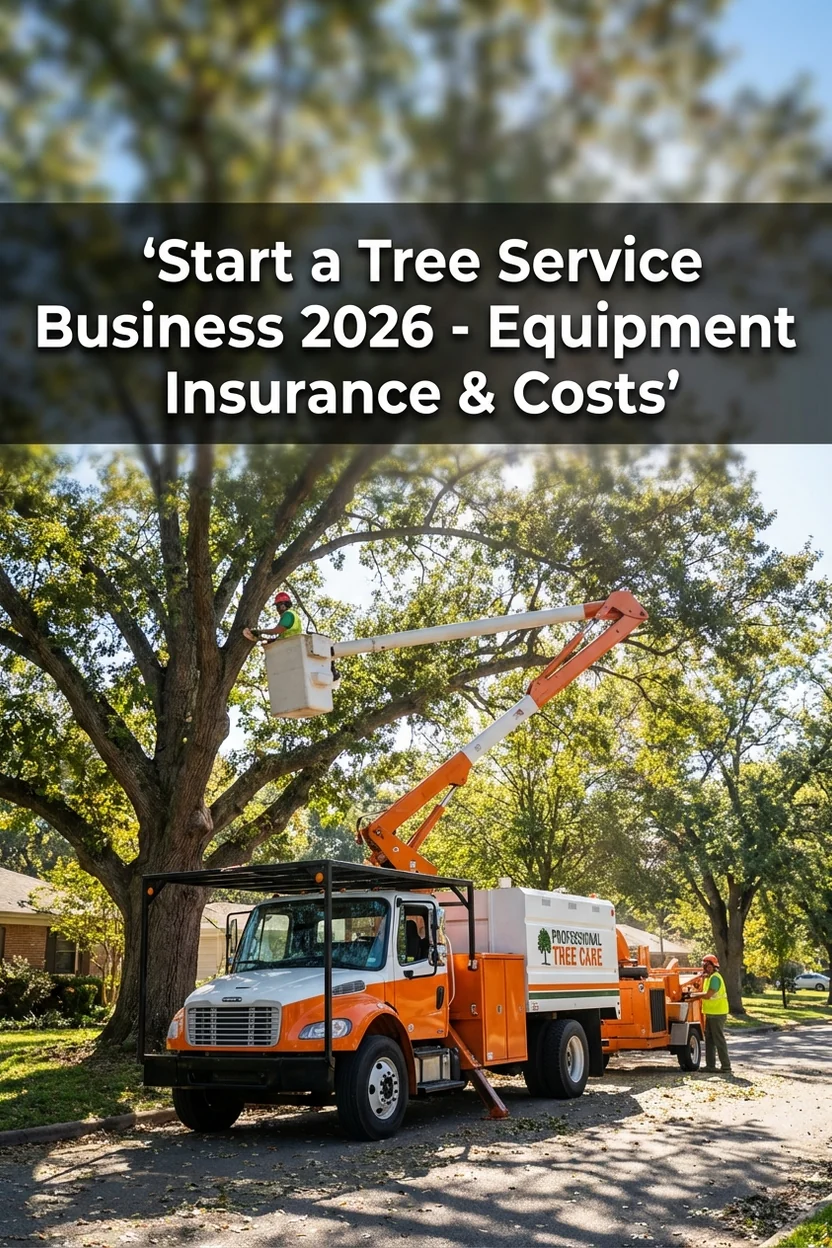
Starting a Tree Service Business in 2026: Equipment, Insurance, and Startup Costs
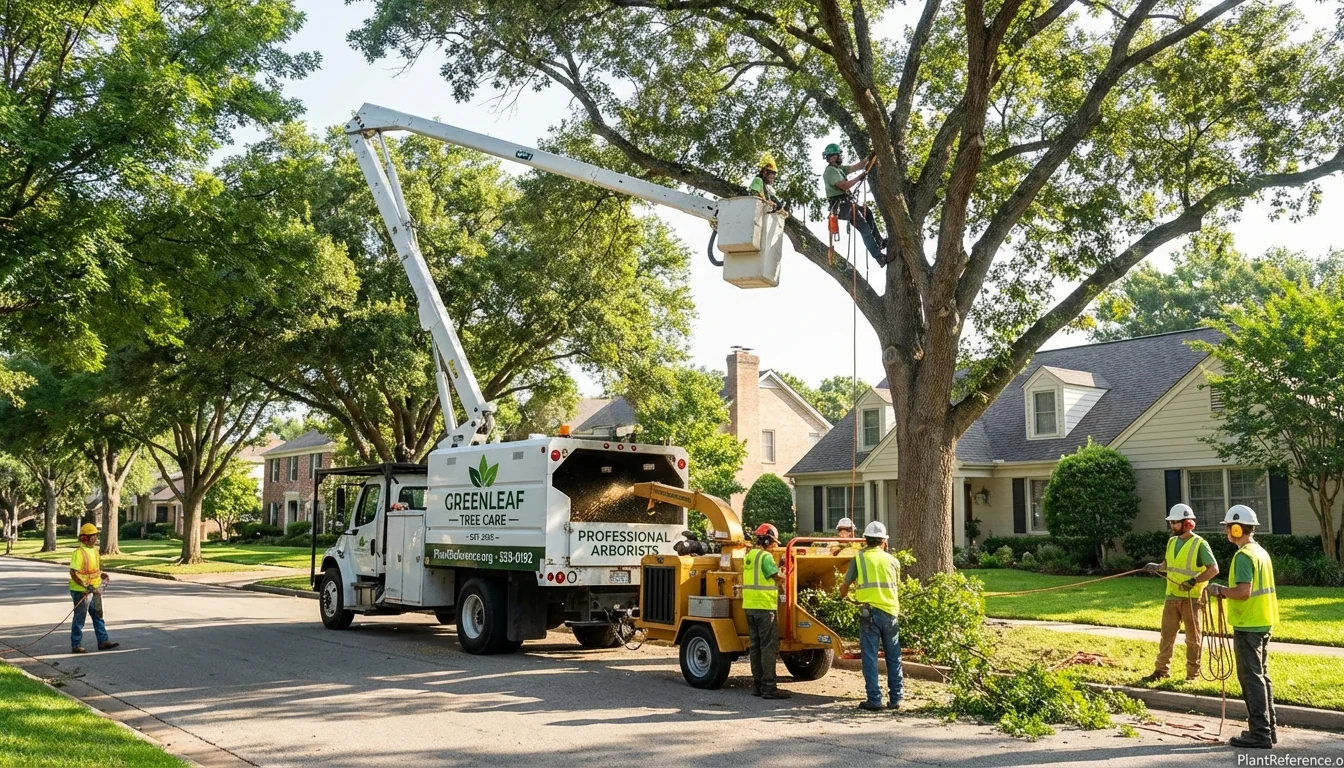
— Image © Plant Reference 2026
I started my tree care consulting practice after a decade working for a commercial tree service, and the single biggest lesson from that transition was this: undercapitalization kills more tree service businesses than competition does. The operators who fail aren't bad arborists—they're good climbers who didn't budget for insurance, didn't plan for equipment maintenance, and didn't understand that a $50,000 bucket truck needs $8,000 per year in upkeep. Here's the realistic startup picture for 2026, including the costs most guides don't mention. How to Write a Tree Care Plan: The Complete 2026 Guide
Startup Cost Breakdown
Category | Budget Range | Notes |
|---|---|---|
Truck (chip truck or flatbed) | $15,000-40,000 (used) | F-450/F-550 class minimum |
Wood Chipper | $15,000-40,000 (used) | 12-inch capacity minimum for residential |
Chainsaws (3-4 saws) | $2,000-5,000 | Top-handle climbing + ground saws |
Climbing/Rigging Gear | $3,000-8,000 | Harness, ropes, rigging blocks, hardware |
Insurance (Year 1) | $15,000-40,000 | GL, WC, auto, equipment |
Bucket Truck (optional) | $30,000-80,000 (used) | Significantly expands job capacity |
Business Formation/Licensing | $1,000-3,000 | LLC, permits, state registration |
Marketing (Year 1) | $3,000-10,000 | Website, SEO, truck lettering |
Operating Reserve | $10,000-20,000 | 3 months of expenses |
Total Range | $50,000-200,000+ | Scales with equipment level |

Essential Equipment
Chainsaws
You need a minimum of three saws: a top-handle climbing saw (Stihl MS 194 T or Husqvarna T540i), a mid-range ground saw for limbing (Stihl MS 261 or equivalent), and a large felling saw for trunk work (Stihl MS 462 or equivalent). Budget $2,000-5,000 for the initial set. The trend toward electric saws is accelerating—residential zones with noise ordinances increasingly favor battery-powered top-handle saws for climbing work. The Husqvarna T540i XP delivers performance comparable to gas saws in shorter run times suited to climbing cuts. ANSI A300 Tree Care Standards: What Every Arborist Needs to Know in 2026
Climbing and Rigging Gear
A complete climbing and rigging setup runs $3,000-8,000: saddle/harness ($300-700), climbing ropes ($200-500 each, buy 2-3), throwline set ($150-300), rigging blocks and pulleys ($500-1,500), carabiners and hardware ($300-600), and a rope bag system ($100-200). Don't economize on life safety equipment—buy current-standard gear that meets ANSI Z133 requirements. Prescriptive Pruning: The PPQ Model for Structural Tree Care
Truck and Chipper
Your chip truck and chipper are your largest equipment investments. A used F-450 or F-550 class truck with chip box runs $15,000-40,000 depending on age and mileage. A used 12-inch capacity chipper (Vermeer BC1000 or Bandit 990XP class) runs $15,000-40,000. Buy the best used equipment you can afford—cheap equipment breaks on job sites and kills your reputation faster than anything else.
Mini Skid Steers and Stump Grinders
A mini skid steer ($15,000-30,000 used) for debris hauling reduces crew fatigue and soil compaction. Stump grinders ($5,000-20,000 used) add a revenue stream that clients expect. Both can be rented initially to preserve startup capital until job volume justifies the purchase.

Insurance Requirements
Insurance is not optional and not cheap. A new tree service business needs four core policies from day one: General Liability ($2,500-10,000/year), Workers' Compensation ($15-25 per $100 payroll), Commercial Auto ($1,500-5,000/vehicle), and Tools & Equipment ($500-2,000). Total first-year insurance runs $15,000-40,000 depending on crew size and equipment. Tree Risk Assessment: TRAQ Methods, Levels, and What to Expect in 2026
Every residential and commercial client will ask for a Certificate of Insurance before you start work. General contractors won't subcontract tree work to uninsured operators. Municipal contracts absolutely require proof of coverage. If you're not insured, you're not a business—you're a liability.
Your workers' comp rate as a new business starts at the industry baseline ($15-25 per $100 payroll) with no Experience Modification Rate discount. Build a documented safety program from day one—weekly safety meetings, Z133 compliance documentation, proper PPE records—so your EMR starts dropping as soon as you have enough claims history for modification. Is My Tree Dangerous? 10 Warning Signs Every Homeowner Should Know

Certification and Training
ISA Certified Arborist
The ISA Certified Arborist credential is the baseline professional certification for the industry. Many municipalities now require ISA certification for permitted tree work. The exam covers tree biology, diagnosis, pruning, safety, soil science, and urban forestry management. Eligibility requires three years of full-time tree care experience or a combination of education and experience. Exam fee runs $200-350. Urban Forest Management Technology: AI, LiDAR, and Digital Tools for 2026
Beyond the practical requirement, ISA certification provides a genuine competitive advantage. Certified arborists close jobs at higher rates because homeowners increasingly research credentials before hiring. Insurance carriers offer 5-15% premium discounts for certified operators. The credential pays for itself immediately.
TCIA Accreditation
Tree Care Industry Association (TCIA) Accreditation is the business-level credential that signals professional operations. It requires documented safety programs, trained personnel, proper insurance, and adherence to industry standards. Accreditation costs $1,500-3,000 annually but provides access to group insurance programs, marketing support, and credibility with commercial clients who vet contractors carefully.

Marketing Your Tree Service
Authority Marketing
The most effective marketing strategy for tree care in 2026 is authority marketing—positioning yourself as the expert rather than the cheapest option. Build your brand around "Certified Consulting Arborist" and "Scientific Tree Care" rather than competing on price with unlicensed operators. SEO keywords that attract high-value clients: "hazard tree assessment," "prescriptive pruning," "tree risk evaluation," and "certified arborist near me." Choosing Climate-Ready Trees: Species Selection for 2050 and Beyond
Essential Marketing Investments
Professional truck lettering ($500-2,000) is your most visible daily advertisement. A website with local SEO optimization ($1,500-5,000) captures the search traffic that drives residential tree work. Google Business Profile optimization is free and critical—most homeowners find tree services through local search results. Budget $200-500/month for Google Ads targeting emergency tree service keywords in your area.
Drone Photography for Marketing
A basic drone ($500-1,500) produces before-and-after canopy photos that transform your marketing. Aerial views of completed pruning work, hazard tree removals, and canopy restoration tell the story of your expertise far more effectively than ground-level photos. The same drone adds assessment capability that differentiates your service from competitors. How Much Soil Do Urban Trees Actually Need? The Root Volume Guide

Business Management Platforms
ArboStar and Service Autopilot are the two leading platforms for tree service business management. ArboStar's RAI AI system generates profit-aware estimates and optimizes crew scheduling—a significant advantage for operations running three or more crews. Service Autopilot handles CRM, scheduling, invoicing, and marketing automation with a broader landscaping focus that works for tree services offering related services. Do I Need a Permit to Remove a Tree? A State-by-State Guide
Choose your platform before you start booking work. Migrating customer data between platforms later is painful and loses information. Start with the system you'll grow into rather than the cheapest option you'll outgrow in a year.

Frequently Asked Questions
Reading about plants and recognising them are different skills. These three build the second.
- Daily PlantIdentify the day’s mystery plant from a close-up photograph.
- Keyed OutWork a dichotomous key, lead by lead, to name a hidden specimen.
- Name That PlantName a specimen from botanical clues dealt hardest first.
Free to play, no account needed
Derek is an arborist and tree care specialist based in Nashville. He spent a decade working for a commercial tree service before starting his own consulting practice focused on residential tree health. His background is in forest management, and he brings that perspective to urban tree care. He's particularly interested in the intersection of native trees and suburban landscapes, helping homeowners understand what's growing in their yards and how to care for it properly. Derek also teaches tree identification walks through local parks. He's straightforward about tree care: most homeowners either ignore their trees completely or prune them incorrectly, and both cost money in the long run.