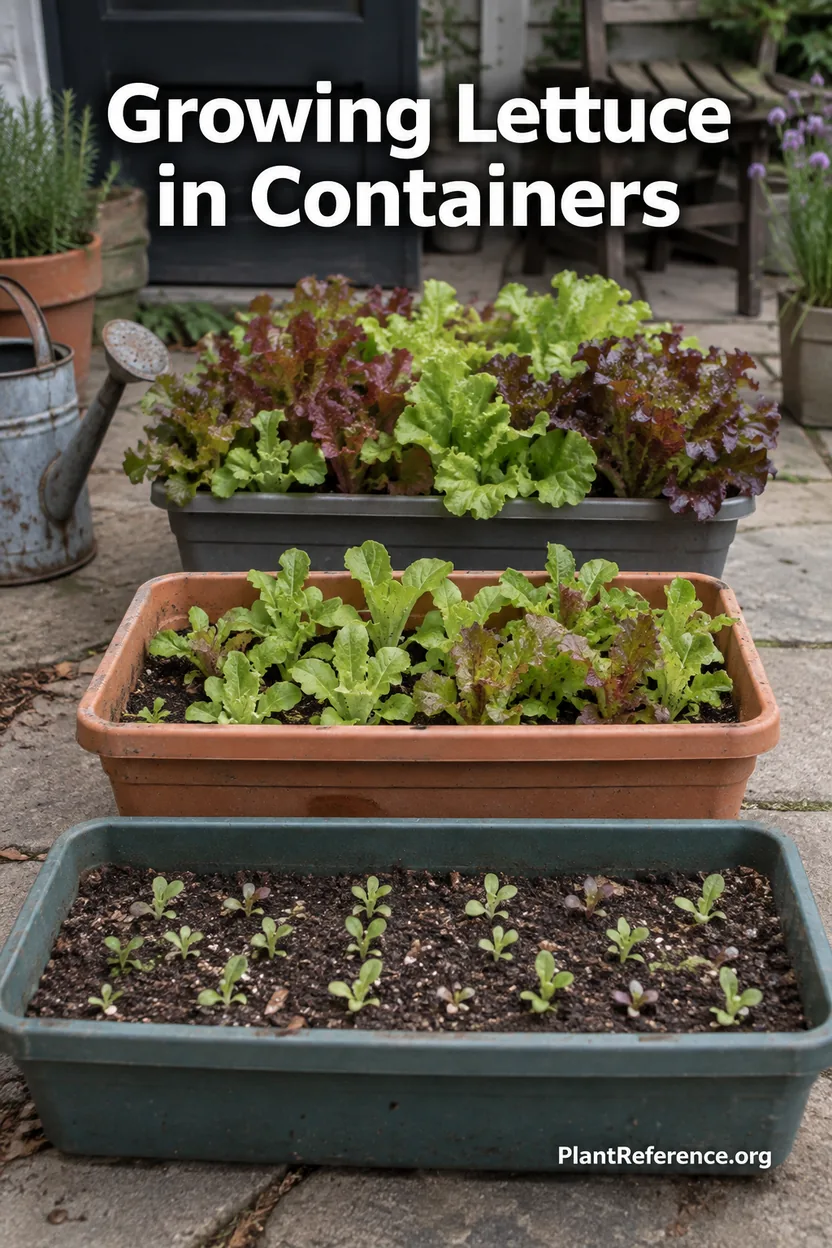
Growing Lettuce in Containers: Fast Salad Harvests
Pets & Toxicity
Recorded toxicity for plants linked in this guide. An unknown status is not a safety assessment.
No linked plant is recorded as toxic (2 linked plants checked)DetailsHide
Lactuca sativa 'Black Seeded Simpson' — Toxicity
Non-toxicView Lactuca sativa 'Black Seeded Simpson' plant profile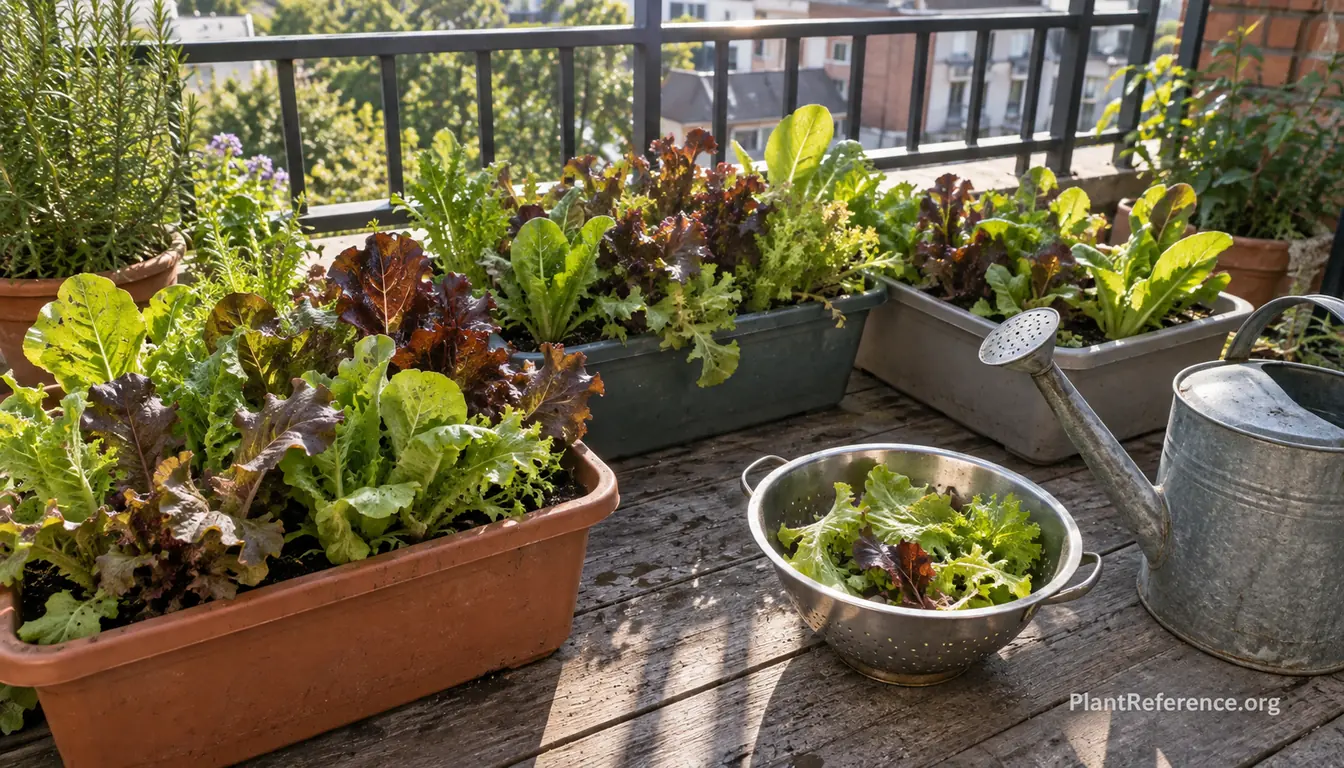
— Image © PlantReference.org 2026
Growing lettuce in containers gives a renter more food per square foot than almost any large fruiting crop. A shallow pot can hold several plants, the first baby leaves arrive quickly, and you can sow another small batch before the first one is finished. Use at least 6–8 inches (15–20 cm) of airy potting mix, keep moisture steady, and shift the container away from hard afternoon heat when leaves begin to wilt.
Pick Lettuce Types for Container Harvests
Lettuce Lactuca sativa (lak-TOO-kuh sah-TEE-vuh) fits containers because its root system is relatively shallow and its leaves can be harvested before the plant reaches full size. The main choice is how you want to harvest. Loose-leaf types let you remove outside leaves repeatedly. Butterhead and romaine can supply baby leaves first, then a small head if you leave the center intact. Crisphead lettuce demands more time, space, and cool weather, so it is rarely my first recommendation for a crowded balcony.
Choose cultivars for speed and heat tolerance rather than a catalog photo. 🌿Lactuca sativa 'Black Seeded Simpson' is a reliable loose-leaf choice for repeat picking. Lactuca sativa 'Salad Bowl' spreads into a productive rosette. Lactuca sativa 'Little Gem' forms a compact mini-romaine, while Lactuca sativa 'Tom Thumb' produces a small butterhead suited to individual containers. 🌿Lactuca sativa 'Red Sails' adds color and has useful bolt resistance, though no lettuce stays sweet forever in sustained heat.
Cultivar | Growth type | Days to young harvest | Best container use |
|---|---|---|---|
Loose leaf | About 30 days | Repeat outer-leaf harvest | |
Lactuca sativa 'Salad Bowl' | Loose leaf | About 28 days | Broad cut-and-come-again pot |
Loose leaf | About 30 days | Color and improved heat tolerance | |
Lactuca sativa 'Little Gem' | Mini romaine | About 35 days | Tight spacing and small heads |
Lactuca sativa 'Tom Thumb' | Mini butterhead | About 40 days | One compact head per planting spot |
Add other salad greens only when their growth speed and flavor fit your harvest. Arugula Eruca vesicaria grows quickly and brings peppery leaves, but older plants become strong and flower fast. Spinach Spinacia oleracea prefers cool conditions and a little more patience. Mizuna Brassica rapa 'Mizuna' gives feathery leaves and regrows well after light cuts. Keep each species in a separate section of the pot so you can thin and harvest it on its own schedule.
Local timing still matters. A winter lettuce window in a warm climate may overlap a summer harvest in a cold one. Compare When to Plant Lettuce in Austin: Complete Guide + Best Varieties for Zone 8b with When to Plant Lettuce in Minneapolis: Complete Guide + Best Varieties for Zone 4a before copying a calendar. This guide focuses on the container system; use the regional guide that matches your frost dates and seasonal heat.
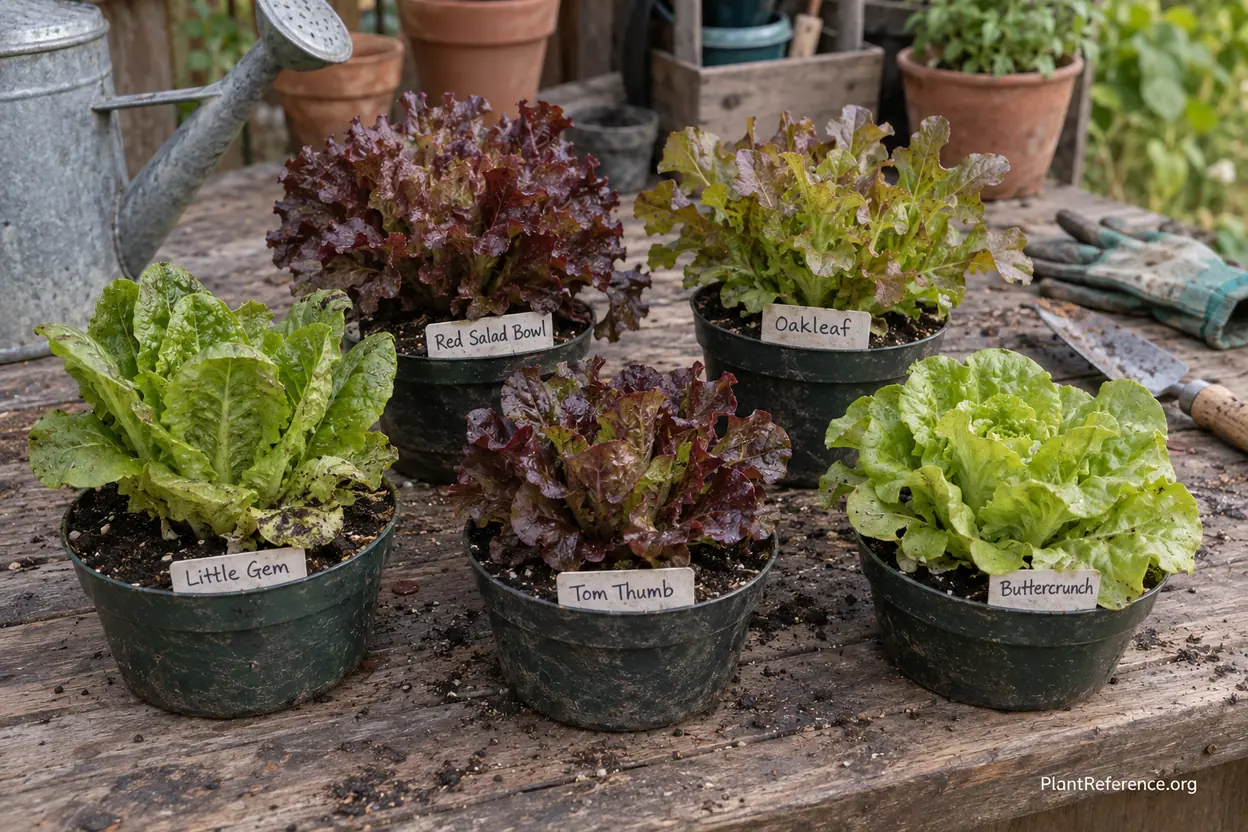
Size and Space a High-Yield Container
Start with depth. Lettuce can grow in 6–8 inches (15–20 cm) of mix, provided the pot drains and is wide enough to keep roots from heating too fast. A 12-inch (30 cm) round pot offers roughly one square foot of surface. For mature mini-heads, space about four plants in that area. For smaller leaf rosettes, six to nine plants can work if you harvest young and preserve airflow. Baby greens can be sown more densely, but they must be cut early instead of being expected to form heads.
Harvest goal | Spacing in a 12-inch (30 cm) pot | Expected approach |
|---|---|---|
Mini heads | 4 plants | Harvest small complete heads |
Loose-leaf rosettes | 6–9 plants | Pick outer leaves repeatedly |
Baby-leaf mix | Dense rows 1–2 inches (2.5–5 cm) apart | Cut young leaves above crowns |
Mixed salad pot | 3 short bands | Harvest each species separately |
Wide containers outperform tall narrow ones for lettuce because surface area controls how many crowns receive light. A window box 24 inches (60 cm) long and 8 inches (20 cm) deep can hold two staggered rows of loose-leaf plants. Use a light-colored plastic or glazed planter when summer heat is a problem; unglazed terracotta dries faster, which may be useful in a cool rainy season but adds work on a windy balcony. Every vessel needs open holes across its base.
Fill the pot uniformly with a container mix containing coir or peat for moisture, plus perlite or bark for air space. Do not add a gravel layer. The boundary between fine mix and coarse gravel can hold the saturated zone higher, reducing the useful root depth. Leave about 1 inch (2.5 cm) below the rim so water can spread across the surface. The potting principles in Container Tomato Soil: Creating the Perfect Growing Mix for Maximum Yields apply even though lettuce needs a shallower volume.
Do the yield math before buying seedlings. Nine loose-leaf plants in one square foot can provide repeated handfuls if you harvest only the largest leaves. A single mature tomato in that same footprint can be productive, but it takes months and a much deeper pot. Lettuce turns space quickly, which is why two shallow containers sown two weeks apart often beat one oversized planter filled all at once.
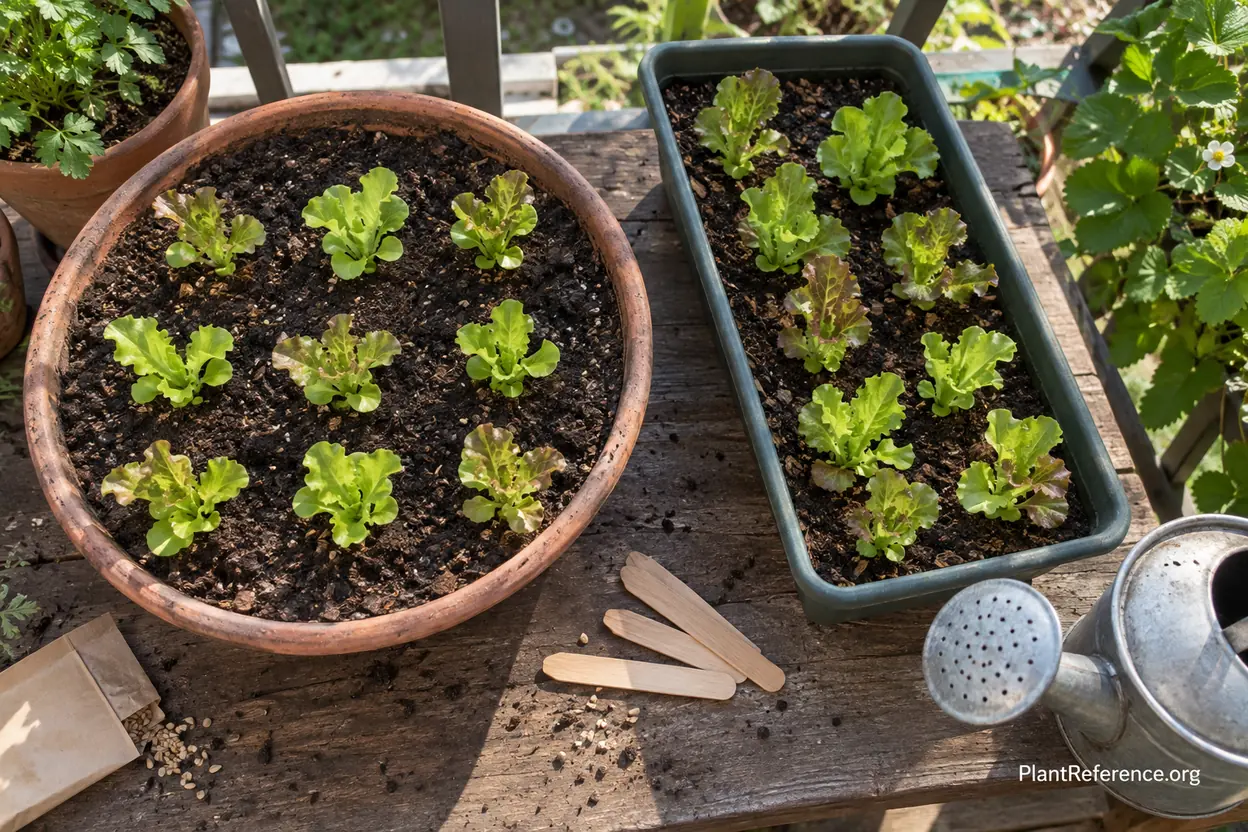
Sow a New Batch Every 14 Days
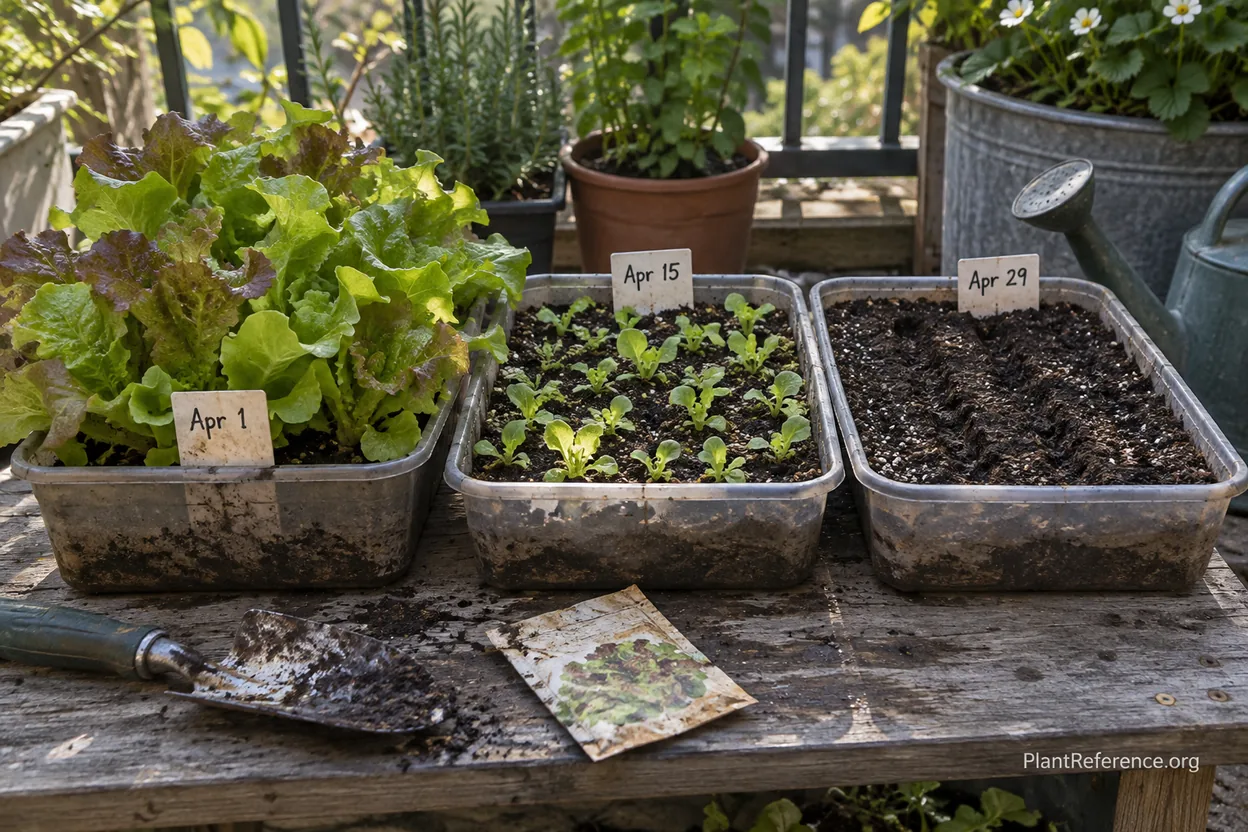
Succession sowing prevents the feast-or-famine cycle. Instead of filling every pot on one weekend, sow a small section every 14 days while weather remains suitable. Mark the date and cultivar on each band. When the first planting begins producing, the second is establishing and the third is ready to germinate. Stop sowing early enough that the last batch can mature before severe heat or hard frost.
Direct sowing avoids transplant shock. Scatter seeds thinly in a shallow furrow about 1/4 inch (6 mm) deep, cover lightly, and mist or water with a gentle rose so seed does not wash into one corner. Keep the surface evenly damp until germination. Once seedlings show true leaves, thin them to the spacing for your intended harvest. Eat clean thinnings rather than leaving crowded roots to compete.
Transplants are useful when you need a head start, but choose small, unstressed plugs. Slide each root ball out gently and set it at the same depth. Lettuce crowns buried under wet mix can rot. Water after planting, then give seedlings a couple of days away from harsh sun and wind. The cool-season calendars in When to Plant Lettuce in Chicago: Zone 6a Dates + Varieties and When to Plant Lettuce in Seattle: Complete Guide + Best Varieties for Zone 8b show how far apart regional sowing windows can be.
Keep a simple record on painter's tape stuck to the pot: cultivar, sowing date, and planned harvest. If one batch bolts before it gives three cuts, move the next pot into afternoon shade sooner or switch to a more heat-tolerant cultivar. If germination is patchy, check whether the surface dried during the first week. Container results improve quickly when each sowing teaches the next one.
Keep Roots Cool, Moist, and Fed
Lettuce leaves are mostly water, and a shallow pot holds little reserve. Check the mix 1 inch (2.5 cm) below the surface each morning during warm or windy weather. Water when the upper layer begins drying, applying enough to moisten the whole profile and produce a little drainage. Empty the saucer afterward. Repeatedly soaking only the top inch encourages weak roots, while allowing the pot to wilt hard can make leaves bitter and accelerate bolting.
A self-watering container can help, but the reservoir is a tool rather than an excuse to stop checking. Keep its overflow open, follow its fill instructions, and verify that young roots can reach the wicking zone. In a conventional pot, a thin 1-inch (2.5 cm) layer of clean straw can slow evaporation once seedlings are established. Keep mulch away from crowns and remove any slimy material.
Feed modestly. If the mix contains starter fertilizer, wait until that supply is nearly exhausted. A half-strength liquid feed or a measured granular vegetable fertilizer can support repeat cuts, but high doses increase salt buildup and overly soft growth. Flush the pot with plain water if white crust appears at the rim. The diagnosis in Overwatering vs Underwatering Container Tomatoes: How to Tell the Difference uses tomatoes, yet the checks for pot weight, drainage, and root-zone moisture work for lettuce too.
Heat management often matters more than fertilizer. Move portable pots where they receive morning sun and afternoon shade when days become hot. Shade the container wall as well as the leaves; a dark pot against masonry can cook the root zone. Do not hide lettuce in deep shade all day, where leaves stretch and airflow declines. A bright site with relief from the hottest hours offers the best compromise.
Harvest Leaves Without Ending the Crop
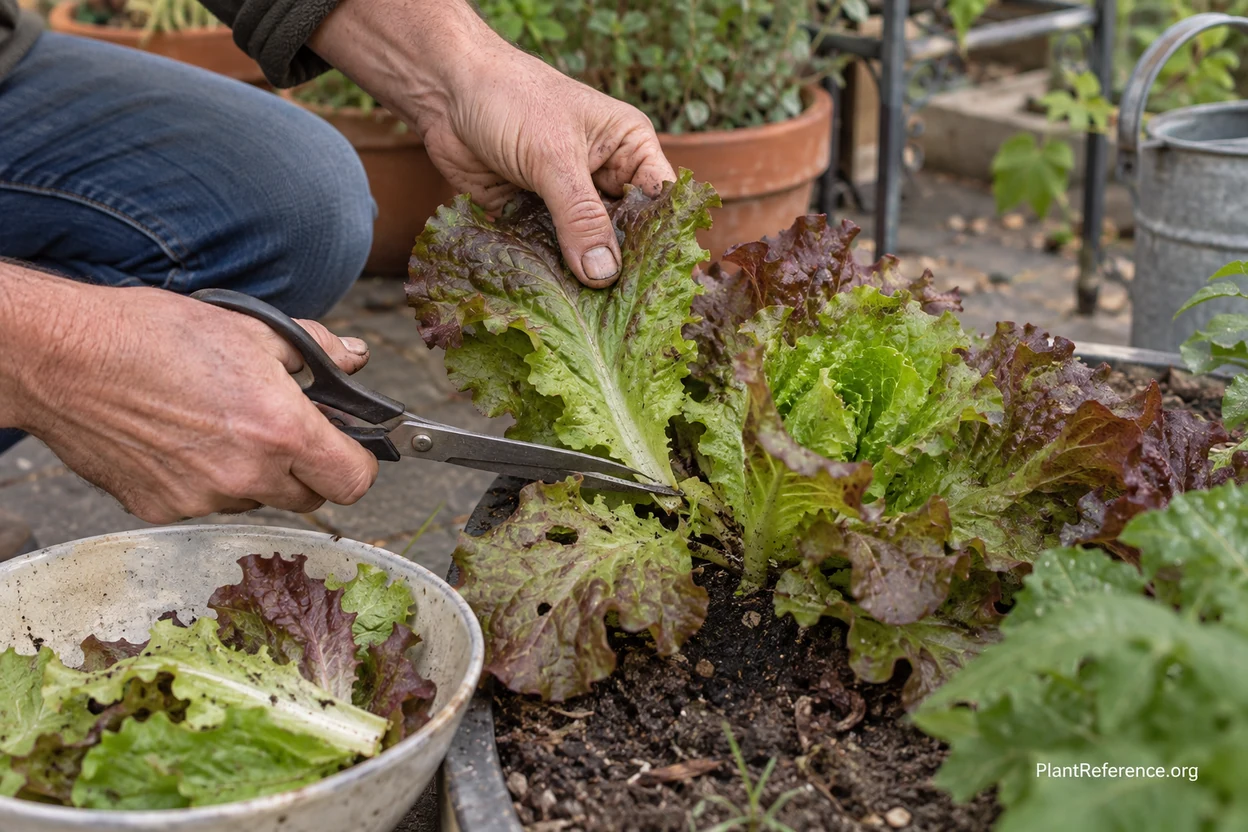
For outer-leaf harvest, remove the oldest full-size leaves near their base and leave the central growing point intact. Take a few leaves from each plant rather than stripping one bare. Harvest in the cool morning after surface moisture dries, then chill leaves promptly. A healthy loose-leaf pot can provide several cuts before quality declines.
For baby greens, gather a small bundle and cut about 1 inch (2.5 cm) above the mix, leaving crowns and tiny center leaves. Water afterward and wait for regrowth. The second cut may be smaller, especially in warm weather. When stems become tough or flavor turns bitter, empty the pot, refresh collapsed mix, and sow the next batch instead of trying to force another poor harvest.
Mini romaine and butterhead cultivars can be cut as complete small heads, but that ends the plant. Staggering four plants in one pot lets you harvest one head every few days while the rest continue. Alternatively, pick outside leaves from Lactuca sativa 'Little Gem' until the center tightens, then take the remaining head. Use clean scissors to reduce tearing and keep soil off the leaves.
Wash harvests in clean cool water and dry them well before refrigeration. Slugs, aphids, and grit hide between folded leaves, so inspect each batch. Do not harvest immediately after applying any pest-control product unless its edible-crop label and preharvest interval allow it. Fresh lettuce is valuable because it can move from pot to plate quickly; keep that chain clean.
Prevent Bolting, Pests, and Rot
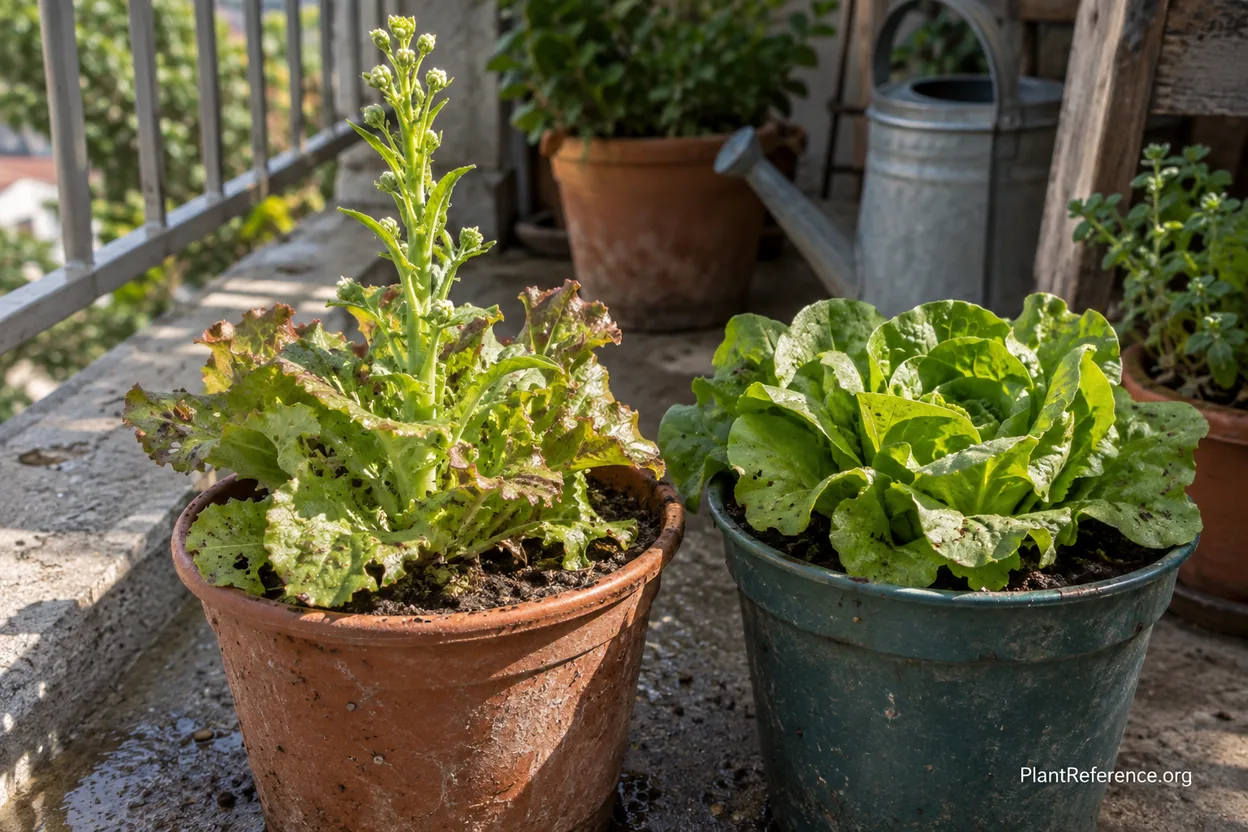
Bolting is the shift from leaf growth to a flower stalk. Heat, long days, dry roots, and plant maturity all contribute. Early signs include an elongated center, tighter upright leaves, and increasingly bitter flavor. Harvest promptly, move the next sowing to afternoon shade, and switch to a tolerant cultivar. Once a tall stalk forms, the plant rarely returns to premium salad production.
Aphids cluster on young leaves and inside tight centers. Start by rinsing a small infestation with water, then inspect again. Slugs and snails chew ragged holes, especially where containers sit close to damp ground. Raise pots, clear hiding places, and hand-pick after dark. The nonchemical habits in Stop Slugs in the Pacific Northwest Garden Safely can be adapted wherever slugs are active.
Bottom leaves that touch wet mix are vulnerable to rot. Space plants for airflow, water the mix instead of repeatedly soaking foliage, and remove decaying leaves. If the whole plant wilts while the pot stays heavy, check blocked holes and sour, compacted mix. More water will not repair oxygen-starved roots. If only the edge of the pot suffers, hot container walls may be damaging nearby roots.
Wind can tear leaves and dry the pot within hours. Put shallow containers below the railing line or behind a permeable screen that softens gusts without creating dead air. Secure window boxes with hardware rated for their saturated weight. Protecting Container Tomatoes on Windy Balconies and Exposed Patios focuses on a taller crop, but its placement and anchoring principles still apply.
Plan Salad Greens Through the Seasons
In cold-winter regions, sow the first containers several weeks before the final frost if the plants can be protected, then continue through spring. Pause when sustained heat makes leaves bitter, and resume about six to eight weeks before the first autumn frost. In mild-winter regions, autumn through spring may be the main season. When to Plant Lettuce in Phoenix: Complete Guide + Best Varieties for Zone 9b and When to Plant Lettuce in Anchorage: Complete Guide + Best Varieties for Zone 4b illustrate opposite schedules.
Use mobility as the container advantage. Slide pots under cover during pounding rain, into morning sun after a cold week, or into afternoon shade during an early heat wave. A simple rolling plant caddy helps with a wide heavy box, but lock its wheels and account for wind. Avoid moving lettuce repeatedly between radically different light levels; make changes over a few days to limit scorch.
At the end of a batch, compost healthy roots and leaves, discard diseased tissue appropriately, and loosen the mix. Replace material that has become fine and compacted. Wash the pot, especially after root disease, before sowing again. Keep one container resting while another produces. That rotation makes growing lettuce in containers less frantic and gives you crisp leaves when a single crowded sowing would already be finished.
Frequently Asked Questions
Reading about plants and recognising them are different skills. These three build the second.
- Daily PlantIdentify the day’s mystery plant from a close-up photograph.
- Keyed OutWork a dichotomous key, lead by lead, to name a hidden specimen.
- Name That PlantName a specimen from botanical clues dealt hardest first.
Free to play, no account needed
Tagged with
Carlos grew up helping his abuelos tend their backyard garden in San Antonio, Texas, but didn't get serious about growing his own food until he bought his first house in Austin. He works as an HVAC technician during the day and gardens in the early mornings and evenings. Carlos specializes in heat-tolerant vegetables and container growing—essential skills for Texas summers and his south-facing driveway that gets intense sun. He's learned through plenty of failures (multiple dead fig trees, countless bolted lettuce crops) and now helps neighbors troubleshoot their own gardens. His YouTube channel documenting his container tomato experiments has a small but dedicated following. Carlos is passionate about growing food on a budget, often sourcing free containers and building his own compost.