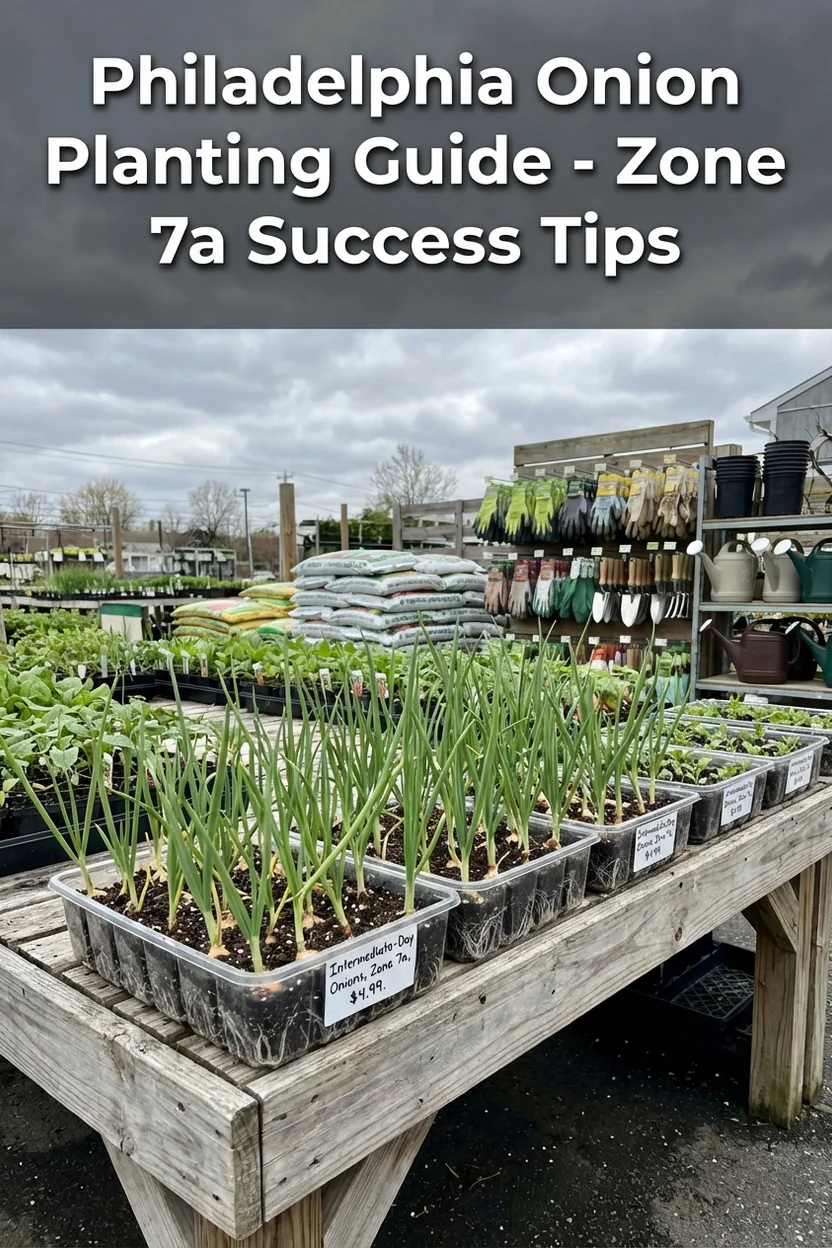
When to Plant Onions in Philadelphia: Complete Guide + Best Varieties for Zone 7a
Pets & Toxicity
Recorded toxicity for plants linked in this guide. An unknown status is not a safety assessment.
Toxic to pets: Granex onion, Texas super sweet onion, Walla Walla sweet onion and 6 moreDetailsHide
Allium cepa 'Granex' — Toxicity Warning
Toxic to cats and dogs if eaten; cats are especially susceptible, and raw, cooked or concentrated plant material can damage red blood cells and cause anaemia.View Allium cepa 'Granex' plant profileAllium cepa 'Texas Super Sweet' — Toxicity Warning
Toxic to cats and dogs if eaten; cats are especially susceptible, and raw, cooked or concentrated plant material can damage red blood cells and cause anaemia.View Allium cepa 'Texas Super Sweet' plant profileAllium cepa 'Walla Walla' — Toxicity Warning
Toxic to cats and dogs if eaten; cats are especially susceptible, and raw, cooked or concentrated plant material can damage red blood cells and cause anaemia.View Allium cepa 'Walla Walla' plant profileAllium cepa 'Yellow Sweet Spanish' — Toxicity Warning
Toxic to cats and dogs if eaten; cats are especially susceptible, and raw, cooked or concentrated plant material can damage red blood cells and cause anaemia.View Allium cepa 'Yellow Sweet Spanish' plant profileAllium sativum 'Music' — Toxicity Warning
Toxic to cats and dogs if eaten; cats are especially susceptible, and raw, cooked or concentrated plant material can damage red blood cells and cause anaemia.View Allium sativum 'Music' plant profileAllium sativum 'California Early' — Toxicity Warning
Toxic to cats and dogs if eaten; cats are especially susceptible, and raw, cooked or concentrated plant material can damage red blood cells and cause anaemia.View Allium sativum 'California Early' plant profileAllium cepa 'Red Candy Apple' — Toxicity Warning
Toxic to cats and dogs if eaten; cats are especially susceptible, and raw, cooked or concentrated plant material can damage red blood cells and cause anaemia.View Allium cepa 'Red Candy Apple' plant profileAllium cepa 'Super Star' — Toxicity Warning
Toxic to cats and dogs if eaten; cats are especially susceptible, and raw, cooked or concentrated plant material can damage red blood cells and cause anaemia.View Allium cepa 'Super Star' plant profileAllium cepa 'Bridger' — Toxicity Warning
Toxic to cats and dogs if eaten; cats are especially susceptible, and raw, cooked or concentrated plant material can damage red blood cells and cause anaemia.View Allium cepa 'Bridger' plant profile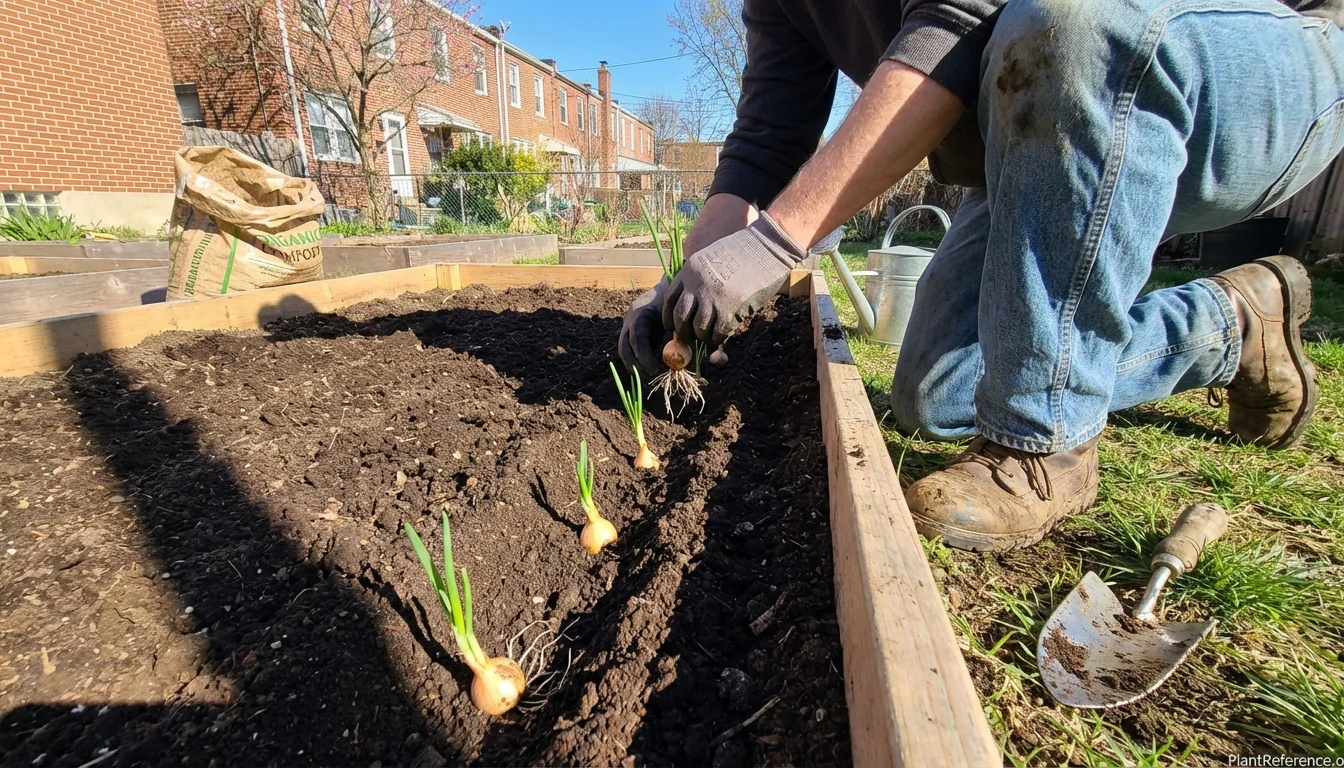
— Image © Plant Reference 2026
After forty years of growing onions in Pennsylvania, I can tell you that Philadelphia gardeners have one of the best climates in the country for onion production. Your Zone 7a location with a 209-day growing season gives you flexibility that many regions don't enjoy—you can plant onions in spring for a traditional summer harvest, or try fall planting for an early summer crop.
Best Onion Varieties for Philadelphia's Climate
Philadelphia sits at 40°N latitude, right in the sweet spot for intermediate-day onions. These varieties need 12-14 hours of daylight to trigger bulb formation, which perfectly matches your summer day length. Long-day varieties will work too, but intermediate-day types give you the most reliable results.
The key to onion success in Philadelphia is understanding that bulbing happens when day length reaches a specific threshold. Plant the wrong type, and you'll get small bulbs or no bulbs at all. I've seen too many gardeners fail because they grabbed whatever sets were available without checking the day-length requirements.
Variety | Days to Maturity | Best For | Notes for Philadelphia |
|---|---|---|---|
90-110 days | All-around performance | Perfect intermediate-day for Zone 7a | |
90-105 days | Red storage onion | Excellent storage, beautiful color | |
100-115 days | Large bulbs | Reliable intermediate-day performer | |
110-125 days | Sweet eating | Long-day but works in Philadelphia | |
110-120 days | Giant bulbs | Adaptable to Philadelphia latitude | |
240-270 days | Hardneck garlic | Excellent for Zone 7a winters |
Top Intermediate-Day Varieties for Philadelphia
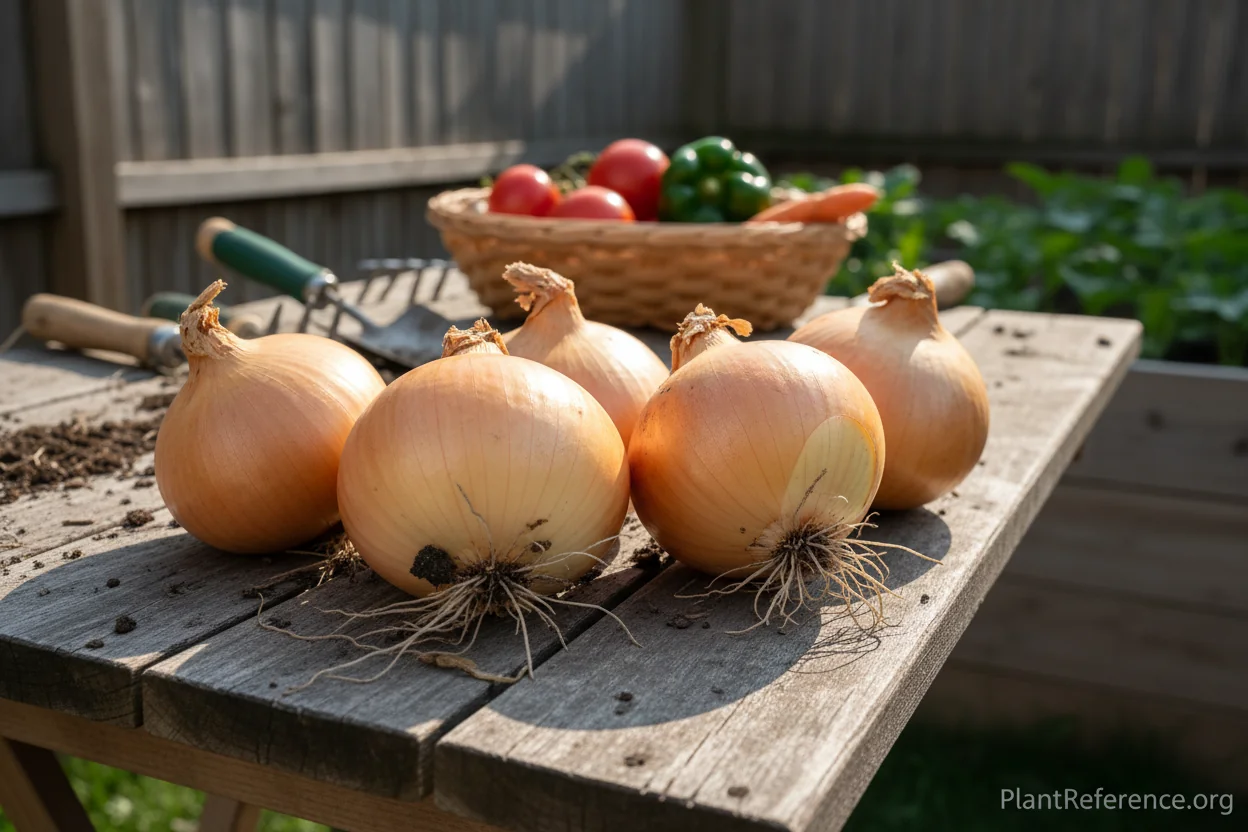
🌿Allium cepa 'Candy' is my top recommendation for Philadelphia gardeners. This hybrid was specifically bred to bridge the gap between short and long-day types. It produces large, sweet bulbs that store well—typically 3-4 months with proper curing. I've grown Candy successfully for fifteen years, and it's never disappointed.
🌿Allium cepa 'Red Candy Apple' gives you all the reliability of Candy with beautiful red color that holds through cooking. The storage quality is excellent, often lasting into February when properly cured. These reds add color to your storage bins and beautiful flavor to your winter cooking.
🌿Allium cepa 'Superstar' lives up to its name in Philadelphia's climate. This variety consistently produces jumbo bulbs—often over a pound each—with good storage characteristics. If you want to impress at the county fair, this is your onion.
Long-Day Varieties That Work in Philadelphia
While intermediate-day varieties are safest, Philadelphia's latitude allows some long-day varieties to succeed. 🌿Allium cepa 'Walla Walla' is worth growing if you want ultra-sweet onions for fresh eating. These don't store long—maybe a month—but they're perfect for summer salads and sandwiches.
🌿Allium cepa 'Yellow Sweet Spanish' can produce enormous bulbs in Philadelphia, sometimes reaching 2 pounds. The key is getting them started early—March planting is essential. These store moderately well, typically 4-5 months.
Garlic Selection for Philadelphia
Philadelphia's Zone 7a climate is ideal for both hardneck and softneck garlic. 🌿Allium sativum 'Music' is my go-to hardneck variety—it produces large bulbs with 4-6 jumbo cloves and has excellent cold tolerance. For softneck options, 🌿Allium sativum 'California Early' stores exceptionally well and braids beautifully.
Specific Planting Dates for Philadelphia
Philadelphia's last frost date of April 9 and first frost date of November 4 give you excellent timing flexibility. Your 209-day growing season is long enough for both spring and fall onion plantings.
Spring Planting Schedule
March 10-25 is your optimal spring planting window. I start watching soil temperature in early March—you want it consistently above 35°F (2°C) before planting. Philadelphia soils usually reach this point by March 10.
Sets and Transplants: Plant sets and transplants March 10-25. Sets go in earlier because they're more cold-tolerant. Transplants can wait until March 20 if you're concerned about late cold snaps.
Seeds: Direct-sown seeds go in March 15-30. The soil needs to be workable and at least 40°F (4°C). Seeds planted after March 30 may not have enough growing time before day-length triggers bulbing.
Fall Planting Schedule (Overwintering Onions)
Fall planting is an advanced technique, but Philadelphia's mild winters make it possible. Plant September 15-October 1 for a June harvest.
Variety Selection for Fall: Only specific overwintering varieties work for fall planting. Look for varieties like 🌿Allium cepa 'Bridger' or 🌿Allium cepa 'Walla Walla' that are bred for fall planting.
Protection Required: Fall-planted onions need protection. I use row covers or cold frames to help them through Philadelphia's coldest months. Mulch heavily with 4-6 inches of straw after the first hard freeze.
Garlic Planting Schedule
October 15-November 15 is perfect for garlic in Philadelphia. I aim for 4-6 weeks before the ground freezes hard, which gives cloves time to establish roots before winter dormancy.
Plant cloves pointed end up, 2 inches deep, 6 inches apart. Garlic needs that winter chill period to develop properly—without it, you'll get single-bulb "rounds" instead of segmented heads.
Complete Growing Guide for Philadelphia
Success with onions in Philadelphia comes down to soil preparation, proper spacing, and consistent care through the growing season. These aren't difficult crops, but they do have specific needs.
Soil Preparation
Onions need well-draining soil rich in organic matter. Philadelphia's clay soils can be challenging, so I always work in 2-3 inches of compost before planting. The pH should be between 6.0-6.8—test your soil and add lime if needed.
Work the soil to 8 inches deep and break up any clay clumps. Onions have shallow root systems, so that top 6 inches of soil is critical. I like to prepare beds in fall and let them settle over winter for spring planting.
Planting Technique
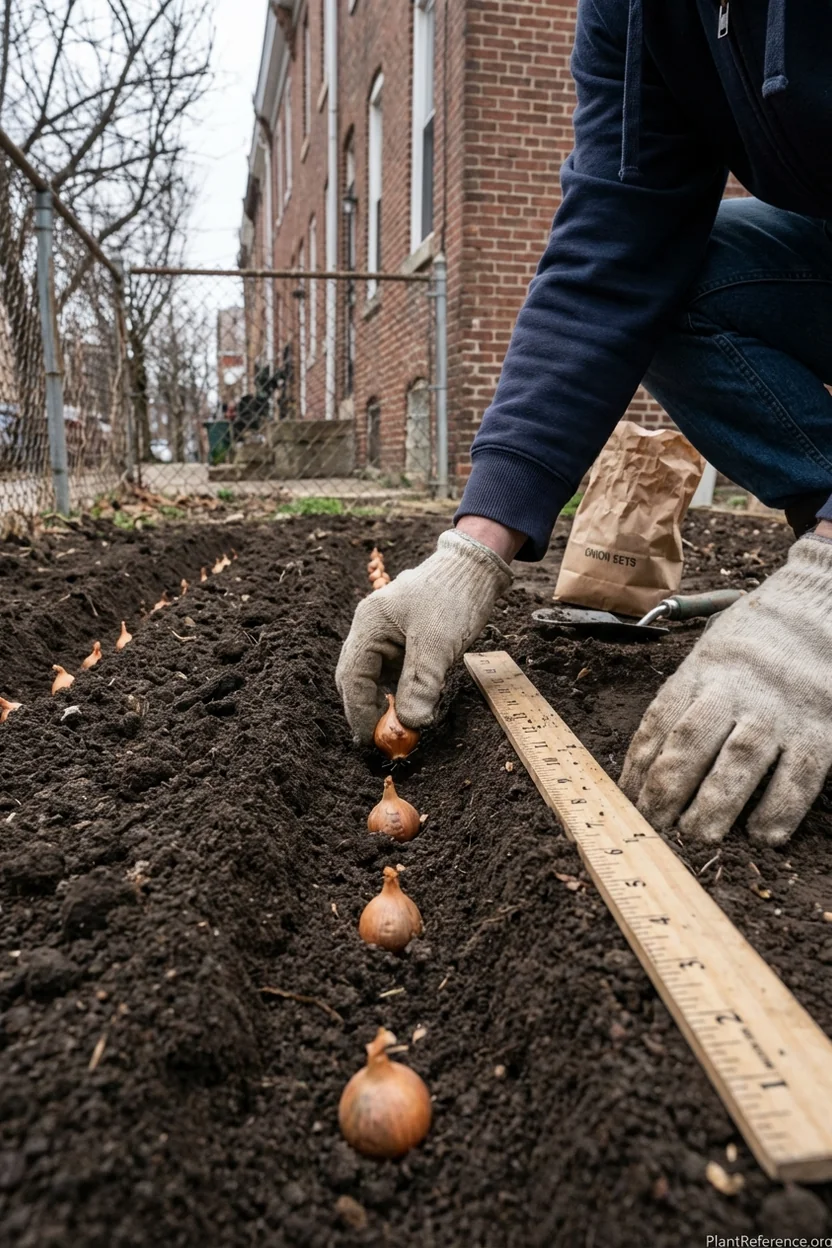
Sets: Plant with the pointed end up, just barely covered with soil. The top should be at soil level. Space them 4 inches apart in rows 12 inches apart.
Transplants: Trim roots to 2 inches and tops to 4 inches before planting. Set them at the same depth they were growing in the container. Handle gently—damaged roots set plants back weeks.
Seeds: Plant ½ inch deep, 1 inch apart. Thin to 4 inches when plants are pencil-thick. Direct seeding works well in Philadelphia's long growing season.
Fertilizing Schedule
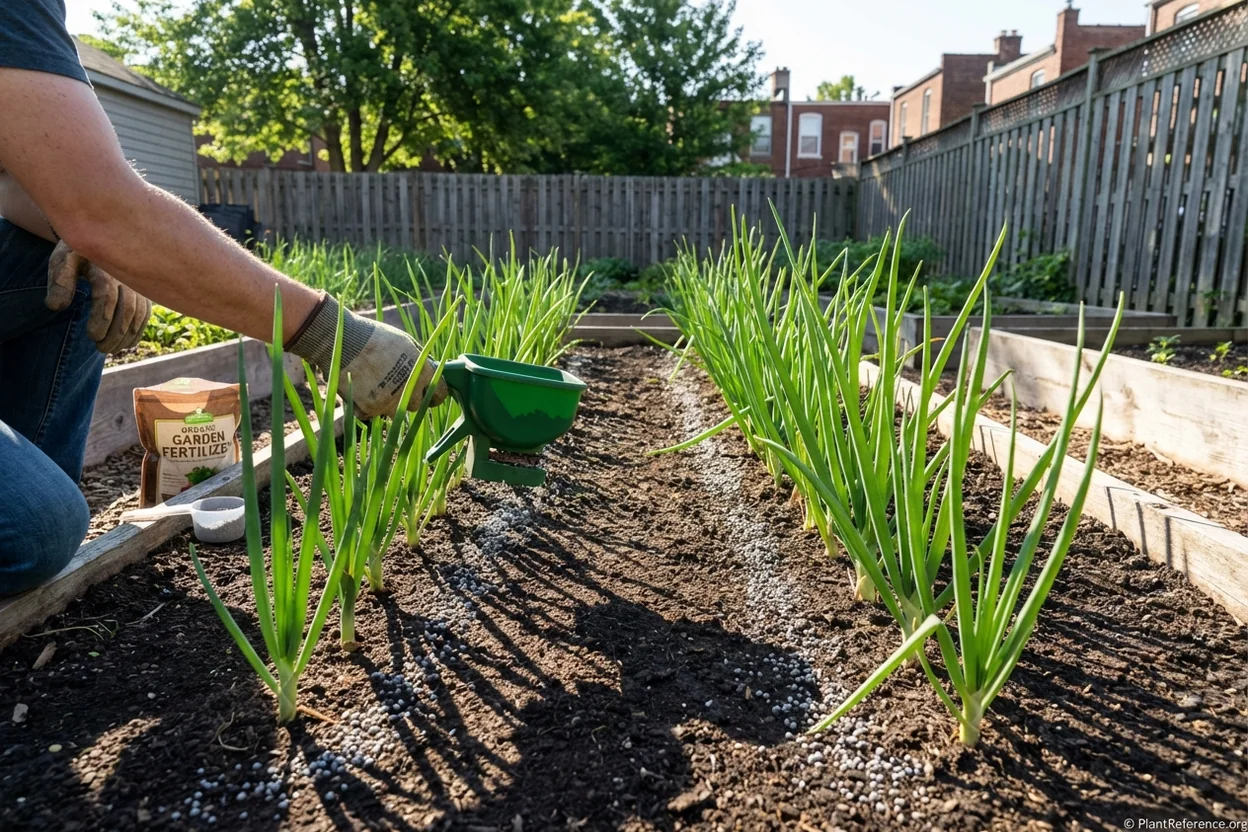
Onions are heavy feeders during their vegetative growth phase. I apply a balanced fertilizer (10-10-10) at planting, then side-dress every 3-4 weeks through May.
Critical timing: Stop all fertilizing 6-8 weeks before harvest. In Philadelphia, that means no fertilizer after mid-June for August harvest. Late nitrogen creates thick necks that won't cure properly.
Watering Requirements
Consistent moisture is key, but don't overwater. Onions need about 1 inch per week, including rainfall. I use drip irrigation or soaker hoses to keep water off the foliage—wet leaves invite fungal diseases.
Reduce watering as harvest approaches. When tops start yellowing and falling over, stop watering completely. Wet conditions at harvest lead to poor storage quality.
Weed Control
Onions compete poorly with weeds because of their shallow roots and upright growth habit. I mulch between rows with 2-3 inches of grass clippings or straw, keeping mulch away from the bulbs themselves.
Hand-weeding is often necessary early in the season. Cultivate shallowly to avoid damaging onion roots. A scuffle hoe works perfectly for this.
Troubleshooting Philadelphia-Specific Problems
Philadelphia's humid summers and clay soils create specific challenges for onion growers. Here are the problems I see most often and how to prevent them.
Fungal Diseases
Philadelphia's summer humidity encourages downy mildew and purple blotch. Provide good air circulation by proper spacing and avoid overhead watering. If you see fuzzy growth on leaves, remove affected plants immediately.
Crop rotation prevents soil-borne diseases. Don't plant onions in the same spot more than once every three years. The Allium family includes onions, garlic, leeks, and chives—rotate all of these together.
Bolting (Premature Flowering)
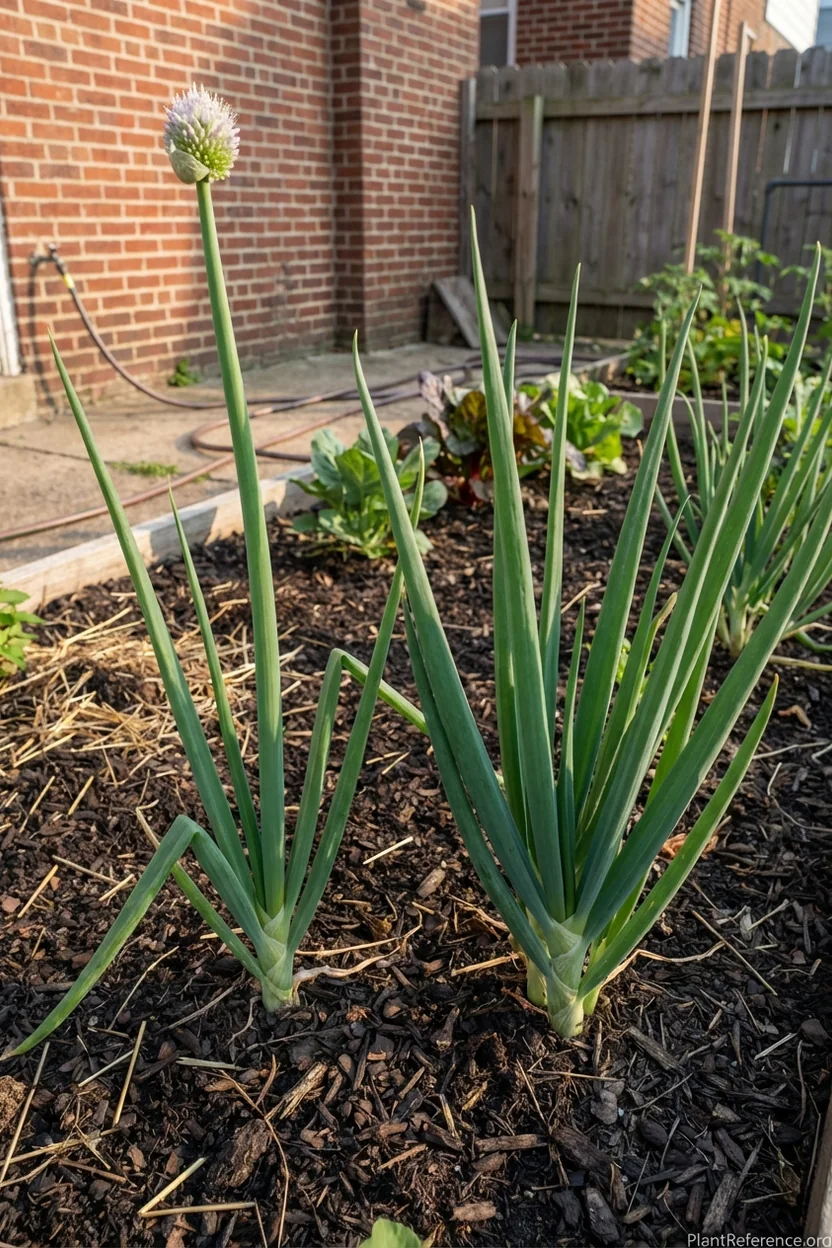
Bolting ruins your onion crop by creating a hard, woody stem through the center of the bulb. In Philadelphia, bolting usually results from using large sets or temperature stress.
Choose sets smaller than a dime. Large sets are physiologically older and prone to bolting when exposed to cool spring weather. Transplants and seeds rarely bolt.
Small Bulbs
Consistent small bulbs usually mean you're growing the wrong day-length type for Philadelphia. Short-day varieties won't bulb properly here—they need shorter days than Philadelphia provides.
Poor soil fertility also causes small bulbs. Onions need rich soil with plenty of nitrogen during vegetative growth. Test your soil and amend as needed.
Thick Necks
Thick, soft necks prevent proper curing and lead to storage rot. This problem usually stems from too much nitrogen late in the season or excess moisture near harvest.
Stop fertilizing by mid-June and reduce watering as tops begin to yellow. The neck should become tight and wiry as the onion matures.
Onion Maggots
These white larvae tunnel into bulbs, causing rot and wilting. In Philadelphia, the adult flies emerge in May and lay eggs at the base of plants.
Row covers installed immediately after planting prevent egg-laying. Remove covers when day temperatures consistently reach 75°F (24°C). Crop rotation also helps break the lifecycle.
Harvest & Storage
Proper harvest timing and curing makes the difference between onions that last through winter and ones that rot by October. Don't rush this process—it's critical for storage success.
When to Harvest
Harvest when 50-75% of the tops have fallen over naturally. Don't bend them over yourself—let the plants tell you when they're ready. In Philadelphia, this typically happens in mid to late August for spring-planted onions.
Choose a dry day if possible. Wet conditions at harvest encourage storage rot. If you must harvest during wet weather, get the onions under cover immediately for curing.
Curing Process
Curing dries the outer scales and seals the neck, preventing moisture loss and rot. Lay onions in a single layer in a warm, dry, well-ventilated area. I use an old window screen raised on blocks—perfect airflow.
Cure for 2-4 weeks until the outer skins are papery and the neck is tight and wiry. Don't trim tops until curing is complete. Green, fleshy necks won't cure properly if cut.
Storage Conditions
Store cured onions in mesh bags or crates in a cool, dry location. Ideal conditions are 32-40°F (0-4°C) with 65-70% humidity. A basement or unheated garage often works well in Philadelphia.
Check stored onions monthly and remove any showing signs of rot. One bad onion can spoil an entire basket. Properly stored intermediate-day varieties often keep until March.
Frequently Asked Questions
Reading about plants and recognising them are different skills. These three build the second.
- Daily PlantIdentify the day’s mystery plant from a close-up photograph.
- Keyed OutWork a dichotomous key, lead by lead, to name a hidden specimen.
- Name That PlantName a specimen from botanical clues dealt hardest first.
Free to play, no account needed
Frank retired from the city parks department after 28 years, the last fifteen as a grounds supervisor overseeing park plantings and maintenance crews. He now spends his time volunteering at a local historic garden, maintaining his own half-acre property in the Roxborough neighborhood, and writing about landscape maintenance, seasonal timing, and the practical side of keeping plants healthy through Mid-Atlantic winters and humid summers. Frank knows what works at scale and what's a waste of time—he's planted thousands of trees and shrubs and watched plenty of them fail. His advice tends toward what's proven and durable rather than what's trendy.