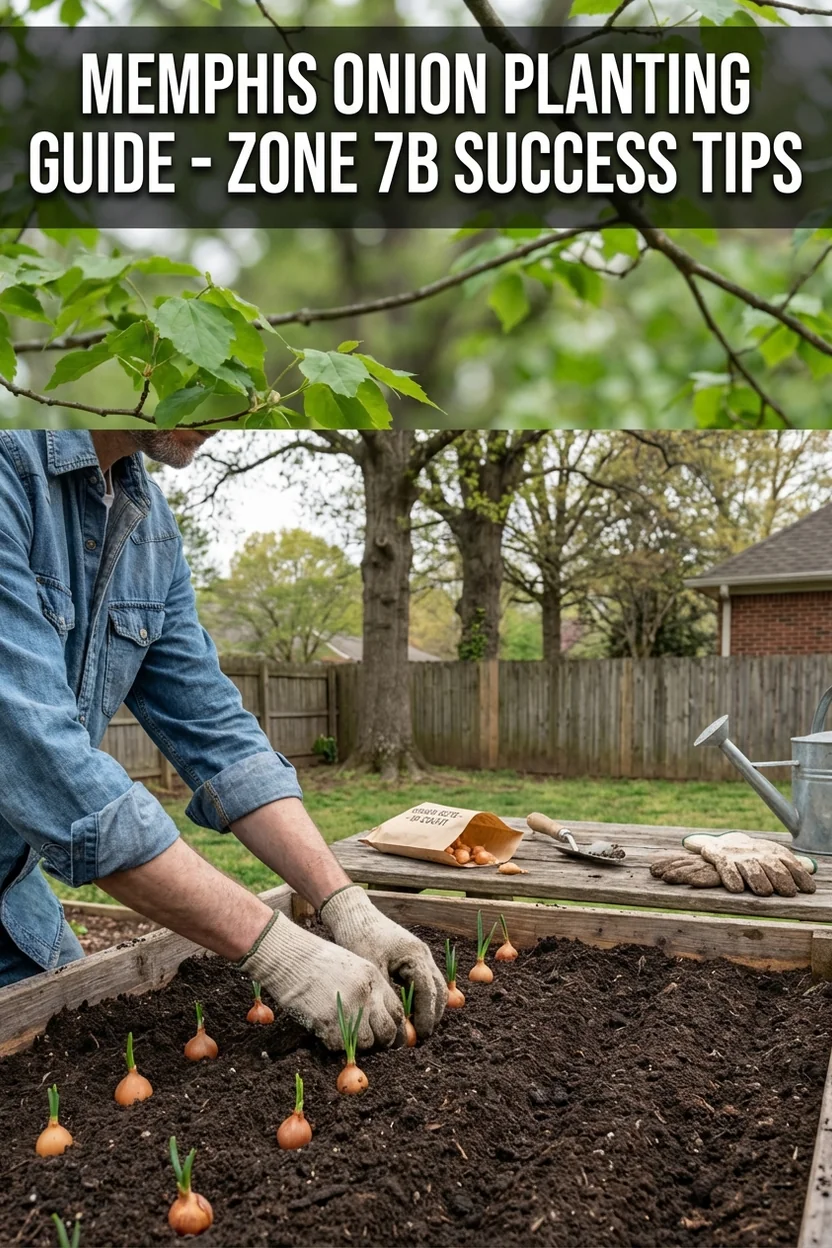
When to Plant Onions in Memphis: Complete Guide + Best Varieties for Zone 7b
Pets & Toxicity
Recorded toxicity for plants linked in this guide. An unknown status is not a safety assessment.
Toxic to pets: candy onion, cabernet red onion, Welsh onion (scallions) and 4 moreDetailsHide
Allium cepa 'Candy' — Toxicity Warning
Toxic to cats and dogs if eaten; cats are especially susceptible, and raw, cooked or concentrated plant material can damage red blood cells and cause anaemia.View Allium cepa 'Candy' plant profileAllium cepa 'Cabernet' — Toxicity Warning
Toxic to cats and dogs if eaten; cats are especially susceptible, and raw, cooked or concentrated plant material can damage red blood cells and cause anaemia.View Allium cepa 'Cabernet' plant profileAllium fistulosum — Toxicity Warning
Toxic to cats and dogs if eaten; cats are especially susceptible, and raw, cooked or concentrated plant material can damage red blood cells and cause anaemia.View Allium fistulosum plant profileAllium cepa 'Granex' — Toxicity Warning
Toxic to cats and dogs if eaten; cats are especially susceptible, and raw, cooked or concentrated plant material can damage red blood cells and cause anaemia.View Allium cepa 'Granex' plant profileAllium cepa 'Red Candy Apple' — Toxicity Warning
Toxic to cats and dogs if eaten; cats are especially susceptible, and raw, cooked or concentrated plant material can damage red blood cells and cause anaemia.View Allium cepa 'Red Candy Apple' plant profileAllium cepa 'Super Star' — Toxicity Warning
Toxic to cats and dogs if eaten; cats are especially susceptible, and raw, cooked or concentrated plant material can damage red blood cells and cause anaemia.View Allium cepa 'Super Star' plant profileAllium sativum 'California Early' — Toxicity Warning
Toxic to cats and dogs if eaten; cats are especially susceptible, and raw, cooked or concentrated plant material can damage red blood cells and cause anaemia.View Allium sativum 'California Early' plant profile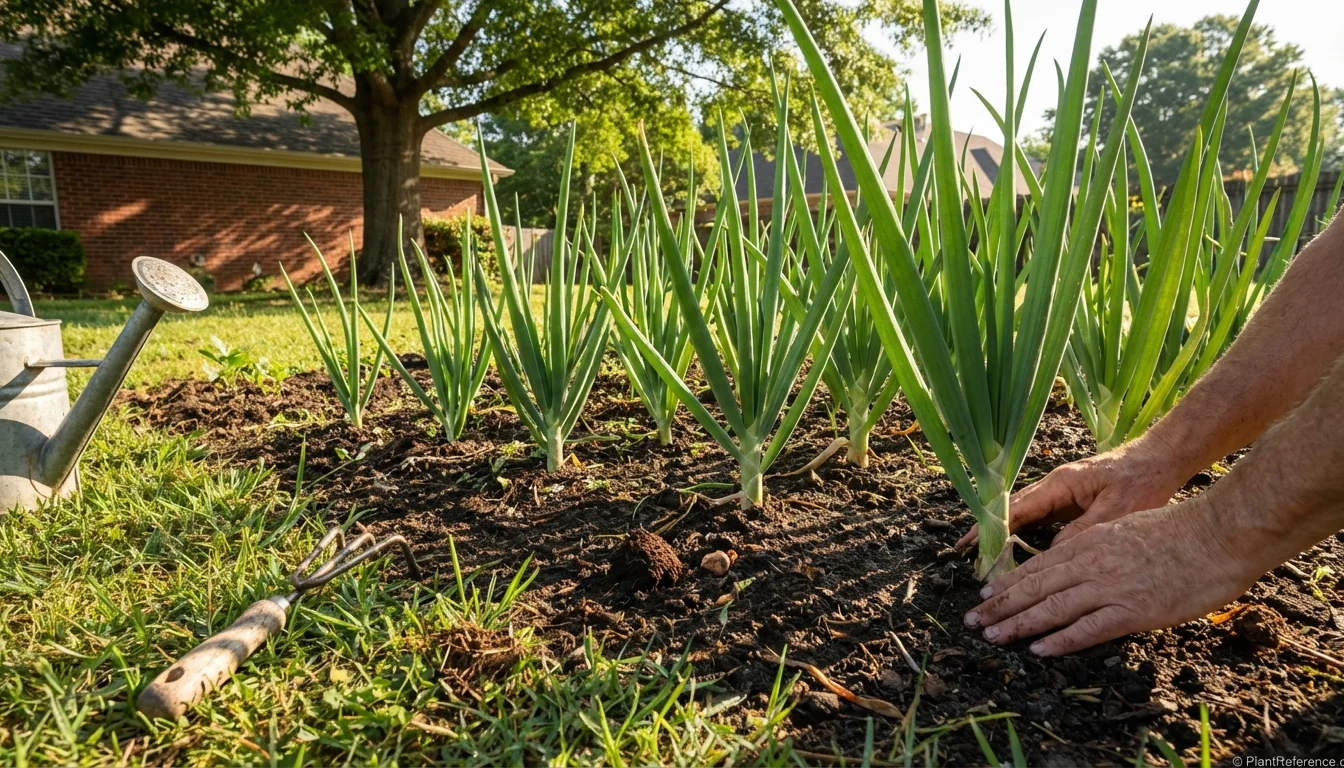
— Image © Plant Reference 2026
Memphis gardeners have a real advantage when it comes to growing onions. Your Zone 7b climate with its 210-day growing season gives you flexibility that most folks don't have - you can plant in fall for an early spring harvest or stick with traditional spring planting.
Best Onion Varieties for Memphis's Climate
Memphis sits right in the sweet spot for intermediate-day onions. At 35°N latitude, you need varieties that bulb when daylight reaches 12-14 hours - which happens perfectly here in late spring and early summer.
The key thing to understand is that onions won't bulb until they get the right day length signal. Plant the wrong type for your latitude, and you'll get either tiny buttons or giant scallions with no bulbs at all. I've seen too many Memphis gardeners frustrated because they planted long-day varieties meant for Minnesota.
Top Intermediate-Day Varieties for Memphis
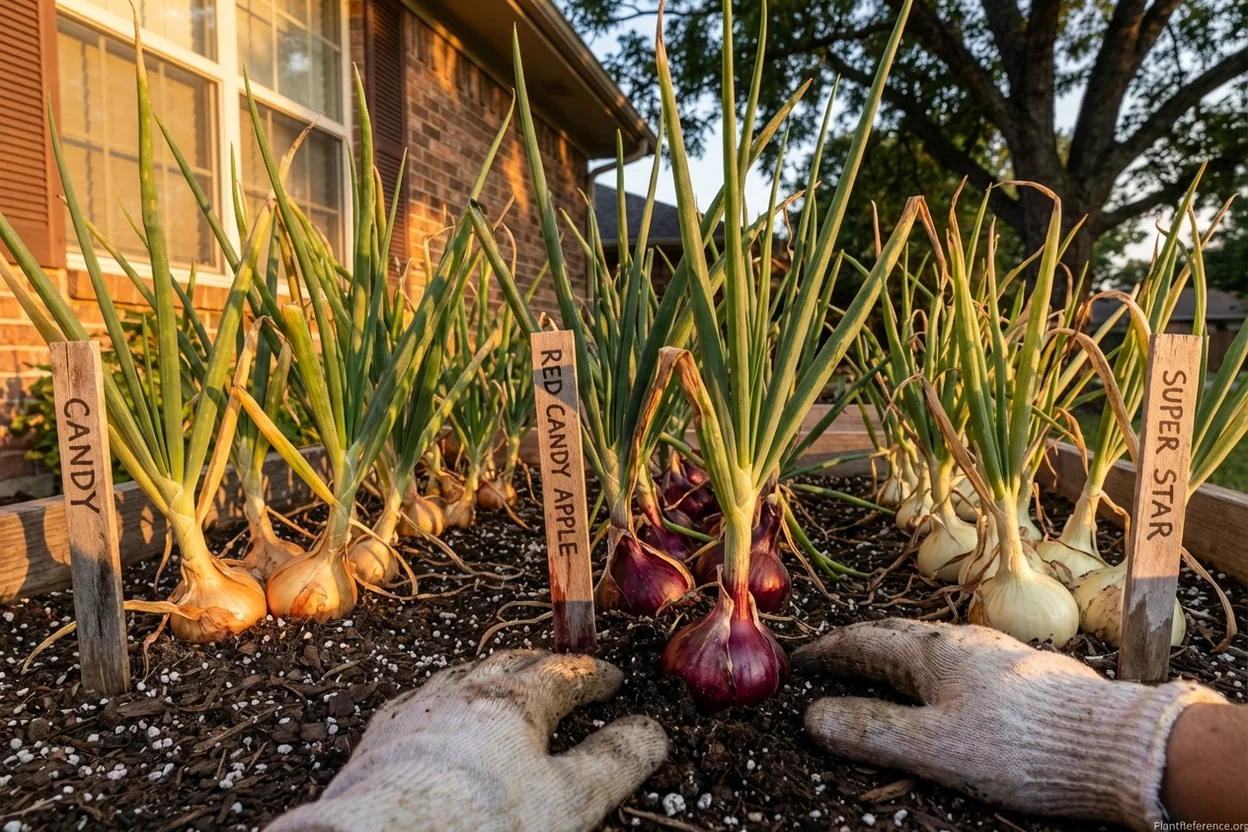
🌿Allium cepa 'Candy' (CAN-dee) is what I call the "magic onion" because it works almost everywhere, including right here in Memphis. This hybrid produces large, sweet bulbs that mature in 95-105 days. The bulbs store well for 4-6 months when cured properly, and they're mild enough to eat fresh but have enough sulfur content to last through winter.
🌿Allium cepa 'Red Candy Apple' (CAN-dee AP-el) gives you those beautiful red storage onions. Takes about 110 days to mature and stores excellently - I've had them last 8 months in proper storage. The red color stays true through cooking, making them perfect for both fresh eating and preserving.
🌿Allium cepa 'Super Star' (SOO-per star) is my go-to for reliable production. This white intermediate-day variety bulbs consistently in Memphis conditions and handles our occasional temperature swings better than most. Ready to harvest in 100-110 days.
Why Short-Day Varieties Don't Work Here
I get asked about growing those famous sweet onions like Texas Super Sweet, but they won't work reliably in Memphis. Short-day varieties need only 10-12 hours of daylight to start bulbing, which happens here in early April - too early for the plants to develop the leaf mass needed for large bulbs.
Long-Day Varieties Are Risky Too
Some folks try to grow Walla Walla or other long-day types, but our summer days max out around 14.5 hours. Long-day varieties often need 15+ hours, so they may produce decent bulbs some years and fail completely in others.
Variety | Days to Maturity | Best For | Notes for Memphis |
|---|---|---|---|
95-105 days | Fresh eating & storage | Most reliable intermediate-day variety | |
110 days | Long-term storage | Excellent storage life, holds red color | |
100-110 days | Consistent production | Handles temperature fluctuations well | |
105-115 days | Fresh eating | Good disease resistance | |
100-110 days | Reliable bulbing | White storage type |
Specific Planting Dates for Memphis
Memphis's Zone 7b climate gives you two planting windows. I prefer fall planting because you get an earlier harvest and avoid some of the pest pressure that builds up during our hot summers.
Fall Planting (Recommended)
When to plant: October 15 - November 15 Why these dates: You want transplants established with good root systems before our first hard freeze around October 31st, but not so early they get too big and bolt when spring returns.
Plant transplants October 15th for the earliest harvest. If you're using sets, wait until November 1-15th since sets (being older plants) are more prone to bolting if they experience temperature swings.
Indoor seed starting: If you want to grow from seed for fall planting, start indoors August 15 - September 1st. Transplant out when seedlings are pencil-thick.
Spring Planting (Alternative)
When to plant: March 1 - April 1st Why these dates: Soil is workable by early March in most years, and onions handle light frosts just fine. The April 4th average last frost date means you can plant a full month early.
Indoor seed starting: Start seeds indoors January 1-15 for spring transplanting. This gives you 8-10 weeks of growth before moving outdoors.
Garlic Planting Schedule
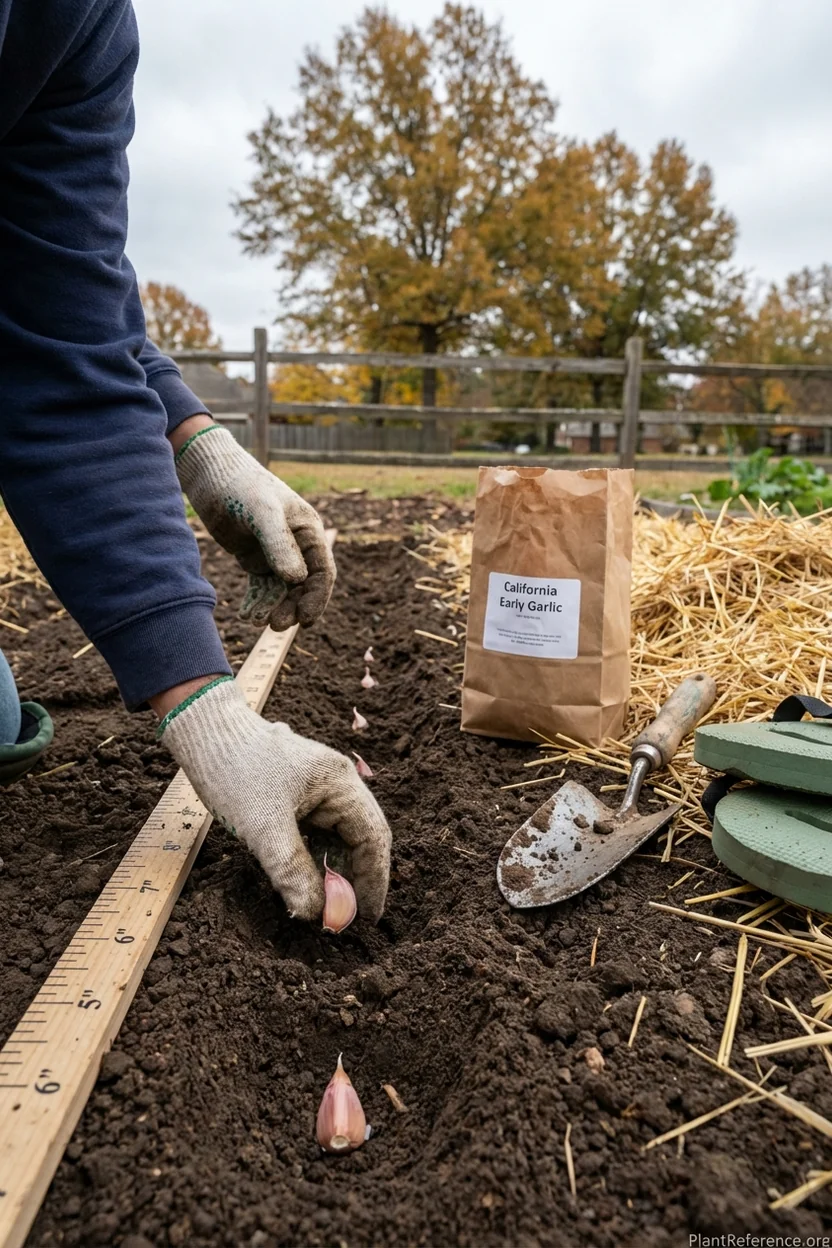
🌿Allium sativum 'California Early' (kal-ih-FOR-nee-uh ER-lee) softneck garlic is perfect for Memphis. Plant cloves October 15 - November 30th. The softneck types don't need as much cold as hardneck varieties, making them ideal for our relatively mild winters.
Plant cloves 2 inches (5 cm) deep and 6 inches (15 cm) apart. Mulch heavily after planting to regulate soil temperature through winter.
Continuous Scallion Production
🌿Allium fistulosum (al-LEE-um fis-tu-LOH-sum) bunching onions can be planted March through September in Memphis. These don't form bulbs - you harvest them as green onions. Plant every 3-4 weeks for continuous harvest.
Complete Growing Guide for Memphis
Soil Preparation
Onions need well-drained soil with plenty of organic matter. Our Memphis clay holds water too long and restricts bulb expansion. Work in 2-3 inches (5-8 cm) of compost or aged manure before planting.
Test your soil pH - onions prefer 6.0 to 6.8. Our local soils tend to run neutral to slightly alkaline, which is fine. If your soil tests above 7.5, work in some sulfur to bring it down.
Planting Techniques
Transplant spacing: 4 inches (10 cm) apart in rows 12 inches (30 cm) apart. Plant so the white portion is just covered with soil - don't bury the green tops.
Set planting: Push sets into loose soil until just the tips show. Choose sets smaller than a dime - larger ones tend to bolt.
From seed: Direct sow seeds ¼ inch (6 mm) deep. Thin to 4-inch spacing when plants are pencil-thick.
Fertilization Schedule
Onions are heavy feeders during their leaf-growth phase. Apply 10-10-10 fertilizer at planting, then side-dress with high-nitrogen fertilizer (like 21-0-0 ammonium sulfate) every 3-4 weeks until bulbing starts.
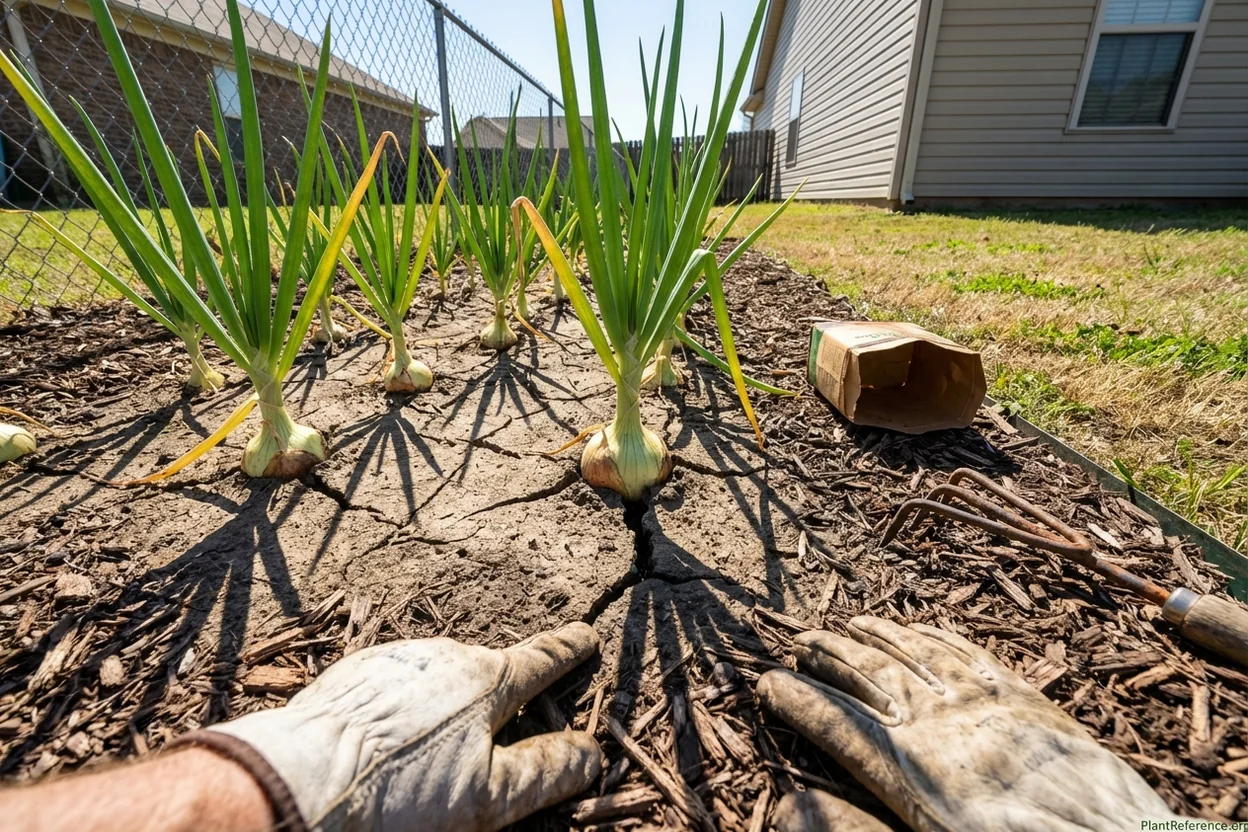
Critical timing: Stop all nitrogen fertilizer when the soil cracks around the bulb base - this signals bulbing has begun. Late nitrogen applications create thick necks that won't cure properly.
Watering Requirements
Keep soil consistently moist but not waterlogged during the growing season. Onions need about 1 inch (2.5 cm) of water weekly. Reduce watering as harvest approaches - too much water near harvest creates storage problems.
Our Memphis springs are usually wet enough, but watch for dry spells in May and June when bulbs are sizing up.
Companion Planting
Onions grow well alongside When to Plant Tomatoes in Memphis: Complete Guide for Zone 7b Success|tomatoes, When to Plant Carrots in Memphis: Complete Growing Guide + Best Varieties|carrots, and When to Plant Lettuce in Memphis: Year-Round Growing Guide + Best Varieties|lettuce. The onions help deter pests from these crops.
Avoid planting near beans and peas - onions can inhibit their nitrogen-fixing bacteria.
Troubleshooting Memphis-Specific Problems
Bolting Issues
If your onions send up flower stalks (bolt), it's usually because:
Used sets larger than a dime - big sets think they're in their second year
Planted wrong day-length type for our latitude
Temperature stress from planting too early in unusually cold spring
Used long-day varieties that don't adapt well to Memphis
Cut off flower stalks immediately if bolting occurs, but know these onions won't store well.
Small Bulbs
The most common cause of small bulbs in Memphis is using the wrong day-length type. Short-day varieties bulb too early before developing leaf mass. Long-day varieties may never get the signal to bulb at our latitude.
Solution: Stick with proven intermediate-day varieties like 🌿Allium cepa 'Candy' and 🌿Allium cepa 'Red Candy Apple'.
Thick Necks That Won't Cure
This happens when you fertilize too late in the season or water too much near harvest. The necks stay fat and fleshy instead of drying down to wiry stems.
Prevention: Stop nitrogen fertilizer when bulbing starts (soil cracks around bases). Reduce watering 4-6 weeks before harvest.
Thrips Damage
Those tiny insects that cause silvery streaks on leaves are common in our hot Memphis summers. They're worse on spring-planted onions that mature during peak summer heat.
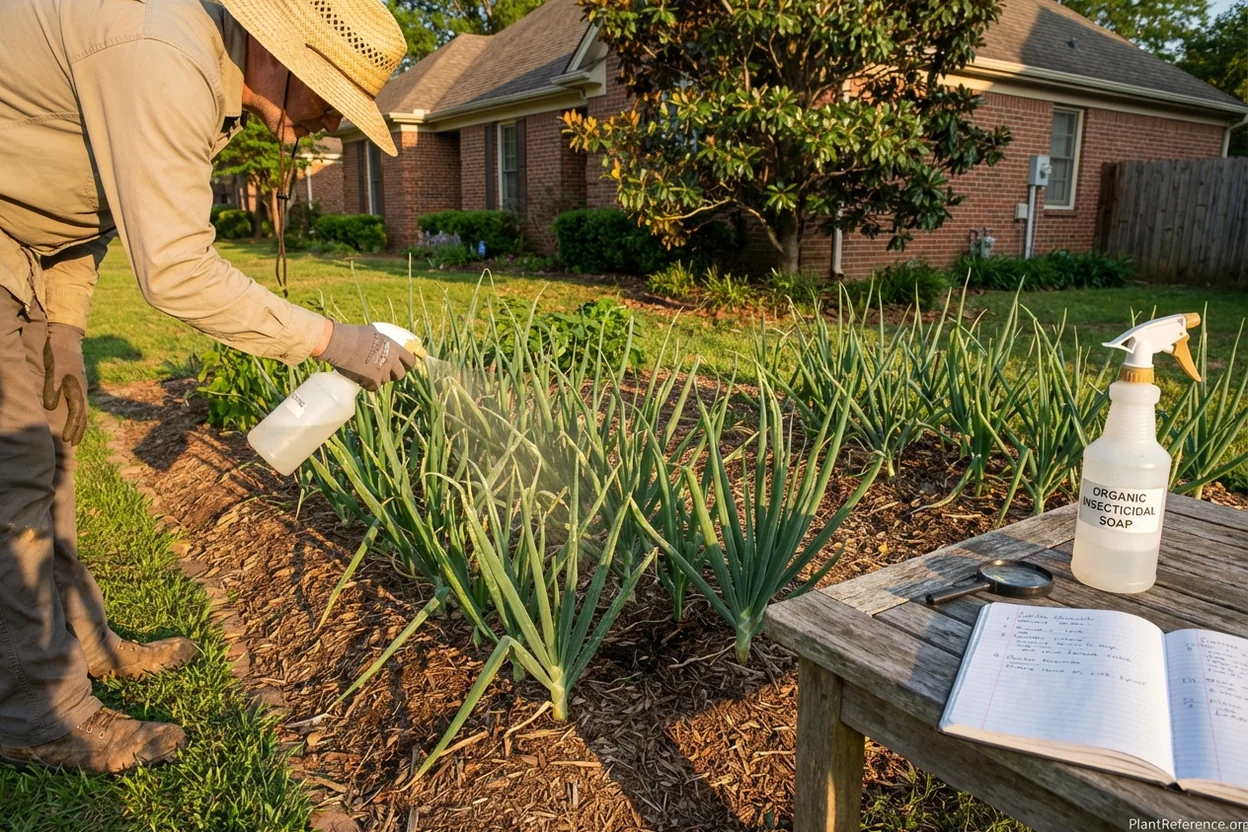
Management: Fall planting avoids peak thrips season. For spring plantings, use row covers during June-July or spray with insecticidal soap weekly.
Onion Maggots
The larvae tunnel into bulbs and stems. More common in cool, wet springs.
Prevention: Use row covers immediately after planting. Rotate planting areas - don't plant onions in the same spot more than once every 3-4 years.
Harvest & Storage
Harvest Timing
Spring harvest (from fall planting): May 15 - June 30 Fall harvest (from spring planting): July 15 - September 15
Harvest when 50-75% of the tops fall over naturally. Don't bend them over yourself - let the plants tell you when they're ready.
Curing Process
Proper curing is what separates storage onions from those that rot in a month:
Dig bulbs on a sunny day and lay them on the soil surface
Cover bulbs with the tops from adjacent rows to prevent sunscald
After 24-48 hours, move to a warm (75-85°F), dry, well-ventilated area
Cure for 2-4 weeks until necks are tight and papery
Trim tops to 1 inch above bulb after curing is complete
Storage Conditions
Store cured onions at 32-40°F (0-4°C) with 65-70% humidity. A cool basement or garage works well. Avoid the 50-70°F range - that temperature triggers sprouting.
Storage life expectations: - 🌿Allium cepa 'Red Candy Apple': 6-8 months - 🌿Allium cepa 'Candy': 4-6 months - 🌿Allium cepa 'Super Star': 5-7 months
Garlic Harvest
Harvest 🌿Allium sativum 'California Early' garlic in mid-July when lower leaves brown but 5-6 green leaves remain. Cure in a warm, dry place for 3-4 weeks, then braid or store in mesh bags.
Frequently Asked Questions
Reading about plants and recognising them are different skills. These three build the second.
- Daily PlantIdentify the day’s mystery plant from a close-up photograph.
- Keyed OutWork a dichotomous key, lead by lead, to name a hidden specimen.
- Name That PlantName a specimen from botanical clues dealt hardest first.
Free to play, no account needed
Marcus manages the grounds at a historic property in Memphis and runs a side business doing residential garden design. He grew up helping his grandfather maintain a large vegetable garden in the Mississippi Delta and carried that knowledge into formal training—he has a degree in landscape technology. Memphis sits in a sweet spot for growing: long warm seasons, decent rainfall, and mild enough winters that many marginally hardy plants survive. Marcus writes about Southern gardening traditions, ornamental garden design, and dealing with the humidity and heavy rainfall that define the Mid-South climate.