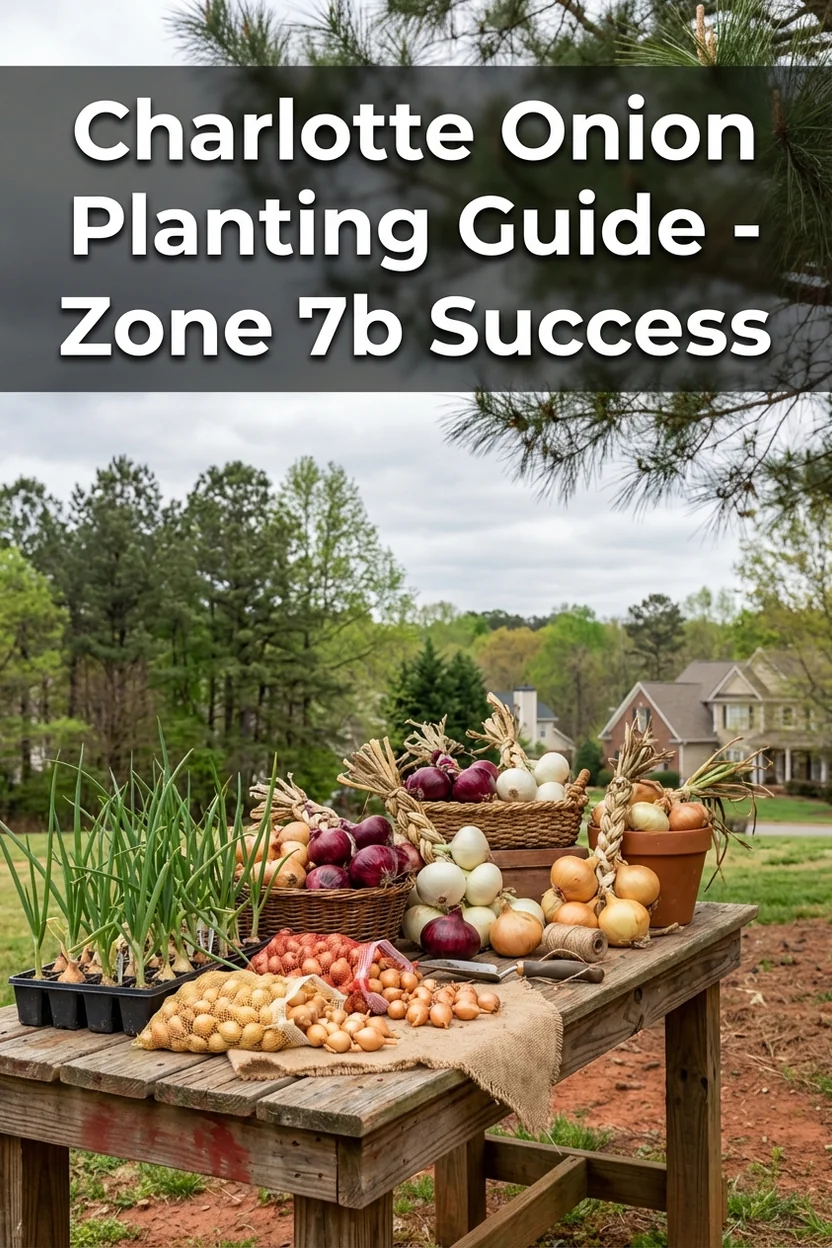
When to Plant Onions in Charlotte: Complete Guide + Best Varieties for Zone 7b
Pets & Toxicity
Recorded toxicity for plants linked in this guide. An unknown status is not a safety assessment.
Toxic to pets: Granex onion, Texas super sweet onion, music hardneck garlic and 4 moreDetailsHide
Allium cepa 'Granex' — Toxicity Warning
Toxic to cats and dogs if eaten; cats are especially susceptible, and raw, cooked or concentrated plant material can damage red blood cells and cause anaemia.View Allium cepa 'Granex' plant profileAllium cepa 'Texas Super Sweet' — Toxicity Warning
Toxic to cats and dogs if eaten; cats are especially susceptible, and raw, cooked or concentrated plant material can damage red blood cells and cause anaemia.View Allium cepa 'Texas Super Sweet' plant profileAllium sativum 'Music' — Toxicity Warning
Toxic to cats and dogs if eaten; cats are especially susceptible, and raw, cooked or concentrated plant material can damage red blood cells and cause anaemia.View Allium sativum 'Music' plant profileAllium sativum 'California Early' — Toxicity Warning
Toxic to cats and dogs if eaten; cats are especially susceptible, and raw, cooked or concentrated plant material can damage red blood cells and cause anaemia.View Allium sativum 'California Early' plant profileAllium cepa 'Red Candy Apple' — Toxicity Warning
Toxic to cats and dogs if eaten; cats are especially susceptible, and raw, cooked or concentrated plant material can damage red blood cells and cause anaemia.View Allium cepa 'Red Candy Apple' plant profileAllium cepa 'Super Star' — Toxicity Warning
Toxic to cats and dogs if eaten; cats are especially susceptible, and raw, cooked or concentrated plant material can damage red blood cells and cause anaemia.View Allium cepa 'Super Star' plant profileAllium cepa 'Cabernet' — Toxicity Warning
Toxic to cats and dogs if eaten; cats are especially susceptible, and raw, cooked or concentrated plant material can damage red blood cells and cause anaemia.View Allium cepa 'Cabernet' plant profile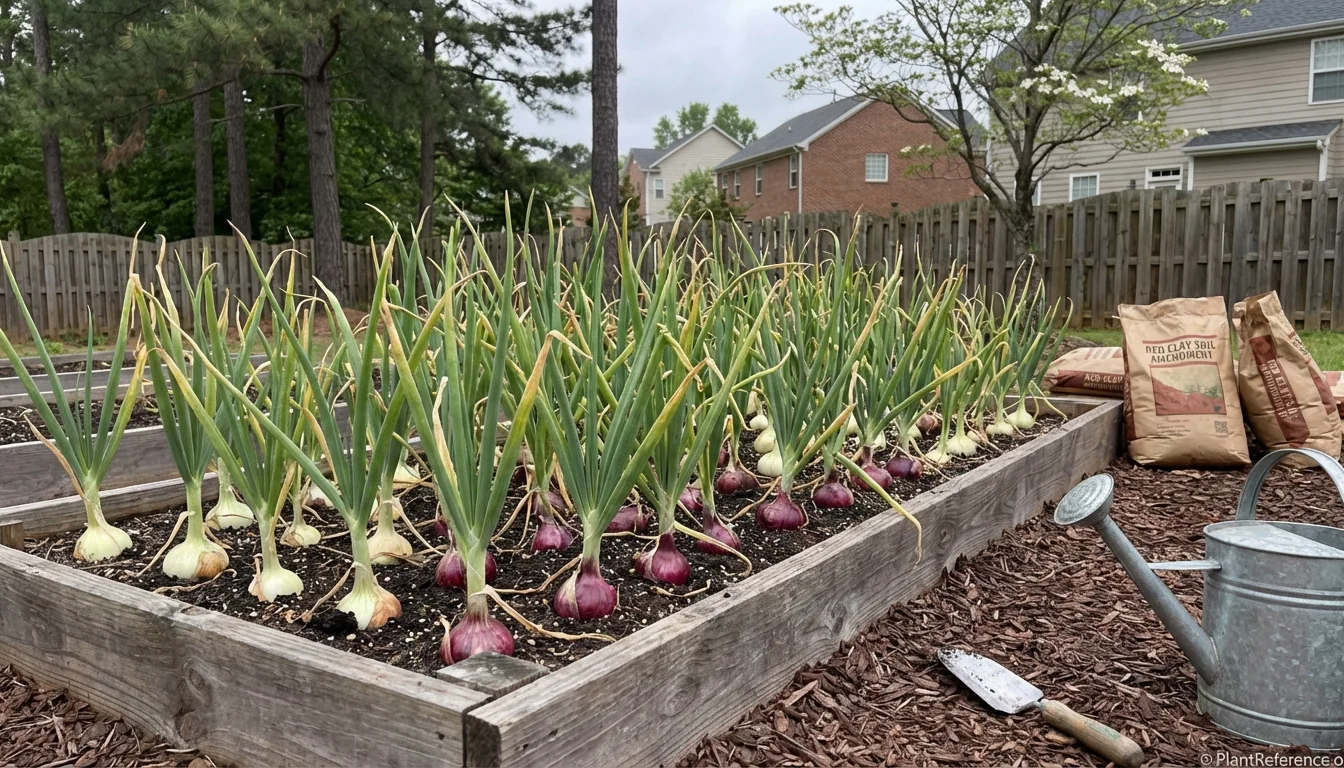
— Image © Plant Reference 2026
Charlotte's Zone 7b climate offers excellent conditions for growing both spring and fall onions, but success depends on selecting intermediate-day varieties that respond to Charlotte's 14-hour summer day length. Located at 35°N latitude, Charlotte sits perfectly in the transition zone where intermediate-day onions thrive with proper timing.
Best Onion Varieties for Charlotte's Climate
Charlotte's latitude at 35°N requires intermediate-day onions that bulb when daylight reaches 12-14 hours. This occurs naturally in Charlotte during late May through early July, making it perfect for intermediate-day varieties. Long-day onions won't bulb reliably here, while short-day onions will bulb too early and remain small.
The key to Charlotte onion success lies in understanding that intermediate-day varieties can be planted twice per year: spring planting for late summer harvest, or fall planting for early summer harvest. Fall planting often produces larger bulbs because plants establish extensive root systems during Charlotte's mild winters.
Variety | Days to Maturity | Best For | Notes for Charlotte |
|---|---|---|---|
85-100 days | All-purpose cooking | Perfect for Charlotte's climate, sweet flavor | |
90-105 days | Fresh eating | Beautiful red color, mild flavor | |
110-120 days | Storage | Best storage variety for Zone 7b | |
100-110 days | Cooking | Deep red storage onion | |
240-270 days | Hardneck garlic | Plant October, harvest July | |
240-270 days | Softneck garlic | Better for storage, milder climate |
🌿Allium cepa 'Candy' stands out as the most reliable variety for Charlotte gardeners. This intermediate-day hybrid adapts beautifully to Charlotte's climate, producing large, sweet bulbs whether spring or fall planted. The variety tolerates Charlotte's variable spring weather and resists bolting better than most intermediate-day types.
🌿Allium cepa 'Red Candy Apple' offers the same reliability as Candy with stunning red color and mild flavor. Both varieties store well for 4-6 months when properly cured, making them excellent choices for Charlotte's long growing season.
For storage onions, 🌿Allium cepa 'Super Star' provides excellent keeping quality through Charlotte's mild winters. This variety requires the full 110-120 days to maturity but rewards patience with firm bulbs that store 8-10 months.
Specific Planting Dates for Charlotte
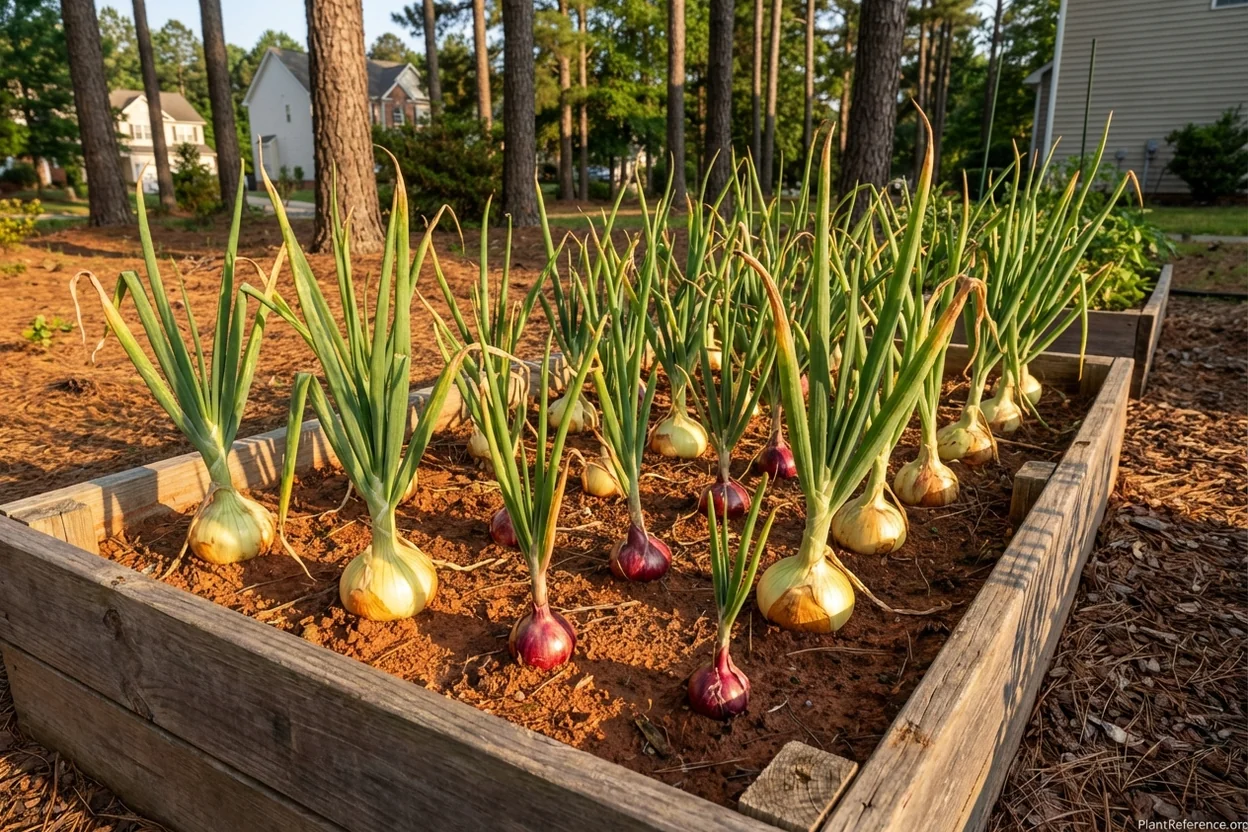
Charlotte's Zone 7b climate with an average last frost of April 4 and first frost of November 4 provides a generous 214-day growing season ideal for both spring and fall onion planting. The key is timing plantings to avoid Charlotte's hottest summer months and taking advantage of the mild fall and winter conditions.
Spring Planting Schedule:
-
March 15-April 15: Optimal spring planting window for onion sets and transplants
-
February 1-15: Start seeds indoors for transplanting in March
-
March 1-15: Direct sow seeds outdoors if soil workable
-
July 15-August 15: Harvest spring-planted onions
Spring planting in Charlotte works well because intermediate-day onions have enough time to establish good leaf growth before the 14-hour day length trigger occurs in late May. Plant 2-3 weeks before the last frost date since onions tolerate light frost well.
Fall Planting Schedule:
-
September 15-October 15: Plant transplants for overwintering
-
August 1-15: Start seeds indoors for fall transplanting
-
May 15-June 15: Harvest fall-planted onions
-
Late October: Plant garlic cloves
Fall planting often produces superior results in Charlotte because plants develop extensive root systems during the mild winter months. These well-established plants respond vigorously to spring warmth and often produce larger bulbs than spring plantings.
Garlic Planting Dates:
-
October 25-November 15: Plant hardneck varieties like
🌿Allium sativum 'Music'
-
November 1-30: Plant softneck varieties like
🌿Allium sativum 'California Early'
-
July 1-15: Harvest garlic planted the previous fall
Garlic requires 4-6 weeks before soil freezes to establish roots. In Charlotte, soil rarely freezes before December, providing ample establishment time for November plantings.
Complete Growing Guide for Charlotte
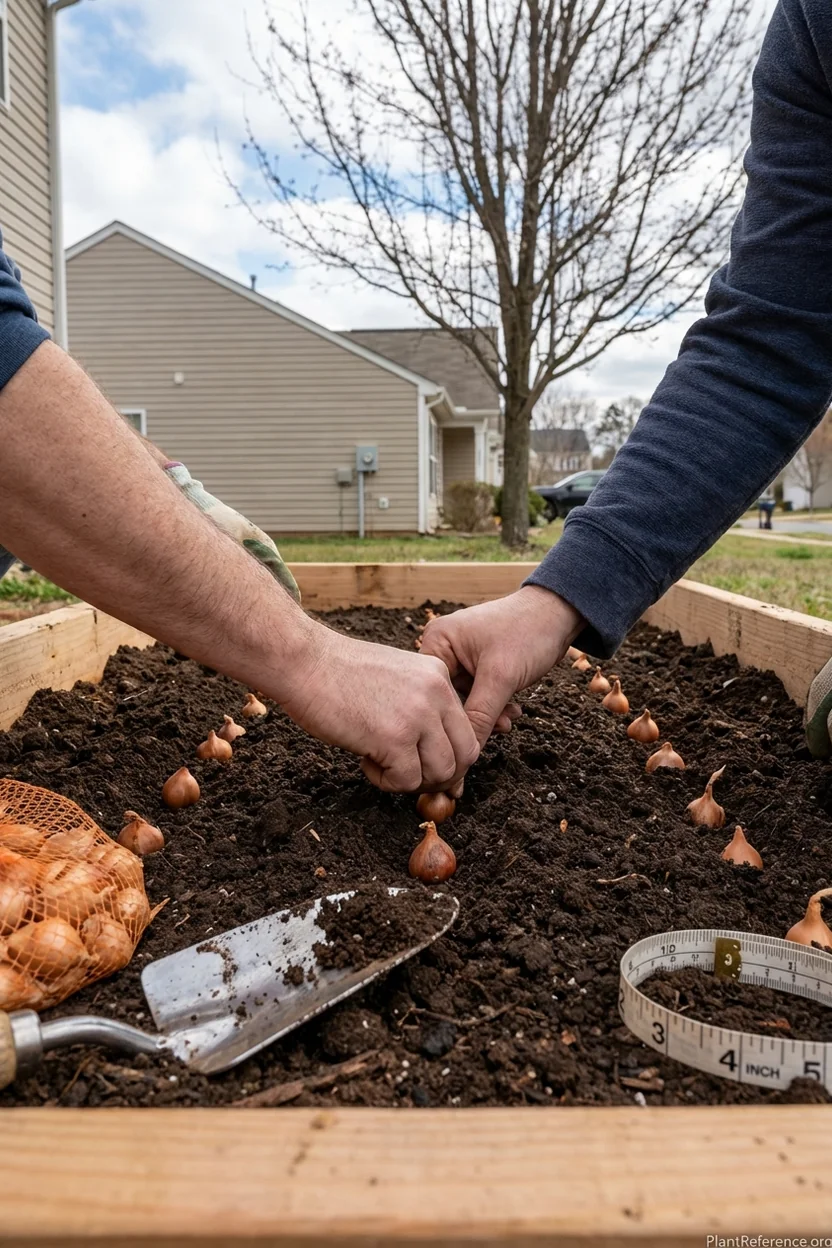
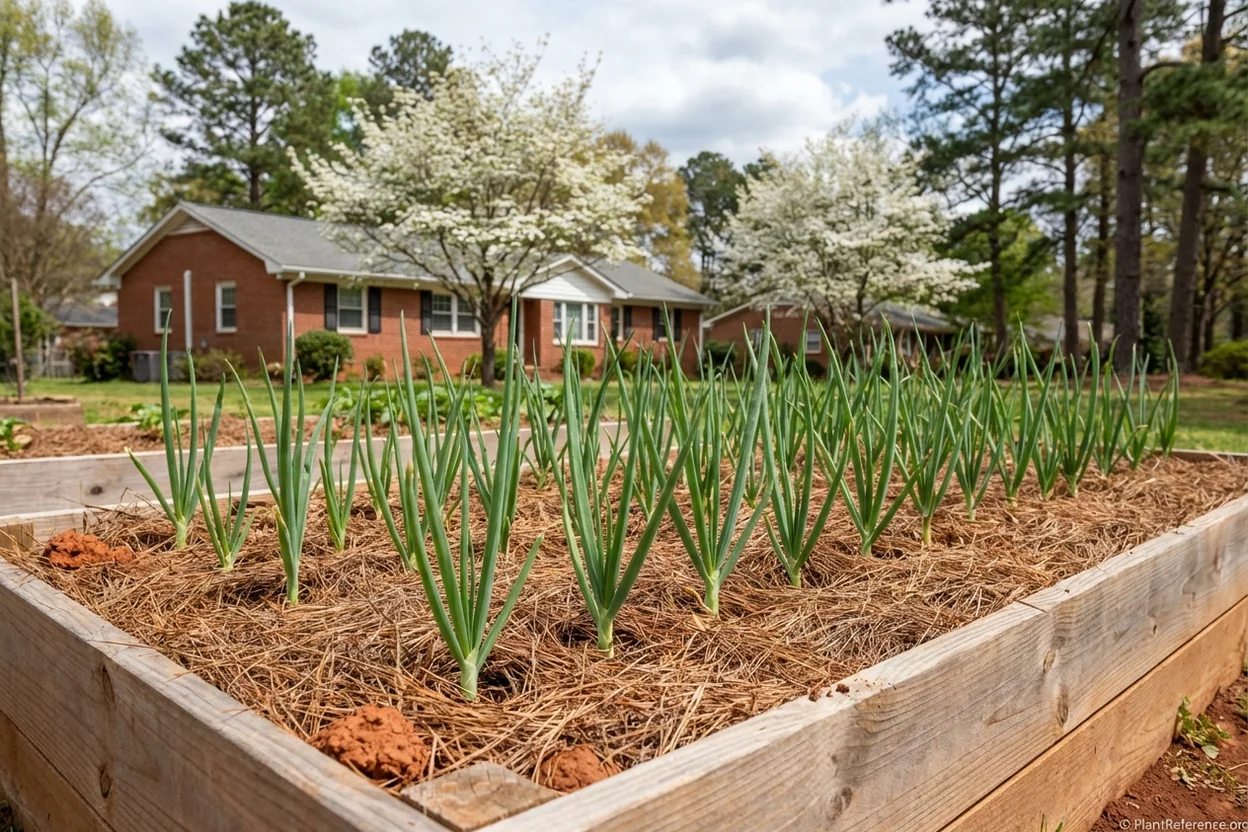
Charlotte's red clay soil requires amendment for successful onion production. The native clay holds too much moisture and restricts bulb expansion. Success starts with proper soil preparation in Charlotte's unique soil conditions.
Soil Preparation for Charlotte: Work 2-4 inches (5-10 cm) of compost or aged manure into Charlotte's clay soil to improve drainage and add organic matter. Onions prefer slightly acidic soil with pH 6.0-6.8, which suits most Charlotte gardens naturally. Raised beds work excellently in Charlotte, lifting onions above the clay and providing better drainage during wet periods.
Fertilizing Schedule: Charlotte's long growing season allows for multiple feeding opportunities. Apply balanced fertilizer (10-10-10) at planting, then side-dress with nitrogen every 3-4 weeks until bulbing begins. Stop nitrogen applications when day length reaches 14 hours in late May - continuing nitrogen delays maturity and reduces storage life.
Watering in Charlotte Climate: Charlotte receives approximately 43 inches (109 cm) of rainfall annually, but summer dry spells require supplemental irrigation. Provide 1 inch (2.5 cm) of water weekly during active growth, reducing to minimal watering as tops begin yellowing. Charlotte's humidity can encourage fungal diseases, so water at soil level rather than overhead.
Pest Management: Charlotte's warm, humid conditions favor onion thrips and onion maggot. Thrips cause silvery streaking on leaves and can vector iris yellow spot virus. Use floating row covers early in the season or spray with insecticidal soap weekly. Onion maggots tunnel into bulbs - practice crop rotation and avoid fresh manure which attracts egg-laying flies.
Mulching Strategy: Apply 2-3 inches (5-7.5 cm) of organic mulch around onion plants to conserve moisture and suppress weeds. Pine straw works excellently in Charlotte and is readily available. Keep mulch 2 inches (5 cm) away from onion stems to prevent moisture-related rot.
Prepare soil with 2-4 inches compost worked into clay
Plant sets/transplants 4 inches (10 cm) apart in rows 12 inches (30 cm) apart
Water 1 inch (2.5 cm) weekly during active growth
Fertilize every 3-4 weeks until late May
Mulch with pine straw keeping 2 inches from stems
Stop nitrogen when day length reaches 14 hours
Temperature Considerations: Charlotte's Zone 7b climate rarely experiences temperatures cold enough to damage onions. However, late spring heat waves can stress plants and trigger premature bulbing. Provide afternoon shade during heat waves above 85°F (29°C) using shade cloth or planting near taller crops.
Troubleshooting Charlotte-Specific Problems
Charlotte's transitional climate presents unique challenges that gardeners in pure northern or southern zones don't face. Understanding these regional issues helps prevent common failures and maximizes harvest success.
Problem: Small Bulbs Despite Good Growing Conditions This common Charlotte issue usually stems from planting long-day varieties that never receive enough daylight to trigger proper bulbing. Charlotte's maximum day length of 14.5 hours in late June isn't sufficient for varieties requiring 15-16 hours. Always choose intermediate-day varieties for reliable bulbing in Charlotte.
Problem: Premature Bolting in Spring Charlotte's variable spring weather can trigger bolting when warm periods are followed by cold snaps. Use small onion sets (smaller than a dime) and avoid large transplants which are more prone to bolting. Cover plants during late cold snaps to maintain steady growing conditions.
Problem: Rot During Storage Charlotte's high humidity makes proper curing critical for storage success. Cure onions in a well-ventilated area with fans if necessary to achieve proper drying. The necks must be completely dry and papery before storage, which may take 3-4 weeks in Charlotte's humid conditions.
Problem: Poor Garlic Bulb Development Inadequate winter chilling can prevent proper clove formation in garlic. Charlotte usually provides sufficient chilling hours, but exceptionally warm winters may require refrigerating cloves for 6-8 weeks before planting to ensure vernalization.
Choose intermediate-day varieties for Charlotte's 14.5-hour maximum day length
Use small sets and transplants to reduce bolting risk
Cure thoroughly in well-ventilated area for 3-4 weeks minimum
Pre-chill garlic cloves during warm winters for proper development
Plant fall onions by October 15 for winter establishment
Provide afternoon shade during summer heat waves above 85°F (29°C)
Seasonal Timing Issues: Charlotte's long growing season can tempt gardeners to plant too late in fall or too early in spring. Fall plantings after October 15 may not establish sufficient root systems before winter dormancy. Spring plantings before March 1 risk damage from late freezes and slow growth in cold soil.
Harvest & Storage
Charlotte's climate provides excellent conditions for both onion harvest and storage when proper techniques are followed. The key is timing harvest correctly and curing thoroughly in Charlotte's humid conditions.
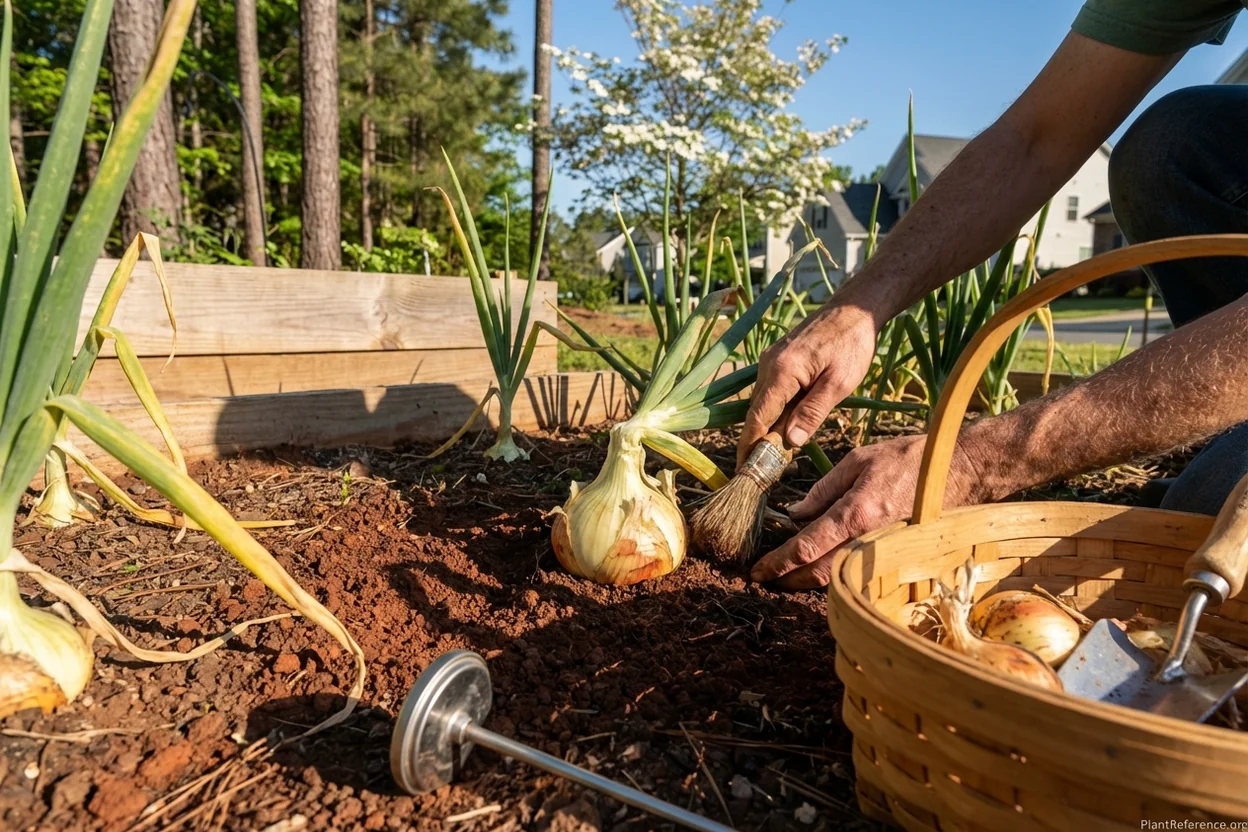
Harvest Timing Indicators: Begin harvest when 50-75% of onion tops have fallen over naturally. This typically occurs in Charlotte during July for spring plantings and May-June for fall plantings. Don't manually bend tops over - this creates wounds that invite rot and reduces storage life.
Curing Process for Charlotte: Charlotte's summer humidity requires extra attention during curing. Lay harvested onions in single layers on screens or slat tables in a shaded, well-ventilated area. A garage with fans provides ideal conditions. Cure for 2-4 weeks until necks are completely dry and papery. Properly cured onions will have tight, dry necks that don't yield when pinched.
Storage Conditions: Store cured onions in a cool, dry location with good air circulation. Charlotte's mild winters make unheated garages or sheds ideal storage locations. Avoid basements or areas that stay above 50°F (10°C) as this triggers sprouting. Properly stored intermediate-day onions keep 4-6 months in Charlotte conditions.
Garlic Harvest and Curing: Harvest garlic when lower leaves turn brown but 5-6 upper leaves remain green, typically mid-July in Charlotte. Cure whole plants (don't remove roots and tops immediately) in bundles hung in shaded, ventilated areas for 3-4 weeks. After curing, trim roots and tops to 1 inch (2.5 cm) for storage.
Harvest when 50-75% of tops fall over naturally
Cure in shaded, well-ventilated area with fan assistance if needed
Allow 2-4 weeks curing time in Charlotte's humid conditions
Store in cool location below 50°F (10°C) to prevent sprouting
Check stored onions monthly, remove any showing soft spots
Harvest garlic in mid-July when 5-6 upper leaves remain green
Storage success in Charlotte requires monitoring stored onions monthly and removing any showing soft spots immediately to prevent spread. Sweet varieties like 🌿Allium cepa 'Candy' store 4-6 months, while storage varieties like 🌿Allium cepa 'Super Star' can keep through winter when properly cured.
Frequently Asked Questions
Reading about plants and recognising them are different skills. These three build the second.
- Daily PlantIdentify the day’s mystery plant from a close-up photograph.
- Keyed OutWork a dichotomous key, lead by lead, to name a hidden specimen.
- Name That PlantName a specimen from botanical clues dealt hardest first.
Free to play, no account needed
Sophie is a garden designer in Charlotte who came to the U.S. from France about a decade ago. Her design sensibility blends the structured formality of French garden traditions with the looser, more naturalistic style that works well in the Southeast. She has a degree in landscape architecture and worked at several design firms in Charlotte before going independent. She specializes in year-round garden structure, mixed borders, and creating outdoor spaces that feel intentional without being rigid. Sophie writes about garden design principles, plant combinations, and creating visual interest across seasons—always grounded in what actually grows well in the Piedmont.