When to Plant Green Beans in Pittsburgh: Complete Guide + Best Varieties for Zone 6b
Pets & Toxicity
Recorded toxicity for plants linked in this guide. An unknown status is not a safety assessment.
No linked plant is recorded as toxicDetailsHide
Phaseolus vulgaris 'Blue Lake' — Toxicity
Non-toxic when cooked. Raw pods carry lectins (phytohemagglutinin) that cause digestive upset on raw consumption — pods are cooked before eatingView Phaseolus vulgaris 'Blue Lake' plant profilePhaseolus vulgaris 'Kentucky Wonder' — Toxicity
Non-toxicView Phaseolus vulgaris 'Kentucky Wonder' plant profilePhaseolus vulgaris 'Purple Queen' — Toxicity
Non-toxicView Phaseolus vulgaris 'Purple Queen' plant profilePhaseolus vulgaris 'Dragon Tongue' — Toxicity
Non-toxicView Phaseolus vulgaris 'Dragon Tongue' plant profile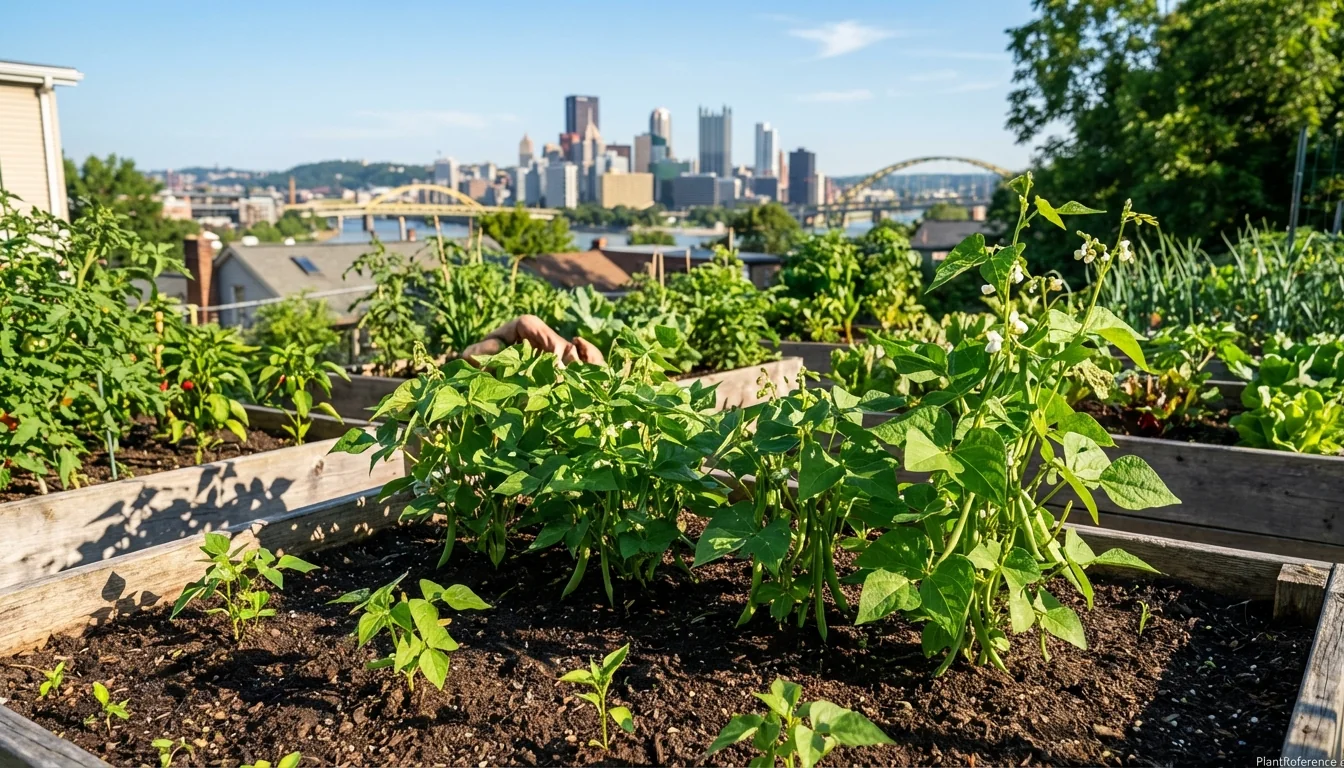
— Image © Plant Reference 2026
Planning your green bean harvest in Pittsburgh? You've got ideal conditions for both spring and fall crops in Zone 6b. With 178 frost-free days from April 25 to October 20, Pittsburgh gardeners can grow multiple succession plantings for fresh beans all season long.
I've been growing beans in Pennsylvania for forty years, and Pittsburgh's climate hits that sweet spot—long enough for multiple crops but not so hot that summer planting becomes difficult. Your Zone 6b designation means you get reliable spring warmth and decent fall weather, perfect for the bean varieties that thrive in our region.
Best Green Bean Varieties for Pittsburgh's Zone 6b Climate
Pittsburgh's moderate summers and reliable growing season make it perfect for both bush and pole bean varieties. Here's what works best in our Pennsylvania climate:
Variety | Days to Maturity | Best For | Notes for Pittsburgh |
|---|---|---|---|
50-55 days | Quick harvest | Perfect for Zone 6b succession planting | |
55-65 days | Fresh eating | Excellent quality for Pennsylvania gardens | |
53-60 days | Italian cooking | Flat pods ideal for local Italian-American cuisine | |
60-70 days | Continuous harvest | Pole variety perfect for Pittsburgh's 178-day season | |
55-60 days | Visual appeal | Purple pods easy to spot during harvest | |
55-60 days | Specialty markets | Unique yellow pods with purple markings |
Bush Bean Champions for Pittsburgh
🌿Phaseolus vulgaris 'Provider' is my top recommendation for Pittsburgh gardeners. This reliable bush variety matures in just 50-55 days, which means you can plant it May 15 and have beans by July 4th. More importantly, you can succession plant Provider every 2-3 weeks through mid-July and still get a harvest before October frost.
🌿Phaseolus vulgaris 'Blue Lake' produces the finest eating quality of any bean I've grown. The pods stay tender longer than other varieties, and in Pittsburgh's moderate summer heat, they maintain excellent texture. Plant Blue Lake for your main fresh-eating crop—the extra 5-10 days to maturity is worth it for the superior quality.
🌿Phaseolus vulgaris 'Roma II' gives you those broad, flat Romano beans perfect for sautéing. With Pittsburgh's large Italian-American population, these beans are always in demand at local farmers markets. They mature in 53-60 days and handle our Pennsylvania humidity better than many flat-pod varieties.
Pole Beans for Vertical Growing
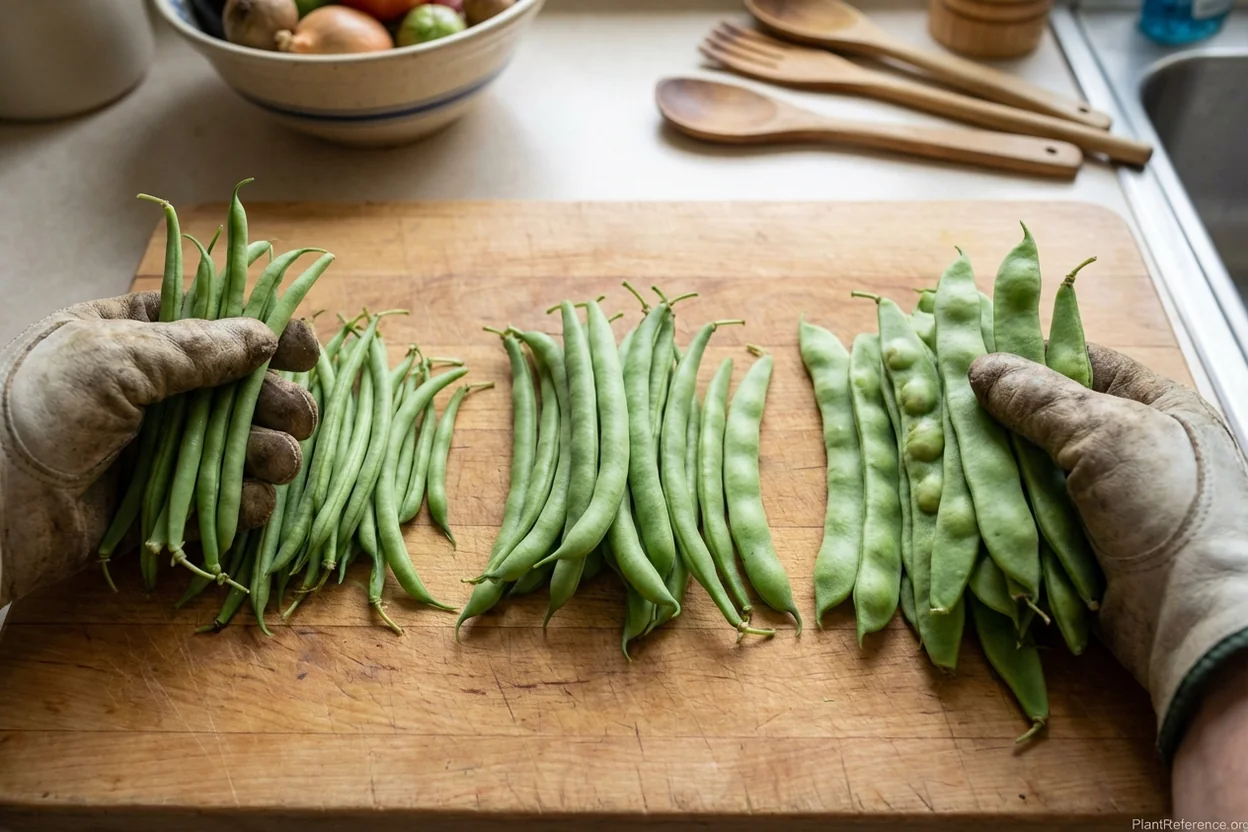
🌿Phaseolus vulgaris 'Kentucky Wonder' is the classic pole bean that thrives in Pittsburgh's climate. While it takes 60-70 days to start producing, it then continues harvesting until frost. In Pittsburgh's 178-day season, one planting of Kentucky Wonder can replace three succession plantings of bush beans—if you have the vertical space and don't mind putting up trellises.
This variety is particularly valuable for Pittsburgh's urban gardens where vertical space is often more available than ground space. A 6-foot trellis can support plants that produce beans from mid-July through October.
Specific Planting Dates for Pittsburgh Gardeners
Pittsburgh's last frost date of April 25 and first frost date of October 20 give you a solid 178-day growing window. Here's exactly when to plant for maximum success:
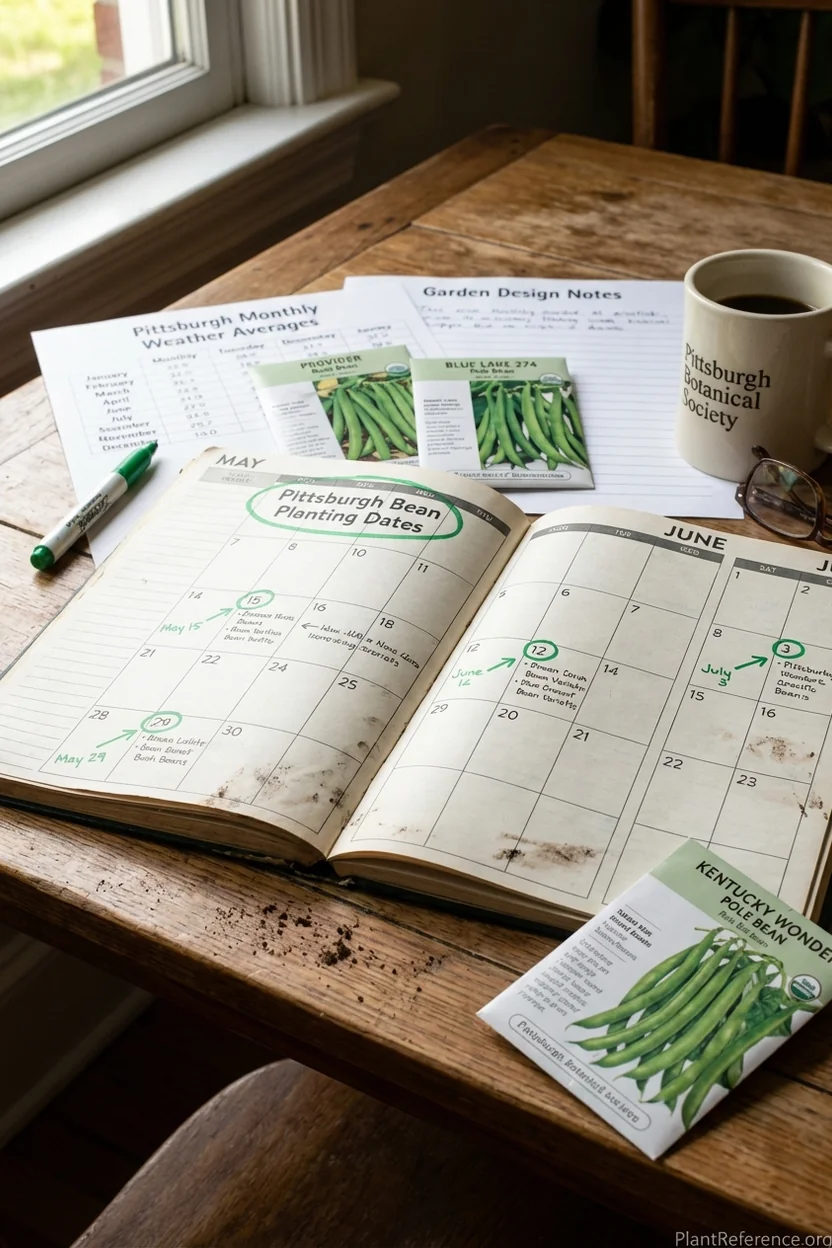
First Planting: May 15-20
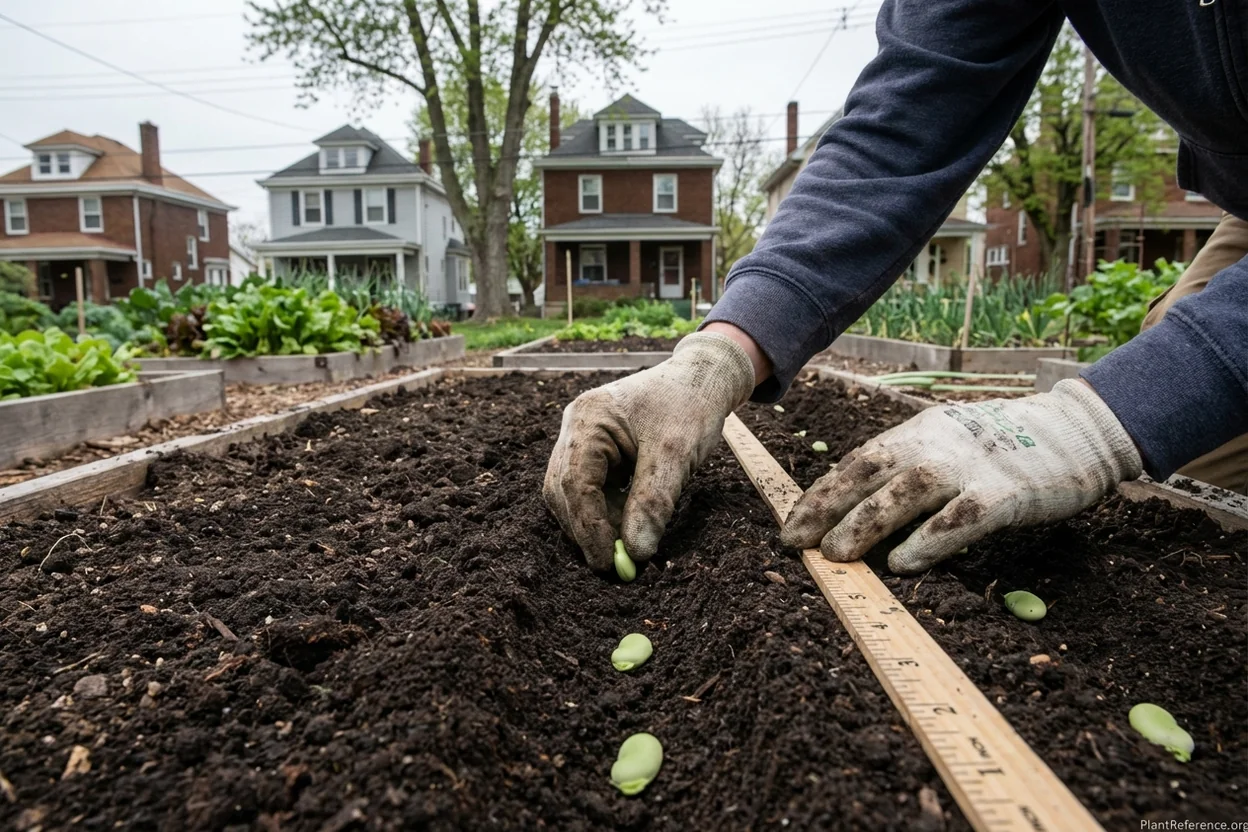
Wait until soil temperature reaches 60°F consistently. In Pittsburgh, this typically happens around May 15, about three weeks after our last frost. Planting too early in cold soil leads to seed rot—I've learned this lesson the hard way with impatient May plantings.
Plant your main crop of 🌿Phaseolus vulgaris 'Blue Lake' and any 🌿Phaseolus vulgaris 'Kentucky Wonder' for pole beans during this window. These varieties need the full season to reach their potential.
Succession Plantings: June 1, June 15, July 1, July 15
Every two weeks from June 1 through July 15, plant more 🌿Phaseolus vulgaris 'Provider' for continuous harvests. This gives you fresh beans from July through September without overwhelming you with a single massive harvest.
July 15 is your cutoff for succession planting in Pittsburgh. Later plantings risk being caught by October frost before reaching maturity.
Fall Planting Option: Late July
If you want fall beans, plant 🌿Phaseolus vulgaris 'Provider' around July 25-30. Count back 55 days from October 20 (first frost), and you get September 26 for harvest start. This timing gives you fresh beans in September when most gardens are winding down.
Fall beans often taste better than summer crops because they mature in cooler weather. The pods stay tender longer and don't get tough from heat stress.
Soil Temperature Guidelines
Don't plant when soil is below 60°F—the seeds will sit in cold, wet soil and rot. Use a soil thermometer at 2-inch depth, taking readings for three consecutive days. In Pittsburgh, soil temperature usually hits 60°F around May 10-15 in typical years.
If you're eager to start early, warm the soil with black plastic mulch for two weeks before planting. This can advance your planting date by 7-10 days safely.
Complete Growing Guide for Pittsburgh's Bean Season
Growing beans successfully in Pittsburgh requires understanding our specific growing conditions. Here's everything you need to know for success:
Soil Preparation for Pennsylvania Gardens
Pittsburgh-area soils tend to be clay-heavy with decent organic matter from our forest history. Beans need well-draining soil, so if your garden holds water after rain, add compost or aged manure before planting.
Test your soil pH—beans prefer 6.0-7.0, and many Pittsburgh soils run slightly acidic. If your pH is below 6.0, add lime in fall before planting season. I add 2-3 inches of compost to my bean beds every spring, which improves both drainage and pH gradually.
Space bush beans 4 inches apart in rows 18-24 inches apart. Pole beans need 6 inches between plants with rows 36 inches apart to accommodate trellises. Plant seeds 1 inch deep in our clay soils, 1.5 inches deep if you've improved the soil with compost.
Watering Strategy for Pennsylvania Climate
Pittsburgh gets about 38 inches of rainfall annually, fairly evenly distributed. However, July and August can have dry spells that stress bean plants during pod development.
Water deeply once or twice per week rather than daily light watering. Beans need about 1 inch of water per week total. During flowering and pod set (usually July for spring plantings), consistent moisture is critical—stress during this period causes flower drop and reduces yields significantly.
Mulch around plants with 2-3 inches of straw or grass clippings to conserve moisture and suppress weeds. In Pittsburgh's clay soils, mulch also prevents surface crusting that can prevent seedling emergence.
Supporting Pole Beans
For 🌿Phaseolus vulgaris 'Kentucky Wonder', install supports before planting. I use 8-foot cedar posts with trellis netting, but bean poles or teepees work equally well. The plants can reach 8-10 feet in Pittsburgh's good growing conditions.
Install supports on the north side of bush beans to prevent shading. Pole beans actually benefit from some afternoon shade during Pittsburgh's hottest July and August days.
Fertilizing Guidelines
Beans are legumes—they fix nitrogen from the air through root nodules. Don't over-fertilize with nitrogen or you'll get all leaves and no pods. I give my beans a balanced fertilizer (10-10-10) at planting, then side-dress with compost mid-season if plants look pale.
If you've never grown beans in your soil before, consider inoculating seeds with rhizobium bacteria. This ensures good nodulation and nitrogen fixation. The inoculant costs about $3 and treats a whole packet of seeds.
Troubleshooting Pittsburgh-Specific Bean Problems
Growing beans in Pittsburgh comes with some predictable challenges. Here's how to handle the most common issues:
Mexican Bean Beetle
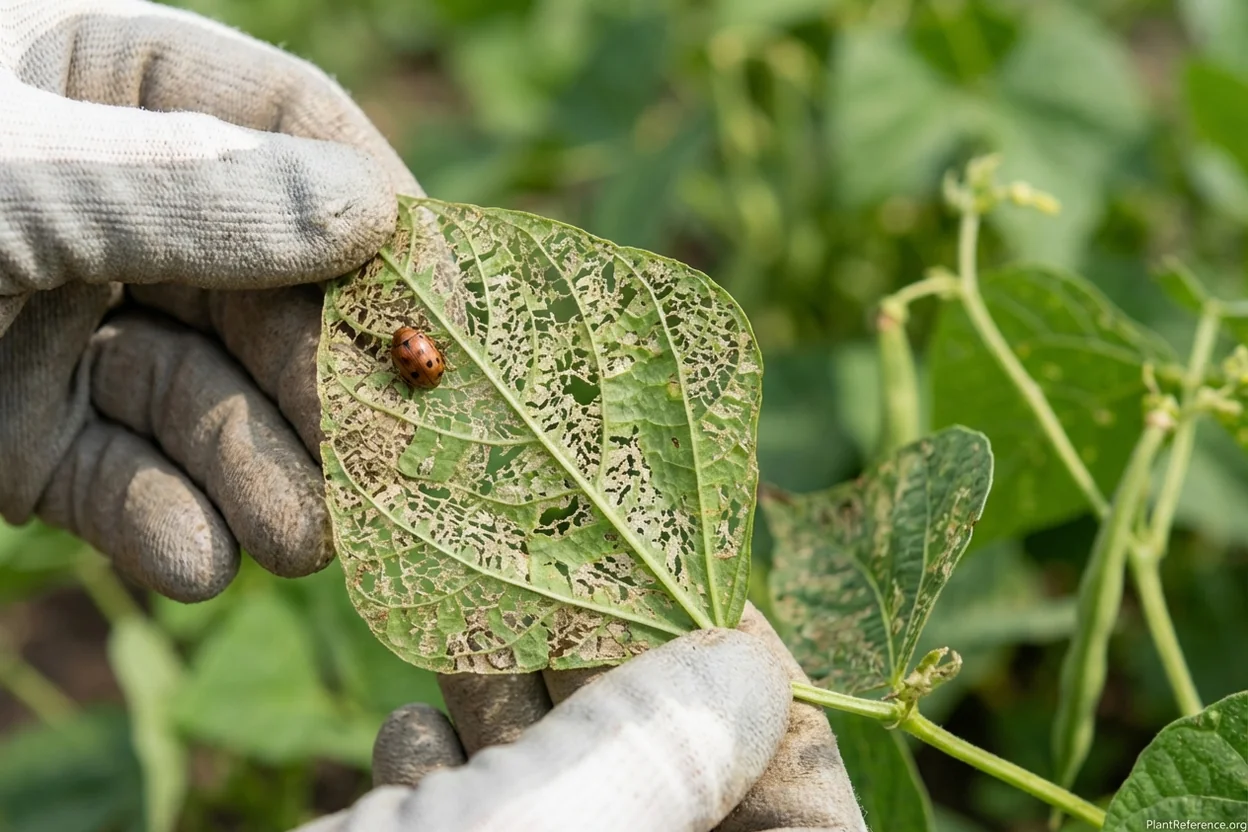
This is Pittsburgh's #1 bean pest. Adults are copper-colored with black spots, and larvae are spiny yellow grubs that skeletonize leaves. They typically appear in July, just as your first plantings start producing.
Check the undersides of leaves weekly for orange egg clusters. Crush them before they hatch. For heavy infestations, beneficial nematodes work well, or use row covers until plants flower (then remove for pollination).
Anthracnose
Pittsburgh's humid summers can trigger this fungal disease, causing black spots on pods. It spreads through water splash, so avoid overhead watering when possible. Space plants properly for air circulation—don't crowd them together.
Choose resistant varieties like 🌿Phaseolus vulgaris 'Roma II', which has improved disease resistance. If you see anthracnose, remove affected pods immediately and don't save seeds from infected plants.
Blossom Drop
When flowers fall off without setting pods, it's usually heat stress or inconsistent watering. Pittsburgh's July heat waves can cause this, especially on pole beans that are taller and catch more sun.
Maintain consistent soil moisture and consider providing afternoon shade during heat waves above 90°F. Pole beans are more susceptible than bush varieties to blossom drop.
Poor Germination
Cold, wet soil is the usual culprit in Pittsburgh's unpredictable May weather. Wait until soil temperature stays above 60°F for three consecutive days. If seeds rot, replant with fresh seed—don't try to salvage partial stands.
Heavy clay soil can crust over after rain, preventing seedling emergence. Cover the seed furrow with potting mix instead of native clay soil, or use row covers to maintain soil moisture during germination.
Stunted Growth
If plants germinate but grow slowly with yellow leaves, check for poor drainage or compacted soil. Pittsburgh clay soils can become waterlogged, causing root rot. Improve drainage with raised beds or organic matter.
Yellow plants in well-draining soil may lack nitrogen due to poor nodulation. This happens in new gardens or where soil has been treated with antibiotics. Inoculate seeds with rhizobium bacteria and side-dress with compost.
Harvest & Storage Tips for Pennsylvania Growers
Knowing when and how to harvest beans makes the difference between tender, delicious pods and tough, stringy disappointments.
Harvesting Timeline
Bush beans mature all at once over 10-14 days. Plan to pick every 2-3 days during peak harvest to keep plants producing. In Pittsburgh's climate, this usually means daily picking during the height of summer.
Pole beans produce continuously once they start. Pick regularly to keep them producing—letting pods mature signals the plant to stop flowering and focus on seed production.
Storage Methods
Fresh beans keep 5-7 days refrigerated in plastic bags. For longer storage, blanch for 3 minutes in boiling water, then freeze in portion-sized bags. This preserves Pittsburgh beans for winter use.
Canning works well for 🌿Phaseolus vulgaris 'Blue Lake' and other round varieties. Romano types like 🌿Phaseolus vulgaris 'Roma II' are better frozen or used fresh—they can get mushy when canned.
Seed Saving
If you want to save seeds for next year's Pittsburgh garden, let some pods mature completely until they rattle when shaken. Harvest after pods turn brown but before they split open.
Dry seeds thoroughly indoors, then store in airtight containers in cool, dark places. Properly dried bean seeds keep viable for 2-3 years in Pittsburgh's climate.
Frequently Asked Questions
Reading about plants and recognising them are different skills. These three build the second.
- Daily PlantIdentify the day’s mystery plant from a close-up photograph.
- Keyed OutWork a dichotomous key, lead by lead, to name a hidden specimen.
- Name That PlantName a specimen from botanical clues dealt hardest first.
Free to play, no account needed
Linda's been growing tomatoes in containers on her suburban Pittsburgh balcony—ever since her kids grew up and she finally had time for hobbies again. She's a medical billing specialist by day and a tomato enthusiast by night and weekend. Linda started documenting her container growing experiments on a simple blog and discovered other renters and condo dwellers were desperate for practical advice. She tests different varieties every season, tracking yields, disease resistance, and flavor in a detailed spreadsheet. Linda's approach is practical and budget-conscious—she saves seeds, reuses containers, and makes her own fertilizer from kitchen scraps. Her specialty is maximizing production in small spaces, and she's perfected the art of growing full-size tomatoes in 5-gallon buckets. She's a Pennsylvania Master Gardener and teaches container growing workshops at her local library.