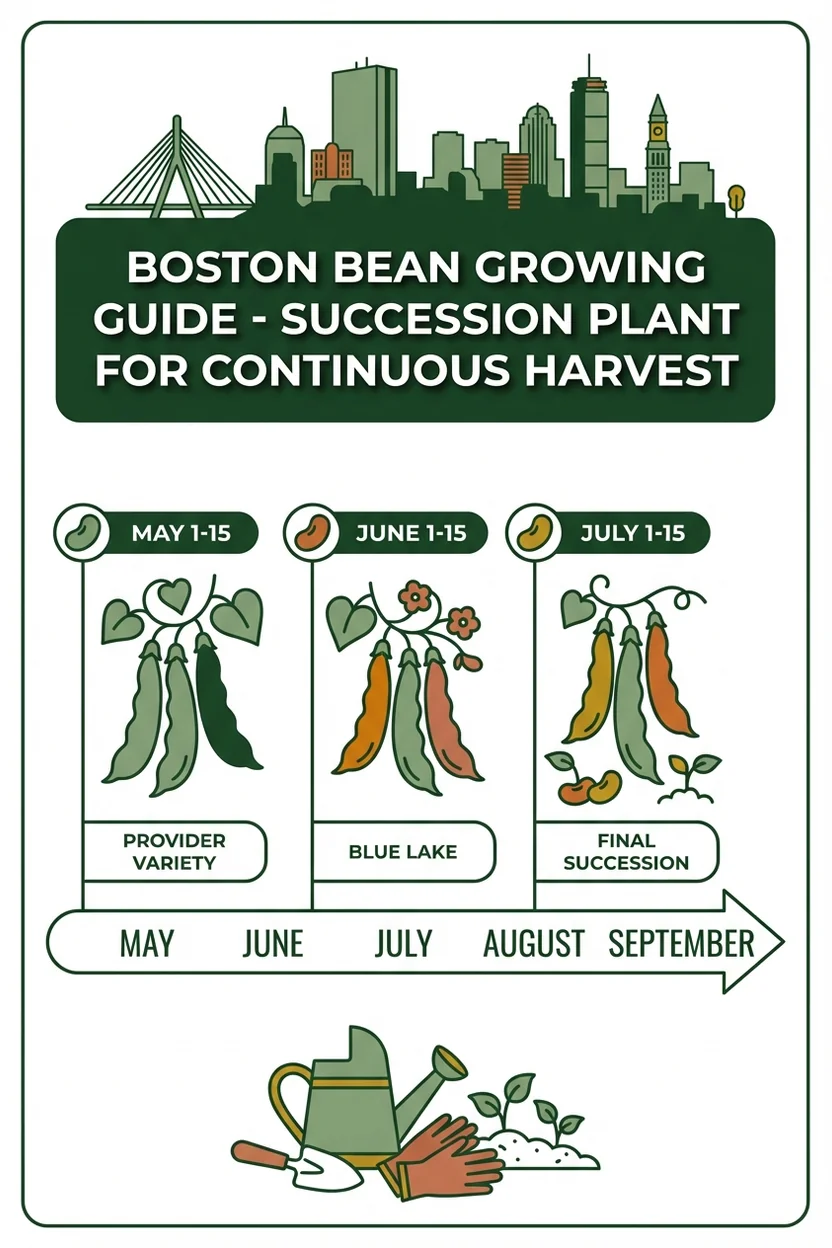
When to Plant Green Beans in Boston: Complete Guide + Best Varieties
Pets & Toxicity
Recorded toxicity for plants linked in this guide. An unknown status is not a safety assessment.
No linked plant is recorded as toxicDetailsHide
Phaseolus vulgaris 'Blue Lake' — Toxicity
Non-toxic when cooked. Raw pods carry lectins (phytohemagglutinin) that cause digestive upset on raw consumption — pods are cooked before eatingView Phaseolus vulgaris 'Blue Lake' plant profilePhaseolus vulgaris 'Kentucky Wonder' — Toxicity
Non-toxicView Phaseolus vulgaris 'Kentucky Wonder' plant profilePhaseolus vulgaris 'Purple Queen' — Toxicity
Non-toxicView Phaseolus vulgaris 'Purple Queen' plant profilePhaseolus vulgaris 'Dragon Tongue' — Toxicity
Non-toxicView Phaseolus vulgaris 'Dragon Tongue' plant profile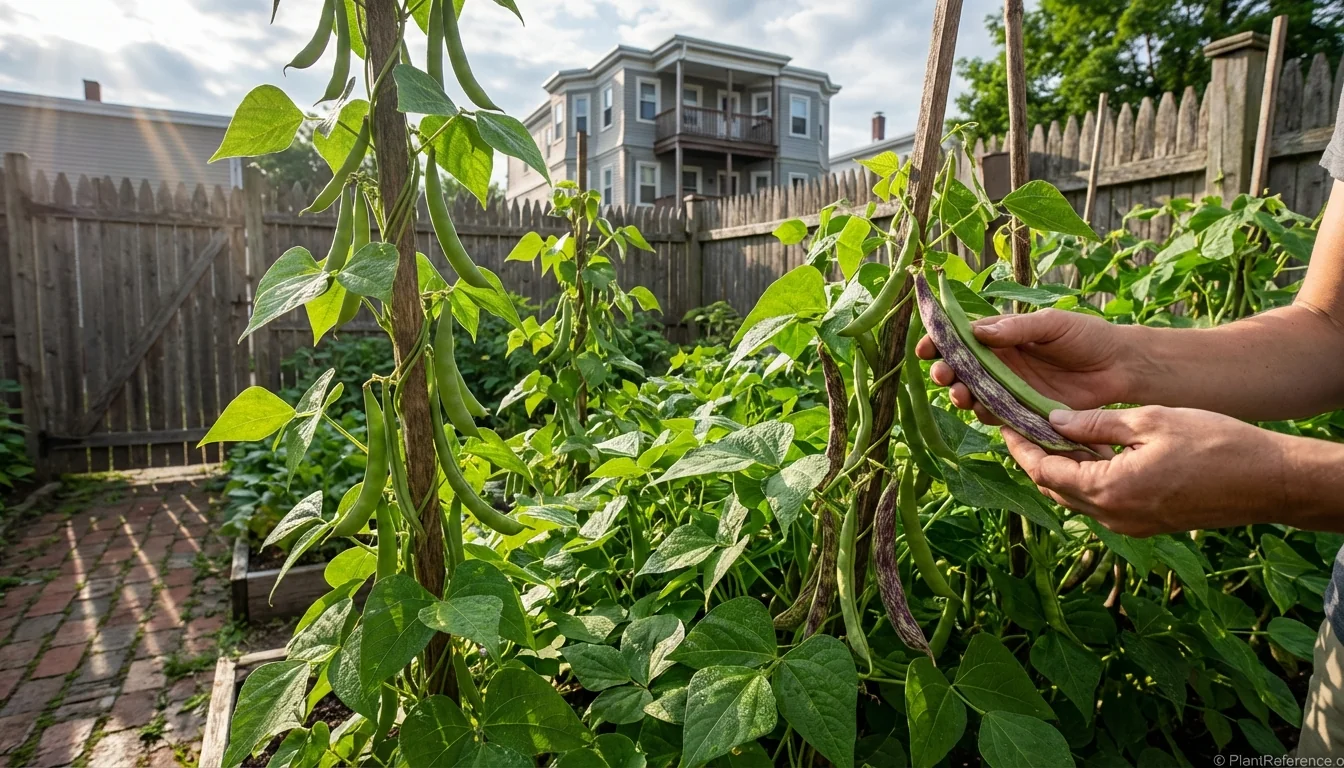
— Image © Plant Reference 2026
Boston gardeners have won the lottery when it comes to growing green beans 🌿Phaseolus vulgaris 'Provider'. Your Zone 6b maritime climate provides a generous 183-day growing season from April 19 through October 19, creating perfect conditions for both quick bush varieties and productive pole beans that keep producing until frost.
I've been growing beans in New England for four decades, and Boston's climate is ideal for this crop. The key to success lies in understanding your frost dates and maximizing that nearly 6-month growing window with strategic succession planting.
Best Green Bean Varieties for Boston's Zone 6b Climate
Boston's maritime influence creates mild summers and extended falls perfect for green bean production. Your 183-day season allows time for both early quick-maturing varieties and later pole beans that produce until October frost.
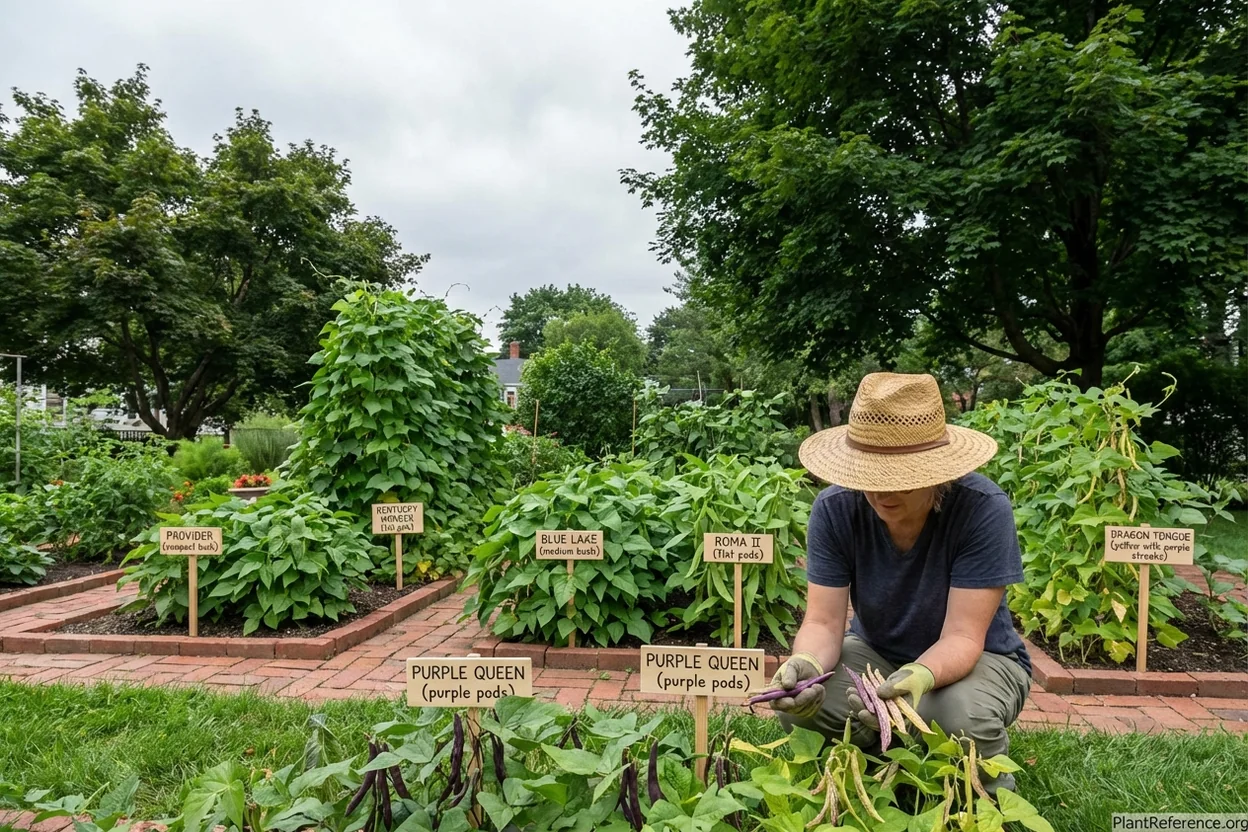
Variety | Days to Maturity | Growth Habit | Best For Boston Gardeners | Planting Strategy |
|---|---|---|---|---|
50-55 days | Compact bush | Early May plantings, quick harvest | First succession - reliable cold soil germination | |
55-65 days | Bush | Mid-season production, processing | Main season crop - excellent pod quality | |
53-60 days | Bush | Fresh market, flat Italian pods | Succession plantings for variety | |
55-60 days | Bush | Easy harvest visibility | Great for children's gardens | |
55-60 days | Bush | Specialty market, tender pods | Mid-summer planting when heat helps color | |
60-70 days | Pole | Maximum production, small spaces | Single June planting for fall harvest |
Early Season Champions for Boston
🌿Phaseolus vulgaris 'Provider' earns its name in Boston gardens. This variety germinates in cooler soil better than others, making it perfect for your earliest May 1st plantings when soil might still be 55-58°F (13-14°C). The compact 18-inch (45 cm) plants produce heavily in Boston's moderate summer temperatures.
🌿Phaseolus vulgaris 'Blue Lake' represents the gold standard for processing and freezing. Boston gardeners preserve substantial quantities each season, and this variety maintains texture and flavor after blanching and freezing better than any other.
Specialty Varieties for Boston Markets
🌿Phaseolus vulgaris 'Roma II' brings Italian flat bean tradition to New England gardens. The broad, meaty pods are perfect for Boston's farmer's markets and provide culinary variety for sauce-making families.
🌿Phaseolus vulgaris 'Dragon Tongue' creates stunning visual appeal with yellow pods streaked in purple. The cool nights of Boston enhance color development while maintaining pod tenderness.
Pole Beans for Extended Harvest
🌿Phaseolus vulgaris 'Kentucky Wonder' transforms Boston's long fall season into productive harvest time. Plant once in June, and this heirloom continues producing until October 19 frost, eliminating need for succession plantings.
Specific Planting Dates for Boston Gardeners
Boston's maritime climate moderates temperature swings, creating excellent conditions for bean succession. Your last frost date of April 19 starts the countdown, but soil temperature determines actual planting success.
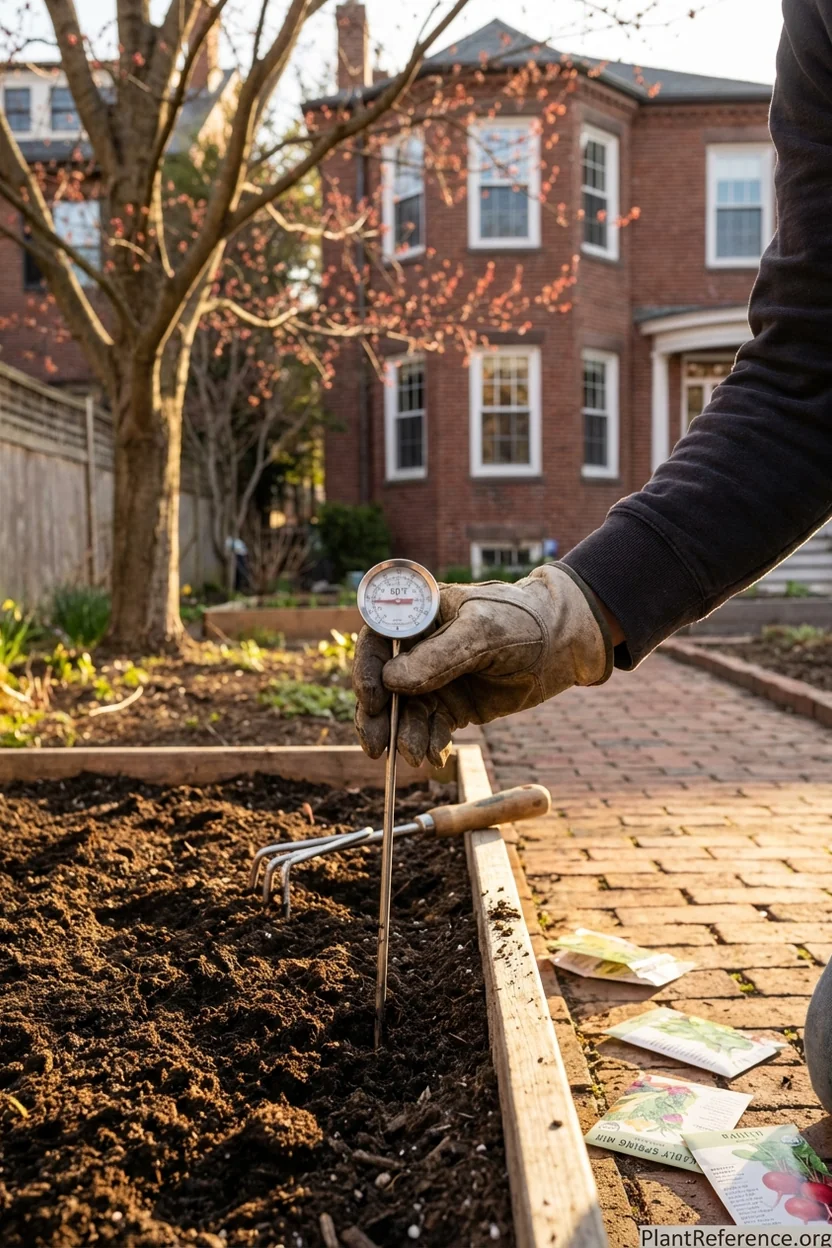
First Planting Window: May 1-15
Your earliest safe planting begins May 1st, two weeks after last frost. Soil typically reaches the critical 60°F (16°C) threshold by early May in most Boston neighborhoods.
Best variety: 🌿Phaseolus vulgaris 'Provider' handles cool soil better than others. Plant seeds 1 inch (2.5 cm) deep, 4 inches (10 cm) apart.
Expected harvest: June 20-July 5 (50-55 days)
Second Succession: May 15-30
Mid-May plantings capture warming soil and longer days for robust growth.
Best varieties: 🌿Phaseolus vulgaris 'Blue Lake' or 🌿Phaseolus vulgaris 'Roma II' for main season production.
Expected harvest: July 10-30 (55-65 days)
Third Succession: June 1-15
Early June plantings benefit from warm soil and established growing conditions.
Best varieties: 🌿Phaseolus vulgaris 'Purple Queen' or 🌿Phaseolus vulgaris 'Dragon Tongue' for mid-summer harvest.
Expected harvest: July 25-August 15 (55-60 days)
Pole Bean Planting: June 1-20
Single planting of indeterminate varieties provides extended harvest through fall.
Best variety: 🌿Phaseolus vulgaris 'Kentucky Wonder' for continuous production through October.
Expected harvest: August 1-October 19 (60-70 days, then continuous)
Final Succession: July 1-15
Latest bush bean plantings for fall harvest before frost.
Best varieties: 🌿Phaseolus vulgaris 'Provider' for fastest maturity ensuring harvest before October 19.
Expected harvest: August 20-September 10 (50-55 days)
Complete Growing Guide for Boston's Maritime Climate
Boston's proximity to the Atlantic Ocean creates unique growing conditions that benefit green bean production. Understanding how to work with maritime influences maximizes your harvest.
Soil Preparation for New England Gardens
Boston-area soils often contain clay from glacial deposits. Green beans require well-draining conditions to prevent root rot and ensure proper nitrogen fixation.
Test soil pH in early spring (target 6.0-7.0 for optimal growth)
Add compost to heavy clay soils common in Boston suburbs
Create raised beds if drainage remains poor after amendments
Incorporate coarse sand (not fine sand) to improve clay soil structure
Apply lime in fall if pH tests below 6.0
Managing Boston's Maritime Growing Conditions
Your coastal location brings benefits and challenges. Cool sea breezes moderate summer heat, creating ideal bean growing temperatures, but also increase humidity and disease pressure.
Temperature Management: Boston rarely experiences heat stress that affects bean production in inland areas. Your average summer highs of 80-85°F (27-29°C) keep beans productive through August when other regions struggle.
Humidity Considerations: Maritime air increases fungal disease risk. Ensure proper spacing and avoid overhead watering late in day. Morning watering allows foliage to dry completely.
Water Management in Coastal Climate
Boston receives approximately 42 inches (107 cm) annual rainfall, often concentrated in spring and fall. Summer drought periods require supplemental irrigation.
Install drip irrigation for consistent soil moisture without wetting foliage
Apply 2-inch (5 cm) organic mulch layer to conserve soil moisture
Water deeply once weekly rather than frequent shallow watering
Monitor soil moisture during typical July-August dry periods
Maintain consistent moisture during flowering (35-45 days after planting)
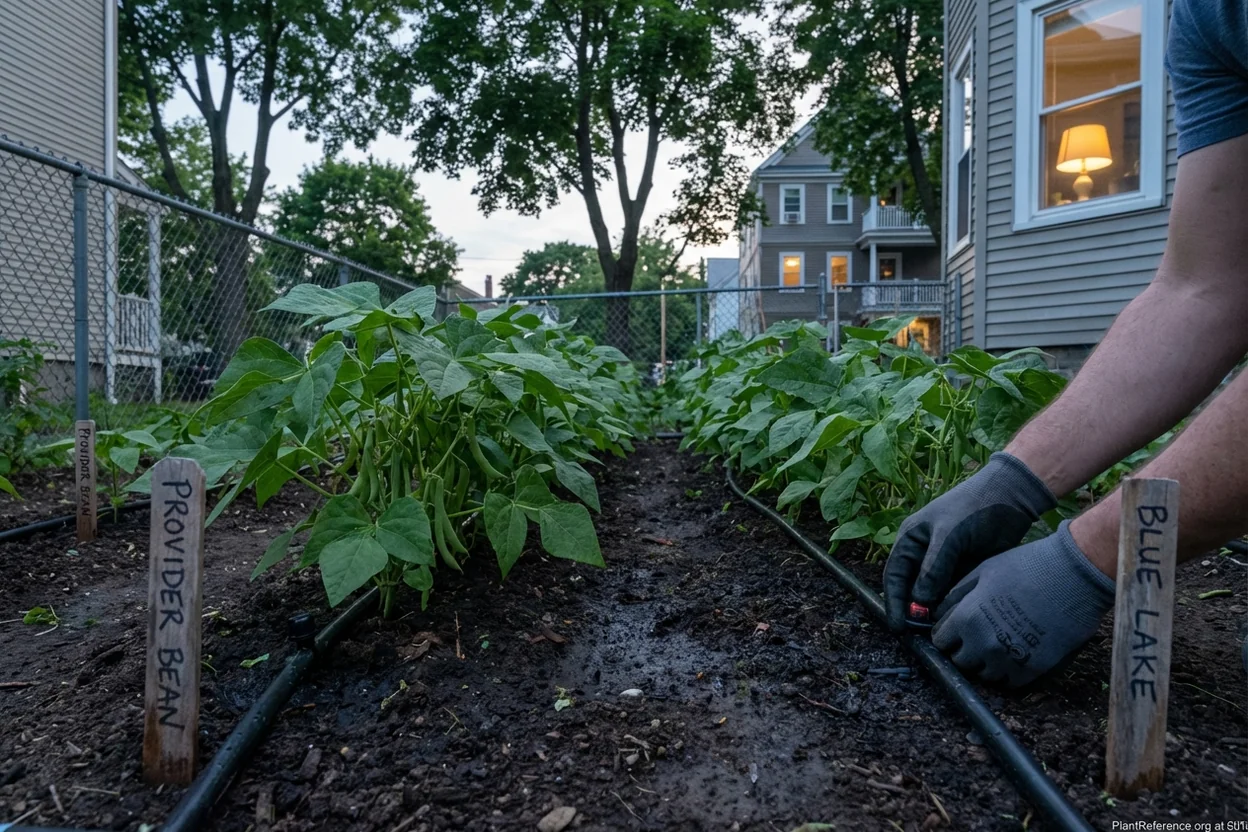
Nitrogen Management and Soil Biology
Green beans fix atmospheric nitrogen through root nodule bacteria. Boston's cool spring soils may require inoculation to establish this beneficial relationship.
Inoculation Strategy: Apply rhizobium inoculant to seeds immediately before planting, especially in new garden beds or sterilized soils. This ensures rapid nodulation in cool May soils.
Fertility Program: Avoid high-nitrogen fertilizers that suppress natural fixation. Use balanced fertilizer (5-10-10) at planting, then rely on biological nitrogen fixation.
Supporting Pole Varieties
Trellis Construction: Install 8-foot (2.4 m) poles or construct teepees before planting 🌿Phaseolus vulgaris 'Kentucky Wonder'. Boston's fall winds require sturdy support structures.
Training and Maintenance: Guide young vines onto supports when 6 inches (15 cm) tall. Pole beans climb counter-clockwise naturally—work with this tendency rather than against it.
Troubleshooting Boston-Specific Growing Problems
Maritime New England presents unique challenges for bean growers. Forty years of Boston-area gardening has taught me to anticipate and prevent these common issues.
Slug and Snail Management
Boston's humid conditions create ideal slug habitat. These pests can destroy entire bean plantings overnight, especially in cool, wet springs.
Prevention Strategy:
Remove debris and hiding places around bean plantings
Apply diatomaceous earth around plants after rain
Set up beer traps 20 feet (6 m) away from beans to lure slugs away
Hand-pick slugs during evening garden inspections
Consider copper tape barriers around raised bed perimeters
Fungal Disease Prevention
High humidity from coastal air increases white mold and anthracnose risk. These diseases can devastate bean crops in wet summers.
Cultural Controls:
Space plants properly—never reduce recommended spacing for better airflow
Water at soil level using drip irrigation or soaker hoses
Remove and destroy infected plant material immediately
Rotate bean family crops to different garden areas annually
Plant in locations with good morning sun for rapid dew evaporation
Cool Season Growing Challenges
Boston's cool springs can delay germination and slow early growth. Late cold snaps occasionally threaten May plantings.
Season Extension Techniques:
Use row covers for first 2-3 weeks after planting in May
Consider black plastic mulch to warm soil before planting
Start pole beans in peat pots indoors for 7-10 days if space allows
Have backup seed ready for replanting if cold weather damages crops
Choose 🌿Phaseolus vulgaris 'Provider' for earliest plantings due to cold tolerance
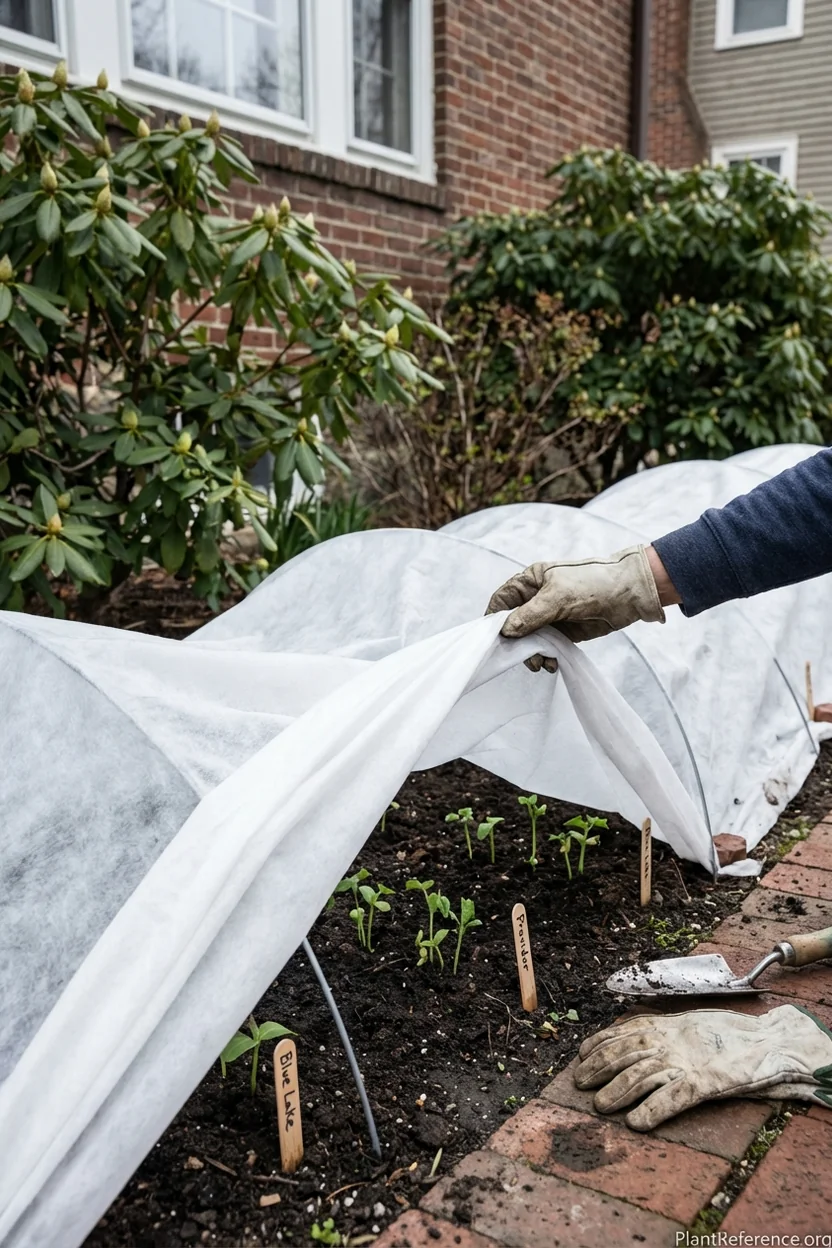
Mexican Bean Beetle Control
This copper-colored pest with black spots can skeletonize bean leaves rapidly. Boston's warm summers provide ideal conditions for multiple generations.
Integrated Management:
Inspect undersides of leaves weekly for orange egg clusters
Remove egg masses before they hatch (typically 5-10 day incubation)
Release beneficial insects like ladybugs early in season
Apply neem oil or spinosad for severe infestations
Plant trap crops like soybeans to draw beetles away from main crop
Wind Damage from Coastal Storms
Boston's exposure to nor'easters and tropical storms can damage bean crops, especially tall pole varieties.
Storm Preparation:
Install sturdy 8-foot (2.4 m) poles driven 18 inches (45 cm) deep
Use guy wires to anchor trellis systems against strong winds
Harvest mature pods before predicted storms to prevent crop loss
Consider bush varieties in very exposed locations
Have repair materials ready to fix damaged supports quickly
Harvest and Storage in New England
Boston's extended fall season allows leisurely harvesting and preservation activities. Understanding proper timing and storage methods maximizes your bean harvest value.
Determining Optimal Harvest Time
Fresh Eating Stage: Harvest when pods snap crisply and seeds are small. For 🌿Phaseolus vulgaris 'Blue Lake', pods should be 4-5 inches (10-13 cm) long and pencil-thick.
Processing Stage: For freezing or canning, harvest slightly younger pods when most tender. 🌿Phaseolus vulgaris 'Provider' reaches perfect processing stage 3-5 days before optimal fresh eating.
Preservation Methods for Boston Gardeners
New England's tradition of food preservation serves modern gardeners well. Boston's beans freeze exceptionally well due to variety selection and harvest timing.
Freezing Protocol:
Blanch whole beans in boiling water for 3 minutes
Plunge immediately into ice water bath for 3 minutes
Drain thoroughly and package in freezer containers
Label with variety and date—use within 12 months
Freeze in meal-sized portions for convenient use
Fresh Storage: Unwashed beans keep 5-7 days refrigerated in perforated plastic bags. Boston's cool fall nights help extend storage life compared to warmer climates.
FAQ: Growing Green Beans in Massachusetts
When is the latest I can plant green beans in Boston for fall harvest?
Plant your final succession by July 15 to ensure harvest before Boston's average first frost of October 19. 🌿Phaseolus vulgaris 'Provider' at 50-55 days maturity provides the best chance of successful fall harvest. Count backward 60 days from your expected first frost to determine the absolute latest planting date with safety margin.
Can I grow pole beans successfully in Boston's climate?
Absolutely—Boston's 183-day growing season is perfect for pole beans like 🌿Phaseolus vulgaris 'Kentucky Wonder'. Plant in early June, and harvest begins in early August, continuing until October frost. The long fall season makes pole beans particularly valuable here, providing continuous harvest when bush varieties have finished. Install sturdy 8-foot (2.4 m) supports to handle occasional coastal winds.
Which varieties handle Boston's humid summers best?
🌿Phaseolus vulgaris 'Blue Lake' and 🌿Phaseolus vulgaris 'Roma II' show excellent disease resistance in humid conditions. Their wider 6-inch (15 cm) and 4-inch (10 cm) spacing respectively promotes airflow that reduces fungal problems. Avoid planting too densely, and always water at soil level rather than overhead to minimize humidity-related diseases common in maritime climates.
Do I need to inoculate bean seeds in Boston area soils?
For established gardens, soil bacteria populations are usually sufficient. However, new gardens, recently tilled areas, or soils treated with fungicides benefit from inoculation. Apply rhizobium bacteria powder to damp seeds immediately before planting. This is especially important for early May plantings when cool soil temperatures slow natural bacterial activity.
How do I protect beans from slugs in Boston's damp climate?
Slugs are Boston gardeners' biggest bean challenge. Create barriers using diatomaceous earth around plants, especially after rain. Remove mulch and debris near bean plantings where slugs hide during day. Beer traps placed 20 feet (6 m) away from beans attract and drown slugs without luring them to your crop. Hand-picking during evening garden inspections remains most effective control method.
Can I succession plant all the way through Boston's growing season?
Your 183-day season allows 4-5 succession plantings of bush varieties. Start May 1, then plant every 2-3 weeks through July 15. Each planting provides 2-3 weeks of harvest. For continuous production with less work, plant one succession of 🌿Phaseolus vulgaris 'Kentucky Wonder' pole beans in June—they'll produce from August through October 19 without additional plantings.
What's the best way to extend the season in Boston?
Use row covers for early May plantings to protect against late cold snaps. For fall extension, pole beans naturally continue producing until hard frost, often lasting 2-3 weeks longer than bush varieties. Row covers can also protect late plantings from early October frosts, extending harvest into November in mild years.
Frequently Asked Questions
Reading about plants and recognising them are different skills. These three build the second.
- Daily PlantIdentify the day’s mystery plant from a close-up photograph.
- Keyed OutWork a dichotomous key, lead by lead, to name a hidden specimen.
- Name That PlantName a specimen from botanical clues dealt hardest first.
Free to play, no account needed
Tagged with
Kevin is a landscape contractor in the Boston area who specializes in cold-climate perennial gardens and hardscaping. He studied landscape design and worked at a prominent nursery on the North Shore before starting his own design-build firm. Kevin's gardens are built to handle New England weather—freeze-thaw cycles, nor'easters, late springs, and heavy snow loads. He's particularly interested in native perennials and shrubs that provide four-season interest without constant maintenance. Kevin writes about cold-hardy plant selection, winter garden structure, and building landscapes that look good even in February.