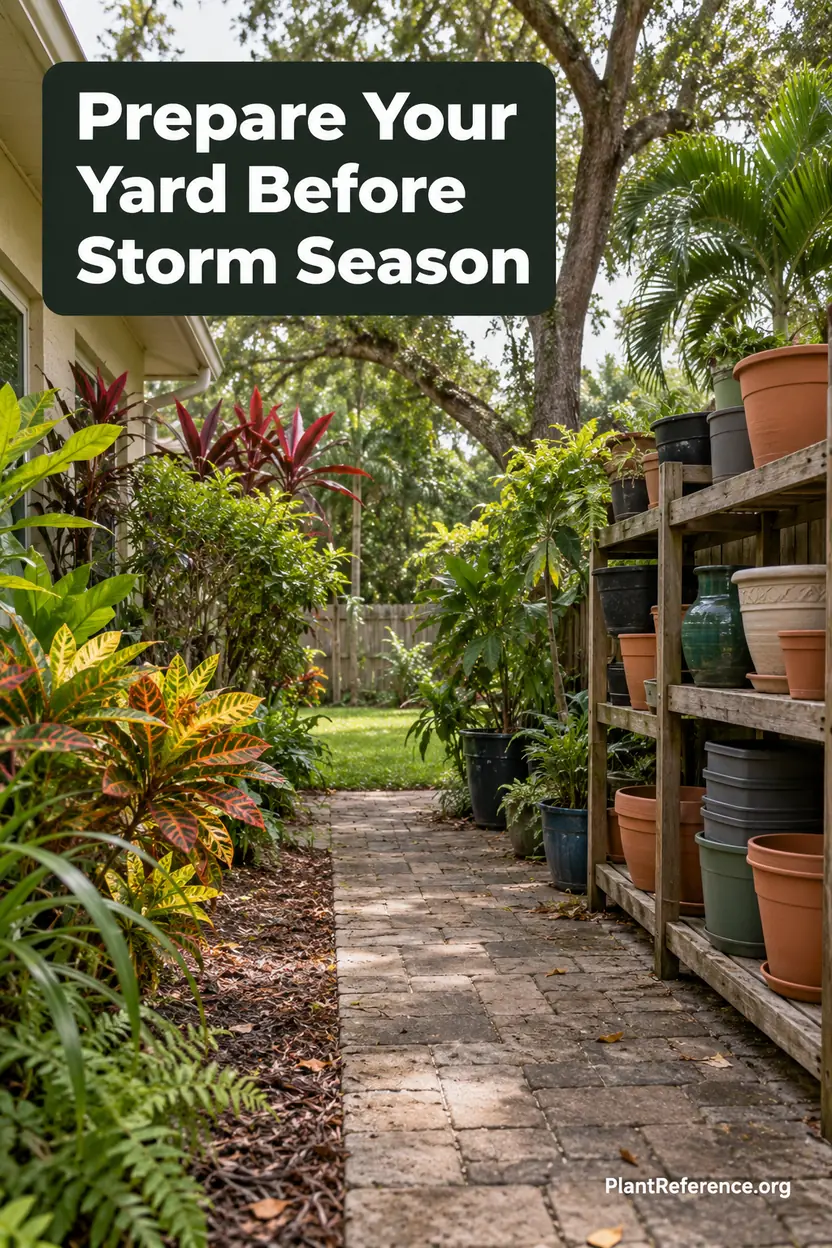
Hurricane Landscaping Preparation: Trees and Drainage
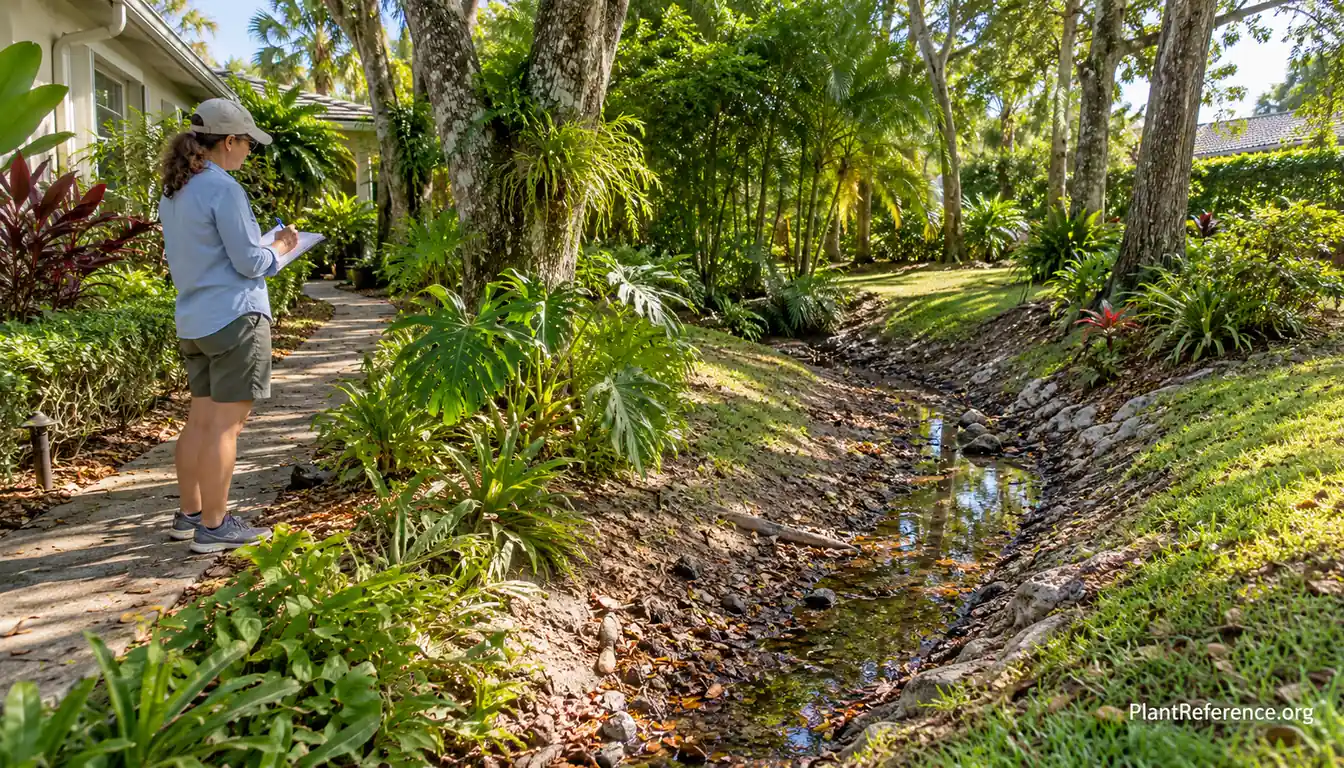
— Image © PlantReference.org 2026
Hurricane landscaping preparation works best as routine maintenance, not a last-minute pruning rush. Inspect trees, understand where rainwater travels, and decide where loose pots and furniture will go before a storm threatens. A prepared yard can reduce some hazards, but no tree or drainage feature is hurricane-proof.
Start Hurricane Landscaping Preparation Early
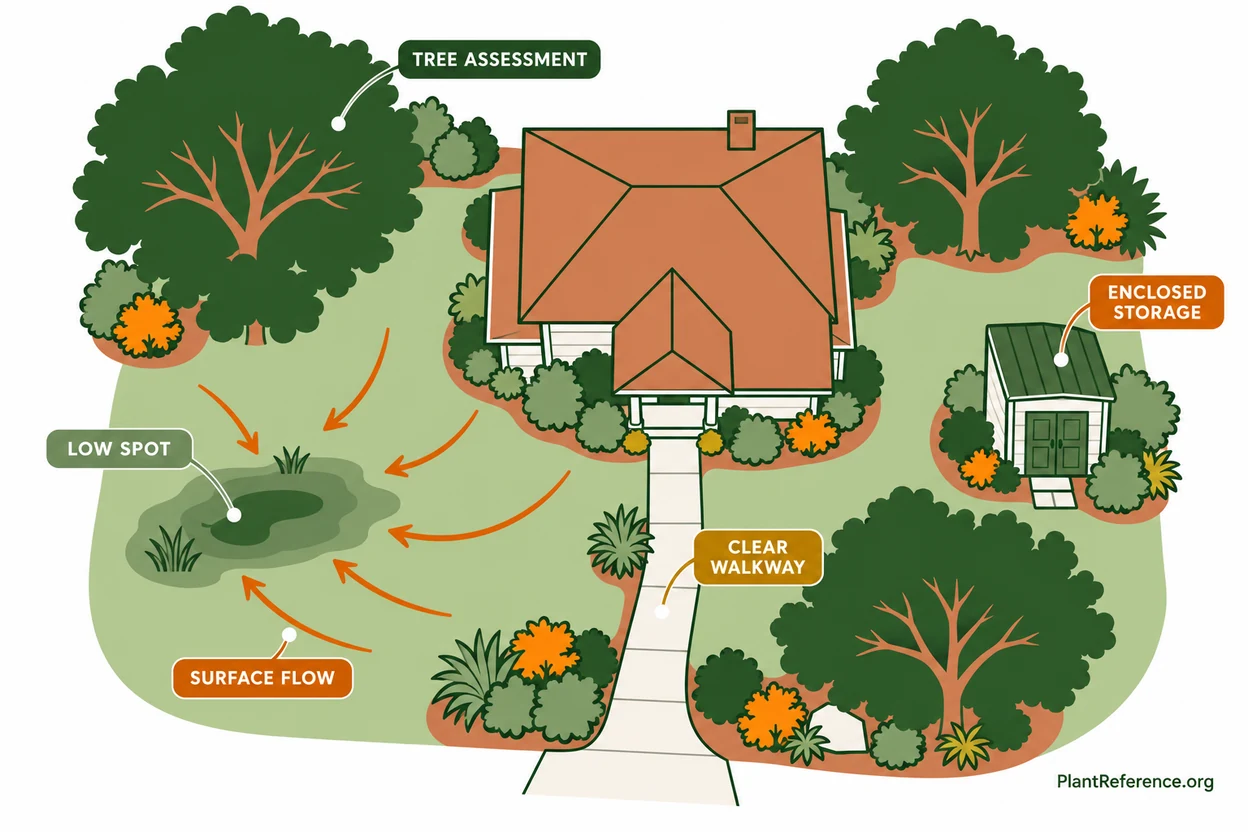
Walk the property in ordinary weather and make a simple map. Mark large trees, buildings, access routes, low spots, drainage inlets, and outdoor objects that could move in wind. The useful question is not whether the yard looks tidy; it is what could fall, block access, or collect water.
Separate work into professional projects and ordinary housekeeping. Tree assessment and drainage redesign need time, suitable weather, and sometimes local approvals. Moving empty pots into storage and keeping accessible surface grates free of leaves are different tasks. Do not wait for a warning to discover that storage space is already full.
Plant selection belongs in the long-term plan. Best Native Plants for Coastal Southeast Gardens helps match plants to coastal conditions, but native status alone does not guarantee wind resistance. Mature size, root space, planting quality, and maintenance all affect how a landscape develops.
Inspect Trees Without Attempting Hazardous Repairs
From the ground, look for dead limbs, obvious cracks, cavities, recent leaning, exposed or disturbed roots, and branches close to structures. Record what you see for an arborist. A visual walk is useful triage, not a substitute for a qualified assessment of internal decay or structural risk.
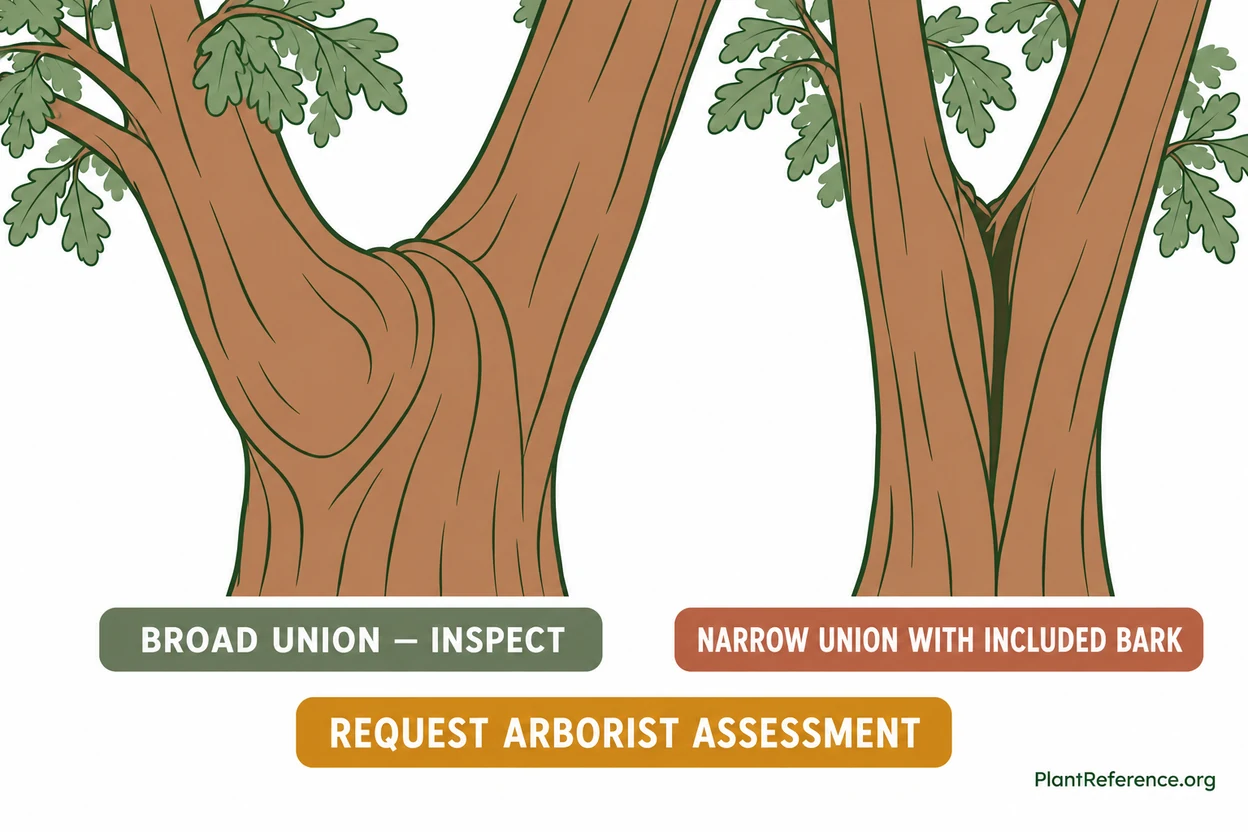
Pay attention to codominant stems: two substantial stems competing from the same junction. A narrow union with included bark or visible cracking deserves assessment, but a Y shape alone does not prove that a tree will split. Do not attempt to correct a large established union by cutting off one side yourself.
Prescriptive Pruning: The PPQ Model for Structural Tree Care provides background on deliberate structural decisions. Ask a qualified arborist what the tree needs and why. Appropriate pruning can address particular defects; blanket thinning, topping, or removing most interior foliage is not a dependable hurricane strategy.
Keep climbing, overhead cutting, large limbs, and work near power lines out of homeowner preparation. Do not use a ladder and saw to solve a newly noticed defect as weather worsens. If a tree presents an immediate danger, keep people away and contact the appropriate professional or utility.
Shrub maintenance is a separate matter. Rejuvenation Pruning for Overgrown Shrubs describes a planned horticultural task, not a last-minute tree safety treatment. Finish routine work early enough to remove debris through the normal collection process instead of leaving a pile outdoors when high winds arrive.
Match Drainage Solutions to the Site
Observe water movement during ordinary rainfall from a safe location. Note whether ponding comes from a blocked inlet, a downspout discharge, compacted soil, a low area, or water arriving from elsewhere. A solution that works on freely draining sand may disappoint on heavy clay or shallow limestone.
Start with accessible maintenance: remove loose leaves from surface grates and keep established flow paths unobstructed. Do not enter culverts, remove protective covers, or work in moving water. Persistent ponding near buildings needs a drainage professional rather than an improvised trench.
Option | Main purpose | Suitable question | Important limitation |
|---|---|---|---|
Swale | Convey surface runoff along a graded route | Is there room for a safe surface path? | Needs suitable grading and destination |
French drain | Collect and convey subsurface water | Where will collected water discharge? | Buried pipe is ineffective without a functioning outlet |
Rain garden | Temporarily hold and infiltrate runoff | Can this soil absorb water appropriately? | Saturated ground and major flooding can exceed capacity |
Permeable paving | Reduce runoff from some hard surfaces | Is the base and soil suitable? | Requires design and ongoing maintenance |
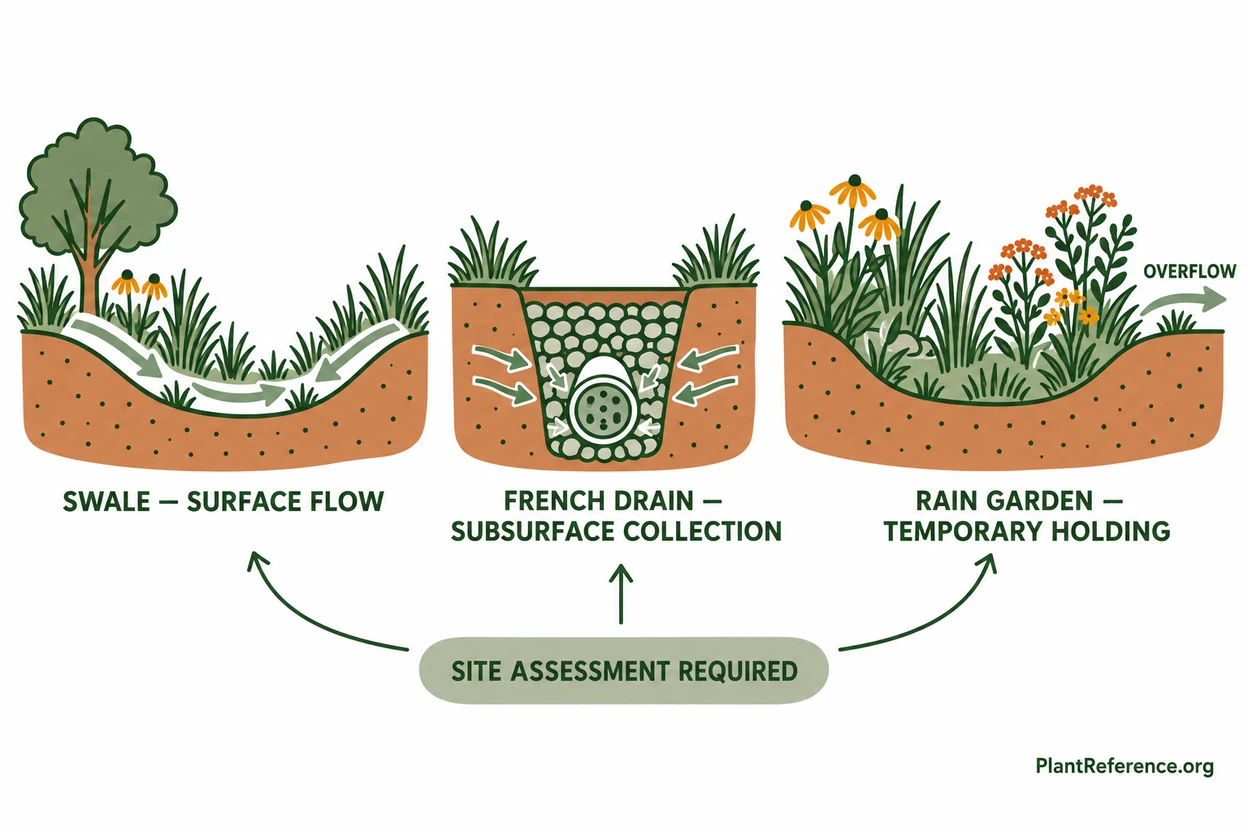
A rain garden is not simply a hole in the wettest part of the yard. How to Build a Rain Garden: Three-Zone Planting explains the planting concept, while the site's infiltration, utilities, foundations, and overflow route determine whether the location is appropriate. Confirm those factors before digging.
Similarly, Permeable Pavers: Stormwater Guide for Homeowners covers an option for planned hardscape changes, not an emergency flood fix. Never redirect runoff toward neighboring property or assume a street, public drain, or waterway is an approved discharge point. Arrange local review where needed before changing drainage.
Raised beds protect some garden roots but do not solve whole-property flooding. Poor Drainage in Raised Beds: Causes and Fixes for Waterlogged Soil helps diagnose that smaller problem. Keep mulch and loose material out of established runoff routes; How Much Mulch Do You Need? Depth and Volume Guide explains normal placement without piling material against trunks.
Secure Loose Items Before Weather Deteriorates
Make a storage list while there is time to act calmly. Small pots, hanging baskets, tools, decorations, hose attachments, lightweight furniture, and temporary garden frames all need attention. Use enclosed storage where practical and follow manufacturer guidance for items designed to be secured in place.
Do not assume a heavy pot cannot overturn or that a casual tie will hold a tall trellis. Moving a large planted container can also cause injury. Plan help or professional handling early rather than improvising lifting during deteriorating weather.
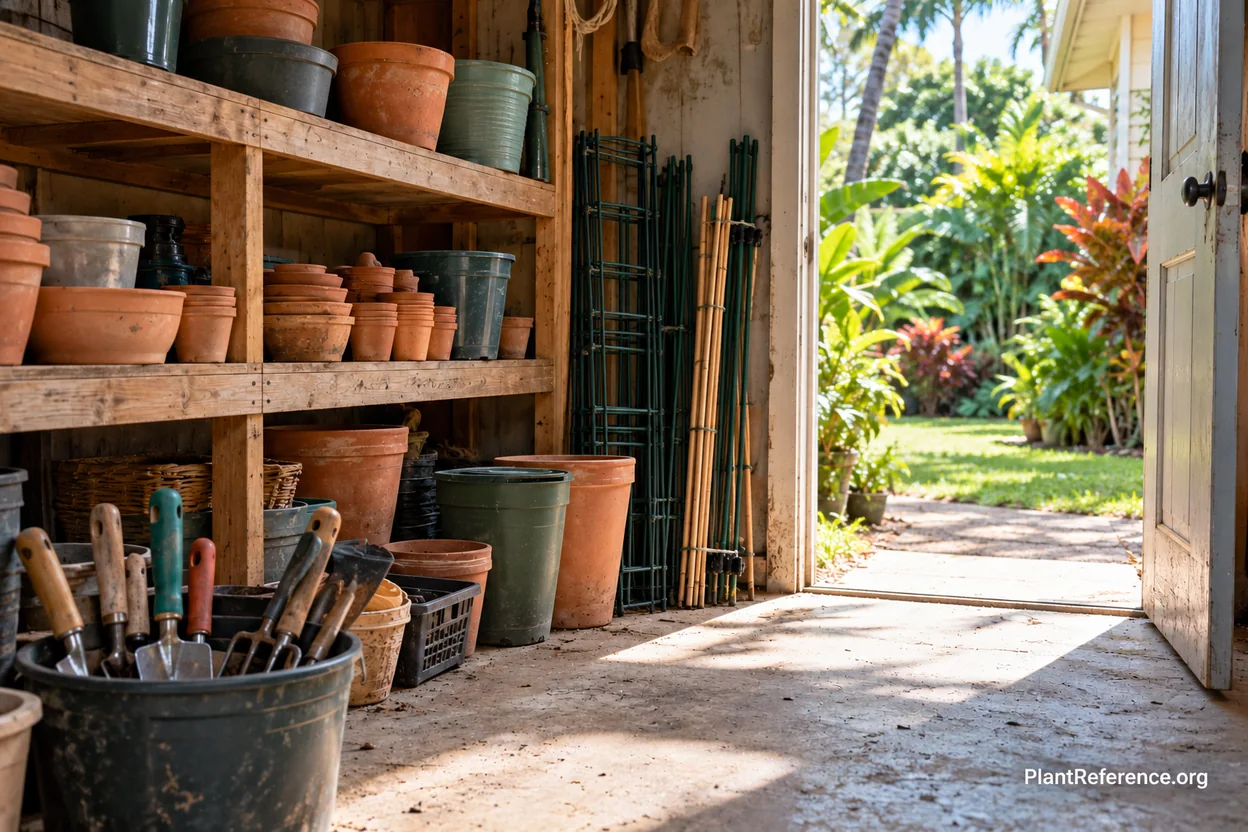
For containers remaining outdoors, check ordinary drainage before the event. Gravel in Bottom of Pots for Drainage: Why It Backfires explains why gravel is not a repair for a poorly draining pot. Container improvements are plant care, however, not a reason to stay outside when emergency instructions say to shelter or leave.
Finish professional tree and drainage work well ahead of threats.
Store loose objects before wind and rain increase.
Keep access routes clear without entering hazardous areas.
Follow official alerts and evacuation guidance.
Leave unsafe or unfinished outdoor tasks until conditions permit.
Review the Yard Safely After the Storm
Do not rush outside because the wind has briefly eased. Follow official guidance about when it is safe to move around. Avoid downed lines, hanging limbs, unstable trees, floodwater, and damaged structures; treat suspicious lines as energized and report them to the utility.
When safe access is established, photograph damage from a distance and note blocked drainage paths. Do not pull lodged branches free, cut tensioned limbs, or try to stand a large fallen tree upright. Storm-damaged wood and disturbed root plates can move unexpectedly.
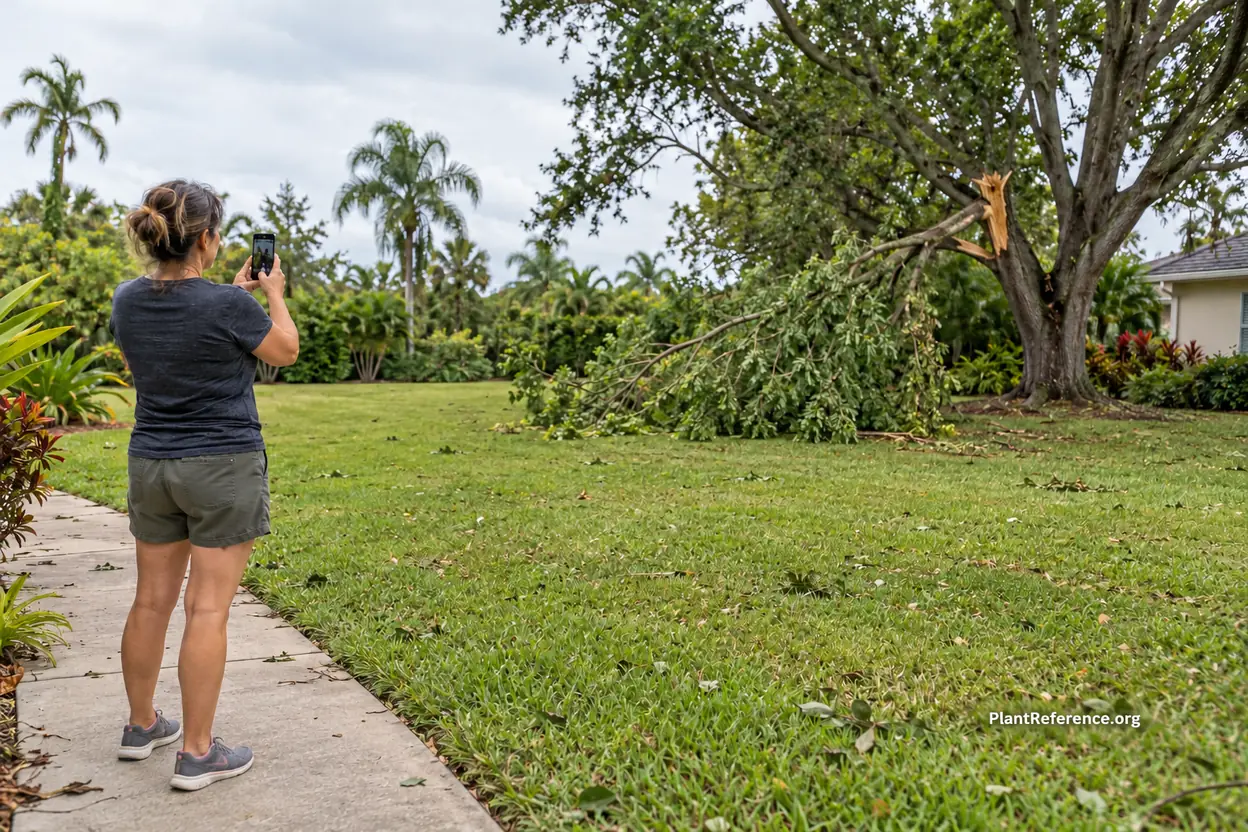
Use what happened to improve next season's plan. Record where water collected, which items were difficult to store, and which trees need follow-up. Hurricane landscaping preparation is an ongoing process of reducing avoidable risks, not a promise that the next storm will leave the garden untouched.
Frequently Asked Questions

Reading about plants and recognising them are different skills. These three build the second.
- Daily PlantIdentify the day’s mystery plant from a close-up photograph.
- Keyed OutWork a dichotomous key, lead by lead, to name a hidden specimen.
- Name That PlantName a specimen from botanical clues dealt hardest first.
Free to play, no account needed
Tagged with
Maria is a tropical plant grower in Miami who maintains a half-acre property packed with palms, fruit trees, and tropical ornamentals. She grew up in Puerto Rico surrounded by tropical plants and moved to South Florida for college, earning a biology degree. Maria worked at a major tropical botanic garden for several years before transitioning to freelance writing and consulting. She specializes in tropical fruit growing, hurricane-resilient landscaping, and the particular challenges of gardening in South Florida—salt air, limestone soil, intense rain, and the threat of tropical storms. Maria's practical about the realities of tropical gardening: it's not paradise if you don't understand what you're dealing with.