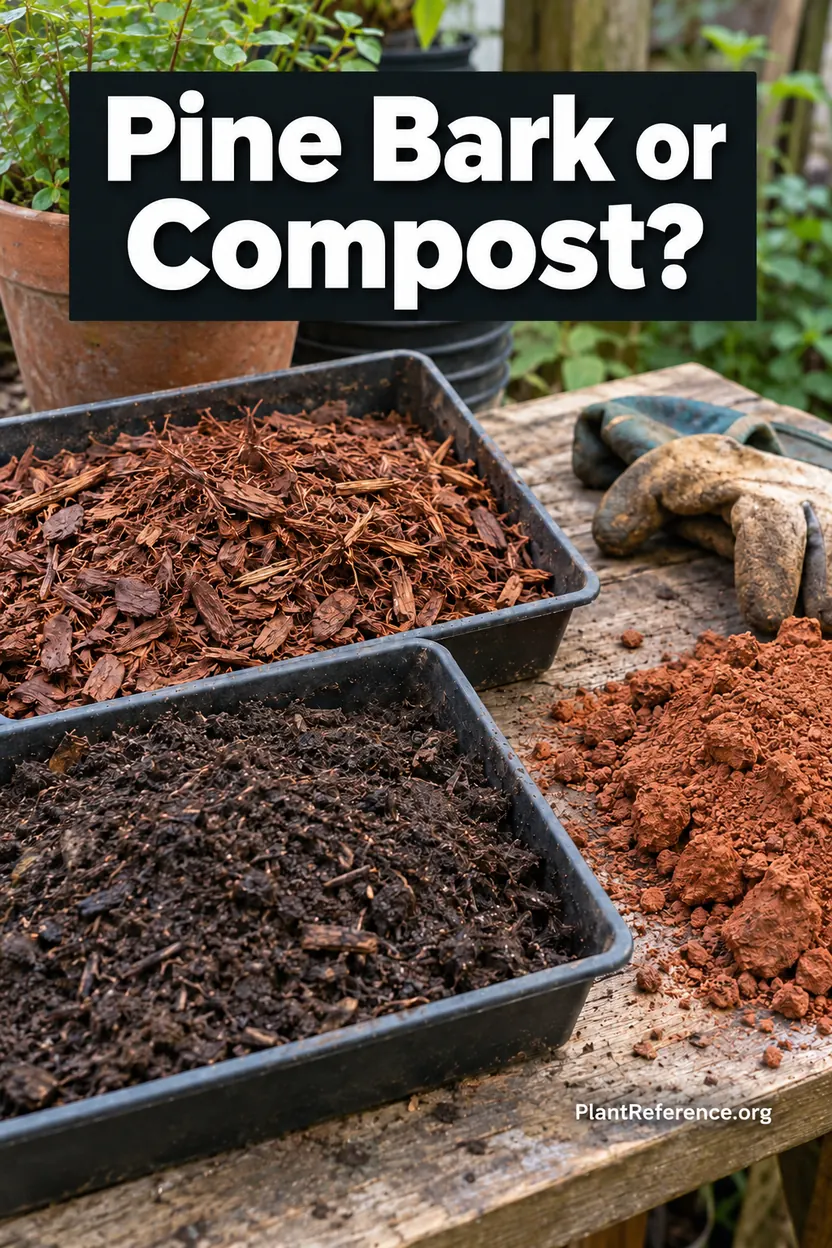
Best Soil Conditioner for Clay: Pine Bark vs Compost
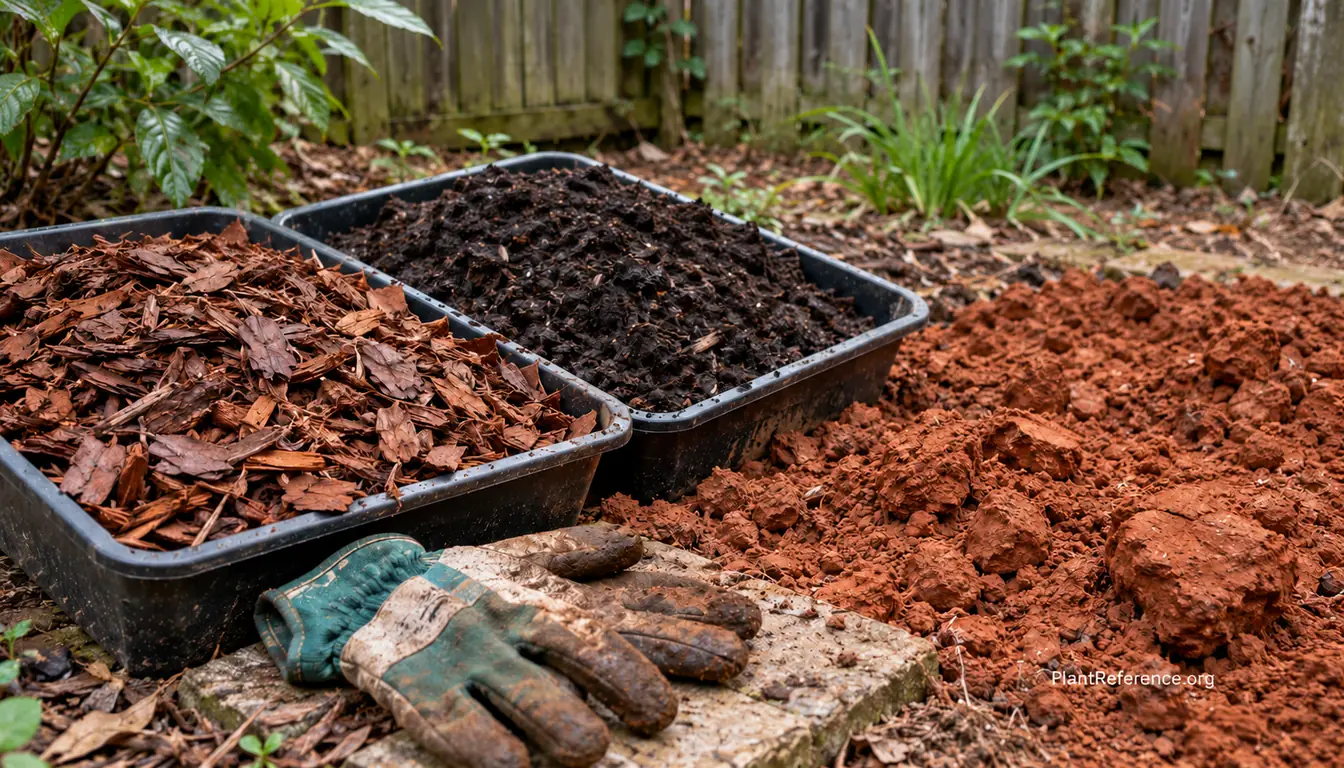
— Image © PlantReference.org 2026
The best soil conditioner for clay is not necessarily the bag with the strongest drainage claim. For Southern beds, fine pine bark and mature compost are the useful starting comparison: bark contributes persistent organic structure, while compost supports aggregation and biological activity. Neither can make water drain uphill or repair a compacted subsoil overnight.
Best Soil Conditioner for Clay: Match the Problem
Red clay can be productive soil. Trouble starts when small particles are packed tightly, roots lack oxygen, and rain has nowhere to go. An amendment should improve the growing environment, not simply make the surface look darker. How to Improve Clay Soil Without Making It Worse explains why handling soil correctly matters as much as buying material.
Separate three questions before shopping: Is the soil compacted? Is the bed receiving runoff? Is its chemistry wrong for the plants? Those problems can occur together, but a single bag rarely addresses all three. Start with observations after rain and a soil test, using How to Test Garden Soil: Jar, Ribbon & pH Tests for the basic distinctions.
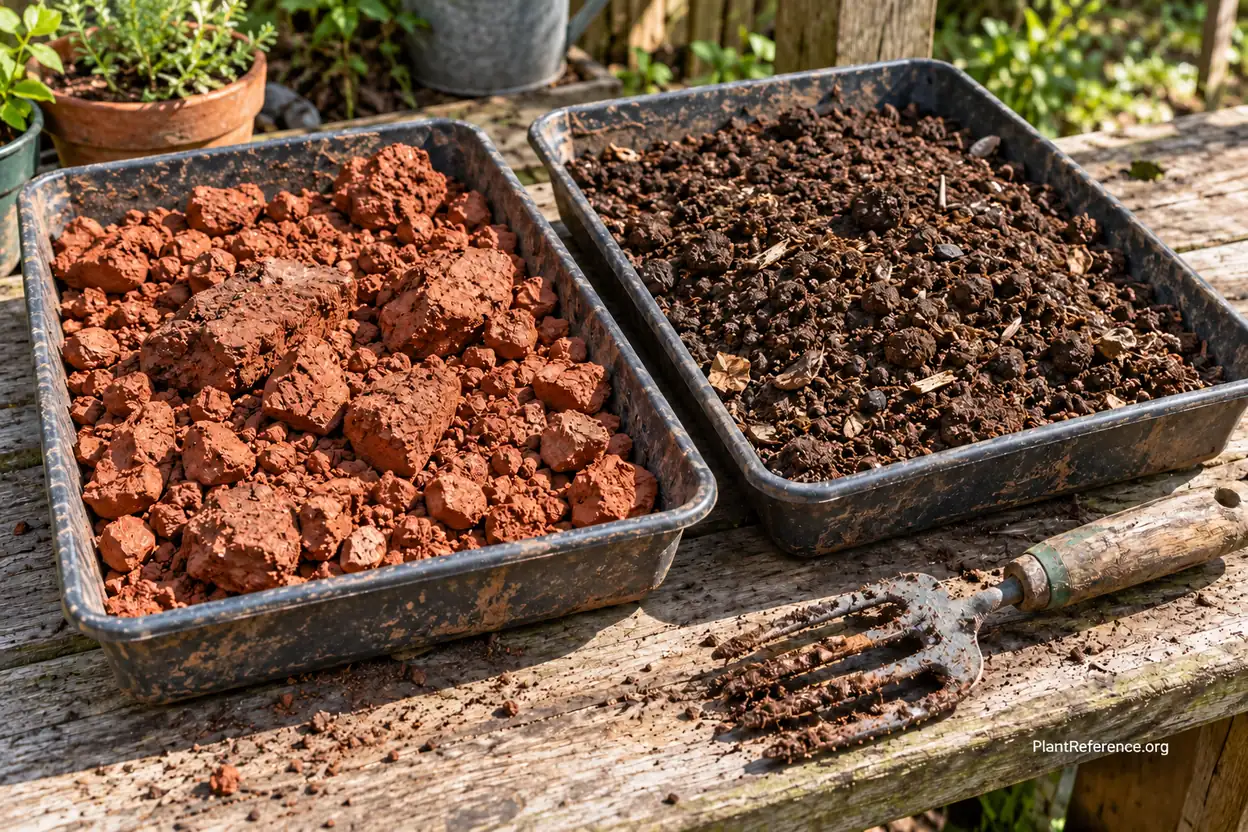
Think in categories rather than a universal winner. Pine bark fines suit a bed needing a longer-lasting organic component. Finished compost suits a bed needing organic matter renewal. Mushroom compost needs a closer look at chemistry, especially around acid-loving ornamentals. Gypsum belongs on a soil-test-driven shopping list, not in every cart.
Material | Useful role | Check before buying | Main limitation |
|---|---|---|---|
Pine bark fines | Organic structure | Grind and intended soil use | Coarse mulch is not the same grade |
Finished compost | Aggregation and organic matter | Maturity and feedstock | Nutrients and pH vary |
Mushroom compost | Organic matter addition | pH and suitability for plants | Can be too alkaline |
Composted manure | Organic matter and nutrients | Finished condition and nutrient analysis | Not a neutral filler |
Gypsum | Specific chemical correction | Soil-test recommendation | Not a universal clay cure |
For the regional context behind these choices, read Southeast Gardening Guide: Heat, Humidity & Clay Soil. The goal is a functioning root zone through wet weather and summer heat, not replacing every trace of native clay.
Pine Bark Fines: Buy the Right Grade
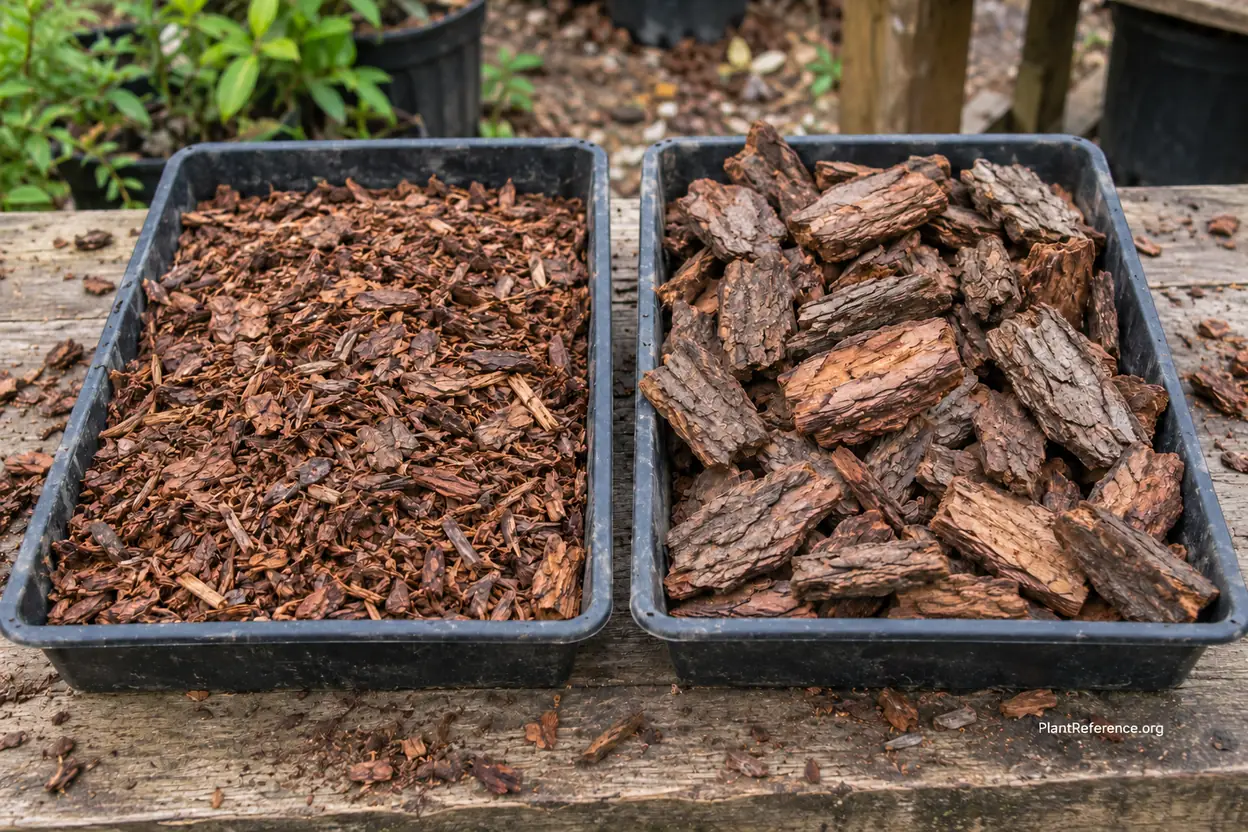
Look for pine bark sold as a soil conditioner, with a small, reasonably consistent grind. The regional research describes roughly 1/4–1/2 inch (6–13 mm) particles. Treat that as a buying reference, not a promise that every bag labeled “fines” has an identical screen size. Ask to see a sample if the packaging gives no useful detail.
Large decorative nuggets are a different purchase. They can work as surface mulch, but they do not mix through a planting bed like smaller particles. Conversely, a bag dominated by powder should not be assumed equivalent to a graded conditioner. Particle distribution matters more than a picture of lush plants on the front.
What bark does—and does not—provide
Bark supplies carbon-rich organic material that breaks down more slowly than many softer residues. It helps create a more open amended mixture, but it is not a complete fertilizer and does not remove the need to assess drainage. Do not buy it on the assumption that it will produce a precise final pH.
For an established bed, protect existing roots instead of trying to force a new material deeply through them. A new empty bed offers more freedom to prepare the whole planting area. Use Amend Red Clay Soil in the Southeast: A Yearly Plan to connect the purchase to an actual maintenance plan.
Finished Compost and Mushroom Compost Compared
Finished compost is the more flexible option when the aim is to replenish organic matter. It supports the processes that bind soil particles into aggregates, rather than permanently changing clay into another soil texture. Warm, humid conditions speed decomposition, so inspect beds each year instead of assuming one application lasts indefinitely.
Choose a mature material with a clear description of its ingredients. Garden-soil blends, pure compost, and composted manure are not interchangeable names. A blend can be useful, but you should know what you are purchasing before comparing prices or deciding how much to incorporate. Soil Health 101: How to Build Living, Productive Garden Soil puts organic matter in that broader context.
When mushroom compost needs caution
Mushroom compost is spent growing substrate, not a guarantee of a particular pH. It can add organic matter, but its alkalinity can be a poor match for beds devoted to acid-loving plants. Ask the supplier for actual analysis rather than assuming that “organic” means chemically suitable everywhere.
If pH already needs correction, select the conditioner and the chemical treatment separately. Do not attempt to balance an alkaline amendment by guessing at an acidifier dose. Raised Bed Soil pH Problems: Testing, Adjusting, and Maintaining Balance explains why repeated testing is more useful than opposing products added blindly.
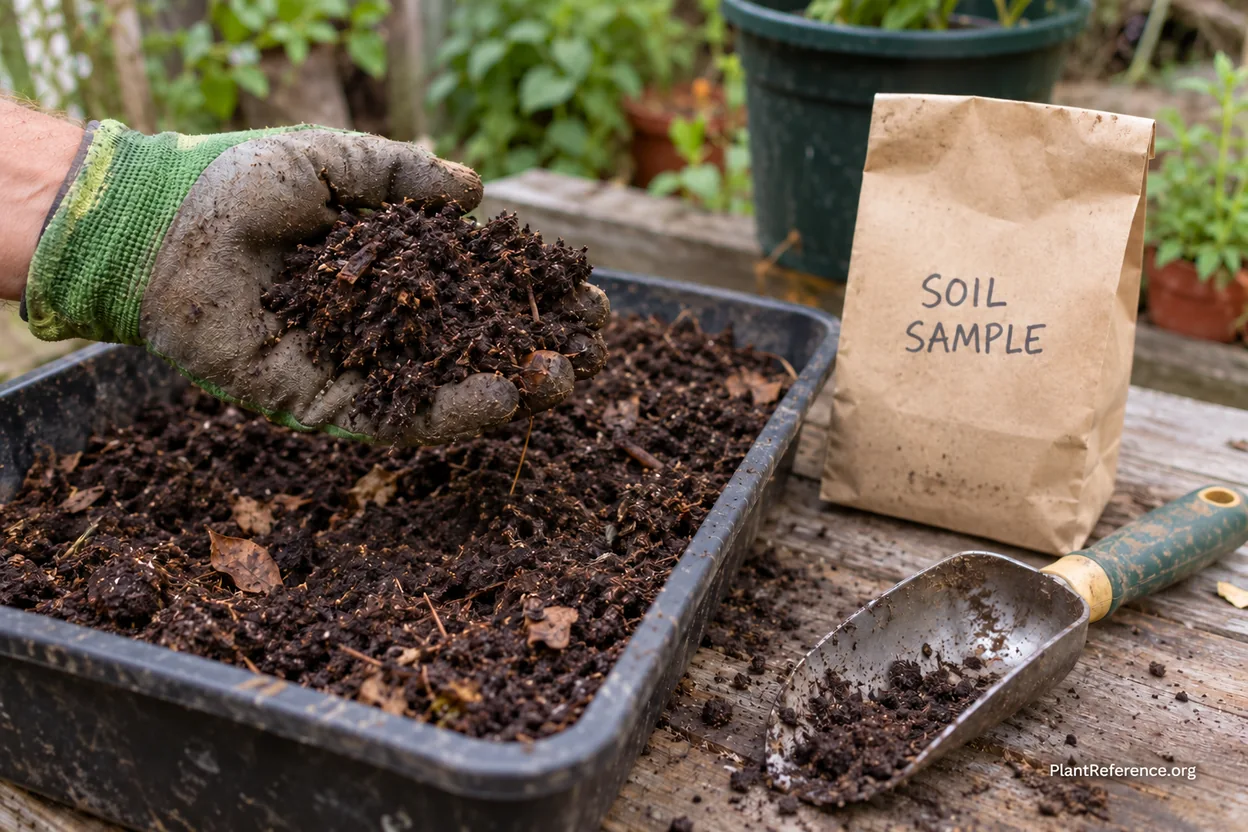
Home-produced compost can also reduce purchased volume. Follow How to Build a Hot Compost Pile: Finished Compost in Weeks for the process, but judge readiness by the material rather than a promised calendar deadline. Unfinished residues and finished compost should not be treated as equivalent bed amendments.
Compare Bag Volume, Chemistry, and Real Cost
The best soil conditioner for clay becomes an expensive choice if you compare bag prices without comparing volume. Weight varies with moisture and material density. Use cubic feet or liters for bed-volume planning, then include delivery costs and the practical effort of moving it.
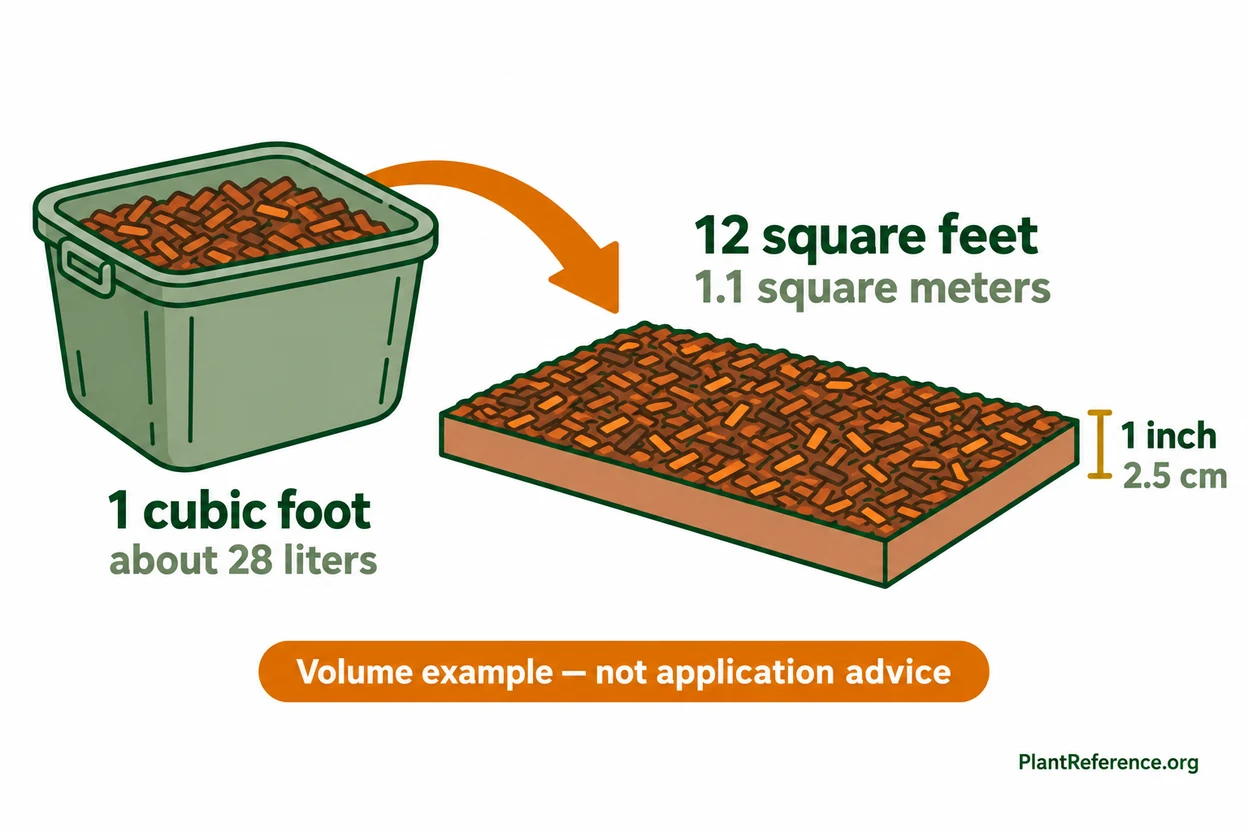
For example, a 12-square-foot (1.1-square-meter) area covered 1 inch (2.5 cm) deep needs about 1 cubic foot (28 L) of material before settling. This is volume arithmetic, not a recommended amendment rate. Actual incorporation depth and quantity should match the soil, plants, and product directions.
Confirm whether the bag contains conditioner, mulch, compost, or a blended garden soil.
Compare volume in the same units before judging the price.
Ask for pH information when planting acid-loving species.
Check maturity and particle size rather than relying on marketing terms.
Buy enough for the planned area without burying established plant crowns.
Keep gypsum off the automatic shopping list
Gypsum supplies calcium and sulfur and has a role in particular soil conditions, including some sodium-related problems. It does not reliably loosen every non-sodic Southern clay. A laboratory recommendation is a better reason to purchase it than a blanket “clay breaker” claim. Best Soil Test Kits for Home Gardeners can help you distinguish a screening tool from a more informative analysis.
Put Your Purchase to Work Without Damaging Soil
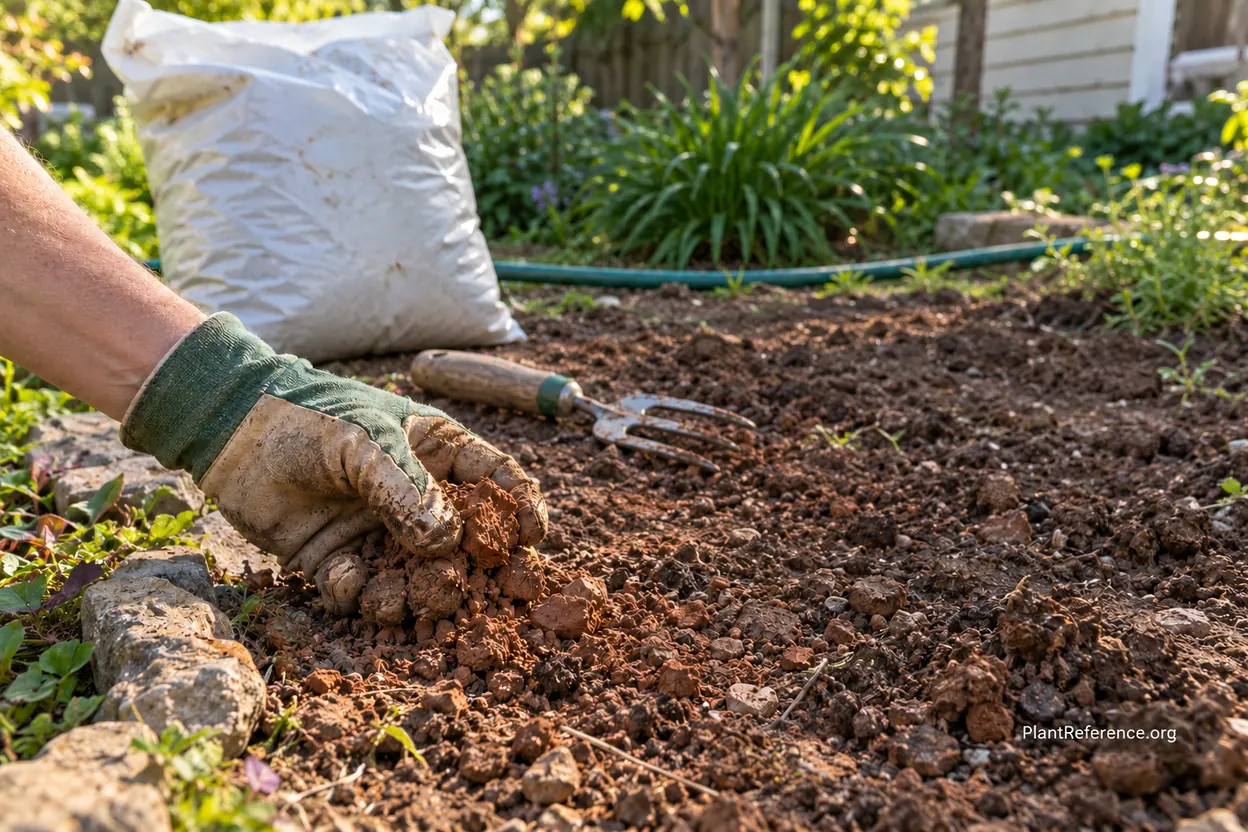
Avoid working clay while it is wet enough to smear. Mixing a good conditioner into badly handled soil can leave a dense structure underneath a temporarily fluffy surface. Plan preparation when the soil is workable, and keep repeated foot traffic out of the planting area.
Do not pour concentrated amendment into a small hole and expect the surrounding clay to behave differently. Think about the entire bed and where water will go after heavy rain. Low spots receiving runoff need a drainage assessment before another load of compost.
Organic material changes as it decomposes. Check bed level, root exposure, drainage, and soil-test results before adding more; yearly assessment does not mean an unlimited annual dose. Raised Bed Soil Settling and Compaction: Prevention and Solutions covers the difference between normal settling and a developing structure problem.
For most shoppers, the sensible shortlist starts with properly graded pine bark and mature compost. Choose mushroom compost only when its chemistry fits, and reserve gypsum for a demonstrated need. Better soil comes from the right material plus careful management—not from collecting every amendment on the shelf.
Frequently Asked Questions

Reading about plants and recognising them are different skills. These three build the second.
- Daily PlantIdentify the day’s mystery plant from a close-up photograph.
- Keyed OutWork a dichotomous key, lead by lead, to name a hidden specimen.
- Name That PlantName a specimen from botanical clues dealt hardest first.
Free to play, no account needed
Tagged with
Aisha manages a small tropical nursery on the east side of Houston, specializing in plants that can handle the Gulf Coast's humidity, heat, and unpredictable flooding. She studied horticulture in college and worked at a wholesale grower before opening her own operation. Growing up, her parents kept a kitchen garden with okra, bitter gourd, and curry leaf plants—a tradition she's continued. Houston's subtropical climate lets her grow things most of the country can't, but it also means dealing with fungal issues, standing water, and summers where it's too hot for even tomatoes. Aisha writes about tropical and subtropical plant care, humidity management, and working with heavy clay soils.