Best Soil Test Kit: Home Tests vs Laboratory Reports
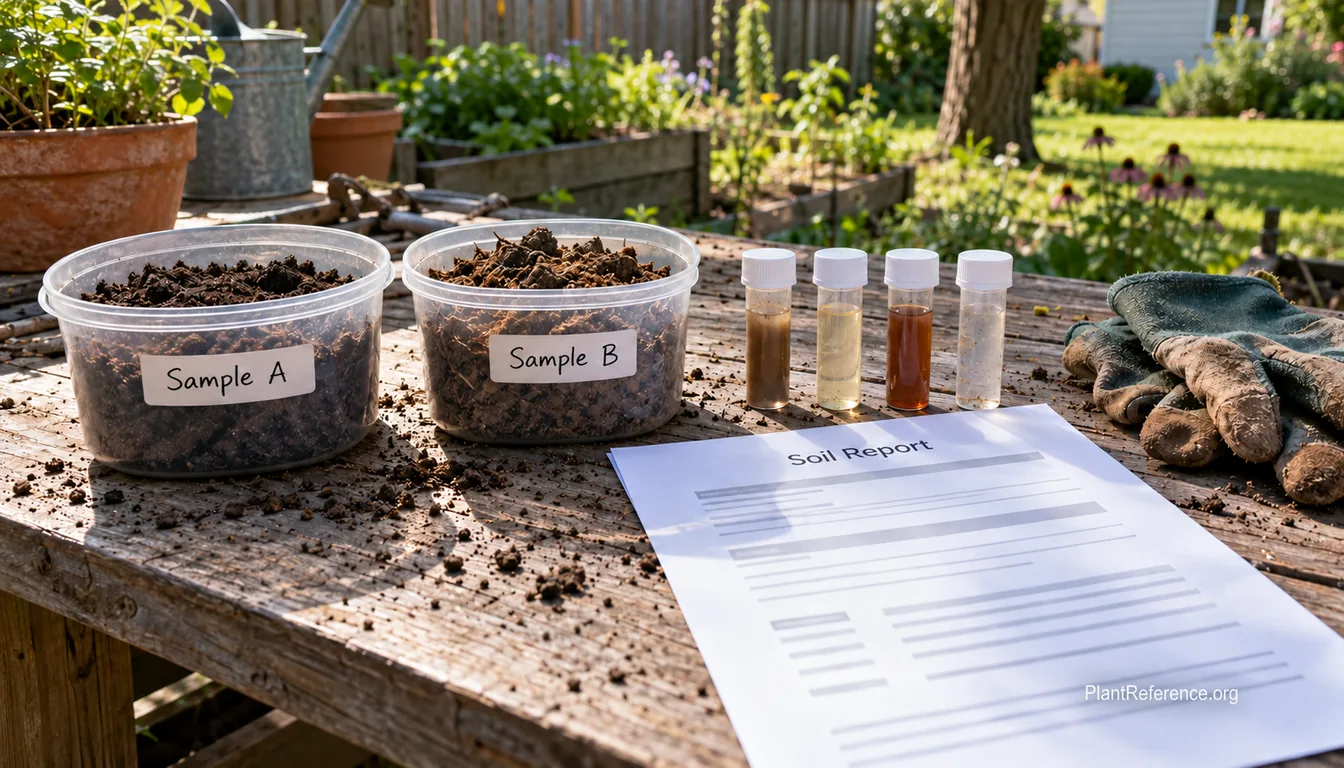
— Image © PlantReference.org 2026
The best soil test kit is the one that answers the question behind your purchase. If you need to decide whether to apply lime, sulfur, or fertilizer, prioritize a laboratory report with relevant interpretation. If you only want a preliminary pH check, a home test can help—but a quick reading is not an amendment prescription.
Best Soil Test Kit: Start with the Decision
Before comparing brands, write down what you want to know. Is the soil too acidic? Does it need phosphorus? Is it compacted? Those are different questions, and a product labeled “soil tester” may address only one. Soil Health 101: How to Build Living, Productive Garden Soil provides the broader framework.
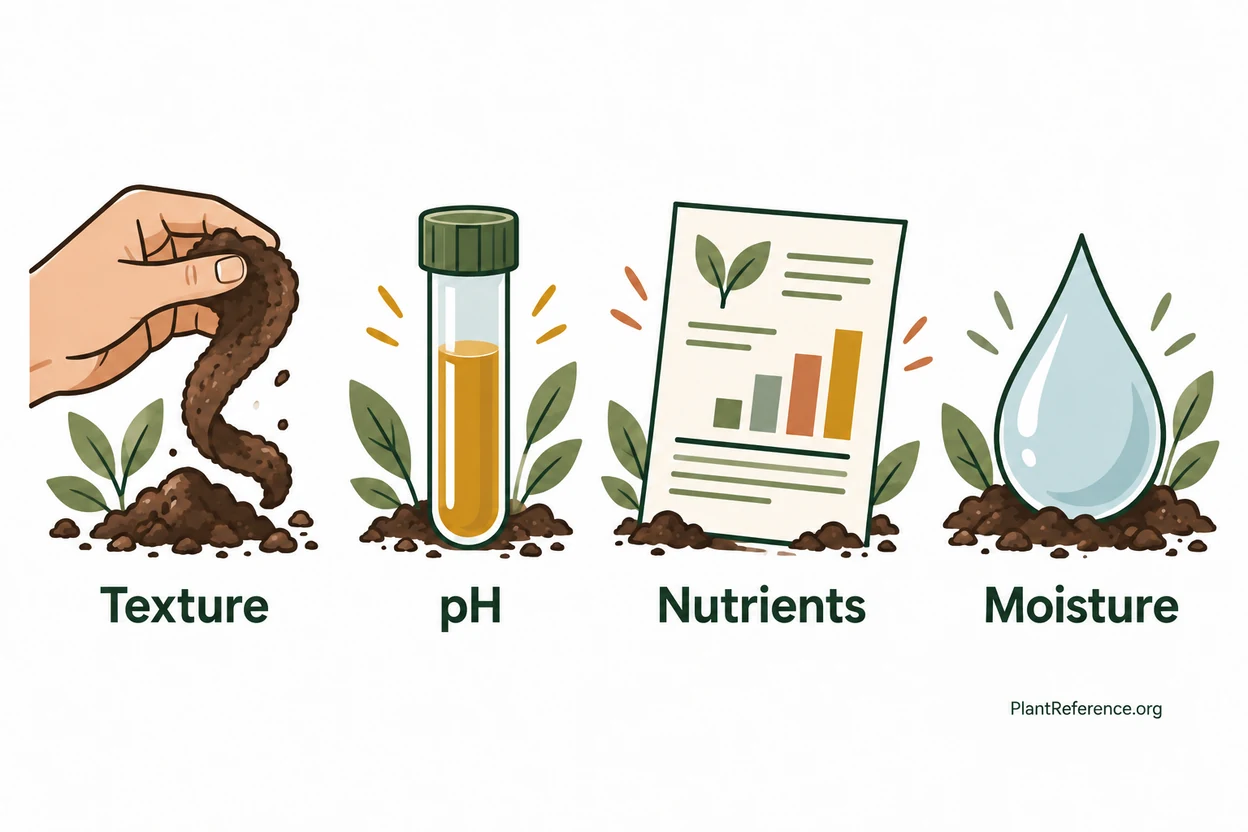
Soil texture is the proportion of sand, silt, and clay. Soil pH describes acidity or alkalinity. Nutrient testing evaluates specified chemical properties using a particular method. A meter with several scales does not necessarily measure all these things, and a long list of functions is not evidence of reliable fertilizer recommendations.
Test category | Useful question | Buying priority | Important limitation |
|---|---|---|---|
Home pH test | Is acidity worth investigating? | Clear method and readable scale | Does not alone give an amendment rate |
Home nutrient kit | What screening category does this method report? | Named nutrients and instructions | Categories are not a complete fertility plan |
Soil meter | What specified property does this instrument measure? | Method, care, and calibration requirements | Display precision does not prove accuracy |
Laboratory analysis | What management change is justified? | Appropriate panel and recommendations | Only tests the submitted sample and requested properties |
Jar or ribbon test | What is the soil's approximate texture? | Consistent procedure | Not a chemical nutrient analysis |
For inexpensive physical observations, start with How to Test Garden Soil: Jar, Ribbon & pH Tests. A ribbon around 1 inch (2.5 cm) long is a texture observation, not a pH reading. Keep those distinctions clear and you are less likely to buy an instrument that cannot diagnose the problem you have.
Home pH Kits and Meters Compared
Home pH testing is useful as a first look at acidity, provided you follow the exact preparation and reading procedure. Compare the measurement range, increments on the scale, required supplies, storage instructions, and number of tests. A kit with difficult-to-read color steps may be frustrating even if the process is straightforward.
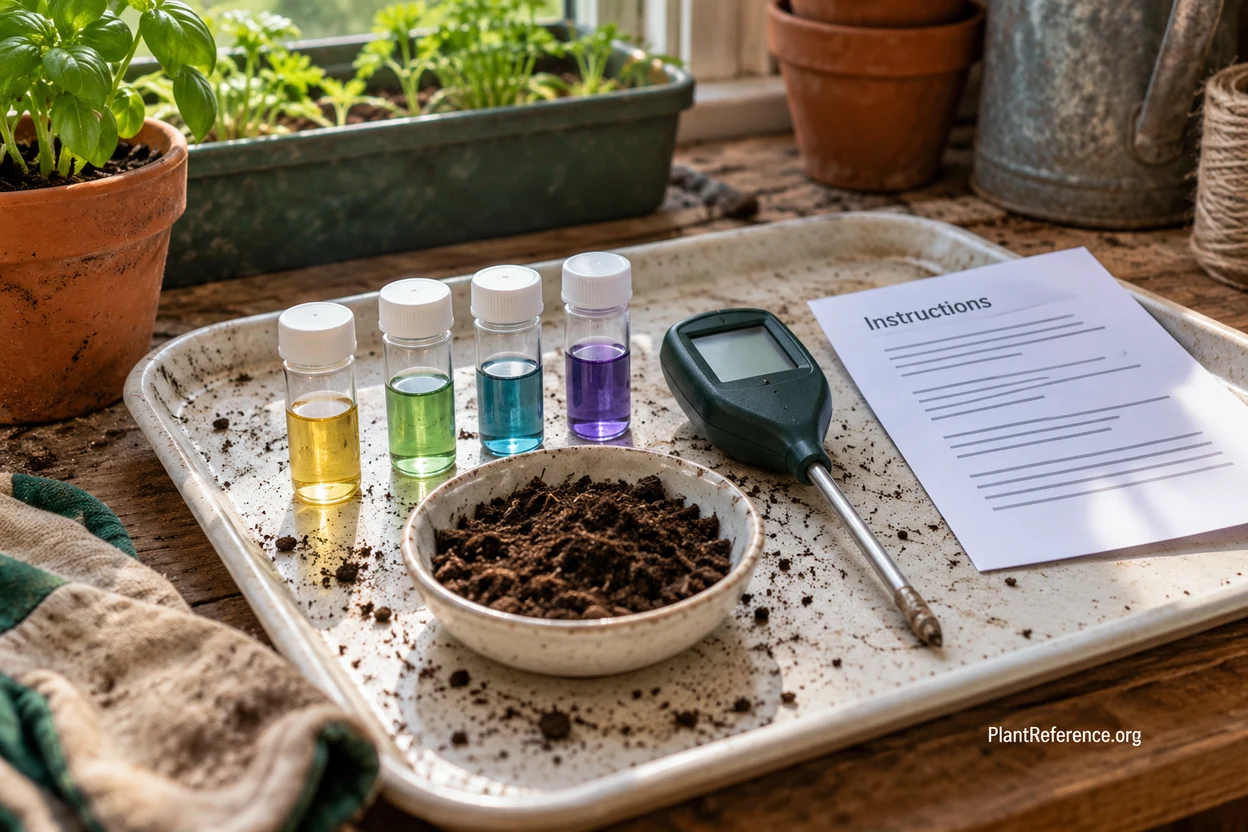
Meters add another set of questions. Does the instrument test a prepared suspension or insert directly into soil? What cleaning, calibration, and storage does it require? Read those instructions before buying; do not assume every probe operates the same way or that a battery-free device has no limitations.
One supported catalog option
The catalog lists the Rapitest Digital Soil pH Meter 1880 with Protective Case, with a stored range of $25–30. It is an option to investigate for pH monitoring, not a substitute for laboratory nutrient analysis. Confirm the exact model, included accessories, and operating instructions with the seller.
Do not confuse a display showing tenths with demonstrated accuracy to a tenth. A manufacturer specification, a laboratory comparison, and a precise-looking number are different kinds of evidence. This guide does not claim hands-on accuracy testing of the listed meter.
Use a surprising home result as a reason to investigate, not immediately add a corrective product. Raised Bed Soil pH Problems: Testing, Adjusting, and Maintaining Balance explains the practical consequences. If a substantial pH correction is being considered, a laboratory recommendation is a stronger basis than one isolated probe reading.
DIY Nutrient Kits: Know What the Result Means
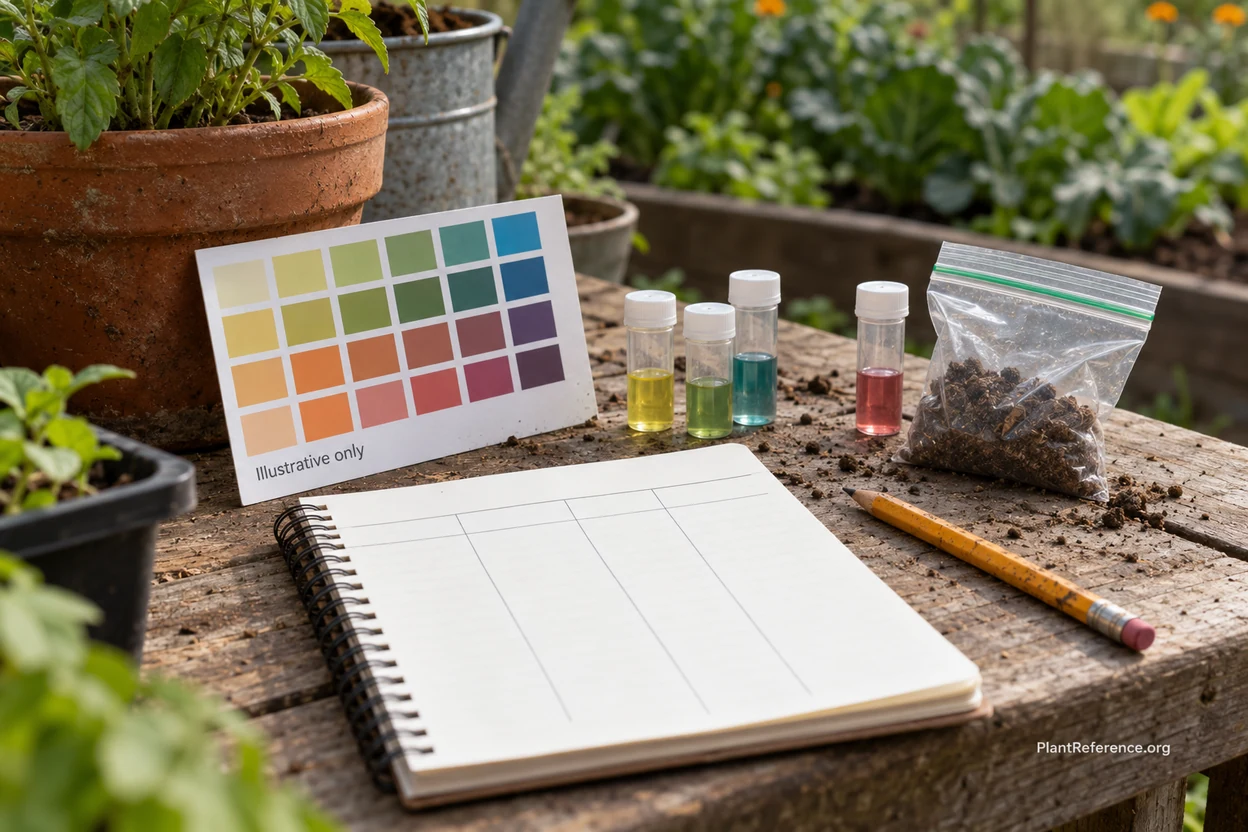
Home nutrient kits commonly organize results around nitrogen, phosphorus, and potassium. Before buying, check exactly which measurements are included and how the instructions translate them into categories. A result called low or high belongs to that method's scale; it does not automatically translate into pounds of fertilizer for your garden.
Evaluate the whole procedure. How much soil and water are required? Are consumables included for repeated tests? Is the endpoint a color comparison? Can replacement reagents be obtained? Clear directions and practical repeatability are more useful buying criteria than a box covered in large nutrient symbols.
Avoid fertilizing from a single ambiguous color
If you cannot confidently distinguish two color categories, record that uncertainty. Repeat only as instructed, and seek laboratory analysis when the result would lead to a meaningful treatment. More fertilizer is not a harmless way to cover uncertainty, particularly when soil already contains enough of a nutrient.
DIY Organic Fertilizer Blends: A Soil-Test-First Guide is the next step after the need has been established. Organic ingredients still contribute nutrients; their origin does not remove the need to match the application to the soil and crop.
Also separate nutrient supply from nutrient availability. Soil pH can affect whether roots obtain a nutrient already present. Iron Chlorosis in Desert Soil: Yellow Leaves, Green Veins illustrates why adding more of an element is not always the first answer. Plant symptoms help frame a question, but they are not themselves a complete soil analysis.
Laboratory Tests: Buy Interpretation, Not Just Numbers
A mail-in kit is primarily a route to a laboratory service. Compare what that service measures, whether the analysis is suitable for your growing medium, and whether recommendations account for the intended plants. The collection box is less important than the report that comes back.
Check the panel before paying. Do not assume every laboratory package includes nitrogen, organic matter, salts, or every micronutrient. Likewise, a routine fertility panel does not establish that soil is free of contaminants. Ask for the specific analysis needed instead of inferring coverage from “complete” on the package.
Look for an actionable report
Useful interpretation connects a result to a management decision. The research emphasizes testing before choosing lime or sulfur because the two move pH in opposite directions. A report should help distinguish a genuine correction from an unnecessary amendment, not simply provide another number to worry about.
Compare the total cost, including analysis, shipping, and any optional panels, without assuming today's price from an old listing. Ask how results are delivered and whether someone can clarify an unexpected finding. A cheaper package is not a bargain if it omits the question that prompted the test.
Regional context matters too. Soil Types by Region: Diagnose and Fix Your Garden Soil explains why a sandy coastal bed and an inland clay bed should not receive identical advice. But a regional pattern is background information, not a substitute for testing your own sample.
Best Soil Test Kit Results Start with Sampling
Even a good method cannot rescue a sample that does not represent the area being managed. Read the chosen laboratory or kit's collection instructions before going outside. Use its specified depth, amount, preparation, and packaging rather than improvising a universal protocol.
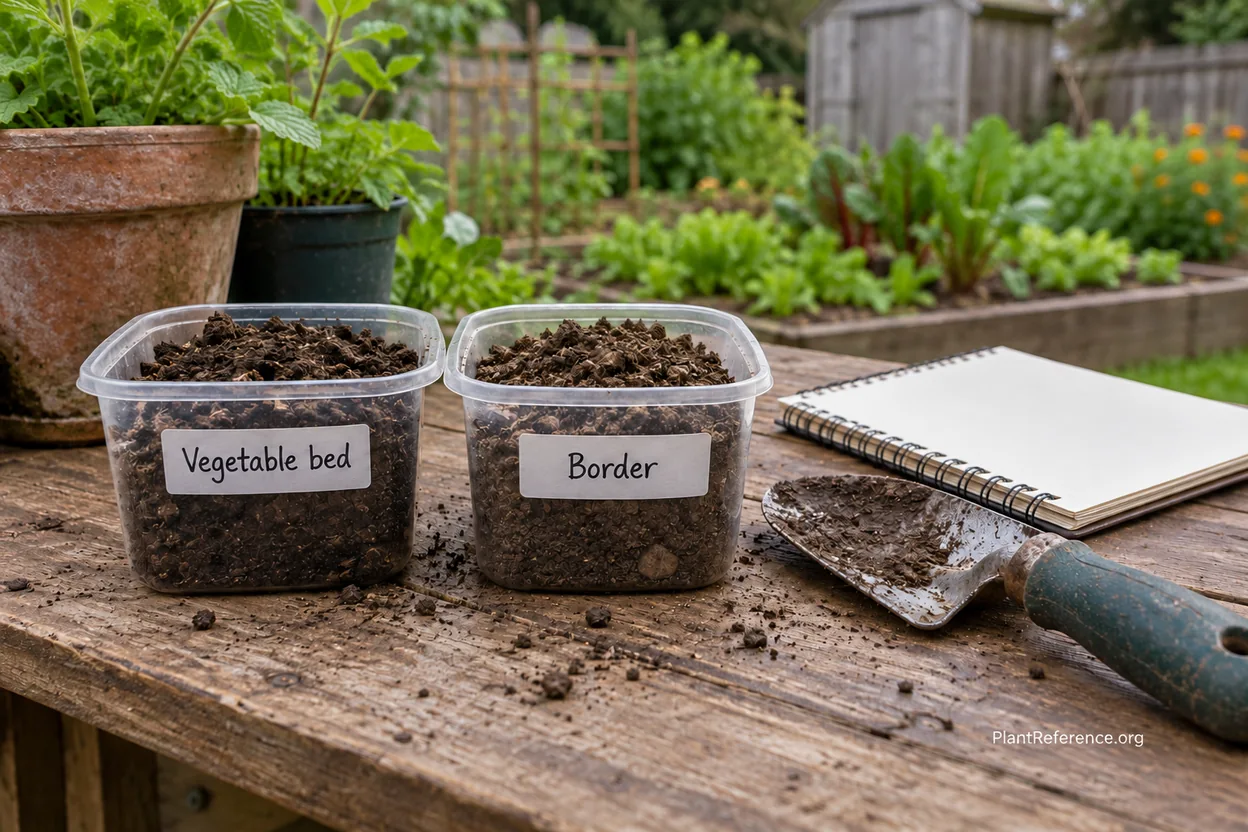
Keep distinctly different areas separate. A heavily amended vegetable bed, an untouched border, and a visibly troubled patch may need different samples. Combining them can hide the very difference you are trying to understand. Label each sample with enough detail to find the same location again.
Decide the question before selecting the test panel.
Follow the provider's sampling and preparation instructions.
Keep different soils or management areas separately identified.
Record recent amendments and relevant growing conditions.
Save results with the sample location and testing date.
Confirm unexpected findings before making major corrections.
Finally, remember what chemistry cannot tell you alone. Compaction and water movement still require physical observation, as discussed in How to Improve Clay Soil Without Making It Worse and How to Improve Sandy Soil That Dries Out Fast. A healthy garden starts with a useful diagnosis—not the largest collection of testing gadgets.
Frequently Asked Questions
Reading about plants and recognising them are different skills. These three build the second.
- Daily PlantIdentify the day’s mystery plant from a close-up photograph.
- Keyed OutWork a dichotomous key, lead by lead, to name a hidden specimen.
- Name That PlantName a specimen from botanical clues dealt hardest first.
Free to play, no account needed
Tagged with
Priya is a soil scientist at an agricultural extension office who gardens on a quarter-acre suburban lot in Indianapolis. Her professional work focuses on soil health and nutrient management, which gives her a perspective most gardening writers don't have—she thinks about what's happening underground before worrying about what's happening above it. Priya maintains a large pollinator garden, grows herbs and vegetables, and is slowly converting her conventional lawn to a mix of native grasses and low-growing groundcovers. She writes about soil health, composting, fertilizer use, and building the kind of foundation that makes plants thrive without constant intervention.