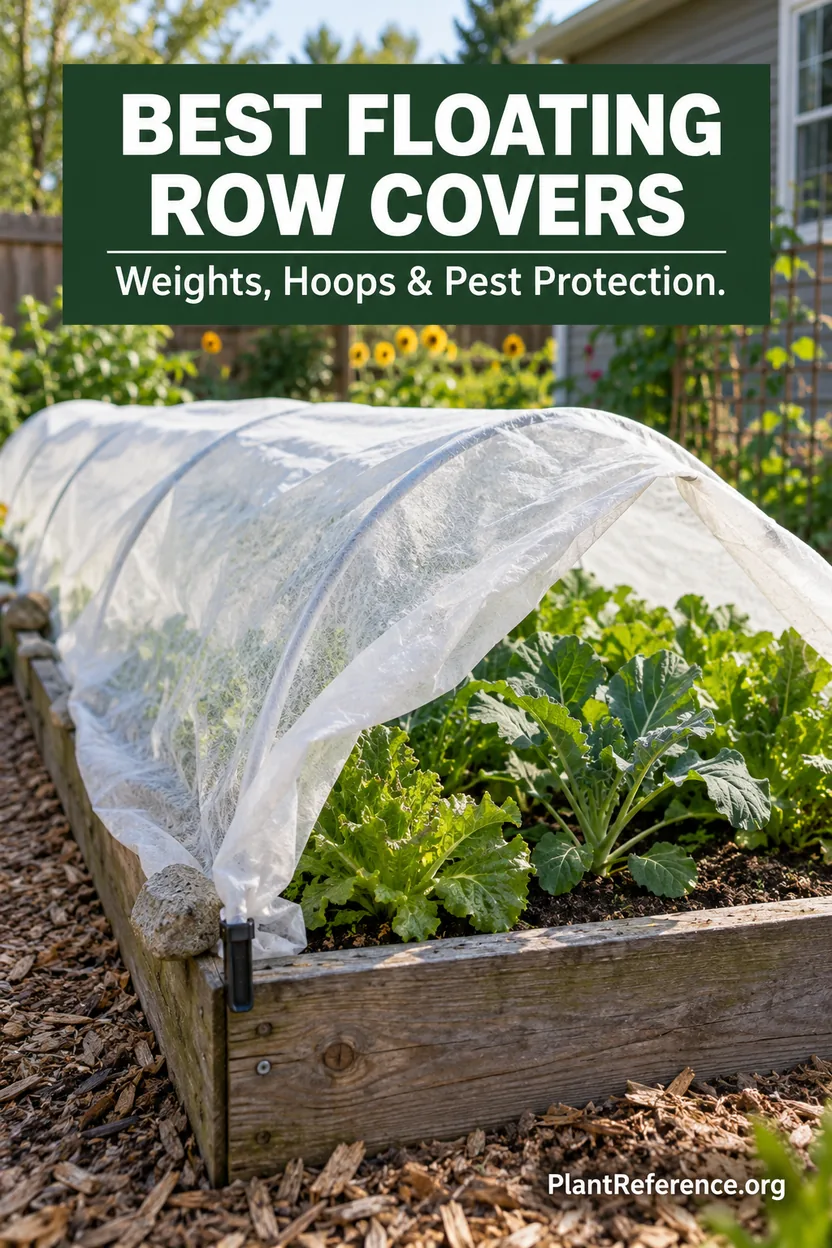
Best Floating Row Covers for Pest Exclusion
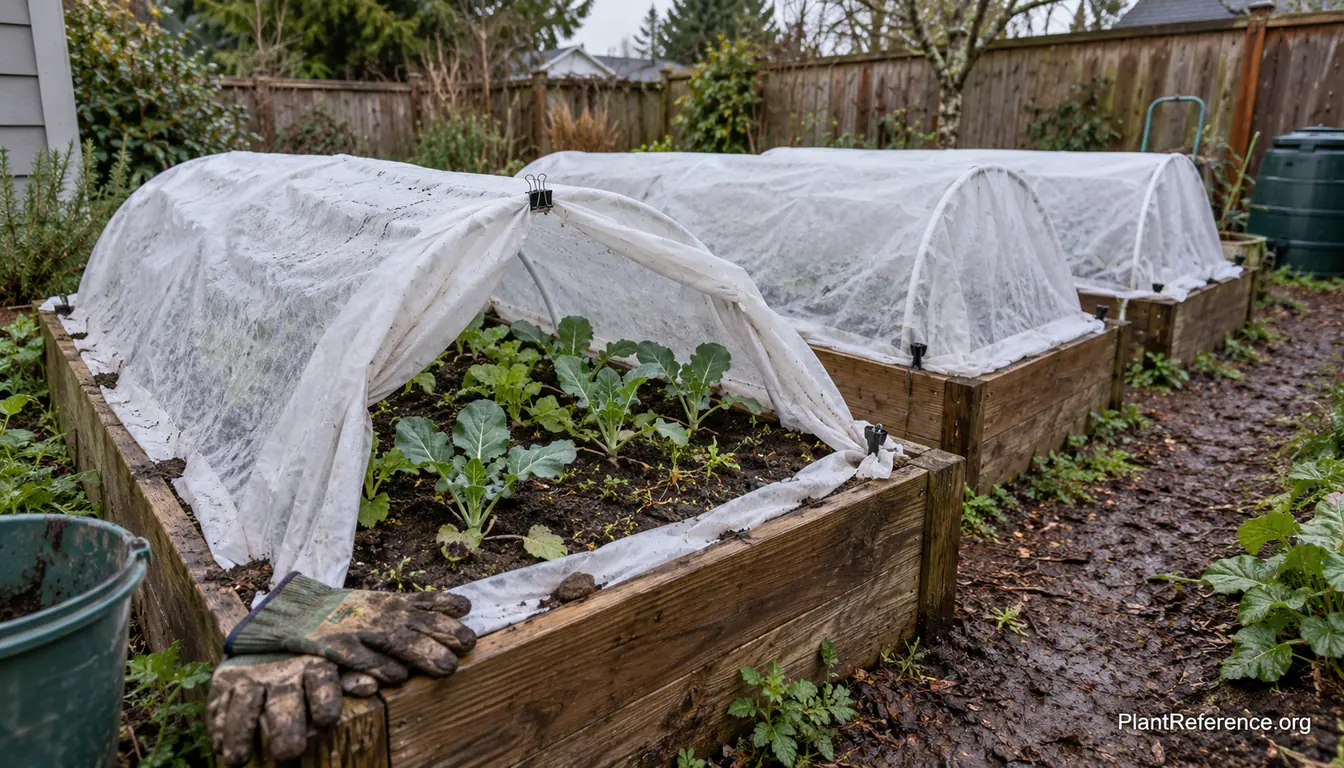
— Image © PlantReference.org 2026
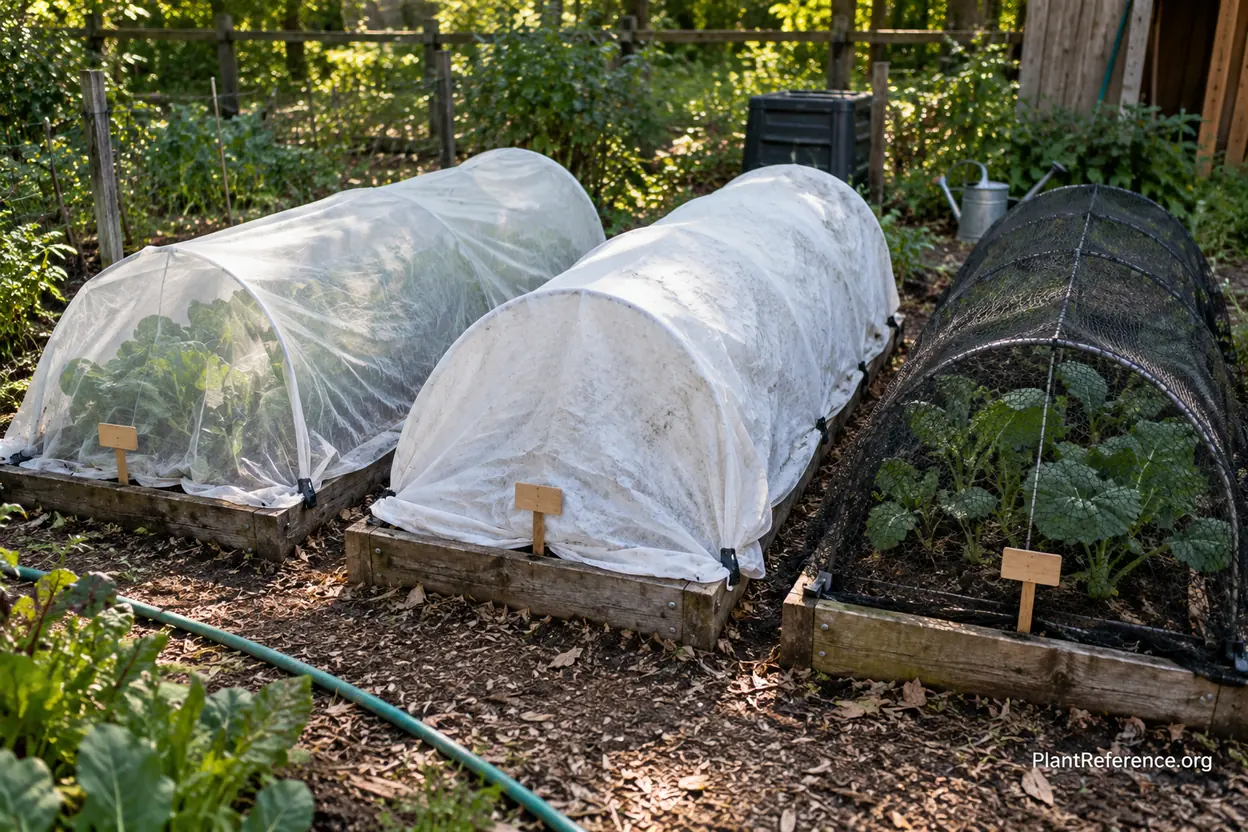
The best floating row cover is not automatically the thickest fabric on the shelf. For everyday insect exclusion, a lightweight, breathable cover such as Agribon AG-15 gives seedlings the light and airflow they need while blocking flea beetles, cabbage moths, cucumber beetles, and other flying pests. Heavier grades make more sense when frost protection matters as much as insect control.
This guide compares cover weights, support systems, and mesh options as one practical setup rather than a pile of unrelated products. If your garden plan is still taking shape, start with Pacific Northwest Gardening Guide: Climate, Soil & Plant Selection and The Complete Guide to Raised Bed Gardening for Beginners (2026) before measuring a bed for fabric.
How Physical Barriers Fit an IPM Plan
Integrated pest management starts with identification and prevention, not a spray bottle. A physical barrier prevents contact between a crop and a pest, so it belongs near the top of the control ladder. It also leaves ladybugs, lacewings, syrphid flies, and parasitic wasps unharmed elsewhere in the garden. That ecological restraint is the real value of a cover.
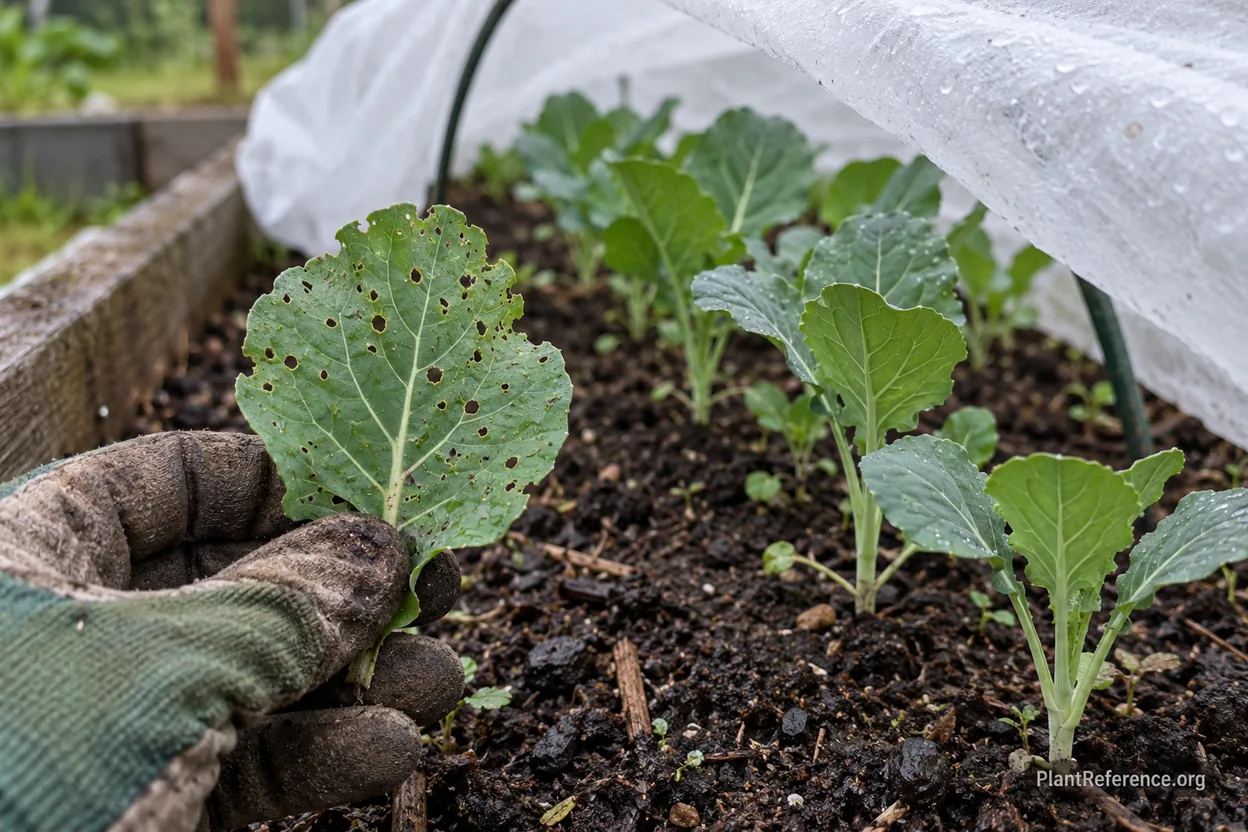
A cover works only when it goes on before the pest arrives. Flea beetles can scar newly emerged brassica leaves in a morning, and moths need only a brief opening to lay eggs. Install fabric immediately after sowing or transplanting, then inspect the seal after wind, watering, or harvest. For a wider diagnostic approach, use Raised Bed Pest Problems: Identification and Organic Control Methods alongside this exclusion strategy.
Choose the Right Cover Weight
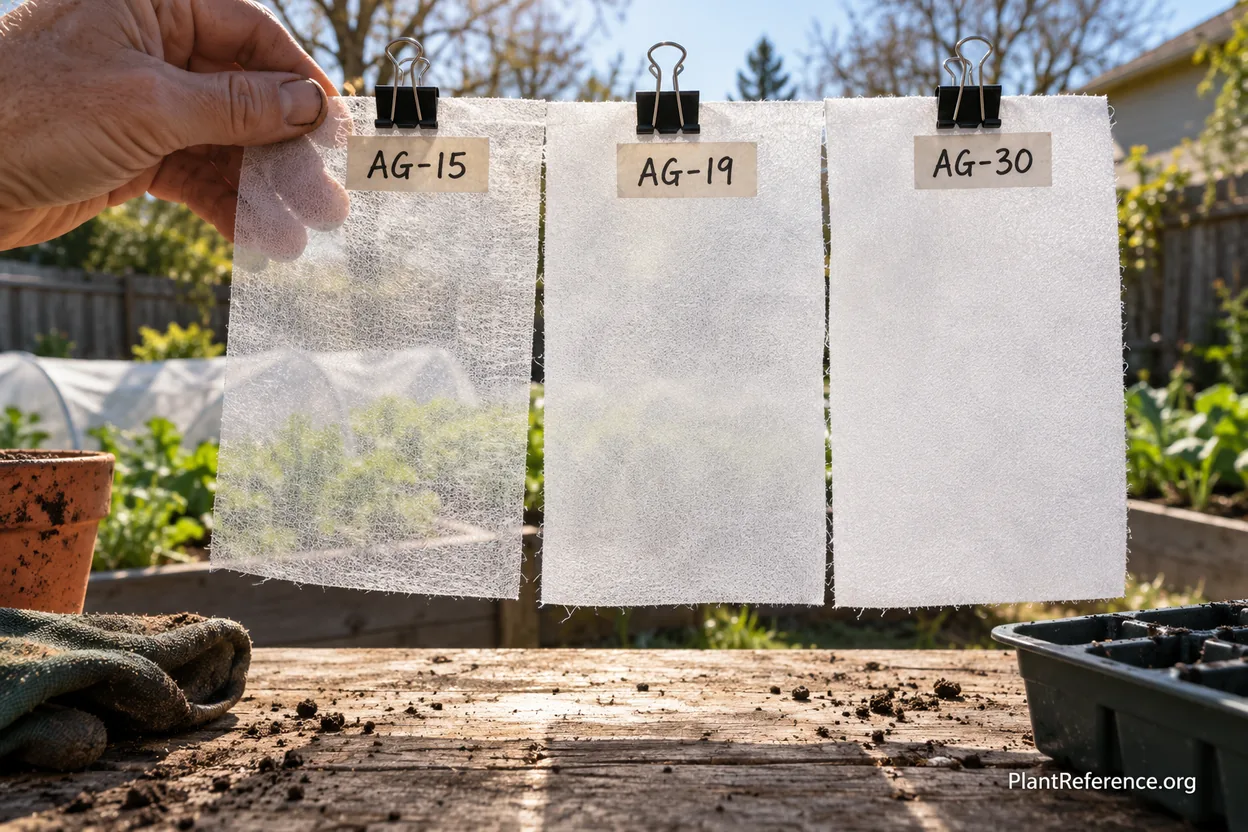
Fabric weight changes light transmission, heat retention, durability, and how safely the material can rest on plants. Lightweight AG-15 is primarily an insect barrier and modest wind buffer. AG-19 adds a little more cold protection while keeping good light transmission. AG-30 is better reserved for shoulder seasons, exposed sites, or plants that need a stronger temperature buffer.
Use this simple buying hierarchy:
Choose AG-15 for spring and summer insect exclusion over seedlings and leafy crops.
Choose AG-19 when insects and light frost are equal concerns.
Choose AG-30 for cool-season protection when reduced light is an acceptable trade-off.
Choose open mesh for birds or larger animals when airflow matters more than tiny-insect exclusion.
Add hoops whenever fabric could rub leaves, compress transplants, or trap heat against foliage.
Measure the planted area, not just the bed footprint. A 4-foot-wide (1.2 m) bed with 18-inch-high (46 cm) hoops needs fabric wide enough to rise over the arch and leave at least 12 inches (30 cm) on both sides for anchoring. That usually means buying wider material than the bed label suggests.
Best Floating Row Covers Compared
The products below fall into three useful roles: lightweight exclusion, balanced frost-and-pest protection, and structural support. Do not pay for a heavy cover if your actual problem is summer flea beetles. Conversely, a thin insect barrier is not the right emergency blanket for a hard freeze. The recommendations section gives exact active products and current listed price ranges.
Product type | Best use | Main advantage | Main trade-off |
|---|---|---|---|
Agribon AG-15 | Warm-season insect exclusion | High light and airflow | Minimal frost protection |
Agribon AG-19 | Spring and fall protection | Balanced pest and cold defense | Warmer on sunny days |
Agribon AG-30 | Cold, windy shoulder seasons | Stronger temperature buffer | Lower light transmission |
Cover-and-hoop kit | First low-tunnel setup | Compatible parts in one box | Less sizing flexibility |
Galvanized hoops | Reusable bed structure | Keeps fabric above foliage | Fabric sold separately |
Bird netting | Ripening fruit protection | Maximum airflow | Does not stop tiny insects |
For cool-season vegetables, combine this comparison with Best Cool-Season Vegetables for Pacific Northwest Gardens. For a broader look at frost cloth, plastic, and tunnel systems, see Best Season Extenders for the Pacific Northwest Garden. The same frame can often serve both jobs when you swap the covering by season.
Build a Secure Low Tunnel
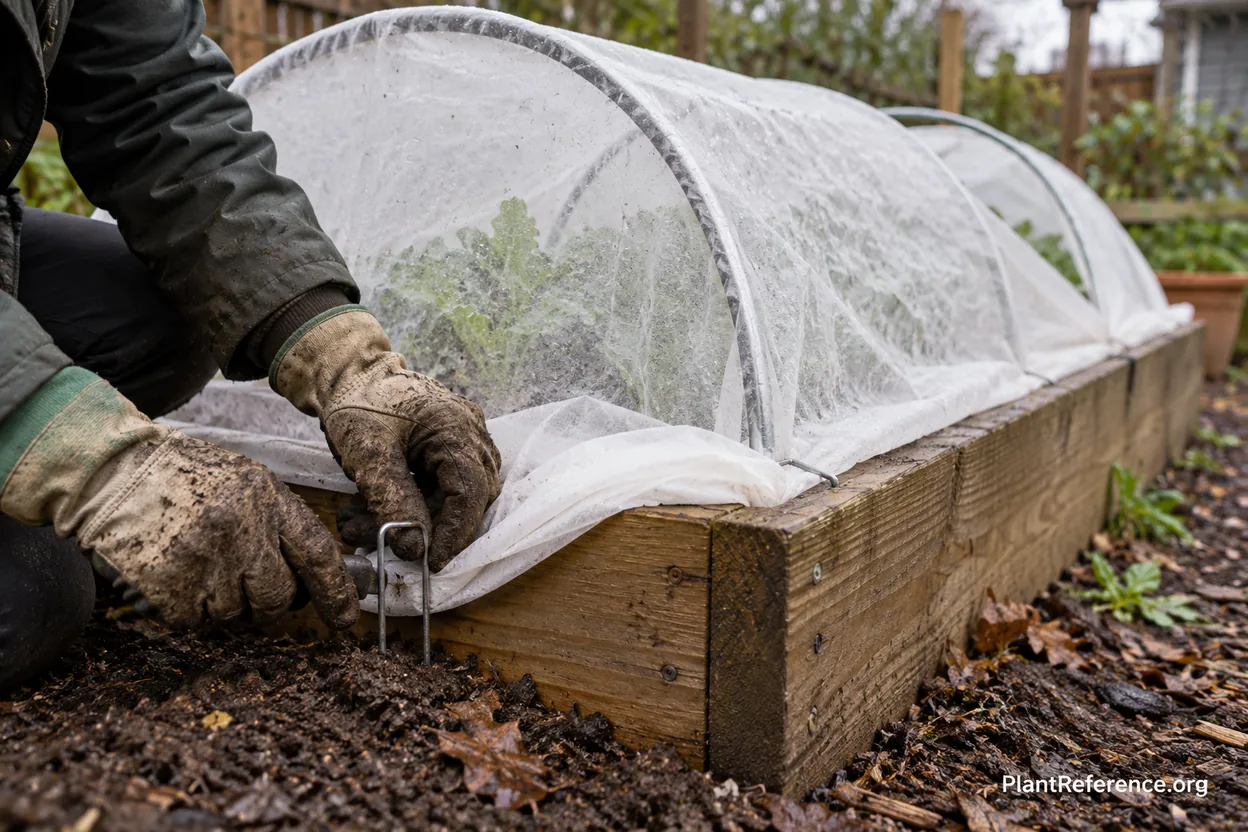
Hoops keep fabric from abrading leaves and create room for plants to grow. Space galvanized wire supports about 3 to 5 feet (0.9 to 1.5 m) apart, closer in windy sites. Push both ends 6 to 8 inches (15 to 20 cm) into firm soil, drape the cover with a little slack, and secure the long edges continuously with soil, boards, landscape staples, or weighted bags.
The ends deserve the same attention as the sides. Gather excess fabric, fold it flat, and pin it beyond the final hoop. A loose pleat becomes a pest entrance and a wind scoop. Plan one access edge that can be lifted without dismantling the tunnel. Good access matters when your layout follows Raised Bed Vegetable Garden Layout: Planning for Maximum Production and several crops share one bed.
Match the Barrier to the Pest
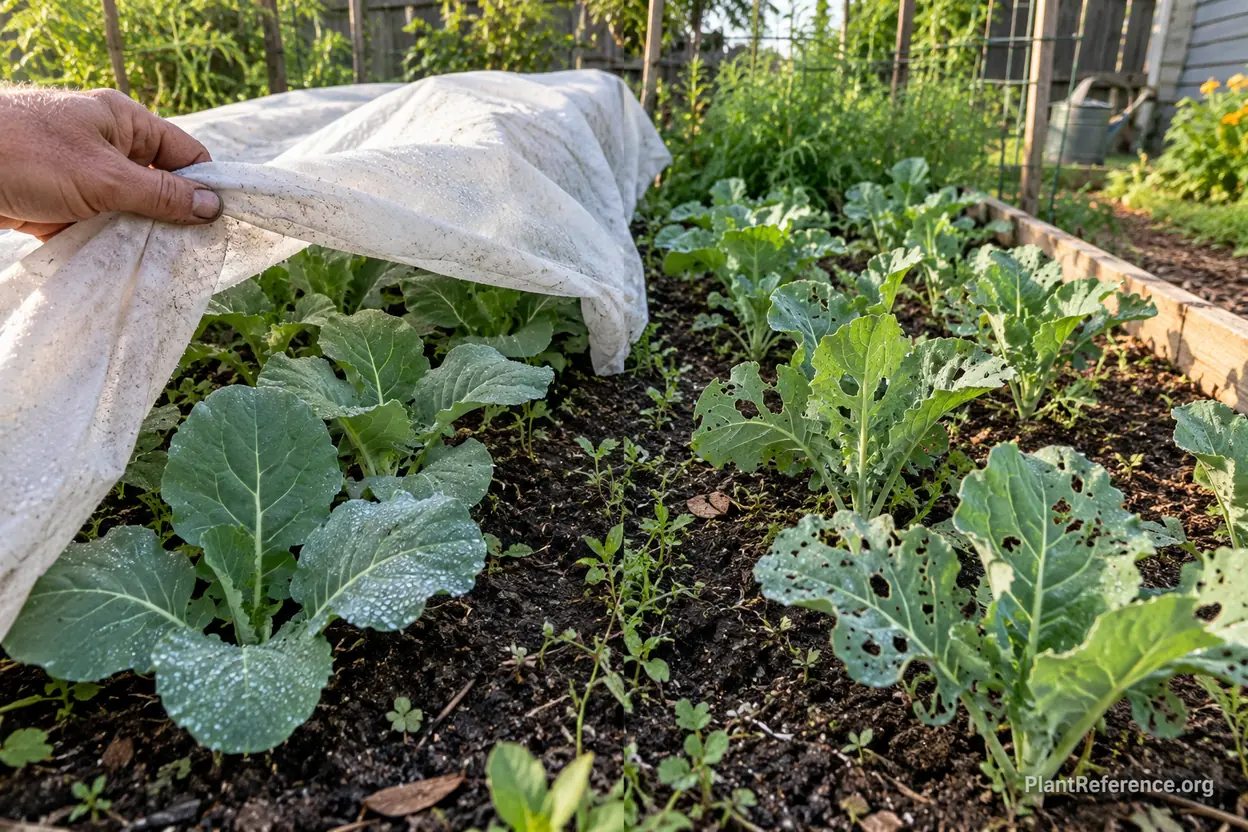
Floating fabric excels against small flying insects, but it is not universal. Use lightweight cover against flea beetles, cabbage white butterflies, cucumber beetles, leaf miners, and root-maggot flies. Use bird netting over fruiting plants when birds are the problem. Copper tape belongs on smooth raised-bed rims for slugs, while a well-sealed fabric edge can reduce—but not eliminate—crawling pest access.
Kaolin clay is another physical approach: its mineral film makes leaves less recognizable and less comfortable for feeding insects. It is useful when a fabric cover must come off for pollination, but rain can remove it and the white residue is visible. Do not treat it as a substitute for exclusion during the vulnerable seedling stage. For slug-heavy sites, pair barriers with Stop Slugs in the Pacific Northwest Garden Safely.
Manage Heat, Water, and Pollination
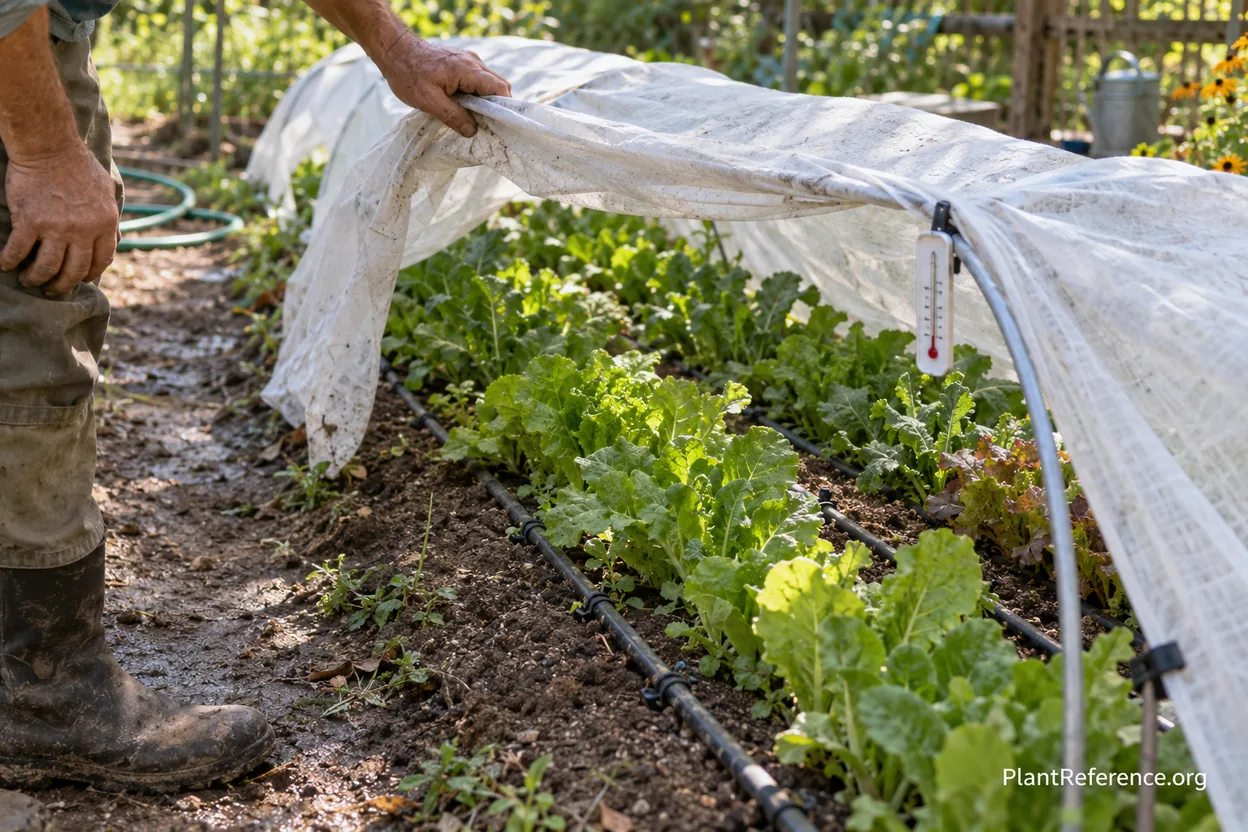
A barrier changes the crop environment. Check the tunnel on bright days, especially when temperatures rise above 75°F (24°C). Lift the leeward side for ventilation if foliage wilts or condensation persists. Most spun fabric admits rain, but a quick soil check confirms whether water reached the root zone evenly. Drip irrigation under the cover is the least disruptive option.
Remove covers when insect-pollinated squash, cucumber, melon, or berry plants begin flowering. Leaving the barrier closed can prevent fruit set as effectively as it blocks beetles. Self-pollinating greens and root crops can stay covered longer. If you want more beneficial insects working the uncovered parts of the garden, add plants from Best Perennials for Pollinators: Bees & Butterflies.
Care, Reuse, and Storage
Row cover lasts longer when it is clean, dry, and rolled rather than crumpled. Shake off soil, rinse gently if needed, air-dry completely, then roll the fabric around a cardboard tube. Label the weight and dimensions so AG-15 does not get confused with AG-30 next spring. Patch small tears with compatible repair tape before they enlarge.
Retire fabric that has become brittle, heavily torn, or impossible to seal. Inspect hoops for sharp rust points and cap cut wire ends before reuse. A maintained system should protect several successions, making physical exclusion one of the most economical tools in an IPM program. If plants still stall beneath a sound cover, work through Why Your Raised Bed Plants Are Stunted: Diagnosing Growth Problems rather than assuming insects are responsible.
Frequently Asked Questions

Reading about plants and recognising them are different skills. These three build the second.
- Daily PlantIdentify the day’s mystery plant from a close-up photograph.
- Keyed OutWork a dichotomous key, lead by lead, to name a hidden specimen.
- Name That PlantName a specimen from botanical clues dealt hardest first.
Free to play, no account needed
Tagged with
Helen is an interior plant stylist in Los Angeles who works with restaurants, offices, and residential clients to select and maintain indoor plants. She studied design in college and got into plants when a client asked her to "green up" a mid-century modern home. Helen's expertise sits at the intersection of design and plant care—she thinks about light, scale, texture, and color, but she also knows which plants will actually survive in a given space. She's killed enough fiddle leaf figs in dark corners to know better. Helen maintains her own collection of over 80 houseplants in her apartment and writes about indoor plant selection, styling, and the practical side of keeping plants alive in interior environments.