Picea, Genus, orientalis, Species, 'Aureospicata', Cultivar,
- Genus & species
- Cultivar
golden oriental spruce
Caucasus Mountains and northeastern Turkey (montane forests at 3000-7000 feet / 900-2100 m elevation; golden-tipped cultivar)
Overview
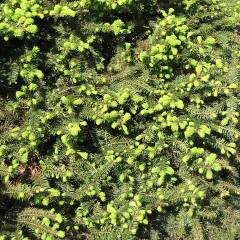
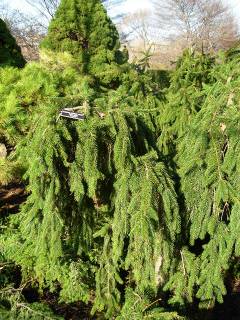
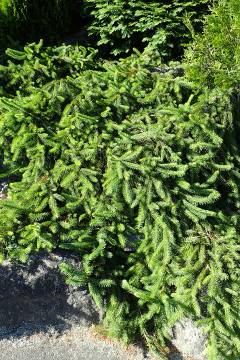
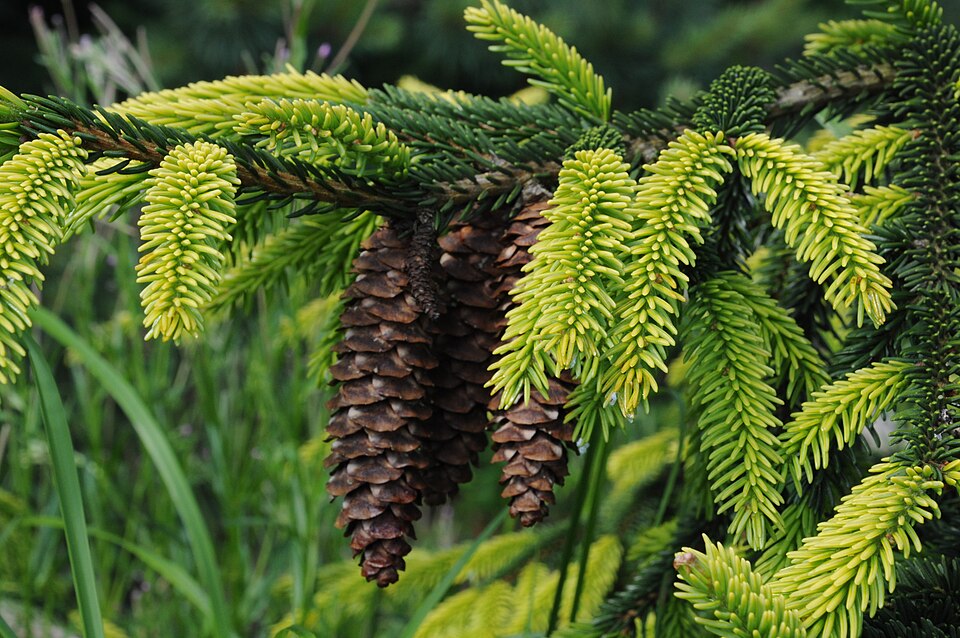
Picea orientalis 'Aureospicata' is an evergreen conifer in the pine family (Pinaceae) reaching 15–25 feet (4.6–7.6 m) tall with a spread of 8–12 feet (2.4–3.7 m) after 10–20 growing seasons, carrying a narrowly conical to pyramidal habit. This cultivar of the Oriental spruce is grown for the spring foliage display — new growth emerges in bright golden-yellow tones during April and May, contrasting against the dark green mature needles across the canopy for 4–6 weeks before gradually darkening to green tones by midsummer. Needles run the shortest of any spruce species at 0.2–0.4 inch (5–10 mm) long, closely pressed to the shoots, which builds a densely-textured canopy surface across the tree. Pendulous purple-red cones 2–4 inches (5–10 cm) long develop on mature trees after 10 or more growing seasons. Growth rate runs slow to moderate — significantly slower than the species type, which reaches 50–60 feet (15–18 m) at maturity. Hardy to zone 4. The spring golden display reads most clearly on the outer canopy surfaces of larger specimens.
Native Range
Picea orientalis is native to the Caucasus Mountains and northeastern Turkey, where wild populations grow in montane forests at elevations between 3,000 and 7,000 feet (900–2,100 m). The 'Aureospicata' cultivar was selected from a golden-tipped seedling form and introduced into commercial cultivation for the spring foliage display.Suggested Uses
Grown as a specimen tree or vertical garden anchor at 10–15 foot (3–4.6 m) spacing from structures. The golden spring display on the dark green conifer canopy carries 4–6 weeks of bicolor ornamental interest across April and May. The densely-textured short-needled foliage holds year-round structure in the garden. Slow growth rate suits the cultivar to garden settings where full-size spruces exceed the allocated footprint across a human lifetime. Small garden footprints that cannot accommodate the 15–25 foot mature size and positions exposed to drying winter winds are both unsuitable given the cultural profile.How to Identify
Appearance
Size & Dimensions
Height15' - 25'
Width/Spread8' - 12'
Bloom Information
Male strobili release pollen during April and May. Pendulous purple-red cones 2–4 inches (5–10 cm) long develop on mature trees of 10 or more years, ripening across the autumn period. The golden-yellow spring new growth flush during April and May runs as the primary seasonal display feature rather than the cone or strobili phase.
Detailed Descriptions
Flower Description
Male strobili during April and May; pendulous purple-red cones 2-4 inches long on mature trees after 10 or more years; golden spring tips run the primary displayFoliage Description
Dark green mature needles with bright golden-yellow spring new growth flush during April and May; shortest spruce needles at 0.2-0.4 inch long building a densely-textured canopyGrowing Conditions
Sun Requirements
Requires 4-10 hours of direct sunlight daily
• Full Sun: 6+ hours of direct sunlight
• Partial Shade: 3-6 hours of direct sunlight
• Full Shade: Less than 3 hours of direct sunlight