Image 1 of 8
1 / 8
Plant Reference
Picea, Genus, abies, Species, 'Nidiformis', Cultivar,
- Genus & species
- Cultivar
bird's nest spruce
Cultivar of European origin; species native to northern and central Europe
Overview
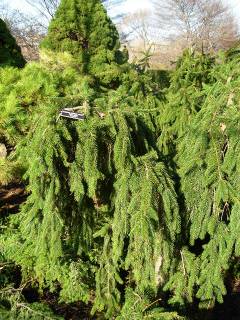
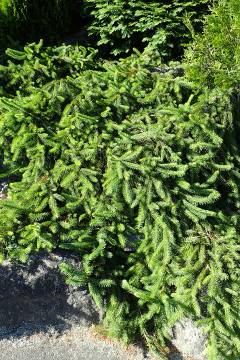
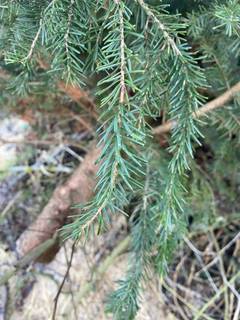
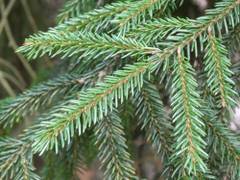
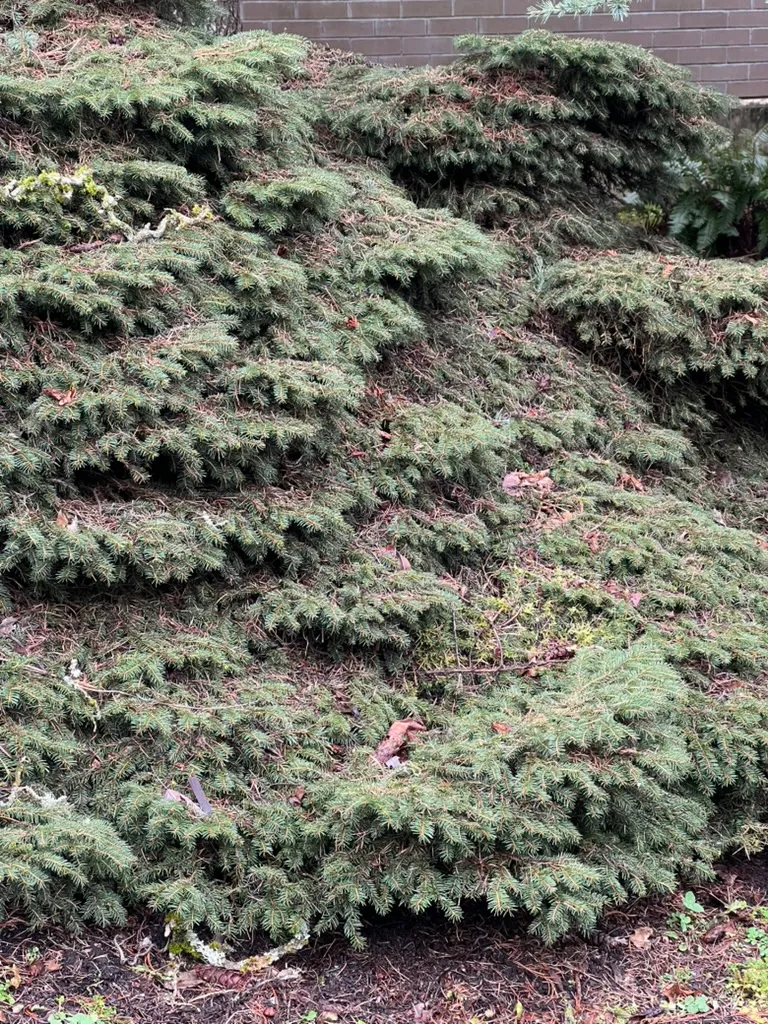
Picea abies 'Nidiformis' is a dwarf, mounding cultivar of Norway spruce, forming a flat-topped to slightly concave shape with a characteristic central depression. Plants typically reach 3–4 feet (90–120 cm) tall and 4–6 feet (1.2–1.8 m) wide after 10 years; mature specimens may reach 6 feet (1.8 m) tall and 8–10 feet (2.4–3 m) wide over several decades at a rate of 2–4 inches (5–10 cm) per year. Short, dark green needles, 0.5–0.75 inch (12–19 mm) long, are densely arranged on flattened horizontal branch sprays that radiate outward from the center. The central depression that gives the cultivar its nest-like appearance is formed by the outward-spreading lateral branches with no dominant central leader. Root competition and canopy closure from adjacent large plants can suppress the characteristic spreading form. Produces small cylindrical cones 1–2 inches (2.5–5 cm) long on mature plants; cones are infrequent on young plants. Spider mites are a recurring problem in hot, dry summers, causing yellowing needles and thinning foliage.
Native Range
The species Picea abies is native to northern and central Europe, from Scandinavia south through the Alps and Carpathians to the Balkans. The cultivar 'Nidiformis' originated in cultivation and does not have a native range.Suggested Uses
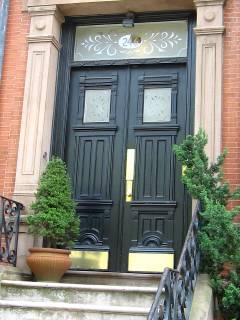
Commonly planted in rock gardens, foundation plantings, and mixed shrub borders at 5–8 feet (1.5–2.4 m) from adjacent plants to accommodate mature spread. Used in containers of at least 15 gallons (57 L) with adequate drainage; growth rate slows further in containers and plants require more frequent watering. Site selection must account for eventual width of 8–10 feet (2.4–3 m), as the spreading form is difficult to prune back without disfiguring the plant.How to Identify
Appearance
Size & Dimensions
Height3' - 6'
Width/Spread4' - 10'
Colors
Bloom Information
Male strobili are small, reddish-yellow, releasing pollen in April–May. Female cones, when produced, are cylindrical, 1–2 inches (2.5–5 cm) long, maturing from green to brown in the first season. Cone production is sparse on young plants and becomes more consistent on specimens over 10 years old.
Detailed Descriptions
Flower Description
reddish-yellow (male strobili)Foliage Description
dark greenGrowing Conditions
Sun Requirements
Requires 4-8 hours of direct sunlight daily
• Full Sun: 6+ hours of direct sunlight
• Partial Shade: 3-6 hours of direct sunlight
• Full Shade: Less than 3 hours of direct sunlight
Care & Maintenance
Care Guide
Water weekly during the first two growing seasons; established plants tolerate short dry periods but show needle browning after 3–4 weeks without rain in summer. Site in well-drained soil with consistent moisture; waterlogged conditions cause root rot and dieback. Spider mites infest foliage in hot, dry weather above 85°F (29°C); affected needles yellow and drop, with mite populations highest on stressed plants. Fertilization is not required in adequate soils; excess nitrogen stimulates atypically lush growth that can reduce cold hardiness. Snow load may deform the spreading branches on mature plants; heavy accumulations can be brushed off gently. Plants maintain form without pruning; no deadheading or division applies to this conifer.Pruning
Pruning is not required to maintain the characteristic spreading, nest-like form. Dead or damaged branches can be removed at any time. If a branch extends beyond the desired footprint, it can be shortened in late winter before new growth begins; cut back to a lateral branch rather than to bare wood, as P. abies does not reliably bud from old wood.Pruning Schedule
Prune: February–March
early spring
Container Growing
Suitable for container growing
Minimum container size: 15 gallons