Image 1 of 16
1 / 16
Plant Reference
Picea, Genus, orientalis, Species,
- Genus & species
oriental spruce
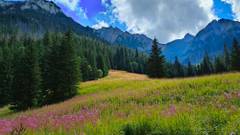
Caucasus Mountains and northeastern Turkey; 3,300–6,600 feet (1,000–2,000 m)
Overview
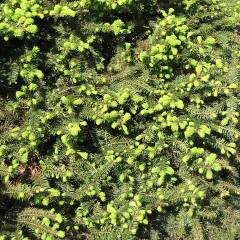
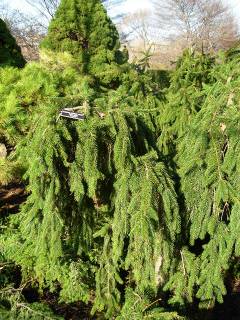
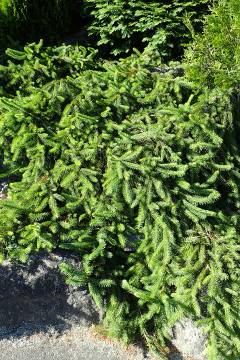
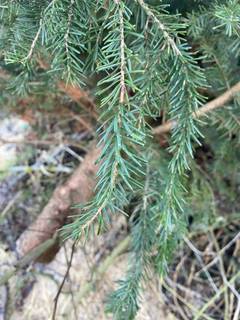
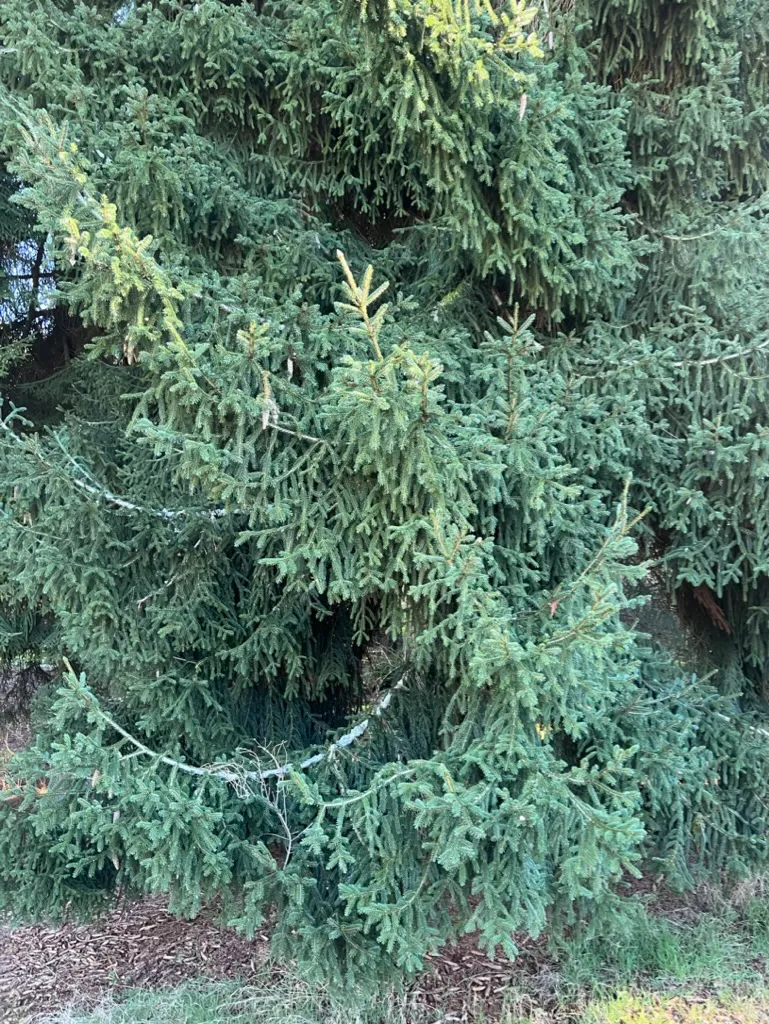
Picea orientalis is a pyramidal evergreen conifer reaching 40–60 feet (12–18 m) tall and 15–25 feet (4.5–7.6 m) wide at maturity in cultivation, with a growth rate of 8–12 inches (20–30 cm) per year. Needles are the shortest of any commonly cultivated spruce, 0.25–0.375 inch (6–10 mm) long, dark green, glossy, four-sided, and densely set on the branches, giving a finer texture than other spruce species. The pyramidal crown is dense and regular, with horizontal to slightly drooping lateral branches. Bark is orange-brown to gray, scaly in plates. Cones are narrow-cylindrical, 2.5–4 inches (6–10 cm) long, purplish-red when young, maturing to brown in the first season. The species tolerates shade, urban conditions, and a range of soils better than many spruces; it is less susceptible to needle diseases in humid climates than P. pungens. Spider mites can be a problem in hot, dry summers, and needle dieback occurs on lower interior branches as they are shaded out by crown growth.
Native Range
Picea orientalis is native to the Caucasus Mountains and northeastern Turkey, growing in mixed coniferous forests on moist, well-drained slopes at elevations of 3,300–6,600 feet (1,000–2,000 m). The natural range extends from the Georgian and Armenian Caucasus into northeastern Turkey.Suggested Uses
Used as a specimen tree in residential landscapes, spaced 15–20 feet (4.6–6 m) from structures and adjacent plants to accommodate mature spread. Also planted in groups as screens or windbreaks at 10–12 foot (3–3.7 m) spacing. The eventual height of 40–60 feet (12–18 m) requires planning in confined sites.How to Identify
Appearance
Size & Dimensions
Height40' - 60'
Width/Spread15' - 25'
Colors
Bloom Information
Male strobili are reddish-purple, releasing pollen in April–May. Female cones are narrow-cylindrical, 2.5–4 inches (6–10 cm) long, purplish-red when young, ripening to brown in the first season, and often produced in large numbers on mature trees.
Detailed Descriptions
Flower Description
reddish-purple (male strobili)Foliage Description
dark greenGrowing Conditions
Sun Requirements
Requires 4-8 hours of direct sunlight daily
• Full Sun: 6+ hours of direct sunlight
• Partial Shade: 3-6 hours of direct sunlight
• Full Shade: Less than 3 hours of direct sunlight