Image 1 of 7
1 / 7
Plant Reference
Picea, Genus, abies, Species, 'Pendula', Cultivar,
- Genus & species
- Cultivar
weeping Norway spruce
Cultivar of European origin; species native to northern and central Europe
Overview
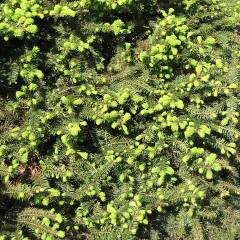
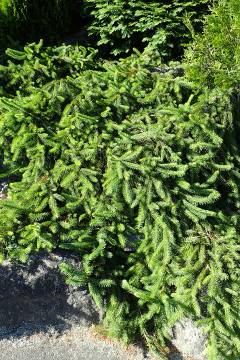
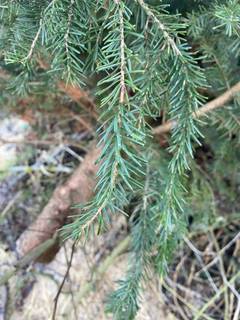
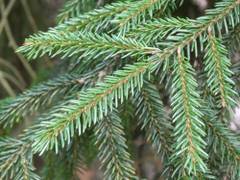
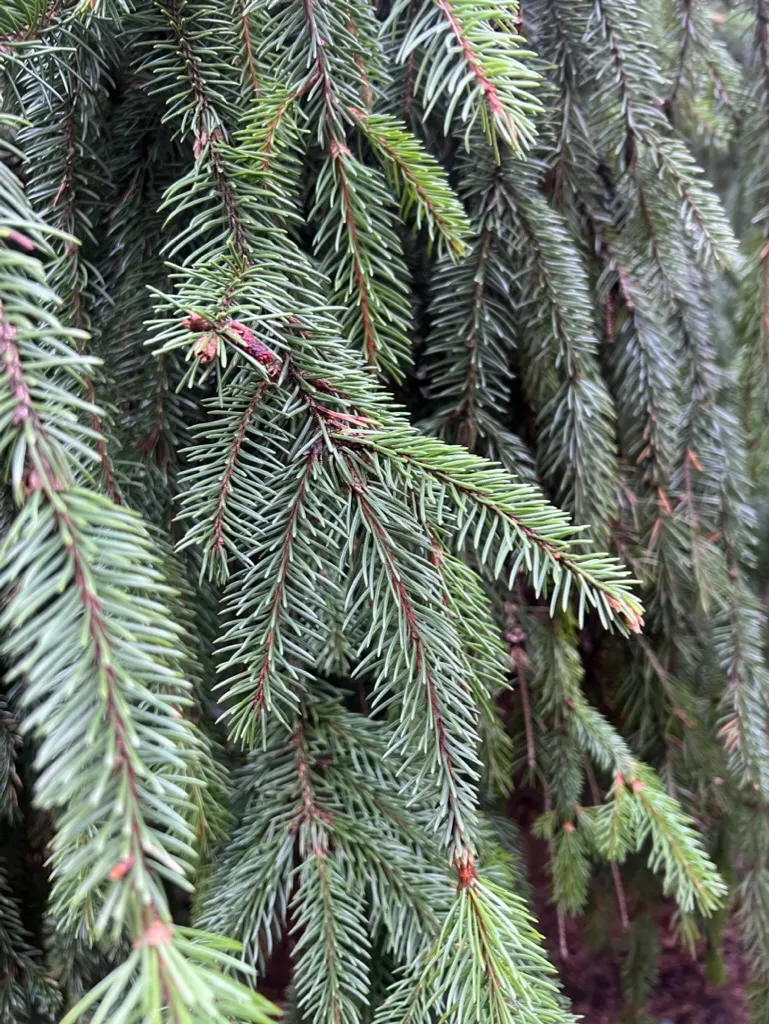
Picea abies 'Pendula' is a weeping cultivar of Norway spruce with strongly pendulous branches that hang nearly vertically along a central leader. Height and form depend largely on training: staked specimens form narrow columns reaching 10–20 feet (3–6 m) tall and 3–5 feet (0.9–1.5 m) wide; unstaked specimens crawl along the ground, spreading 10–20 feet (3–6 m) with height limited to 2–3 feet (60–90 cm). Growth rate is 6–12 inches (15–30 cm) per year when staked. Short, dark green needles, 0.5–0.75 inch (12–19 mm) long, densely cover pendulous branches that form curtain-like masses of foliage. Bark is orange-brown to gray-brown, scaly on mature trunks. Cylindrical cones 4–6 inches (10–15 cm) long are produced on mature specimens. Susceptible to spider mites in hot, dry conditions and to Cytospora canker on stressed plants; both are more prevalent in sites with poor air circulation.
Native Range
The species Picea abies is native to northern and central Europe, from Scandinavia south through the Alps and Carpathians to the Balkans, in montane forests from 1,500–5,900 feet (450–1,800 m) elevation. The cultivar 'Pendula' originated in cultivation.Suggested Uses
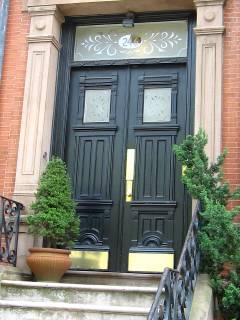
Staked specimens are planted as vertical accents in mixed borders and garden beds, spaced 5–8 feet (1.5–2.4 m) from adjacent plants. Unstaked specimens are used as large-scale ground covers on slopes and banks, spreading 10–20 feet (3–6 m). The variable final form requires careful site planning, as eventual size and shape depend on training during the first several years.How to Identify
Appearance
Size & Dimensions
Height2' - 20'
Width/Spread3' - 20'
Colors
Bloom Information
Male strobili are reddish-yellow, releasing pollen in April–May. Female cones are cylindrical, 4–6 inches (10–15 cm) long, green when young, ripening to brown in the first season. Cone production begins on specimens 10–15 years old and increases with maturity.
Detailed Descriptions
Flower Description
reddish-yellow (male strobili)Foliage Description
dark greenGrowing Conditions
Sun Requirements
Requires 4-8 hours of direct sunlight daily
• Full Sun: 6+ hours of direct sunlight
• Partial Shade: 3-6 hours of direct sunlight
• Full Shade: Less than 3 hours of direct sunlight
Care & Maintenance
Care Guide
Water deeply weekly during the first two growing seasons; mature plants tolerate 2–3 weeks without rain but growth slows and needle drop increases during extended drought. Spider mites cause yellowing and needle drop in hot, dry summers; infestations typically appear first on the interior and lower branches. Cytospora canker produces resinous patches on the bark and causes branch dieback, typically on stressed plants or those with bark wounds. Staked specimens require the central leader tied to a support stake for the first 5–10 years to establish height; once the leader lignifies, staking can be removed. Form is difficult to correct once established without staking, as the leader will continue in the direction it grew during establishment.Pruning
Pruning requirements depend on training. On staked specimens, the central leader should be tied to the support stake and any competing leaders removed in late winter. Lateral branches that extend horizontally rather than hanging can be removed at their base. On ground-covering specimens, no pruning is needed to maintain spread; length can be controlled by cutting back lateral stems in late winter to a rearward-facing lateral, though P. abies does not bud from old wood and cuts to bare wood leave permanent gaps.Pruning Schedule
Prune: February–March
early spring