Image 1 of 17
1 / 17
Plant Reference
Picea, Genus, abies, Species,
- Genus & species
Norway spruce
Northern and central Europe (Scandinavia south to Balkans and Alps)
Overview
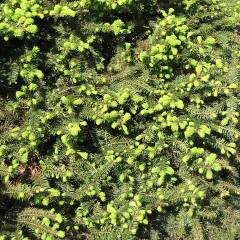
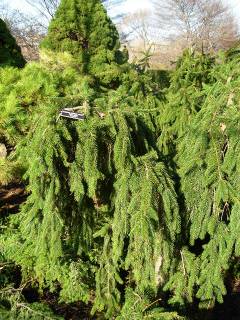
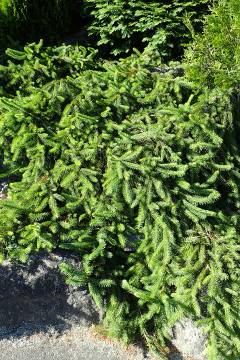
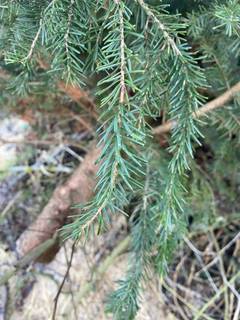
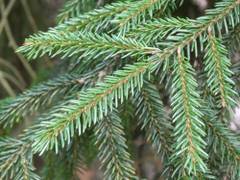
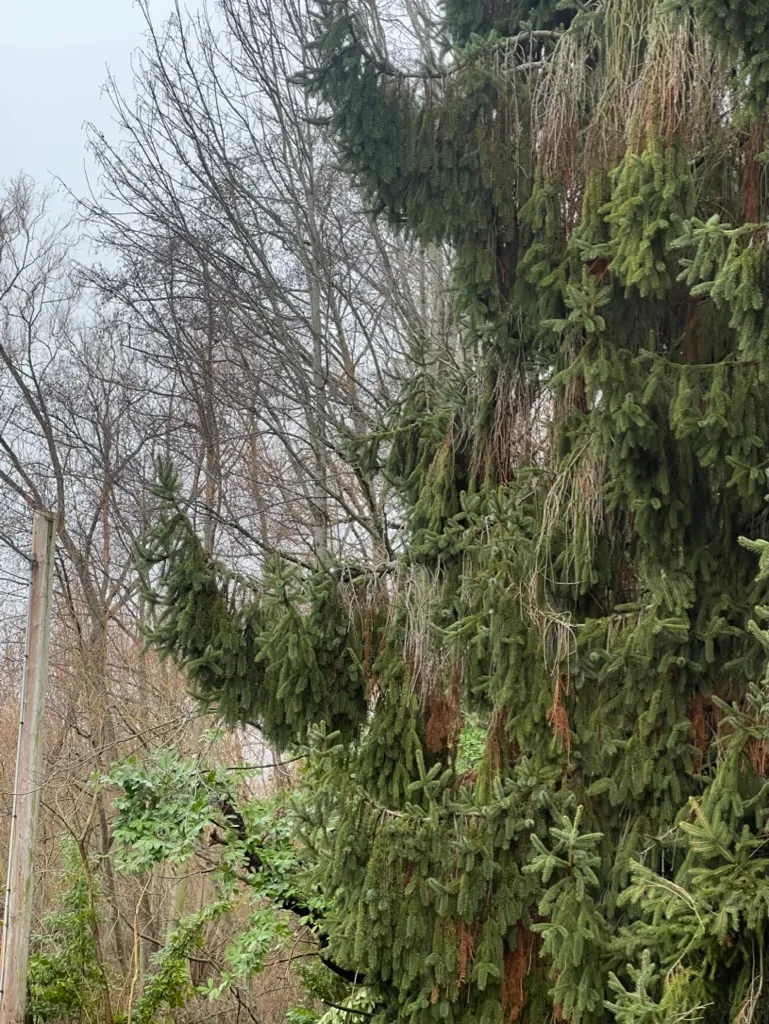
Picea abies is an evergreen coniferous tree growing 60-100 feet (18-30 m / 720-1,200 inches) tall and 25-40 feet (7.5-12 m / 300-480 inches) wide. Dark green stiff 4-sided needles, 0.5-1 inch (12-25 mm), are borne on peg-like projections (sterigmata) along the stem; the pegs persist after needles drop, producing a rough twig surface that is the key genus trait separating Picea from Abies (which has smooth twigs). Mature trees develop pendant (drooping) secondary branchlets that create a curtain-like texture; young trees have ascending branches, and the pendant habit appears with age. Cones are the largest of any European spruce at 4-7 inches (10-18 cm), pendant and cylindrical. Widely planted across North America as windbreaks, screens, and Christmas trees — the Rockefeller Center Christmas tree in New York is typically this species. Hundreds of dwarf cultivars are available, including 'Nidiformis' (bird's nest spruce — dense flat-topped mound, 24-36 inches / 60-90 cm), 'Pumila' (dwarf globe), and 'Pendula' (weeping). A clonal colony of P. abies in Sweden, named 'Old Tjikko', has a root system carbon-dated to approximately 9,550 years. Native to northern and central Europe from Scandinavia south to the Balkans and Alps. Intolerant of hot dry summers — the species declines in zones 8+. Growth rate is 24-36 inches (60-90 cm) per year when young. Non-toxic. Deer-resistant.
Native Range
Native to northern and central Europe from Scandinavia south to the Balkans and Alps, in montane and boreal forest habitats.Suggested Uses
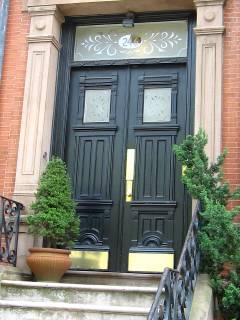
Grown as a windbreak, screen, or specimen tree on sites with room for 60-100 foot (18-30 m) height and 25-40 foot (7.5-12 m) spread, spaced 25-40 feet (7.5-12 m) apart. Dwarf cultivars such as 'Nidiformis' and 'Pumila' serve small gardens. Not well-suited to hot dry summers. Non-toxic. Hardy in zones 2-7.How to Identify
Appearance
Size & Dimensions
Height60' - 100'
Width/Spread25' - 40'
Bloom Information
Mid-spring (April-May). Red-purple female strobili and yellow-red male strobili. Large pendant cones, 4-7 inches (10-18 cm), mature by fall. The dark green evergreen pyramidal form with pendant branchlets is the year-round feature.
Detailed Descriptions
Flower Description
female strobili red-purple, upright, 1 inch (2.5 cm); male strobili yellow-red in springFoliage Description
dark green, stiff, 4-sided needles 0.5-1 inch (12-25 mm) on peg-like projections (sterigmata)Growing Conditions
Sun Requirements
Requires 6-10 hours of direct sunlight daily
• Full Sun: 6+ hours of direct sunlight
• Partial Shade: 3-6 hours of direct sunlight
• Full Shade: Less than 3 hours of direct sunlight
Care & Maintenance
Care Guide
Site in full sun (6-10 hours) in well-drained loam with a pH of 5.0-7.0. Intolerant of hot dry summers; the species declines in zones 8+. Fast-growing when young at 24-36 inches (60-90 cm) per year. The pendant branchlet texture develops on mature trees. Hundreds of dwarf cultivars are available for small gardens. Non-toxic. Deer-resistant. Hardy in zones 2-7.Pruning
No pruning is required for the species — the pyramidal form develops naturally. The central leader should not be removed. Dwarf cultivars require no pruning. Christmas tree farms shear annually for dense form, but landscape specimens are left unpruned.Pruning Schedule
Prune: February–March
late spring