Picea, Genus, orientalis, Species, 'Aurea', Cultivar,
- Genus & species
- Cultivar
golden oriental spruce
Cultivar discovered at Skylands Manor, New Jersey; species native to the Caucasus Mountains and northeastern Turkey
Overview
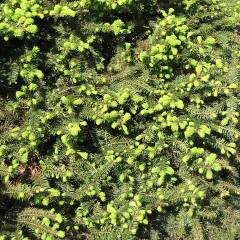
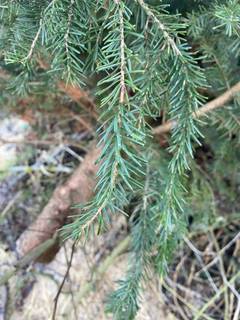
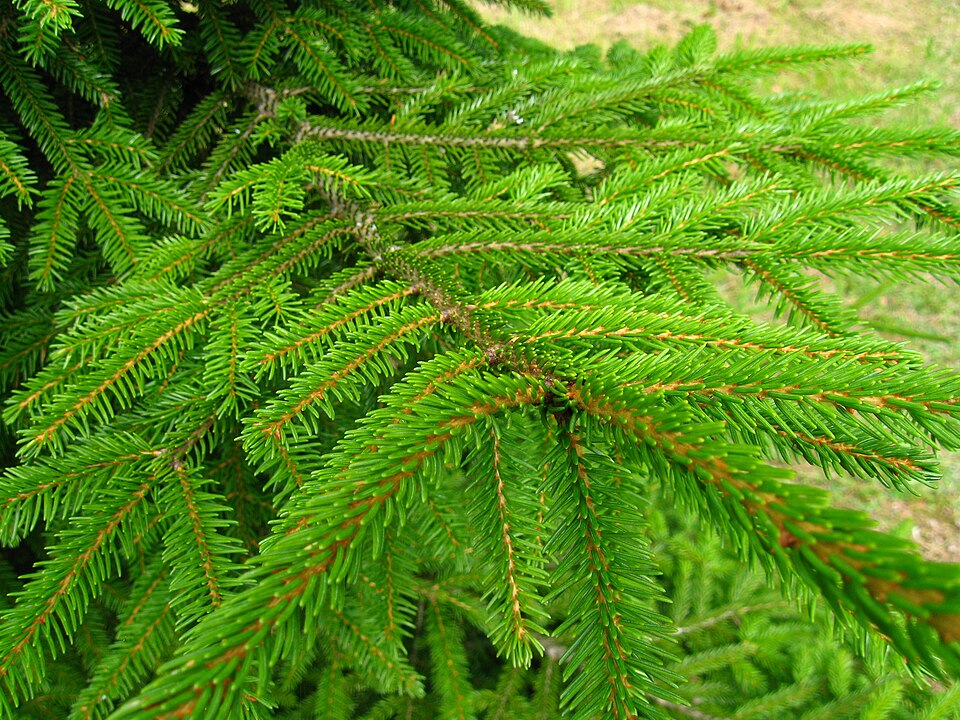
Picea orientalis 'Aurea' is an upright coniferous evergreen tree growing 25-40 feet (7.6-12 m) tall and 10-15 feet (3-4.6 m) wide. New growth emerges bright golden-yellow in spring and transitions to dark green by late summer; the golden spring flush is the primary ornamental feature. Needles are the shortest of any spruce at 0.25-0.4 inch (6-10 mm), tightly appressed to the branches, producing a dense compact texture not matched by other spruce species. The cultivar is also sold under the name 'Skylands' (same clone). The species name orientalis means eastern, referring to the native range in the Caucasus Mountains and northeastern Turkey. Heat tolerance is better than most spruce species, and the cultivar grows reliably into USDA zone 8 where other spruces often decline. Golden foliage can scorch in hot afternoon sun — afternoon shade helps in the warmest zones. Slow-growing at 6-12 inches (15-30 cm) per year. Spruce spider mite is the primary pest. Drought-tolerant once established. Non-toxic. Deer-resistant.
Native Range
Cultivar discovered at Skylands Manor, New Jersey. Species native to the Caucasus Mountains and northeastern Turkey.Suggested Uses
Grown as a golden conifer specimen tree on sites with room for 25-40 foot (7.6-12 m) height and 10-15 foot (3-4.6 m) spread, spaced 10-15 feet (3-4.6 m) apart. Golden spring color and compact needle texture suit specimen positions where close-range viewing is intended. Mature size exceeds typical container dimensions. Non-toxic. Hardy in zones 4-8.How to Identify
Appearance
Size & Dimensions
Height25' - 40'
Width/Spread10' - 15'
Bloom Information
Spring (April-May). Reddish-purple male strobili shed pollen over approximately 3 weeks. Wind-pollinated. Pendant brown cones 2-4 inches (5-10 cm) with smooth entire scales develop through the growing season.
Detailed Descriptions
Flower Description
reddish-purple male strobili in spring; pendant brown cones 2-4 inches (5-10 cm) with smooth entire scalesFoliage Description
new spring growth emerges bright golden-yellow and transitions through lime-green to dark green by late summer; needles are the shortest of any spruce at 0.25-0.4 inch (6-10 mm), tightly appressed to the branches, giving a dense compact texture; the golden spring flush is the cultivar's primary featureGrowing Conditions
Sun Requirements
Requires 6-8 hours of direct sunlight daily
• Full Sun: 6+ hours of direct sunlight
• Partial Shade: 3-6 hours of direct sunlight
• Full Shade: Less than 3 hours of direct sunlight