Picea, Genus, engelmannii, Species,
- Genus & species
Engelmann spruce
Overview
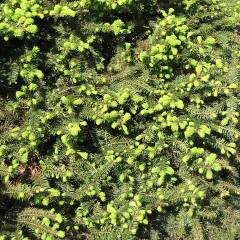
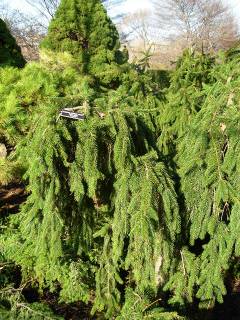
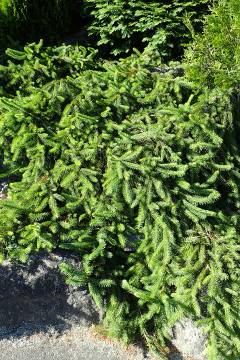
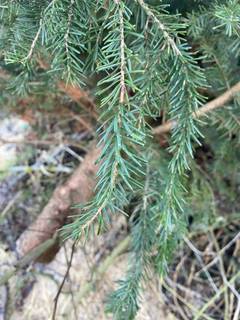
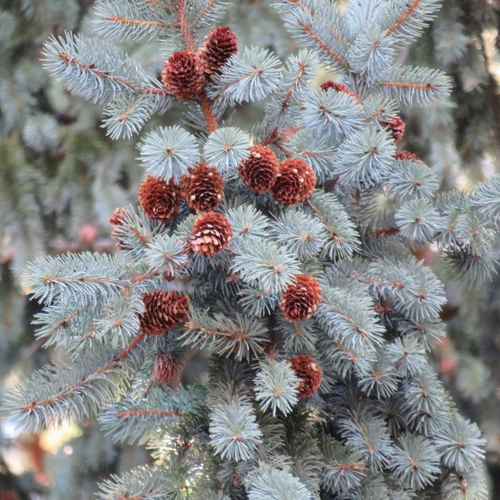
Picea engelmannii is a large evergreen conifer in the pine family (Pinaceae), reaching 80-130 feet (24-40 m) tall, occasionally more, with a narrow, spire-like crown and a trunk to 3 feet (90 cm) in diameter. The four-sided needles are 0.6-1.2 inches (15-30 mm) long, blue-green to gray-green with a waxy bloom, and give off a sharp scent when crushed; they are soft-pointed compared with the stiff needles of P. pungens. Young twigs are finely hairy, a feature that separates it from related spruces. Pollination occurs in late spring, with reddish male and purplish young female cones; the seed cones mature to 1-2.5 inches (2.5-6 cm), light brown, with thin, papery scales that fall the first winter. P. engelmannii grows in cold, high mountains of western North America, mostly between 5,000 and 12,000 feet (1,500-3,700 m), where it forms extensive subalpine forests, often with subalpine fir. It is very cold hardy and long-lived but grows slowly and struggles in heat, drought, and low elevations. Stands are subject to periodic outbreaks of spruce beetle, which can kill mature trees.
Native Range
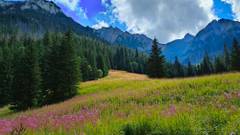
Native to the mountains of western North America, from British Columbia and Alberta south through the Rocky Mountains to Arizona and New Mexico, with populations in the Cascades and interior ranges. It grows in cold subalpine forests, generally between 5,000 and 12,000 feet (1,500-3,700 m).Suggested Uses
Grown in large landscapes, parks, and mountain properties in cold climates as a specimen and screen, and used in reforestation and watershed protection at high elevations. Its dense crown gives cover and its seeds feed birds and small mammals. Its eventual height and need for cool, moist conditions limit it to spacious, cool-climate sites.How to Identify
Appearance
Size & Dimensions
Height80' - 130'
Width/Spread15' - 25'
Colors
Bloom Information
Like other conifers, it does not bloom but releases pollen in late spring, usually May and June, from small reddish male cones. Purplish young seed cones stand upright at first, then bend downward as they enlarge. Pollen release lasts one to two weeks and varies with elevation.
Detailed Descriptions
Flower Description
reddish male and purplish female conesFoliage Description
blue-green to gray-greenGrowing Conditions
Sun Requirements
Requires 6-12 hours of direct sunlight daily
• Full Sun: 6+ hours of direct sunlight
• Partial Shade: 3-6 hours of direct sunlight
• Full Shade: Less than 3 hours of direct sunlight