When to Plant Onions in Richmond: Complete Guide + Best Varieties for Zone 7b
Pets & Toxicity
Recorded toxicity for plants linked in this guide. An unknown status is not a safety assessment.
Toxic to pets: Granex onion, red wing storage onion, music hardneck garlic and 3 moreDetailsHide
Allium cepa 'Granex' — Toxicity Warning
Toxic to cats and dogs if eaten; cats are especially susceptible, and raw, cooked or concentrated plant material can damage red blood cells and cause anaemia.View Allium cepa 'Granex' plant profileAllium cepa 'Red Wing' — Toxicity Warning
Toxic to cats and dogs if eaten; cats are especially susceptible, and raw, cooked or concentrated plant material can damage red blood cells and cause anaemia.View Allium cepa 'Red Wing' plant profileAllium sativum 'Music' — Toxicity Warning
Toxic to cats and dogs if eaten; cats are especially susceptible, and raw, cooked or concentrated plant material can damage red blood cells and cause anaemia.View Allium sativum 'Music' plant profileAllium cepa 'Yellow Sweet Spanish' — Toxicity Warning
Toxic to cats and dogs if eaten; cats are especially susceptible, and raw, cooked or concentrated plant material can damage red blood cells and cause anaemia.View Allium cepa 'Yellow Sweet Spanish' plant profileAllium sativum 'California Early' — Toxicity Warning
Toxic to cats and dogs if eaten; cats are especially susceptible, and raw, cooked or concentrated plant material can damage red blood cells and cause anaemia.View Allium sativum 'California Early' plant profileAllium cepa 'Walla Walla' — Toxicity Warning
Toxic to cats and dogs if eaten; cats are especially susceptible, and raw, cooked or concentrated plant material can damage red blood cells and cause anaemia.View Allium cepa 'Walla Walla' plant profile
— Image © Plant Reference 2026
Richmond gardeners have a distinct advantage when it comes to growing onions—our Zone 7b climate sits perfectly in the transition zone where both spring and fall planting succeed beautifully. After forty years of vegetable gardening in Virginia, I can tell you that timing is everything with onions, and getting it right means the difference between baseball-sized bulbs and disappointing buttons.
Best Onion Varieties for Richmond's Zone 7b Climate
Richmond sits at 37°N latitude, placing us perfectly in the transition zone where intermediate-day onions thrive. These varieties need 12-14 hours of daylight to trigger bulbing, which aligns perfectly with our Virginia growing season.
Understanding Day-Length Requirements
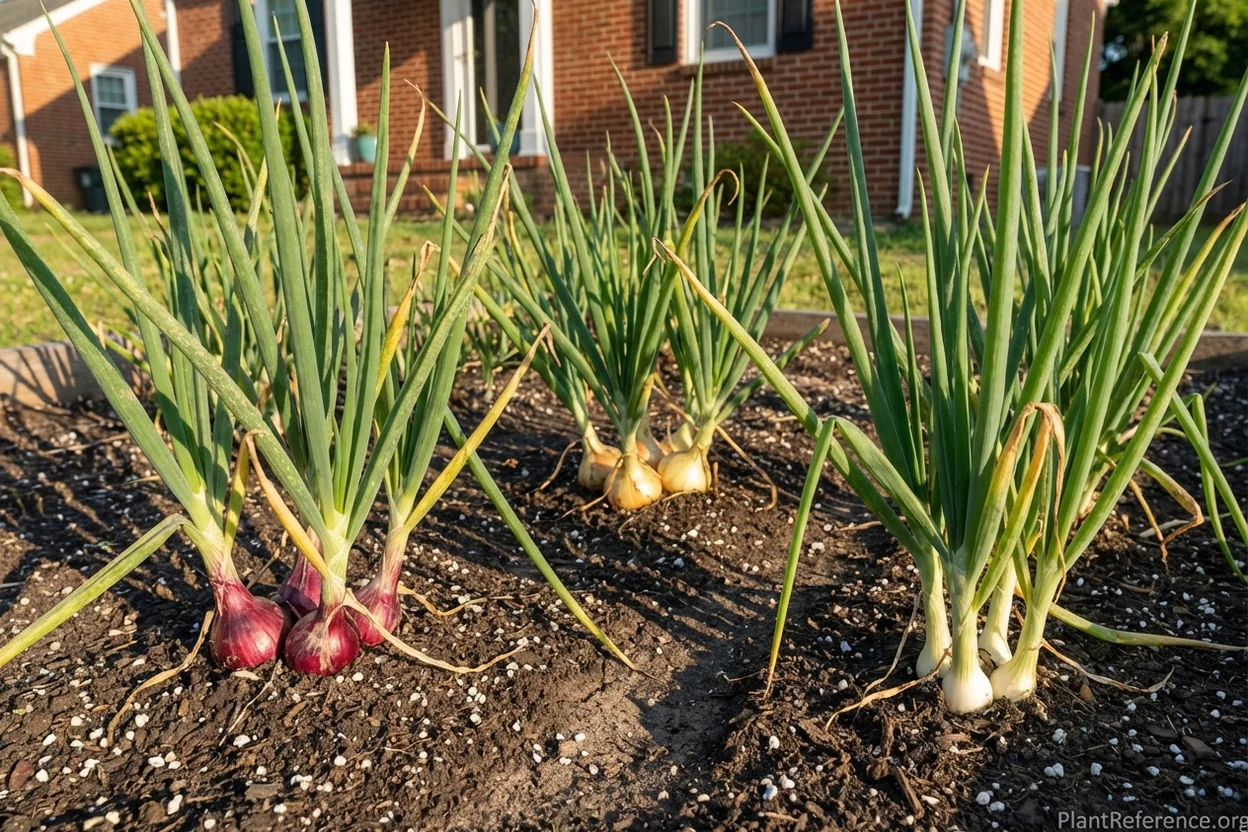
Here's what most gardeners don't realize: onions won't form bulbs until they receive their specific day-length trigger. Plant the wrong type for your latitude, and you'll get massive green tops but tiny bulbs—or worse, the plants will bolt and flower without bulbing at all.
Variety | Days to Maturity | Best For | Notes for Richmond |
|---|---|---|---|
85-100 days | All-purpose | Perfect for Zone 7b, adapts to spring or fall planting | |
105-120 days | Long storage | Excellent storage onion, stores 8-10 months | |
110-120 days | Large bulbs | Produces jumbo onions in Richmond's climate | |
110-125 days | Sweet eating | Best fall-planted for June harvest | |
240-270 days | Hardneck garlic | Plant October, harvest June | |
240-270 days | Softneck garlic | Better storage, braids well |
Top Intermediate-Day Varieties for Richmond
The candy onion 🌿Allium cepa 'Candy' (KAN-dee) is my go-to recommendation for Richmond gardeners. It's bred specifically for our transitional latitude and produces reliable medium to large bulbs whether you plant in spring or fall. The flavor balances sweetness with enough bite for cooking, and it stores moderately well—about 4-5 months with proper curing.
For serious storage, nothing beats 🌿Allium cepa 'Red Wing' (RED-wing). This hybrid produces deep red bulbs that maintain their color through storage and keeps firm for 8-10 months when properly cured. The thick, papery skin protects against moisture loss and rot.
If you want bragging-rights onions, try 🌿Allium cepa 'Yellow Sweet Spanish' (yel-low sweet SPAN-ish). Given Richmond's long growing season, this variety can reach colossal size—I've grown them over a pound each. The flavor is mild enough to eat raw but develops complexity when cooked.
Specific Planting Dates for Richmond Virginia
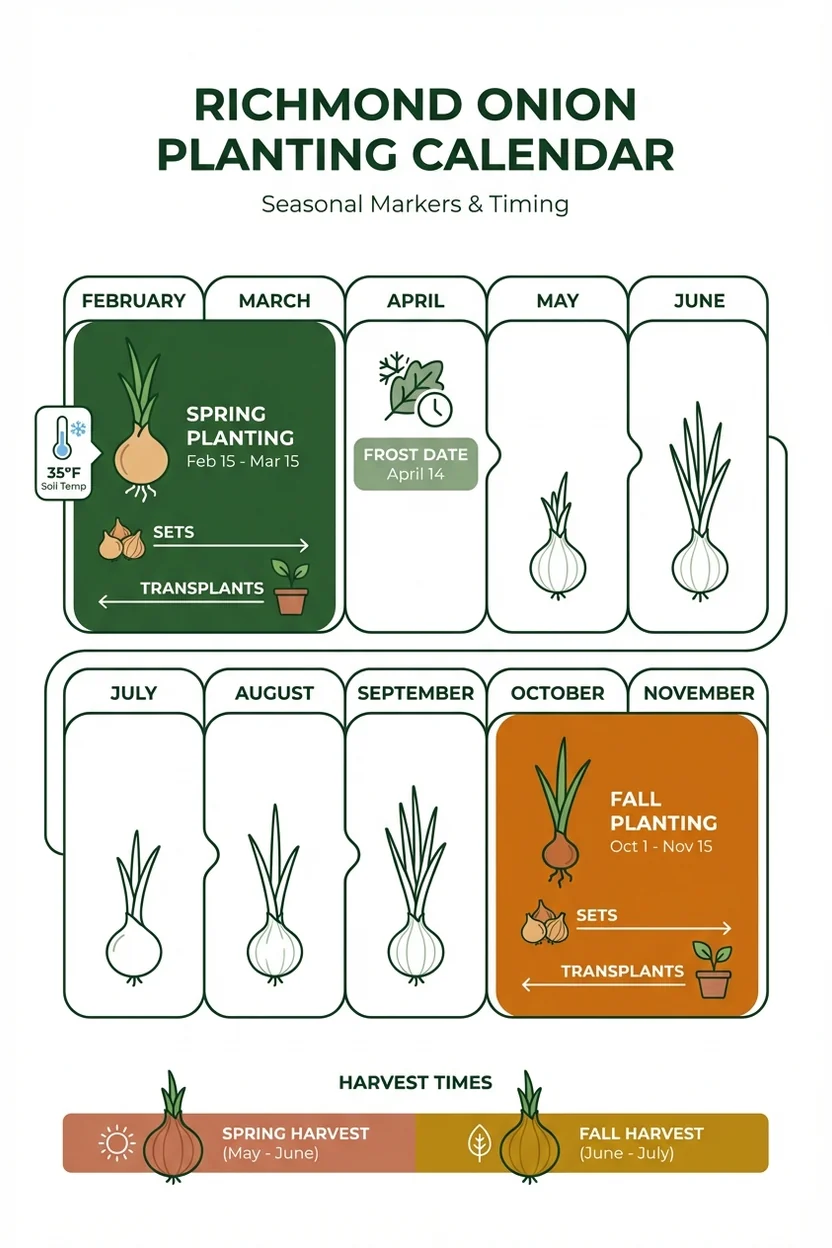
Richmond's last frost averages April 14, but our onion planting schedule doesn't follow typical frost date calculations. Onions are remarkably cold-hardy and actually prefer cool weather for root establishment.
Spring Planting Schedule
February 15-March 15: Plant onion sets, transplants, or direct-seed for late summer harvest (August-September). This timing allows maximum leaf growth before the June solstice triggers bulbing. Soil temperature should be at least 35°F (2°C)—onions will grow slowly but steadily in cold soil.
March 15-April 1: Last chance for spring planting. Later plantings risk smaller bulbs because there's insufficient time for leaf development before day-length triggers bulbing.
Fall Planting Schedule (Overwintering)
October 1-November 15: Plant transplants for early summer harvest (May-June). This method works beautifully in Zone 7b because our winters are mild enough for survival yet cold enough to prevent premature bulbing.
The key to fall success is planting transplants, not sets. Sets often bolt when exposed to spring temperature fluctuations after winter dormancy. Transplants establish better root systems and show superior bolt resistance.
Garlic Planting in Richmond
Plant garlic cloves October 15-November 15 for June harvest. Garlic requires 4-6 weeks of cold exposure (vernalization) to form proper bulbs. Richmond's winter provides perfect conditions without the extreme cold that can damage cloves in northern zones.
Both hardneck varieties like 🌿Allium sativum 'Music' and softneck types like 🌿Allium sativum 'California Early' perform well here. Hardnecks produce scapes (flower stalks) in late spring that should be removed to maximize bulb size. Softnecks don't produce scapes and typically store longer.
Complete Growing Guide for Richmond Onions
Soil Preparation
Onions demand well-draining soil with high fertility. Richmond's clay-heavy soils need amendment with compost or aged manure to improve drainage and provide sustained nutrition. Work in 2-3 inches of compost before planting.
Test soil pH—onions prefer 6.0-6.8. Our Virginia soils often run slightly acidic (5.5-6.0), so you may need lime applied the previous fall to raise pH gradually.
Planting Techniques
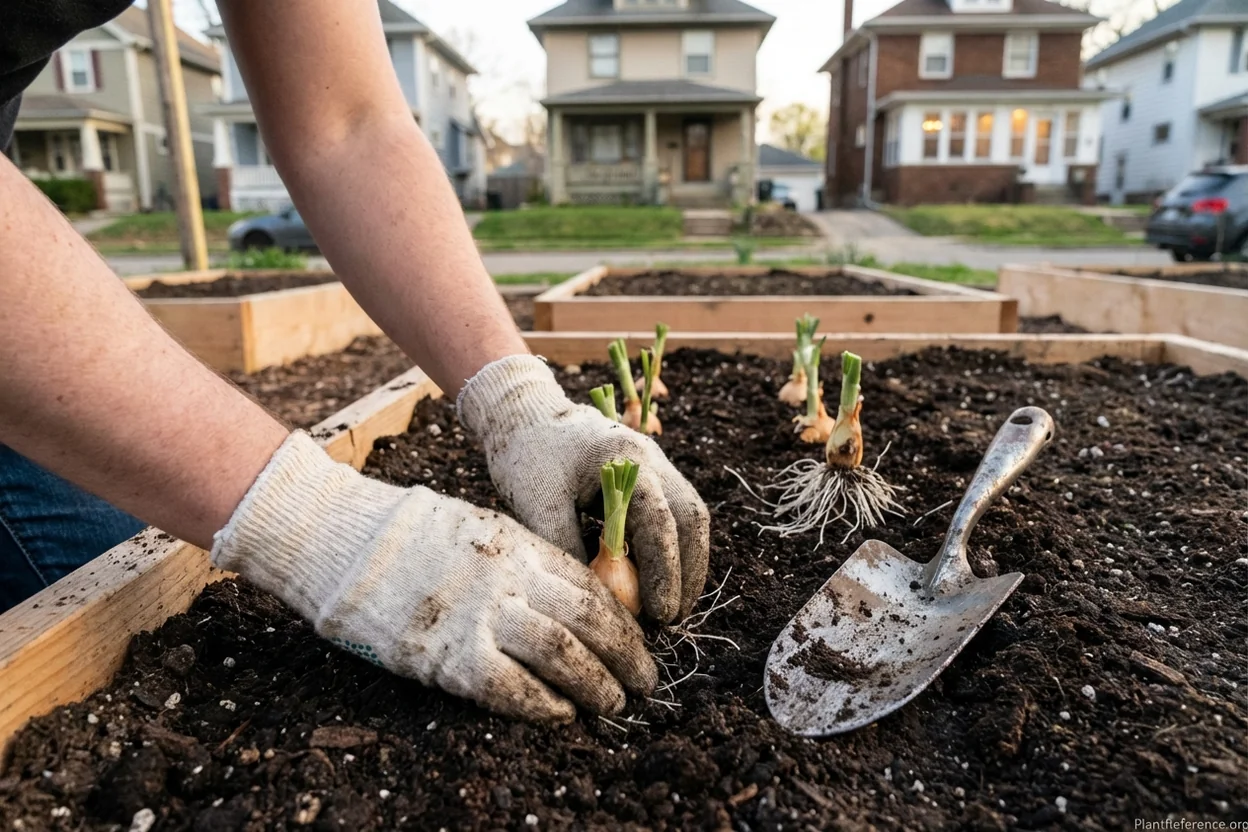
Sets: Push into soil until only the tip shows, spacing 4 inches apart in rows 12 inches apart. Choose sets smaller than a dime—large sets tend to bolt.
Transplants: Trim roots to 2 inches and tops to 4 inches. Plant at the same depth they were growing, firming soil gently around roots.
Seeds: Start indoors 8-10 weeks before transplanting. Direct seeding works for fall planting but requires consistent moisture for germination.
Fertilization and Care
Onions are heavy nitrogen feeders during vegetative growth but require a complete fertilizer approach:
Apply balanced fertilizer (10-10-10) at planting time
Side-dress with nitrogen every 3-4 weeks until bulbing begins
Stop all nitrogen feeding when you see the soil crack around bulb bases
Maintain consistent moisture—1 inch per week including rainfall
Mulch between rows to suppress weeds and retain moisture
The critical management point comes when bulbing begins, usually indicated by soil cracking around the plant base as bulbs expand. Cease nitrogen feeding immediately—continued nitrogen delays maturity and produces thick necks that won't cure properly.
Companion Planting
Onions complement most vegetables, particularly members of the brassica family. Plant alongside broccoli, cabbage, and kale for natural pest deterrence. The strong onion scent masks brassica odors that attract cabbage worms and flea beetles.
Avoid planting near legumes (beans and peas), as onions can inhibit their nitrogen fixation ability.
Troubleshooting Richmond-Specific Problems
Bolting Issues
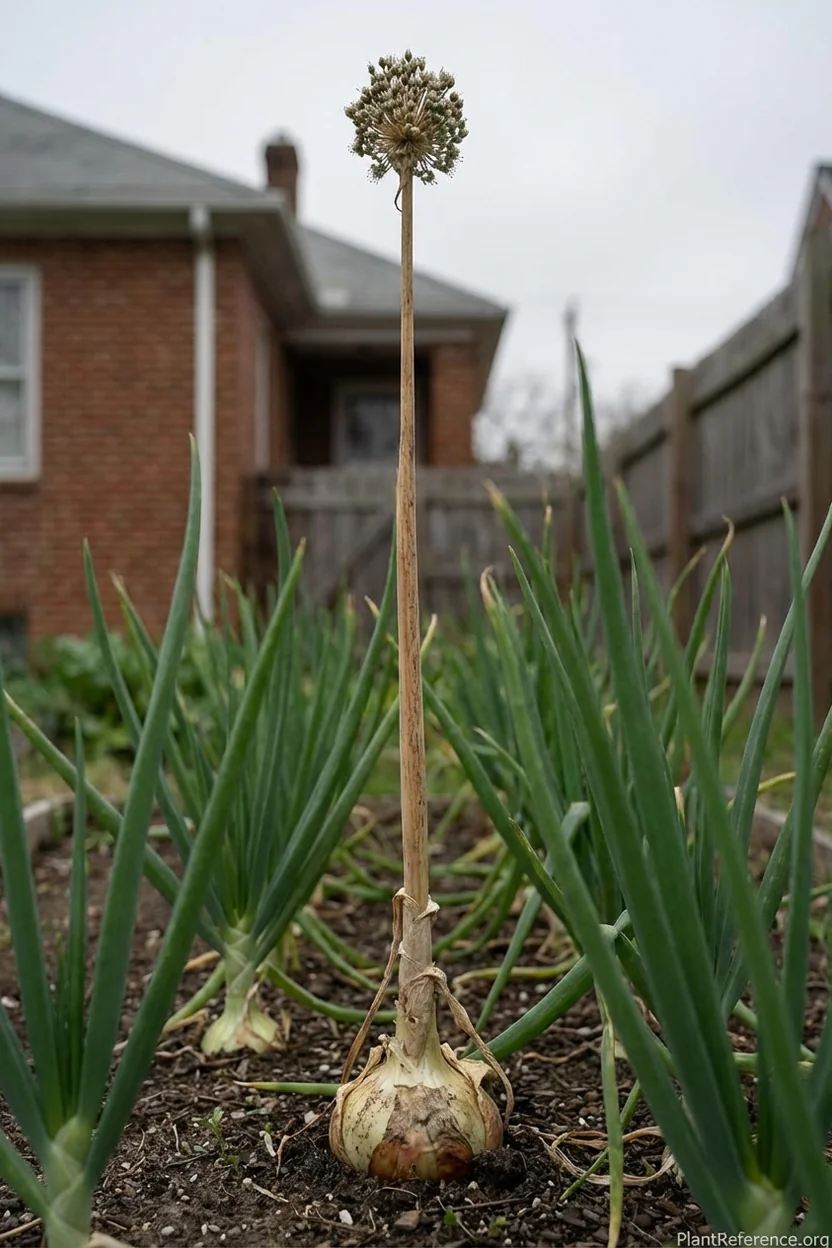
Spring-planted sets sometimes bolt (send up flower stalks) during Richmond's variable spring weather. Cool periods followed by sudden warmth trick large sets into thinking they've experienced winter and need to reproduce.
Prevention: Use smaller sets (pea-sized), choose transplants over sets, or plant intermediate-day varieties that adapt better to temperature fluctuations.
Clay Soil Drainage
Richmond's clay soils retain moisture but can become waterlogged during our wet springs. Onions sitting in saturated soil develop root rot and fail to bulb properly.
Solutions: Build raised beds 6-8 inches high, incorporate coarse sand and compost to improve drainage, or plant in containers filled with well-draining potting mix.
Summer Heat Stress
Late-planted onions may struggle with Richmond's hot, humid summers. Symptoms include stunted growth, premature bulbing, and increased disease pressure.
Management: Ensure adequate mulching, maintain consistent moisture, provide afternoon shade during the hottest periods (July-August), and time plantings to avoid peak summer stress.
Disease Prevention
Richmond's humidity creates favorable conditions for onion diseases:
Rotate onion family crops every 3-4 years to break disease cycles
Ensure good air circulation by proper spacing
Water at soil level to keep foliage dry
Remove diseased plants immediately
Choose disease-resistant varieties when available
Harvest and Storage in Virginia Climate
Harvest Timing
Harvest when 50-75% of tops have fallen over naturally—this indicates the plant has finished transferring nutrients from leaves to bulbs. Don't be tempted to bend tops over manually; this creates wounds and reduces storage life.
Spring-planted onions: Typically ready August-September
Fall-planted onions: Usually ready May-June
Garlic: Harvest when lower leaves turn brown but 5-6 green leaves remain, typically mid-June
Curing Process for Virginia Humidity
Richmond's summer humidity makes proper curing critical for storage success. After harvest:
Brush off soil but don't wash
Lay in single layer on screens or racks in shaded, well-ventilated area
Maintain temperatures between 80-90°F (27-32°C) with good airflow
Cure for 2-4 weeks until necks are tight and papery
Move indoors if rain threatens during curing period
Our humid climate extends curing time compared to arid regions. Be patient—properly cured onions store significantly longer than rushed ones.
Long-Term Storage
Once cured, store onions in cool (32-40°F/0-4°C), dry conditions with good air circulation. Avoid temperature fluctuations that trigger sprouting.
Storage expectations in Richmond's climate:
Storage varieties (Red Wing): 8-10 months
Intermediate varieties (Candy): 4-5 months
Sweet varieties (Walla Walla): 2-3 months
Hardneck garlic: 6-8 months
Softneck garlic: 10-12 months
Check stored onions monthly and remove any showing soft spots or sprouting to prevent spread to healthy bulbs.
Frequently Asked Questions
Reading about plants and recognising them are different skills. These three build the second.
- Daily PlantIdentify the day’s mystery plant from a close-up photograph.
- Keyed OutWork a dichotomous key, lead by lead, to name a hidden specimen.
- Name That PlantName a specimen from botanical clues dealt hardest first.
Free to play, no account needed
Dot grew up on a small farm in rural Virginia and has maintained a vegetable garden for decades. After retiring from teaching elementary school, she became a Master Gardener volunteer and spends her time mentoring new gardeners at community garden plots in Richmond. She's especially knowledgeable about heirloom varieties, seed saving, and traditional growing methods passed down from her grandmother. Dot's no-nonsense advice comes from extensive trial and error—she's seen every tomato disease, pest problem, and weather disaster imaginable. Her biggest pet peeve is gardeners who overcomplicate simple tasks. "Plants want to grow," she often says. "Your job is to not get in their way."