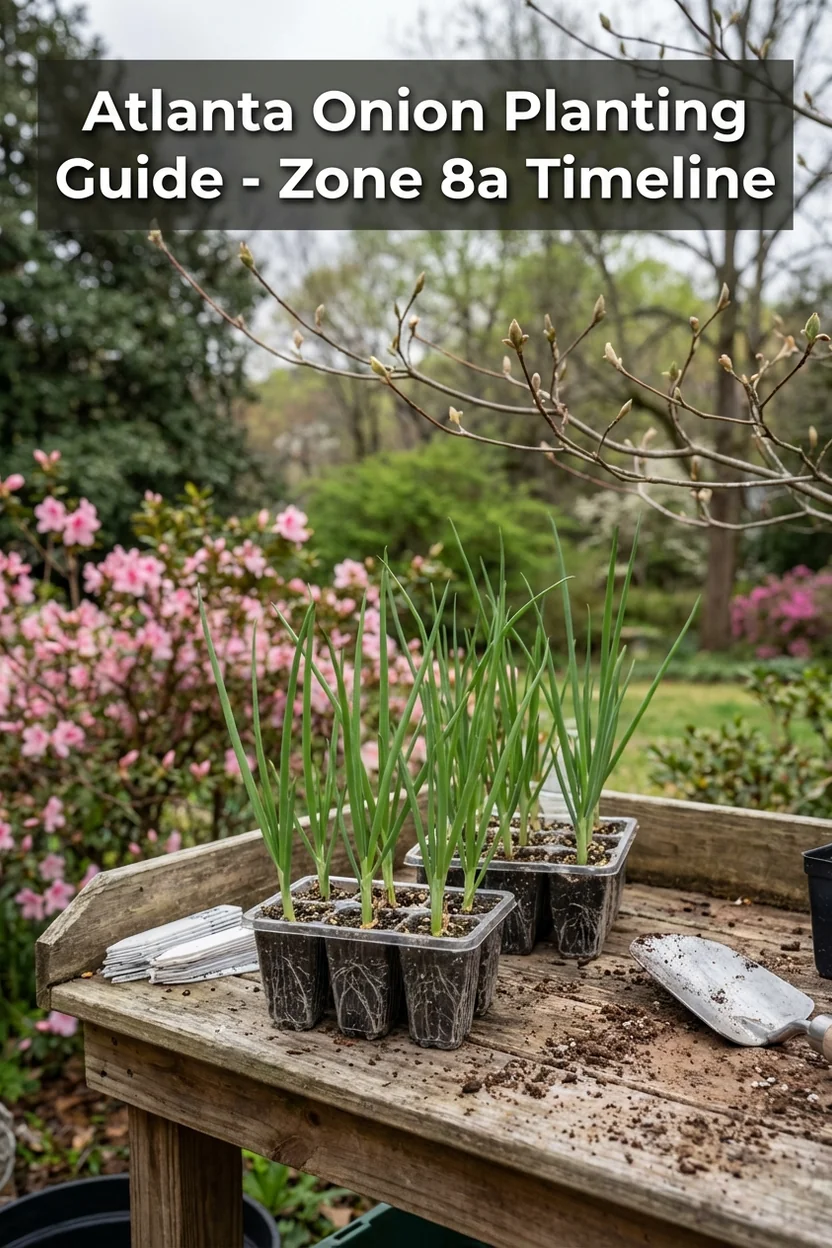
When to Plant Onions in Atlanta: Complete Guide + Best Varieties for Zone 8a
Pets & Toxicity
Recorded toxicity for plants linked in this guide. An unknown status is not a safety assessment.
Toxic to pets: Granex onion, Texas super sweet onion, copra onion and 6 moreDetailsHide
Allium cepa 'Granex' — Toxicity Warning
Toxic to cats and dogs if eaten; cats are especially susceptible, and raw, cooked or concentrated plant material can damage red blood cells and cause anaemia.View Allium cepa 'Granex' plant profileAllium cepa 'Texas Super Sweet' — Toxicity Warning
Toxic to cats and dogs if eaten; cats are especially susceptible, and raw, cooked or concentrated plant material can damage red blood cells and cause anaemia.View Allium cepa 'Texas Super Sweet' plant profileAllium cepa 'Copra' — Toxicity Warning
Toxic to cats and dogs if eaten; cats are especially susceptible, and raw, cooked or concentrated plant material can damage red blood cells and cause anaemia.View Allium cepa 'Copra' plant profileAllium cepa 'Yellow Sweet Spanish' — Toxicity Warning
Toxic to cats and dogs if eaten; cats are especially susceptible, and raw, cooked or concentrated plant material can damage red blood cells and cause anaemia.View Allium cepa 'Yellow Sweet Spanish' plant profileAllium sativum 'California Early' — Toxicity Warning
Toxic to cats and dogs if eaten; cats are especially susceptible, and raw, cooked or concentrated plant material can damage red blood cells and cause anaemia.View Allium sativum 'California Early' plant profileAllium fistulosum — Toxicity Warning
Toxic to cats and dogs if eaten; cats are especially susceptible, and raw, cooked or concentrated plant material can damage red blood cells and cause anaemia.View Allium fistulosum plant profileAllium cepa 'Red Candy Apple' — Toxicity Warning
Toxic to cats and dogs if eaten; cats are especially susceptible, and raw, cooked or concentrated plant material can damage red blood cells and cause anaemia.View Allium cepa 'Red Candy Apple' plant profileAllium cepa 'Super Star' — Toxicity Warning
Toxic to cats and dogs if eaten; cats are especially susceptible, and raw, cooked or concentrated plant material can damage red blood cells and cause anaemia.View Allium cepa 'Super Star' plant profileAllium cepa 'Cabernet' — Toxicity Warning
Toxic to cats and dogs if eaten; cats are especially susceptible, and raw, cooked or concentrated plant material can damage red blood cells and cause anaemia.View Allium cepa 'Cabernet' plant profile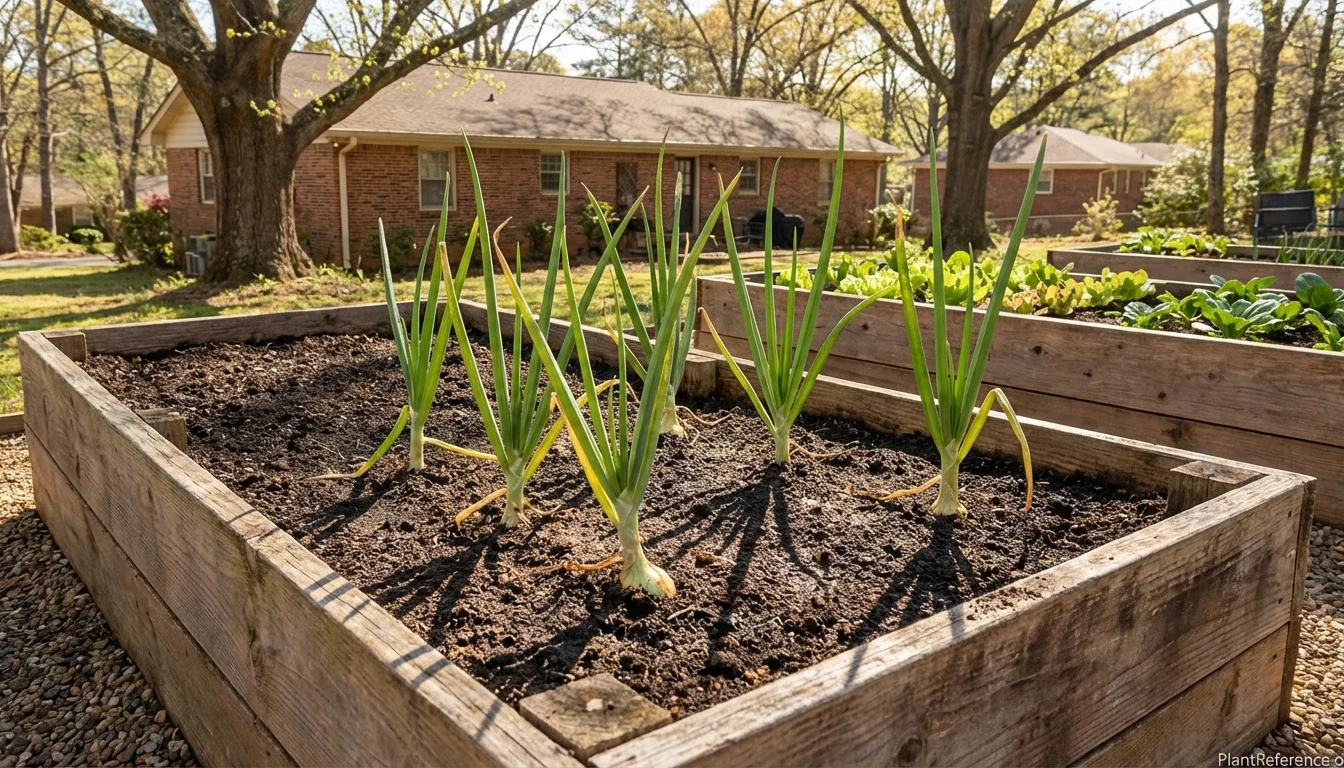
— Image © Plant Reference 2026
Atlanta gardeners have a significant advantage when growing onions—Zone 8a's mild winters and long growing season allow for both spring and fall planting strategies. Understanding when to plant onions in Atlanta depends on your variety choice and desired harvest timing.
Best Onion Varieties for Atlanta's Climate
Atlanta sits at 33°N latitude, placing it perfectly in the intermediate-day onion zone. This geographic positioning means you need varieties that bulb when daylight reaches 12-14 hours—a sweet spot that occurs twice yearly in Georgia.
The key to onion success in Atlanta lies in understanding photoperiodism. Onions are triggered to form bulbs by day length, not temperature. Plant the wrong type for your latitude, and you'll get all green tops with tiny bulbs.
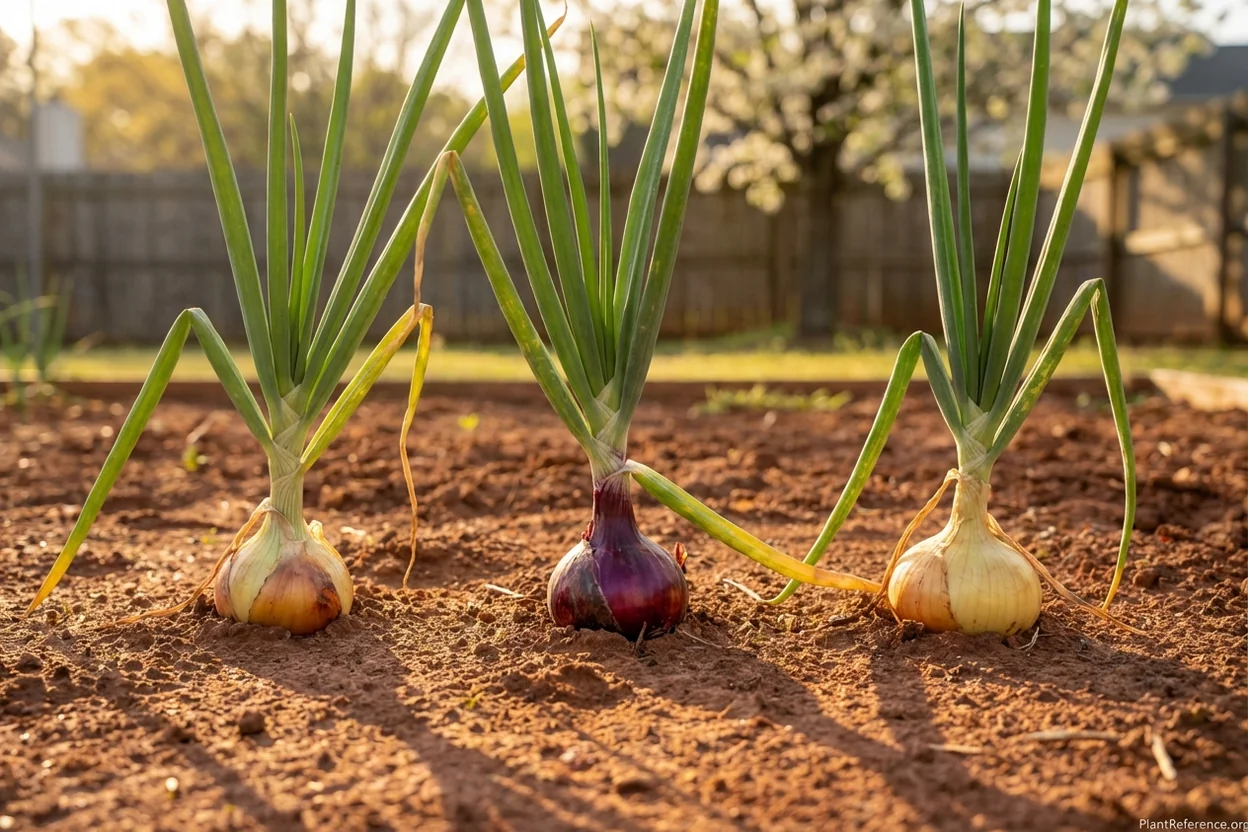
Top Intermediate-Day Varieties for Atlanta
Variety | Days to Maturity | Best For | Notes for Atlanta |
|---|---|---|---|
85-100 days | All-purpose | Perfect for beginners, adaptable to both planting seasons | |
90-105 days | Fresh eating | Beautiful red color, mild sweet flavor | |
104-110 days | Long storage | Stores 8-10 months when properly cured | |
100-110 days | Disease resistance | Excellent for humid Atlanta summers | |
95-105 days | Cooking | Rich flavor, holds up well to Southern cooking | |
110-120 days | Large bulbs | Can reach 1+ pounds with fall planting |
🌿Allium cepa 'Candy' stands out as the most reliable choice for Atlanta gardeners. This variety tolerates both our humid summers and occasional late spring freezes. I've grown it successfully with both spring and fall planting dates.
For storage onions, 🌿Allium cepa 'Copra' is your best bet in Atlanta. While many Southern gardeners focus on sweet onions, storage varieties like Copra cure properly in our climate and keep through winter.
Why Intermediate-Day Onions Work in Atlanta
Atlanta's latitude of 33°N places us in the perfect zone for intermediate-day varieties. These onions begin bulbing when days reach 13-14 hours, which occurs in late April/early May and again in August.
This dual timing allows for two distinct growing strategies:
Spring Planting: Plant February-March, harvest August-September as days shorten past the bulbing trigger.
Fall Planting: Plant October-November, grow through winter, harvest May-June as days lengthen past the trigger.
Specific Planting Dates for Atlanta
Atlanta's last frost date of March 24 and first frost of November 9 provide a generous 230-day growing season. This extended window opens up planting opportunities that northern gardeners can only dream of.
Spring Planting Timeline
February 15-March 15: Optimal Spring Planting Window
Plant onion sets or transplants 2-4 weeks before the last frost date. Onions tolerate light frost down to 28°F, making them one of the earliest crops you can plant.
Specific Dates by Method:
Sets (small dormant bulbs):February 15-March 1
Most cold-tolerant option
Plant when soil temperature reaches 35°F
Choose sets smaller than a dime to prevent bolting
Transplants:February 20-March 15
Best variety selection
Plant 4-6 week old plants from nursery
Trim roots to 2 inches, tops to 4 inches before planting
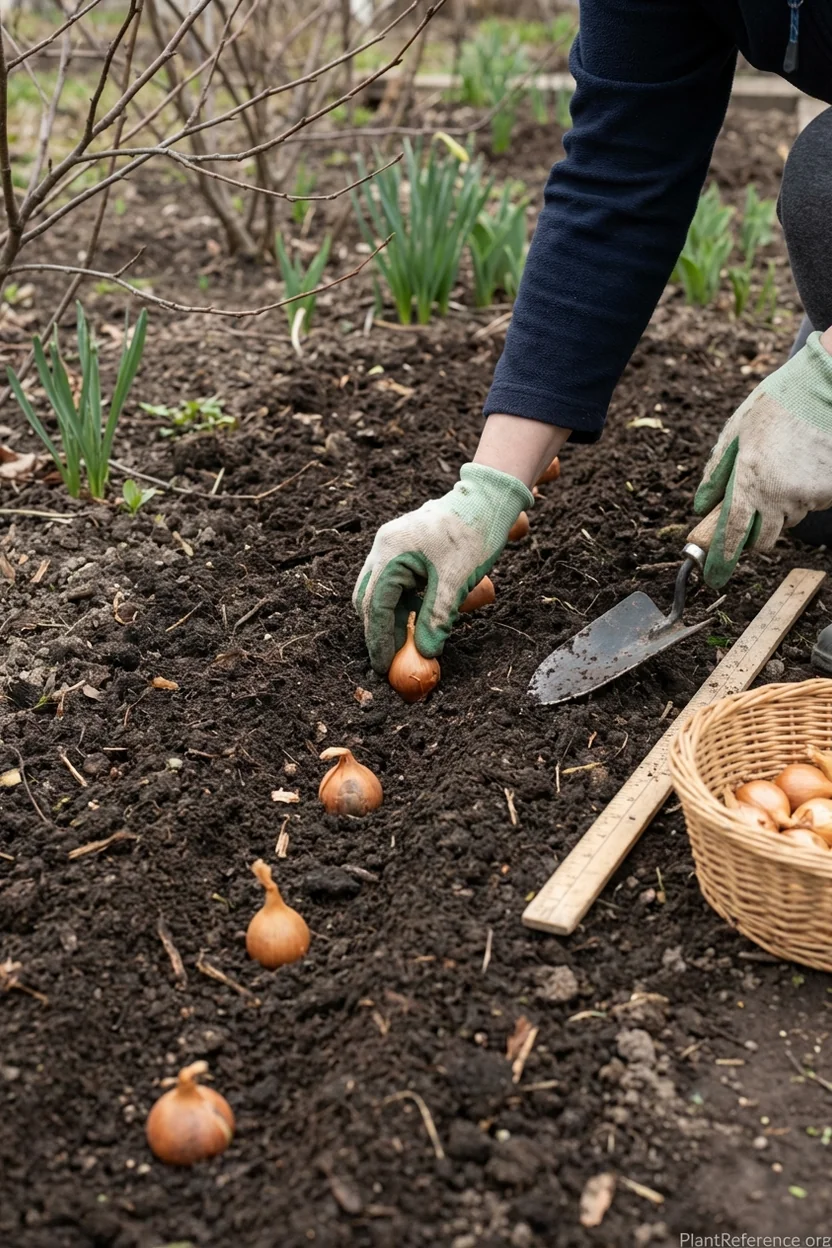
Fall Planting Timeline (Recommended)
October 15-November 15: Optimal Fall Planting Window
Fall planting often produces larger, higher-quality bulbs in Atlanta. Plants establish during cool weather, grow steadily through our mild winter, then put on rapid growth in spring before bulbing.
Why Fall Planting Works Better:
Cooler growing conditions reduce pest pressure
Plants avoid summer heat stress
Earlier harvest (May-June) beats summer storage challenges
Larger bulbs from longer growing period (7-8 months vs 5-6 months)
Fall Planting Method:
Use transplants only—sets and seeds are unreliable for fall planting. Start seeds indoors in August or purchase transplants from specialty suppliers.
Plant 6-8 weeks before first hard freeze (November 9). This allows root establishment before winter dormancy.
Garlic Planting Schedule
October 1-November 1: Softneck Garlic Planting
Atlanta's Zone 8a climate is ideal for softneck garlic varieties like 🌿Allium sativum 'California Early'. Plant cloves 4-6 weeks before first frost to establish roots before winter.
Garlic Timeline:
October planting
Root establishment through November
Winter dormancy December-February
Rapid growth March-April
Harvest June-July (240-270 days total)
Complete Growing Guide for Atlanta
Soil Preparation for Atlanta Clay
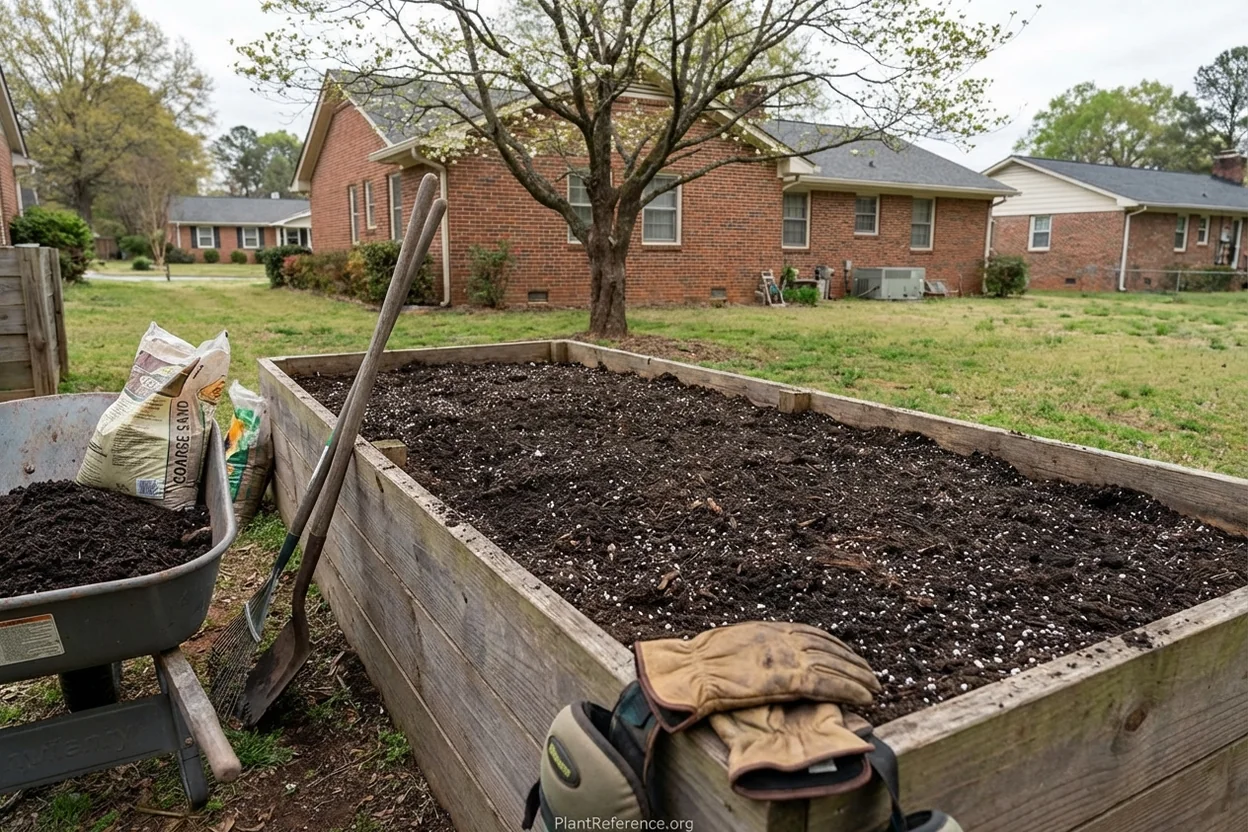
Atlanta's notorious clay soil requires amendment for successful onion growing. Onions need well-draining soil—clay holds too much moisture and restricts bulb expansion.
Soil Amendment Recipe for Atlanta:
Add 2-3 inches compost or aged manure
Work in 1 inch coarse sand (not fine sand)
Incorporate perlite for drainage
Target pH 6.0-6.8 (most Atlanta soil runs acidic)
Raised Bed Advantage:
Consider raised beds if dealing with heavy clay. Even 6 inches of elevation dramatically improves drainage and allows earlier spring planting.
Planting Techniques
Spacing Requirements:
Onion sets/transplants: 4 inches apart, rows 12 inches apart
Garlic cloves: 6 inches apart, rows 12 inches apart
Scallions: 2 inches apart for continuous harvest
Planting Depth:
Onion sets: 1 inch deep (tip just below soil surface)
Transplants: Same depth as in pot, firm gently
Garlic cloves: 2 inches deep, pointed end up
Fertilization Schedule
Pre-Plant: Work 2-3 inches compost into soil At Planting: Apply balanced fertilizer (10-10-10) 4 weeks after emergence: Side-dress with nitrogen (blood meal or 21-0-0) 8 weeks after emergence: Final nitrogen application Stop nitrogen 6 weeks before harvest: Prevents thick necks and storage problems
Water Management
Atlanta's variable spring and summer rainfall requires attention to moisture management.
Establishment Phase (first 4 weeks): Keep consistently moist but not waterlogged Growth Phase: 1 inch per week, reduce if natural rainfall abundant Bulbing Phase: Maintain even moisture, avoid drought stress Pre-Harvest: Reduce watering as tops begin to yellow
Atlanta-Specific Watering Tips:
Mulch heavily to conserve moisture during hot summers
Use soaker hoses to avoid wetting foliage (reduces disease pressure)
Monitor clay soil moisture—it dries slowly but deeply
Troubleshooting Atlanta-Specific Problems
Humidity and Disease Pressure
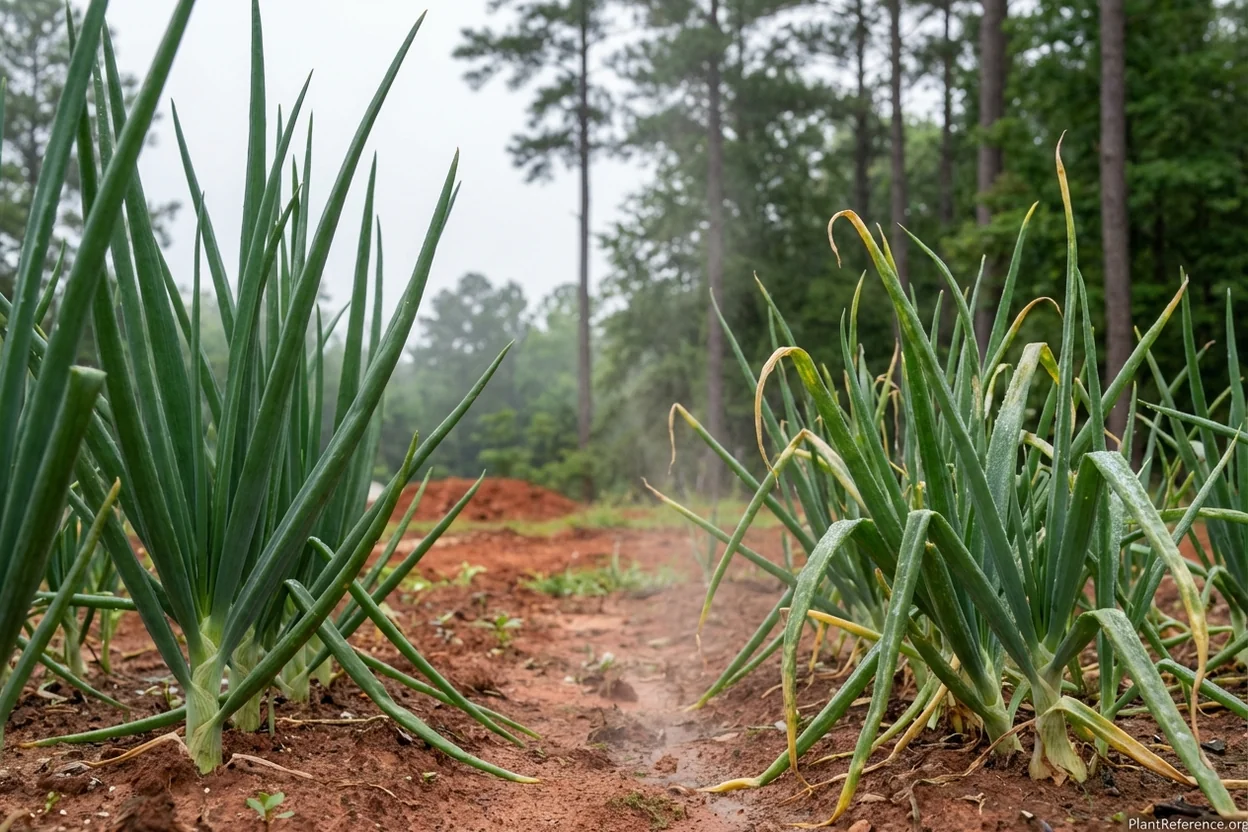
Atlanta's high humidity creates challenging conditions for onions, which prefer drier climates. Focus on prevention through good cultural practices.
Common Disease Issues:
Downy Mildew: Purple-gray fuzzy growth on leaves during humid weather - Prevention: Avoid overhead watering, ensure good air circulation - Treatment: Remove affected leaves, apply copper fungicide if severe
Bacterial Soft Rot: Water-soaked spots leading to bulb rot - Prevention: Avoid overwatering, improve drainage - Management: Remove affected plants immediately
Heat Stress Management
Atlanta's intense summer heat can stress spring-planted onions during bulb formation.
Heat Stress Symptoms:
Premature leaf die-back
Small bulb size
Early bolting
Prevention Strategies:
Provide afternoon shade during peak summer (June-August)
Mulch heavily to keep soil cool
Consider fall planting to avoid summer heat entirely
Clay Soil Drainage Issues
Problem: Standing water after heavy rains Solution: Install French drains or plant in raised beds
Problem: Soil compaction preventing bulb expansion Solution: Add organic matter annually, avoid walking on wet soil
Harvest & Storage
Determining Harvest Readiness
Onions are ready when 50-75% of the tops fall over naturally. This typically occurs:
Spring-planted onions: August-September Fall-planted onions: May-June
Don't bend tops over manually—this creates wounds that invite rot. Let the plant signal maturity naturally.
Curing Process for Atlanta's Climate
Atlanta's humidity makes proper curing essential for storage onions.
Curing Steps:
Lift carefully: Use a fork to avoid bruising bulbs
Field cure briefly: 24-48 hours in shade if weather is dry
Move indoors: Atlanta's humidity requires indoor curing
Provide airflow: Use fans to circulate air around onions
Maintain warmth: 80-85°F speeds curing process
Duration: 2-4 weeks until necks are tight and papery
Storage Recommendations
Short-term (1-3 months): Cool basement or air-conditioned room Long-term (6+ months): 32-40°F with 65% humidity
Atlanta's humid climate makes long-term storage challenging without climate control. Consider these strategies:
Store only perfectly cured onions
Use mesh bags for air circulation
Check monthly and remove any showing soft spots
Consider dehydrating or freezing for preservation
Frequently Asked Questions
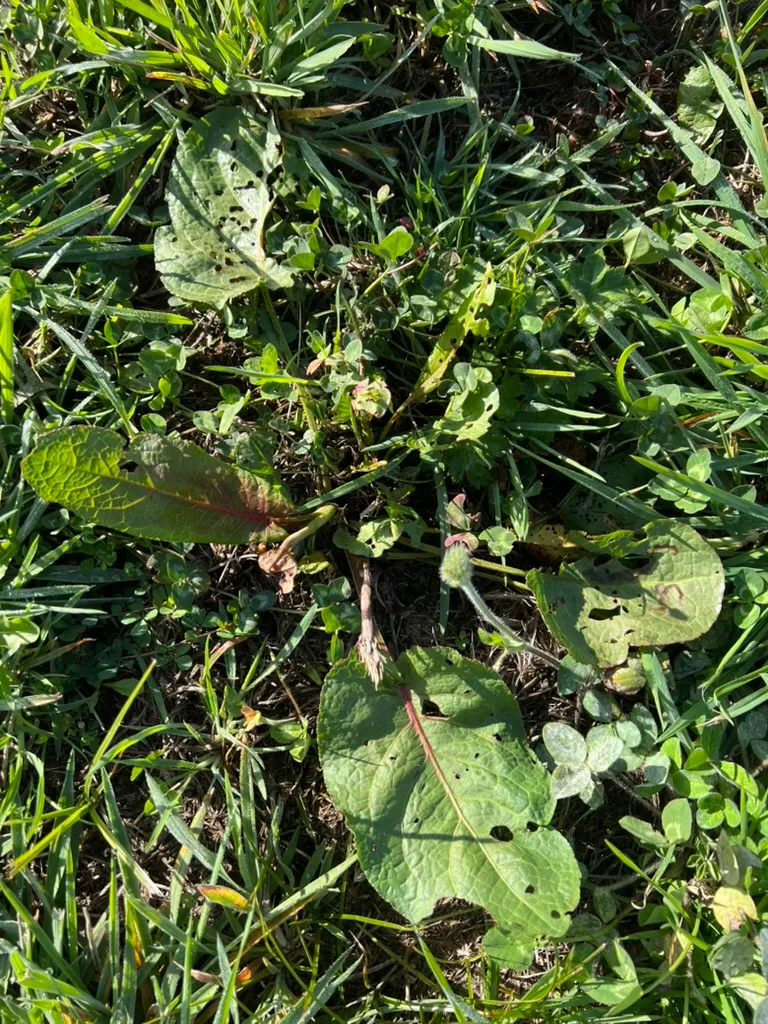
Reading about plants and recognising them are different skills. These three build the second.
- Daily PlantIdentify the day’s mystery plant from a close-up photograph.
- Keyed OutWork a dichotomous key, lead by lead, to name a hidden specimen.
- Name That PlantName a specimen from botanical clues dealt hardest first.
Free to play, no account needed
Grace is a community garden organizer in Atlanta who manages three neighborhood garden plots across the city. She came to gardening through food justice work—she saw how many Atlanta neighborhoods lacked access to fresh produce and decided to do something about it. Grace has a background in public health and brings that lens to everything she writes about food growing, soil safety in urban settings, and making gardens work for the communities they serve. She grows a wide range of vegetables, with a focus on crops that produce heavily in Atlanta's long growing season. Grace is practical and community-minded—she thinks about gardens as shared spaces, not just personal projects.