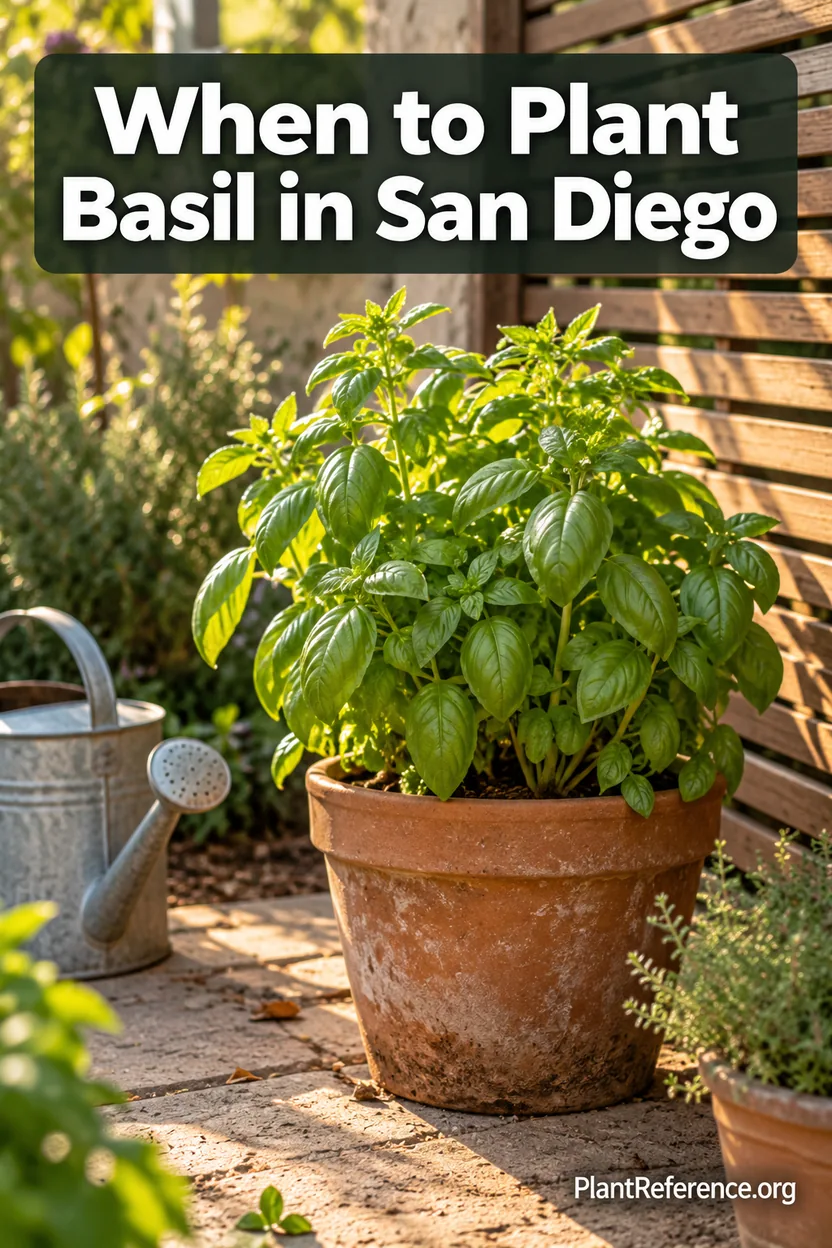
When to Plant Basil in San Diego: Coastal Growing Guide
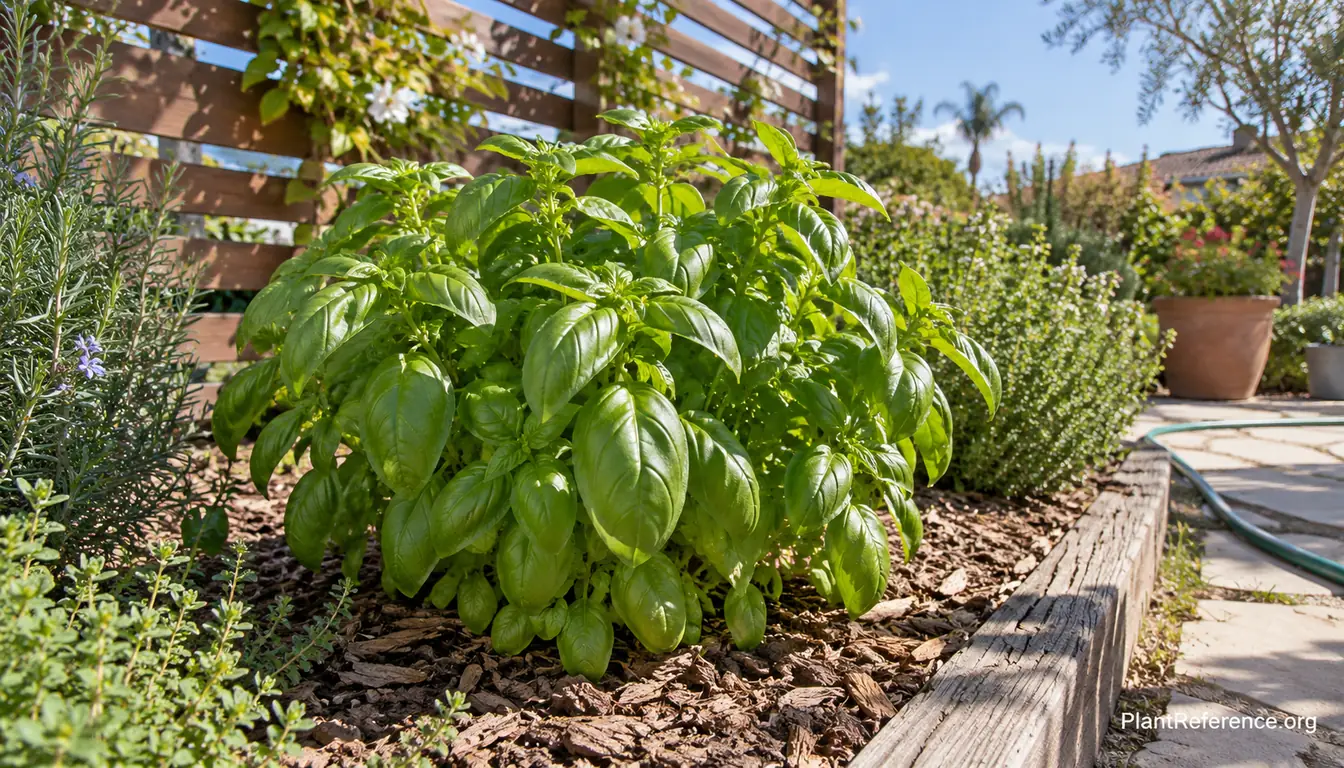
— Image © PlantReference.org 2026
Pets & Toxicity
Recorded toxicity for plants linked in this guide. An unknown status is not a safety assessment.
No linked plant is recorded as toxicDetailsHide
Ocimum basilicum 'Purple Ruffles' — Toxicity
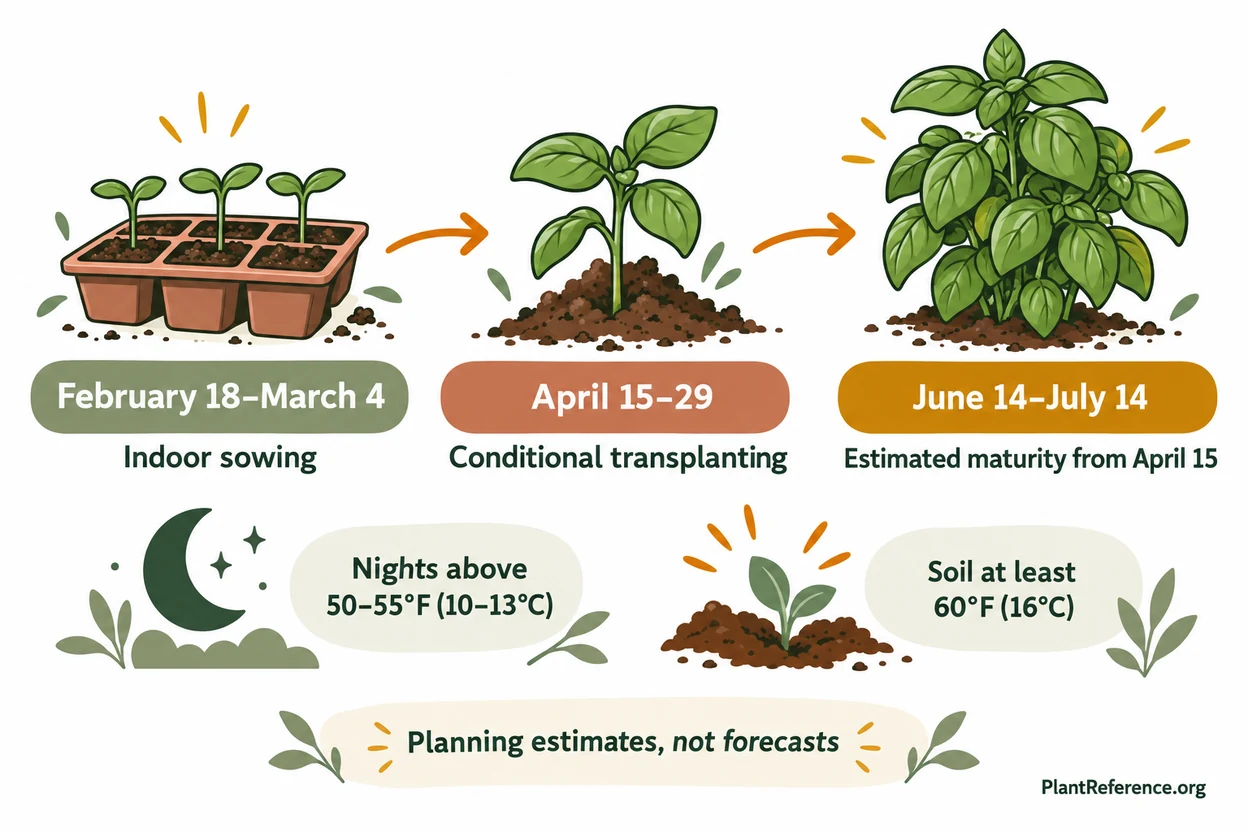
Non-toxicView Ocimum basilicum 'Purple Ruffles' plant profileWhen to plant basil in San Diego is a question of warmth, not simply whether frost has finished. Start seeds indoors February 18–March 4 for an April 15–29 transplant target, but wait for nights consistently above 50–55°F (10–13°C) and soil at least 60°F (16°C). A sheltered inland garden may be ready sooner, but a cool coastal pot can wait without losing the whole season.
Sweet basil Ocimum basilicum (OH-see-mum bah-SIL-ih-kum) brings a different watering routine to a California garden full of drought-adapted plants. Its soft leaves need a steady supply of moisture, but roots still need air. A sheltered container can be easier to manage than an exposed bed, provided it drains and has enough room for growth. Growing Herbs in Containers: Pots, Soil & Harvest explains that approach. A useful first goal is a few healthy plants that supply dinner, not an uninterrupted harvest every month of the year.
Best Basil Varieties for San Diego's Climate
Start with the basil you buy for cooking most often. Then add one contrasting flavor, if you have room to care for it properly. In a cooler garden, early planting is not a substitute for warmth; in a hotter inland setting, heat tolerance becomes useful only when the root zone stays adequately supplied with water.
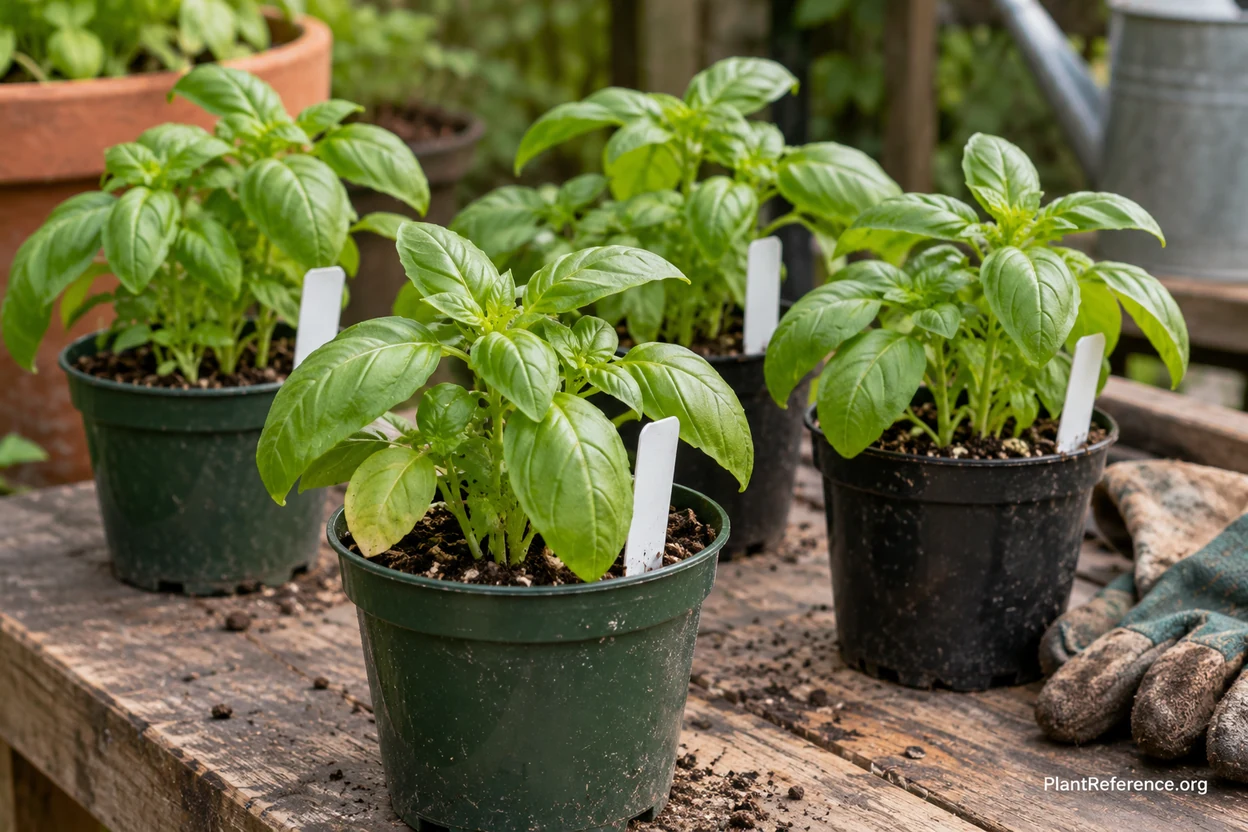
Compare flavor, maturity, and the actual packet
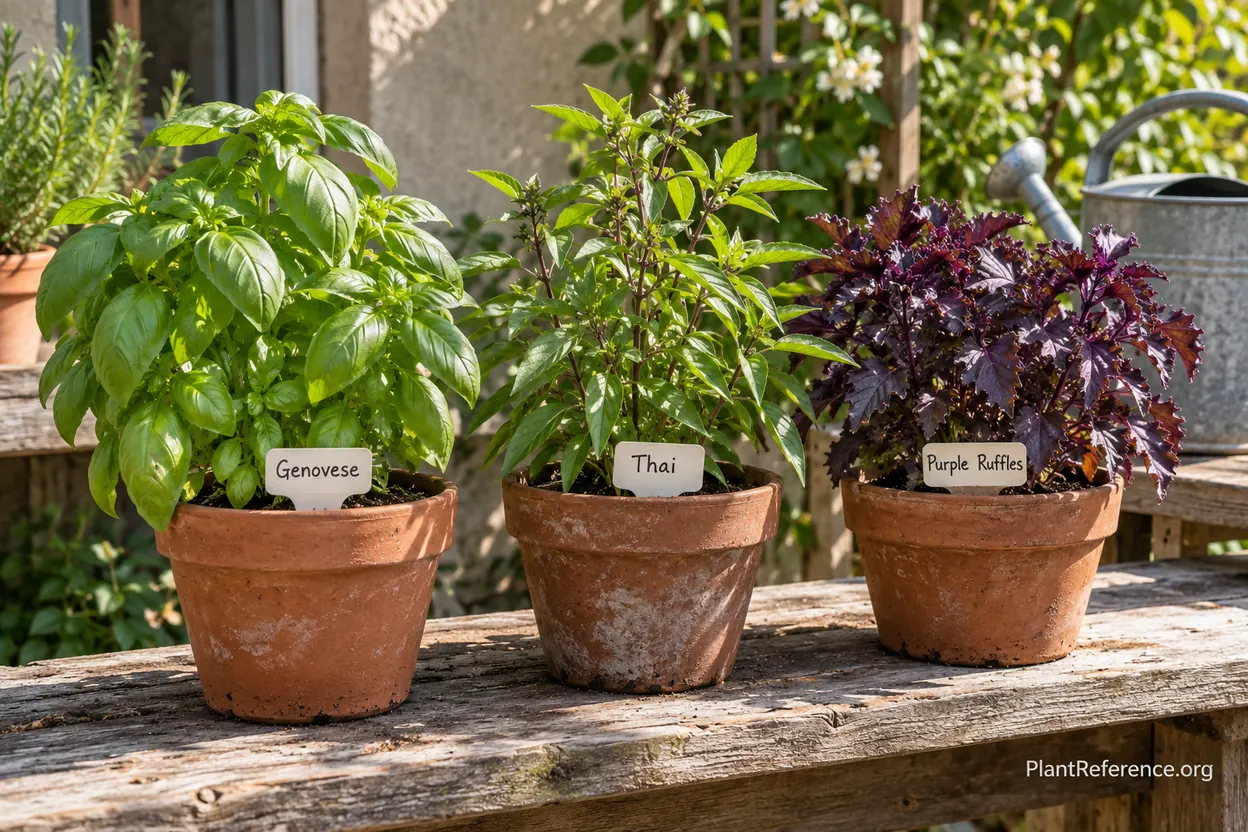
🌿Ocimum basilicum 'Genovese' supplies broad leaves for pesto and familiar sweet-basil cooking. Its soft leafy growth makes moisture management important in an exposed setting. Put it where inspection and small harvests are convenient, rather than at the far end of a bed you seldom visit.
🌿Ocimum basilicum 'Thai' has narrower leaves and an anise-like flavor. The research identifies this type as more heat tolerant than the familiar broad-leaved cooking basil, but tolerance is not immunity to dry roots. Pinch developing flowers when leafy growth is the main objective.
🌿Ocimum basilicum 'Lemon' adds a citrus aroma to the selection. This is the planting plan's name; commercial lemon basil may have a different botanical identity, so retain the name and instructions on the actual packet. Do not assume that all lemon-scented seed lots share the same maturity or sowing requirements.
Variety or planned type | Days to maturity | Best for | Local growing priority |
|---|---|---|---|
60–90 days | Pesto and fresh cooking | Protect tender growth from abrupt exposure | |
60–90 days | Anise-flavored leaves | Maintain moisture despite heat tolerance | |
60–75 days | Citrus-scented dishes | Confirm identity and timing on the packet | |
70–80 days | Color and culinary variety | Choose a named cultivar rather than color alone | |
60–90 days | Spicy aromatic leaves | Follow its seed instructions and grow as an annual |
These are planning ranges from the article brief, not a promise of harvest on a particular day. Seed suppliers may count maturity from sowing or transplanting. Confirm the starting point before placing dates on your calendar; light, warmth, and transplant stress can all change progress.
The plan's 🌿Ocimum basilicum 'Purple' entry is a broad selection label. A named option in the research is 🌿Ocimum basilicum 'Purple Ruffles', which adds textured dark foliage. Purple color does not prove resistance to drought or disease. Keep identification labels rather than treating all dark-leaved plants as interchangeable.
Holy basil 🌿Ocimum tenuiflorum (OH-see-mum ten-yoo-ih-FLOR-um) is a different species with a stronger aromatic profile and frequent flowers. Its seed instructions may call for light during germination, unlike the covering used for many sweet-basil seeds. It may persist in a genuinely warm, frost-free setting, but the stored Zone 10b label alone does not establish that your garden provides one. Plan for useful seasonal growth rather than relying on overwintering.
For a first planting, keep the comparison small enough to water and harvest consistently. Give each type a clear label and note which flavor actually reaches the kitchen. Healthy plants of a familiar type are more useful than a large collection kept in undersized pots.
When to Plant Basil in San Diego: Specific Dates
The city record lists February 1 and December 20 frost dates, stored with the year 2025. That interval is 322 days, rather than the 323 days stated in the plan. Use the calculated interval and the stored Zone 10b label as background, not a forecast or proof that basil will grow actively all winter.
Subtracting six to eight weeks from February 1 gives December 7–21 of the preceding year. Adding a seven- to fourteen-day frost buffer gives February 8–15. Those are the direct frost-based calculations, but they can put tender basil outside before nights and soil are warm enough.
For a straightforward spring crop, this guide instead uses April 15 as a conditional target. Count back six to eight weeks to February 18–March 4 for indoor sowing, and use April 15–29 for transplanting only if temperatures cooperate. A cool site may need a later start, while an earlier warm-site planting still needs actual temperature checks.
Plan replacements rather than demanding year-round growth
A 60–90 day maturity range counted from an April 15 transplant points to June 14–July 14. If the seed packet counts from sowing instead, calculate from the seed date. Young tip harvests can precede a substantial cutting, so record what you mean by the first harvest.
A small June sowing can provide young plants as older ones become woody or flower repeatedly. Raise them in bright conditions with protection from harsh afternoon exposure. Do not put tender new starts beside a heat-reflecting wall simply because mature plants nearby have survived there.
An August 15 transplant plus 60–90 days points to October 14–November 13. The slow end leaves 37 days before the stored December 20 frost boundary, but shorter days and cool nights can slow growth earlier. This is a conditional late-season opportunity, not a guarantee of a winter crop.
If you prefer to skip indoor sowing, buy healthy starts when outdoor conditions are suitable. Direct sowing also depends on warm soil and a seedbed that stays evenly moist. There is no need to use every planting method; choose the one that fits your space and the amount of basil your kitchen uses.
Complete Growing Guide for San Diego
Make a small growing space easy to care for
Choose a place you pass regularly. Basil near the kitchen or a frequently used path is easier to inspect, water, and harvest than a plant hidden behind larger shrubs. Watch where sun actually reaches the leaves through the day; bright surroundings do not necessarily mean a shaded pot receives useful light.
Test the soil before adding materials intended to change pH or nutrients. The research gives a useful pH range around 6.0–7.5, but appearance alone cannot tell you where your soil falls. How to Test Garden Soil: Jar, Ribbon & pH Tests explains which observations you can make and which measurements need a test.
Improve the bed gradually rather than trying to make it perfect in one afternoon. Keep foot traffic out of the root area and use finished compost appropriately. Soil Health 101: How to Build Living, Productive Garden Soil covers the longer view, while How to Build a Hot Compost Pile: Finished Compost in Weeks explains compost preparation if you make your own.
A raised bed is an option for a site that needs better drainage or easier access, not a condition for growing a few herbs. How to Build a Raised Garden Bed: Step-by-Step Construction Guide can help when construction solves a real problem. Otherwise, a suitable existing bed may be enough.
Containers keep the herb's watering needs separate from nearby succulents. Use drainage holes and a suitable container mix, and leave space for roots to develop. Container Gardening: Pots, Soil, Water & Yields explains why a small nursery pot behaves differently from a larger growing container. Repotting can be simpler than trying to compensate for cramped roots with repeated watering.
Raise compact starts and harden them gradually
Sow sweet-basil seed about 1/4 inch (6 mm) deep unless the packet directs otherwise. Keep the mix evenly moist and around 75°F (24°C) for germination. Follow separate surface-sowing directions for holy basil where specified. A thermostatic heat mat is useful only when the seed zone needs extra warmth.
Once seedlings emerge, provide bright light and enough space to avoid tangled, stretched growth. Warmth without adequate light produces weak starts. Thin crowded cells or separate seedlings carefully, and do not let small root balls alternate repeatedly between saturation and dryness.
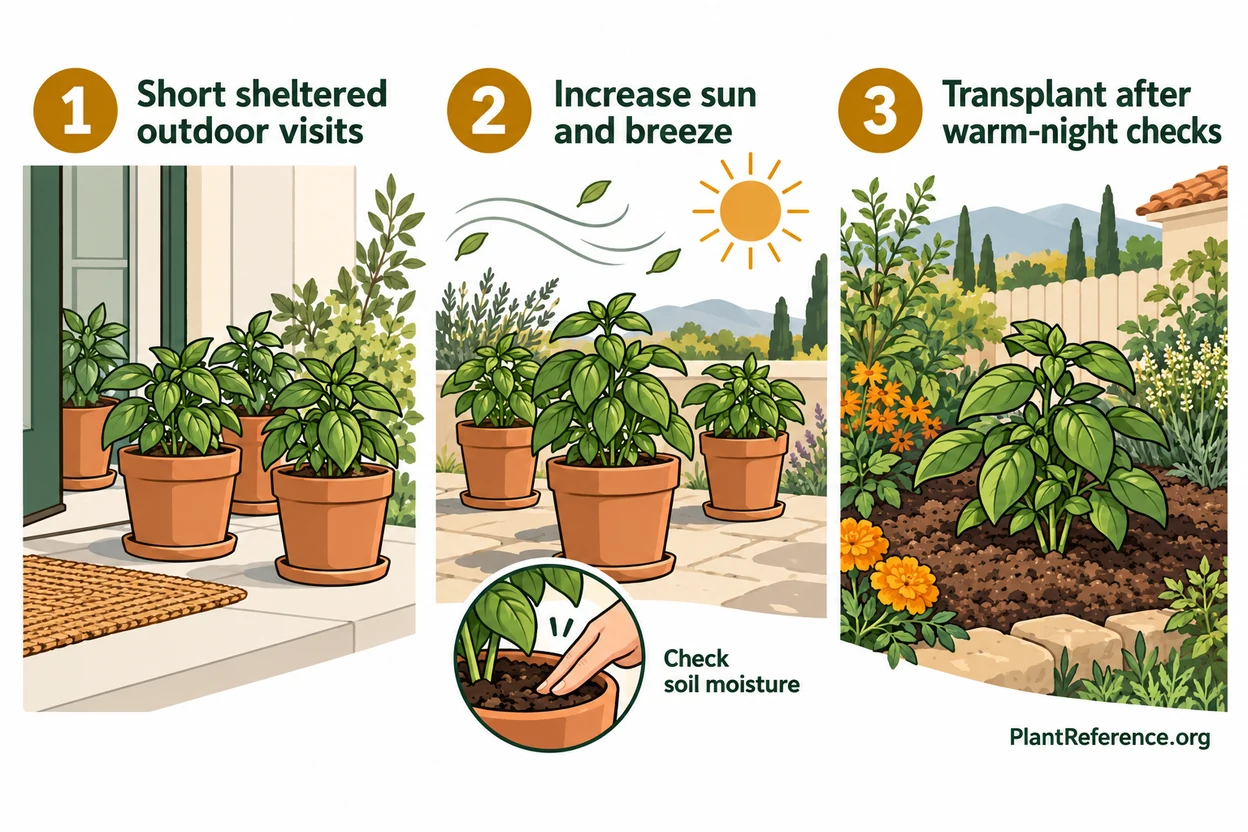
Begin hardening with short periods in a sheltered outdoor position. Increase sun and wind exposure over roughly a week, adjusting to the plants and weather. Do not leave tender starts outside during cold nights simply because hardening has begun.
Transplant at roughly the existing growing depth, water the root ball and surrounding mix, and check again the following day. Avoid moving seedlings straight from a still indoor room to the most exposed corner of the yard. Gradual exposure is a separate task from choosing the calendar date.
Let coastal and inland conditions guide adjustments
Cool coastal air is not a reason to enclose basil in a damp, poorly ventilated corner. Give plants useful light and space for air to move. Inland, a position with morning sun and relief from harsh afternoon exposure can be more manageable than a pot surrounded by hot paving.
Check moisture below the surface rather than copying the watering schedule used for succulents. Basil should not repeatedly dry out completely. Small containers and reflected heat can increase demand, while cooler shaded roots may stay moist longer. Water thoroughly when needed, allow excess to drain, and empty standing water from saucers instead of keeping roots continuously submerged.
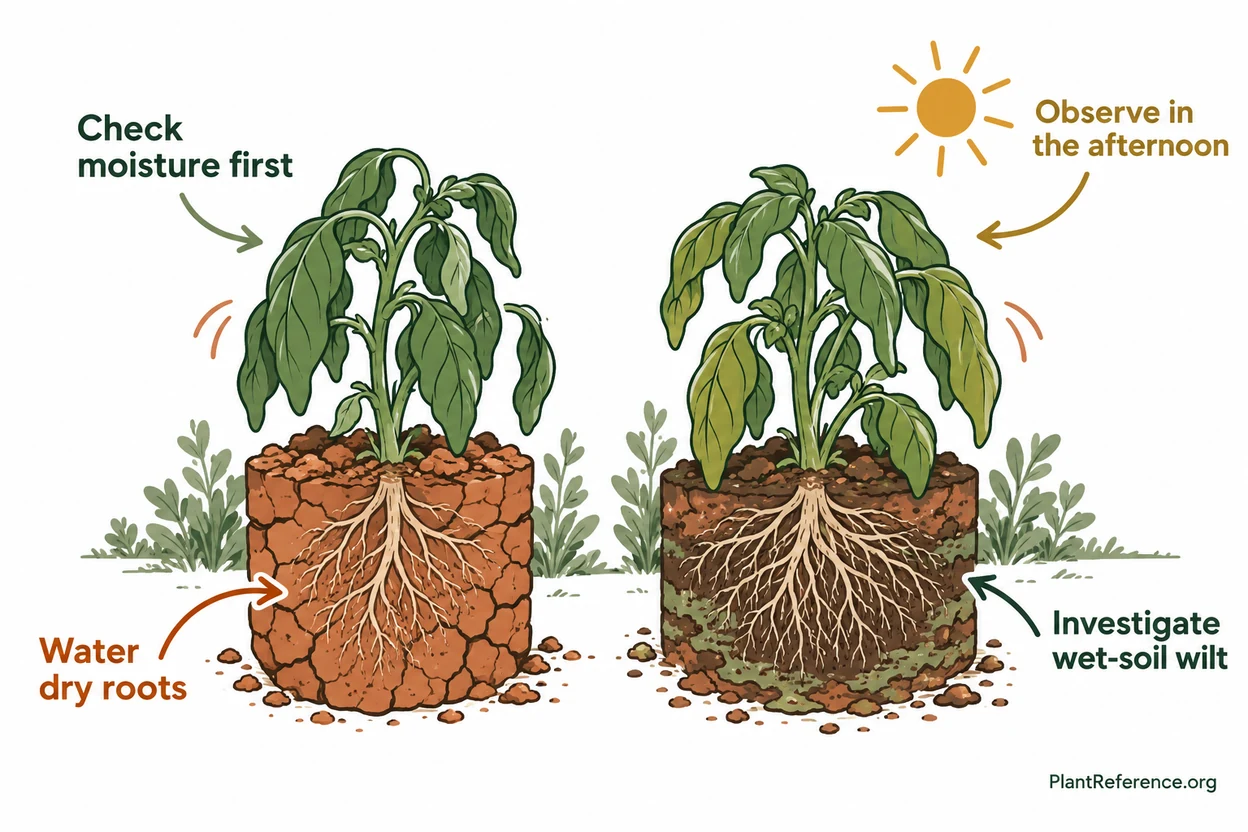
Use morning watering directed at the soil where practical. Keep basil on a watering pattern suited to leafy herbs rather than increasing irrigation throughout a dry-land border. Mulch can moderate surface drying; keep it clear of stems and inspect beneath it. Wet-soil wilt needs investigation before another soaking.
Larger plants may need roughly 18–24 inches (45–60 cm) between them; adjust to the cultivar's mature size. Pinch tips above a healthy leaf pair once plants have several pairs of true leaves. Regular modest cutting encourages branching without stripping away the foliage needed for regrowth.
Remove flower tips when leaves are the main crop, and use younger replacements when old plants become woody. Feed to the needs of the soil or potting mix. DIY Organic Fertilizer Blends: A Soil-Test-First Guide helps keep fertilizer decisions tied to evidence rather than every episode of pale foliage.
Troubleshooting San Diego Basil Problems
Afternoon wilt is an observation, not a diagnosis
First check the root zone. Dry soil supports a watering response; wet soil suggests checking drainage, root condition, or exposure before adding more. Compare the plant later in the evening or the next morning to distinguish brief heat-related flagging from persistent collapse.
Where afternoon exposure is severe, provide some relief while retaining useful morning light. Raised Bed Too Hot in Summer: Protecting Plants from Heat Stress covers this balance. Avoid changing water, fertilizer, shade, and pest treatments all at once; you lose the ability to tell which change helped.
Notice the difference between aging and trouble
An older plant may put more effort into flowers and woody stems than tender new leaves. Keep harvesting modestly, but do not interpret every slowdown as a problem requiring a product. Starting another small batch while the weather is suitable is often a more practical use of the season.
Yellow patches with gray-purple growth beneath leaves can indicate downy mildew. Leaf wetness and humid pockets still matter in coastal or sheltered gardens. Inspect both surfaces, remove badly affected plants, and seek diagnostic guidance if uncertain. Airflow and avoiding unnecessary leaf wetting reduce risk but do not cure an established infection.
Persistent wilt with brown stem streaks or deteriorating roots deserves a closer diagnosis. Likewise, identify a chewing pest before choosing treatment. For an edible herb, use only products labeled for that crop and follow harvest restrictions; a spray suitable for ornamental shrubs is not automatically appropriate here.
Harvest & Storage
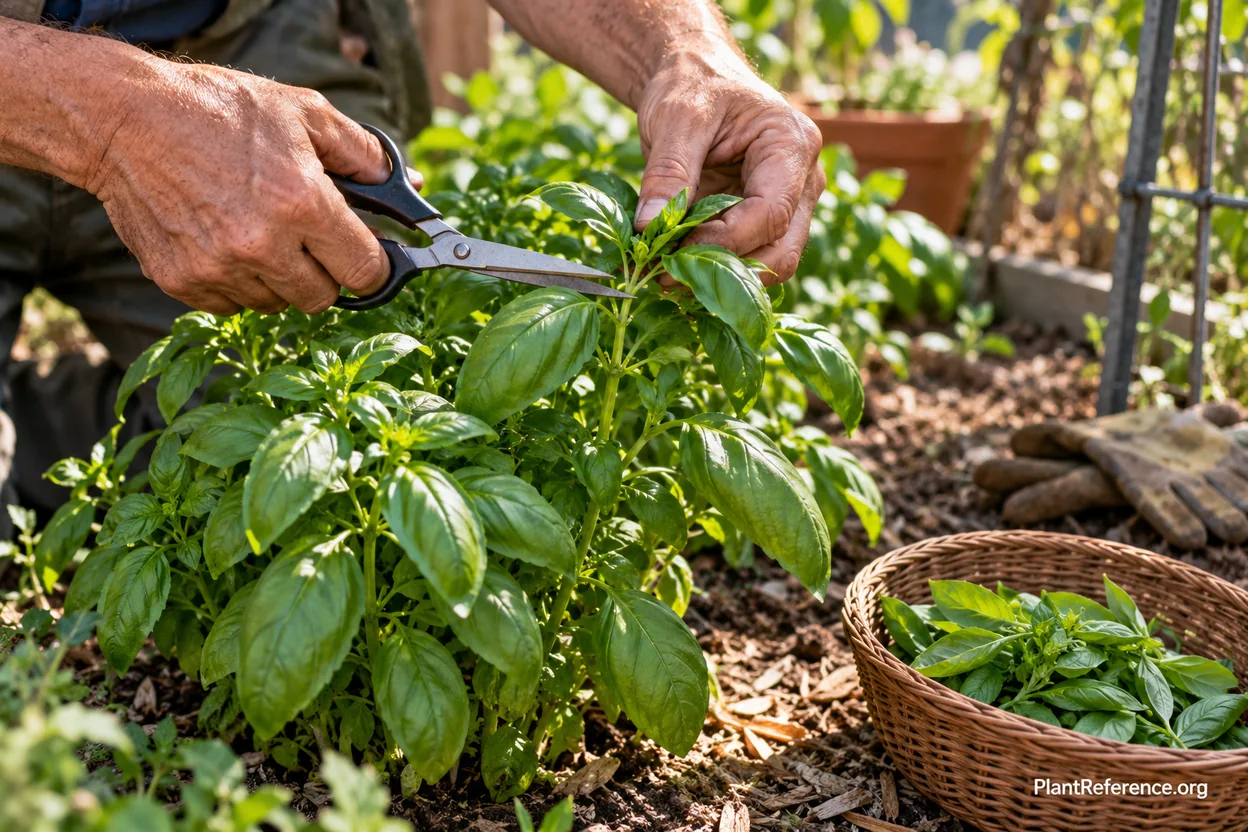
Harvest growing tips in the morning after dew has dried. Cut above healthy leaf pairs with clean scissors and leave enough foliage for recovery. A small first picking from a newly established plant is different from taking a large basketful from a mature one.
Bring cut leaves out of direct sun promptly. Sort damaged material away from sound leaves, rinse as needed, and dry gently. Keep distinctly flavored types separate so the frozen portions match the meals you intend to cook.
Freeze surplus in small labeled portions for sauces or cooked dishes. Frozen leaves will not keep the texture of fresh garnish. Do not store fresh herbs in oil at room temperature; use a tested preservation method for longer storage.
Make the final harvest ahead of a cold forecast rather than waiting for December 20. The stored Zone 10b calendar does not protect tender foliage from a cold pocket. A warm sheltered site may keep plants longer, but declining light and cool nights can reduce useful production without a freeze.
Frequently Asked Questions

Reading about plants and recognising them are different skills. These three build the second.
- Daily PlantIdentify the day’s mystery plant from a close-up photograph.
- Keyed OutWork a dichotomous key, lead by lead, to name a hidden specimen.
- Name That PlantName a specimen from botanical clues dealt hardest first.
Free to play, no account needed
Tagged with
Emma runs a small succulent propagation business from her home in San Diego, shipping starter plants and cuttings across the country. She fell into succulents after college when she realized they were the only plants that survived her travel schedule—she was working as a travel nurse at the time. San Diego's mild, dry climate is ideal for outdoor succulent gardens, and Emma's front yard is a living catalog of over 200 varieties. She completed a certificate program in ornamental horticulture and writes about succulent care, propagation techniques, and drought-tolerant garden design. Her writing is calm and reassuring—she knows people feel bad about killing plants, and she wants them to stop worrying so much.