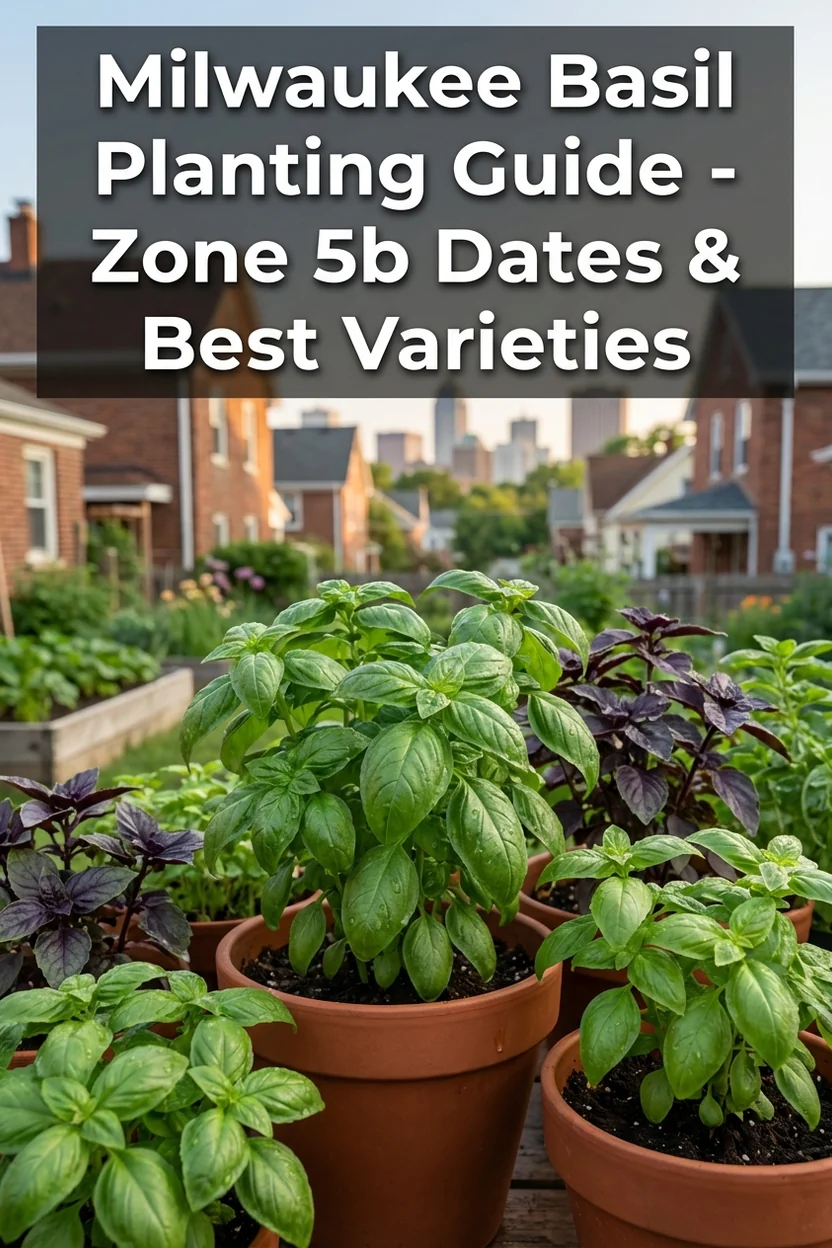
When to Plant Basil in Milwaukee: Complete Guide + Best Varieties for Zone 5b
Pets & Toxicity
Recorded toxicity for plants linked in this guide. An unknown status is not a safety assessment.
No linked plant is recorded as toxicDetailsHide
Ocimum basilicum 'Purple Ruffles' — Toxicity
Non-toxicView Ocimum basilicum 'Purple Ruffles' plant profile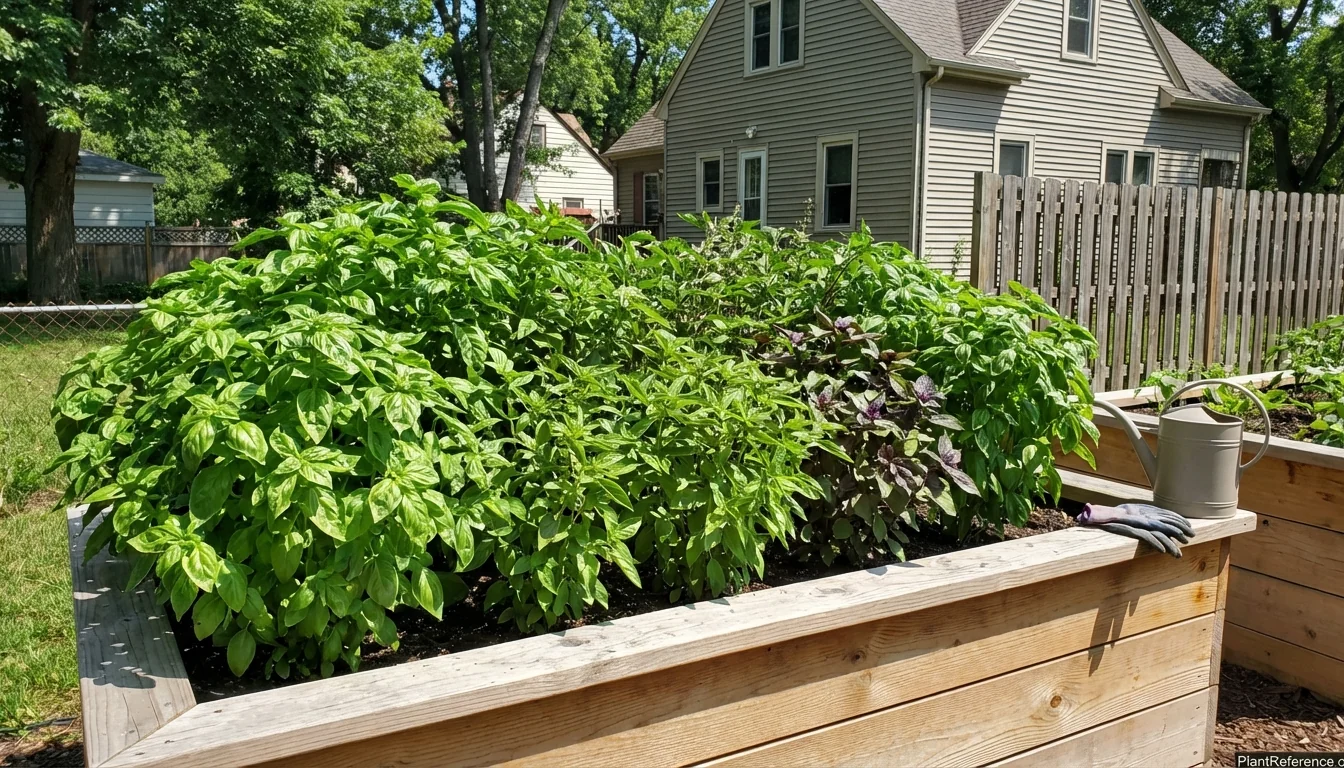
— Image © Plant Reference 2026
Milwaukee's 139-day growing season is the tightest window for basil of any major city I cover, and Lake Michigan makes it tighter. The lake keeps spring temperatures cool well past the calendar's promises—when Madison gardens are planting, Milwaukee's lakefront neighborhoods are still dealing with 45°F nights that damage basil tissue. But there's the flip side: once Milwaukee summer arrives (usually by mid-June), it's glorious. Warm, sunny days with moderate humidity create exactly the conditions basil loves, and the lake that delays your spring moderates summer heat so basil rarely bolts as aggressively as it does in hotter inland cities. You just need to plan around the late start. Indoor seed starting is mandatory, not optional. Fast-maturing varieties earn their place over slower ones. And containers you can shuttle indoors during cold snaps are worth their weight in pesto. Work with Milwaukee's reality and you'll harvest fresh basil from mid-June through September—three and a half productive months from a crop that costs less than a coffee to grow. When to Plant Tomatoes in Milwaukee: Complete Guide + Best Varieties for Zone 5b
Best Basil Varieties for Milwaukee's Climate
Milwaukee sits in USDA Zone 5b with a May 15 last frost and October 1 first frost—139 growing days. Lake Michigan's influence keeps spring cooler and fall milder than inland Wisconsin, but the net effect is a compressed basil window. Fast maturity matters more here than in warmer zones, and bolt resistance matters less because Milwaukee's moderate summer heat rarely pushes basil to flower as aggressively as Southern cities.
Variety | Type | Days to Harvest | Cold Tolerance | Best For |
|---|---|---|---|---|
Lemon | 55 days | Low | Fastest maturity for short season | |
Sweet | 60-70 days | Low (below 50°F damage) | Pesto, Italian cooking essential | |
Ocimum basilicum var. thyrsiflora | Thai | 60 days | Moderate | Stir-fry, Southeast Asian, hardier |
Holy (Tulsi) | 60 days | Low-Moderate | Tea, medicinal, slightly more tolerant | |
Purple | 65-70 days | Low | Garnish, vinegars, ornamental accent |
🌿Ocimum × citriodorum (Lemon basil) leads the Milwaukee variety list because 55 days to harvest means production starts sooner in our compressed season. Transplants set out June 1 produce harvestable leaves by late June—gaining you two weeks over 70-day Genovese. The bright citrus flavor works in tea, fish, and summer cocktails. It bolts faster than other varieties, but Milwaukee's moderate summer heat means you get more weeks before bolting than gardeners in hotter climates.
🌿Ocimum basilicum 'Genovese' is still the variety every Milwaukee pesto-maker needs. Yes, it takes 60-70 days, but transplants started indoors in April produce from early July through September—three months of the classic pesto flavor. One plant yields 2-3 cups of packed leaves per week during peak production. In Milwaukee's moderate summer, Genovese plants stay productive longer without the aggressive bolting that plagues this variety in Southern heat.
Ocimum basilicum var. thyrsiflora (Thai basil) handles Milwaukee's cool spring transitions better than Genovese because its tropical genetics provide slightly more resilience to temperature swings. The anise-licorice flavor serves the Thai and Vietnamese restaurants that are thriving across the Milwaukee food scene. Thai basil also shows more resistance to Basil Downy Mildew (Peronospora belbahrii), which has reached the Great Lakes region.
🌿Ocimum tenuiflorum (Holy Basil/Tulsi) offers slightly more cold tolerance than Genovese—a real advantage when Milwaukee's late May nights still hover near 50°F. Strongly clove-scented leaves make excellent tea. A good choice for gardeners who want the earliest possible outdoor planting date.
🌿Ocimum basilicum 'Purple Ruffles' at 65-70 days is slower to mature—a disadvantage in Milwaukee's season. Grow one plant for visual interest and vinegar-making alongside faster-producing varieties. When to Plant Peppers in Milwaukee: Complete Guide + Best Varieties for Zone 5b
Specific Planting Dates for Milwaukee Gardens
Milwaukee's May 15 last frost is late compared to most major cities, and Lake Michigan keeps lakefront neighborhoods even cooler. Basil needs warmer conditions than the frost date implies—soil at 65°F (18°C) and nighttime air above 50°F (10°C). That's typically late May to early June in Milwaukee.
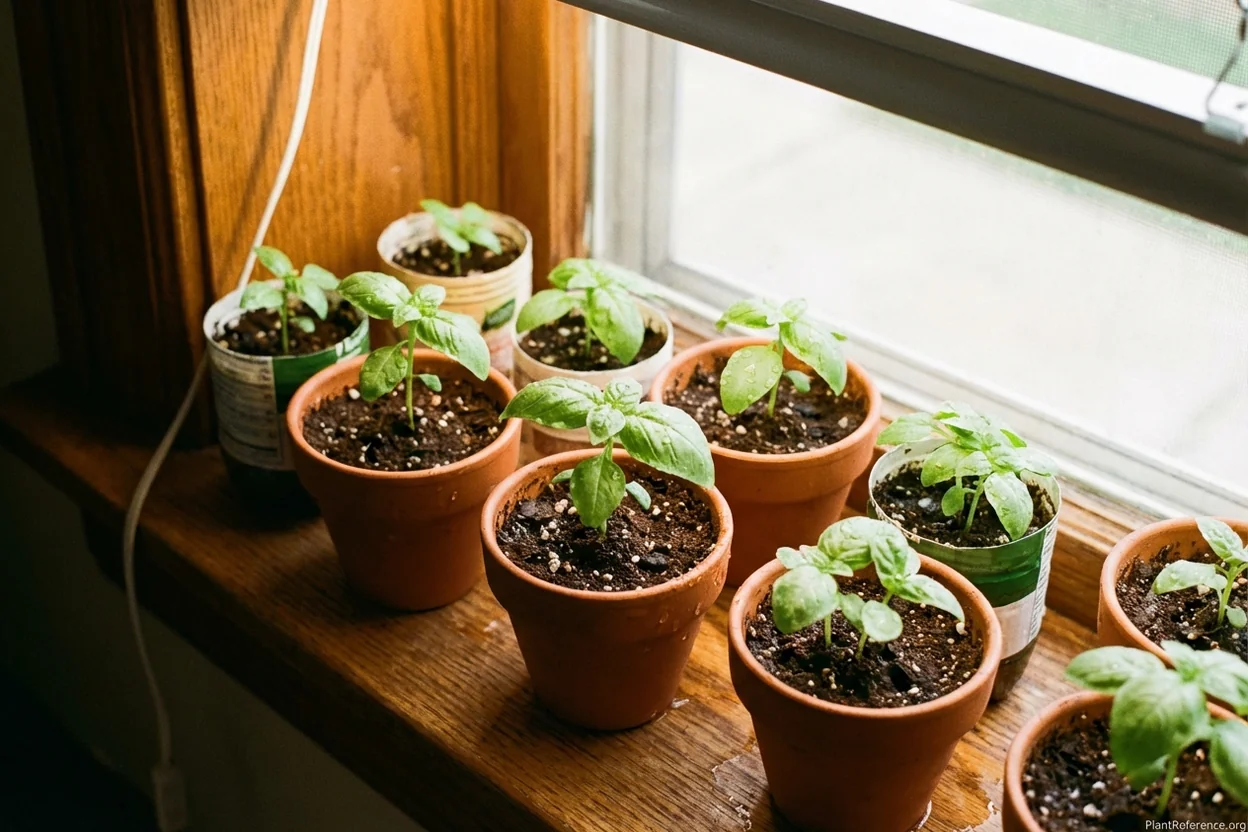
Indoor Seed Starting: April 15-22 (5-6 weeks before transplanting). Start at 70-75°F (21-24°C) for 5-7 day germination. Press seeds onto soil surface—basil needs light to germinate. Indoor starts are mandatory in Milwaukee because direct sowing wastes 2-3 weeks you can't afford in 139 days.
Transplant Outdoors: May 25-June 5. Inland neighborhoods (Wauwatosa, Brookfield) warm earlier than lakefront areas (Bay View, Shorewood). Check extended forecasts—Lake Michigan can push cold air onshore through late May. Harden off seedlings 5-7 days before transplanting. Keep containers ready to bring inside if a cold night threatens.
Direct Sow: Not recommended. Milwaukee's soil doesn't reliably reach 65°F until early June, and the 5-7 day germination period plus slow early growth wastes 2-3 weeks of your already-short season. Transplants are the only practical approach for maximizing Milwaukee basil production.
Succession Plantings: One succession by mid-June. Milwaukee's 139-day window supports the primary planting plus one follow-up—not the 4-5 successions that longer-season cities enjoy. Make the first planting count.
Final Sowing Deadline: June 20. A 55-day 🌿Ocimum × citriodorum started indoors June 20 and transplanted early July matures by late August with five weeks of harvest before the October 1 frost. This is a tight margin—don't push it later. Raised Bed Vegetable Garden Layout: Planning for Maximum Production
Complete Growing Guide for Milwaukee
Containers: Milwaukee's Best Basil Strategy
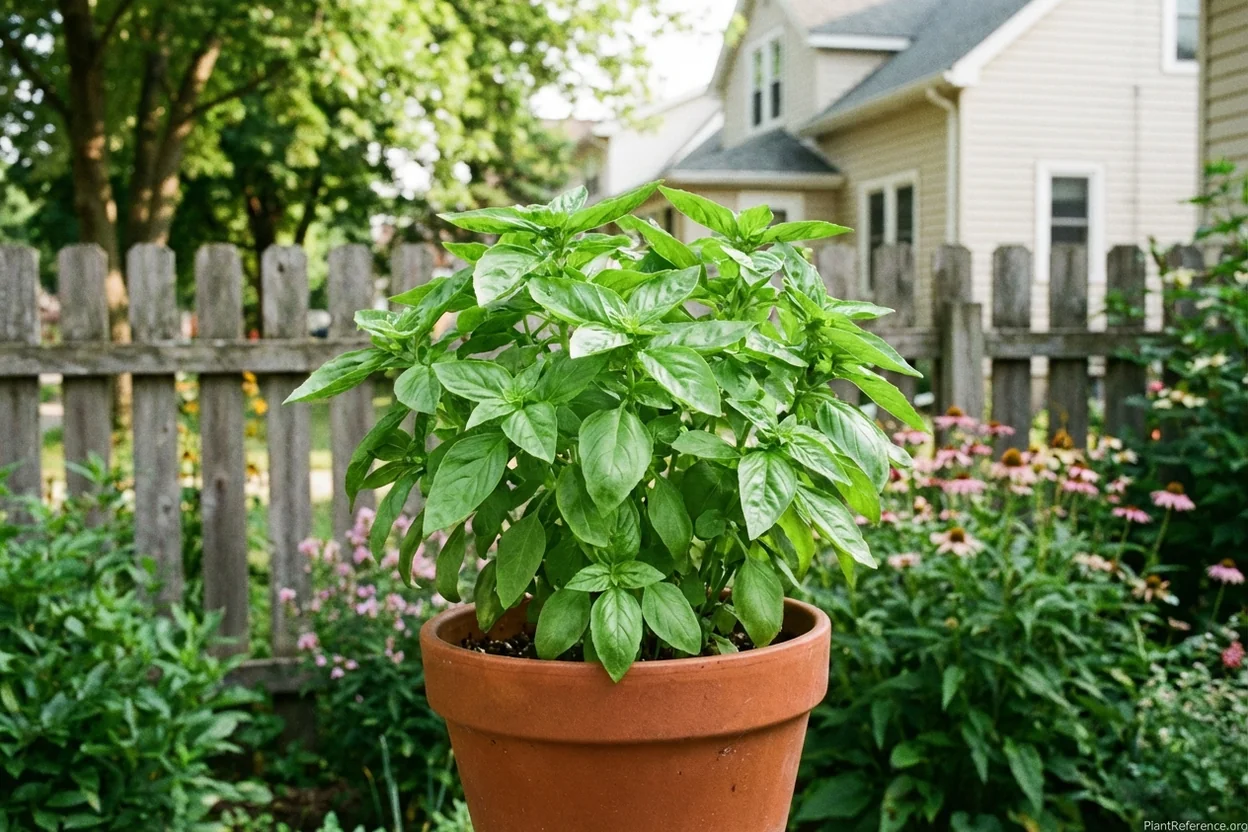
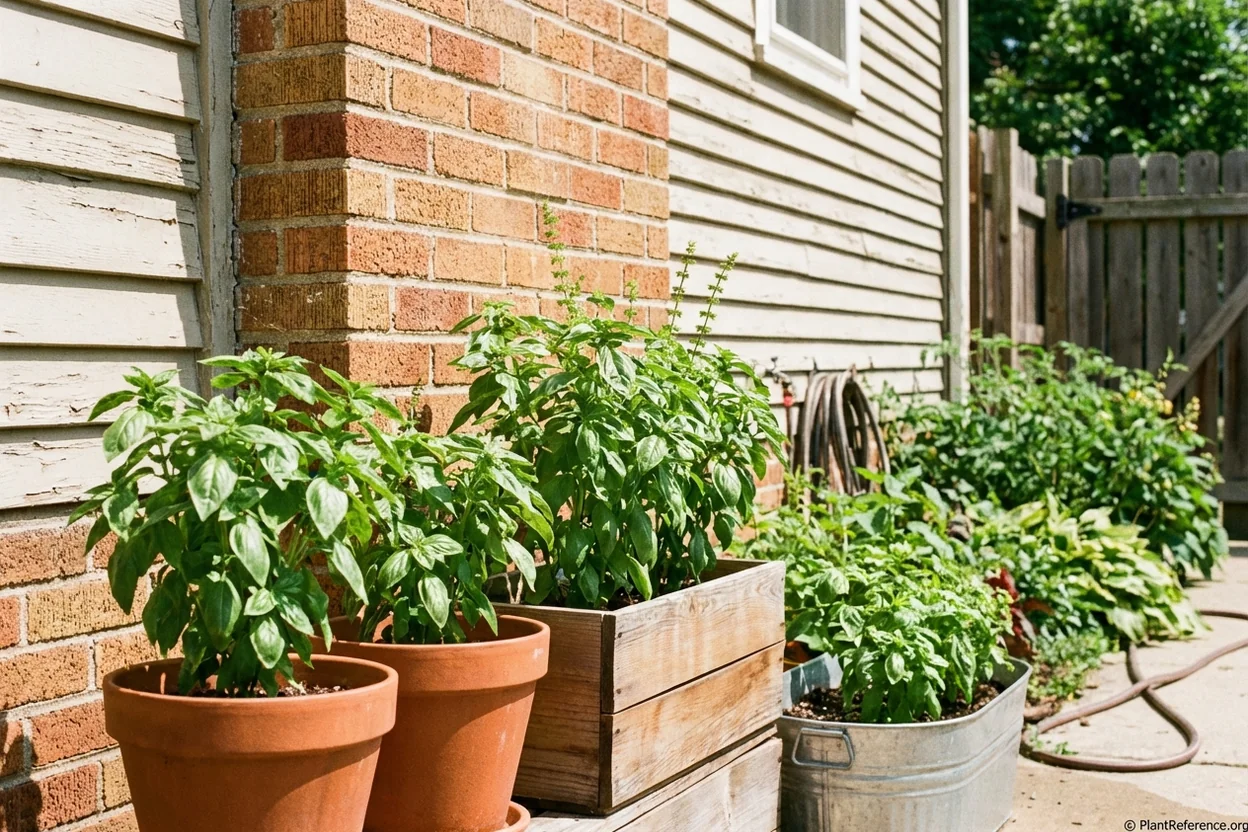
Containers are the smartest approach for Milwaukee basil. A 12-inch (30 cm) pot supports one productive Genovese plant, and containers on porches and patios can be moved inside when Lake Michigan pushes cold air into the city—something that happens more often than inland gardeners realize, even in June. Five-gallon buckets with drainage holes work well for budget-conscious growing.
Place containers against south-facing walls where radiated heat keeps nighttime temperatures several degrees warmer than open garden beds. The extra warmth from house walls and pavement is a significant advantage for basil in a city where every degree matters during the shoulder seasons. How to Build a Raised Garden Bed: Step-by-Step Construction Guide
Raised Beds and In-Ground Planting
For garden beds, well-drained soil at pH 6.0-7.0 is essential. Most Milwaukee soils test slightly acidic, which basil handles well. Work 2-3 inches (5-8 cm) of compost into the top 8 inches (20 cm). Black plastic mulch warms soil faster in spring—lay it 2 weeks before transplanting to pre-warm beds to the 65°F threshold. After transplanting, switch to straw or shredded leaf mulch for moisture retention.
Sun and Placement
Basil needs 6-8 hours of direct sun. South-facing locations provide the best exposure in Milwaukee. Lakefront neighborhoods may lose sun hours to morning fog and lake haze during June—inland gardens typically get more reliable sunshine. The same Lake Michigan influence that delays spring also moderates summer heat, keeping Milwaukee basil cooler than inland Wisconsin cities.
Watering
Basil needs 1 inch (2.5 cm) per week. Milwaukee gets about 35 inches (89 cm) of annual rainfall—generally adequate but inconsistent. Water at the base to keep foliage dry. Morning watering is especially important in Milwaukee because our humid summer evenings near the lake promote the conditions Downy Mildew thrives in. Mulch 2 inches (5 cm) to retain moisture and moderate soil temperature swings. 5 Best Drip Irrigation Kits for Raised Beds (Tested for Easy Installation)
Pinching for Maximum Production
Pinch flower buds whenever they appear. Milwaukee's moderate summer heat means basil bolts less aggressively than in hotter cities, but it still happens—especially in August. Begin pinching when plants reach 3-4 sets of true leaves. In Milwaukee's compressed season, every week of leaf production counts, so preventing bolting is even more important than in longer-season climates where you can make up lost production with later successions.
Feeding
Fish emulsion every 2-3 weeks provides balanced nutrition. In Milwaukee's short season, moderate consistent feeding keeps plants growing vigorously through the entire productive window. Avoid heavy nitrogen that promotes leaf growth at the expense of essential oil concentration—your basil should taste as good as it looks. When to Plant Squash in Milwaukee: Complete Guide + Best Varieties for Zone 5b
Season Extension
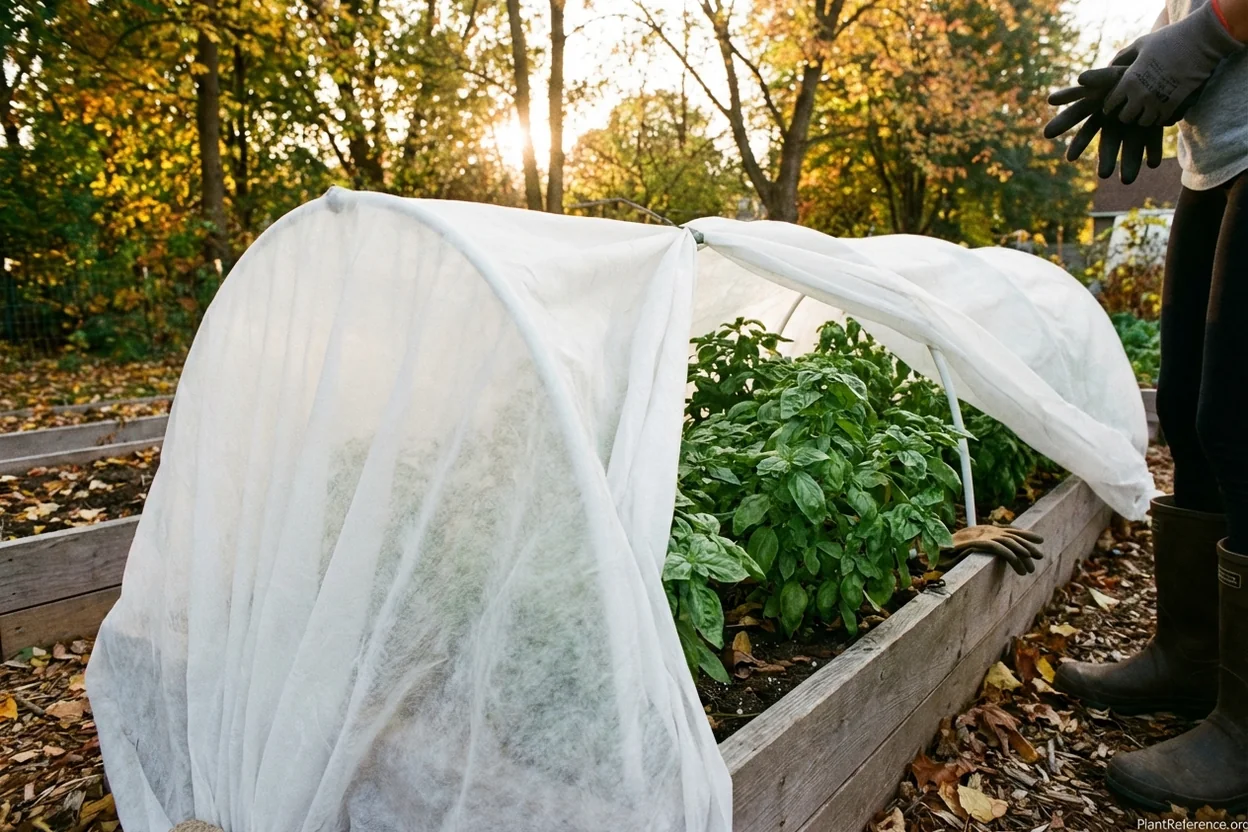
Row covers extend the fall harvest 2-3 weeks past the October 1 frost. In Milwaukee's short season, those extra weeks represent a meaningful percentage of total production—potentially 15-20% more harvest from the same plants. Keep row covers ready from mid-September and deploy when forecasts show nighttime temperatures dropping below 50°F. Containers can be brought inside at night starting in late September for the last few weeks of production—even a warm porch or garage extends the season compared to unprotected garden beds. The combination of row covers on garden plantings and indoor retreat for containers can extend Milwaukee basil through mid-October in mild years. When to Plant Kale in Milwaukee: Complete Guide + Best Varieties for Zone 5b
Troubleshooting Milwaukee-Specific Problems
Lake-Effect Cold in Spring
Milwaukee's signature basil challenge. Lake Michigan keeps lakefront neighborhoods 5-10°F cooler than inland areas in May and early June. Even after the May 15 last frost date, onshore breezes can push nighttime temperatures below the 50°F damage threshold for basil. Lakefront gardeners (Bay View, Shorewood, East Side) should wait until June 1-5 for transplanting while inland gardeners can plant by late May. Container growing with indoor retreat options provides the best insurance against lake-effect cold events. Raised Bed Pest Problems: Identification and Organic Control Methods
Basil Downy Mildew (Peronospora belbahrii)
Present in the Great Lakes region and spreading. Yellow patches on upper leaf surfaces with gray-purple fuzzy growth underneath. It spreads during warm, humid nights—Milwaukee's lake-influenced climate provides these conditions from late June through August. Prevention: space plants for airflow, water at the base only, and grow Ocimum basilicum var. thyrsiflora (Thai basil) for its better resistance. Remove infected leaves immediately and don't compost them. Best Soil Mix for Raised Beds: Creating the Perfect Growing Medium
Short Season Production Pressure
Milwaukee's 139 days don't allow for the extended succession planting and leisurely harvest that Southern cities enjoy. Every week of production matters. Prevention: start seeds indoors (mandatory, not optional), transplant at the earliest safe date for your microclimate, pinch religiously to prevent bolting, and extend the season with row covers in fall. Treat every productive day as valuable—it is.
Japanese Beetles
Active from late June through August in Milwaukee. They skeletonize basil leaves. Hand-pick into soapy water in early morning. Neem oil provides deterrence. In Milwaukee's short season, beetle damage that costs even one week of production is proportionally more significant than in longer-season cities. The Complete Guide to Raised Bed Gardening for Beginners (2025)
Harvest & Storage
Harvest by cutting stems just above a leaf pair. Begin when plants have 6 sets of leaves, taking no more than one-third per harvest. During Milwaukee's peak summer (July-August), harvest twice weekly. In a 139-day season, you get roughly 14-16 weeks of potential harvest from transplants set out in late May—make every week count.
A single 🌿Ocimum basilicum 'Genovese' plant produces 2-3 cups per week during peak production. Four plants provide enough for daily cooking and pesto batches from July through September. Morning harvest before 10 AM captures peak essential oil concentration.
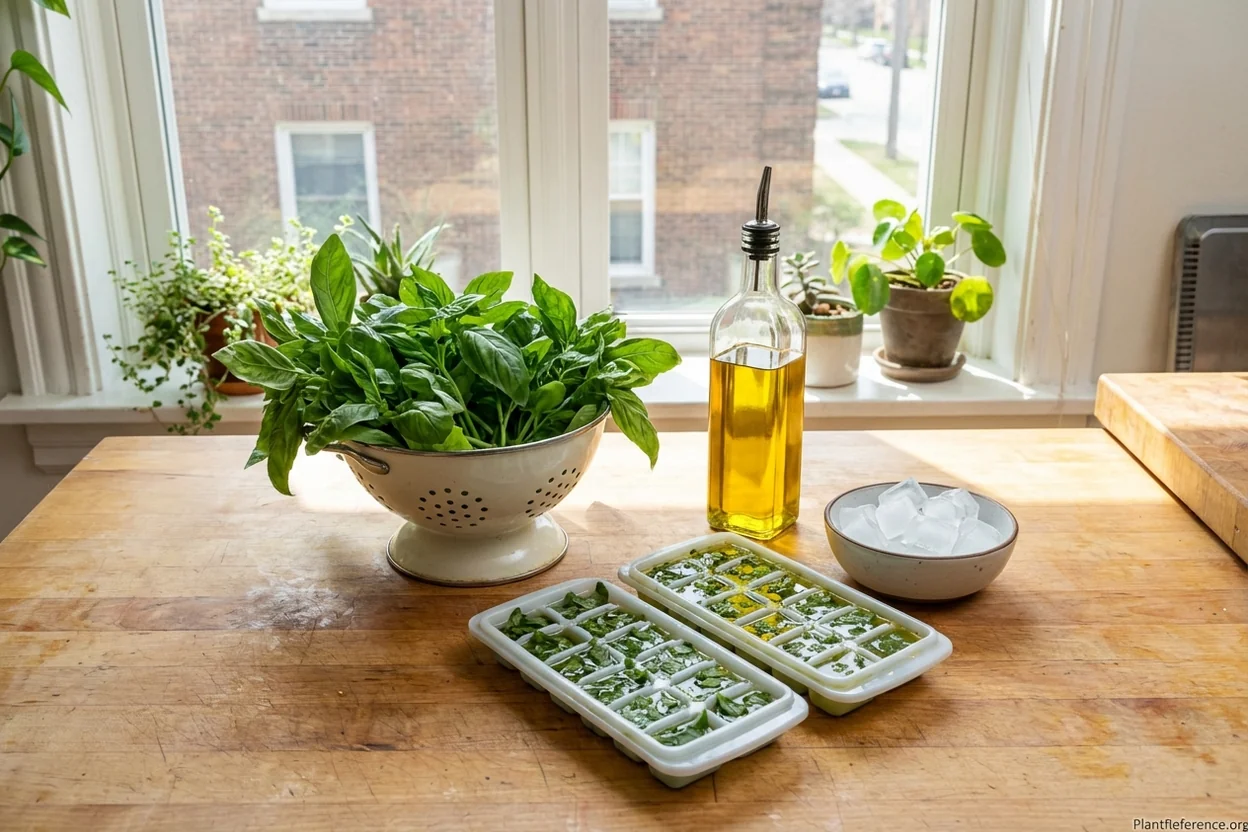
Fresh basil blackens in the refrigerator. Store stems in water on the counter for 5-7 days. For winter preservation, blend leaves with olive oil and freeze in ice cube trays. Process your entire harvest before the October 1 frost—or earlier if forecast shows cold. In Milwaukee's long winter (October through May), frozen basil cubes provide pesto flavor for seven months until next summer's harvest. A $4 seed packet that produces seven months of frozen pesto is the best return on investment in any Milwaukee garden.
Frequently Asked Questions
Reading about plants and recognising them are different skills. These three build the second.
- Daily PlantIdentify the day’s mystery plant from a close-up photograph.
- Keyed OutWork a dichotomous key, lead by lead, to name a hidden specimen.
- Name That PlantName a specimen from botanical clues dealt hardest first.
Free to play, no account needed
Pat has been gardening in Milwaukee for over thirty years, through every kind of Wisconsin weather. She worked as a school librarian and started gardening seriously when her kids were small—she wanted them to know where food came from. Now retired, she's a certified Master Gardener and runs the plant sale at her local garden club every spring. She specializes in cold-hardy perennials, native wildflower meadows, and the art of getting a vegetable garden producing in Wisconsin's short but intense growing season. Pat is practical and patient—she's seen enough Wisconsin winters to know that gardening here is a long game, and she writes with the steady confidence of someone who's been doing this a long time.