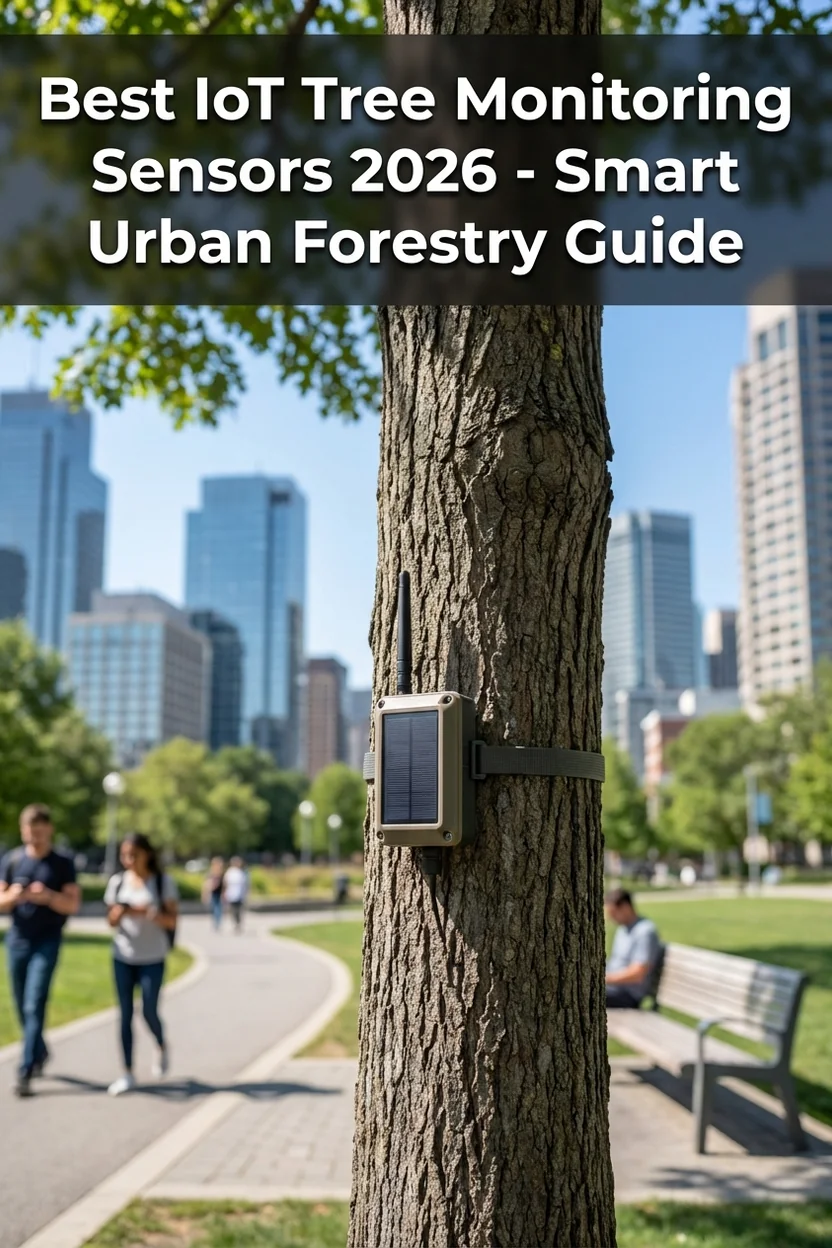
Best IoT Sensors for Tree Monitoring: Smart Urban Forestry in 2026
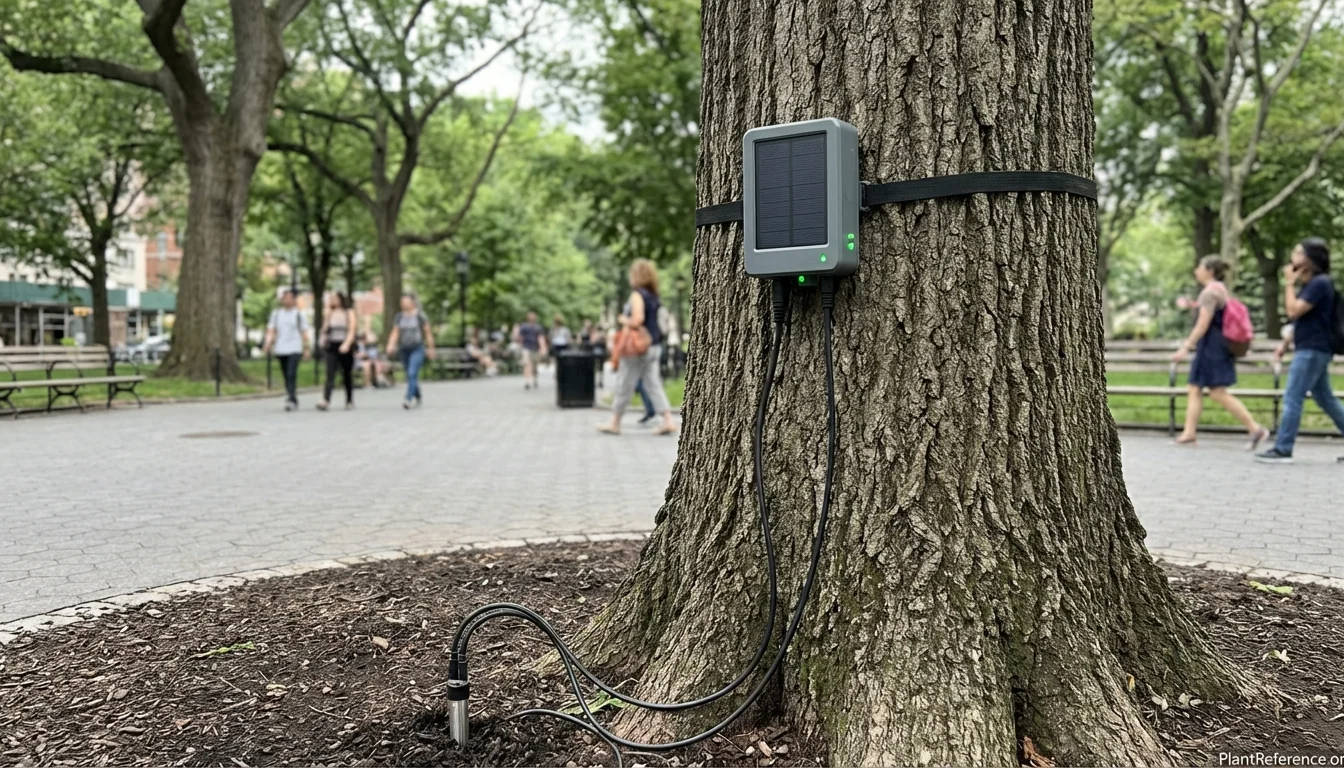
— Image © Plant Reference 2026
Tree monitoring sensors are the frontier where urban forestry meets smart city infrastructure. Instead of waiting for visual symptoms—by which point a tree may be months into decline—IoT sensors detect stress, structural shifts, and water needs in real time. The technology has matured significantly: battery life now extends 5-15 years, wireless connectivity works reliably in urban canopies, and the data dashboards have become genuinely useful rather than just impressive demos. The practical question isn't whether sensors work—it's which type makes sense for your trees and budget. How to Write a Tree Care Plan: The Complete 2026 Guide
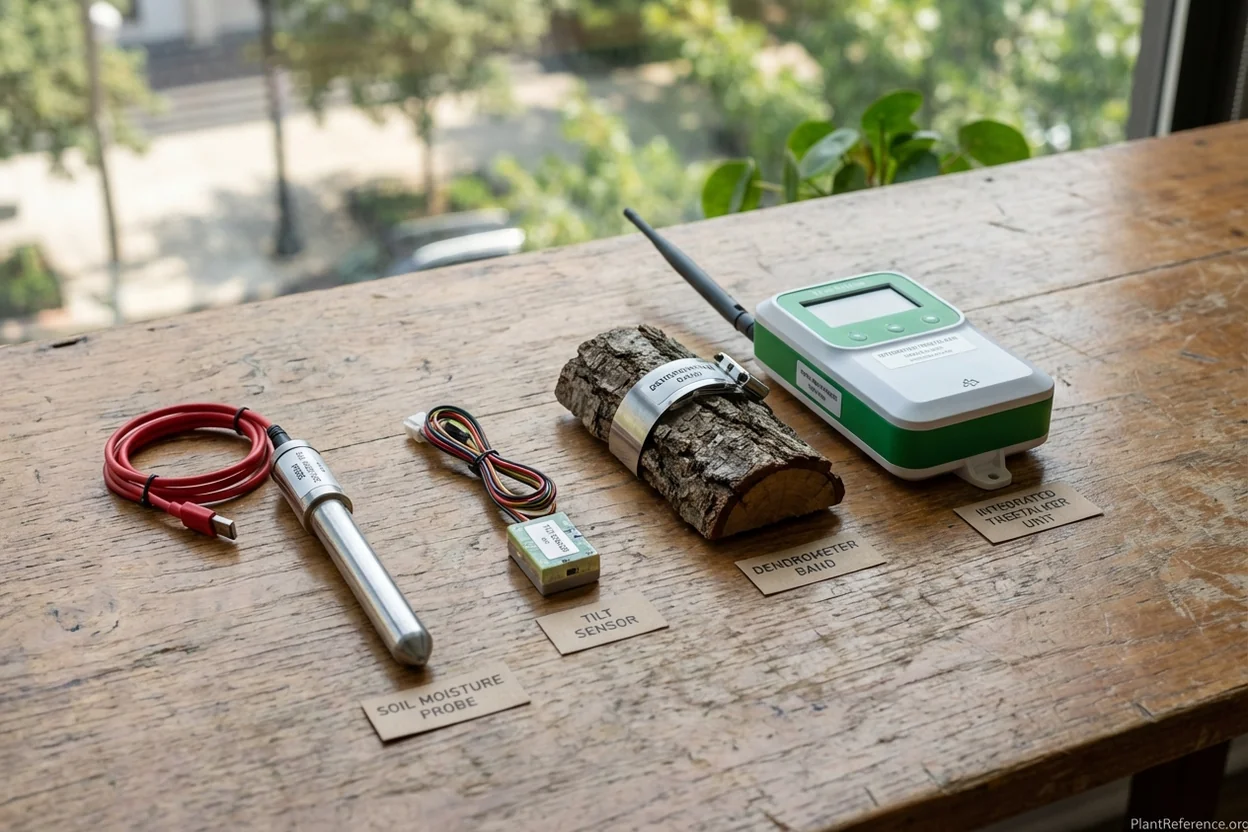
Sensor Types and What They Measure
Sensor Type | Price Per Unit | What It Measures | Battery Life | Best For |
|---|---|---|---|---|
Soil Moisture Probe | $100-300 | Volumetric water content, temperature | 3-5 years | Precision irrigation, drought monitoring |
Tilt/Movement Sensor | $200-500 | Lean angle, root plate shift, vibration | 5-15 years | Structural failure early warning |
Dendrometer | $300-800 | Stem diameter changes (growth/shrinkage) | 3-5 years | Heat stress, drought, growth monitoring |
TreeTalker (TT+) | $500-1,200 | Transpiration, carbon, PM removal, temp | 2-4 years (solar) | Ecosystem services quantification |
Weather Station | $200-1,500 | Temperature, humidity, wind, rainfall | Solar powered | Microclimate context for sensor data |
Soil Moisture Monitoring
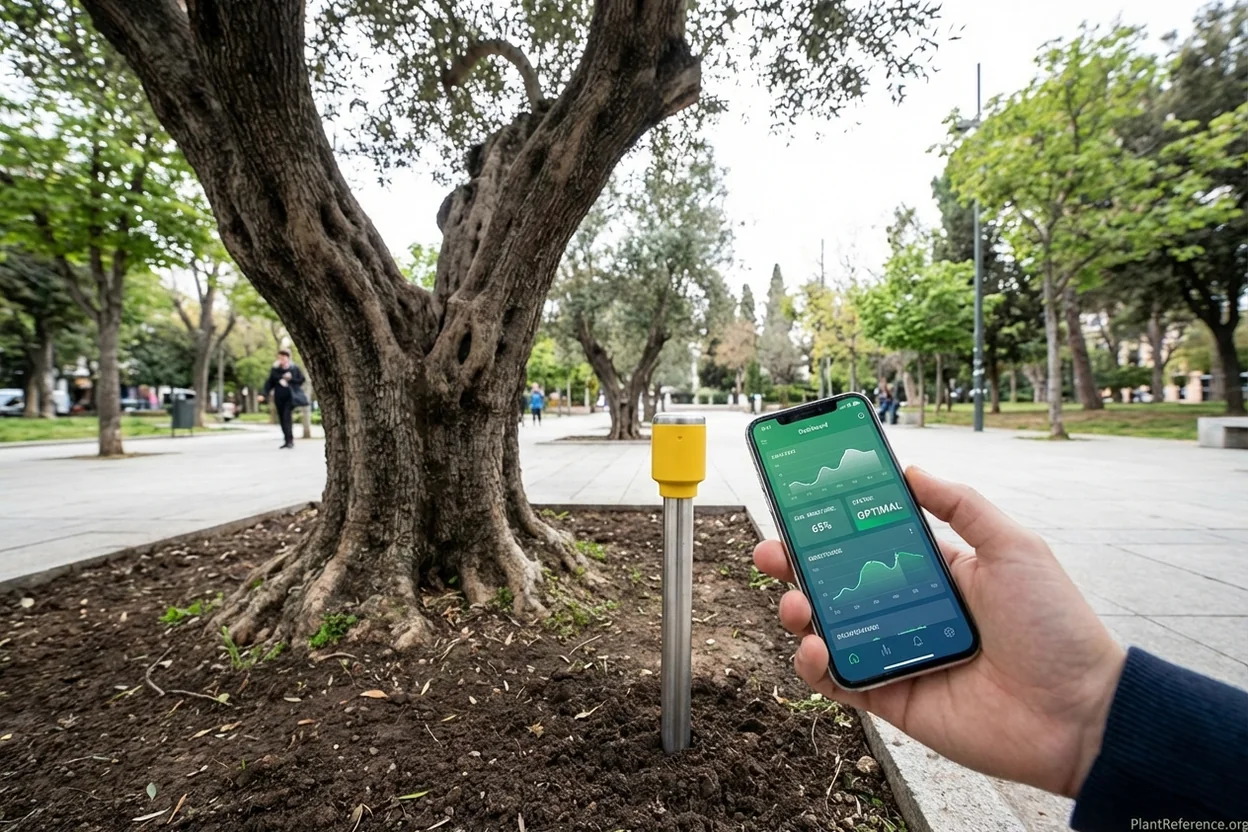
Soil moisture sensors deliver the fastest, most measurable return on investment of any tree monitoring technology. By measuring volumetric water content at root zone depth, they replace calendar-based irrigation schedules with data-driven watering that responds to actual soil conditions. Published data shows 25-40% reduction in irrigation water waste—significant for municipalities spending millions annually on urban tree watering. How Much Soil Do Urban Trees Actually Need? The Root Volume Guide
Modern probes measure at multiple depths simultaneously, capturing whether water is reaching the critical root zone or just wetting the surface. Temperature sensors integrated into the same probe add freeze-thaw monitoring in northern climates. The data stream feeds into dashboard platforms that flag trees needing water and confirm when irrigation has been adequate.
For individual high-value trees, a single probe at $100-300 installed at root zone depth provides years of continuous moisture data on 3-5 year battery life. For municipal-scale deployment, the per-unit cost drops with volume purchasing, and the water savings typically pay back the sensor investment within the first irrigation season.
Structural Monitoring: Tilt and Movement
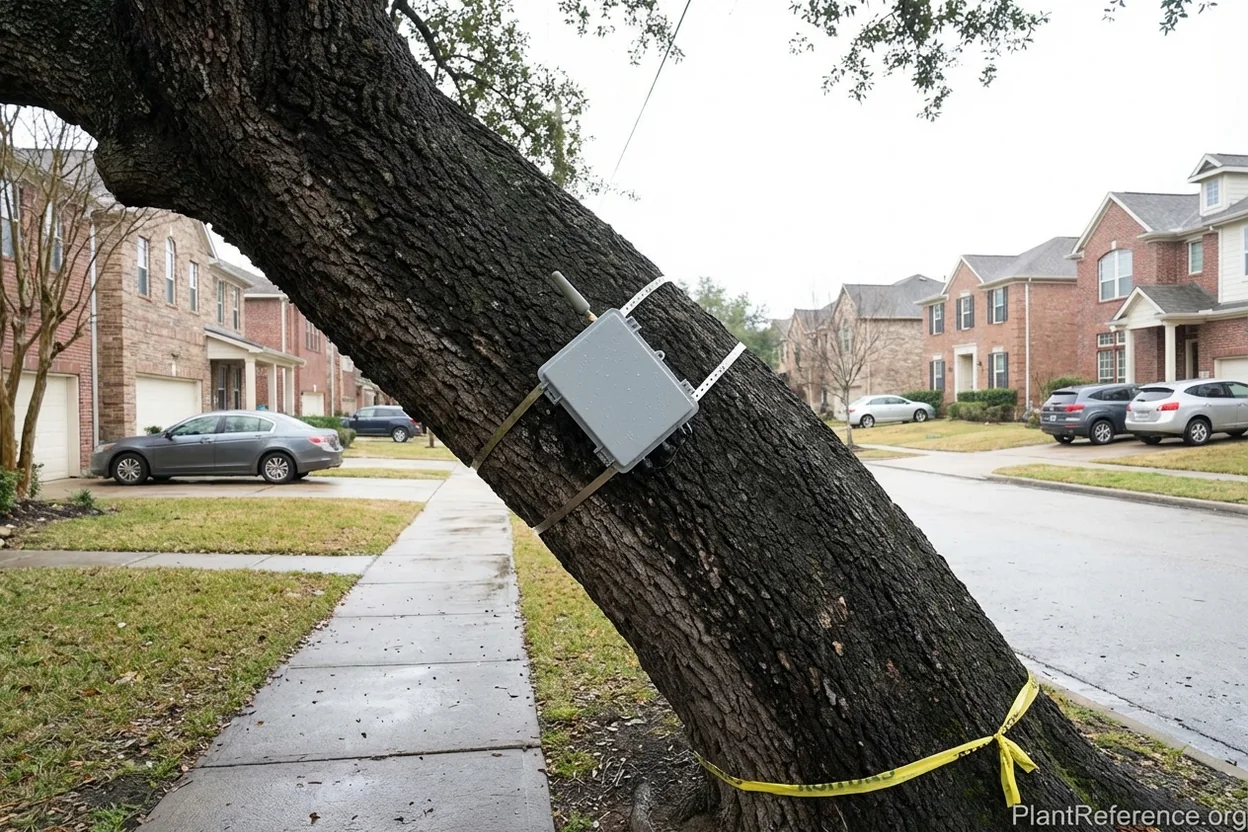
Tilt sensors represent the most safety-critical application of tree IoT technology. These devices detect minute changes in lean angle and root plate movement that precede structural failure—often by weeks or months. When a root system begins to compromise, the tree develops a progressive lean that's too slow for periodic visual inspection to catch but perfectly suited to continuous sensor monitoring. Tree Risk Assessment: TRAQ Methods, Levels, and What to Expect in 2026
The TiltR sensor platform offers omnidirectional 3D XYZ tilt measurements with battery life up to 15 years and operation across extreme temperature ranges. The intelligence is in the filtering: the software distinguishes short-term vibrations caused by wind and traffic from the long-term deformation trends that indicate genuine structural compromise. Without this filtering, every gusty day would trigger false alarms.
Low-cost motion sensors using LoRa communication networks provide real-time hazard notification at scale. These are particularly valuable for trees along high-traffic corridors, near schools, or adjacent to buildings—locations where the consequence of failure justifies continuous monitoring. At $200-500 per sensor with multi-year battery life, the cost is trivial compared to the liability exposure of an unmonitored hazard tree. Is My Tree Dangerous? 10 Warning Signs Every Homeowner Should Know
Growth and Health: Dendrometers
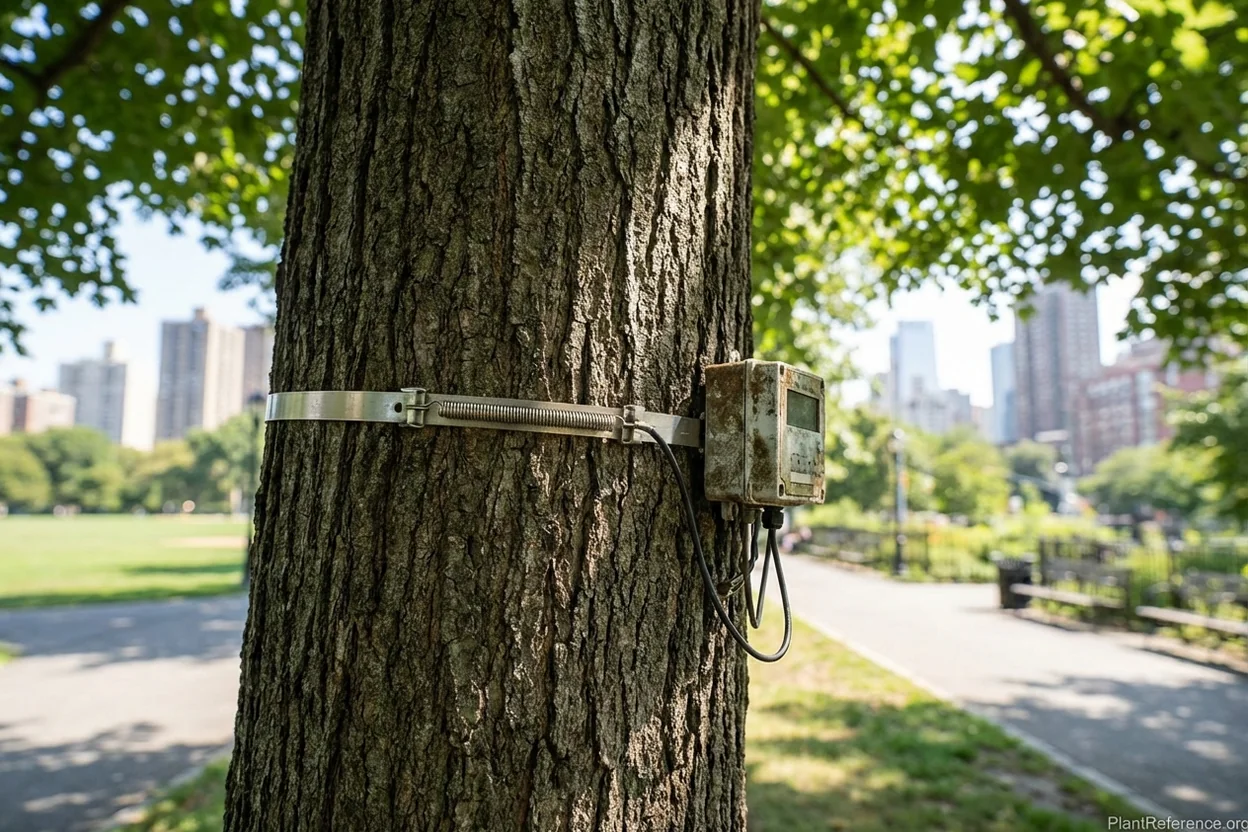
Dendrometers measure daily stem diameter changes with micrometer precision. Trees expand during nighttime rehydration and shrink during daytime transpiration—a healthy tree shows a clear daily oscillation pattern. When drought stress or heat stress disrupts this pattern, the dendrometer data reveals it days to weeks before visual symptoms like wilting or leaf scorch appear. Urban Forest Management Technology: AI, LiDAR, and Digital Tools for 2026
Citygreen smart sensor systems use dendrometers alongside soil moisture probes to build continuous growth-rate models for individual trees. The combined data stream shows exactly how soil moisture conditions drive growth patterns, enabling prescriptive management that optimizes tree health rather than just preventing death.
At $300-800 per unit, dendrometers are the premium option for individual tree monitoring. They're most valuable on specimen trees, heritage trees, and trees in challenging growing conditions where early stress detection justifies the investment. For municipal programs, dendrometers on a representative sample of trees across the city provide canopy-wide health trend data without instrumenting every tree. Choosing Climate-Ready Trees: Species Selection for 2050 and Beyond
Integrated Platforms: TreeTalker
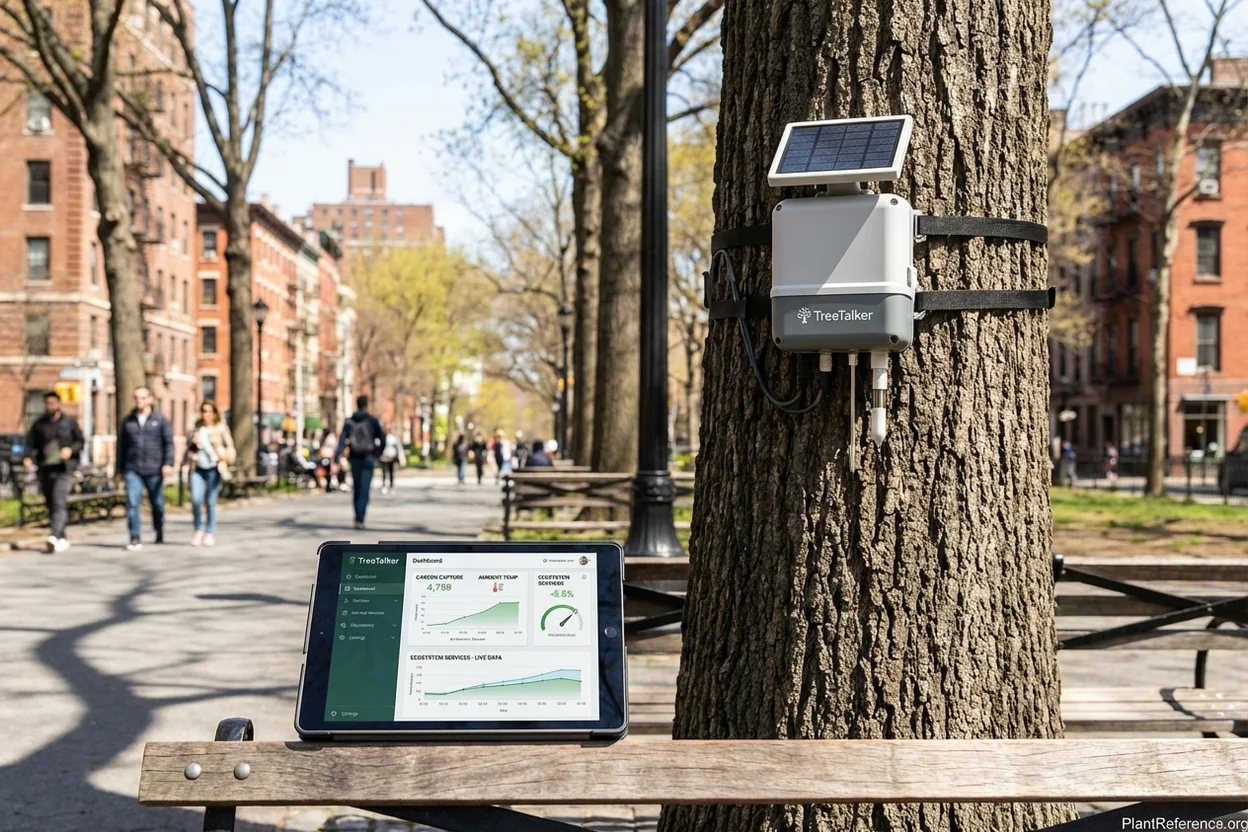
The TreeTalker (TT+) platform represents the most comprehensive single-tree monitoring system available. Beyond basic health metrics, TreeTalker quantifies the ecosystem services each monitored tree provides: transpiration rates, carbon sequestration, particulate matter removal, and local temperature reduction. Published data from TreeTalker deployments shows average urban trees reducing extreme heat by 2°C and sequestering 8.61 kg of carbon per growing season. ANSI A300 Tree Care Standards: What Every Arborist Needs to Know in 2026
This ecosystem services data transforms budget conversations. When you can demonstrate that a specific row of street trees removes X tons of carbon, intercepts Y gallons of stormwater, and reduces ambient temperature by Z degrees—with real-time sensor data rather than modeled estimates—the argument for urban forestry funding becomes concrete. TreeTalker data feeds directly into i-Tree compatible reporting frameworks.
At $500-1,200 per unit with solar-powered operation, TreeTalker is priced for research installations and high-profile municipal demonstration projects rather than mass deployment. The value is in the data quality and the ecosystem services quantification that no other sensor platform matches.
Connectivity, Power, and Deployment
Cellular vs LoRa Networks
Cellular-connected sensors (4G/LTE) offer the simplest deployment—they connect directly to existing cellular infrastructure with no additional equipment. The tradeoff is higher per-sensor data costs and dependency on cellular coverage, which can be spotty in dense canopy environments. Prescriptive Pruning: The PPQ Model for Structural Tree Care
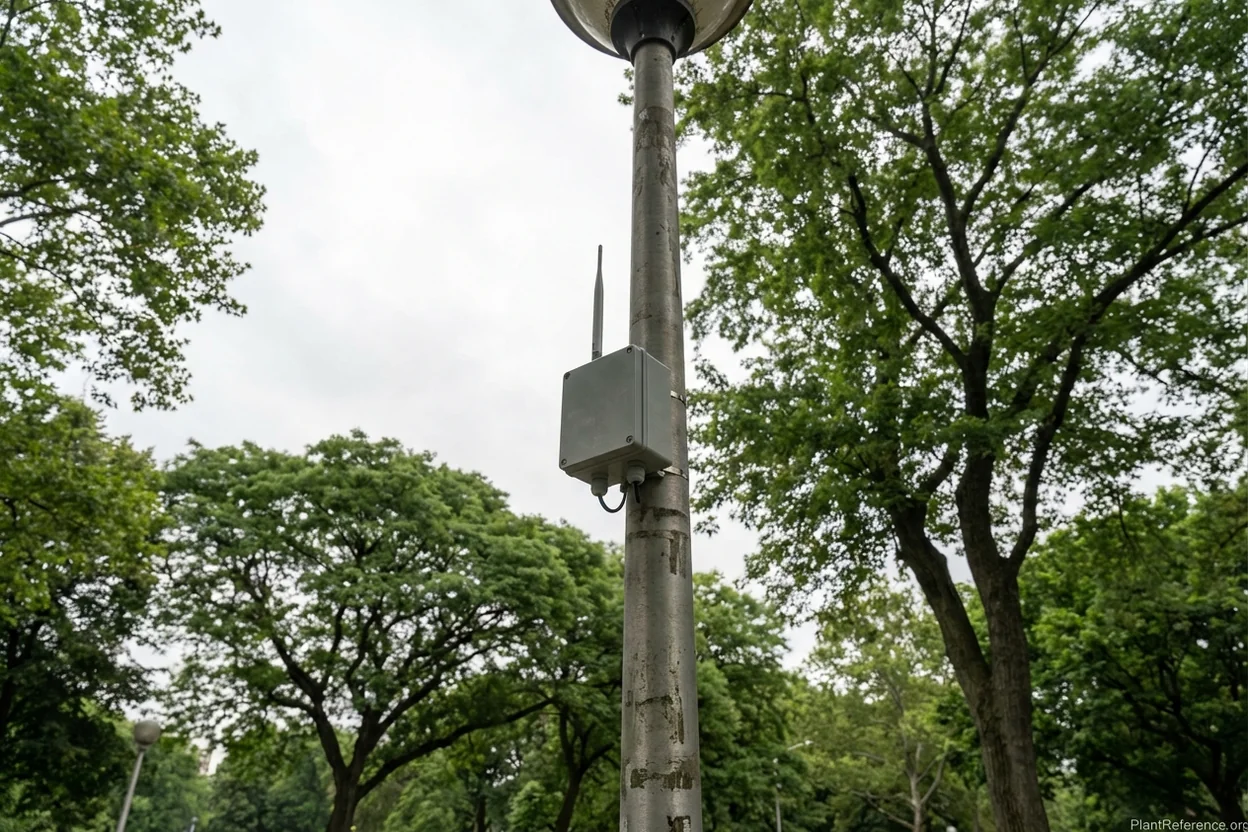
LoRa (Long Range) networks use low-power wide-area communication requiring a gateway device but offering 2-10 km range per gateway with excellent penetration through foliage and structures. For municipal deployments of 50+ sensors, LoRa reduces per-sensor communication costs significantly and provides more reliable connectivity under dense canopy.
Power and Maintenance
Battery-powered sensors dominate the market. Soil moisture probes and tilt sensors achieve 3-15 year battery life depending on transmission frequency. Solar-powered units like TreeTalker maintain indefinite operation but require occasional panel cleaning. The maintenance burden is minimal—annual inspection and battery replacement on the longest-lived units is typically the only recurring cost.
Deployment Strategy
Start with a pilot of 10-20 sensors on high-priority trees: specimens along high-traffic corridors, heritage trees, and trees with known risk factors. Use the pilot data to build the business case for broader deployment. Most municipalities that successfully scale tree sensor programs started with a focused pilot and expanded based on demonstrated water savings or risk detection. Do I Need a Permit to Remove a Tree? A State-by-State Guide
Frequently Asked Questions
Reading about plants and recognising them are different skills. These three build the second.
- Daily PlantIdentify the day’s mystery plant from a close-up photograph.
- Keyed OutWork a dichotomous key, lead by lead, to name a hidden specimen.
- Name That PlantName a specimen from botanical clues dealt hardest first.
Free to play, no account needed
Tagged with
Derek is an arborist and tree care specialist based in Nashville. He spent a decade working for a commercial tree service before starting his own consulting practice focused on residential tree health. His background is in forest management, and he brings that perspective to urban tree care. He's particularly interested in the intersection of native trees and suburban landscapes, helping homeowners understand what's growing in their yards and how to care for it properly. Derek also teaches tree identification walks through local parks. He's straightforward about tree care: most homeowners either ignore their trees completely or prune them incorrectly, and both cost money in the long run.