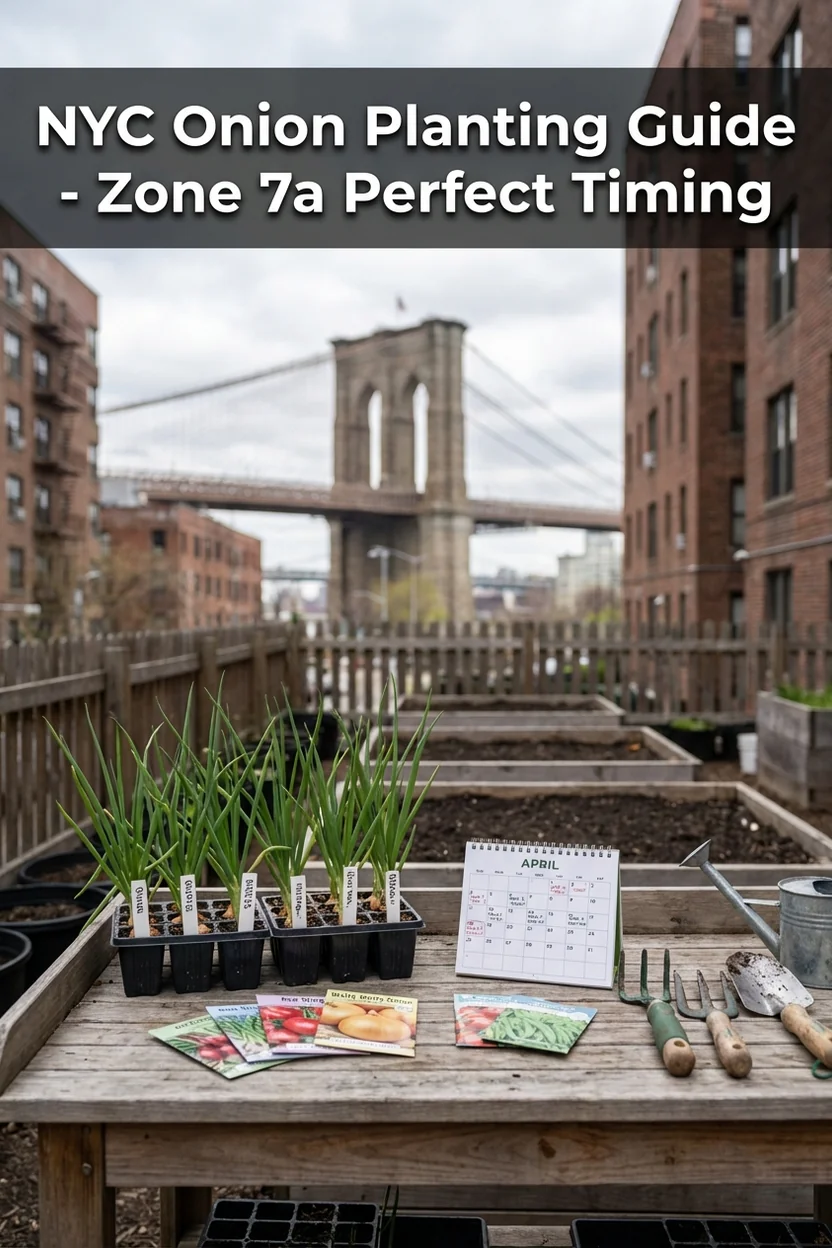
When to Plant Onions in New York: Complete Guide + Best Varieties for Zone 7a
Pets & Toxicity
Recorded toxicity for plants linked in this guide. An unknown status is not a safety assessment.
Toxic to pets: red wing storage onion, Walla Walla sweet onion, Granex onion and 5 moreDetailsHide
Allium cepa 'Red Wing' — Toxicity Warning
Toxic to cats and dogs if eaten; cats are especially susceptible, and raw, cooked or concentrated plant material can damage red blood cells and cause anaemia.View Allium cepa 'Red Wing' plant profileAllium cepa 'Walla Walla' — Toxicity Warning
Toxic to cats and dogs if eaten; cats are especially susceptible, and raw, cooked or concentrated plant material can damage red blood cells and cause anaemia.View Allium cepa 'Walla Walla' plant profileAllium cepa 'Granex' — Toxicity Warning
Toxic to cats and dogs if eaten; cats are especially susceptible, and raw, cooked or concentrated plant material can damage red blood cells and cause anaemia.View Allium cepa 'Granex' plant profileAllium sativum 'Music' — Toxicity Warning
Toxic to cats and dogs if eaten; cats are especially susceptible, and raw, cooked or concentrated plant material can damage red blood cells and cause anaemia.View Allium sativum 'Music' plant profileAllium cepa 'Yellow Sweet Spanish' — Toxicity Warning
Toxic to cats and dogs if eaten; cats are especially susceptible, and raw, cooked or concentrated plant material can damage red blood cells and cause anaemia.View Allium cepa 'Yellow Sweet Spanish' plant profileAllium sativum 'California Early' — Toxicity Warning
Toxic to cats and dogs if eaten; cats are especially susceptible, and raw, cooked or concentrated plant material can damage red blood cells and cause anaemia.View Allium sativum 'California Early' plant profileAllium cepa 'Copra' — Toxicity Warning
Toxic to cats and dogs if eaten; cats are especially susceptible, and raw, cooked or concentrated plant material can damage red blood cells and cause anaemia.View Allium cepa 'Copra' plant profileAllium cepa 'Patterson' — Toxicity Warning
Toxic to cats and dogs if eaten; cats are especially susceptible, and raw, cooked or concentrated plant material can damage red blood cells and cause anaemia.View Allium cepa 'Patterson' plant profile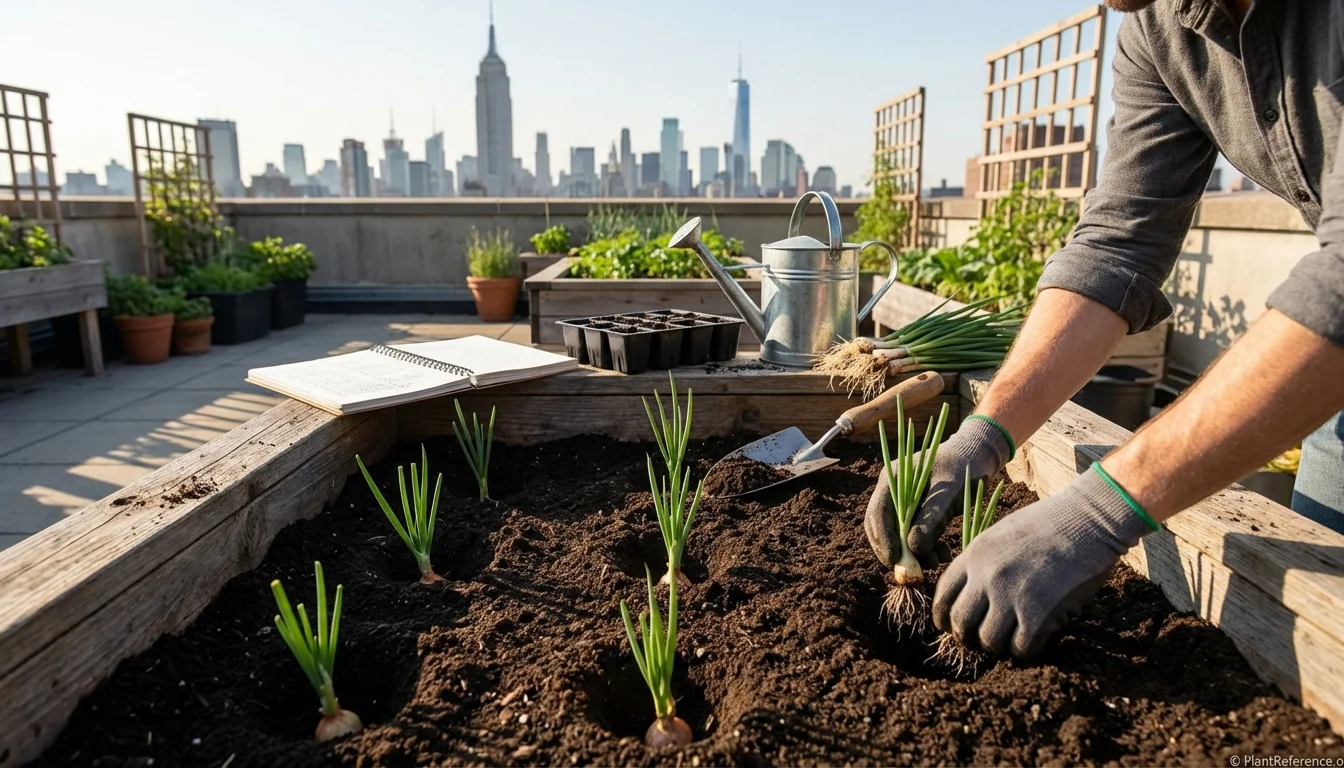
— Image © Plant Reference 2026
New York's Zone 7a climate puts you in the sweet spot for onion growing—you can successfully grow both long-day and intermediate-day varieties with proper timing. After forty years of vegetable gardening, I've learned that New York's 200-day growing season and moderate winters create ideal conditions for both spring-planted onions and fall-planted garlic.
The key to onion success in New York lies in understanding that you're at latitude 41°N—right in the transition zone where day length reaches 15+ hours in summer. This means long-day varieties will bulb reliably, but you can also grow intermediate-day types with excellent results.
Best Onion Varieties for New York's Climate
Your variety selection determines everything in onion growing. New York's latitude of 41°N puts you right at the transition point between long-day and intermediate-day requirements, giving you excellent flexibility in what you can grow successfully.
Long-Day Varieties (14-16 Hour Day Length Trigger)
These varieties are perfectly suited to New York's latitude and summer day length:
Variety | Days to Maturity | Best For | Notes for New York |
|---|---|---|---|
105-120 days | Long-term storage | Excellent keeper, stores 8-10 months | |
110-125 days | Fresh eating | Sweet variety, use within 2 months | |
110-120 days | Large bulbs | Can reach 1+ pounds in good soil | |
104-120 days | Storage champion | Best storage variety, keeps until next harvest | |
105-115 days | Disease resistance | Great for humid New York summers |
Red Wing is my top recommendation for New York storage onions. This variety produces uniform, deep red bulbs that store exceptionally well in cool basement conditions. I've had Red Wing onions last until the following spring when properly cured.
Walla Walla gives you those sweet, mild onions perfect for fresh eating through summer and early fall. Plant these if you love sweet onions for sandwiches and salads, but don't expect long storage life.
Intermediate-Day Varieties (12-14 Hour Day Length Trigger)
These bridge varieties work beautifully in New York's climate:
Candy is the most adaptable variety I've grown in forty years. It produces large, sweet bulbs and can handle New York's variable spring weather better than most. This variety bulbs reliably even in cooler summers when long-day varieties might delay.
Superstar offers excellent disease resistance—important in New York's humid summers where fungal issues can develop quickly.
Garlic Varieties for New York
New York's Zone 7a climate works well for both hardneck and softneck garlic varieties:
Music Hardneck 🌿Allium sativum 'Music' is exceptional for New York. Plant cloves in mid-October, and you'll harvest large bulbs with 4-6 jumbo cloves in July. The scapes that develop in late spring are delicious stir-fried or grilled.
California Early Softneck 🌿Allium sativum 'California Early' stores longer than hardnecks and doesn't produce scapes. Plant the same time as Music for harvest in late June to early July.
Specific Planting Dates for New York
With New York's last frost averaging April 14 and first frost October 31, you have a generous 200-day growing season perfect for onions.
Spring Onion Planting Schedule
Mid-March (March 15-20): Start with onion sets if soil is workable. Sets handle cold soil better than transplants and can go in 2-4 weeks before last frost.
Late March to Early April (March 25-April 5): Prime time for onion transplants. Soil temperature should reach 40°F consistently. This timing gives you maximum leaf growth before summer triggers bulbing.
Mid-April (April 10-15): Last reasonable planting date for good bulb size. Later plantings may produce smaller bulbs as day length increases rapidly in May.
Fall Garlic Planting Schedule
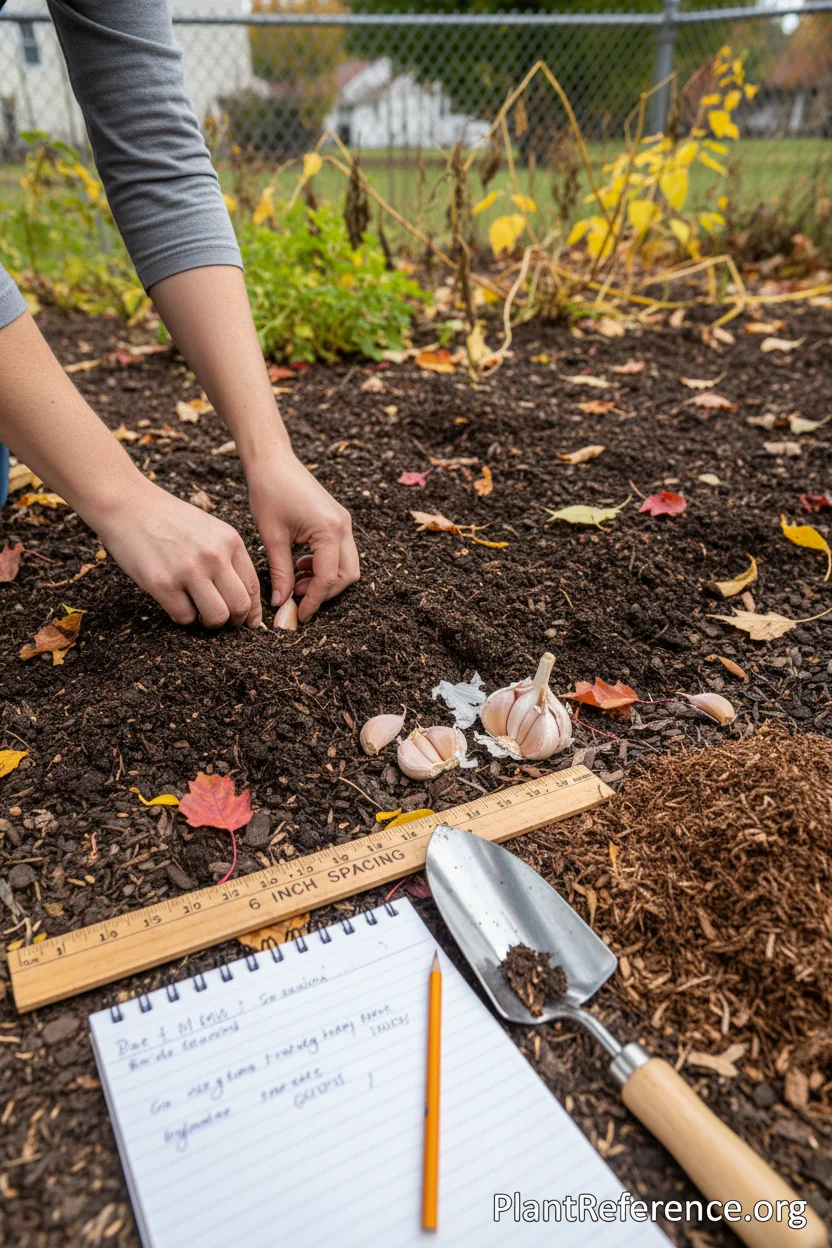
Mid-October (October 10-20): Plant garlic cloves 4-6 weeks before ground freezes hard. This timing allows root establishment without excessive top growth that could be damaged by winter weather.
Late October (October 20-30): Latest planting window. Earlier planting within this range generally produces larger bulbs.
Complete Growing Guide for New York
Soil Preparation
New York's heavy clay soils in many areas require amendment for onion success. Onions need well-draining soil—they'll rot in waterlogged conditions but need consistent moisture.
Work 2-3 inches of compost into your onion beds each spring. This improves both drainage in clay soils and water retention in sandy soils. I've found that raised beds work exceptionally well in New York, especially in areas with poor drainage.
Test your soil pH—onions prefer 6.0 to 6.8. Most New York soils run slightly acidic, so you may need lime applied in fall for spring planting.
Planting Techniques
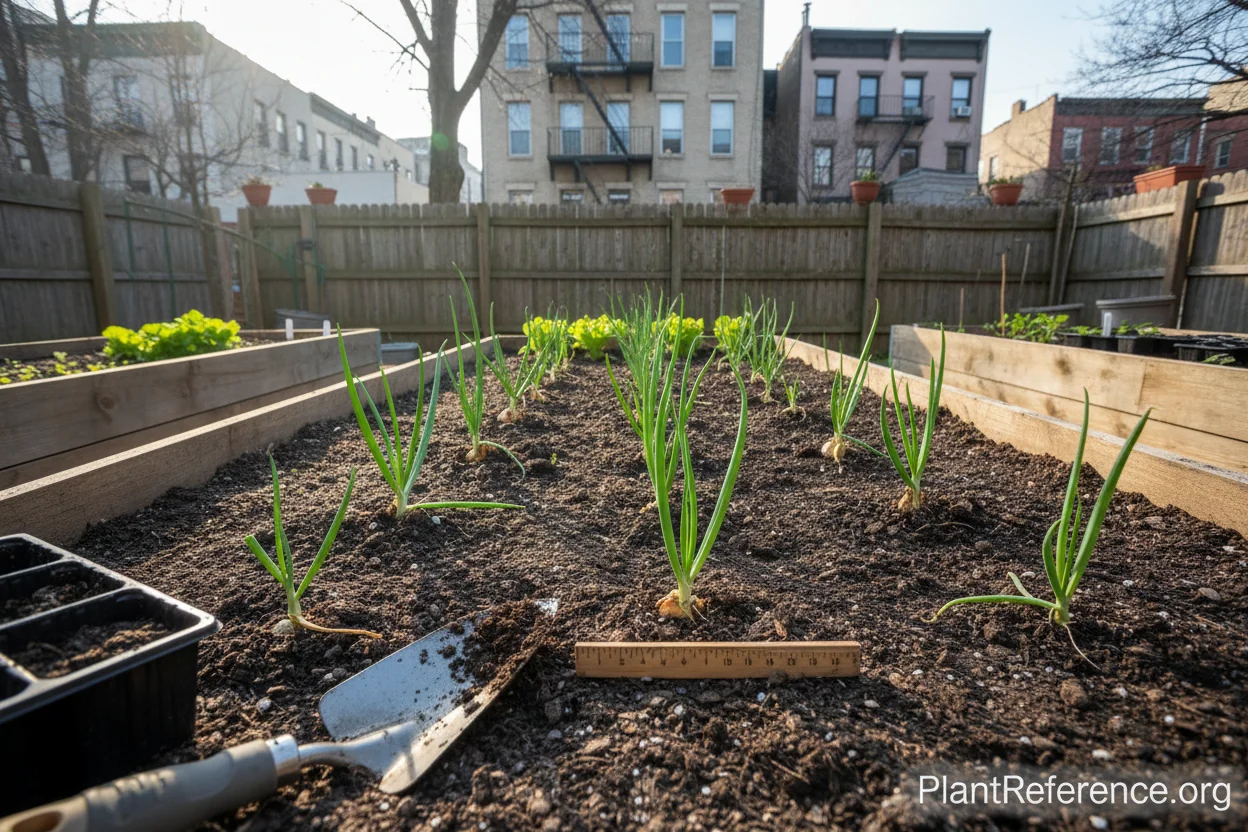
Onion Sets: Push sets into soil until just the tip shows. Plant pointed end up. Sets smaller than a dime perform best—larger ones tend to bolt.
Transplants: Trim roots to 2 inches, tops to 4 inches. Plant at the same depth they were growing, firming soil gently around roots.
Seeds: Start indoors 8-10 weeks before transplant date. New York gardeners can direct seed in late March if soil conditions allow, but transplants give more reliable results.
Space all onions 4 inches apart in rows 12 inches apart. Closer spacing produces smaller bulbs but higher total yield.
Fertilizing Schedule
Onions are heavy nitrogen feeders during their vegetative growth phase:
At Planting: Work 2-3 pounds of balanced fertilizer (10-10-10) per 100 square feet into the bed.
4 Weeks After Planting: Side-dress with nitrogen. I use blood meal or apply diluted fish emulsion every 2 weeks.
Critical Timing: Stop all nitrogen fertilizer when day length reaches 14-15 hours (late May to early June). Continued nitrogen delays maturity and reduces storage life.
Water Management
New York's variable spring rainfall requires flexible watering:
Early Season: Provide 1 inch per week if rainfall is insufficient. Young plants need consistent moisture for root and leaf development.
Mid-Season: Maintain regular watering through bulb formation period (May through July).
Late Season: Reduce watering as tops begin to yellow. Stop watering 2-3 weeks before harvest to promote proper curing.
Avoid overhead watering late in the day during humid New York summers—this promotes fungal diseases.
Troubleshooting New York-Specific Problems
Bolting Issues
Spring temperature swings can trigger premature bolting in New York. When onion plants experience temperatures below 45°F after reaching pencil thickness, they may bolt the following season.
Solutions: Use smaller sets (under dime size), plant at proper timing, choose day-neutral varieties like Candy for variable conditions.
What to do: If plants bolt, harvest immediately for fresh use. Bolted onions won't store and develop woody centers if left to flower.
Fungal Diseases
New York's humid summers create conditions favorable for onion diseases:
Purple Blotch: Appears as purple spots on leaves. Improve air circulation, avoid overhead watering, rotate crops.
Downy Mildew: Causes yellowing and fuzzy growth on leaves. Most problematic in cool, wet springs. Choose resistant varieties like Patterson.
White Rot: Soil-borne disease causing plant wilting and white fungal growth at bulb base. Rotate onions to different beds every 3-4 years.
Pest Management
Onion Maggots: Larvae tunnel into bulbs. Use row covers immediately after planting, maintain crop rotation.
Thrips: Cause silvery streaks on leaves. Overhead watering helps control populations. Beneficial insects like predatory mites provide natural control.
Weather Challenges
Late Spring Frost: Cover plants with row covers or buckets if hard frost threatens after planting.
Summer Heat Waves: Provide afternoon shade during extreme heat (above 90°F) to prevent heat stress.
Excessive Spring Rain: Ensure good drainage to prevent bulb rot. Raised beds solve most drainage issues.
Harvest & Storage
Harvest Timing
In New York, onions typically mature from late July through September depending on planting date and variety:
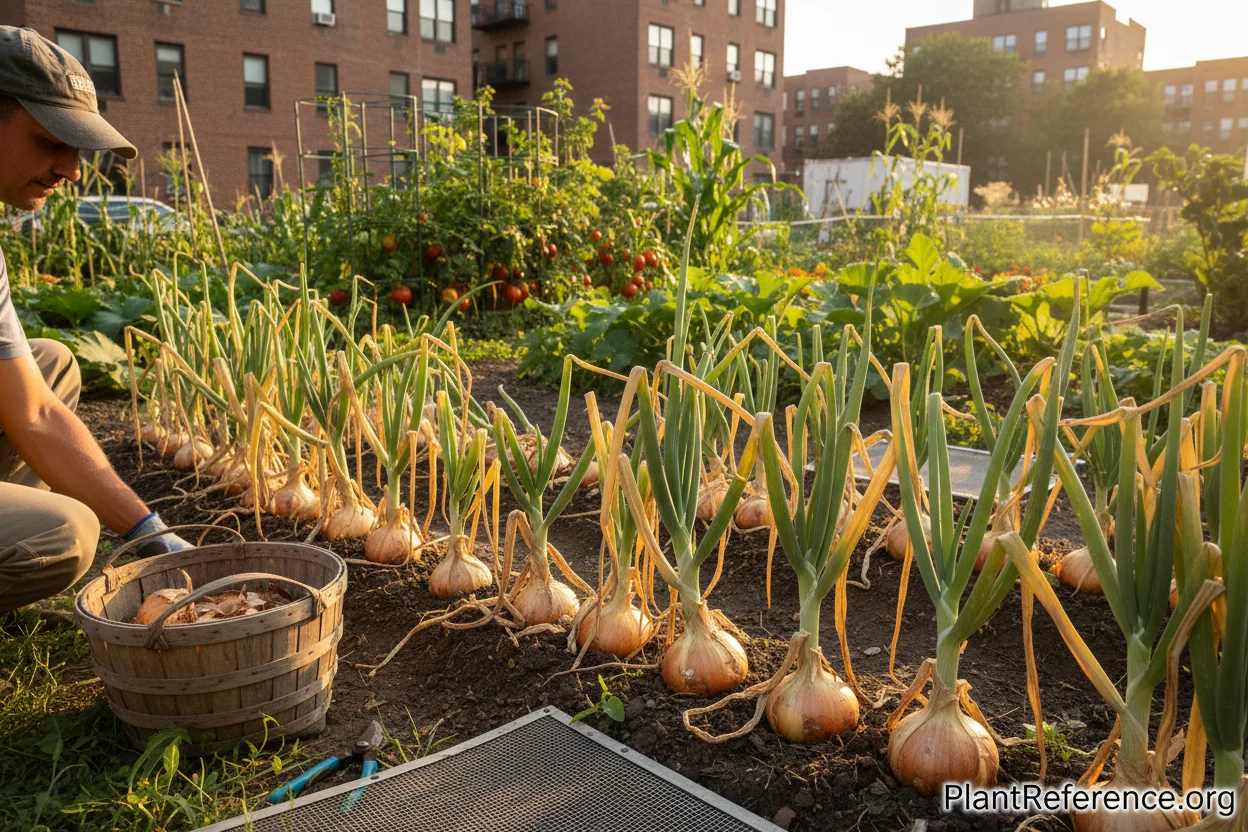
Storage Varieties: Harvest when 50-75% of tops fall over naturally. Don't bend tops over manually—this stops bulb development and creates entry points for disease.
Sweet Varieties: Can harvest when bulbs reach desired size, even if tops haven't fallen.
Garlic: Harvest when lower leaves brown but 5-6 green leaves remain (typically July in New York).
Curing Process
New York's summer humidity requires careful curing:
Field Cure: Leave onions in garden for 2-3 days if weather is dry, covering bulbs with tops to prevent sunscald.
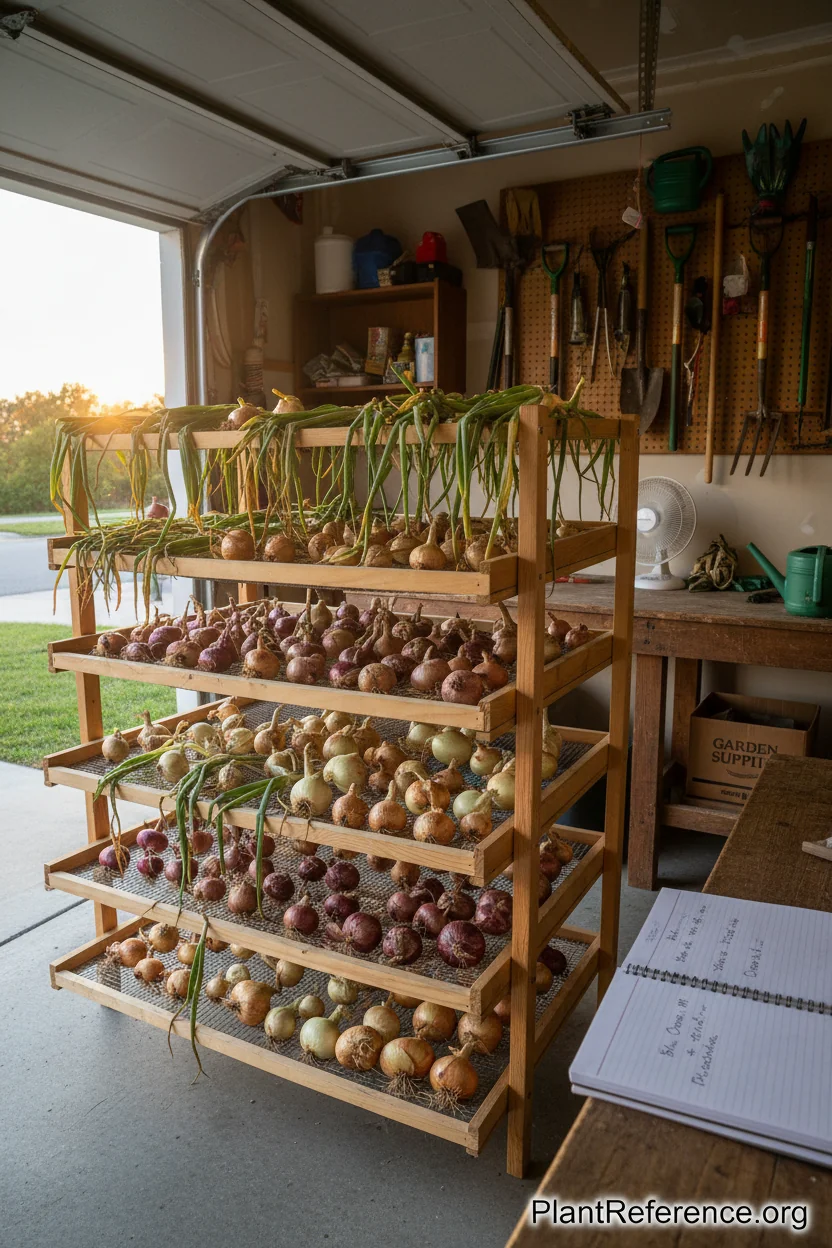
Protected Cure: Move to warm (75-85°F), dry, well-ventilated area like garage or shed. Lay in single layers on screens.
Duration: Cure 2-4 weeks until necks are tight and papery. Properly cured onions feel dry and papery on outer scales.
Long-Term Storage
New York's cool basements provide excellent onion storage conditions:
Temperature: 32-40°F ideal. Many New York basements naturally maintain these temperatures.
Humidity: 65-70% relative humidity prevents desiccation without promoting rot.
Air Circulation: Store in mesh bags or ventilated crates, not plastic bags.
Duration: Properly cured Red Wing and Copra varieties store 8-12 months in good conditions. Sweet varieties like Walla Walla use within 2-3 months.
Frequently Asked Questions
Reading about plants and recognising them are different skills. These three build the second.
- Daily PlantIdentify the day’s mystery plant from a close-up photograph.
- Keyed OutWork a dichotomous key, lead by lead, to name a hidden specimen.
- Name That PlantName a specimen from botanical clues dealt hardest first.
Free to play, no account needed
Frank retired from the city parks department after 28 years, the last fifteen as a grounds supervisor overseeing park plantings and maintenance crews. He now spends his time volunteering at a local historic garden, maintaining his own half-acre property in the Roxborough neighborhood, and writing about landscape maintenance, seasonal timing, and the practical side of keeping plants healthy through Mid-Atlantic winters and humid summers. Frank knows what works at scale and what's a waste of time—he's planted thousands of trees and shrubs and watched plenty of them fail. His advice tends toward what's proven and durable rather than what's trendy.