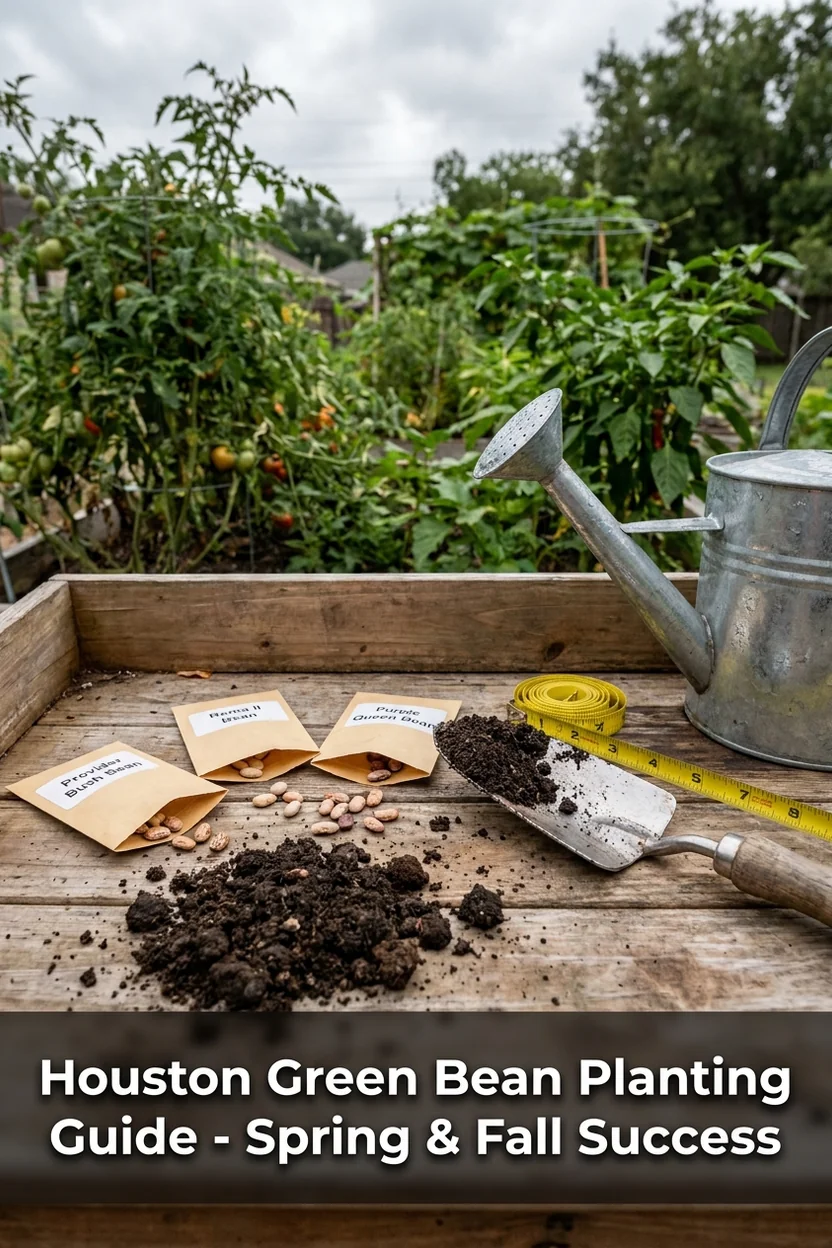
When to Plant Green Beans in Houston: Complete Guide + Best Varieties for Zone 9a
Pets & Toxicity
Recorded toxicity for plants linked in this guide. An unknown status is not a safety assessment.
No linked plant is recorded as toxic (6 linked plants checked)DetailsHide
Phaseolus vulgaris 'Purple Queen' — Toxicity
Non-toxicView Phaseolus vulgaris 'Purple Queen' plant profilePhaseolus vulgaris 'Blue Lake' — Toxicity
Non-toxic when cooked. Raw pods carry lectins (phytohemagglutinin) that cause digestive upset on raw consumption — pods are cooked before eatingView Phaseolus vulgaris 'Blue Lake' plant profilePhaseolus vulgaris 'Dragon Tongue' — Toxicity
Non-toxicView Phaseolus vulgaris 'Dragon Tongue' plant profilePhaseolus vulgaris 'Kentucky Wonder' — Toxicity
Non-toxicView Phaseolus vulgaris 'Kentucky Wonder' plant profile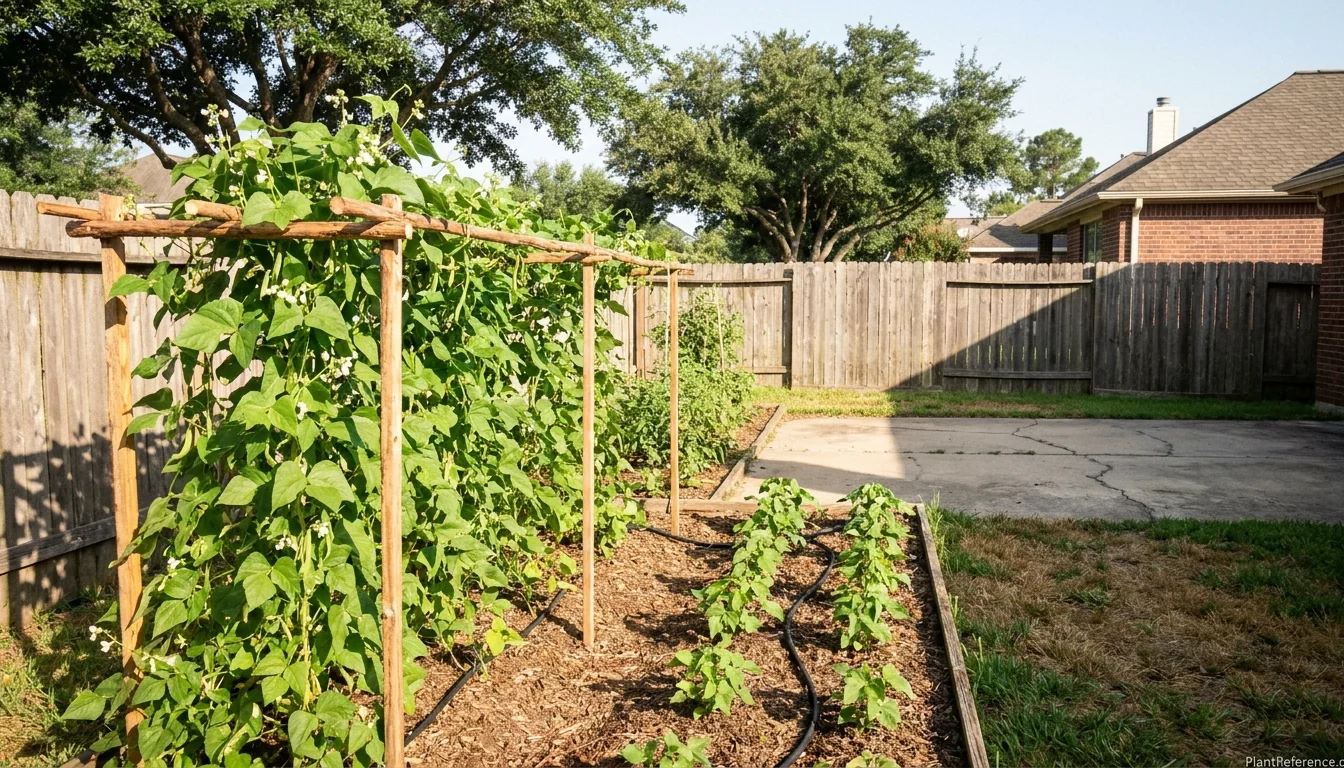
— Image © PlantReference.org 2026
I've been growing green beans in Texas for over forty years, and let me tell you what works in Houston's challenging Zone 9a climate. The secret isn't just knowing when to plant green beans in Houston—it's understanding that our 289-day growing season requires a completely different strategy than cooler climates.
Houston's Zone 9a climate presents unique opportunities and challenges for green bean cultivation. With our last frost around February 14 and first frost not until November 30, we enjoy one of the longest growing seasons in the country. However, the intense summer heat and humidity from June through August make green bean Phaseolus vulgaris (fay-ZEE-oh-lus vul-GAR-iss) production nearly impossible during those months.
The key to success lies in understanding Houston's two distinct growing seasons: our productive spring season from March through May, and our excellent fall season from September through November. Smart gardeners focus their efforts on these periods, when temperatures and humidity levels create ideal conditions for consistent bean production.
Best Green Bean Varieties for Houston's Zone 9a Climate
Not all green bean varieties handle Houston's heat and humidity equally well. After decades of testing, I've identified six varieties that consistently perform in our challenging climate.
Variety | Days to Maturity | Best For | Notes for Houston |
|---|---|---|---|
50-55 days | Quick spring harvest | Perfect for Zone 9a short spring window | |
53-60 days | Heat tolerance | Romano type handles humidity well | |
55-60 days | Easy harvesting | Purple pods visible in dense foliage | |
55-65 days | Processing quality | Excellent for freezing, good fall variety | |
55-60 days | Market sales | Unique appearance, requires cool weather | |
60-70 days | Fall production | Pole variety for extended harvest |
Provider stands out as Houston's most reliable spring variety. Its 50-day maturity allows you to plant in early March and harvest before the worst heat arrives. The compact 4-inch spacing makes it perfect for intensive spring production.
Roma II earns my recommendation for its superior disease resistance. Houston's humidity creates perfect conditions for fungal problems, but this Romano-type bean shrugs off most issues. The broad, flat pods also handle our spring rains without rotting as quickly as round varieties.
For fall production, Kentucky Wonder becomes the star performer. This pole variety actually benefits from Houston's late-season heat, growing vigorously through September while setting pods as temperatures cool in October.
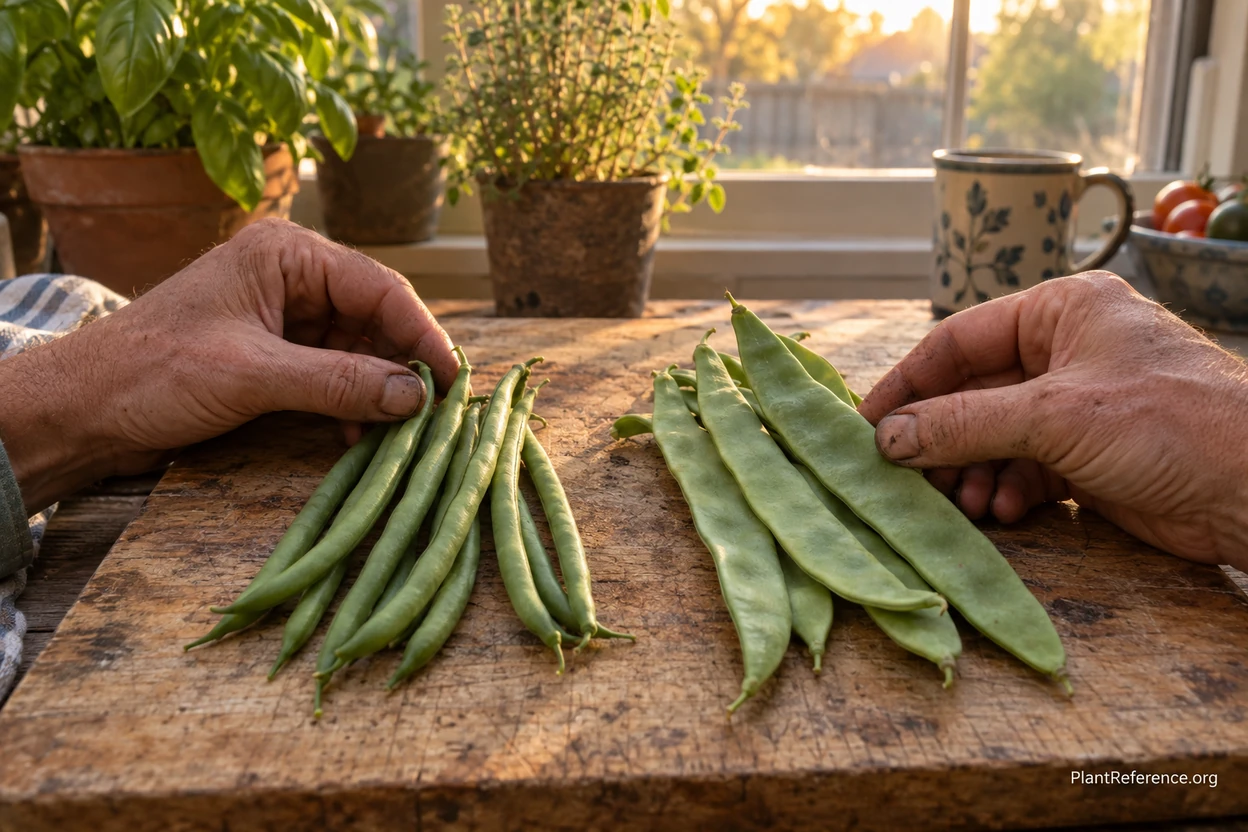
Purple Queen offers practical advantages beyond novelty. The deep purple pods stand out dramatically against green foliage, making harvest faster and more complete. In Houston's dense, humid growing conditions where plants can quickly become jungle-like, this visibility matters.
Dragon Tongue requires careful timing in Houston. This wax variety with purple striations performs beautifully in our mild fall weather but struggles with spring humidity. Reserve it for September plantings when humidity drops.
Specific Planting Dates for Houston
Houston's Zone 9a climate demands precise timing to avoid our brutal summer months while maximizing our excellent spring and fall windows.
Spring Planting Window: March 1 - May 15
First Spring Planting (March 1-15): Start with Provider or Roma II. These varieties can handle occasional cool snaps while establishing quickly as soil warms.
Second Spring Planting (March 20-April 5): Add Blue Lake and Purple Queen to your rotation. Soil temperatures are consistently above 60°F, ensuring rapid germination.
Final Spring Planting (April 15-May 1): Last chance for quick-maturing varieties. Provider planted May 1 will harvest by June 15, just before extreme heat arrives.
Late Spring Risk Planting (May 1-15): Only attempt with Provider, and only if you can provide afternoon shade and consistent irrigation.
Summer Break: May 15 - August 15
Don't plant green beans during Houston's summer months. Temperatures regularly exceed 95°F, causing blossom drop and plant stress. Even with irrigation, pods that do form are often tough and bitter.
Fall Planting Window: August 15 - September 30
Early Fall Planting (August 15-30): Kentucky Wonder performs best with this timing, establishing while warm but maturing as temperatures moderate.
Mid Fall Planting (September 1-15): All varieties work well. This timing provides harvest from October through November.
Late Fall Planting (September 15-30): Stick to quick-maturing Provider and Roma II. A September 30 planting of Provider harvests by November 20, well before our first frost.
Calculating Your Harvest Dates
To determine harvest timing, add the variety's days to maturity to your planting date:
March 15 Provider planting: Harvest begins May 10 (55 days later) September 1 Kentucky Wonder planting: Harvest begins November 5 (65 days later) April 1 Roma II planting: Harvest begins May 25 (54 days later)
This calculation helps you plan succession plantings for continuous harvest and avoid conflicts with summer heat or winter frost.
Complete Growing Guide for Houston
Successfully growing green beans in Houston requires understanding our unique soil, weather, and pest challenges.
Soil Preparation for Houston Clay
Houston's notorious clay soil presents the biggest challenge for green bean cultivation. These crops require well-drained soil, but our heavy clay often stays waterlogged after rains.
Clay Soil Amendment Strategy:
Add 2-3 inches of compost to planting beds each season
Mix in coarse sand (not fine sand) at 25% of soil volume
Create raised beds 4-6 inches high for better drainage
Never work wet clay soil—wait until it crumbles in your hand
pH Management: Houston soils typically run 6.5-7.5, perfect for beans. If your soil tests below 6.0, add lime in fall for spring planting.
Organic Matter: Bean plants fix their own nitrogen but need phosphorus and potassium. Work aged compost into beds before planting, providing slow-release nutrients throughout the season.
Houston-Specific Watering Strategy
Our intense heat and periodic drought require careful water management.
Spring Watering (March-May):
Water deeply twice weekly during establishment
Provide 1-1.5 inches per week including rainfall
Morning watering prevents fungal issues in humid conditions
Fall Watering (September-November):
Reduce frequency as temperatures drop
Water deeply once weekly unless receiving rainfall
Watch for October dry spells that can stress developing pods
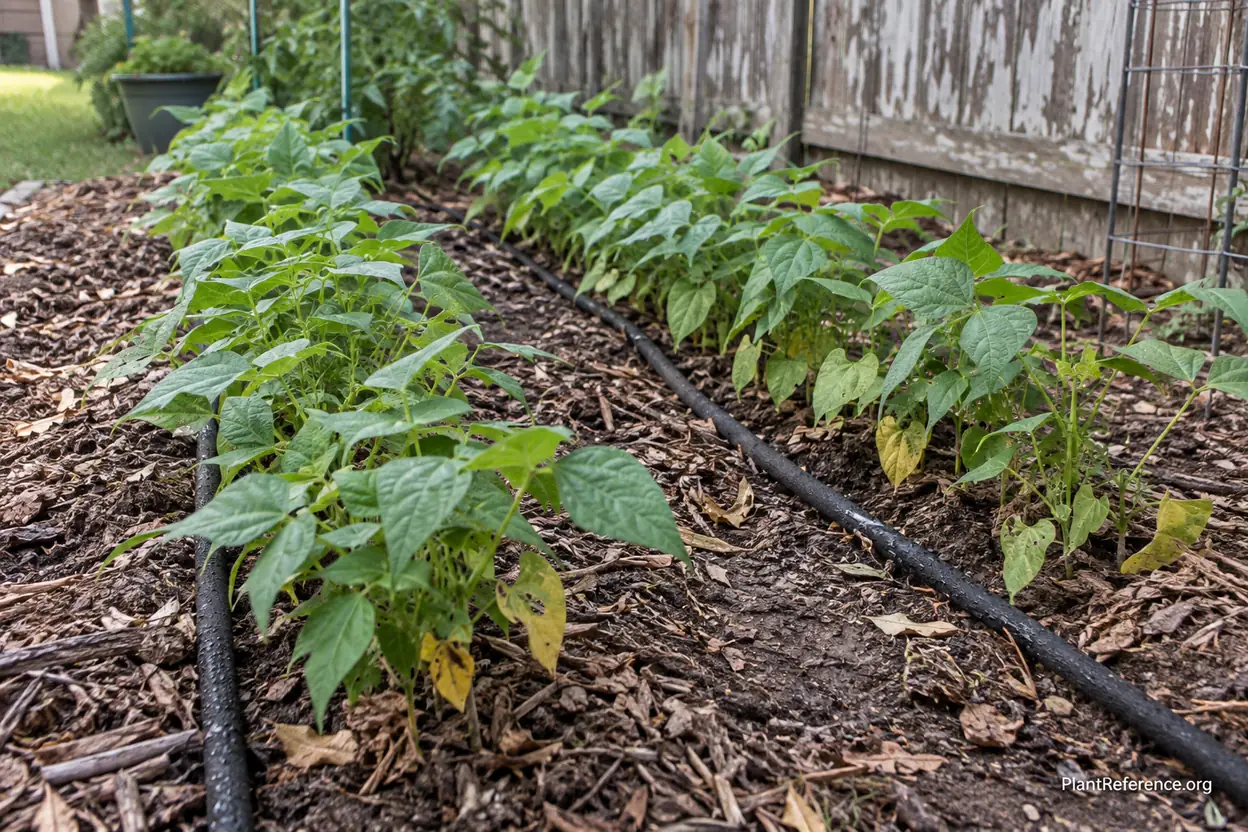
Irrigation Method: Drip irrigation or soaker hoses work best in Houston. Overhead watering in our humidity promotes fungal diseases and can knock off flowers during heavy rains.
Dealing with Houston Humidity
High humidity creates perfect conditions for fungal diseases but also benefits plant growth when managed properly.
Positive Humidity Effects:
Reduces water stress during establishment
Maintains soil moisture longer
Supports vigorous vegetative growth
Humidity Management Techniques:
Space plants properly—never crowd even bush varieties
Provide morning sun for rapid dew evaporation
Avoid overhead watering late in day
Remove lower leaves touching soil to improve air circulation
Plant in areas with good air movement
Fertilizing Houston Beans
As nitrogen-fixing legumes, green beans need minimal fertilization when grown in amended soil.
Pre-Planting: Work 2-inch layer of compost into soil. This provides slow-release nutrients throughout the season.
At Planting: Apply balanced fertilizer (10-10-10) at half the recommended rate. Too much nitrogen prevents nodule formation.
Mid-Season: Side-dress with compost or low-nitrogen fertilizer if plants show yellowing.
Bean Inoculant: For new garden beds or sterilized soils, treat seeds with Rhizobium inoculant before planting. This ensures proper nitrogen fixation.
Troubleshooting Houston-Specific Problems
Growing green beans in Houston's challenging climate brings unique issues that northern gardeners rarely encounter.
Heat Stress Management
Symptoms: Blossom drop, wilted leaves during hottest part of day, poor pod set
Solutions:
Provide afternoon shade during extreme heat (over 95°F)
Mulch heavily to keep roots cool
Water consistently to prevent drought stress
Plant heat-tolerant varieties like Roma II
Time plantings to avoid peak summer months
Prevention: Schedule plantings so harvest completes before June 15 or begins after September 1.
Fungal Disease Pressure
Houston's humidity creates ideal conditions for several bean diseases.
White Mold (Sclerotinia): Most common during spring's wet, mild weather
Prevention: Increase plant spacing, improve air circulation, avoid overhead watering
Treatment: Remove affected plants immediately, apply organic fungicide preventively
Anthracnose: Spreads rapidly in humid conditions
Symptoms: Black, sunken lesions on pods and leaves
Prevention: Use disease-resistant varieties, avoid working wet plants
Management: Remove infected plant debris, rotate crops annually
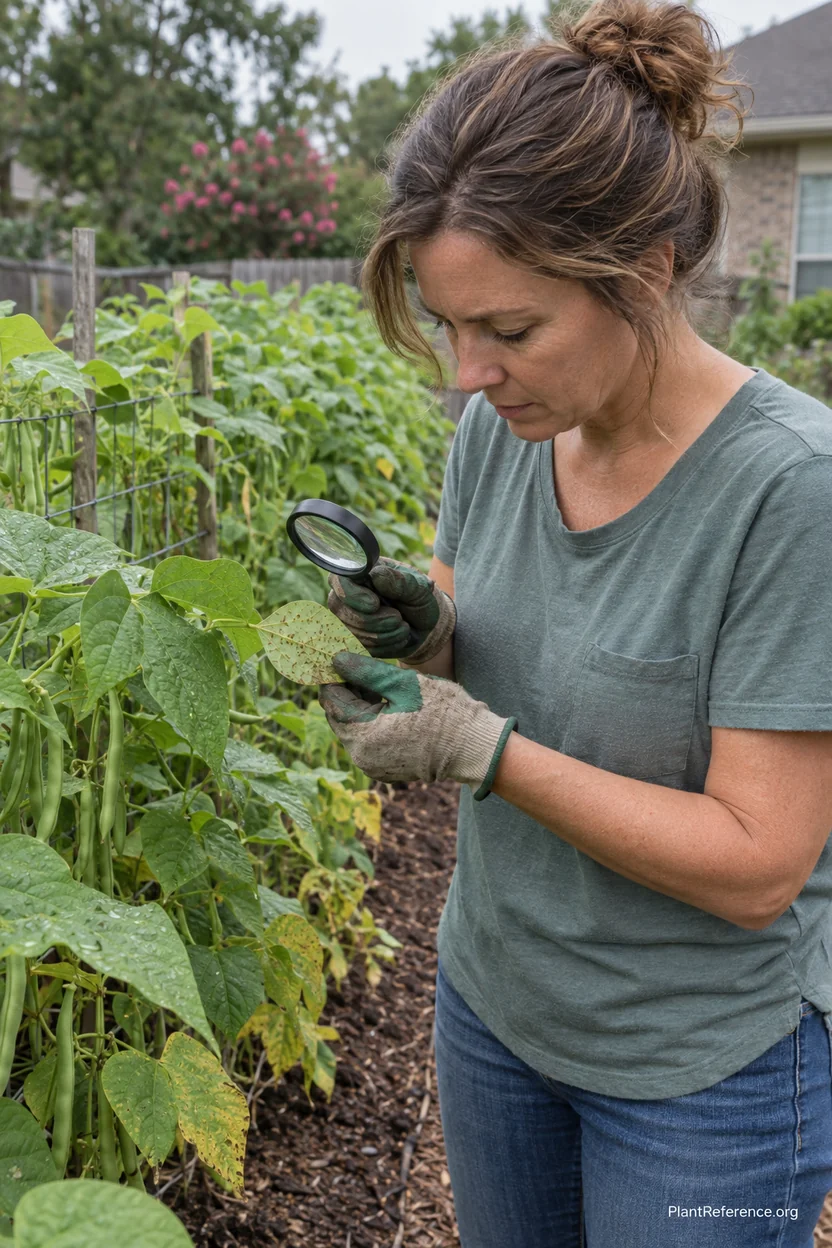
Pest Management
Mexican Bean Beetle: Houston's long season supports multiple generations
Identification: Copper-colored beetle with black spots, spiny yellow larvae
Control: Hand-pick egg masses from leaf undersides, apply Bacillus thuringiensis (Bt) for larvae
Timing: Monitor closely during spring emergence and fall plantings
Spider Mites: Become problematic during hot, dry periods
Symptoms: Fine webbing between leaves, stippled appearance on foliage
Prevention: Maintain adequate humidity around plants, avoid drought stress
Treatment: Spray with water to dislodge mites, apply insecticidal soap
Soil Drainage Issues
Heavy Clay Problems: After Houston's intense rainstorms, clay soils often remain waterlogged
Immediate Solution: Create drainage channels around planting areas
Long-term Fix: Build raised beds 6-8 inches high filled with amended soil
Quick Drainage Test: Dig 12-inch deep hole, fill with water, check drainage after 24 hours
Poor Germination: Seeds rot in cold, wet soil before sprouting
Prevention: Wait until soil temperature reaches 65°F consistently
Solution: Plant in raised beds or mounded rows for faster warming and drainage
Harvest & Storage
Proper harvesting techniques maximize both yield and quality of your Houston-grown green beans.
Harvesting Timeline
Bush Varieties (Provider, Roma II, Purple Queen): Begin harvesting 50-60 days after planting. Pick every 2-3 days during peak season to encourage continued production.
Pole Varieties (Kentucky Wonder): Start harvesting 65-70 days after planting. Continue picking 2-3 times weekly through first frost.
Houston Harvest Indicators
In our hot climate, beans mature quickly. Check plants daily once harvest begins:
Optimal Timing: Pods snap crisply when bent, seeds inside are small and barely visible Too Early: Pods bend without snapping, very thin and underdeveloped Too Late: Pods feel lumpy with large seeds, tough and stringy texture
Post-Harvest Handling
Houston's heat requires immediate attention to harvested beans:
Cool Immediately: Bring harvested beans indoors right away. Our intense heat rapidly degrades quality.
Refrigerate Promptly: Store in refrigerator at 40°F within 30 minutes of harvest for maximum freshness.
Processing for Storage: Houston gardeners often preserve excess harvest through freezing or canning. Blanch beans for 3 minutes before freezing to maintain color and texture.
FAQ
When is the last date I can plant green beans in Houston?
September 30 is the absolute latest for quick-maturing varieties like Provider. Plant 60 days before Houston's average first frost (November 30) to ensure harvest completion. For longer-season varieties like Kentucky Wonder, stop planting by September 15.
Can I grow green beans year-round in Houston?
No, despite Houston's Zone 9a classification. Summer temperatures (June-August) regularly exceed 95°F, causing blossom drop and poor pod quality. Focus on spring (March-May) and fall (September-November) production for best results.
Which green bean varieties handle Houston heat best?
Roma II shows the best heat tolerance, followed by Provider and Purple Queen. These varieties can handle late spring planting (early May) better than others. Kentucky Wonder excels in fall when planted in late August.
How do I prevent fungal problems in Houston's humidity?
Space plants properly even for bush varieties, provide morning sun for rapid dew evaporation, and avoid overhead watering. Use drip irrigation and remove lower leaves touching soil. Roma II and Provider show better disease resistance than Dragon Tongue or Blue Lake.
Should I plant bush beans or pole beans in Houston?
For succession planting, choose bush varieties like Provider that mature quickly before heat arrives. For fall production and space efficiency, pole varieties like Kentucky Wonder work excellently. Most Houston gardeners use bush beans for spring and pole beans for fall.
How often should I water green beans in Houston?
During establishment (first 2-3 weeks), water deeply twice weekly. Once established, provide 1-1.5 inches per week including rainfall. Houston's clay soil holds moisture well, so avoid overwatering which promotes root rot.
Can I start green beans indoors in Houston?
No, green beans must be direct-sown. Their taproot system doesn't tolerate transplant shock. Houston's warm soil allows reliable direct-seeding from early March through September, making indoor starting unnecessary and counterproductive.
Frequently Asked Questions
Reading about plants and recognising them are different skills. These three build the second.
- Daily PlantIdentify the day’s mystery plant from a close-up photograph.
- Keyed OutWork a dichotomous key, lead by lead, to name a hidden specimen.
- Name That PlantName a specimen from botanical clues dealt hardest first.
Free to play, no account needed
Tagged with
Dot grew up on a small farm in rural Virginia and has maintained a vegetable garden for decades. After retiring from teaching elementary school, she became a Master Gardener volunteer and spends her time mentoring new gardeners at community garden plots in Richmond. She's especially knowledgeable about heirloom varieties, seed saving, and traditional growing methods passed down from her grandmother. Dot's no-nonsense advice comes from extensive trial and error—she's seen every tomato disease, pest problem, and weather disaster imaginable. Her biggest pet peeve is gardeners who overcomplicate simple tasks. "Plants want to grow," she often says. "Your job is to not get in their way."