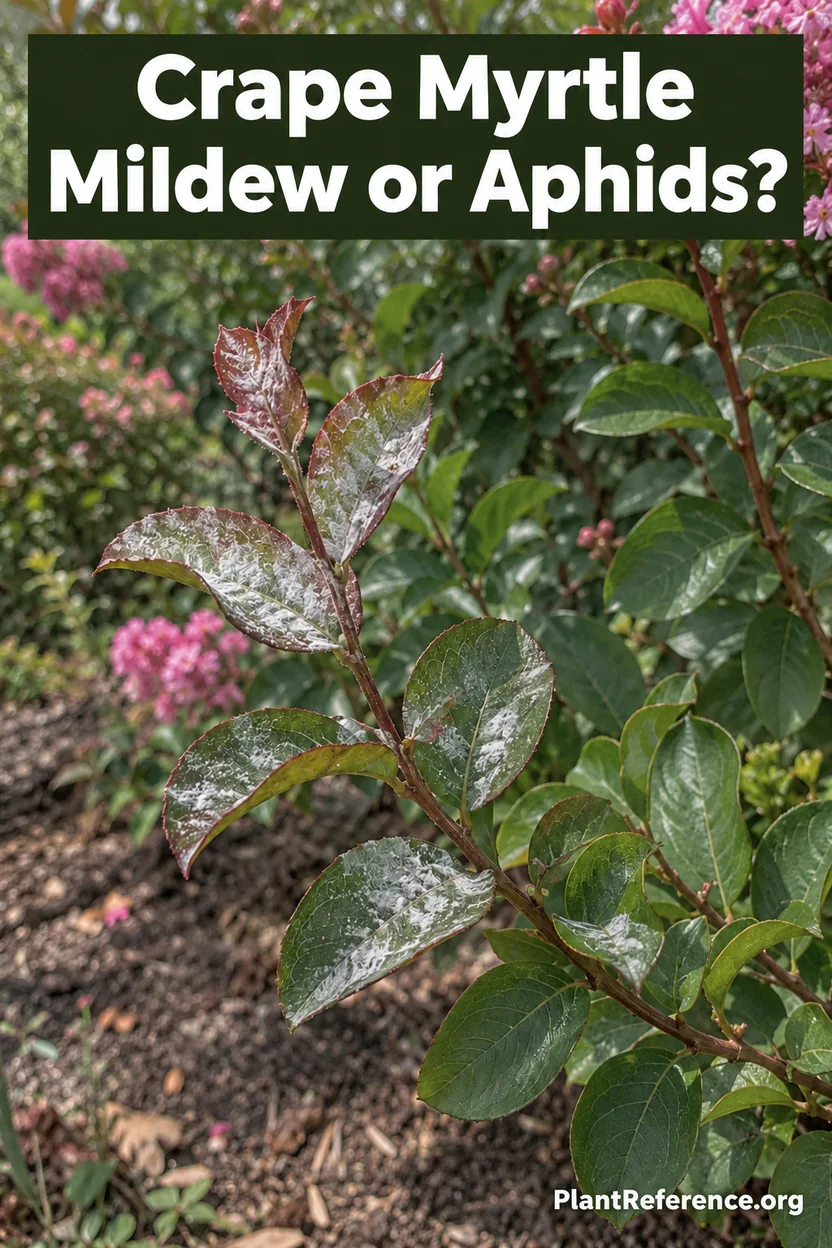
Crape Myrtle Powdery Mildew and Aphids: What to Do
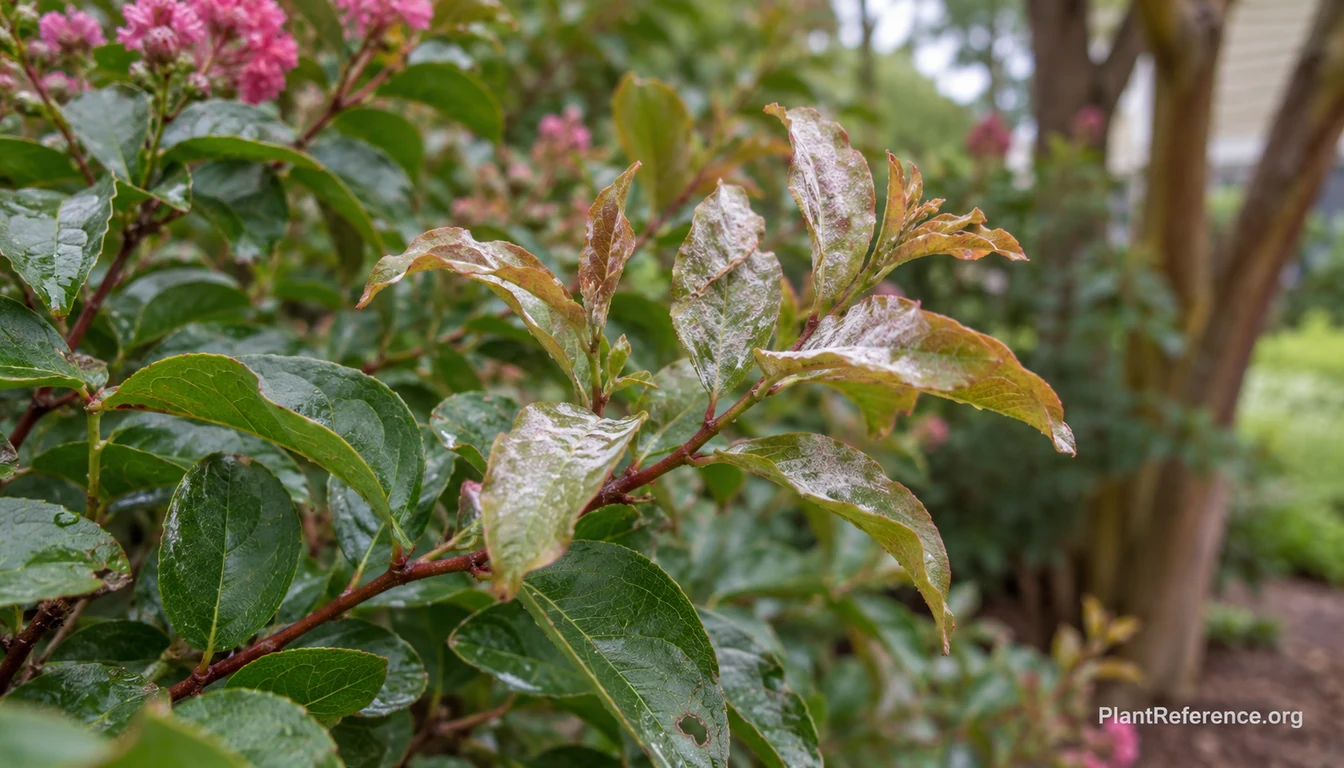
— Image © PlantReference.org 2026
Pets & Toxicity
Recorded toxicity for plants linked in this guide. An unknown status is not a safety assessment.
No linked plant is recorded as toxicDetailsHide
Crape myrtle powdery mildew and aphids can arrive on the same tree, but they need separate decisions. White coating on tender growth is different from sticky honeydew or black sooty mold. Before reaching for a sprayer, turn over several leaves and inspect the shoots. A humid Southern summer is a reason to look closely, not a diagnosis by itself.
Diagnose White Powder, Sticky Leaves, and Black Mold
Crape myrtles 🌿Lagerstroemia spp. (lay-ger-STREE-mee-uh) can develop powdery white growth on leaves, shoots, and flower buds. Young leaves may distort, and affected buds may fail to open normally. Mildew does not need standing water on foliage to develop; humid conditions can favor trouble even when leaves look dry.
For suspected aphids, inspect leaf undersides for clusters of small insects. Sticky surfaces below the canopy suggest honeydew. Black sooty mold can grow on that sugary deposit, making leaves look dirty without producing the characteristic white mildew coating. Check the bark too; unexplained honeydew may need a broader pest diagnosis.
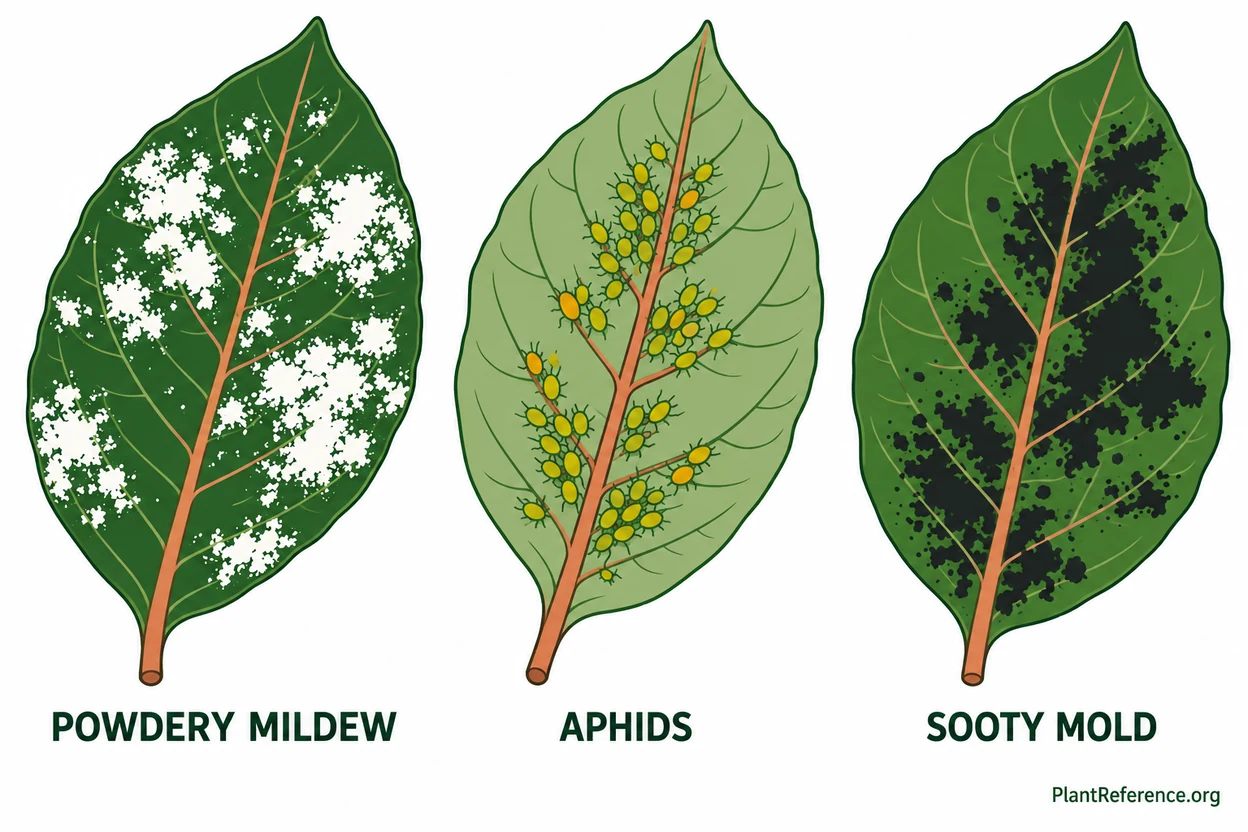
Photograph affected and healthy shoots before treatment. When insects are absent or bark has unusual encrustations, seek an extension diagnosis instead of assuming aphids. Integrated Pest Management for Pacific Northwest Gardens explains the observe-first approach; its regional timing should not be copied into a Southern treatment calendar.
Make the Site Less Favorable to Recurring Trouble
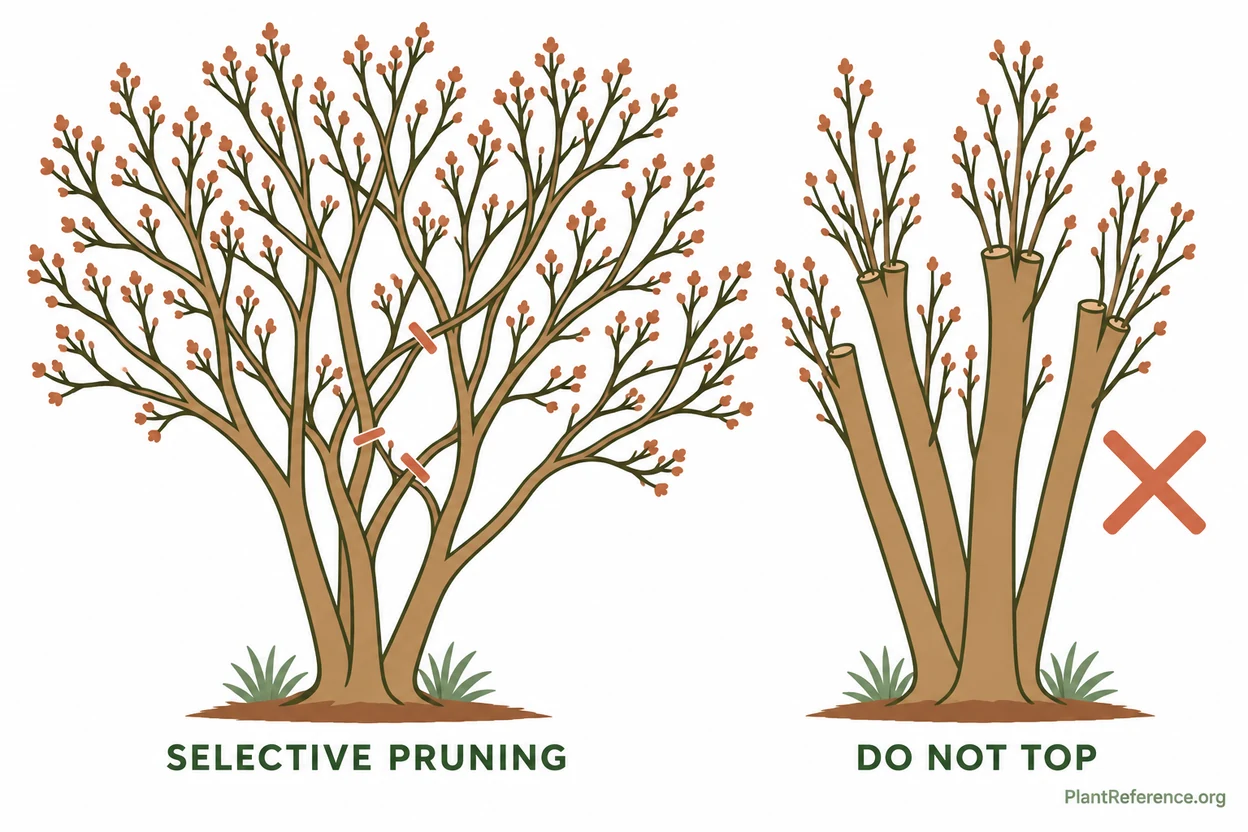
Start with sunlight and space. A crape myrtle crowded against a building or shaded by larger trees is harder to inspect and manage. Consider its mature canopy, not its nursery size, when planting. For an established tree, selective corrections are more useful than stripping out branches to force an open appearance.
Prune for sound structure during dormancy, commonly late winter in the South, with local conditions guiding timing. Remove suckers and selected crossing or damaged branches as appropriate. Avoid topping: the resulting dense, weak growth does not solve mildew or aphids. Prescriptive Pruning: The PPQ Model for Structural Tree Care offers a framework for choosing cuts deliberately.
Do not transfer another shrub's pruning recipe automatically. Old Wood vs New Wood Pruning: Why Blooms Disappear explains why flowering habit matters, while Rejuvenation Pruning for Overgrown Shrubs is background reading rather than permission to cut a crape myrtle back to stubs.
Water the root zone as needed and maintain drainage. Mulch can buffer soil moisture, but keep it away from the trunk; How Much Mulch Do You Need? Depth and Volume Guide covers sensible placement. Avoid feeding merely because foliage looks poor. DIY Organic Fertilizer Blends: A Soil-Test-First Guide supports checking actual nutrient needs before adding more nitrogen.
Manage Aphids Without Treating the Wrong Problem
A few aphids on an otherwise vigorous tree do not automatically justify treatment. Look for predators and track whether colonies are increasing. Where reachable, a directed stream of water can dislodge insects; avoid damaging tender shoots or turning the whole garden into a daily wetting exercise. Do not climb with a sprayer to reach a tall canopy.
If colonies persist and treatment is warranted, consider an insecticidal soap product only when its label supports the plant and pest. Coverage must reach the insects. Household dish detergent is not an interchangeable substitute. Check temperature restrictions and plant-stress precautions, and avoid spraying beneficial insects directly.
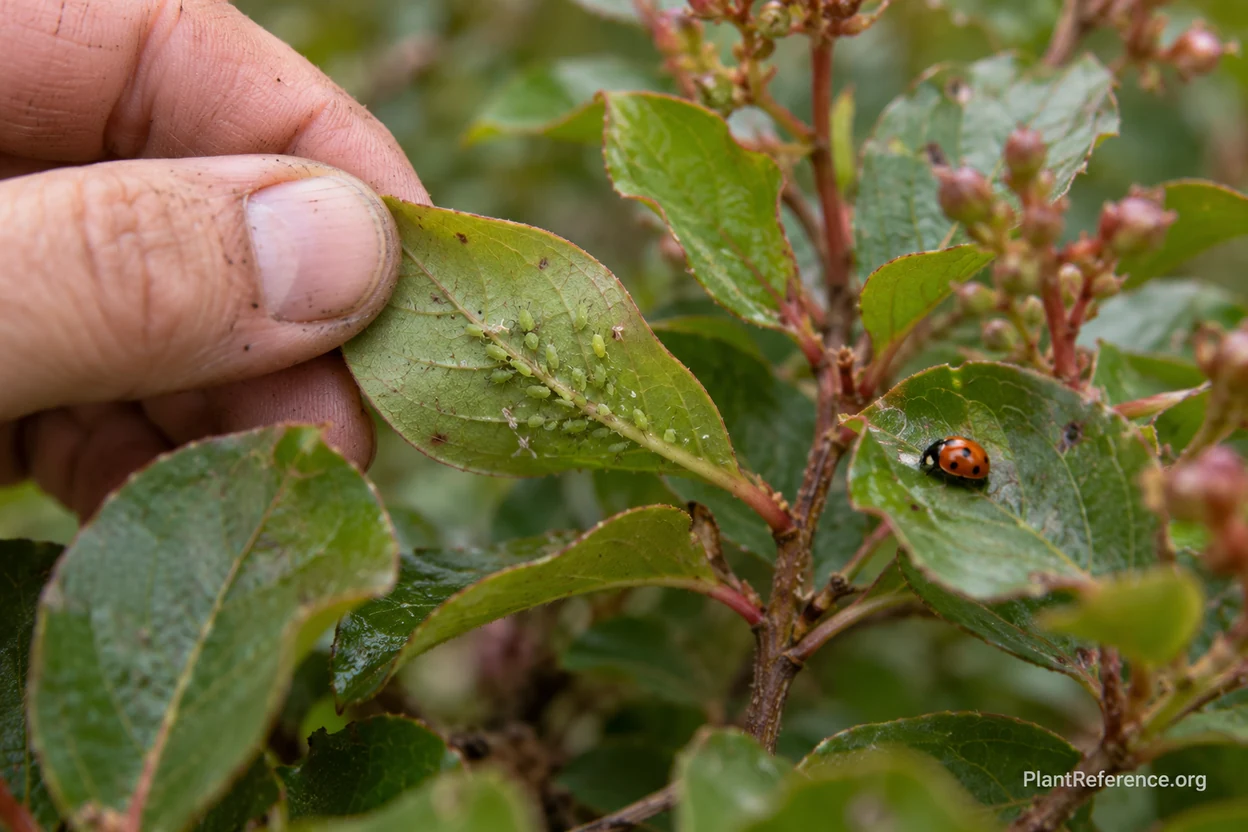
Protect the broader garden while managing one tree. How to Build a Pollinator Garden That Works explains why flower visitors matter. Avoid unnecessary broad treatments and follow restrictions for blooms, drift, and pollinators. Reducing honeydew production addresses the source of sooty mold; a fungicide aimed at mildew does not remove the aphid population.
Compare Contact and Systemic Mildew Treatments
For mild mildew, observation and better growing conditions may be enough. Consider fungicides when recurring disease substantially damages shoots or flowering, especially on a susceptible tree. Start with correct identification and a product labeled for the ornamental use and powdery mildew. None restores dead tissue or replaces a poorly chosen planting site.
Approach | Examples | Main role | Important limitation |
|---|---|---|---|
Contact fungicide | Copper or sulfur products | Protect treated surfaces early | Coverage, weather, and heat restrictions matter |
Absorbed fungicide | Myclobutanil or propiconazole products | Suppress susceptible disease where labeled | Absorption does not mean unrestricted use |
Nonchemical management | Resistant selection, sunlight, suitable spacing | Reduce recurring pressure | Existing damaged tissue remains damaged |
Copper and sulfur are not interchangeable blanket recommendations. Their usefulness depends on the formulation and label. Contact treatments remain associated with treated surfaces, making coverage and protection of new growth important. Sulfur can injure foliage under unsuitable heat conditions and may be incompatible with nearby oil applications. Use the product-specific temperature limits and separation interval, not a universal homemade schedule.
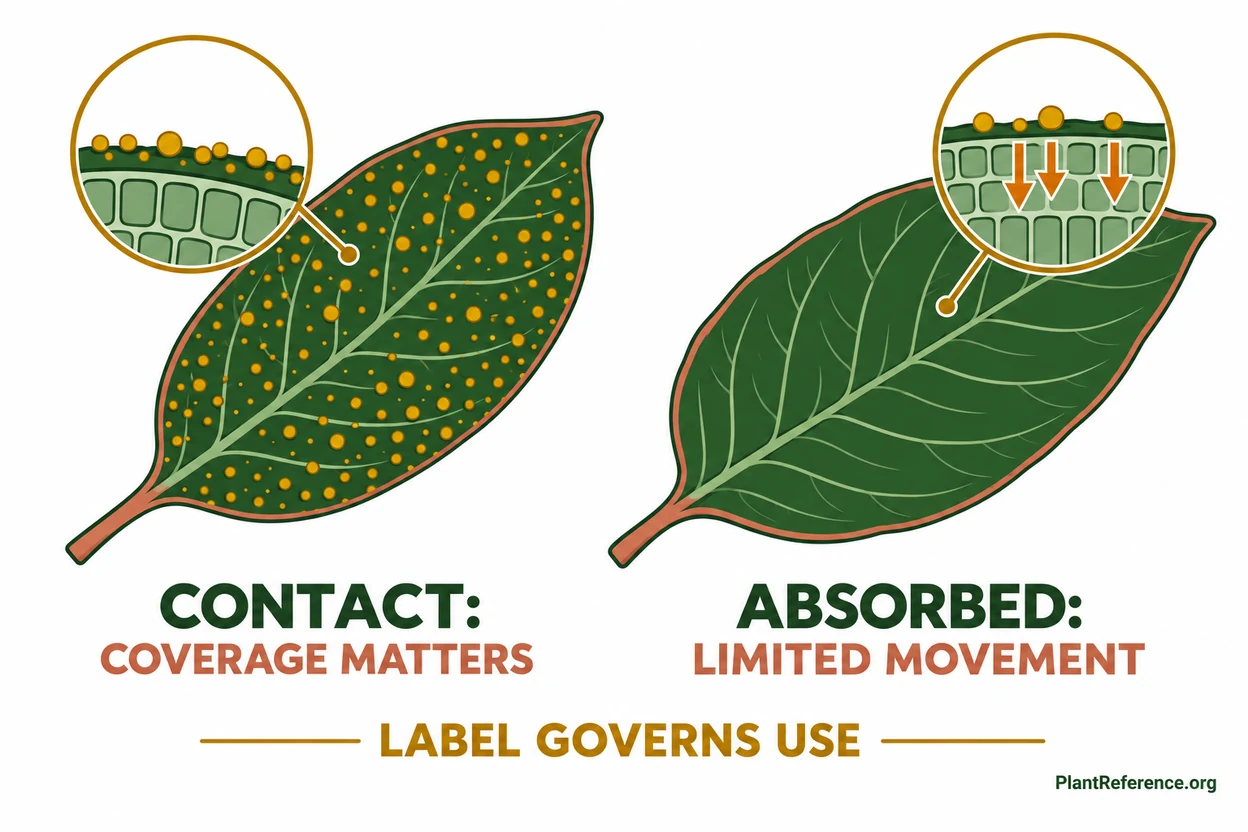
Myclobutanil and propiconazole are examples of absorbed fungicide ingredients, not instructions to buy any product containing them. Confirm permitted plant, disease, application method, and resistance-management directions. Systemic does not mean instant, permanent, or rainproof at every stage. Switching brand names alone may not change the mode of action.
For broader ingredient comparisons, see Best Organic Fungicides: Copper, Sulfur & Biologicals. Here the decision remains crape-myrtle-specific: confirmed mildew, meaningful damage, a suitable label, and conditions that permit application. Do not mix fungicides with aphid treatments unless the relevant labels allow the combination.
Check Recovery and Plan Next Season
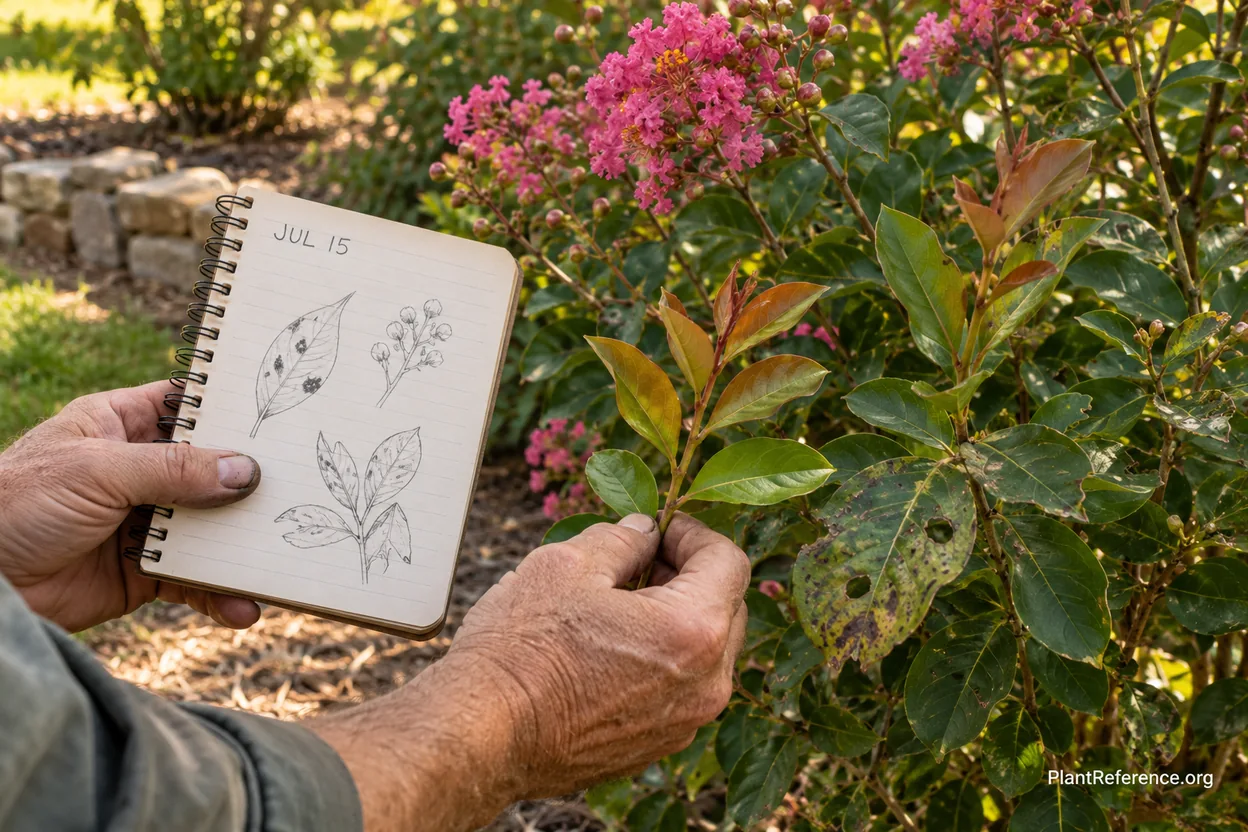
Keep a short record of symptoms, treatment dates, and photographs of the same shoots. Judge progress by fewer fresh mildew patches, less new distortion, and declining live aphid colonies. Old coating, damaged leaves, or residual sooty mold may remain after the underlying problem improves. Do not increase a dose to erase cosmetic evidence.
For a tree that struggles every year, reassess shade, crowding, and cultivar susceptibility before repeating another season of spraying. When replacing or adding a tree, ask for locally suitable mildew-resistant selections and a mature size that fits the site. Resistance reduces risk; it does not guarantee a pest-free canopy.
Frequently Asked Questions

Reading about plants and recognising them are different skills. These three build the second.
- Daily PlantIdentify the day’s mystery plant from a close-up photograph.
- Keyed OutWork a dichotomous key, lead by lead, to name a hidden specimen.
- Name That PlantName a specimen from botanical clues dealt hardest first.
Free to play, no account needed
Tagged with
Marcus manages the grounds at a historic property in Memphis and runs a side business doing residential garden design. He grew up helping his grandfather maintain a large vegetable garden in the Mississippi Delta and carried that knowledge into formal training—he has a degree in landscape technology. Memphis sits in a sweet spot for growing: long warm seasons, decent rainfall, and mild enough winters that many marginally hardy plants survive. Marcus writes about Southern gardening traditions, ornamental garden design, and dealing with the humidity and heavy rainfall that define the Mid-South climate.